























With our increasing dependence on technology to manage and streamline our daily routines, the need for reliable apps to keep track of our loved ones has become paramount.
Life360 has gained immense popularity as a family locator tool, offering features that help you stay connected and ensure the safety of your loved ones. But what if you’re seeking alternatives that might better suit your specific needs, or perhaps you want a platform with a different interface or unique features?
You’re not alone in this search. Many users have wondered about the same thing, especially when encountering occasional location inaccuracies, concerns about data privacy, or simply wanting a change.
Plus, relying on a single app can sometimes be limiting. It’s like putting all your eggs in one basket. What if the app faces a major outage, or what if there’s another platform with a unique feature you never knew you needed?
This is where we come in. For those searching for apps like Life360, we’ve curated a comprehensive list and deep-dive into some of the top alternatives. These apps offer a mix of unique functionalities, user-friendly interfaces, and robust security measures to give you peace of mind and the best possible experience.
Whether you’re looking for enhanced geo-fencing features, real-time location tracking, or emergency alerts, our roundup will guide you to the ideal solution tailored to your requirements.
What is Life360?🔭
Life360 is a comprehensive location tracking and family communication app that enables users to stay connected and ensure the safety of their loved ones. It functions as a digital hub for families, allowing them to monitor each other’s whereabouts in real-time and communicate efficiently.

At its core, Life360 leverages geolocation technology to provide precise information about the current location of family members. This feature proves invaluable in today’s fast-paced world, where keeping tabs on loved ones’ safety has become increasingly important.
The app incorporates geofencing capabilities, allowing users to define virtual boundaries on a map. Whenever a family member enters or exits these predefined areas, Life360 sends automated notifications to designated individuals, offering peace of mind and enhancing safety protocols.
Life360 also offers a range of communication features, including group chat, check-ins, and panic alerts. These functionalities facilitate seamless interaction and prompt responses in emergencies. Moreover, Life360 has a driving safety component that enables users to monitor and assess their family members’ driving habits.
It provides insights into speeding, hard braking, and other critical factors, promoting safer driving practices and reducing potential risks on the road.
In conclusion, Life360 is more than just a location-tracking app. It offers a holistic approach to family safety and communication, empowering users to stay connected, enhance security measures, and promote responsible behavior.
Benefits of Using Location Tracking Apps
Location-tracking apps offer many benefits that cater to various needs and enhance personal safety. These apps have revolutionized how we stay connected and navigate our daily lives.
Here are some key advantages of using location-tracking apps:-
Enhanced Safety and Security:- Location tracking apps provide security by allowing individuals to monitor their loved ones’ whereabouts in real-time. This feature is particularly valuable for parents, caregivers, and families seeking reassurance and peace of mind.
Efficient Communication:- These apps facilitate seamless communication by offering real-time messaging, check-ins, and location-sharing features. Users can easily coordinate meetups, stay informed about each other’s plans, and promptly respond in case of emergencies.
Geofencing Capabilities:- Location tracking apps often include geofencing features that enable users to set up virtual boundaries. These boundaries trigger automated alerts when someone enters or exits the designated area, ensuring better safety and monitoring.
Emergency Assistance:- In critical situations, location-tracking apps can be a lifeline. With panic buttons or emergency alerts, users can quickly notify trusted contacts or emergency services, allowing for rapid response and assistance.
Driving Safety:- Many location tracking apps incorporate safety features that monitor speeding, hard braking, and other driving behaviors. This promotes safer driving habits, reducing the risk of accidents and encouraging responsible behavior on the road.
Convenience and Peace of Mind:- Location tracking apps offer convenience by providing a centralized platform to monitor and stay connected with family and friends.
They eliminate the need for constant phone calls or messages to check on someone’s location, granting peace of mind and saving time.
Privacy Concerns and Mitigating Factors
When it comes to using location-tracking apps, privacy concerns often arise. Users understandably worry about their personal information and whereabouts being exposed to unauthorized parties.
However, it’s important to note that reputable location-tracking apps implement various mitigating factors to address these concerns and protect user privacy.
First and foremost, user control is a key mitigating factor. Privacy-conscious apps provide users with granular control over their location data. They allow individuals to determine who can view their location when it is visible, and for how long. Users can customize settings and share their location only with trusted contacts.
Encryption plays a crucial role in safeguarding privacy. Location-tracking apps employ end-to-end encryption to secure data transmission and storage.
This means that location information is encrypted at the sender’s device, travels securely through the network, and can only be decrypted by authorized recipients. As a result, unauthorized access to user data is significantly mitigated.
Furthermore, reputable apps have strict privacy policies and adhere to industry standards to protect user information. They ensure that personal data is stored securely and used only for the intended purpose, implementing measures to prevent data breaches and unauthorized access.
Transparency is another important factor in addressing privacy concerns. Responsible location-tracking apps provide clear and easily accessible privacy settings and guidelines. They inform users about the types of data collected and how it is used and offer opt-out options for specific features or data sharing.
In conclusion, while privacy concerns may arise when using location-tracking apps, several mitigating factors are in place to address these concerns. User control, encryption, strict privacy policies, and transparent practices play significant roles in ensuring the privacy and security of personal information.
By choosing reputable apps and being mindful of privacy settings, users can enjoy the benefits of location tracking while maintaining their privacy.
Here, we have prepared a list of some of the best ones for you –
Best Alternative Apps like Life360 – Our Pick👌
1. iSharing: GPS Location Tracker
In the landscape of location-tracking applications, few shine as brightly as iSharing in apps like Life360. This app goes beyond the ordinary, providing a wealth of features designed to ensure safety, connectivity, and peace of mind for families and individuals alike.
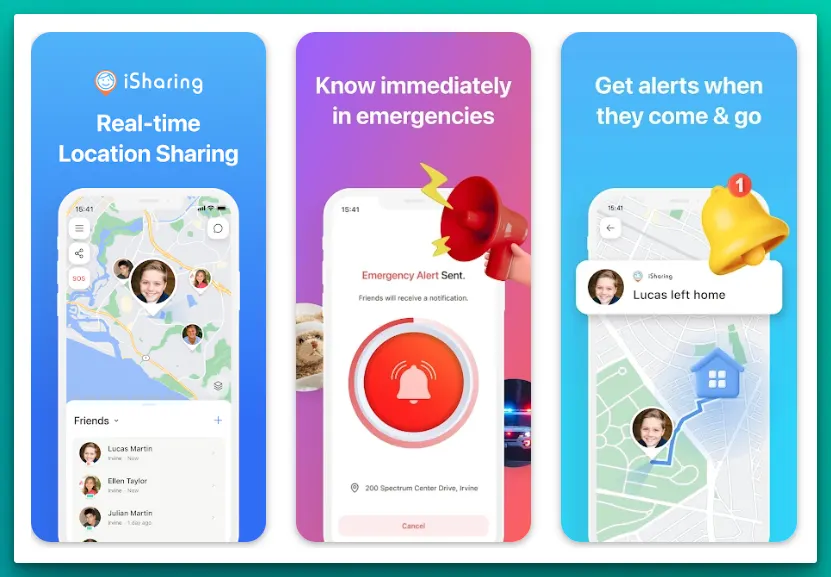
At its core, iSharing offers real-time connections while prioritizing user privacy. Unlike other solutions, it employs advanced techniques such as GPS, cellular triangulation, and Wi-Fi positioning for remarkably precise location tracking.
This sets it apart by not only enabling peer-to-peer tracking but also introducing the concept of geofencing. This virtual perimeter feature triggers instant notifications when loved ones cross predefined boundaries.
What makes iSharing exceptional is its broad compatibility across iOS devices, including iPhone and iPad, and the Android platform. This cross-platform availability ensures that users can benefit from its features, irrespective of their chosen device ecosystem.
However, iSharing truly stands out through its innovative approach to emergency response. The app seamlessly integrates with local emergency services, empowering users to transmit distress signals complete with real-time location data. This unique blend of technology and safety measures transforms iSharing from a mere tracking tool into a lifeline during critical moments.
In summary, iSharing takes its place among the leading apps like Life360, redefining the standards for location-sharing applications. Its ability to combine advanced positioning techniques, compatibility across various platforms, and unparalleled safety mechanisms cements its position as the go-to solution for individuals prioritizing security and seamless connectivity.
Key Features of iSharing:-
In location-tracking applications akin to Life360, iSharing distinguishes itself through many standout features that seamlessly blend technology and user-centric design.
Let’s delve into the key attributes that set iSharing apart:
Advanced Location Accuracy: Leveraging a sophisticated fusion of GPS, cellular triangulation, and Wi-Fi positioning, iSharing offers unparalleled location accuracy. This ensures that users can track their loved ones with precision and reliability.
Geofencing: A standout feature that defines iSharing is its geofencing capability. Users can establish virtual boundaries on maps and receive instant alerts when family members or friends enter or exit these predefined zones, enhancing safety and awareness.
Cross-Platform Compatibility: Going beyond the norm, iSharing is available on iOS (iPhone and iPad) and Android platforms. This broad compatibility ensures that users can connect and track regardless of device preferences.
Emergency Response Integration: iSharing shines in emergencies by integrating local emergency services. In critical situations, users can send distress signals with real-time location data, enabling swift and accurate assistance.
Privacy Protection: Respecting user privacy, iSharing allows individuals to control who can access their location information. This customizable privacy setting fosters trust and ensures that users maintain control over their data.
Real-Time Connections: iSharing fosters real-time connections through live location sharing. This feature enables family members or friends to track each other’s movements and stay informed about their safety and whereabouts.
Driving Reports: A unique offering, iSharing provides reports detailing speed, routes, and driving habits. This feature is particularly valuable for parents monitoring their teenage drivers or analyzing personal driving habits.
Location History: The app allows users to access historical location data to review past routes and places visited. This feature can be useful for planning travel itineraries or recalling previous activities.
ISharing is a formidable contender among location-tracking apps akin to Life360. Its advanced accuracy, geofencing, cross-platform accessibility, emergency response integration, privacy protection, real-time connections, driving reports, and location history contribute to a holistic solution prioritizing safety, connectivity, and user empowerment.
Life360 vs iSharing:-
Let’s dissect their features, functionalities, and unique propositions to uncover the nuances of this Life360 vs iSharing rivalry.
Life360, renowned for its expansive user base, offers a comprehensive suite of features ranging from real-time location tracking to safety alerts.
The app excels in geofencing, permitting users to set virtual boundaries and receive instant notifications upon boundary breaches. Moreover, Life360 introduces the concept of Circles, enabling users to form distinct groups for diverse connections, such as family, friends, and even sports teams.
On the other hand, iSharing emerges as a viable contender in this match-up, emphasizing precision in location accuracy through a fusion of GPS, cellular triangulation, and Wi-Fi positioning. Its unique forte lies in its cross-platform compatibility, effortlessly bridging the gap between iOS (iPhone and iPad) and Android users.
Additionally, iSharing integrates seamlessly with local emergency services, allowing users to transmit distress signals with real-time location data—a feature that defines its commitment to safety.
Life360 and iSharing share common ground in their dedication to user privacy, allowing individuals to control who accesses their location information. While Life360 garners praise for its well-established user base and versatile features, iSharing shines with its advanced accuracy and swift emergency response integration.
The ultimate choice in this Life360 vs. iSharing showdown depends on users’ priorities. Life360 embraces an extensive user community and diverse features while iSharing caters to those who prioritize pinpoint accuracy and cross-platform accessibility.
Whether it’s a preference for geofencing or an emphasis on emergency response, both platforms offer unique value propositions in the pursuit of seamless digital connectivity and safety.
Download The App From the Google Play Store
Download The App From the Apple App Store
2. FamiSafe: AI Parental Control
In the realm of digital parenting and safety, FamiSafe emerges as a powerful alternative to Life360, catering to the evolving needs of families while providing a robust set of features.
Tailored for Android and iPhone users, FamiSafe presents a sophisticated blend of technology and usability that sets it apart in the world of parental control apps.
FamiSafe, available for Android and iPhone platforms, transcends traditional tracking applications by introducing a holistic suite of features. This app seamlessly amalgamates GPS accuracy, geofencing, and app monitoring, offering parents an intricate understanding of their child’s digital footprint.
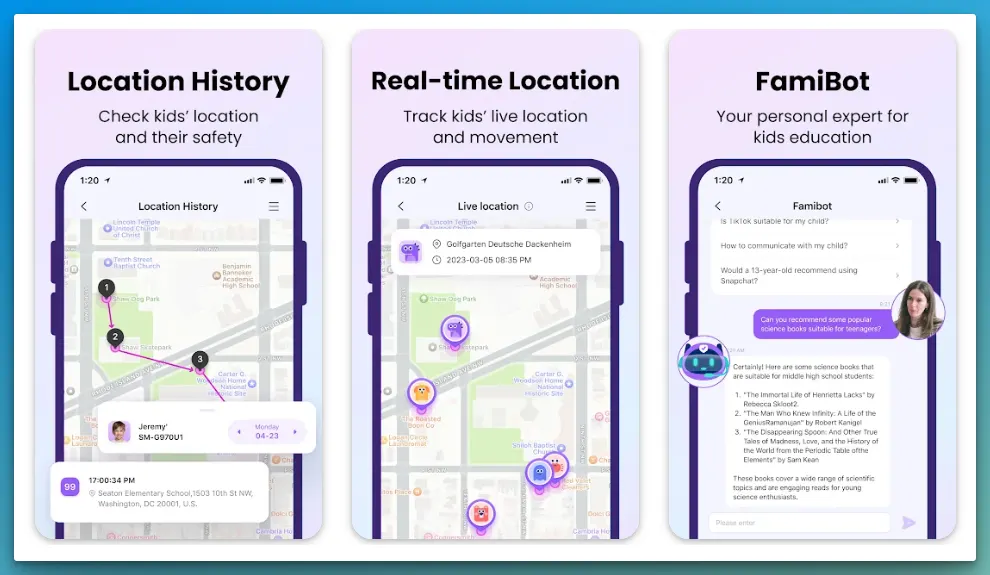
The standout aspect of FamiSafe lies in its multifaceted approach to parental control. Much like Life360, it empowers parents to create virtual fences through geofencing, notifying them when their child enters or exits predefined zones.
However, FamiSafe goes beyond by incorporating intelligent app detection, enabling parents to monitor and manage screen time and app usage patterns.
In addition to its location-tracking prowess, FamiSafe introduces an innovative content filtering mechanism. Parents can safeguard their children’s online experience by blocking inappropriate content and websites, fostering a secure digital environment.
Furthermore, FamiSafe’s comprehensive activity report offers an in-depth analysis of device usage, locations visited, and online interactions. This feature-rich approach cements FamiSafe as a holistic solution for parents keen on digital supervision and nurturing their child’s responsible device usage.
In summary, FamiSafe is a dynamic option among apps like Life360, tailored for Android and iPhone users. Its integration of precise GPS tracking, advanced geofencing, intuitive app monitoring, content filtering, and insightful activity reports presents a well-rounded platform that empowers parents to foster a secure and balanced digital ecosystem for their children.
Key Features of FamiSafe:-
In the realm of comprehensive parental control apps akin to Life360, FamiSafe takes center stage with distinctive features designed to provide parents unparalleled control and vigilance over their children’s digital activities. This app, available on Android and iPhone platforms, is a beacon of modern parenting in the digital age.
Real-Time Location Tracking: Like Life360, FamiSafe enables real-time location tracking, ensuring that parents can keep tabs on their child’s whereabouts, enhancing safety and peace of mind.
Geo-fencing Innovation: Setting itself apart, FamiSafe introduces an advanced Geo-fencing feature. Parents can establish virtual boundaries and receive immediate alerts should their child step beyond these predefined limits—an active approach to safety that goes beyond basic tracking.
App Blocker Mastery: Going beyond the ordinary, FamiSafe empowers parents with an App Blocker tool. This functionality grants the ability to regulate screen time and control access to specific applications, fostering a healthy balance between technology and other activities.
Multi-Platform Accessibility: An edge over the competition, FamiSafe caters to Android and iPhone users. This inclusive approach ensures parents can leverage its benefits regardless of their chosen device ecosystem.
Web Content Filtering: FamiSafe facilitates safeguarding children from inappropriate online content by offering comprehensive web content filtering. Parents can create a safe digital environment by blocking access to explicit or harmful websites.
Suspicious Text Detection: Employing cutting-edge artificial intelligence, FamiSafe scans text messages for potentially harmful or explicit content. This feature enables parents to be vigilant even in the digital communication realm.
Activity Report Insights: Parents can delve into detailed activity reports, gaining insights into their child’s digital behavior, including app usage, device screen time, and more.
In conclusion, FamiSafe is a powerful counterpart to Life360, redefining digital parenting through its diverse and innovative features. With real-time tracking, pioneering Geo-fencing, App Blocker controls, multi-platform accessibility, web content filtering, suspicious text detection, and insightful activity reports, it empowers parents to navigate the digital landscape confidently and effectively.
Life360 vs FamiSafe:-
In the ever-evolving realm of family safety applications, the juxtaposition of Life360 and FamiSafe marks a significant turning point. These two platforms, Life360 and FamiSafe, stand as titans in the landscape of digital guardianship.
Unveiling many features that extend beyond the conventional, they redefine the boundaries of family connectivity and security.
Life360, renowned for its expansive user base, boasts various features encompassing real-time location tracking and safety alerts. Its forte lies in geofencing, a technology that enables users to create virtual boundaries and receive instant notifications upon boundary breaches—a unique layer of vigilance.
In the opposing corner stands FamiSafe, positioning itself as a comprehensive solution for digital parenting. Like Life360, it offers real-time location tracking, but it distinguishes itself through its innovative Geo-fencing prowess. This feature enables parents to establish virtual boundaries and receive real-time alerts, promoting an engaged approach to safety.
Beyond mere location tracking, FamiSafe introduces the concept of App Blocker, permitting parents to regulate screen time and control access to specific applications. This augmentation of features transforms FamiSafe into a holistic solution, emphasizing location security and fostering balanced technology habits.
While both platforms are committed to user privacy, it’s worth noting that FamiSafe has a remarkable edge—it caters to Android and iPhone users. This breadth of compatibility underscores its dedication to inclusivity, ensuring families can reap its benefits regardless of their chosen device ecosystem.
The choice hinges on individual preferences in the face-off between Life360 and FamiSafe. Life360 offers a diverse set of features with an established user community.
In contrast, FamiSafe strides forward with its innovative Geo-fencing and App Blocker capabilities, appealing to those who seek a comprehensive approach to family safety. Both platforms emerge as stalwarts in family security, offering a unique perspective on safeguarding loved ones in the digital age.
Download The App From the Google Play Store
Download The App From the Apple App Store
3. GeoZilla – Find My Family
In cutting-edge location-tracking apps like life360, GeoZilla emerges as a powerhouse, offering a seamless blend of safety and connectivity for families and individuals alike.
Available on both Android and iPhone platforms, GeoZilla is poised to redefine how we stay connected and secure.
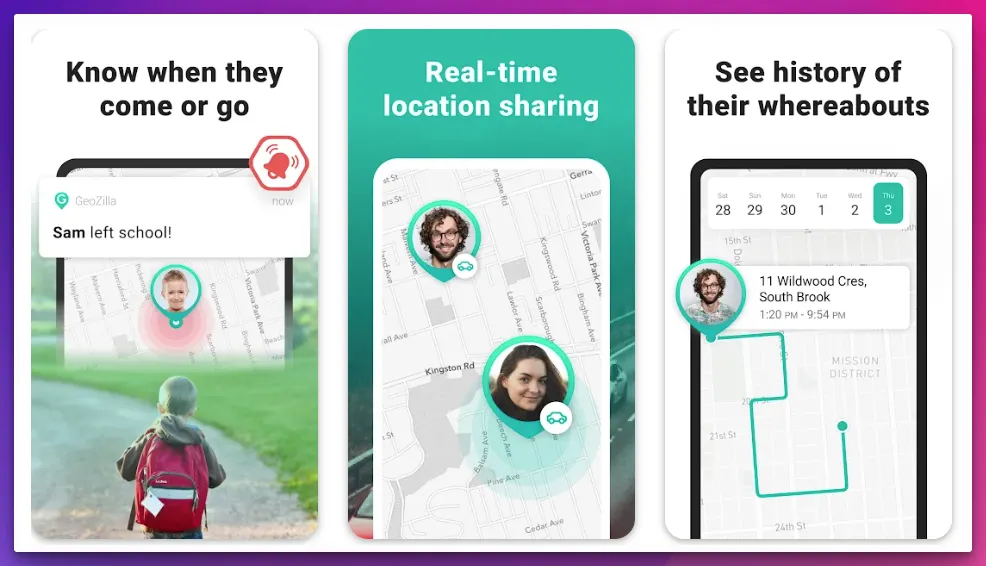
Much like Life360, GeoZilla excels in real-time location tracking, ensuring that loved ones are never out of reach. However, it takes a step further with its innovative approach to geofencing, allowing users to create virtual boundaries and receive instant notifications when these predefined limits are crossed. This active safety feature adds an extra layer of security to the user experience.
The uniqueness of GeoZilla shines through its versatile compatibility, encompassing Android and iPhone devices. This inclusivity underlines the app’s commitment to providing a comprehensive solution, bridging the gap between device preferences and ensuring everyone can participate in digital family safety.
GeoZilla’s integration with smart devices sets it apart, extending its utility to platforms such as the Apple Watch. This seamless synchronization brings real-time tracking to your wrist, creating a holistic approach to monitoring and connectivity.
In summary, GeoZilla stands as a robust alternative to Life360, catering to the demands of modern family dynamics. Real-time tracking, geofencing innovation, cross-platform compatibility for Android and iPhone, and integration with smart devices like the Apple Watch solidify its position as a trailblazer in digital safety and connectivity.
As the world evolves, so do our solutions for staying connected and secure, and GeoZilla leads the charge with innovation and precision.
Key Features of GeoZilla:-
In the competitive landscape of family safety and connectivity applications, GeoZilla emerges as a formidable contender, offering many unique features that seamlessly blend innovation and practicality. As an alternative to Life360, GeoZilla sets itself apart through its dynamic offerings, available on Android and iPhone platforms.
Real-Time Location Tracking: Similar to Life360, GeoZilla excels in real-time location tracking, ensuring that users can keep a watchful eye on their loved ones’ whereabouts, promoting peace of mind and connectivity.
Geofencing Excellence: Where GeoZilla truly shines is in its geofencing capabilities. It empowers users to establish virtual boundaries and receive instantaneous alerts if these boundaries are breached—a proactive approach to safety and vigilance.
Cross-Platform Compatibility: GeoZilla’s compatibility with Android and iPhone devices is one of its strengths. This comprehensive reach ensures that individuals from various device ecosystems can harness its benefits.
Smart Device Integration: GeoZilla takes innovation further by seamlessly integrating with devices like the Apple Watch. This synchronization brings real-time tracking and connectivity to users’ wrists, enhancing the overall user experience.
Family Locator Hub: The app offers a centralized family locator hub, providing a one-stop solution for staying connected and ensuring loved ones’ safety.
Emergency Alerts: In critical situations, GeoZilla allows users to send emergency alerts, complete with real-time location data, to designated contacts—a feature that underscores its commitment to safety.
Location History: GeoZilla enables users to access historical location data, allowing them to review past routes and locations—a handy tool for planning and recalling past activities.

In conclusion, GeoZilla is a robust contender in family safety and connectivity applications, rivaling alternatives like Life360.
With its real-time tracking, innovative geofencing, cross-platform compatibility, smart device integration, family locator hub, emergency alerts, and location history, it embodies a comprehensive solution that prioritizes safety and seamless connectivity for Android and iPhone users.
Life360 VS GeoZilla:-
The clash between Life360 and GeoZilla takes center stage in the dynamic landscape of family safety applications. These two platforms, Life360 and GeoZilla, each boasting a unique array of features, stand as pillars in the digital realm of connectivity and security.
As families seek to bolster their safety measures, the decision between these two contenders warrants a closer examination.
Life360, with its established user base, offers a comprehensive suite of features. Its real-time location tracking ensures that loved ones’ whereabouts are known, fostering a sense of assurance.
A notable strength lies in its geofencing capability, permitting users to define virtual boundaries and receive instant alerts when those boundaries are crossed—an embodiment of proactive safety measures.
Conversely, GeoZilla presents an intriguing alternative, emphasizing innovation and cross-platform accessibility. It, too, excels in real-time tracking, keeping families informed. GeoZilla notably differentiates itself with its versatility, catering to Android and iPhone users. This inclusive approach reflects its commitment to unified family safety.
The heart of the choice between Life360 vs GeoZilla lies in the nuances of their features. While Life360 showcases its prowess through geofencing and its extensive community, GeoZilla impresses with its multi-platform availability. Both platforms highlight emergency alerts for critical situations, ensuring users’ safety remains paramount.
In summary, the decision between Life360 vs GeoZilla hinges on the user’s priorities. Life360 leverages its user base and distinctive features while GeoZilla strides forward with innovation and accessibility. Both platforms encapsulate the essence of modern family safety, embodying vigilance and connectivity in an increasingly digital world.
Download The App From the Google Play Store
Download The App From the Apple App Store
4. Bark – Parental Controls
In the realm of digital parenting solutions, Bark emerges as a formidable alternative to Life360, catering to the intricate needs of modern families. Bark is a beacon of hope for parents seeking comprehensive control and supervision over their children’s digital lives on Android and iPhone platforms.
Like Life360, Bark excels in real-time monitoring, ensuring parents remain informed about their child’s digital activities. However, Bark distinguishes itself with its innovative approach, emphasizing proactive monitoring for potential risks and concerns.
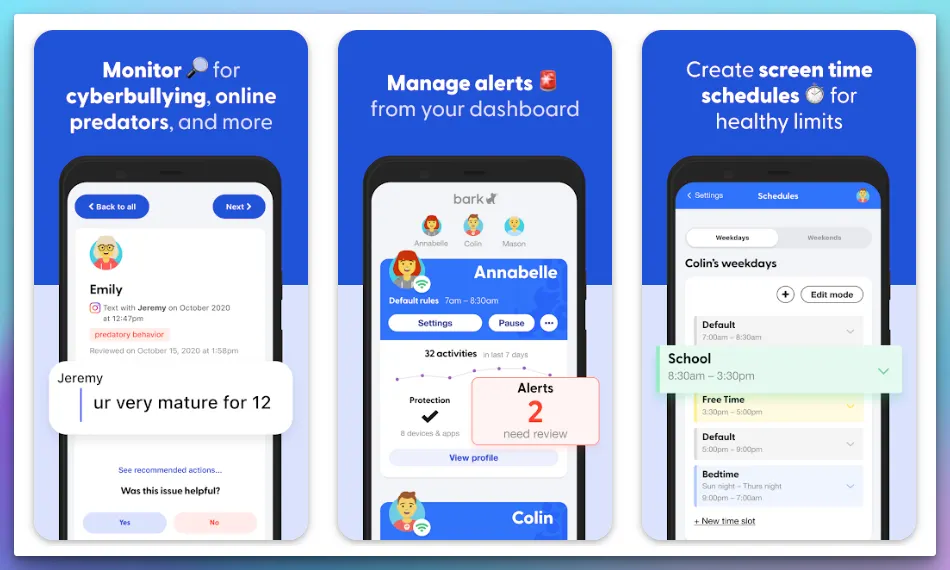
The power of Bark lies in its ability to analyze text messages, social media, and other digital communications for signs of cyberbullying, self-harm, explicit content, and more. This state-of-the-art analysis goes beyond basic tracking, empowering parents to step in promptly when their child’s safety is compromised.
Beyond monitoring, Bark empowers parents with the capability to manage screen time and filter web content, fostering a balanced digital lifestyle. This holistic approach sets Bark apart as a comprehensive solution, ensuring that digital experiences remain safe, healthy, and enriching.
A noteworthy advantage of Bark is its compatibility with Android and iPhone devices. This wide reach underlines its commitment to inclusivity, allowing parents across device ecosystems to benefit from its features.
Bark shines as a remarkable contender among apps similar to Life360. With its real-time monitoring, innovative risk analysis, screen time management, web content filtering, and cross-platform accessibility, it stands as a beacon of enhanced digital parenting, nurturing a secure and enriching environment for children on both Android and iPhone devices.
Key Features of Bark:-
In the landscape of comprehensive digital parenting apps, Bark emerges as a trailblazer, offering a rich array of features designed to empower parents in safeguarding their children’s online experiences.
As an alternative to Life360, Bark encompasses a suite of unique functionalities for Android and iPhone users.
Advanced Digital Monitoring: Similar to Life360, Bark excels in real-time monitoring, enabling parents to stay informed about their children’s digital interactions, ensuring their safety and well-being.
Proactive Risk Detection: Where Bark truly shines is its ability to analyze text messages, social media, and online communications for potential risks such as cyberbullying, self-harm, and explicit content. This proactive approach empowers parents to intervene promptly when concerns arise.
Screen Time Management: Bark empowers parents to manage screen time effectively, helping children maintain a healthy balance between online and offline activities, fostering a wholesome digital lifestyle.
Web Content Filtering: Going beyond tracking, Bark enables parents to filter web content, ensuring children are protected from inappropriate or harmful online material.
Cross-Platform Compatibility: A distinctive advantage of Bark is its compatibility across Android and iPhone platforms. This inclusivity ensures parents can harness its benefits regardless of their preferred device ecosystem.
Privacy Protection: Bark respects user privacy by using AI technology to scan for potential issues without accessing the actual content of messages, ensuring a secure and confidential monitoring experience.
Comprehensive Alerts: The app alerts parents when potentially concerning content is detected, providing them with the information they need to address any issues effectively.
In summary, Bark is a robust contender in digital parenting solutions, rivaling alternatives like Life360. Its blend of real-time monitoring, proactive risk detection, screen time management, web content filtering, cross-platform compatibility, privacy protection, and comprehensive alerts makes it an invaluable tool for parents striving to create a safe and healthy online environment for their children on Android and iPhone platforms.
Life360 Vs Bark:-
In the evolving sphere of digital parenting applications, the duel between Life360 and Bark takes center stage, showcasing two distinct approaches to modern family safety.
Both platforms, Life360 and Bark, offer a range of features that underscore their commitment to ensuring children’s online experiences are secure and enriching. As families seek to strike a balance between connectivity and protection, a closer examination of these two contenders is warranted.
Life360, with its established reputation, presents a comprehensive suite of features encompassing real-time location tracking and safety alerts. This app keeps families connected and informed about each other’s whereabouts, providing a sense of security in the digital age.
On the opposing side, Bark steps forward with an innovative stance. This platform focuses on in-depth content analysis, actively scanning text messages and online communications for potential risks, such as cyberbullying, self-harm, and explicit content. This proactive approach empowers parents to address concerns promptly, fostering a safer online environment for children.
While Life360 emphasizes connectivity through its real-time tracking, Bark emphasizes risk detection and content analysis. Both platforms offer distinctive features that cater to different priorities in digital parenting.
In the battle of Life360 vs Bark, the choice ultimately hinges on individual family needs. Life360 appeals to those prioritizing location tracking and real-time connectivity, whereas Bark addresses concerns through its advanced content analysis and proactive risk detection features.
Both platforms contribute to the evolving landscape of digital parenting, offering unique solutions that underscore the importance of balancing safety and connectivity in today’s digital world.
Download The App From the Google Play Store
Download The App From the Apple App Store
5. Family360 – GPS Live Locator
In the realm of family safety and location-tracking applications, Family360 stands as a beacon of innovation and practicality, establishing itself as one of the best apps like Life360.
With a focus on seamless connectivity and comprehensive safety measures, Family360 offers various features that cater to modern families’ evolving needs.
Like Life360, Family360 excels in real-time location tracking, ensuring that loved ones’ whereabouts are readily accessible. This feature fosters a sense of security and reassurance, allowing families to stay connected effortlessly.
However, what truly sets Family360 apart is its user-friendly interface and intuitive design. Navigating the app is a breeze, making it accessible even to those less familiar with technology. This simplicity enhances the user experience, contributing to the app’s status as one of the best in its category.
Moreover, Family360 introduces a unique angle by focusing on fostering virtual togetherness. The app emphasizes connectivity through features that allow families to share activities, events, and milestones, transcending mere tracking to creating shared memories.
Compatibility is another forte of Family360, catering to iPhone and Android users. This inclusivity ensures families can harness its benefits regardless of their chosen device ecosystem.
In conclusion, Family360 has etched its name among the best apps similar to Life360. It’s real-time tracking, user-friendly interface, emphasis on virtual togetherness, and compatibility across platforms redefine family safety and connectivity.
In a world where staying connected is paramount, Family360 stands out as a compelling choice, enriching the digital experiences of families worldwide.
Key Features of Family360:-
In the realm of family safety and connectivity, Family360 shines as one of the best apps like Life360, offering a suite of features that empower families to stay connected and secure. Let’s delve into the key attributes that make Family360 stand out:
Real-Time Location Tracking: Like Life360, Family360 excels in real-time location tracking, enabling families to monitor their loved ones’ whereabouts and ensure their safety.
User-Friendly Interface: Family360 stands out with its intuitive and user-friendly interface. Navigating the app is effortless, catering to users of all tech-savviness levels.
Virtual Togetherness: Going beyond basic tracking, Family360 emphasizes virtual togetherness. Families can share activities, events, and milestones, fostering a sense of connection despite physical distances.
Cross-Platform Compatibility: A standout feature of Family360 is its compatibility across iPhone and Android platforms. This ensures that families can enjoy its benefits regardless of their device preferences.
Safety Alerts: The app alerts users when a family member arrives or departs from specific locations. This feature enhances security and awareness.
Geofencing: Family360 includes geofencing capabilities, allowing users to set virtual boundaries and receive instant notifications when family members enter or exit these defined areas.
Activity Reports: Families can access detailed activity reports, providing insights into their loved ones’ digital and physical activities—a valuable tool for staying informed.
Emergency Assistance: Family360 offers emergency assistance features in critical situations, allowing users to send distress signals and real-time location data to designated contacts.
Family360 redefines family safety and connectivity through its real-time tracking, user-friendly interface, virtual togetherness emphasis, cross-platform compatibility, safety alerts, geofencing, activity reports, and emergency assistance capabilities. As one of the best alternatives to Life360, it empowers families to navigate the modern digital landscape confidently and easily.
Life360 vs Family360:-
The clash between Life360 and Family360 takes center stage in the ever-evolving landscape of family safety applications. These two platforms, Life360 and Family360, are vying for attention with their unique offerings in the realm of digital guardianship.
As families seek to fortify their safety measures, an in-depth comparison between these contenders becomes essential.
Life360, a recognized name in the industry, brings forth a comprehensive array of features. Its real-time location tracking stands out, allowing families to stay connected and informed about each member’s whereabouts—a crucial facet in the digital age.
On the opposing side, Family360 emerges as a strong contender, emphasizing real-time tracking and the concept of virtual togetherness. It goes beyond the conventional by enabling families to share activities, events, and experiences, fostering a sense of connection despite physical distances.
While both platforms focus on family safety, Life360 highlights geofencing, enabling users to set virtual boundaries and receive immediate notifications upon boundary breaches. Family360, on the other hand, draws attention with its intuitive user interface that simplifies navigation, enhancing the overall user experience.
Another point of distinction lies in the platforms’ compatibility. While Life360 caters to a broad audience, Family360 ensures cross-platform accessibility for iPhone and Android users, reflecting its commitment to inclusivity.
In the Life360 vs Family360 duel, the ultimate choice hinges on individual priorities. Life360 caters to those prioritizing real-time tracking and geofencing, while Family360 appeals to families seeking a more connected and immersive experience.
Both platforms contribute significantly to the evolving landscape of family safety, offering unique perspectives on staying secure and connected in a digital world.
Download The App From the Google Play Store
Download The App From the Apple App Store
6. AT&T Secure Family
AT&T Secure Family emerges as a stalwart in digital parenting solutions, positioning itself as one of the best apps like Life360. With a focus on comprehensive control and safety measures, AT&T Secure Family offers an impressive suite of features designed to empower parents in navigating the complexities of the digital age.
Like the acclaimed Life360, AT&T Secure Family excels in real-time location tracking, ensuring parents know their children’s whereabouts well. This real-time insight forms the bedrock of a secure digital parenting experience.
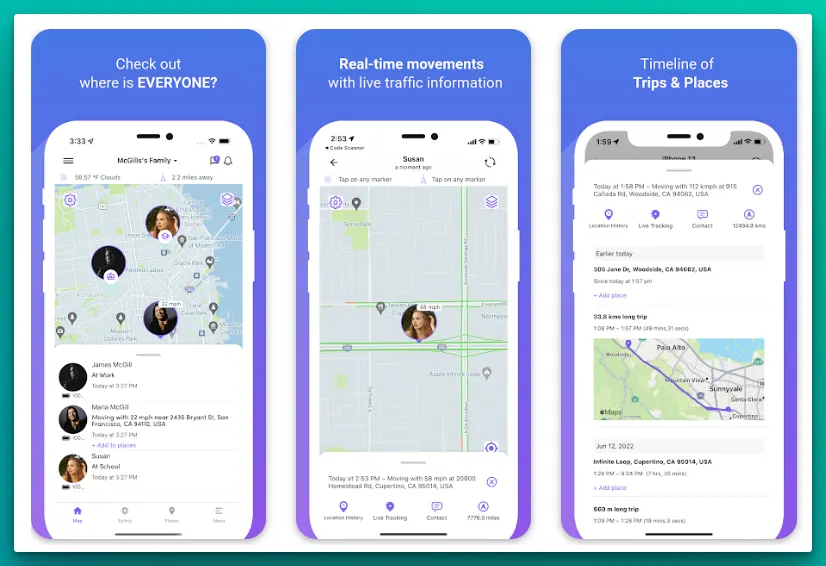
What sets AT&T Secure Family apart is its commitment to digital well-being, reflected through its content filters and screen time management features. These capabilities empower parents to guide their children’s online experiences, ensuring a healthy balance between screen time and other activities.
Moreover, AT&T Secure Family integrates parental controls seamlessly into the user interface, offering an intuitive experience for both tech-savvy and less tech-savvy parents. This user-centric approach enhances the overall effectiveness of the app.
An advantage that AT&T Secure Family possesses is its affiliation with a reputable telecommunications provider, lending an additional layer of trust and credibility to its services.
In conclusion, AT&T Secure Family is a formidable alternative among the best apps similar to Life360. With its real-time tracking, focus on digital well-being through content filters and screen time management, intuitive user interface, and association with a trusted telecom provider; it redefines digital parenting.
In a world where children’s digital experiences are multifaceted, AT&T Secure Family is a tool that empowers parents to foster a safe and balanced online environment.
Key Features of AT&T Secure Family:-
AT&T Secure Family distinguishes itself as a robust contender in digital parenting apps, offering a range of features designed to enhance children’s online safety and parental control. Let’s delve into the key attributes that set AT&T Secure Family apart:
Real-Time Location Tracking: Similar to Life360, AT&T Secure Family excels in real-time location tracking, ensuring parents stay informed about their children’s whereabouts and safety.
Content Filters: One of the standout features of AT&T Secure Family is its content filtering capabilities. This empowers parents to regulate their children’s online experiences, protecting them from inappropriate or harmful content.
Screen Time Management: The app provides tools for parents to manage their children’s screen time, promoting a healthy balance between digital engagement and other activities.
User Interface: AT&T Secure Family integrates parental controls seamlessly into an intuitive user interface, making it user-friendly for parents of varying tech expertise levels.
Geofencing: Like Life360, the app offers geofencing capabilities, allowing parents to set virtual boundaries and receive notifications when their children enter or exit these predefined areas.
Location History: Parents can access location history, allowing them to review past routes and locations for their children—a useful tool for understanding their daily routines.
Trusted Provider Affiliation: AT&T Secure Family is backed by a reputable telecommunications provider, lending credibility and trust to the app’s services.
In conclusion, AT&T Secure Family enriches the landscape of digital parenting with its real-time tracking, content filters, screen time management, user-friendly interface, geofencing, location history, and association with a trusted provider.
These features empower parents to create a safer and healthier online environment for their children, making it a valuable tool in today’s digital world.
Life360 vs AT&T Secure Family:-
In the dynamic landscape of digital guardianship, the showdown between Life360 and AT&T Secure Family captures the essence of modern family safety applications.
These two platforms, Life360 and AT&T Secure Family, each with distinctive features, epitomize the evolution of digital parenting. As families strive to balance connectivity and control, a comprehensive comparison between these contenders becomes essential.
Life360 brings a rich suite of features to the forefront. Its real-time location tracking is a cornerstone, allowing families to monitor their loved ones’ whereabouts.
Additionally, the app boasts geofencing capabilities, empowering users to set virtual boundaries and receive real-time alerts when these boundaries are crossed—an embodiment of proactive safety measures.
On the other side of the spectrum, AT&T Secure Family emphasizes a holistic approach. Beyond real-time tracking, it introduces content filters and screen time management tools. These features resonate with parents seeking to nurture a balanced digital lifestyle for their children, ensuring that online experiences are enriching and safe.
The user interface of both platforms plays a pivotal role in the user experience. While Life360 offers an intuitive interface for easy navigation, AT&T Secure Family integrates parental controls seamlessly into its interface, catering to various tech-savviness levels.
An additional factor to consider is the trusted provider affiliation of AT&T Secure Family, which contributes to its credibility and reliability.
In the Life360 vs AT&T Secure Family debate, the choice depends on individual priorities. Life360 caters to those who prioritize real-time tracking and geofencing, while AT&T Secure Family resonates with families seeking a comprehensive approach with content filters and screen time management.
Both platforms contribute significantly to the evolving landscape of family safety, offering unique perspectives on safeguarding loved ones in today’s digital world.
Download The App From the Google Play Store
Download The App From the Apple App Store
7. Carpin
Carpin emerges as a standout contender in family safety and digital connectivity, solidifying its position as one of the best apps like Life360. With a focus on real-time tracking and seamless communication, Carpin offers features designed to foster security and connectedness in the modern age.
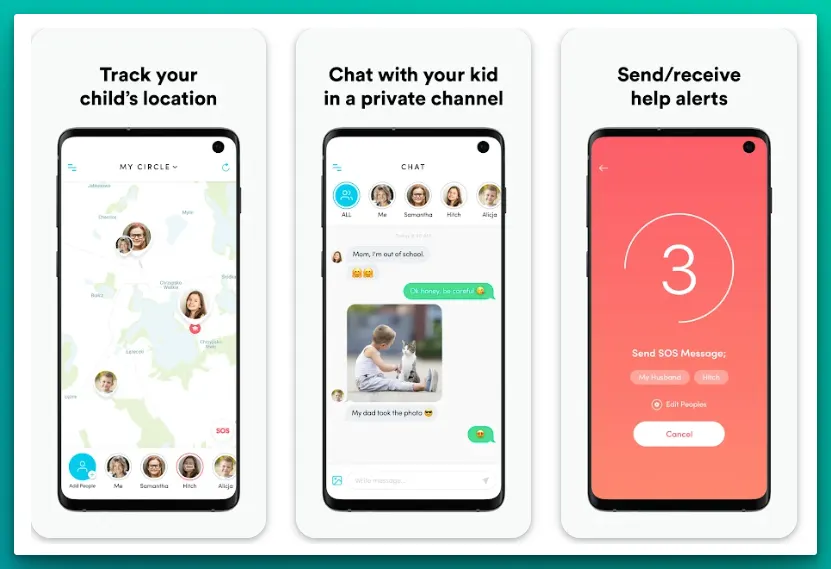
Similar to the renowned Life360, Carpin excels in real-time location tracking, allowing families to stay informed about their loved ones’ whereabouts. This feature promotes a sense of assurance and vigilance in an increasingly fast-paced world.
However, what truly sets Carpin apart is its emphasis on efficiency. The app offers a streamlined user experience, minimizing complexity and ensuring that users can easily access essential information—a valuable aspect of family safety.
Moreover, Carpin introduces a unique facet by prioritizing seamless communication. In addition to tracking, the app empowers families to exchange messages and updates, creating a cohesive platform that encapsulates safety and connection.
Cross-platform compatibility is another strength of Carpin, catering to iPhone and Android users. This inclusivity reflects its commitment to fostering connectedness across device ecosystems.
In conclusion, Carpin distinguishes itself as one of the best apps akin to Life360. With its real-time tracking, emphasis on efficiency, seamless communication features, and cross-platform accessibility, it redefines digital connectivity and safety.
In a landscape where staying connected and secure is paramount, Carpin shines as a beacon of innovation, enriching the digital experiences of families worldwide.
Key Features of Carpin:-
In the realm of family safety and connectivity apps, Carpin sets itself apart with various features designed to empower families and individuals alike. Let’s delve into the key attributes that make Carpin one of the best alternatives to Life360:
Real-Time Location Tracking: Much like Life360, Carpin excels in real-time location tracking, providing users with accurate and up-to-date information about the whereabouts of their loved ones.
Efficiency and User-Friendly Interface: Carpin stands out for its emphasis on efficiency and an intuitive user interface. Navigating the app seamlessly allows users to access essential information without unnecessary complexity.
Seamless Communication: Beyond tracking, Carpin facilitates seamless communication among family members and friends. The app empowers users to exchange messages and updates, enhancing connectivity and fostering a sense of togetherness.
Cross-Platform Compatibility: One of Carpin’s strengths is its cross-platform compatibility, catering to iPhone and Android users. This inclusivity ensures that families stay connected regardless of their preferred device ecosystem.
Location History: Carpin enables users to access location history, allowing them to review past routes and locations to understand their loved ones’ movements comprehensively.
Geo-Fencing: Similar to Life360, the app features geo-fencing capabilities, empowering users to set virtual boundaries and receive notifications when those boundaries are breached.
Privacy Controls: Carpin prioritizes user privacy by providing customizable privacy settings, allowing individuals to choose who can access their location and other information.
Carpin elevates the family safety and connectivity landscape with its real-time tracking, efficient user interface, seamless communication, cross-platform compatibility, location history, geo-fencing, and privacy controls.
These features collectively empower families to confidently navigate the digital world, staying connected and secure wherever they may be.
Download The App From the Google Play Store
Download The App From the Apple App Store
8. My Family
In the ever-evolving landscape of family safety applications, My Family emerges as a noteworthy contender, solidifying its position as one of the apps like Life360. Focusing on real-time tracking and seamless communication, My Family offers features that foster security and connectedness in the modern era.
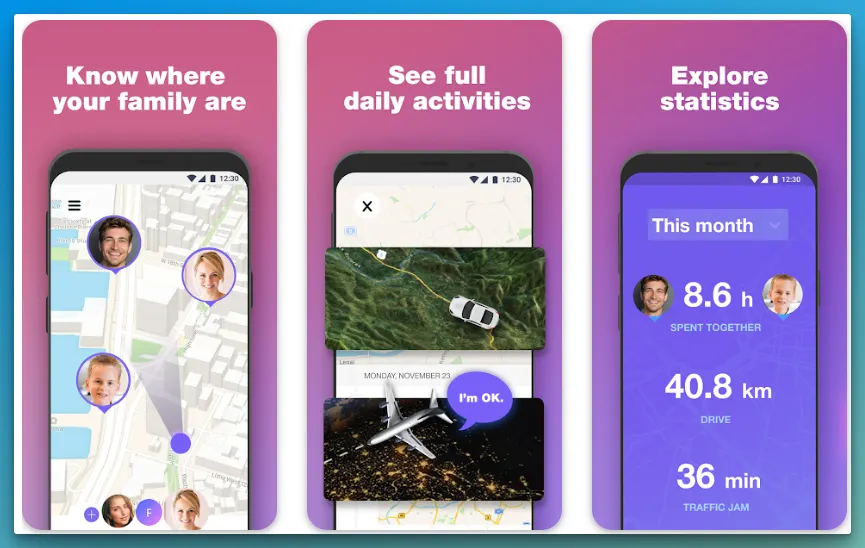
Much like the renowned Life360, My Family excels in real-time location tracking, enabling families to stay informed about the whereabouts of their loved ones. This feature fosters peace of mind and vigilance, essential in today’s fast-paced world.
However, what truly sets My Family apart is its emphasis on personalization. The app caters to individual preferences, allowing users to customize settings and notifications, enhance user experience, and adapt to unique family dynamics.
Furthermore, My Family introduces a unique dimension by focusing on geo-fencing capabilities. This feature empowers users to set virtual boundaries and receive immediate alerts when their loved ones cross these predefined limits—embodying proactive safety measures.
Cross-platform compatibility is another strength of My Family, catering to iPhone and Android users. This inclusivity reflects the app’s commitment to fostering connectivity across various device ecosystems.
In conclusion, My Family distinguishes itself as one of the apps akin to Life360. With its real-time tracking, emphasis on personalization, geo-fencing capabilities, and cross-platform accessibility, it redefines family safety and connectivity.
In a world where staying connected and secure is paramount, My Family shines as a beacon of innovation, enriching the digital experiences of families worldwide.
Key Features of My Family:-
In family safety and connectivity apps, My Family stands out with features that empower families to stay connected and secure. Let’s explore the key attributes that make My Family a compelling choice for those seeking alternatives to Life360:
Real-Time Location Tracking: Similar to Life360, My Family excels in real-time location tracking, providing users with up-to-the-minute information about their family member’s whereabouts.
Personalization: My Family prioritizes personalization, allowing users to customize settings and notifications according to their preferences. This tailored approach enhances the user experience and accommodates each family’s unique dynamics.
Geo-Fencing: An exceptional feature of My Family is its geo-fencing capabilities. Users can set virtual boundaries and receive instant notifications when family members enter or exit these predefined areas, promoting proactive safety measures.
Seamless Communication: Beyond tracking, the app facilitates seamless communication among family members. Users can exchange messages and updates, fostering a sense of connection even when physically apart.
Cross-Platform Compatibility: My Family caters to iPhone and Android users, ensuring that families can harness its benefits regardless of their chosen device ecosystem.
Location History: Users can access location history to review past routes and locations to comprehensively understand their family members’ movements.
User-Friendly Interface: The app boasts a user-friendly interface that makes navigation effortless, catering to users of varying levels of tech expertise.
In summary, My Family enriches family safety and connectivity with its real-time tracking, personalization, geo-fencing capabilities, seamless communication, cross-platform compatibility, location history, and user-friendly interface. These features empower families to confidently navigate the digital world, fostering secure and enriching connections among loved ones.
Download The App From the Google Play Store
Download The App From the Apple App Store
Tips for Using Location Tracking Apps Effectively
To make the most out of location-tracking apps and ensure a seamless experience, following a few tips for using them effectively is important.
By incorporating these strategies, users can optimize their app usage and enhance their safety and convenience.
Establish Boundaries:- Define clear boundaries with your family members or friends regarding the usage of location-tracking apps. Discuss privacy concerns, consent, and guidelines to ensure everyone feels comfortable and respected.
Open Communication:- Maintain open lines of communication with the individuals you are connected with on the app. Regularly discuss the purpose and benefits of location tracking, addressing any questions or concerns.
Privacy Settings:- Familiarize yourself with the app’s privacy settings and customize them according to your preferences. Choose who can see your location, for how long, and consider using features like geofencing to automate notifications.
Regular Review:- Review your location tracking settings and update them as needed. People’s circumstances and preferences may change, so ensuring your settings align with your current needs is important.
Educate Family Members:- If you’re using location-tracking apps with family members, take the time to educate them about the features and how to use them effectively. This will promote responsible usage and maximize the benefits of the app.
Respect Individual Privacy:- While location tracking is a valuable tool, respect each individual’s privacy. Avoid using the app to constantly monitor or intrude on someone’s personal space without their knowledge or consent.
By following these tips, users can harness the full potential of location-tracking apps while maintaining respect for privacy and fostering effective communication among family members or friends.
Responsible usage and open dialogue are key to making location-tracking apps beneficial to your digital toolkit.
📗FAQ’s
Is there a better app than Life360?
Life360 stands prominent in family location tracking, yet alternatives like iSharing and GeoZilla have earned credibility. Deciding which is superior depends on user preferences.
What is better bark or Life360?
While Life360 focuses primarily on location tracking, Bark leans towards monitoring online activity. Parents inclined towards supervising internet usage may find Bark more suitable.
Which is better Life360 or iSharing?
Both serve location tracking purposes. iSharing offers real-time location updates but varies in features. Researching both ensures a fitting choice.
How can I track my loved one location?
Myriad apps are available, from Life360, iSharing, to Google’s family tracking app. Each offers unique features to cater to specific needs.
How can I track my son without him knowing?
It’s crucial to respect privacy. Stealthily tracking without knowledge may breach trust. However, various apps can operate discreetly.
Is there an app to control your child’s phone?
Yes, apps like Qustodio, Bark, and Circle enable parental controls.
What is the best app to track my child?
Life360, iSharing, and Google’s family tracking offer comprehensive features. Determining the ‘best’ requires individual assessment.
Is Bark app detectable?
Bark works silently, but a keen user might notice its presence.
Who are Life360 biggest competitors?
iSharing, GeoZilla, and Google’s family tracking are considerable competitors.
Is iSharing free to use?
iSharing offers both free and premium versions with varying features.
Are there any free location-sharing apps?
Yes, including Google’s family tracking and the basic version of iSharing.
Does Life360 tell you when someone looks at your location?
No, Life360 doesn’t notify users when their location is checked.
Conclusion
In today’s digital age, ensuring the safety and connectivity of our loved ones is no longer restricted to just one app or platform. While Life360 has paved the way with its innovative features, it’s clear that there’s a diverse ecosystem of apps out there catering to specific needs and preferences.
Whether you prioritize a user-friendly design, unique features, or stringent data privacy measures, there’s an alternative to match. As with any tool, it’s about finding what aligns best with your lifestyle and requirements.
We hope this article has illuminated some worthy contenders in your search for apps like Life360. Remember, technology is at its best when it’s tailored to serve you, so take the time to explore, experiment, and discover the best fit for you and your family.
Safe journeying!