
























Are you a wildlife enthusiast looking for an affordable camera to capture stunning shots of your favorite animals?💁
If so, you’re in luck! In this article, we’ll reveal the best affordable camera for wildlife photography that will help you take your skills to the next level.
As a wildlife photographer, capturing great shots can be challenging, especially if you don’t have the right equipment.
Without a high-quality camera that can handle fast-moving subjects, low-light conditions, and harsh environments, you may miss out on some once-in-a-lifetime shots.
But here’s the thing: many cameras ideal for wildlife photography can be quite expensive, and not everyone has the budget to splurge on a top-of-the-line model. You don’t want to compromise on quality, but you don’t want to break the bank.
That’s why we’ve scoured the market to find the best affordable camera for wildlife photography. We’ve tested and compared various models based on their features, performance, and price, so you can decide to meet your needs and budget.
In the next sections, we’ll share our top picks for the best affordable camera for wildlife photography, including their pros and cons, key features, and sample shots.
Whether you’re a beginner or an experienced photographer, you’ll find something that suits your style and preferences. So, let’s dive in and discover the perfect camera for your wildlife adventures!
Best Affordable Camera For Wildlife Photography
1. Canon EOS 80D
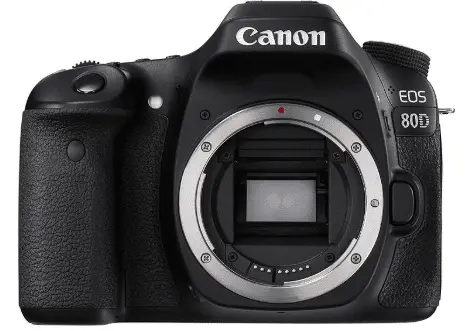
If you love the canon but were unsatisfied with the sensor and the autofocus on previous versions like the 70D, then prepare to be impressed by this improved yet affordable 80D version.
This sleek camera upholds the Canon standard or perhaps pushes it higher. With great autofocus and sensor, your wildlife photographs come out amazing.
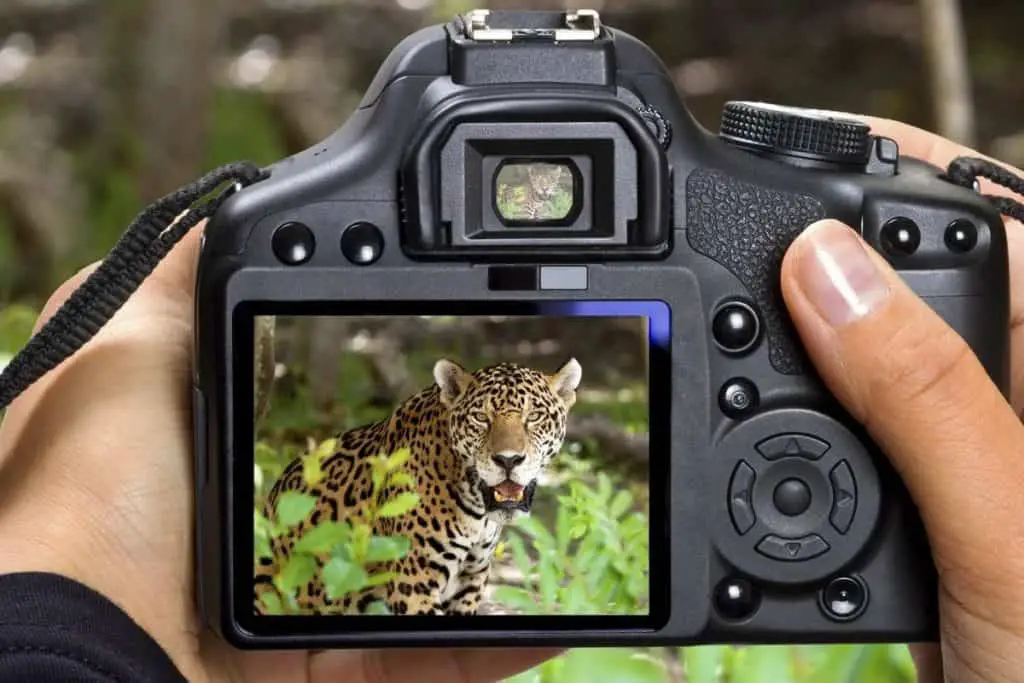
However, the Canon EOS has a low range of ISO, so you may have to shoot only when it is bright outside. Not to worry, many lovely things to see and photograph during the day.
Features:-
- Body material is made up of polycarbonate and magnesium alloy
- 7FPS continuous burst shooting with autofocus
- Touchscreen LCD monitor
- Four numbers of a high ISO setting
- Anti-moisture and anti-dust body material
- Autofocus rating of 45
- 24 MP sensor
- It weighs 1.4 pounds
Pros:-
- An improvement from the 70D version
- The autofocus feature continues to work all through shooting and in live videos.
- The lightweight offers convenience when moving around
- It is built to withstand rain and dusty weather
- It is a convenient option for beginner photographers and professionals
Cons:-
- The ISO range is low, therefore is better to use in the daytime
- It doesn’t have the classic intelligent tracking recognition
Note:- this camera is budget-friendly, and if you shoot more when it is bright, you will have a great time using it.
Check Price on Amazon
2. Nikon D7200
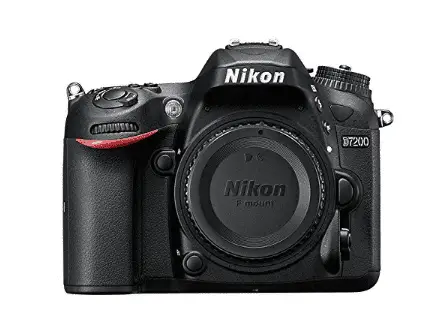
Nikon is a great brand in the market and has released many impressive cameras to soothe your wildlife photography passion.
If you weren’t impressed with the cannon because of the ISO settings, then you may love this Nikon D7200, as its major selling point is the ability to perform great with low light.
Features:-
- 6FPS feature
- 51 AF point feature
- Long battery run time
- It has an inbuilt Wi-Fi and remote control
- Up to 24MP image resolution
- APS-C sensor
- SLR camera type
Pros:-
- The camera is affordable.
- It is a great buy for both beginners and professional photographers
- Good for use with low light, hence can be used in the evenings
- The battery runtime is impressive, able to last through 1110 photos
- The 51 AF is impressive
Cons:-
- It is not waterproof hence is not very weather friendly
- It doesn’t have inbuilt image stabilization
Notes:- This Nikon camera is a great buy for all levels of photographers, and if you love to explore nocturnal animals, you should have yourself a golden buy in your hands.
Check Price on Amazon3. Sony Alpha 99
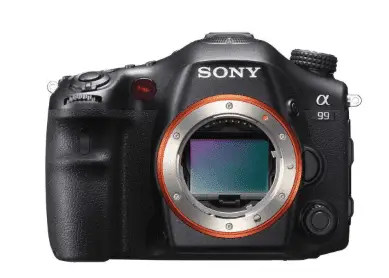
If your budget is a little on the high side of fewer than 4000 dollars, then the Sony Alpha 99 camera is the best in this budget category.
This camera was made to appeal to anyone who is already into DSLR type of cameras and with a great autofocus ability that sets it above previous camera models by Sony.
The high light sensitivity of the camera and the resulting image quality is one to fall in love with within seconds.
Features:-
- SLT camera type
- 24MP resolution
- It has a full-frame sensor
- 6FPS with autofocus all through the shooting time
- ISO rating of 100 to 25600
- SLT mirror design
Pros:-
- High rating even among other DSLR cameras
- Suitable for use in different weather conditions
- The camera is suitable for the different levels of wildlife photographers
- The high shutter speed and high FPS make it amazing for shooting wildlife
- It has an inbuilt GPS
- The autofocus is highly effective, especially for making videos
- Good quality photographs produced
Cons:-
- It has no wireless connection
- Controls are with buttons
- It is a bit heavy
Notes:- if you love DSLR, you should try it as it is rated one of the best with very good light sensitivity. Even if the specs are unsatisfactory, try the S-99 II version.
Check Price on Amazon
4. Pentax K-3 II
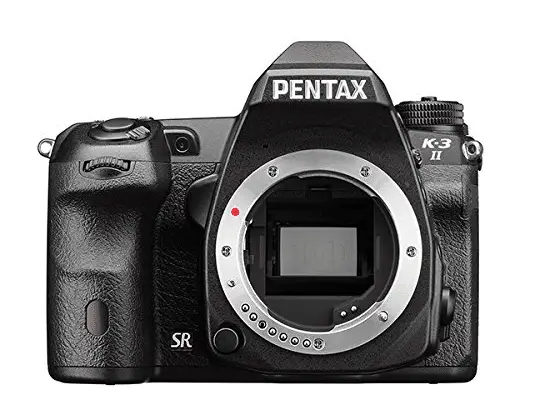
This camera is probably too good to be true as it seems to tick almost all the right boxes. If you are one for adventuring and discovering new things, then the geotag’s accurate feature should appeal to you greatly.
Not only will you get to take high-quality images, but you also get to make memories with the K-3 II by adding the right tags. The K-3 II is an upgrade from the K-3 and comes with impressive specs at an affordable rate.
Features:-
- 24 megapixel
- APS-C sensor type
- The ISO setting is 100-51200
- In-built GPS
- Weather-friendly body built
- Optical viewfinder to improve image quality
- It weighs 800grams
- 3FPS
Pros:-
- Image quality can be improved with the optical viewfinder
- Professional photographers can use it as well
- A highly accurate GPS tracking
- I can take a lot of pictures with high autofocus all through
- High shutter speed to capture moving animals
- Battery life can last to take up to 720 shots
- Astrophotography feature
- Dual storage slots
Cons:-
- It is heavy
- No wireless feature
- It lacks a touchscreen feature
Note: The K-3 II has a lot to live about it; the lack of an in-built flash strobe can be corrected by purchasing one at a very affordable price.
Check Price on Amazon5. Canon EOS Rebel T5i DSLR Camera
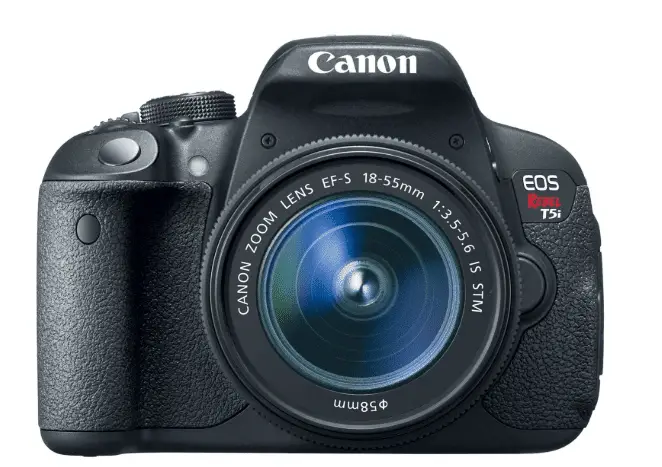
The T5i is a beast in Canon’s Rebel series and is especially great for capturing fast-moving objects of interest. Wildlife photography always happens in a flash, and it is easy to miss the best actions within frames; that is why the T5i is an amazing buy.
With 30FPS in videos, you couldn’t ask for more with that price tag. Although the 18MP resolution is considered low for a few, it is still highly rated among others because the image quality is nothing short of impressive.
Features:-
- 5FPS when setting to viewfinder mode
- It has an articulated LCD touchscreen
- 18MP resolutions
- 60FPS for live-view videos
- Three AF settings are available; manual, auto, and phase detection.
Pros:-
- The image quality you get when used in a low-light situation is very good.
- It gives great detailed video with live video
- It is affordable
- It is lightweight and easy to carry around for long periods
- The fast shutter speed means you hardly miss a thing when you shoot on burst
- It is portable and comfortable to use by both newbies and professionals.
Cons:-
- There is not much improvement from the T4i version
- No inbuilt Wi-Fi
- The battery run time is low.
Notes:- if you are not into the fact that this T5i does not feature many upgrades, you could opt for the T4i version.
Check Price on Amazon6. Sony A7 III
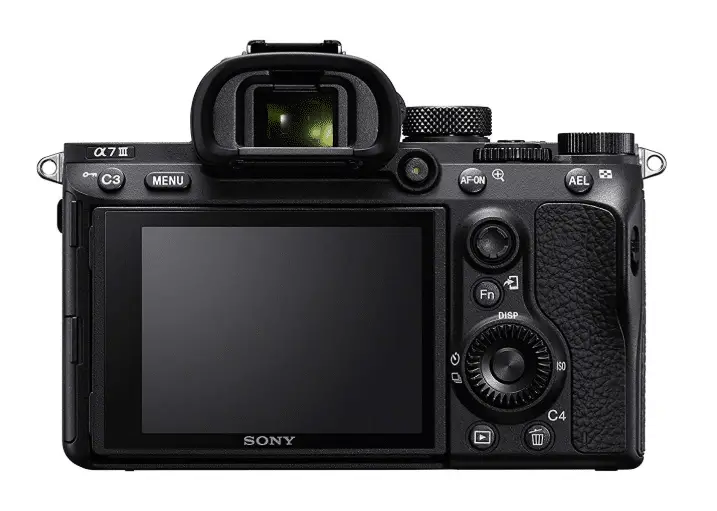
There is a lot to find when you unbox the Sony A7 III camera; of course, a great-quality image will result.
With a fast shutter speed and the ability to capture even minute movements, you will have a great time exploring the outdoors with this camera.
Features:-
- 24MP resolution camera
- It has a full-frame sensor
- Can take full-width 4K video and cropped 6K video
- It has a joystick controller for the autofocus
- Touchscreen is available
- 10FPS with a fast shutter speed
- It is a mirrorless camera
- A battery can last through 710 shots
Pros:-
- High-quality images
- Fast shutter speed for capturing objects in motion
- The 10FPS makes it a top runner in this list as you can capture details of the motion
- Works well with low light
- Autofocus kicks in quickly
- Easy to handle
- Very good video shoot produced
Cons:-
- Some people find it hard to understand the controls
Notes:- This camera is a top runner in this category for daytime and nighttime picture taking; however, you should get used to the controls, especially if you are new to cameras.
Check Price on Amazon
7. Olympus OM-D-E-M1 II
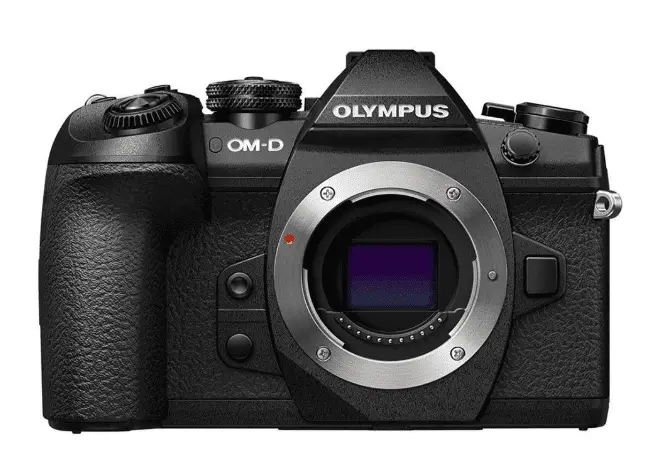
If you aren’t specific in DSLR cameras but need one that will take your wildlife with high image quality, then you got yourself a steal with this one.
The price usually causes a turnaround for many, but it is worth the money if it falls within your budget. The Olympus OM-D_E_MI II mirrorless camera is built to support professionals through their journey.
Features:-
- Mirrorless camera
- It has a 20MP image resolution
- It has five-axis image stabilization
- Can capture 4k videos
- Supports USB 3
- Built to be used in harsh weather conditions
- It weighs 575 grams
- Battery run time can take 440 shots
- ISO rating range of 200 to 25,600
- CMOS sensor type
Pros:-
- It has a fast performance
- It is suitable for taking fast-action shots
- Image stabilization is a high level
- Good options for attachments
- Good ISO range for different lighting situations
Cons:-
- Some professionals do not prefer the MFT format.
Notes:- considering that this camera’s specs are suitable for carrying out professional shots, it is easier to overlook the price tag, especially when looking at the features.
Check Price on Amazon8. Canon 7D Mark II
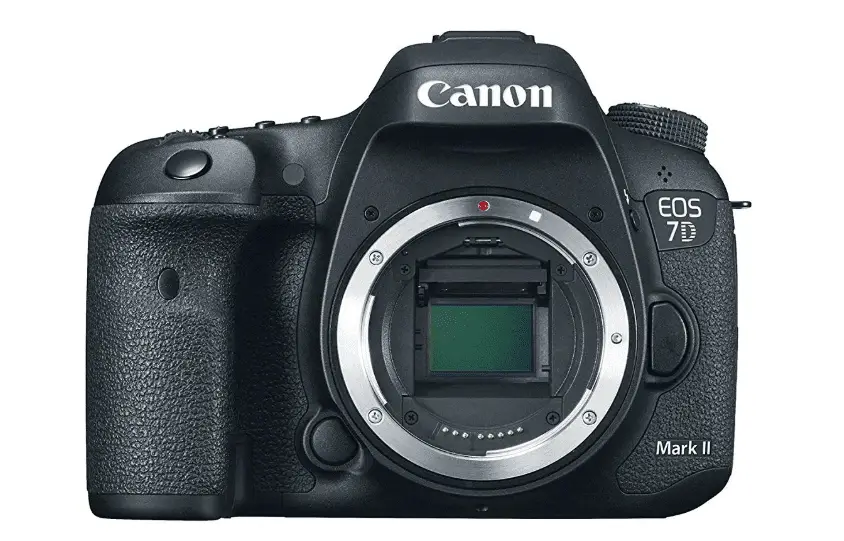
If you need a camera to produce sharper images and work with different light conditions, then you should go for the Canon 7D Mark II. This camera is great for capturing wildlife and any other action-packed events, especially events when you cannot get the focus to pose.
The autofocus feature of the camera as well as highly impressive. However, you must put up with the noisy photos as that is a compromise to provide sharper images.
Features:-
- It is a pro-SLR format camera
- It weighs 1.3kg when coupled
- 5FPS with a high shutter speed
- MP3 and MP4 video format
- The ISO rating is 100 to 16000 and can get up to 51200
- 20MP resolution
- 10FPS due to high shutter speed
- Weather and dust-resistant body materials
Pros:-
- The high shutter speed allows for capturing a smooth and high image
- Up to 10 frames can be captured in one second
- It has great accuracy when capturing motion pictures
- Video quality
- The cropped sensor camera allows for sharp image captures
Cons:-
- No Wi-Fi
- No touchscreen option
Notes:- Overall, this camera is worth every cent of the price.
Check Price on Amazon9. Panasonic LUMIX GH5
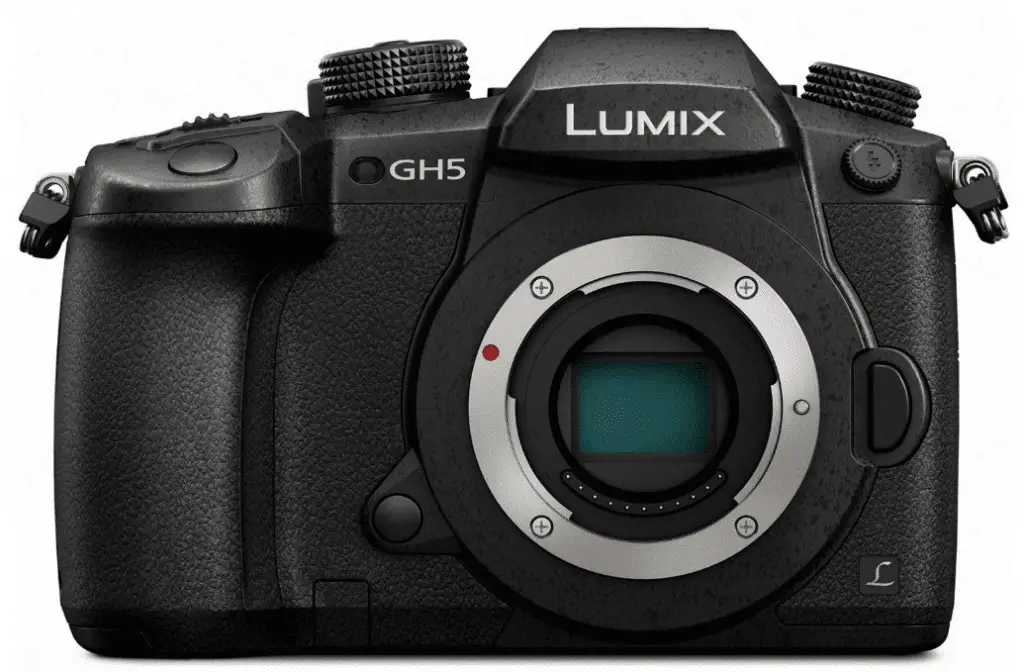
The LUMIX GH5 is a top contender among cameras and a great one for Panasonic.
If you plan to take more pictures than you would be making videos, then you can be sure you will capture even the tiniest moments with this camera. With brilliant FPS and autofocus, getting the slightest movements becomes a breeze.
Features:-
- 20MP camera resolution
- Can shoot 4K video quality
- Produces both 4k and 6k image quality
- Inbuilt WiFi
- Dual I.S.2 for image stabilization and clarity
- Joystick for control
- 225 AF
- 30FPS with a high shutter speed
Below are some of the Pros and Cons of the Panasonic LUMIX GH5 Camera that earned it a spot in our list of Best Affordable Camera For Wildlife Photography.
Pros:-
- It can produce a high-quality video (4K video quality
- The burst feature helps to capture actions in details
- High-quality image production
- Joystick control is easy to use
- Weather-resistant so it is perfect for outdoor use
- Can capture details in a scene
- It is not noisy during use
- Getting it to come on and start shooting requires a very short time.
Cons:-
- When switched to video mode, the autofocus slows down.
Notes:- This camera provides high-quality video and image format, and although it may not be the best, it is highly impressive.
However, it is more impressive with pictures than videos, so we put in our best affordable camera for wildlife photography lists.
Check Price on Amazon
These nine cameras are the best you would get within the budget of below $1000 and below $3500; however, for fun, you can check out more high-end cameras; Nikon D5 ($6589) and Canon EOS-1D X II ($5499).
If you don’t have budget restrictions, these are absolute beasts; even if you are on a budget, there is no reason you cannot know about them.
Best Affordable Camera For Wildlife Photography: What To Consider
Did it get confusing reading through all the specs, not knowing which camera to go with? That is understandable, seeing that while the specs are fantastic, you may not know which of the camera specs is relevant to your chosen passion for wildlife photography.
Just before you buy your camera, a quick look at these buying guides will help you make sure you are making the right choice, especially since you are on a budget.
Built For Working at Night:-
If you are shooting wildlife, you need a camera that can work well with different light settings. With another type of photography, you can stage a scene and alter different things, including the light, but with wildlife, you have to work with what you’ve got.
Because the aim is to shoot the animals without disturbing their natural activities, you cannot necessarily alter the lighting but rather work with natural light. This means that even for shots at night, you need to be able to take clear pictures.
The camera’s ISO rating determines how well it can deal with light situations; high ISO means it is built for bright days, while low ISO means it is built for darker night times.
However, except you are exclusively shooting a species of animal that only comes out during the day or night, you will need a camera that can work well all day. This means you will be looking at the ISO range rather than just a figure; the bigger the range, the more options you have with lighting.
High-Resolution Cameras:-
High resolution is important when photographing wildlife because there are a lot of details to be captured, a bird in a tree close by, a teeny tiny butterfly finding a home in the fields, and many more.
And let us be honest, with wildlife photography, you can’t always be close to your target muse; sometimes, these picture-perfect details appear in unexpected places, making it so much fun.
In every frame, your images are clear, and you can see details even if you zoom and crop. Be sure that to create the best wildlife photos, you will do a lot of zooming and cropping, and you do not want your resulting image to be pixelated and come out blurry. Therefore, the higher the megapixels, the giddier the camera should make you feel.
Capture Speed:-
When taking pictures and videos of wildlife, nothing is exactly trying to pose for you or stay still while you get the right angle and focus. Sometimes the best moments in wildlife happen in seconds, and you have to be camera-ready in less than that time.
This level of unpredictability in wildlife photography makes capture speed a highly desired feature of cameras. The faster the capture speed, the higher your chances of getting everything in a picture.
The capture speed is indicated by the number of frames per second (FPS) a camera has; the higher it is, the more pictures you can take in a second.
The Autofocus of the Camera:-
In wildlife photography, there is always a lot happening in your scene, but that doesn’t mean you are trying to capture everything. To get a good image or video, you need to be able to emphasize your intended subject to stand out among everything.
Doing this is easy when shooting other things that are still, but we all know that in the outdoors, things are hardly still in motion in the order of the day or night.
Therefore, your camera’s autofocus must be brilliant enough to maintain focus even with the movements of whatever you are trying to capture. Autofocus is important whether you are making a video or a photo but what determines its importance is how still your subject can be.
Easy to move around with:-
When shooting wildlife, you spend a lot of time outdoors, usually chasing animals in their natural state, and sometimes this means you are walking through non-motorable paths.
You must go along with gears that will not get you exhausted before you reach your destination, seeing that you will carry it around with you.
Also, lightweight gears are better as they do not tire out the arms, even if you have to shoot continuously for minutes.
The Lenses:-
You often upgrade your gadgets with increased wildlife photography expertise to give you better shots. Often this upgrade isn’t changing the entire camera but just changing the lenses or buying new ones to offer you more options.
If you find yourself sticking to wildlife photography for the long run, you should consider going with a brand that you love in of the ways the features they offer. So that it becomes easy to change the lens as you will need lenses of the same camera brand.
The Price:-
Whether you are starting or a professional just looking to upgrade gadgets, you will be working with a budget. It is important to know firsthand that cameras for shooting wildlife are high-end and generally more expensive than their counterparts.
However, your budget will determine what you will be able to get. Luckily this list comprises budget-friendly cameras that will still perform at an amazing level for any stage in your photography career, so feel at ease picking from any of them listed above.
Your level of expertise:-
With more skill comes higher demand from your camera. Cameras that will be good enough for beginners will not8 necessarily serve more professional photographers. Therefore, your expertise will indeed guide you in choosing a camera.
The key here is that, since you are working with a budget, you need to buy something that serves you, not the absolute best in the industry, as you can always improve as you upgrade.
📗FAQs
Below are a couple of queries everyone expects to answer, and I did include the same for my readers.
What kind of camera should I look for in wildlife photography?
Regarding wildlife photography, the ideal camera has a fast autofocus system, high shutter speed, and good image quality. Look for cameras with a high frame rate, a large sensor, and a wide ISO range. Weather sealing is also important if you plan to shoot in harsh conditions.
Here’s a table outlining some important features to consider when choosing a camera for wildlife photography:-
| Feature | Explanation |
|---|---|
| Sensor Size | A larger sensor size can capture more light and detail, producing higher quality images. Look for APS-C or full-frame sensors. |
| Image Quality | Look for a camera with a high resolution and low noise at high ISO settings to produce sharp, clear images. |
| Autofocus System | Wildlife can be fast-moving, so a camera with a fast and accurate autofocus system is essential. Look for a camera with a high number of autofocus points and advanced tracking capabilities. |
| Burst Speed | A camera with a high burst speed is essential to capture the perfect moment. Look for a camera that can shoot at least 5 frames per second or more. |
| Weather Sealing | Wildlife photography often requires shooting in unpredictable weather conditions, so a camera with weather sealing will protect it from moisture and dust. |
| Lens Compatibility | The lens you use is just as important as the camera itself. Look for a camera with a wide range of lens options and compatibility with telephoto lenses. |
| Size and Weight | Wildlife photography can require long hikes and extended periods holding the camera, so consider a camera that is lightweight and easy to carry. |
Is Canon or Nikon better for wildlife photography?
Both Canon and Nikon have excellent cameras for wildlife photography, so it ultimately comes down to personal preference.
However, Canon’s autofocus system is generally considered better for fast-moving subjects, while Nikon’s dynamic range and low-light performance are often superior.
Which Canon camera is best for wildlife photography for beginners?
The Canon EOS Rebel T8i is a great camera for beginner wildlife photographers. It has a 24.2-megapixel APS-C sensor, a 45-point autofocus system and can shoot up to 7 frames per second. It also has a vari-angle touchscreen LCD and built-in Wi-Fi for easy sharing.
here’s a table comparing some of Canon’s entry-level DSLR and mirrorless cameras that are suitable for wildlife photography beginners:-
| Canon Camera Model | Key Features | Price Range |
|---|---|---|
| Canon EOS Rebel T7i | 24.2 MP APS-C CMOS sensor, 45-point all cross-type AF system, 6 fps continuous shooting, built-in Wi-Fi and Bluetooth | $649-$799 |
| Canon EOS 80D | 24.2 MP APS-C CMOS sensor, 45-point all cross-type AF system, 7 fps continuous shooting, Dual Pixel CMOS AF, built-in Wi-Fi and NFC | $999-$1,199 |
| Canon EOS 90D | 32.5 MP APS-C CMOS sensor, 45-point all cross-type AF system, 10 fps continuous shooting, Dual Pixel CMOS AF, built-in Wi-Fi and Bluetooth | $1,199-$1,399 |
| Canon EOS 7D Mark II | 20.2 MP APS-C CMOS sensor, 65-point all cross-type AF system, 10 fps continuous shooting, Dual Pixel CMOS AF, built-in GPS and Wi-Fi | $1,499-$1,799 |
What is the best low price camera for bird photography?
The Nikon COOLPIX P1000 is a great low-price option for bird photography. It has a 125x optical zoom lens and shoots 4K UHD video. It also has a built-in electronic viewfinder and a tilting LCD screen for easy composition.
What is the best camera for wildlife film making?
The Sony Alpha A7S III is an excellent camera for wildlife filmmaking. It has a 12.1-megapixel full-frame sensor, can shoot 4K video up to 120 frames per second, and has a 9.44 million-dot EVF for precise composition. It also has a wide ISO range for shooting in low light.
What is the best image quality for wildlife photography?
Regarding image quality for wildlife photography, a camera with a high-resolution sensor and good low-light performance is ideal. Look for a camera with at least 20 megapixels and a wide ISO range.
Is DSLR or mirrorless better for wildlife photography?
DSLR and mirrorless cameras have advantages for wildlife photography, but mirrorless cameras are often lighter and more compact, making them easier to carry around in the field. They also tend to have faster autofocus systems and can shoot at higher frame rates.
How many megapixels is good for wildlife photography?
A camera with at least 16 megapixels is good enough for wildlife photography. However, a higher megapixel count can allow for more detailed images and flexibility when cropping in post-processing.
What is the best budget Nikon for wildlife?
The Nikon D3500 is a great budget option for wildlife photography. It has a 24.2-megapixel sensor, can shoot up to 5 frames per second, and has an 11-point autofocus system. It also has a long battery life and is lightweight and easy to handle.
Is RAW or JPEG better for wildlife photography?
RAW files offer more flexibility in post-processing, allowing you to adjust things like exposure and white balance without losing image quality.
However, JPEGs are more compressed and easier to handle, making them a good option for photographers who don’t want to spend a lot of time editing their images.
Which lens is best for wildlife photography?
A telephoto lens is generally best for wildlife photography, with a focal length of at least 300mm. Look for lenses with image stabilization, fast autofocus, and good low-light performance.
The Canon EF 100-400mm f/4.5-5.6L IS II USM and the Nikon AF-S NIKKOR 200-500mm f/5.6E ED VR are excellent options.
Here’s a table comparing some popular lenses that are commonly used for wildlife photography:-
| Lens Model | Focal Length | Aperture Range | Image Stabilization | Autofocus | Weight | Price (approx.) |
|---|---|---|---|---|---|---|
| Canon EF 100-400mm f/4.5-5.6L IS II USM | 100-400mm | f/4.5-5.6 | Yes | Yes | 1.64 kg | $2,000 |
| Nikon AF-S Nikkor 80-400mm f/4.5-5.6G ED VR | 80-400mm | f/4.5-5.6 | Yes | Yes | 1.58 kg | $2,300 |
| Sony FE 200-600mm f/5.6-6.3 G OSS | 200-600mm | f/5.6-6.3 | Yes | Yes | 2.1 kg | $2,000 |
| Tamron SP 150-600mm f/5-6.3 Di VC USD G2 | 150-600mm | f/5-6.3 | Yes | Yes | 2.01 kg | $1,400 |
| Sigma 150-600mm f/5-6.3 DG OS HSM Contemporary | 150-600mm | f/5-6.3 | Yes | Yes | 1.93 kg | $1,000 |
The Canon EOS Rebel T7i is a great amateur camera for wildlife photography. It has a 24.2-megapixel sensor, a fast autofocus system with 45 cross-type AF points, and can shoot up to 6 frames per second. It also has a vari-angle touchscreen LCD and built-in Wi-Fi and Bluetooth for easy sharing.
What is the minimum zoom for wildlife photography?
There is no set minimum zoom for wildlife photography, as the necessary zoom depends on the size and proximity of the subject. However, a lens with a focal length of at least 300mm is generally recommended.
Is 400mm enough for wildlife photography?
A 400mm lens can be enough for wildlife photography in certain situations, but a longer lens may be necessary for smaller or more distant subjects. It also depends on the specific camera and lens you are using and the shooting conditions.
How do I choose a budget camera?
When choosing a budget camera, look for a model with the features you need for the type of photography you plan to do.
Consider factors like image quality, autofocus system, ISO range, and shooting speed. Look for reviews and comparisons of different models to find the best option for your needs and budget.
Which camera brand is the cheapest?
No one camera brand is consistently the cheapest, as prices can vary widely depending on the model and features. However, some budget-friendly camera brands include Canon, Nikon, and Sony.
Is iPhone good for bird photography?
The iPhone can be used for bird photography, but it may not produce the same image quality as a dedicated camera with a telephoto lens. However, the iPhone’s ease of use and accessibility can make it a good option for casual bird photography.
Is zoom better than prime for wildlife photography?
Both zoom and prime lenses have their advantages for wildlife photography. Zoom lenses offer versatility and convenience, allowing you to adjust your focal length as needed quickly. Prime lenses tend to be sharper and faster, with wider apertures allowing better low-light performance.
What are the best animal cameras?
Many cameras are well-suited for animal photography, depending on the specific type of photography you plan to do. Some popular options include the Nikon D850, Canon EOS 1DX Mark III, and Sony A9 II.
What camera is best for zoos?
The Canon EOS 80D is a good option for zoo photography. It has a 24.2-megapixel sensor, a fast autofocus system, and can shoot up to 7 frames per second. It also has a vari-angle touchscreen LCD and built-in Wi-Fi and NFC for easy sharing.
How many FPS do you need for wildlife photography?
The necessary FPS (frames per second) for wildlife photography depends on the subject and shooting conditions. However, a camera that can shoot at least 5-6 FPS is generally recommended.
Is a bridge camera better than a DSLR for wildlife?
Bridge cameras can be a good option for wildlife photography, as they offer many features and zoom capabilities in a compact package. However, DSLRs offer better image quality and faster autofocus systems, making them better suited for more advanced wildlife photography.
Why are mirrorless cameras cheaper than DSLR?
Mirrorless cameras are generally cheaper than DSLRs because they don’t require DSLRs’ complex mirror and prism systems. This makes them lighter and more compact, with fewer moving parts that can break or wear out over time.
Why I prefer DSLR over mirrorless?
Some photographers prefer DSLRs over mirrorless cameras because they have a longer track record and more established systems. DSLRs also tend to have longer battery life and a wider range of lenses and accessories.
Additionally, some photographers find that a DSLR’s larger size and weight can help them stabilize their shots.
Is manual or autofocus better for wildlife photography?
Autofocus is generally better for wildlife photography, as it lets you quickly and accurately track moving subjects.
However, manual focus can be useful in certain situations where autofocus struggles, such as in low light or shooting through obstacles like grass or branches.
What is the best lens length for wildlife?
Wildlife photography’s best lens length depends on the subject and shooting conditions. However, a lens with a focal length of at least 300mm is generally recommended, with longer lenses being better for smaller or distant subjects.
here’s a table on what is the best lens length for wildlife photography:-
| Lens Length | Best for |
|---|---|
| 300mm or less | Good for small animals or birds at close range |
| 300-500mm | Ideal for general wildlife photography and birding |
| 500-800mm | Great for distant or small wildlife, such as birds of prey or small mammals |
| 800mm or more | Ideal for extreme close-ups of small or distant wildlife |
Is a 600mm lens good for wildlife?
A 600mm lens can be a good option for wildlife photography, particularly for smaller or distant subjects. However, it may be too long for larger subjects or when shooting in tighter spaces.
Is 200mm enough for wildlife photography?
A 200mm lens may be enough for wildlife photography, particularly for larger or closer subjects. However, a longer lens may be necessary for smaller or distant subjects.
Do you need binoculars for wildlife photography?
Binoculars can be useful for scouting wildlife and finding subjects to photograph, but they are not necessary for photography. However, some photographers may find them helpful for tracking subjects and adjusting their composition.
What is the best used Nikon for wildlife?
The Nikon D7100 is a good used option for wildlife photography. It has a 24.1-megapixel sensor, a fast autofocus system, and can shoot up to 6 frames per second. It also has weather sealing and a long battery life.
Why JPEG is sharper than RAW?
JPEG images can appear sharper than RAW files because they are processed in-camera, with sharpening and other adjustments applied automatically.
However, RAW files offer more flexibility in post-processing and can often be sharpened to a greater degree without introducing artifacts or noise.
Is JPEG sharper than RAW?
JPEG images can appear sharper than RAW files, but this is not always the case. RAW files offer more flexibility in post-processing and can often be sharpened to a greater degree without introducing artifacts or noise.
Is RAW more sharper than JPEG?
RAW files are not inherently sharper than JPEGs, but they offer more flexibility in post-processing, allowing you to sharpen and adjust the image as needed.
What is the price of wildlife camera lens?
The price of a wildlife camera lens can vary widely depending on the brand, model, and focal length. However, a high-quality telephoto lens suitable for wildlife photography can cost anywhere from several hundred to several thousand dollars.
Is a telephoto lens good for wildlife?
A telephoto lens is generally considered the best type of lens for wildlife photography, as it allows you to get close-up shots of subjects that may be far away or difficult to approach. Look for lenses with image stabilization, fast autofocus, and good low-light performance.
What do wildlife photographers take photos of?
Wildlife photographers take photos of various subjects, including birds, mammals, reptiles, insects, and aquatic life. Some photographers specialize in specific types of wildlife, such as big cats, primates, or marine life.
Is 300 mm good for wildlife photography?
A 300mm lens can be good for wildlife photography in certain situations, particularly for larger or closer subjects. However, a longer lens may be necessary for smaller or distant subjects.
Is 500 mm enough for wildlife?
A 500mm lens can be enough for wildlife photography in many situations, particularly for medium to large-sized subjects. However, a longer lens may be necessary for smaller or more distant subjects or if you want to get more detailed shots of your subject.
Is 300mm enough for bird photography?
A 300mm lens may be enough for bird photography in certain situations, particularly for larger birds or relatively close birds. However, a longer lens may be necessary for smaller birds or birds farther away.
What aspect ratio is best for wildlife?
The best aspect ratio for wildlife photography depends on personal preference and the subject you photograph. However, many photographers prefer a 3:2 aspect ratio, as it closely matches the aspect ratio of many camera sensors and allows for more flexibility when cropping.
Is 600mm enough for birds?
A 600mm lens can be enough for bird photography in many situations, particularly for larger birds or relatively close birds. However, a longer lens may be necessary for smaller birds or birds farther away.
How many times is zoom 600mm?
The zoom factor of a 600mm lens depends on the focal length of the lens at its widest setting. For example, if the widest setting is 200mm, the zoom factor would be 3x (600 divided by 200). However, many 600mm lenses are prime lenses, meaning they do not zoom.
Conclusion
In conclusion, finding the best affordable camera for wildlife photography can be challenging, but it doesn’t have to break the bank.
By considering important factors such as image quality, lens options, and durability, you can make an informed decision and capture stunning photos of nature’s beauty without spending a fortune.
After researching and analyzing various options on the market, we have identified several top contenders for the title of the best affordable camera for wildlife photography.
These cameras offer exceptional features and capabilities at a reasonable price point, making them accessible to amateur and professional photographers alike.
Remember, investing in a quality camera can enhance your wildlife photography experience and help you create stunning images that will last a lifetime.
We hope this article has helped you search for the best affordable camera for wildlife photography and wish you happy shooting!