
























Boxing is undeniably one of the world’s most popular combat sports. Mastering art is full of challenges and requires hard work, dedication, and strength.
As a boxing trainer, you feel confident, burn many calories, and get fit. You can learn the art of boxing at a training center or even by hiring a private boxing instructor.
Nowadays, joining a boxing training center is very hard for various reasons. But fortunately, you can solve this problem by honing your boxing skills remotely, right from the comfort of your home!
Dozens of boxing apps are available for iOS and Android users, serving multiple useful purposes.
From offering multiple techniques to master, recording your training duration, to tracking your overall progress, you can find these apps more than handy to get your boxing learning journey started, even without needing a trainer.
Let’s find out more in detail about these amazing apps.
Best Boxing Apps – Our Top Pick 👌👌
1. Heavy Bag Pro Boxing Training & Workout App
If you find it difficult to start your boxing training journey, here is a very handy combat sports app. Download the app, press the start button, and you are good to start!
Get the app; you can slowly but steadily master more than 100 new and unique boxing combinations and start leveling up your skills.
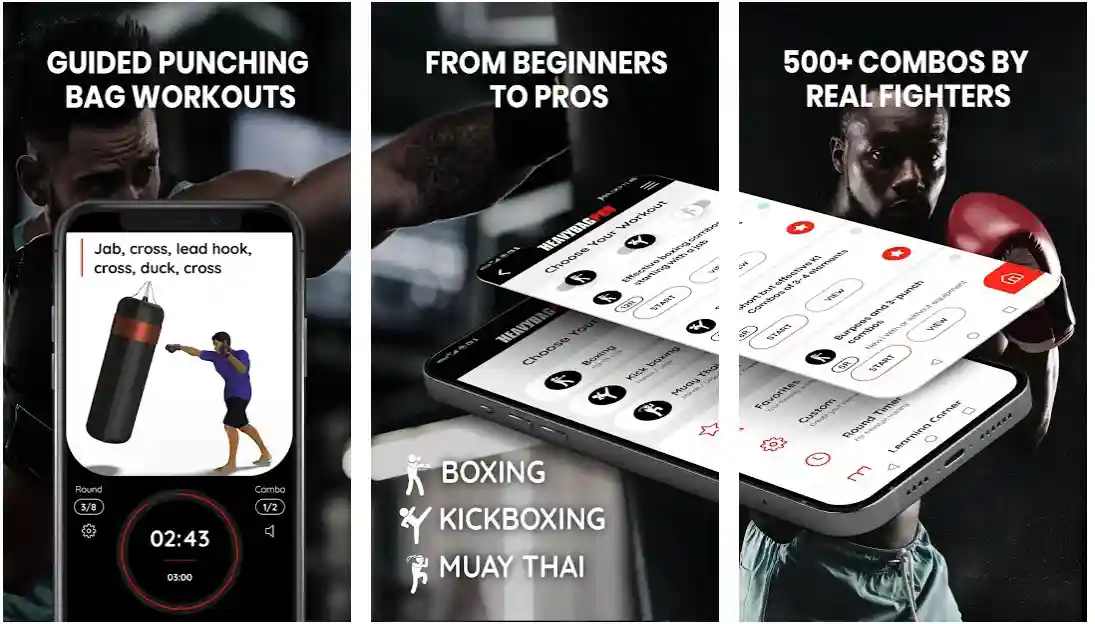
One of the most reliable boxing training apps for shadowboxing and punching bag practice, the app has been used and trusted by many rookie boxers worldwide.
You never run out of ideas when you use the boxing training & workout app for your boxing drills!
It is not short of a personal trainer and effectively guides your heavy bag training. Are you finding no motivation to start your session? How about exploring some fun and interesting boxing drills?🧐
The app is more than suitable for boxing enthusiasts who are always busy honing their skills.
While a heavy bag can be very effective, it’s not perfect for everyone and can be disastrous for those who have no idea about correct postures, angles, punching speed, and more.
Features of Boxing Training & Workout App:-
- More than suitable for both beginners and professionals
- 500 plus boxing combinations designed by real fighters
- Where is simple, easy to follow, and effective
- Diverse and fully customizable training
- Simple, round, ad-free timer
Devices – Android and iOS
Ratings on Apple Store – 5.0 / 5 | Ratings on Google Play Store – 4.7 / 5
Download the App from Google Play Store
Download the App from Apple App Store
2. Shadow Boxing Workout App
Practice boxing with one of the most innovative boxing apps, anywhere, anytime, and without even boxing gear! The app challenges you to execute various exercises and movements to master the art of boxing.
Pick a suitable time, open the app, and start training! Get professional help from the app, train yourself, and improve your boxing skills at home, the gym, or even a training center.
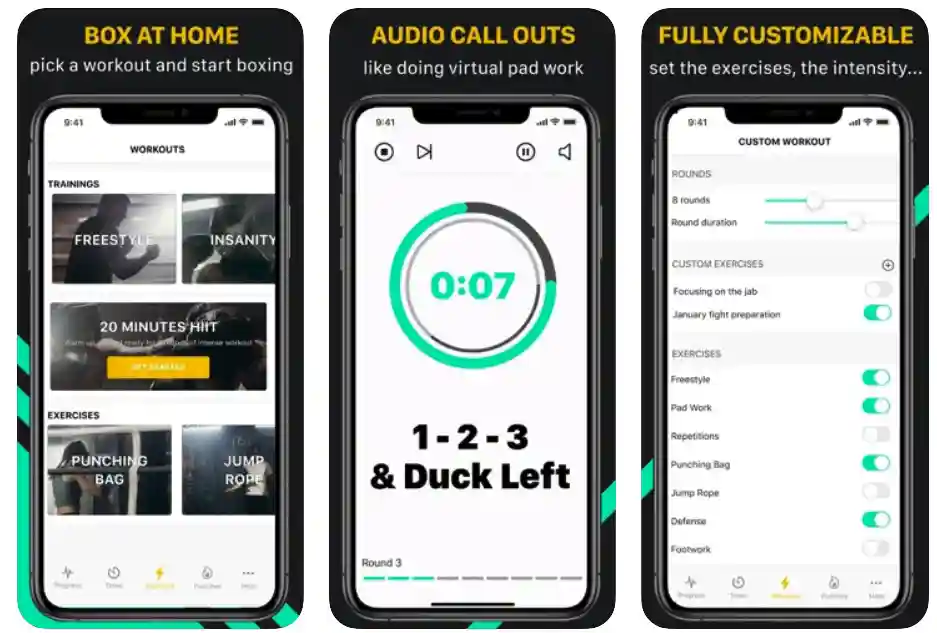
Check out multiple unique ways of mastering your boxing skills with the help of a virtual boxing coach. In addition to exploring already available sessions, you can even build your customized workouts.
The app allows you to choose a duration and pattern according to your preferences and ease. It’s up to you how much time you want to devote to your boxing practice sessions.
The app is featured will predesigned intense shadowboxing and punching workout sessions for both beginners and professionals.
Beginners can enjoy a wide range of easy-to-execute movements, and professionals can challenge them to improve their skills further. And the best part is you don’t need any equipment to start your learning sessions.
Features of Shadow Boxing Workout App:-
- Select a workout based on your preferences
- Start boxing at home without any equipment
- Fully customizable to select the intensity and exercises
- Works on all types of heavy bags
- Many exercises focus on combinations, defense, and movement
Devices – iOS Devices, Including iPhone and iPad
Ratings on Apple Store – 4.9 / 5
Download the App from Apple App Store
3. FightCamp Home Boxing Workouts
FightCamp is one of the most effective yet enjoyable boxing apps that allows you to learn boxing skills whenever possible. You get a growing library of more than 1000 boxing and kickboxing skills to become better every day.
There are multiple punch goals featured in each workout so that you can understand how you need to push yourself hard.
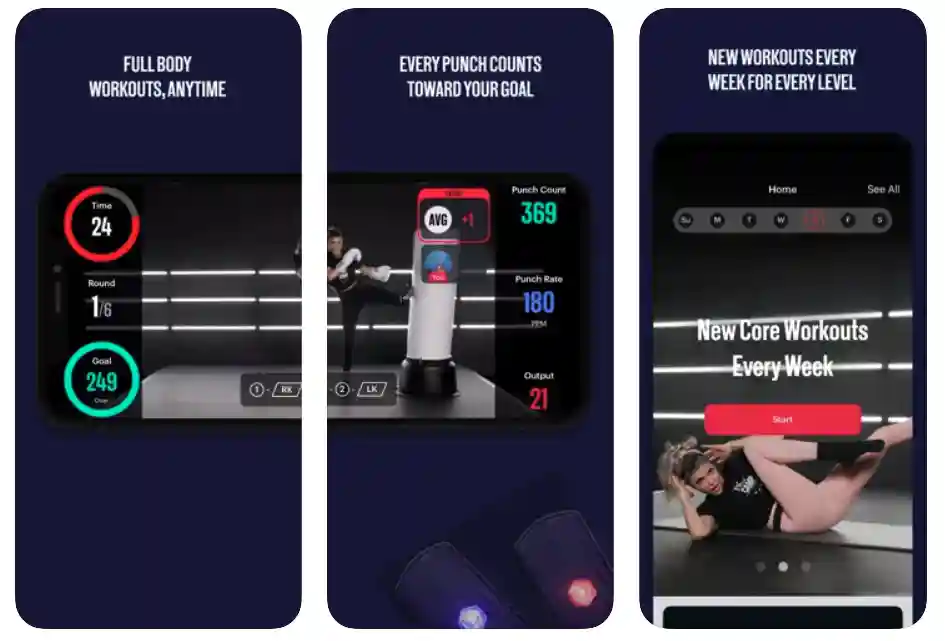
You can also pair the app with wearable punch trackers and track all your workout sessions and statistics in real-time, on-screen. You can track your punch speed, punch count, and total output as easily as you can think.
After every workout session, you can check out the leaderboard and analyze your performance based on the statistics collected by thousands of other boxing enthusiasts.
Keep competing with your previous performances, fight against other fighters, and finally, try the versus mode feature to fuel your competitive side.
The app also features highly interactive punch goals for every round, effective HIIT-style workouts, and a detailed summary of your progress with extensive data.
Instructional paths to help you with the basics of both boxing and kickboxing are also available in the app.
Features of FightCamp Home Boxing Workouts:-
- Highly efficient HIIT-style workout sessions for enhancing the learning experience
- Updated every week with new boxing and kickboxing workouts
- Track all your workouts in real-time
- Syncs with various wearable devices
- Inspires you with achievements and badges
Devices – iOS Devices, Including iPhone and iPad
Ratings on Apple Store – 4.9 / 5
Download the App from Apple App Store
4. Boxing Timer: Boxing Interval Training Video Timer
Track your boxing training progress effectively with one of the most exceptional boxing apps – Boxing Timer!
With the app’s simple and easy user interface, you can easily track your boxing, Tabata workouts, and HIIT.
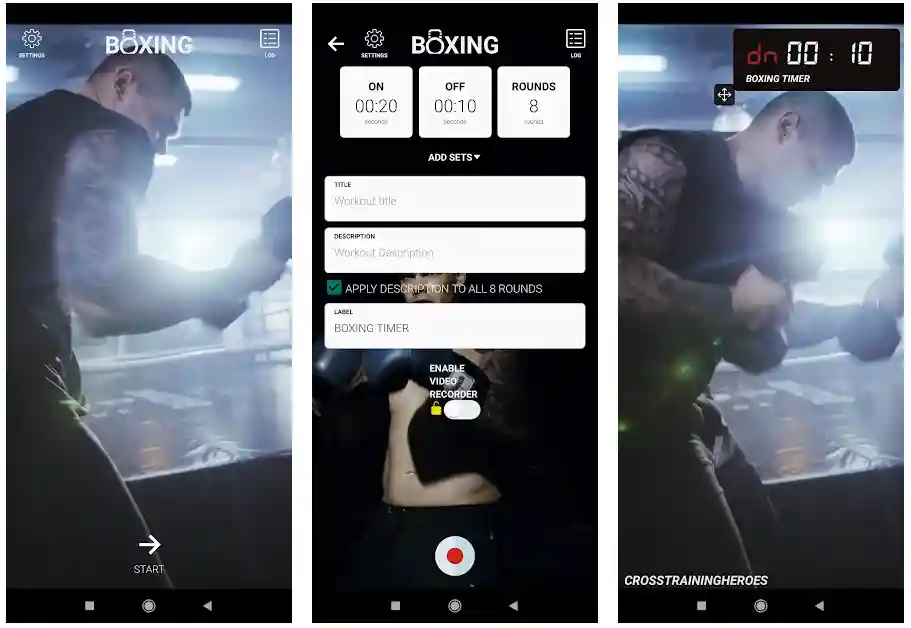
Using the app, you can also figure out your entire training session without any problem. Set the work time, set the number of rounds, set the rest time, and do whatever you want with a single app!
You can’t only record your workouts but can also check out the replays and reviews and enhance your overall performance.
Watch your movements and know what changes you have to make to get a better version of yourself. Share your workouts with your fitness trainer, and get helpful feedback. Apply cool filters on social media to flaunt your fitter and more attractive body.
Take selfies and pictures before or after your workouts, review them to track your progress, and repeat them correctly.
An exceptional boxing workout tracker keeps you on track with whatever you try. Instead of moving ahead in the darkness, use the app to master your skills and movements correctly!
Features of Boxing Timer:-
- Record your boxing drills and track the progress
- Check out various effective ways to improve your practice
- Simple, easy, and very light timer
- Also designed for Tabata, WOD, and HIIT
- It enables you to apply cool filters to your workout videos
Device – Android
Ratings on Google Play Store – 4.8 / 5 | 10,000+ Downloads
Download the App from Google Play Store
5. Boxing Interval Timer
Timing matters greatly in every sport and is paramount, especially in boxing. If you are good enough with your timing, you can overcome different types of hustles on your way to becoming a competitive boxer.
And, if you are struggling to get your timing right, the Boxing Interval Timer is the app you should look at!
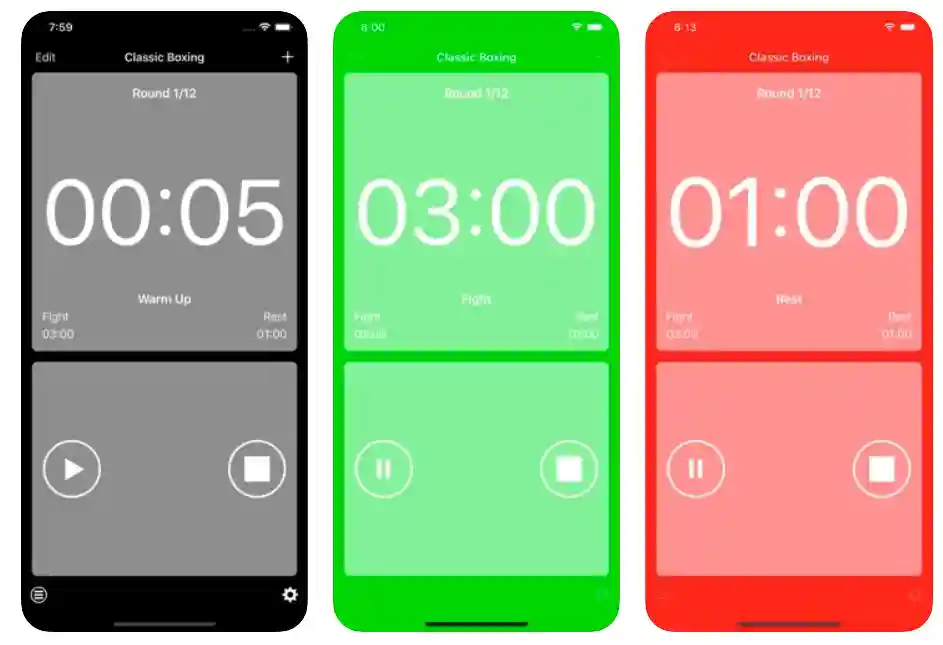
It’s an innovative round-timer design exclusively for training in boxing and wrestling, martial arts, mixed martial arts, kickboxing, and more.
The app is simple, effective, modern, and works perfectly with all HIIT training techniques.
With the app owner, you get fully customizable times and sounds. Set alarms, countdowns, and timers for different parts of training, including preparation, rounds, warning, and rest.
Features like inner ground alerts, the color indication of different phases, automatic screen blink, background functionality, and more make Boxing Interval Timer one of the most preferred boxing apps, especially for those trying to take baby steps into boxing or other combat sports.
Stay on top of your training sessions with accurate timing, avoid overexertion, and learn boxing the right way.
Features of Boxing Interval Timer:-
- Fully configurable timers and sounds
- Enables you to set timers for different stages of training
- Create your customizable profile for various sports
- Colour indication of different training phases
- Automatically runs in the background
Devices – iOS Devices, Including iPhone and iPad
Ratings on Apple Store – 4.8 / 5
Download the App from Apple App Store
6. PUMATRAC Run, Train, Fitness – best boxing training apps
Not a dedicated boxing app, but it is right there with some of the best available. PUMATRAC is a smart sports tracker app that keeps you motivated for fitness drills, running, outside-the-box exercise options, and much more.
You can consider the app as your trainer, featured with high-quality, enjoyable fitness content. More than 120 workouts across different categories are designed to support your requirements.
The app also adds add-on tools for perfectly scheduling workouts, tracking your progress, and accessing exclusive global sports events.
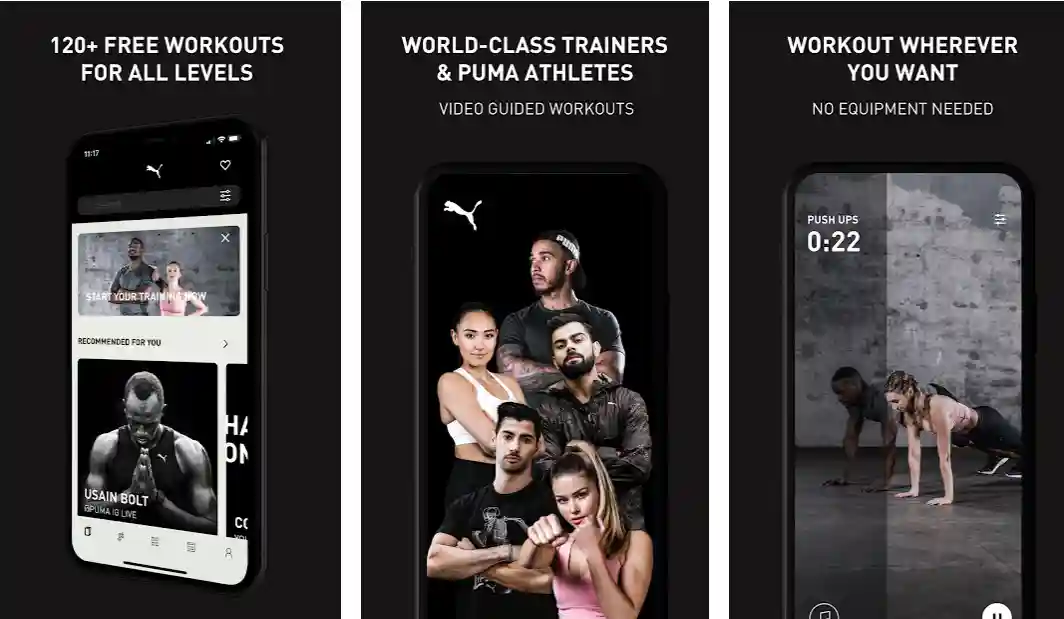
Learn the art of boxing and kickboxing from the best trainers known for their unique skills and styles. It works like a very smart learning engine and offers you personalized workouts from an extensive library.
The more you train with the app, the better results you get! Start improving yourself, get stronger and faster, and achieve your career goals in boxing. Stay in touch with premier global athletes, and learn how these extraordinary people train.
Check out the inspiring stories of leading runners, boxers, cricketers, drivers, and more. Keep yourself motivated with highly effective yet easy-to-follow workouts.
Features of PUMATRAC Run, Train, Fitness:-
- More than 120 workouts for different levels
- Get connected with the world-class trainers
- Workout wherever and whenever you want
- Running plus training to improve your body
- Monthly challenges to master different skills
Devices – Android and iOS
Ratings on Apple Store – 4.8 / 5 | Ratings on Google Play Store – 4.5 / 5
Download the App from Google Play Store
Download the App from Apple App Store
7. PunchLab: Home Boxing Workouts
PunchLab is among the premier boxing apps featured with action-packed interactive boxing workouts exclusively curated by world-class sports coaches.
With the app, you can innovatively and effectively track the power of your punches like never before. Select from a wide range of martial arts and combat sports workouts for boxing, kickboxing, and MMA, and add another combat sport. Follow multiple audio workouts to stay motivated even when you are on the go!
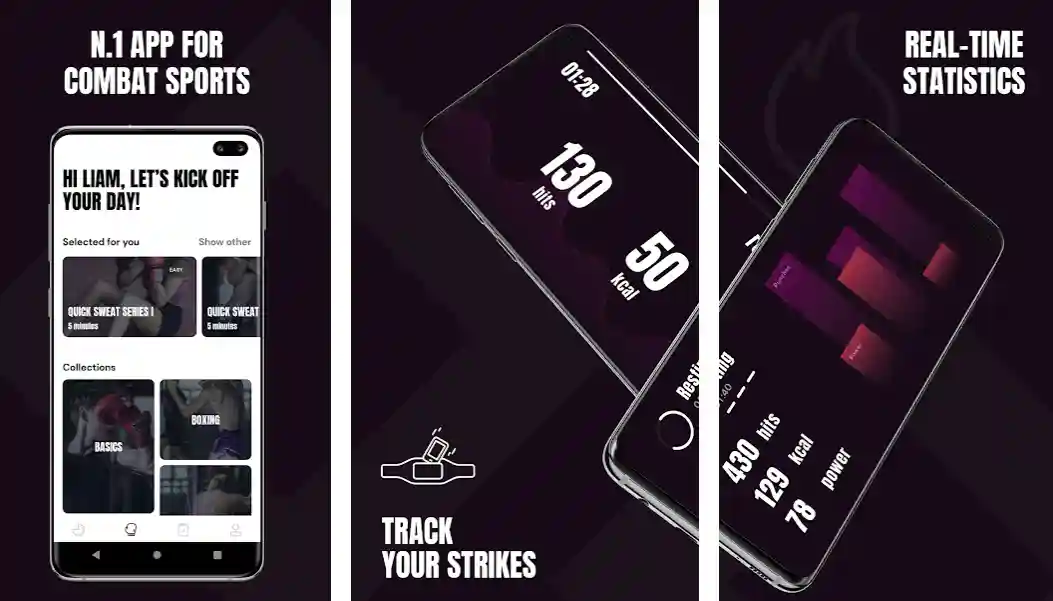
You can easily mount your phone on your punching bag and effectively follow the basic details of your workouts, including live statistics of force, punch power, punch counter, and more.
Work out like a professional without compromising your body. Starting with the app is as easy as you can think! Set up the app, explore different techniques and movements, and start working on them.
Using this app, you don’t have to download a boxing timer separately. It also features an integrated boxing timer that lets you track the duration of your workouts and train in the right direction.
Features of PunchLab:-
- One of the unique apps for combat sports
- Track your punches and strikes and train correctly
- Real-time statistics to keep you motivated
- Presence of striking workouts to master your skills
- Hundreds of video exercises across different categories
Devices – Android and iOS
Ratings on Google Play Store – 4.7 / 5 | Ratings on Apple Store – 4.6 / 5
Download the App from Google Play Store
Download the App from Apple App Store
8. Kickboxing Fitness Training
How can kickboxing completely transform your body and life? I am sure you have some idea, and that’s why you are reading this!
How about getting a satisfactory answer to this question using one of the leading boxing apps? You can unearth all the facts and whatever you want to learn about various combat sports, including boxing and kickboxing.
The app’s high-intensity workout challenges are designed for beginners and elite athletes. Improve your movements, master self-defense, get better with your flexibility and coordination, and burn calories like a pro!
It can be a wonderful app for you, even if you want to get some help with weight loss. This app can make things interesting if you get bored with old-school training techniques!
Explore a wide range of techniques, try mastering them, and evolve as a well-trained kickboxing professional. Tips and tricks in the app are designed to strengthen your legs, knees, shoulders, punches, and other parts of your body.
As professionals design all the techniques well, you don’t need to worry about injuring yourself, as everything is explained perfectly.
Features of Kickboxing Fitness Training:-
- Extensive training program for different difficulty levels
- A wide range of kickboxing techniques designed by experts
- Track your calorie-burning trend like a professional
- No equipment or gym is required whatsoever
- It enables you to perform workouts anytime and anywhere
Devices – Android and iOS
Ratings on Apple Store – 4.7 / 5 | Ratings on Google Play Store – 4.4 / 5
Download the App from Google Play Store
Download the App from Apple App Store
9. Boxtastic: Bag / Shadow Boxing Home HIIT Workouts
Boxtastic is one of the most fantastic boxing apps for shadowboxing and boxing workouts on the punch bag. An excellent HIIT-included training program that perfectly suits your level and requirements.
The app’s virtual trainer will help you master your movements, punch combinations, and other skills, just like a professional trainer.
Practice your punching skills, improve fitness, and lose weight through multiple customizable workouts that fit your requirements perfectly. You should try this app at least once for so many reasons!
If you’ve been bored with those old-school boxing training methods, the app easily generates unique, random boxing bouts every time.
Exercise and punches commands are called at different durations and help you get better without feeling fatigued.
In addition to traditional, fixed punches, you can also work out different types of modern combinations and skills to improve the boxer in you!
There are as many as 16 bouts to explore, and you have many different ways to elevate yourself daily.
Features of Boxtastic:-
- Train boxing like a professional with various techniques and combinations
- 16 unique and highly effective boxing bouts
- Shadowboxing and heavy bag workouts
- Simple, easy, and smooth user interface
- Random punch combinations to avoid boredom
Device – Android
Ratings on Google Play Store – 4.6 / 5 | 1,00,000+ Downloads
Download the App from Google Play Store
10. Boxing Star
How about mastering your boxing skills in a very interesting, immersive gaming environment? Boxing Star teaches you many boxing skills through highly entertaining and competitive boxing games, unlike most boxing apps.
With the app, you can test your skills, challenge power, and show your opponent why you are one of the best! Experience a wonderful journey to become the next boxing star.
Start from the streets, and elevate yourself towards greatness in boxing. Face some of the wackiest and wild boxing characters, showcase your fighting skills, and win multiple battles.

Improve your punches, movements, kicks, and other aspects of boxing using your arsenal of uppercuts, hooks, and jabs! Select a boxer of your choice, train it, and customize it the way you want.
Develop your smart boxer based on your unique fighting style, add different skills, and stay on the leaderboards.
Check out various daily, weekly, and monthly events and missions, and be a part of league missions to clean amazing rewards! Always stay on top of all events, and become the best among your opponents.
To summarize, Boxing Star is the ultimate boxing game you should look at!
Features of Boxing Star:-
- A highly immersive boxing game with multiple gaming modes
- Challenges you to test your skills
- Train and customize your boxer the way you want
- Check out the league mode, and fight with other real-life players
- Multiple events and missions to explore
Devices – Android and iOS
Ratings on Apple Store – 4.6 / 5 | Ratings on Google Play Store – 4.5 / 5
Download the App from Google Play Store
Download the App from Apple App Store
11. Boxx: Workouts & Fitness Plans
Boxx is the ultimate home training and boxing app and features a wide range of on-demand fitness classes. Not only boxing, but you can also master various other skills, including cardio, strength, yoga, and more, with the app.
Whether you want to learn the art, destress yourself, lose weight, boost overall confidence, or increase your energy level, the app has covered you!
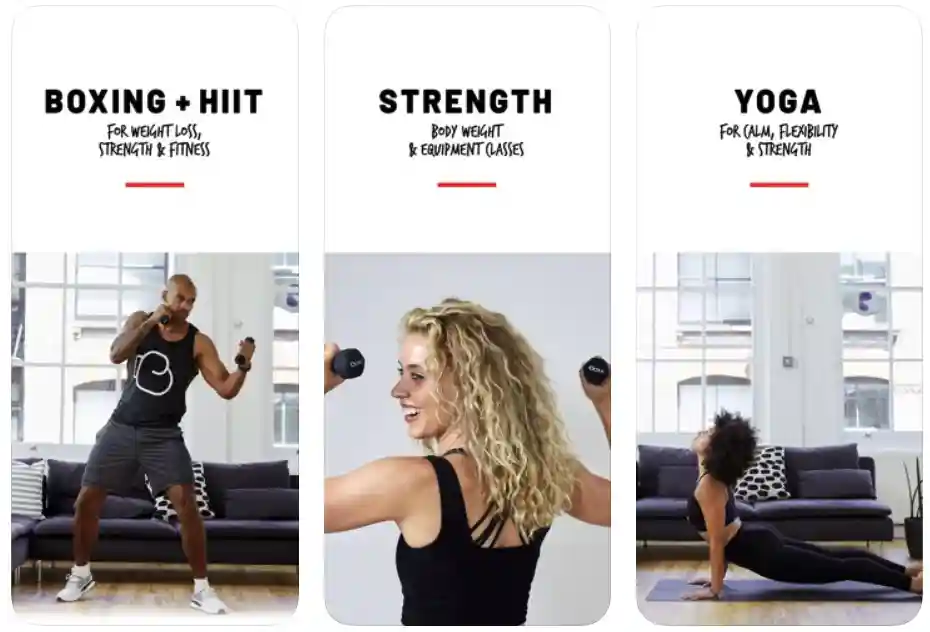
Multiple fitness training experts on the app are working tirelessly to make you feel stronger, fitter, and final.
Choose a training class based on your preferences, and elevate yourself to a better version.
Multiple technique videos based on workouts and movements are available for free. And, if you want to get access to the premium content, you have the option of purchasing the paid version.
The premium content in the app includes more than 200 classes, expert-guided workout sessions, and a personalized nutritional plan curated just for you!
You can expect highly effective workouts that will make you feel confident, strengthen your whole body, relax your mood, and much more – at fairly affordable prices. Download the app, work up and sweat, get better and fitter, and have a lot of fun on the way!
Features of Boxx:-
- Workout with some of the best fitness trainers
- Master your boxing skills like a professional
- Boxing, strength, fitness, weight loss, HIIT, and more
- Learn without expensive equipment
- Master your yoga skills for flexibility, calmness, and strength
Devices – iOS Devices, Including iPhone and iPad
Ratings on Apple Store – 4.2 / 5
Download the App from Apple App Store
✅FAQ
What is the best free boxing app?
FightCamp, Heavy Bag Pro Boxing Training & Workout App, Shadow Boxing Workout App, FightCamp Home Boxing Workouts, and Boxing Timer: Boxing Interval Training Video Timer, etc. are among the best free boxing applications you can try, and learn the basics of boxing.
What’s the best boxing app?
Boxx, Boxtastic, PunchLab, FightCamp, etc., are some of the best boxing apps that will let you get started the right way and slowly but steadily become a better boxer.
What is the best boxing app for iPhone?
PunchLab, FightCamp, Nike+ Training Club, Precision Striking, etc., are some of the best boxing apps for iPhone.
Can you self-learn boxing?
Self-learning is not the best way to become a professional boxer. Yes, you can do it to have some exciting leisure time. However, you can become better every day with constant practice.
Why should boxers not lift weights?
Weight training is not good for boxers, especially if you are bodybuilding or powerlifting focused. Bodybuilding routines usually target hypertrophy, which relies heavily on volume for muscle growth. Heavy work volume may leave a boxer very fatigued, especially for boxing training.
What is the right age to start boxing?
Sports medicine specialists believe 9-10 years is a suitable time to start boxing. As boxing is very challenging, starting too early can be risky from a physical point of view.
But starting at 9 or 10 years old can be very good for building stamina, muscle memory, discipline, and enduring good habits.
What age is too late to become a pro boxer?
There is no age limit whatsoever in professional boxing! But irrespective of age, you must prove that you are worthy enough to fight.
And shining in an amateur ring is the only way to get a chance at higher levels; you have to do that by age 40.
Is 40 too old to learn boxing?
No, you can never be too late if you want to get into any sport, including boxing. It doesn’t matter, even if you are in your 40s, 50s, or 60s, especially if you want to become an amateur boxer.
Is 30 too old for boxing?
No, it’s not at all! Although the very common conception is that martial art is only for young individuals, starting professional boxing training in your 30s is not late, a wonderful idea to keep yourself in good shape.
First, you are never too old to start from scratch, and starting in your 30s can benefit you physically and mentally.
How easy is it to be a boxer?
No, it’s not easy at all! The path of becoming a pro boxer is very difficult and full of extreme challenges.
You will have to undergo stiff training to develop your physical and mental strength finally, and that too, in some of the most demanding conditions.
Who is the oldest boxer to turn pro?
Stephen Ward, aged 54, is a notable English professional boxer and is known as the oldest professional boxer in the world. He achieved this extraordinary feat when the officials confirmed his age in 2011.
How can I do boxing exercises at home?
Boxing is a fantastic full-body workout that will increase stamina, endurance, and coordination. The steps below can be used to perform boxing drills at home:-
1. Pick a spot in your house where you have enough space to move around and throw punches. Ensure that no obstructions or items in the area could get in your way.
2. Dress in loose-fitting, comfortable clothing and footwear.
3. Get your muscles ready for the workout by stretching and running as you warm up.
4. Practice striking by launching punches into the air to improve your form and technique. Concentrate on twisting your hips while maintaining your elbows tight to your torso to generate power.
5. Include additional boxing-specific workouts like jumping rope, push-ups, and sit-ups in your routines to engage every muscle in your body.
6. To avoid stiffness and pain, cool down by stretching your muscles.
Another smart move is to speak with a personal trainer or boxing coach who can demonstrate proper form and assist you in creating an exercise program that will help you achieve your objectives.
Conclusion
These are my best boxing apps available on both Apple Store and Google Play Store, and they make boxing training super easy and a thing of fun for you!
You can explore dozens of different types of movements, combinations, and skills to help yourself become an improved boxer every day.
Before concluding, I suggest you try at least half of these apps and find which suits you best. One thing is guaranteed: you will get better, fitter, and more skilled irrespective of the app you try.