




















Are you struggling to find the perfect graphics card that can handle the intense processing requirements of Photoshop? You may have experienced lag, freezes, or even crashes, which can be incredibly frustrating, especially when you’re in the middle of an important project.
This problem isn’t just annoying; it can hinder productivity and creativity. Working with high-resolution images, complex layers, and detailed effects demands a powerful graphics card. Without the right hardware, you can face delays that interrupt your workflow, rob you of precious time, and hamper your artistic vision.
That’s why we’ve researched and compiled the ultimate guide to finding the best graphics card for Photoshop. Whether you’re a professional graphic designer, a photographer, or a hobbyist looking to explore your creative side, our comprehensive review will help you identify the right graphics card that meets your needs, budget, and performance expectations.
Stay with us as we dive deep into the features, specifications, and real-world performance of the top graphics cards, ensuring you get the smooth and responsive Photoshop experience you deserve.
The Role of Graphics Cards in Photoshop
Photoshop relies heavily on the capabilities of your graphics card to deliver a smooth and efficient editing experience.
Here’s a closer look at the key roles that a graphics card plays in enhancing Photoshop performance:
1. Rendering and Displaying Images:- One of the primary functions of a graphics card in Photoshop is to render and display images accurately and swiftly.
When working on high-resolution files or complex compositions, the graphics card’s processing power comes into play, allowing for real-time rendering and smooth navigation within the application. This ensures you can see your edits and adjustments in real-time, providing a more interactive and responsive workflow.
2. GPU-Accelerated Features:- Photoshop offers a range of GPU-accelerated features that leverage the power of your graphics card to speed up certain tasks.
These features include GPU-accelerated filters, liquify effects, 3D rendering, and canvas rotation. By offloading the processing workload to the graphics card, these tasks can be completed significantly faster, saving you valuable time and improving productivity.
3. Performance Boost for Graphics-Intensive Tasks:- Photoshop is a demanding application that requires substantial computing power, especially when working with large files, multiple layers, or complex effects.
A robust graphics card with ample video memory (VRAM) and high-speed processing can handle these intensive tasks more efficiently, reducing lag and improving overall performance. This is particularly beneficial when working with tasks such as panoramic stitching, HDR imaging, or video editing within Photoshop.
4. Multitasking and Workflow Efficiency:- Modern graphics cards provide multitasking capabilities that enable you to work on multiple projects simultaneously or perform resource-intensive tasks alongside Photoshop.
With a powerful graphics card, you can seamlessly switch between applications, run other Adobe Creative Cloud software concurrently, or even engage in hardware-demanding activities such as 3D rendering without compromising Photoshop’s performance.
Factors To Consider When Choosing a Graphics Card for Photoshop
When selecting a graphics card for Photoshop, it’s crucial to consider several factors to ensure compatibility, performance, and value for your specific needs.
Let’s delve into these essential considerations:-
1. GPU Architecture and Processing Power:- The GPU architecture determines the efficiency and capabilities of a graphics card. Opt for the latest architecture, as it incorporates advancements in performance, power efficiency, and feature support.
Additionally, a graphics card with more CUDA cores or Stream Processors generally offers higher processing power, allowing for faster rendering and smoother performance in Photoshop.
2. VRAM Capacity:- Photoshop relies heavily on VRAM to store image data, layers, and textures. Higher VRAM capacity ensures you can work with large files and complex compositions without experiencing performance bottlenecks.
Aim for a graphics card with ample VRAM, especially if you often work with high-resolution images, multiple layers, or GPU-intensive filters.
3. CUDA Cores and OpenCL Support:- CUDA (Compute Unified Device Architecture) cores and OpenCL (Open Computing Language) do graphics cards use parallel computing frameworks to accelerate certain tasks in Photoshop.
Ensure that your chosen graphics card supports these technologies, as they enhance the performance of GPU-accelerated features and speed up specific operations, such as applying filters or working with 3D content.
4. Compatibility with Photoshop and Adobe Creative Cloud
Check for compatibility and driver support between the graphics card and the version of Photoshop you intend to use. While most modern graphics cards are compatible with Photoshop, it’s essential to verify compatibility to ensure seamless integration and optimal performance. Additionally, consider any specific requirements for other Adobe Creative Cloud applications you use alongside Photoshop.
5. Cooling and Power Requirements:- Powerful graphics cards generate heat, requiring effective cooling mechanisms to maintain optimal performance and prevent overheating.
Look for graphics cards with efficient cooling solutions such as dual or triple fans, heat pipes, or liquid cooling. Additionally, consider the power requirements of the graphics card and ensure that your power supply unit (PSU) can handle the load to avoid any stability issues.
6. Budget Considerations:- Graphics cards come in various price points, and balancing your budget and Photoshop workflow’s performance requirements is important.
While high-end graphics cards offer exceptional performance, mid-range options can provide a significant boost without breaking the bank. Carefully evaluate your needs and allocate your budget accordingly.
Selecting the right graphics card for Photoshop can significantly enhance your workflow, productivity, and creative capabilities. By considering the factors above and understanding your specific requirements, you can make an informed decision that aligns with your budget and elevates your Photoshop experience.
In conclusion, the graphics card plays a crucial role in the performance and efficiency of Photoshop. It empowers you to handle complex tasks, accelerate operations, and work seamlessly with high-resolution files and GPU-intensive features.
By investing in a capable graphics card that suits your needs, you can unlock the full potential of Photoshop and take your digital creations to new heights.
Here, we have prepared a list of some of the best ones for you –
Review of Best Graphics Card For Photoshop
1. NVIDIA GeForce RTX 3090 – Best High End
In the intricate realm of digital artistry, the NVIDIA GeForce RTX 3090 stands unwavering as the best graphics card for Photoshop virtuosos. Within its technological core, a symphony of innovation and power harmonizes, catapulting creative possibilities into an unprecedented stratosphere.
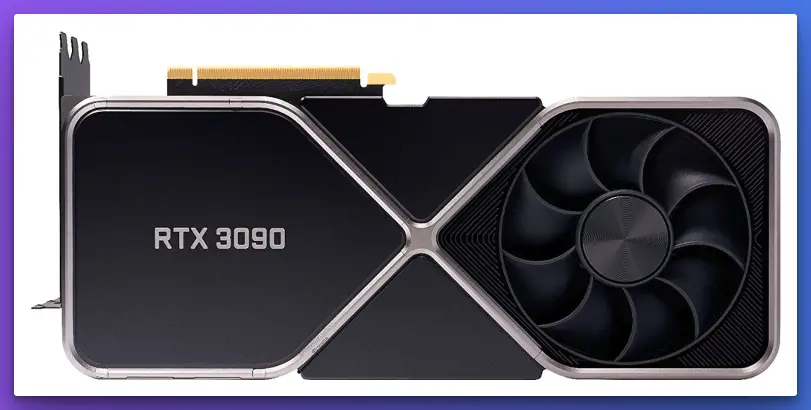
Guided by the revolutionary Ampere architecture, the RTX 3090 becomes a beacon of computational brilliance. Akin to a conductor wielding an orchestra’s baton, its 24GB of GDDR6X video memory orchestrates an opus of detail and scale. This abundance of memory is a canvas upon which creators unfurl intricate designs and manipulate colossal files with uninhibited fluidity.
Delving deeper, a battalion of CUDA cores executes commands with the finesse of a maestro, ensuring that even the most complex Photoshop filters are mere notes in a melodious composition. Real-time adjustments become a reality as the card’s prowess ushers in seamless creativity.
Yet, the RTX 3090’s mastery extends beyond convention. Embedded within are Tensor Cores, imbuing the graphics card with an AI-infused prowess. Intelligent upscaling and noise reduction are not just features but instruments of artistic transcendence. Once confined to the artist’s imagination, details now materialize with breathtaking fidelity.
However, this zenith of technology and creativity bears the insignia of exclusivity, as the title of the best graphics card for Photoshop commands a premium. As with all masterpieces, it’s an investment that elevates and aligns with uncompromising excellence.
In the grand tapestry of digital creation, the NVIDIA GeForce RTX 3090 unfurls as a masterpiece – the finest instrument to compose, refine, and immortalize artistic visions within Photoshop.
Pros:-
Unparalleled Performance: The NVIDIA GeForce RTX 3090 is the pinnacle choice for discerning Photoshop professionals, offering unparalleled performance that effortlessly handles intricate designs, extensive layers, and complex filters.
Ample Video Memory: With a generous 24GB of GDDR6X video memory, this graphics card provides a vast canvas for digital artists. It ensures smooth multitasking and prevents slowdowns even when working on large files.
Real-time Creativity: The inclusion of CUDA cores enables real-time rendering and adjustments. Photoshop tasks that once demanded waiting now unfold seamlessly, enhancing the creative workflow.
AI-Enhanced Precision: The presence of Tensor Cores elevates the RTX 3090 beyond its peers. AI-driven features like intelligent upscaling and noise reduction ensure meticulous detail preservation and optimized image quality.
4K and Beyond: As a graphics card designed for modern demands, the RTX 3090 effortlessly handles high-resolution projects, making it a go-to choice for 4K and even 8K workflows without compromising performance.
Cons:-
High Cost: The excellence of the RTX 3090 comes at a premium. The investment required for this graphics card might be prohibitive for those on a tight budget or those whose Photoshop needs don’t demand its extreme capabilities.
Power Consumption and Cooling: The RTX 3090’s raw power demands a robust power supply and efficient cooling system, which might add extra costs to the overall setup.
Overkill for Casual Users: For users who engage in light or occasional Photoshop work, the RTX 3090’s power might be excessive. Opting for a more budget-friendly option could offer adequate performance without overspending.
Compatibility and Optimization: While the RTX 3090 is a technological marvel, it might not be fully optimized for older software or systems, potentially leading to compatibility issues.
Availability: Given its popularity and demand, the RTX 3090 can sometimes face availability challenges. Securing one might require patience and vigilance, especially during peak demand periods.
In the grand tapestry of graphics cards, the NVIDIA GeForce RTX 3090 is an artistic masterpiece for Photoshop virtuosos. Its cutting-edge features and awe-inspiring performance forge a bridge between imagination and realization, though at a price that reflects its unmatched capabilities.
2. MSI Gaming GeForce RTX 4070 Ti
In digital artistry, where precision and innovation converge, the MSI Gaming GeForce RTX 4070 Ti emerges as the best graphics card for Photoshop, unfurling a canvas of unparalleled creative possibilities. With its Ada Lovelace architecture, this graphics marvel transcends the ordinary and propels creators into a realm of artistic mastery.
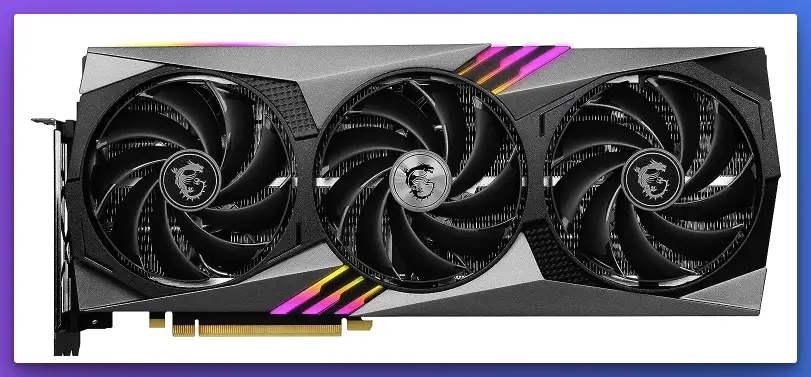
Harnessing the groundbreaking capabilities of the Tri-Frozr 3 cooling system, the RTX 4070 Ti becomes a symphony of efficiency and performance. Its 12GB GDRR6X video memory, akin to an expansive palette, offers artists an expanse to craft intricate digital tapestries without compromise. This ample memory elevates multitasking to an art form, rendering the manipulation of multiple layers and textures a seamless endeavor.
The intricately woven threads of this graphics card are the 192-bit HDMI/DP Nvlink, which facilitates connectivity and flexibility, translating the artist’s vision into pixels with precision. As the heart of digital artistry, the RTX 4070 Ti ensures that each brushstroke and hue transition truly reflects the artist’s intent.
Its remarkable fusion of Ada Lovelace architecture sets the RTX 4070 Ti apart. This architectural innovation is a testament to MSI’s commitment to pushing the boundaries of graphics technology. It seamlessly integrates cutting-edge computational capabilities with intuitive design, granting artists the tools to transform their visions into vivid reality.
In the symphony of graphics cards, the MSI Gaming GeForce RTX 4070 Ti resonates as a masterpiece, an epitome of technological excellence dedicated to serving the needs of Photoshop virtuosos. This card bridges imagination and manifestation, unlocking a world of creativity where every pixel is a brushstroke of brilliance.
Pros:-
Ada Lovelace Architecture: The MSI Gaming GeForce RTX 4070 Ti stands out with its innovative Ada Lovelace architecture, pushing the boundaries of graphics technology and delivering unprecedented performance for Photoshop enthusiasts.
Tri-Frozr 3 Cooling System: The advanced Tri-Frozr 3 cooling system ensures optimal thermal management, allowing the graphics card to maintain peak performance even during demanding Photoshop tasks, thus minimizing the risk of overheating.
Generous Video Memory: With 12GB of GDRR6X video memory, this graphics card offers ample space for handling complex Photoshop projects. The memory ensures seamless multitasking and manipulates intricate layers and high-resolution assets.
Enhanced Connectivity: The 192-bit HDMI/DP Nvlink provides versatile connectivity options, enabling seamless integration with multiple displays and peripherals, enhancing the creative workflow.
Uncompromising Performance: The RTX 4070 Ti delivers exceptional performance, ensuring that even the most resource-intensive Photoshop tasks, such as rendering high-resolution images and applying complex filters, are executed with fluidity and speed.
Cons:-
Higher Price Point: As a top-tier graphics card with cutting-edge features, the RTX 4070 Ti may have a premium price tag. Its exceptional capabilities might not be necessary for all users, especially those requiring less demanding Photoshop.
Power Consumption: The high-performance nature of the graphics card can lead to increased power consumption, potentially requiring a robust power supply unit to ensure stable operation.
Compatibility: While the RTX 4070 Ti’s advancements are impressive, some older systems or software might not be fully optimized to leverage its capabilities, potentially leading to compatibility issues.
Availability: Due to its popularity and demand, the RTX 4070 Ti might face availability challenges, especially during peak periods, making it more challenging to acquire.
Overkill for Casual Users: For users whose Photoshop needs are basic or occasional, the RTX 4070 Ti’s capabilities might be overkill. A more budget-friendly graphics card could offer sufficient performance without the associated cost.
In the realm of digital artistry, the MSI Gaming GeForce RTX 4070 Ti emerges as a testament to technological prowess, catering to the needs of Photoshop professionals.
While it presents exceptional architecture, cooling, and performance advantages, potential downsides like pricing and compatibility must also be considered, ensuring that it aligns with the user’s creative and budgetary requirements.
3. EVGA GeForce RTX 3060 XC – Best Budget Option
In the dynamic realm of digital artistry, the EVGA GeForce RTX 3060 XC emerges as an exceptional contender, the best budget graphics card for Photoshop virtuosos. Within its sleek frame resides an intricate fusion of performance and affordability, making it a canvas upon which creative visions flourish.
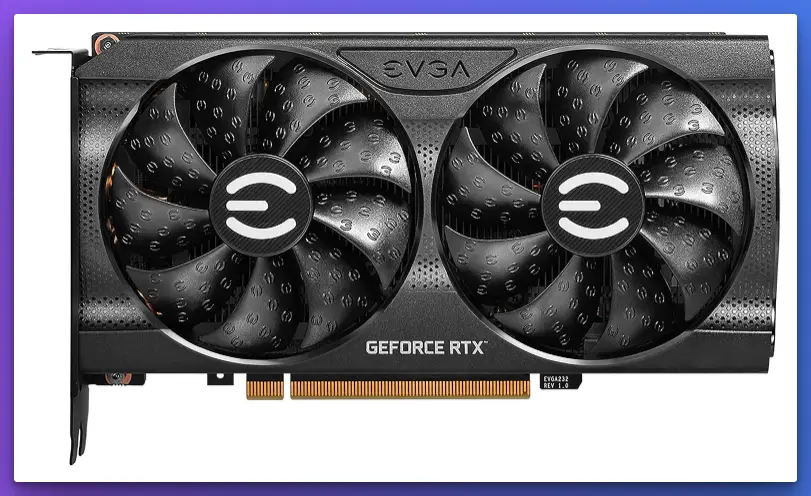
Embracing the innovative prowess of the 12GB GDDR6 video memory, the RTX 3060 XC becomes a portal to artistic ingenuity. Like an expansive canvas, this memory reservoir welcomes the meticulous crafting of intricate designs and layered compositions, ensuring that every pixel exudes precision.
A symphony of power and efficiency unfolds at the heart of this graphics card. The Dual-Fan configuration ensures effective cooling, providing the optimal thermal environment for prolonged creativity without interruption. This technology guarantees smoother operation and prolongs the life of the hardware, a boon for creative professionals on a budget.
The RTX 3060 XC’s role in Photoshop is one of seamless synergy. Its architecture allows for the swift execution of filters and real-time adjustments, transforming mere concepts into tangible expressions without delay. The card’s prowess manifests as the bridge between imagination and realization.
While it is a testament to affordability, the RTX 3060 XC doesn’t skimp on transformative features. As Photoshop’s best budget graphics card, it doesn’t compromise on delivering the core essentials for a satisfying creative journey.
In the grand gallery of graphics cards, the EVGA GeForce RTX 3060 XC is a masterpiece, catering to artists and professionals who seek a harmonious blend of performance and economic prudence. This card encapsulates the essence of creativity without straining the budget, proving that artistic brilliance can be attainable.
Pros:-
Affordable Excellence: The EVGA GeForce RTX 3060 XC is an ideal budget-friendly option for Photoshop enthusiasts, delivering remarkable performance without breaking the bank.
Ample Video Memory: With 12GB of GDDR6 video memory, this graphics card offers a substantial canvas for digital creativity. Artists can confidently manage intricate designs and multitask with ease.
Efficient Cooling: The Dual-Fan configuration ensures optimal thermal management, allowing extended periods of creative work without overheating concerns. This design promotes both performance and hardware longevity.
Real-time Rendering: The RTX 3060 XC’s architecture facilitates real-time rendering and swift execution of complex Photoshop tasks, enabling artists to witness their adjustments instantly.
Cost-Effective Solution: As a budget-conscious choice, this graphics card perfectly balances cost and capability, catering to those seeking quality performance without excessive expenditure.
Cons:-
Limited Extreme Performance: While it excels in its budget category, the RTX 3060 XC might not deliver the same level of performance as higher-end graphics cards, making it less suitable for extremely resource-intensive tasks.
Not Suitable for 4K or Beyond: For users working extensively with 4K or higher resolutions, the RTX 3060 XC’s capabilities might fall short in handling these demanding projects smoothly.
Potential Compatibility Issues: Some users might encounter compatibility challenges with older systems or software that aren’t optimized for the card’s architecture.
Availability Challenges: Like many popular graphics cards, the RTX 3060 XC might face availability constraints, especially during peak demand.
Limited Future-Proofing: As technology evolves, the RTX 3060 XC’s capabilities might become less suitable for handling more advanced Photoshop features or future software updates.
In the landscape of affordable graphics solutions, the EVGA GeForce RTX 3060 XC takes center stage as a standout choice for budget-conscious Photoshop enthusiasts. Its blend of cost-effectiveness, substantial memory, and efficient cooling provides a platform for artistic expression without sacrificing performance. However, users seeking top-tier capabilities or extensive 4K work might need to explore higher-end options.
4. NVIDIA GEFORCE GTX 1080 Ti
In the realm of digital artistry, the NVIDIA GEFORCE GTX 1080 Ti emerges as a timeless masterpiece, the best graphics card for Photoshop connoisseurs seeking a blend of prowess and value. Despite being a renewed offering, this graphics gem remains a stalwart companion for creative journeys.
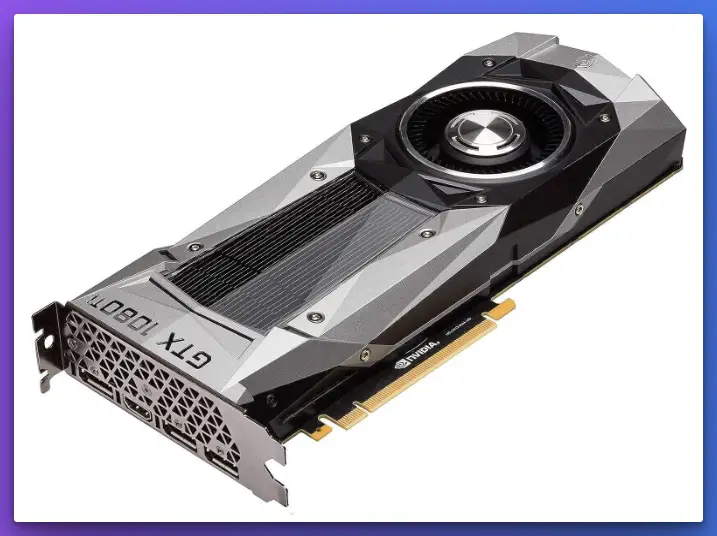
Harnessing the formidable capabilities of the Pascal architecture, the GTX 1080 Ti Founders Edition redefines what’s possible in digital artistry. Its 11GB of GDDR5X video memory, akin to a vast canvas, beckons creative visionaries to craft intricate designs and manipulate multifaceted compositions with unparalleled finesse.
Within the card’s heart resides an orchestra of CUDA cores, orchestrating complex filters and tasks with the precision of a maestro. The architecture empowers swift real-time adjustments, turning imagination into a palpable reality. Every brushstroke and gradient becomes a testament to creative dynamism.
Renewed yet resilient, the GTX 1080 Ti Founders Edition exemplifies value-driven excellence. Its Metal Backplate ensures structural integrity while safeguarding against heat, thus fostering an environment of unwavering reliability for long hours of creative immersion.
The GTX 1080 Ti’s essence transcends time. As the best graphics card for Photoshop, it perpetuates creative potency with a budget-friendly allure. Its age brings wisdom, ensuring compatibility with many software and systems and fostering an environment where vision knows no bounds.
In the gallery of graphics cards, the NVIDIA GEFORCE GTX 1080 Ti stands resolute, an emblem of enduring brilliance. For those seeking performance and prudent investment, this renewed gem bridges the gap between aspiration and realization, emboldening creative souls to unfurl their visions onto the digital canvas.
Pros:-
Pascal Architecture Power: The NVIDIA GEFORCE GTX 1080 Ti boasts the formidable Pascal architecture, rendering it a potent companion for Photoshop enthusiasts. Its architecture ensures the seamless execution of complex tasks and filters.
Ample Video Memory: With a generous 11GB of GDDR5X video memory, this graphics card offers a vast playground for digital artistry. It empowers users to manipulate intricate designs and manage multitasking effortlessly.
Real-time Precision: CUDA cores within the GTX 1080 Ti facilitate real-time adjustments and rendering, allowing artists to see the impact of their creative decisions instantly.
Renewed Reliability: Despite its renewed status, the card’s Metal Backplate ensures structural integrity and heat dissipation, guaranteeing a reliable performance even during prolonged creative sessions.
Cost-Effective Creativity: The GTX 1080 Ti Founders Edition continues to shine as a budget-friendly choice, offering substantial performance without the hefty price tag of more modern alternatives.
Cons:-
Aged Technology: While capable, the GTX 1080 Ti Founders Edition belongs to a previous generation of graphics cards. It might not offer the same level of performance as newer models, particularly in more demanding Photoshop tasks.
Less Power Efficiency: Compared to newer graphics cards, the GTX 1080 Ti might consume more power, leading to potentially higher electricity costs over time.
Limited VRAM Efficiency: Although 11GB of video memory is substantial, newer graphics cards offer faster and more efficient memory types, which might impact performance in memory-intensive tasks.
Availability Challenges: Due to its age, the GTX 1080 Ti might face availability constraints in the market, making it potentially harder to acquire.
Future Compatibility: As technology evolves, there might be limitations in terms of compatibility with newer software or operating systems, which could affect long-term use.
The NVIDIA GEFORCE GTX 1080 Ti in graphics cards symbolizes enduring performance and budget-friendly excellence. While it boasts remarkable capabilities, its age, and potential limitations must be weighed against the benefits it offers, catering to users seeking a balance between performance and affordability.
5. NVIDIA GEFORCE RTX 2080 Ti
In digital artistry, the NVIDIA GEFORCE RTX 2080 Ti unfurls as an unparalleled masterpiece, unquestionably hailed as the best graphics card for Photoshop virtuosos. A convergence of technological brilliance and creative finesse, this graphics marvel elevates digital artistry to extraordinary dimensions.
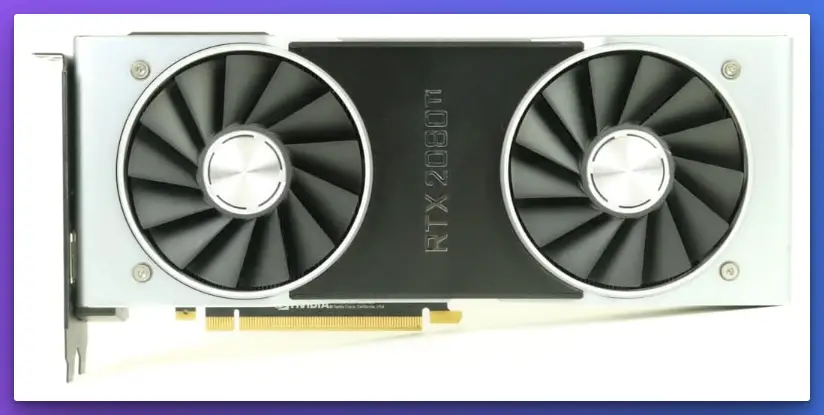
Harnessing the revolutionary Turing architecture, the RTX 2080 Ti’s prowess transcends traditional boundaries. With 11GB of GDDR6 video memory as its palette, artists wield boundless creative power, sculpting intricate designs and harmonizing layered compositions with effortless fluidity.
An orchestra of CUDA cores performs in symphonic harmony under its sleek exterior. This multitude of processing power ensures that even the most intricate Photoshop filters are seamlessly executed, transforming imagination into reality with stunning detail.
What truly sets the RTX 2080 Ti apart is its Ray Tracing capability – a beacon of innovation. This technological marvel simulates light behavior with breathtaking precision, imparting a cinematic quality to digital creations. Every gradient and shadow exudes an authenticity that mirrors the physical world.
The marriage of performance and visual fidelity culminates in the RTX 2080 Ti’s triumphant role as the best graphics card for Photoshop. Its Metal Backplate, a testament to structural integrity, further complements its prowess by maintaining optimal operating temperatures during extended creative sessions.
The NVIDIA GEFORCE RTX 2080 Ti Founders Edition reigns supreme in the pantheon of graphics cards. This card unfailingly delivers for those who seek nothing but the finest for their creative endeavors. It’s an invitation to transform visions into pixels of exceptional brilliance, ensuring that every artistic expression radiates unparalleled magnificence.
Pros:-
Turing Architecture Brilliance: The NVIDIA GEFORCE RTX 2080 Ti showcases the revolutionary Turing architecture, which unleashes exceptional graphics performance and sets new standards for creative excellence in Photoshop tasks.
Ample Video Memory: With 11GB of GDDR6 video memory, this graphics card offers an expansive canvas for intricate designs and complex layers, allowing artists to maneuver and manipulate with precision.
Ray Tracing Marvel: The inclusion of Ray Tracing technology transforms digital artistry, infusing realism by simulating light behaviors with astounding accuracy. This innovation elevates visual fidelity to unprecedented levels.
Uncompromising Performance: The multitude of CUDA cores propels the RTX 2080 Ti to execute demanding Photoshop filters and real-time adjustments with finesse, reducing lag and enhancing the creative workflow.
Metal Backplate Durability: The Metal Backplate ensures structural integrity and regulates temperatures, allowing for consistent performance during prolonged creative sessions.
Cons:-
Premium Price: The excellence of the RTX 2080 Ti comes at a premium, making it an investment that might be prohibitive for those on a tight budget or those with less demanding Photoshop needs.
Power Consumption: The advanced performance of the graphics card can lead to higher power consumption, which might require a robust power supply unit and efficient cooling.
Overkill for Basic Tasks: For users with basic or occasional Photoshop requirements, the RTX 2080 Ti’s capabilities might be overkill, and a more budget-friendly option could suffice.
Compatibility Concerns: While designed for excellence, the RTX 2080 Ti might encounter compatibility issues with older systems or software that haven’t been optimized for its architecture.
Availability Challenges: Due to its popularity and demand, the RTX 2080 Ti might face availability constraints, especially in the face of newer graphics card releases.
In the constellation of graphics cards, the NVIDIA GEFORCE RTX 2080 Ti Founders Edition shines as a stellar beacon for Photoshop professionals, offering a symphony of innovation, performance, and visual fidelity. As with any pinnacle of technology, it’s essential to consider its exceptional strengths and potential limitations when evaluating its fit within the creative journey.
6. XFX GTS Radeon RX 580
In the ever-evolving realm of digital artistry, the XFX GTS Radeon RX 580 emerges as a formidable contender, undoubtedly securing its position as the best graphics card for Photoshop enthusiasts who value performance and affordability. A symphony of innovation and design, this graphics card unlocks creative possibilities.
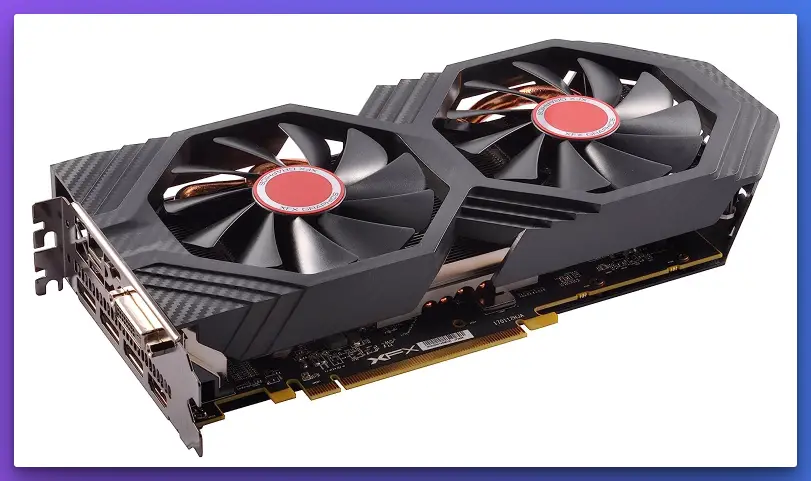
Harnessing the power of the 1386MHz OC+, the RX 580 GTS Radeon card ascends to new heights of visual brilliance. With 8GB of GDDR5 video memory as its canvas, artists are empowered to sculpt intricate designs and finesse layered compositions with remarkable fluidity.
While championing graphical excellence, this graphics card transcends the boundaries of creativity with its Dual BIOS feature. This innovation allows users to tailor performance settings according to the requirements of their Photoshop tasks, further enhancing their creative journey.
Equipped with a versatile array of ports, including 3xDP, HDMI, and DVI, the RX 580 GTS Radeon card ensures seamless connectivity to various displays and peripherals, an indispensable asset for artists embracing diverse visual experiences.
With its VR Ready capabilities, this graphics card propels digital artistry into the realm of immersive creations. The Radeon RX 580’s prowess extends beyond 2D canvases, offering a gateway to explore new dimensions of creativity.
The RX 580 GTS Radeon card, a true masterpiece in its category, encapsulates an ideal blend of performance, design, and value. As the best graphics card for Photoshop, it allows artists to unleash their creative visions onto the digital canvas, transforming imagination into palpable pixels of brilliance.
Pros:-
Optimal Performance: The XFX GTS Radeon RX 580 is the best graphics card for Photoshop, offering impressive performance with a clock speed of 1386MHz OC+. This translates to the seamless execution of complex tasks and filters.
Ample Video Memory: With 8GB of GDDR5 video memory, this graphics card provides a generous playground for artists to manipulate intricate designs and manage multiple layers precisely.
Dual BIOS Flexibility: Including the Dual BIOS feature empowers users to customize performance settings, tailoring the card’s capabilities to meet the specific demands of their Photoshop tasks.
Versatile Connectivity: The RX 580 GTS Radeon card offers a versatile selection of ports, including 3xDP, HDMI, and DVI, ensuring effortless connectivity to various displays and peripherals.
VR Ready Experience: With its VR Ready capabilities, this graphics card enables artists to venture beyond traditional 2D canvases, immersing themselves in virtual creativity.
Cons:-
Aged Architecture: While capable, the RX 580 GTS Radeon card features an older architecture than more recent models, which might impact its performance compared to newer graphics cards.
Power Consumption: The graphics card’s efficiency might not match that of more modern alternatives, potentially resulting in higher power consumption and associated costs.
Limited Ray Tracing: Unlike newer graphics cards, the RX 580 GTS Radeon card lacks advanced ray tracing capabilities, which could impact the realism and visual fidelity of certain Photoshop effects.
Compatibility Concerns: Some users might encounter compatibility issues with older systems or software that haven’t been optimized for the card’s architecture.
Availability: Given its popularity and age, the RX 580 GTS Radeon card might face availability challenges, particularly as newer models enter the market.
In graphics cards, the XFX GTS Radeon RX 580 distinguishes itself as a balanced option for Photoshop enthusiasts. While offering commendable performance and versatility, its age and potential limitations must be weighed against its strengths. For users seeking a combination of performance and affordability, this graphics card provides a gateway to unleash creative visions onto the digital canvas.
7. MSI GeForce RTX 4070 Ti VENTUS 3X
In digital artistry and post-production excellence, the MSI GeForce RTX 4070 Ti VENTUS 3X emerges as the best graphics card for Lightroom and Photoshop, an embodiment of cutting-edge technology fused with artistic finesse. This graphics marvel, hailing from the Ada Lovelace architecture, redefines creative possibilities.
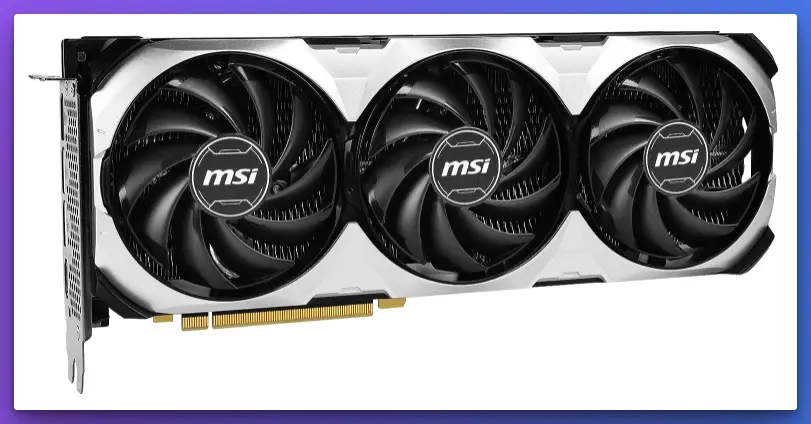
Harnessing the immense power of the 12GB GDRR6X video memory and the 192-bit HDMI/DP Nvlink, the RTX 4070 Ti VENTUS 3X orchestrates a symphony of performance and efficiency. It is a canvas for creators to weave intricate details and manipulate visual elements in Lightroom and Photoshop, ensuring each pixel resonates with clarity.
The architecture’s prowess harmonizes with the TORX Fan 4.0, an epitome of cooling innovation. This feature maintains optimal thermal conditions during prolonged creative sessions, allowing artists to channel their energy into their work without interruption.
With the Ada Lovelace architecture infused into its DNA, this graphics card embraces AI-driven enhancements that elevate image quality and streamline workflows. The RTX 4070 Ti VENTUS 3X becomes a partner in the creative process, intelligently enhancing details and reducing noise with unrivaled precision.
In Lightroom, where intricate edits bring out the essence of every photograph, and in Photoshop, where complex compositions materialize, the MSI GeForce RTX 4070 Ti VENTUS 3X is an ally for artists and photographers. Its capabilities synchronize with the demands of professional post-production, ensuring each adjustment is a brushstroke of perfection.
Embrace the union of technology and creativity. Let the RTX 4070 Ti VENTUS 3X be your conduit to digital artistry, a companion that realizes your vision and transforms it into a visual masterpiece. In Lightroom and Photoshop, this graphics card is a beacon of innovation and prowess.
Pros:-
Ada Lovelace Architecture Brilliance: The MSI GeForce RTX 4070 Ti VENTUS 3X harnesses the innovative Ada Lovelace architecture, delivering unparalleled performance for Lightroom and Photoshop tasks. Its advanced architecture ensures seamless execution of complex edits and compositions.
Ample Video Memory: With 12GB of GDRR6X video memory and a 192-bit HDMI/DP Nvlink, this graphics card provides a spacious canvas for artists and photographers to work with intricate details and high-resolution assets.
Efficient Cooling Innovation: Including TORX Fan 4.0 guarantees efficient thermal management, ensuring optimal operating temperatures during extended creative sessions. This innovation minimizes the risk of overheating and maintains consistent performance.
AI-Driven Enhancement: Leveraging the power of AI, the RTX 4070 Ti VENTUS 3X enhances image quality and streamlines workflows in both Lightroom and Photoshop. It intelligently refines details and reduces noise, achieving higher visual precision.
Comprehensive Creative Partner: From intricate photo edits in Lightroom to complex compositions in Photoshop, this graphics card is a reliable ally for artists and photographers. It seamlessly adapts to the demands of professional post-production, ensuring each adjustment is flawlessly executed.
Cons:-
Premium Price: The advanced features and capabilities of the RTX 4070 Ti VENTUS 3X come at a premium price point. The investment required might be less suitable for those on a tight budget or those with lighter post-production needs.
Power Consumption: As a high-performance graphics card, the RTX 4070 Ti VENTUS 3X may consume more power than more modest alternatives, potentially leading to higher energy costs.
Overkill for Casual Users: The card’s capabilities might be excessive for users who engage in occasional or basic photo editing. A more budget-friendly option could suffice for simpler tasks.
Availability: Due to its popularity and demand, the RTX 4070 Ti VENTUS 3X might face availability challenges, particularly during peak periods.
Compatibility Concerns: While optimized for modern software and systems, some older applications might not fully leverage the card’s capabilities, potentially resulting in compatibility issues.
In post-production, the MSI GeForce RTX 4070 Ti VENTUS 3X reigns supreme as an embodiment of innovation and creative prowess. While its exceptional strengths empower artists and photographers, potential drawbacks like price and compatibility must be considered to ensure they align with users’ needs and budgets.
8. ASUS TUF Gaming GeForce RTX 3090
In the digital artistry empowered by Adobe Creative Cloud, the ASUS TUF Gaming GeForce RTX 3090 emerges as a triumphant masterpiece, undeniably securing its stance as the best graphics card for Adobe Creative Cloud connoisseurs. This graphics juggernaut unfurls a canvas for limitless creative expression within its renewed form.
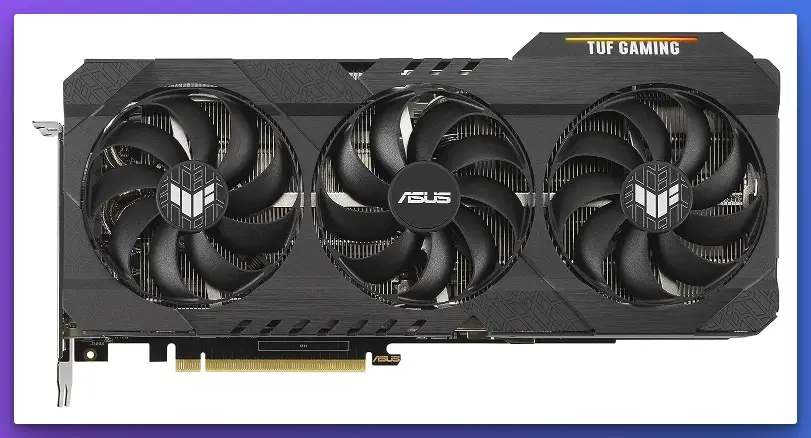
Harnessing the PCIe 4.0 architecture, the RTX 3090 unleashes a symphony of performance, seamlessly conducting intricate Adobe Creative Cloud tasks. With an awe-inspiring 24GB of GDDR6X video memory, it transforms mere concepts into tangible art, offering a boundless realm for digital exploration.
A trailblazer in visual connectivity, the RTX 3090 boasts HDMI 2.1 and DisplayPort 1.4a, promising an immersive visual experience and a canvas for creators to sculpt vibrant worlds. Whether crafting intricate designs in Photoshop or orchestrating captivating motion graphics in After Effects, this card stands ready to magnify each pixel.
The heart of this graphics card pulses with innovation, exemplified by its Dual Ball Fan Bearings. This dynamic cooling technology ensures a harmonious blend of performance and thermal management, allowing creatives to manifest their visions without the constraints of overheating.
The Adobe Creative Cloud ecosystem comes alive with the RTX 3090’s prowess, navigating through demanding video edits in Premiere Pro with grace or seamlessly blending layers in Illustrator. Its capabilities embody a synergy between technology and creative spirit.
The ASUS TUF Gaming GeForce RTX 3090 emerges as a beacon of creative empowerment in the mosaic of graphics cards. For artists, video editors, and designers navigating the Adobe Creative Cloud terrain, this card is a conduit that transforms imagination into visual opulence. Every brushstroke, every frame, and every design is elevated to an unparalleled realm of precision.
Pros:-
Unparalleled Performance: The ASUS TUF Gaming GeForce RTX 3090 excels as the best graphics card for Adobe Creative Cloud, harnessing PCIe 4.0 architecture to deliver exceptional performance for demanding tasks in applications like Photoshop, Illustrator, Premiere Pro, and more.
Vast Video Memory: With an impressive 24GB of GDDR6X video memory, this graphics card offers an expansive canvas for intricate designs, high-resolution video editing, and complex multi-layer compositions, allowing for fluid creative expression.
Cutting-Edge Connectivity: The presence of HDMI 2.1 and DisplayPort 1.4a enables creators to experience content in stunning clarity, making it ideal for professionals working with high-resolution displays and immersive visuals.
Efficient Cooling Solution: The Dual Ball Fan Bearings technology ensures optimal thermal management, maintaining consistent performance during prolonged creative sessions and providing a cooling system that complements the card’s capabilities.
Adobe Creative Cloud Synergy: The RTX 3090 seamlessly integrates with Adobe Creative Cloud applications, enhancing productivity by handling intensive tasks like video rendering, 3D modeling, and graphic design effortlessly.
Cons:-
High Cost: The exceptional performance and features of the RTX 3090 come at a premium price, making it a significant investment that might be better suited for professionals with demanding workloads and budgets.
Power Consumption: Given its high-performance nature, the RTX 3090 consumes more power than standard graphics cards, potentially leading to higher electricity costs and requiring a robust power supply unit.
Overkill for Casual Users: For users with lighter creative tasks or occasional usage of Adobe Creative Cloud applications, the RTX 3090’s capabilities might be excessive, and a more cost-effective option could suffice.
Availability Challenges: The RTX 3090 might face availability constraints due to its popularity and demand, especially during peak periods.
Compatibility Considerations: Some older software or systems might not fully leverage the card’s capabilities, potentially leading to compatibility challenges or underutilization of its features.
In the world of creative professionals relying on Adobe Creative Cloud, the ASUS TUF Gaming GeForce RTX 3090 is an apex of performance, innovation, and artistic empowerment. While its exceptional strengths empower creators, its price and potential compatibility challenges should be carefully evaluated to ensure a harmonious fit with one’s creative workflow and budget.
9. ZOTAC Gaming GeForce RTX 3060
In visual artistry and photo editing prowess, the ZOTAC Gaming GeForce RTX 3060 emerges as the best graphics card for photo editing, a testament to innovation and precision. With a blend of advanced technologies, this graphics marvel unlocks creative possibilities.
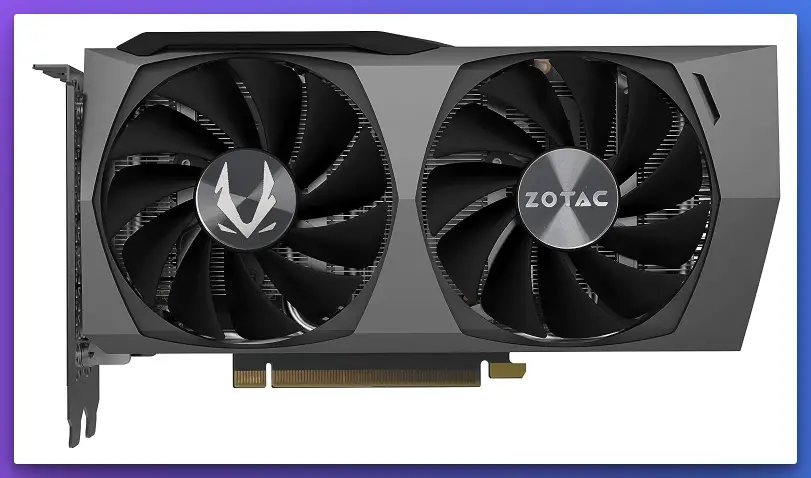
Harnessing the power of the 12GB GDDR6 video memory, the RTX 3060 becomes a canvas for photographers and artists to craft their visions with intricate detail. Its 192-bit memory interface ensures fluid manipulation of high-resolution images, while the 15 Gbps PCIE 4.0 elevates data transfer speeds to unprecedented levels.
At the heart of this graphics card resides the IceStorm 2.0 Cooling technology, a symphony of thermal excellence. This innovative cooling system, coupled with Active Fan Control and Freeze Fan Stop, maintains optimal operating temperatures during long hours of intricate photo edits, ensuring artistic immersion without the interruption of overheating concerns.
The RTX 3060’s prowess isn’t just about raw power; it’s also about intelligent design. Fusing cutting-edge technology and user-centric features makes photo editing a seamless experience. Whether adjusting color gradients in Lightroom or fine-tuning layers in Photoshop, this card delivers real-time precision, reducing rendering time and increasing creative fluidity.
The ZOTAC Gaming GeForce RTX 3060 shines as a guiding star in the universe of pixel-perfect edits. For photographers and artists seeking unparalleled detail and efficiency, this graphics card is a conduit to visual mastery. Each pixel adjustment, each brushstroke, and each enhancement is elevated to a level where creative precision meets technological brilliance.
Pros:-
Ample Video Memory: The ZOTAC Gaming GeForce RTX 3060 is the best graphics card for photo editing, boasting 12GB of GDDR6 video memory that empowers photographers and artists to manipulate high-resolution images with precision and fluidity.
Enhanced Memory Interface: With a 192-bit memory interface, the RTX 3060 ensures efficient data transfer and manipulation, reducing latency and improving performance during intricate photo edits.
High-Speed Connectivity: The 15 Gbps PCIE 4.0 support accelerates data transfer rates, minimizing wait times and optimizing workflow efficiency for seamless photo editing experiences.
Advanced Cooling Technology: The IceStorm 2.0 Cooling, coupled with Active Fan Control and Freeze Fan Stop features, maintains optimal thermal conditions during extended photo editing sessions, ensuring stable performance without overheating concerns.
Real-Time Precision: The RTX 3060’s blend of advanced technology and intelligent design enables real-time adjustments and rendering, reducing rendering times and enhancing creative fluidity in applications like Lightroom and Photoshop.
Cons:-
Moderate Performance: While capable, the RTX 3060’s performance might not match that of higher-tier graphics cards, potentially resulting in longer rendering times for complex photo edits.
Limited for Intensive Workloads: For professional photographers and artists dealing with extremely large and intricate projects, the RTX 3060’s capabilities might be limited, requiring more powerful graphics cards for optimal performance.
Availability Challenges: Due to high demand, the RTX 3060 might face availability constraints in the market, making it potentially harder to acquire.
Power Consumption: While efficient, the graphics card might consume more power than more power-efficient models, leading to slightly higher energy costs.
Software Compatibility: While optimized for modern software and systems, some older applications might not fully leverage the card’s capabilities, potentially leading to compatibility challenges.
In photo editing, the ZOTAC Gaming GeForce RTX 3060 is an emblem of innovation and creative precision. While its strengths cater to photographers and artists seeking efficient workflow and visual excellence, potential limitations and compatibility considerations should be considered when evaluating its suitability for specific photo editing needs.
Best Graphics Cards For illustrator
The digital art and design world is constantly evolving, and to stay ahead, artists must have the right tools. Among these tools, selecting the best graphics cards for Illustrator can make a significant difference in your work.
We will investigate the top graphics cards that could significantly boost your Adobe Illustrator performance.
1. NVIDIA GeForce RTX 3070
The NVIDIA GeForce RTX 3070 is one of the best graphics cards for Illustrator users, owing to its cutting-edge architecture and 8GB GDDR6 memory. Boasting Ray Tracing technology, this graphics card ensures smooth rendering and a lag-free experience. It’s ideal for professionals looking for a perfect balance between price and performance.
2. AMD Radeon RX 5700 XT
The Radeon RX 5700 XT presents a compelling option for those leaning towards AMD. With 8GB GDDR6 memory and support for PCIe 4.0, it offers high bandwidth and fantastic performance. As one of the best graphics cards for Illustrator, it’s perfect for complex vector illustrations and large-scale projects.
3. NVIDIA Quadro RTX 4000
NVIDIA’s Quadro RTX 4000 is tailor-made for creative professionals. With 8GB GDDR6 memory and 2304 CUDA cores, it offers unparalleled 3D rendering and vector illustration performance. Its Turing architecture makes it one of the best graphics cards for Illustrator, particularly for those working on intricate designs requiring high detail and precision.
4. AMD Radeon Pro WX 7100
AMD’s Radeon Pro WX 7100 is designed for the professional in mind. It offers excellent performance with 8GB GDDR5 memory, and 36 compute units. It stands tall as one of the best graphics cards for Illustrator due to its efficient power consumption and ability to handle demanding tasks without breaking a sweat.
Hardware Recommendations For Adobe Photoshop
Adobe Photoshop, the industry’s leading image editing software, necessitates a synergy of hardware components to function at its peak. A seamless Photoshop experience is contingent upon various factors, the most pivotal of which is understanding the Hardware Recommendations for Adobe Photoshop.
Graphics Card:- A dedicated graphics card amplifies Photoshop’s capability to render high-resolution images and complex effects. NVIDIA and AMD cards that support OpenGL and Shader Model 3.0 can significantly enhance Photoshop’s performance. It is vital to align the choice of the graphics card with Adobe Photoshop’s requirements to avoid incompatibility or overspending.
Processor (CPU):- Adobe Photoshop is predominantly CPU-intensive. A multi-core processor such as Intel’s i5 or i7, with a clock speed of 2 GHz or higher, ensures agility in applying filters and performing multi-layered tasks. It can be perceived that the alacrity of the processor is inextricable from Hardware Recommendations for Adobe Photoshop.
RAM:- RAM (Random Access Memory) is paramount in Photoshop’s operational fluency. A minimum of 8GB is recommended, but 16GB or even 32GB may be essential for professionals engaging in large-scale projects. The juxtaposition of RAM capacity with the complexity of the tasks reaffirms its integral role in Hardware Recommendations for Adobe Photoshop.
Storage:- A Solid State Drive (SSD) is often recommended over a Hard Disk Drive (HDD) for Adobe Photoshop. An SSD enhances file access speeds, application responsiveness, and boot times, making it a cardinal aspect of the Hardware Recommendations for Adobe Photoshop. For those dealing with voluminous files, having both an SSD for the operating system and Photoshop and an HDD for bulk storage can strike a harmonious balance.
Monitor:- An impeccably calibrated monitor is indispensable for exact color reproduction. A minimum resolution of 1280×800 is recommended, with a 16-bit color display. For professionals, investing in a monitor that covers the Adobe RGB color space ensures that visual fidelity is maintained.
Tablet:- For illustrators and designers, a graphic tablet like Wacom’s Intuos or Cintiq series could be considered part of the Hardware Recommendations for Adobe Photoshop. Its nuanced control over brush strokes and manipulation fosters creativity and precision.
Navigating through Hardware Recommendations for Adobe Photoshop necessitates a holistic perspective. To unlock Photoshop’s potential, a synergy between the processor, graphics card, RAM, storage, and peripheral devices must be meticulously achieved. However, these recommendations must be tailored to the user’s specific needs.
For a casual hobbyist, meeting the minimum requirements might suffice. In contrast, a professional working on intricate projects should consider higher specifications.
The consummate understanding of Hardware Recommendations for Adobe Photoshop goes beyond mere technical knowledge. It entails aligning the hardware’s capabilities with the artistic ambitions of the user, forging a pathway devoid of technical hindrances, and allowing creativity to flourish unbridled.
In this confluence of technology and artistry, the true potential of Adobe Photoshop is revealed, providing an avenue for visions to transcend into visual reality.
Tips For Installation and Optimization
Digital artistry demands precision, efficiency, and a seamless workflow. This has led to the ever-increasing importance of a proper installation guide and Photoshop settings to maximize GPU utilization and troubleshoot common problems. In this context, exploring each of these facets in detail is crucial.
Understanding System Requirements: Before installing, ensure that your system meets the minimum requirements for Photoshop, including CPU, RAM, and GPU specifications.
Downloading the Correct Version: Obtain the genuine version of Photoshop from Adobe’s official website or a licensed distributor.
Installation Process: Follow the proper installation guide with step-by-step instructions provided by Adobe, paying heed to all prompts and customizing the setup as per your needs.
Driver Updates: Ensure that your GPU drivers are up-to-date. Visit the manufacturer’s website to download the latest drivers, which can significantly influence performance.
Photoshop Settings to Maximize GPU Utilization
To maximize GPU utilization, specific adjustments within Photoshop settings are indispensable:
Accessing Preferences: Navigate to Edit > Preferences > Performance to access GPU settings.
Enabling GPU Acceleration: Check the ‘Use Graphics Processor’ option, allowing Photoshop to utilize the GPU.
Advanced Settings Customization: Click on ‘Advanced Settings’ and select the appropriate drawing mode based on your GPU’s capabilities.
Memory Allocation: Adjust the ‘Let Photoshop Use’ slider to allocate more RAM to Photoshop, thus balancing CPU and GPU usage.
Scratch Disk Optimization: Designate a fast storage device as your primary scratch disk to improve GPU performance.
Troubleshooting Common Problems
Even with proper settings and installation, users may encounter issues. Here are key strategies for troubleshooting common problems:
GPU-related Errors:-
- If GPU acceleration is unavailable, update the graphics driver or toggle the GPU settings within Photoshop.
- For graphical glitches, try changing the drawing mode within advanced GPU settings.
Performance Lag:-
- Reduce the number of active layers or decrease image resolution.
- Allocate more RAM to Photoshop within the Performance Preferences.
Installation Errors:-
- Carefully follow the proper installation guide, ensuring that system requirements are met.
- If errors persist, consider contacting Adobe’s support or seeking expert assistance.
-
The meticulous orchestration of a proper installation guide and Photoshop settings to maximize GPU utilization, along with adept strategies for troubleshooting common problems, paves the way for an enriched user experience. The confluence of these practices ensures a more responsive and robust Photoshop environment, liberating artists and designers to unleash their full creative potential.
By demystifying the complexities of installation and GPU optimization and providing practical solutions to prevalent issues, this guide is an invaluable resource for professionals and hobbyists alike.
The nuanced approach outlined herein not only enhances the technical proficiency of users but also contributes to the broader narrative of technological empowerment in digital creativity.
📗FAQ’s
What is the best graphics card for Photoshop?
Selecting an optimal GPU for Photoshop depends on your specific needs and budget. While there isn’t a universally recognized “best” card, top-tier models like Nvidia’s RTX series often provide excellent performance.
Do you need a powerful graphics card for Photoshop?
Photoshop can function without a high-end GPU, but a powerful graphics card accelerates tasks like rendering and applying filters.
What is the best graphics card for photo editing?
Similar to Photoshop, the ideal GPU for photo editing is contingent on the complexity of tasks. Professionals may lean towards Nvidia RTX or high-end GTX models due to their computational prowess.
What graphics card do I need for Photoshop and Lightroom?
Photoshop and Lightroom benefit from GPUs, but Lightroom often requires less power. A mid-tier GPU can suffice for casual users, but professional work warrants more advanced models.
How much GPU is enough for Photoshop?
A GPU with at least 4GB of VRAM should be sufficient for standard tasks. Complex tasks or 3D rendering might necessitate higher specifications.
Does Photoshop need more CPU or GPU?
Photoshop primarily leans on the CPU. However, GPU acceleration can be pivotal for specific functions, making a balanced system crucial.
What is the best processor for Photoshop?
A multi-core processor with high clock speeds is ideal. Intel’s i7 or i9 and AMD’s Ryzen series have been popular choices.
Is RAM or graphics card more important for photo editing?
Both are vital. While RAM facilitates smooth multitasking and faster processing, the GPU handles real-time image rendering.
Is GTX or RTX better for editing?
As a newer series, RTX performs better, especially with ray tracing tasks.
What graphics cards do photographers use?
Photographers’ choices vary, but many opt for GPUs like Nvidia’s GTX or RTX series or AMD’s Radeon line for enhanced image processing.
Does a better graphics card help with Photoshop?
Absolutely. A superior GPU can expedite several Photoshop tasks, ensuring smoother workflows.
How much RAM do I need for Photoshop?
For casual users, 8GB is a starting point. Professionals, however, should aim for 16GB or more.
Do I need a dedicated graphics card for Photoshop?
While integrated GPUs can run Photoshop, dedicated cards offer better performance, especially in advanced tasks.
Do professionals use Lightroom or Photoshop?
Both. Lightroom is excellent for photo management and basic edits, while Photoshop excels at detailed retouching.
How many cores do you need for Photoshop?
Photoshop can benefit from multi-core processors. Four to eight cores are typically recommended for optimal performance.
How do I optimize my computer for Photoshop?
Ensure updated drivers, adequate RAM, SSD storage, a balanced CPU-GPU combination, and regular system maintenance.
Why does Photoshop need so much RAM?
Photoshop uses RAM to store temporary data, layers, and history states, ensuring quick access and seamless operations.
Conclusion
We’ve spent the entire article addressing the challenge that so many creative professionals face: finding the perfect graphics card that can handle the unique demands of Photoshop. The frustrations of lag, crashes, and limitations have haunted many, hindering the creative process.
But as we’ve seen, the pain of choosing the wrong graphics card doesn’t have to be a constant struggle. It’s more than just an inconvenience; it impedes unlocking your creative potential.
With the insights provided in this guide, you now have the knowledge to choose the best graphics card for Photoshop tailored to your specific needs and budget. From understanding the essential features to comparing the top contenders, you’re well-equipped to make an informed decision that can enhance your Photoshop experience.
No more compromising on your creativity. No more settling for less. Embrace the full power of Photoshop and let your imagination soar with the right graphics card by your side. Happy creating!