
























Every drummer knows the struggle. The intense clashing of the cymbals, the deep bass of the drum kicks, and the resonating snares can make it extremely difficult to stay in tune with the rest of the band during a performance.
Moreover, constant exposure to such high-decibel sounds can pose a serious risk to your hearing. Imagine trying to deliver your best performance, but you’re just unable to pick out your bandmates’ instruments clearly amid the resonating noise of your drums.
It’s frustrating and might even lead to an offbeat performance. Worse, think of the long-term impact on your hearing health, having to endure such high noise levels each time you play.
The solution to these problems lies in finding the Best In-Ear Monitors for Drummers. These specially designed devices protect your ears and help you stay in sync with your band by providing a clear, direct sound feed. With the right in-ear monitor, you can enhance your performance, protect your hearing, and enjoy every beat you play.
In this comprehensive guide, we’ll explore the best in-ear monitors available for drummers, their key features, and how to choose one that suits your needs perfectly.
The Importance of In-Ear Monitors for Drummers
In-ear monitors (IEMs) have emerged as a game-changer for drummers, revolutionizing how they experience live performances. Gone are the days of traditional stage monitors, where excessive volume often led to hearing fatigue and compromised sound quality.
IEMs, in contrast, provide a personalized and immersive auditory experience, safeguarding the drummer’s hearing while enhancing their overall performance.

Precision is paramount in drumming, and IEMs offer just that. With multiple balanced armature and dynamic drivers, these tiny wonders reproduce sound frequencies with astounding accuracy, allowing drummers to discern even the subtlest nuances in their music. The result? A heightened sense of rhythm and an ability to stay perfectly in sync with the band.
Another benefit lies in isolation. Drummers are often surrounded by a barrage of sonic elements, making it challenging to stay focused. In-ear monitors block out external noise, providing a cocoon of clarity and concentration. This isolation helps drummers maintain their tempo and groove effortlessly, even amid a chaotic concert setting.
Furthermore, wireless IEM systems grant drummers unparalleled mobility on stage, eliminating the hazard of tripping over cables during high-energy performances. This freedom enhances their stage presence and confidence, elevating the entire band’s visual appeal.
In conclusion, incorporating in-ear monitors into a drummer’s toolkit is no longer a luxury but a necessity. The fusion of precise sound reproduction, noise isolation, and wireless convenience ensures an exceptional musical experience and the preservation of one’s auditory health. Embrace the future of drumming with IEMs and unlock your true percussive potential.
Key Features to Consider When Buying In-Ear Monitors
In-ear monitors (IEMs) have become an essential accessory for musicians, audiophiles, and professionals seeking a superior audio experience. However, with many options available in the market, choosing the right pair of IEMs can be daunting.
To make an informed decision, it’s crucial to focus on the key features that distinguish one model from another.
Let’s delve into the critical aspects you should consider before making your purchase:
1. Driver Configuration: The heart of any in-ear monitor lies in its driver configuration. IEMs with multiple balanced armature and dynamic drivers offer a wide frequency range and impressive sound clarity, capturing every nuance of your favorite music.
2. Noise Isolation: To immerse yourself fully in your audio world, opt for IEMs with excellent noise isolation capabilities. This feature ensures that external disturbances are kept at bay, allowing you to revel in the intricacies of your tunes without distractions.
3. Impedance and Sensitivity: Pay attention to the impedance and sensitivity ratings of the IEMs. High impedance requires more power to drive, while high sensitivity can lead to distortion at high volumes. Strike the right balance based on your audio source and listening preferences.
4. Cable Quality: A durable and tangle-resistant cable is vital for hassle-free usage. Look for detachable and replaceable cables, as they provide the flexibility of upgrading or replacing parts without investing in an entirely new pair of IEMs.
5. Fit and Comfort: The perfect fit is paramount for prolonged listening sessions. IEMs with multiple ear tips and ergonomic designs ensure a snug and comfortable fit, preventing listening fatigue.
6. Sound Signature: Each pair of IEMs has its unique sound signature, ranging from warm and bass-heavy to analytical and neutral. Choose a sound profile that complements your music taste and intended usage, whether studio monitoring, live performances, or casual listening.
7. Customization Options: For the utmost comfort and isolation, consider IEMs that offer custom molds. Customization ensures a perfect fit for your ears, optimizing sound quality and minimizing sound leakage.
8. Wireless or Wired: Decide between wireless and wired IEMs based on your specific needs. Wireless IEMs offer freedom of movement, while wired models are renowned for their reliable connectivity and audio fidelity.
By keeping these key features in mind, you can confidently embark on your journey to find the perfect pair of in-ear monitors that cater to your unique audio preferences and elevate your sonic experience to unprecedented heights.
Top In-Ear Monitors For Drummers: Detailed Reviews
1. Shure SE535-CL
Regarding elevating the drumming experience, the Shure SE535-CL stands tall as one of the market’s best in-ear monitors (IEMs). Designed with meticulous craftsmanship and cutting-edge technology, these professional sound-isolating earphones offer a remarkable auditory journey for drummers seeking unparalleled clarity and immersive performance.
High Definition Sound + Natural Bass: The SE535-CL is a true sonic powerhouse, thanks to its three drivers – a dedicated tweeter and dual woofers.
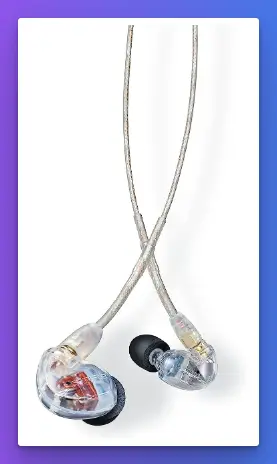
This remarkable driver configuration delivers high-definition sound with crystal-clear highs, rich mids, and a natural, deep bass response. Drummers can now savor the full spectrum of their music, discerning every beat and rhythm with remarkable precision.
In-Ear Fit and Sound Isolation: Drumming demands concentration and focus, and the Shure SE535-CL understands this well. Its in-ear fit provides exceptional comfort and an unparalleled seal, effectively isolating external noise.
Whether performing live on a boisterous stage or practicing in a bustling studio, these IEMs keep distractions at bay, allowing drummers to stay fully immersed in their music.
Detachable Cable and Durable Quality: Durability is key for any gear used in rigorous drumming sessions. The SE535-CL features a detachable cable that enhances its longevity and offers the convenience of replacing the cable if needed. Crafted with high-quality materials, these IEMs are built to withstand the demands of the most passionate drummers.
With the Shure SE535-CL, drummers can truly experience their music at its finest. The amalgamation of high-definition sound, natural bass, comfortable fit, and noise isolation creates a compelling package that propels drumming performances to new heights.
Whether you’re a professional drummer or a passionate enthusiast, these IEMs are your gateway to an unparalleled auditory journey. Embrace the Shure SE535-CL, and let your drumming prowess shine.
Pros:-
Superior Sound Quality: The SE535-CL offers high-definition sound with clear highs, rich mids, and natural bass, enabling drummers to hear every detail of their music.
Noise Isolation: The in-ear fit and sound-isolating design effectively block out external noise, allowing drummers to stay focused during performances and practice sessions.
Comfortable Fit: The IEMs come with multiple ear tips, ensuring a comfortable and secure fit for prolonged use and reducing listening fatigue.
Durable Build: The detachable cable and high-quality materials used in construction make the SE535-CL durable and suitable for the rigors of drumming.
Replaceable Cable: The detachable cable adds convenience and cost-effectiveness, as users can replace the cable if it gets damaged instead of buying a whole new pair of IEMs.
Professional-Grade Performance: Designed for professional musicians, the SE535-CL delivers a level of performance that meets the demanding needs of drummers on stage and in the studio.
Cons:-
Price: The SE535-CL is relatively expensive compared to entry-level IEMs, which might deter budget-conscious drummers.
Fit Variability: While the multiple ear tips offer customization, some users may find it challenging to achieve the perfect fit, leading to potential comfort issues.
No Wireless Option: The SE535-CL does not have a wireless option, which might be a drawback for drummers who prefer a cable-free experience on stage.
Bulky Design: Some users may find the size of the IEMs bulky, making them less inconspicuous compared to smaller earbuds.
Lack of Customization Options: Unlike high-end IEMs, the SE535-CL does not offer custom molds tailored to an individual’s ears.
In conclusion, the Shure SE535-CL in-ear monitors boast exceptional sound quality, noise isolation, and comfort, making them a top choice for discerning drummers.
While the higher price and fit variability may be minor concerns, the overall performance and durability of these IEMs justify the investment for serious drummers seeking a transformative audio experience.
2. BASN Bsinger+Pro – Best Mid-range option
When it comes to seeking the perfect harmony of precision and performance, the BASN Bsinger+Pro emerges as the ultimate choice for drummers looking for top-notch in-ear monitors for drummers.
Tailored to meet the demanding needs of musicians, these IEM earphones with MMCX connector present a captivating auditory experience that elevates drumming sessions to new heights.
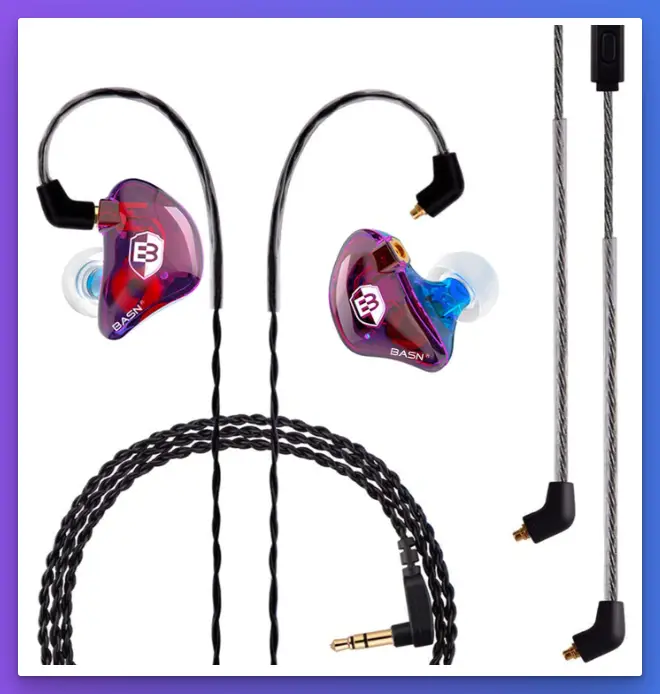
Sonic Brilliance and Clarity: The Bsinger+Pro boasts a refined sonic brilliance, offering drummers crystal-clear audio reproduction with a wide frequency response. Thanks to the vivid instrument separation and stunning sound clarity, every beat and rhythm come to life.
Ergonomic Design and Comfort: Designed with musicians in mind, the ergonomic design of the Bsinger+Pro ensures a snug and comfortable fit. Drummers can find their perfect fit with the multiple ear tips provided, allowing for extended wear without discomfort, ideal for long studio sessions or intense live performances.
MMCX Connector: The MMCX connector adds versatility to these IEM earphones, making it easy to switch cables and ensuring compatibility with various audio devices—a valuable asset for any drummer’s kit.
Noise Isolation and Focus: Drummers must remain in the zone, and the Bsinger+Pro excels in providing exceptional noise isolation. These IEMs effectively block out external distractions, enabling drummers to concentrate solely on their music and achieve optimal focus during performances.
Colorful Aesthetics: The Bsinger+Pro comes in a pro-clear colorful option, adding a touch of vibrancy to the stage presence of drummers. Express yourself not only through your drumming but also with stylish IEMs that complement your individuality.
In conclusion, the BASN Bsinger+Pro in-ear monitors are a stellar choice for drummers seeking a harmonious blend of audio fidelity, comfort, and versatility. With its superior sound clarity, ergonomic fit, and noise isolation capabilities, these IEM earphones embody the essence of performance-driven drumming.
Elevate your musical journey with the Bsinger+Pro and discover a world of sonic possibilities that resonate with your passion for drumming.
Pros:-
Superior Sound Quality: The Bsinger+Pro offers a refined and brilliant sonic experience, with clear instrument separation and wide frequency response, allowing drummers to hear every nuance of their music.
Comfortable Fit: The ergonomic design and multiple ear tips ensure a comfortable and secure fit, allowing drummers to wear them for extended periods without discomfort.
MMCX Connector: The detachable MMCX connector adds versatility and convenience, allowing easy cable replacement and compatibility with various audio devices.
Noise Isolation: The Bsinger+Pro provides excellent noise isolation, effectively blocking out external distractions and enabling drummers to stay focused during performances.
Stylish Aesthetics: Available in a pro-clear colorful option, these IEMs add a touch of vibrancy to the stage presence of drummers, allowing them to express their individuality.
Cons:-
Limited Customization Options: Unlike some high-end IEMs, the Bsinger+Pro may not offer custom molds tailored to an individual’s ears, which could affect fit and isolation for some users.
No Wireless Option: The Bsinger+Pro does not have a wireless option, which might be a drawback for drummers who prefer cable-free freedom on stage.
Less Recognizable Brand: Compared to more well-known brands, BASN may have less recognition in the market, which could be a consideration for some buyers.
Price: While offering great value for the features provided, the Bsinger+Pro might still be on the higher end of the price spectrum for budget-conscious drummers.
In conclusion, the BASN Bsinger+Pro in-ear monitors present an excellent option for drummers seeking a top-notch auditory experience. With its superior sound quality, comfortable fit, and noise isolation capabilities, these IEMs cater to the specific needs of drummers during performances and practice sessions.
While the lack of advanced customization options and a wireless option may be minor concerns for some users, the overall performance and versatility of the Bsinger+Pro make them a valuable addition to any drummer’s gear collection.
3. Audio-Technica ATH-E70 – Best High-end choice
When it comes to delivering an unparalleled auditory experience for drummers, the Audio-Technica ATH-E70 stands out as one of the best in-ear monitors for drummers available in the market.
These professional studio monitor headphones are designed with precision and expertise and cater to drummers seeking exceptional sound quality and reliable performance.
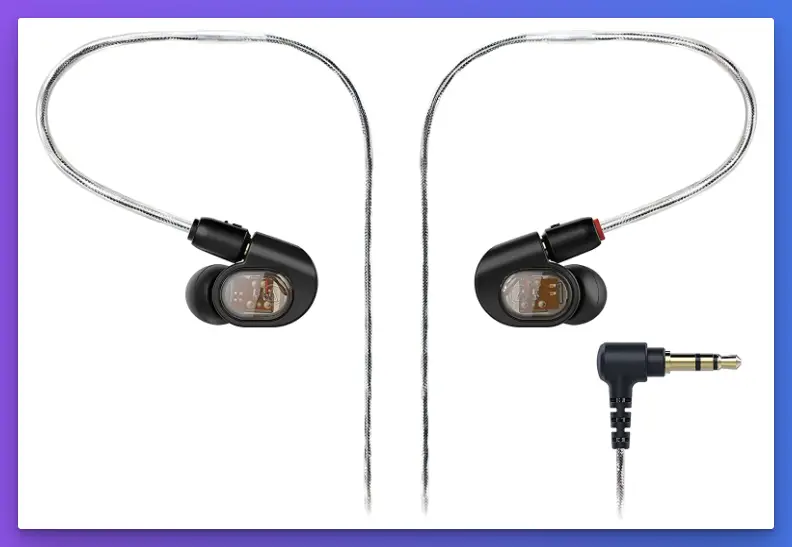
Sonic Precision and Clarity: The ATH-E70 offers a level of sonic precision that is truly remarkable. Equipped with three balanced armature drivers, these IEMs deliver clear, detailed sound with an extended frequency response, allowing drummers to perceive every subtle nuance in their music.
Noise Isolation and Immersion: Drummers need to stay focused and in the zone during performances, and the ATH-E70 facilitates this with excellent noise isolation. The snug fit and multiple ear tips minimize external distractions, allowing drummers to immerse themselves fully in their drumming.
Durable Build and Comfort: Crafted with professional-grade materials, the ATH-E70 boasts a durable build that can withstand the rigors of rigorous drumming sessions and touring. The lightweight and ergonomic design also ensures a comfortable fit, ideal for extended wear during long studio recording sessions or live performances.
Detachable Cables: The ATH-E70 features detachable cables, which add convenience and flexibility to the IEMs. Drummers can easily replace the cables if needed, and the option to switch between different cable types offers enhanced versatility.
Stage-Ready Performance: As the best in-ear monitors for drummers, the ATH-E70 is designed for professionals, delivering a stage-ready performance that meets the highest audio quality and reliability expectations.
In conclusion, the Audio-Technica ATH-E70 in-ear studio monitor headphones present an exceptional choice for drummers who prioritize precision, clarity, and comfort in their monitoring experience.
With its three balanced armature drivers, noise isolation capabilities, and durable build, the ATH-E70 offers a robust and immersive sound experience, empowering drummers to elevate their musical performances to new heights. Embrace the excellence of the ATH-E70 and unlock your true potential as a drummer.
Pros:-
Superior Sound Quality: The ATH-E70 boasts three balanced armature drivers that deliver precise and clear sound, allowing drummers to hear every detail of their music accurately.
Effective Noise Isolation: The snug fit and multiple ear tips provide excellent noise isolation, enabling drummers to stay focused during performances and practice sessions, even in noisy environments.
Durable Build: Crafted with professional-grade materials, the ATH-E70 is built to withstand the demands of rigorous drumming sessions and frequent use, ensuring longevity.
Comfortable Fit: The lightweight and ergonomic design of the ATH-E70 ensures a comfortable fit for extended wear, reducing listening fatigue during long studio recordings or live shows.
Detachable Cables: The ATH-E70 features detachable cables, adding convenience and versatility. Drummers can easily replace the cables if damaged, or use different cable types depending on their needs.
Professional Performance: Designed for professionals, the ATH-E70 delivers a stage-ready performance with top-notch audio quality, meeting the high standards of drummers and other musicians.
Cons:-
Higher Price Range: The ATH-E70 falls into a higher price range than entry-level IEMs, which might be a limiting factor for budget-conscious drummers.
Limited Customization Options: Unlike some higher-end IEMs, the ATH-E70 may not offer custom molds tailored to individual ears, which could affect fit and isolation for some users.
Wired Connectivity Only: The ATH-E70 has no wireless option, which might be a drawback for drummers who prefer cable-free freedom on stage.
Less Well-Known Brand: Audio-Technica may have less recognition than established brands, leading to some uncertainty for potential buyers.
In conclusion, the Audio-Technica ATH-E70 in-ear monitors offer drummers an impressive package of superior sound quality, noise isolation, durability, and comfort.
While the higher price range and limited customization options may be drawbacks for some, the ATH-E70’s professional-grade performance makes it an excellent investment for serious drummers seeking exceptional audio experiences both on stage and in the studio.
4. H HIFIHEAR CCA C10
For drummers seeking the ultimate precision and audio clarity, the H HIFIHEAR CCA C10 Five Drivers Hybrid In-Ear Monitors for Drummers (IEMs) are a standout choice.
Engineered with four balanced armature drivers and one dynamic driver on each side, these IEMs deliver a high-resolution sound that elevates drumming performances to new heights.
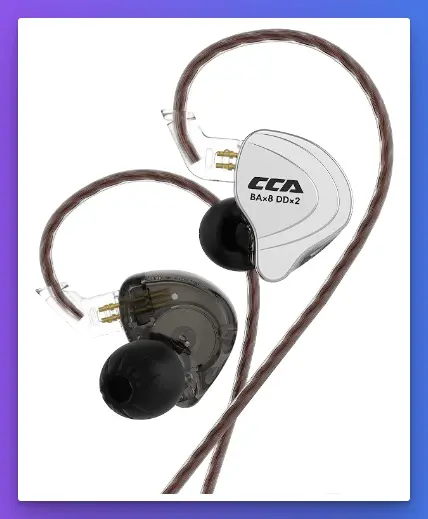
Sonic Excellence: The CCA C10 boasts a unique hybrid driver setup that combines rich bass, clear mids, and detailed highs. Each beat and rhythm is faithfully reproduced with remarkable precision, allowing drummers to feel the music truly.
Enhanced Soundstage: With its five drivers, the CCA C10 offers an impressive soundstage, creating a sense of depth and immersion in the music. This immersive experience allows drummers to perceive their music as if they were in the heart of the performance.
Gold-Plated Detachable Cable: Including a gold-plated detachable cable with a 2-pin 0.75mm connector adds to the versatility of the CCA C10. Drummers can easily replace the cable if needed, and the gold plating ensures reliable and high-quality audio transmission.
Comfortable and Secure Fit: The ergonomic design of the CCA C10 ensures a comfortable and secure fit, ideal for prolonged wear during intense drumming sessions or extended studio recordings.
HIFIHEAR CCA C10 as the Best In-Ear Monitor for Drummers: The HIFIHEAR CCA C10 stands out as the best in-ear monitors for drummers seeking top-notch precision and audio clarity.
Its hybrid driver configuration, enhanced soundstage, and comfortable fit make it an invaluable tool for drummers to enhance their musical performances. Embrace the exceptional sound quality and precision of the CCA C10 and unlock your true potential as a drummer.
Pros:-
Exceptional Sound Quality: The CCA C10’s hybrid driver setup delivers a well-balanced sound with rich bass, clear mids, and detailed highs, providing drummers with an immersive and high-resolution auditory experience.
Enhanced Soundstage: With its five drivers, the CCA C10 offers an impressive soundstage, creating a sense of depth and spatiality in the music, allowing drummers to accurately perceive their music as if they were in the heart of the performance.
Detachable Cable with Gold Plating: Including a gold-plated detachable cable with a 2-pin 0.75mm connector enhances versatility and ensures reliable audio transmission, making it convenient for drummers to replace the cable if needed.
Comfortable and Secure Fit: The CCA C10’s ergonomic design ensures a comfortable and secure fit, reducing listening fatigue during extended drumming sessions and enabling drummers to concentrate on their performance.
High-Quality Build: Crafted with attention to detail and professional-grade materials, the CCA C10 offers a durable build that withstands the demands of intense drumming sessions and frequent use.
Cons:-
Limited Customization Options: Unlike some higher-end IEMs, the CCA C10 may not offer custom molds tailored to individual ears, which could affect fit and isolation for some users.
Wired Connectivity Only: The CCA C10 has no wireless option, which might be a drawback for drummers who prefer cable-free freedom on stage.
Less Recognizable Brand: HIFIHEAR may have less recognition than established brands, leading to some uncertainty for potential buyers.
Potential Fit Variability: While the ergonomic design aims for a comfortable fit, some users may find it challenging to achieve the perfect fit with the included ear tips.
In conclusion, the H HIFIHEAR CCA C10 in-ear monitors offer drummers a compelling package of exceptional sound quality, enhanced soundstage, and a comfortable fit.
While the limited customization options and wired connectivity may be minor concerns for some users, the overall performance and build quality of the CCA C10 make it a valuable investment for serious drummers seeking a superior auditory experience during performances and practice sessions.
5. BASN Metalen
In the realm of in-ear monitors for musicians and drummers, the BASN Metalen is an exceptional choice that strikes the perfect chord between innovation and performance.
With its cutting-edge technology and thoughtful design, these in-ear monitors (IEMs) deliver an unparalleled auditory experience that caters to musicians and drummers seeking deep bass and precise sound reproduction.
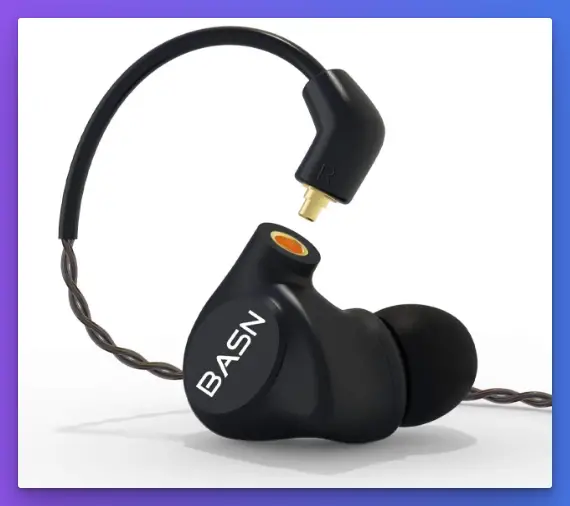
Four Drivers for Sonic Brilliance: The BASN Metalen boasts four drivers meticulously engineered to produce sonic brilliance. The drivers work harmoniously to deliver rich bass, clear mids, and sparkling highs, ensuring that every note and beat is rendered with astonishing clarity and detail.
Noise Isolation for Immersive Performances: Musicians and drummers often live in noisy environments. The BASN Metalen addresses this with its excellent noise isolation capabilities. By effectively blocking out external distractions, these IEMs allow musicians to immerse themselves fully in their music and deliver outstanding performances.
Two Detachable MMCX Cables: Versatility is a hallmark of the BASN Metalen. It comes with two detachable MMCX cables, providing the freedom to choose between different cable options based on individual preferences. These cables ensure reliable audio transmission, whether on stage or in the studio.
Ergonomic Design and Comfort: The comfort of extended wear is crucial during long rehearsals or live shows. The BASN Metalen is designed with musicians in mind, offering an ergonomic fit that stays securely in place, reducing listening fatigue and enabling drummers to focus solely on their craft.
Sleek and Durable: Sporting a stylish matte black finish, the BASN Metalen not only impresses with its sound but also with its aesthetics. Crafted with quality materials, these IEMs are built to withstand the rigors of regular use, making them a durable companion for musicians and drummers on their musical journey.
In conclusion, the BASN Metalen is the ultimate in-ear monitors for musicians and drummers, delivering a symphony of sonic brilliance, noise isolation, and comfort.
Whether you’re a drummer seeking deep bass or a musician craving precise sound reproduction, these IEMs are your ticket to an unforgettable auditory experience.
Embrace the innovation and excellence of the BASN Metalen and take your musical performances to extraordinary heights.
Pros:-
Impressive Sound Quality: With four drivers, the BASN Metalen delivers an exceptional auditory experience with rich bass, clear mids, and sparkling highs, allowing musicians and drummers to hear every nuance of their music.
Effective Noise Isolation: The BASN Metalen’s noise isolation capabilities block out external distractions, enabling musicians and drummers to stay focused during performances and practice sessions.
Versatility with Detachable Cables: The two detachable MMCX cables offer versatility, allowing users to choose between different cable options based on their preferences, ensuring reliable audio transmission in any setting.
Ergonomic and Comfortable Fit: The BASN Metalen’s ergonomic design ensures a comfortable and secure fit, reducing listening fatigue and providing extended wear comfort during long rehearsals or live shows.
Stylish and Durable Build: The sleek matte black finish gives the BASN Metalen a stylish look, and its durable construction ensures longevity, making it a reliable companion for musicians and drummers.
Cons:-
Limited Customization Options: Unlike some higher-end IEMs, the BASN Metalen may not offer custom molds tailored to individual ears, which could affect fit and isolation for some users.
Less Recognizable Brand: BASN may have less brand recognition than established IEM manufacturers, leading to uncertainty for potential buyers.
Wired Connectivity Only: The BASN Metalen has no wireless option, which might be a drawback for musicians and drummers who prefer cable-free freedom on stage.
Price: The BASN Metalen may fall into a higher price range than entry-level IEMs, which could be a consideration for budget-conscious musicians and drummers.
In conclusion, the BASN Metalen in-ear monitors present impressive sound quality, noise isolation, and versatility. While the limited customization options and wired connectivity may be minor concerns for some users, the overall performance and build quality of the BASN Metalen make it a valuable investment for musicians and drummers seeking a premium auditory experience during performances and practice sessions.
6. Kinboofi KZ ZS10 Pro
Kinboofi KZ ZS10 Pro is the epitome of excellence in in-ear monitors for singers. With its extraordinary blend of advanced technologies and impeccable design, these IEMs set a new standard for vocalists seeking unparalleled audio performance on stage.
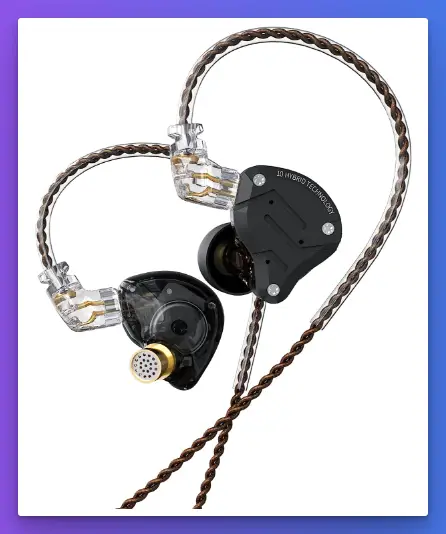
Multi-Driver Marvel: The KZ ZS10 Pro is a multi-driver marvel featuring four balanced armature drivers and one dynamic driver in each earpiece. This configuration delivers a harmonious fusion of crisp highs, lush mids, and powerful lows, allowing singers to showcase their vocals’ full range and emotive depth.
Enhanced Sound Clarity: Incorporating multiple drivers ensures remarkable sound clarity, enabling singers to hear every subtle detail in their vocals and the accompanying music, enhancing their overall stage presence and performance.
On-Stage Confidence: With its exceptional noise isolation capabilities, the KZ ZS10 Pro shields singers from external distractions, allowing them to maintain unwavering focus and confidence during live performances.
Ergonomic Design for Comfort: The KZ ZS10 Pro is ergonomically crafted for a comfortable fit, ensuring singers can wear them for extended periods without discomfort during lengthy rehearsals or energetic stage shows.
Durability Meets Aesthetics: The KZ ZS10 Pro boasts a robust construction that can withstand the demands of rigorous touring and stage use. Coupled with a sleek matte black finish, these IEMs exude elegance and resilience.
In conclusion, the Kinboofi KZ ZS10 Pro is the ultimate in-ear monitor for singers, redefining the standards of audio excellence and on-stage performance.
With its multi-driver setup, sound clarity, noise isolation, and comfortable design, these IEMs empower singers to deliver breathtaking performances that resonate with audiences and leave a lasting impression. Embrace the artistry and innovation of the KZ ZS10 Pro and elevate your singing prowess to new heights.
Pros:-
Exceptional Sound Quality: The KZ ZS10 Pro’s multi-driver configuration delivers a balanced and detailed sound, enabling singers to showcase their vocals with clarity and precision.
Wide Soundstage: With multiple drivers, these IEMs provide an expansive soundstage, enhancing the immersive experience for singers during performances.
Effective Noise Isolation: The KZ ZS10 Pro offers excellent noise isolation, ensuring singers can concentrate on their vocals without being distracted by external sounds.
Comfortable Fit: Designed with ergonomics in mind, these IEMs provide a comfortable and secure fit, allowing singers to wear them for extended periods during rehearsals and performances.
Sturdy Build: The robust construction of the KZ ZS10 Pro ensures durability, making them suitable for the demanding needs of touring musicians.
Cons:-
Limited Customization Options: The KZ ZS10 Pro may not offer custom-molded options, which could affect the fit and comfort for some singers.
Wired Connectivity Only: These IEMs do not offer wireless connectivity, which might be a preference for singers who prefer cable-free movement on stage.
Less Recognizable Brand: Kinboofi may have less brand recognition than established IEM manufacturers, leading to some uncertainty for potential buyers.
Lack of Mic Option: Some singers might prefer IEMs with a built-in microphone for hands-free communication during performances.
In conclusion, the Kinboofi KZ ZS10 Pro in-ear monitors present a compelling option for singers seeking high-quality sound and performance on stage. With exceptional sound quality, wide soundstage, noise isolation capabilities, and comfortable fit, these IEMs empower singers to deliver captivating performances confidently.
While the limited customization options and wired connectivity may be considerations for some users, the overall performance and build quality of the KZ ZS10 Pro make them a valuable choice for singers looking to elevate their vocal performances to new heights.
7. BASN MTPro
Regarding in-ear monitors for drummers, the BASN MTPro sets an unparalleled standard of excellence. Crafted with precision and cutting-edge technology, these 14.5mm Planar HiFi IEM headphones offer a remarkable auditory experience that caters specifically to the needs of drummers.
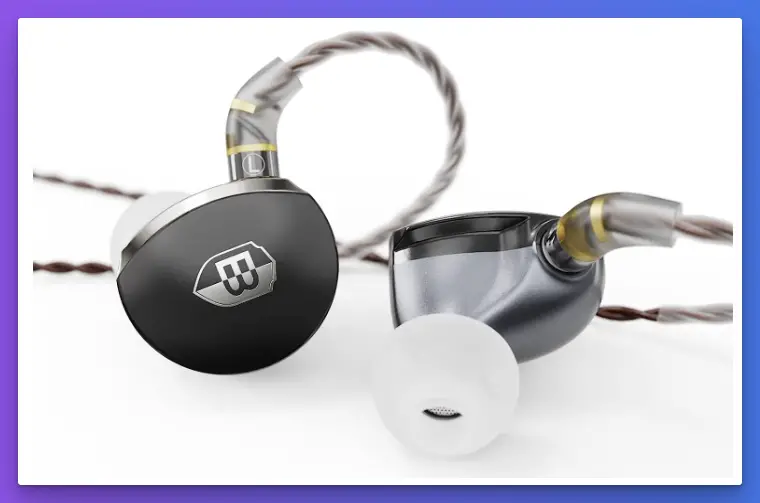
Immersive Planar Technology: The MTPro is equipped with 14.5mm planar drivers, which utilize a thin diaphragm to produce sound with incredible precision and accuracy. Drummers can expect a rich and detailed audio reproduction that allows them to perceive even the subtlest nuances in their drumming.
CNC Processed for Optimal Performance: The CNC-processed shell of the BASN MTPro ensures a seamless and precise fit. This meticulous craftsmanship enhances comfort during extended use and improves sound isolation, enabling drummers to concentrate solely on their performance.
Premium Single-Crystal Copper Cable: The 4-core Litz OCC Single-Crystal Copper cable enhances signal transmission, offering an uninterrupted audio experience. The cable’s high conductivity ensures that every beat is faithfully conveyed from the source to the ears of the drummer.
Durable Build for Professional Use: The MTPro is built to withstand the demands of professional use. Its durable construction ensures longevity, making it a reliable companion for drummers during intense studio sessions and live performances.
Aesthetics and Performance in Harmony: The rich black color of the BASN MTPro complements its exceptional performance. These IEMs sound exceptional and look stunning, adding a touch of sophistication to the drummer’s gear.
In conclusion, the BASN MTPro is the ultimate choice for drummers seeking top-tier in-ear monitors. With its immersive planar technology, CNC-processed shell, premium copper cable, and durable build, these IEMs empower drummers to unleash their full potential and elevate their drumming to extraordinary heights.
Embrace the innovation and precision of the BASN MTPro and immerse yourself in a world of musical excellence.
Pros:-
Immersive Planar Technology: The MTPro’s 14.5mm planar drivers deliver exceptional sound precision, providing drummers with a rich and detailed audio experience, capturing even the finest nuances in their drumming.
CNC Processed Shell: The CNC processed shell ensures a precise and comfortable fit, enhancing sound isolation and enabling drummers to focus on their performance without distractions.
Premium Single-Crystal Copper Cable: The 4-core Litz OCC Single-Crystal Copper cable ensures optimal signal transmission, delivering uninterrupted audio quality and enhancing the listening experience.
Durable Build: The MTPro is designed with durability in mind, making it suitable for the rigors of professional use, ensuring longevity and reliability during intense studio sessions and live performances.
Aesthetic Appeal: The rich black color and sleek design of the MTPro add a touch of sophistication, complementing the outstanding performance and making it visually appealing.
Cons:-
Higher Price Range: The premium features of the MTPro may result in a higher price point, which could be a consideration for budget-conscious drummers.
Limited Customization Options: The MTPro may not offer extensive customization options such as custom-molded ear tips, which could affect the fit for some users.
Wired Connectivity Only: These IEMs do not offer wireless connectivity, which might be a preference for drummers who prefer cable-free movement on stage.
Less Recognizable Brand: BASN may have less brand recognition than established IEM manufacturers, leading to uncertainty for potential buyers.
In conclusion, the BASN MTPro in-ear monitors offer drummers an impressive package of immersive planar technology, precise fit, premium copper cable, and durable build.
While the higher price range and limited customization options may be considerations for some, the overall performance and aesthetic appeal of the MTPro makes it a valuable investment for drummers seeking top-tier sound quality and reliability during their musical endeavors.
8. Mackie MP-320
Regarding precision and sonic excellence, the Mackie MP-320 is the ultimate choice among in-ear monitors for drummers. Crafted with meticulous attention to detail and equipped with triple dynamic drivers, these in-ear headphones deliver an unparalleled auditory experience that elevates drumming performances to new heights.
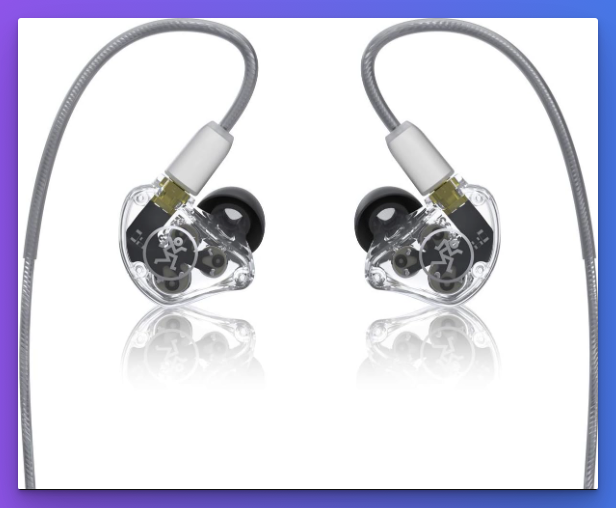
Triple Dynamic Driver Configuration: The MP-320 features a triple dynamic driver setup meticulously engineered to produce a harmonious blend of powerful bass, clear mids, and sparkling highs. Drummers can immerse themselves in the full range of their music with exceptional clarity and precision.
Outstanding Sound Isolation: The Mackie MP-320 provides excellent sound isolation, effectively blocking out external noise and ensuring drummers stay focused and in sync with their music during rehearsals and live performances.
Comfortable and Secure Fit: Designed with ergonomics in mind, the MP-320 offers a comfortable and secure fit, ensuring minimal listening fatigue during prolonged use, making them an ideal companion for extended drumming sessions.
Durable Build for Professional Use: The Mackie MP-320 is built to withstand the demands of professional use, making them a reliable choice for drummers in the studio and on stage.
Detachable Cable with MMCX Connector: Including a detachable cable with MMCX connectors adds convenience and versatility. Drummers can easily replace the cable or use different options to suit their preferences.
In conclusion, the Mackie MP-320 is undoubtedly the best in-ear monitors for drummers seeking precision, sound isolation, comfort, and durability. With its triple dynamic driver configuration, ergonomic design, and detachable cable options, these in-ear monitors enhance the drumming experience and allow drummers to deliver breathtaking performances confidently.
Embrace the innovation and excellence of the Mackie MP-320 and elevate your drumming to extraordinary levels.
Pros:-
Triple Dynamic Driver Configuration: The MP-320’s triple dynamic drivers deliver a balanced and detailed sound, offering powerful bass, clear mids, and sparkling highs for an immersive auditory experience.
Excellent Sound Isolation: The MP-320 provides outstanding sound isolation, allowing drummers to stay focused on their music without being distracted by external noise.
Comfortable and Secure Fit: The ergonomic design of the MP-320 ensures a comfortable and secure fit, reducing listening fatigue and making them suitable for extended drumming sessions.
Durable Build: The MP-320 is designed with durability in mind, making them reliable for professional use and capable of withstanding the demands of studio and stage performances.
Detachable Cable with MMCX Connector: Including a detachable cable with MMCX connectors adds convenience and versatility, allowing drummers to easily replace the cable or use different cable options based on their preferences.
Cons:-
Higher Price Range: The premium features of the MP-320 may result in a higher price point, which could be a consideration for budget-conscious drummers.
Limited Customization Options: The MP-320 may not offer extensive customization options, such as custom-molded ear tips, which could affect the fit for some users.
Wired Connectivity Only: These IEMs do not offer wireless connectivity, which might be a preference for drummers who prefer cable-free movement on stage.
Less Recognizable Brand: Mackie may have less brand recognition than established IEM manufacturers, leading to uncertainty for potential buyers.
In conclusion, the Mackie MP-320 in-ear monitors offer drummers a compelling package of triple dynamic drivers, excellent sound isolation, comfort, and durability.
While the higher price range and limited customization options may be considerations for some, the overall performance and build quality of the MP-320 make them a valuable investment for drummers seeking top-tier sound quality and reliable performance during their drumming endeavors.
9. MEE audio EP-MX2PRO-CL
When it comes to drumming, precision and clarity are paramount, and the MEE audio EP-MX2PRO-CL emerges as the ultimate choice among in-ear drummer monitors.
These dual-driver hybrid musician’s in-ear monitors (IEMs) boast a dedicated subwoofer, delivering a realistic bass experience that elevates the drumming performance.
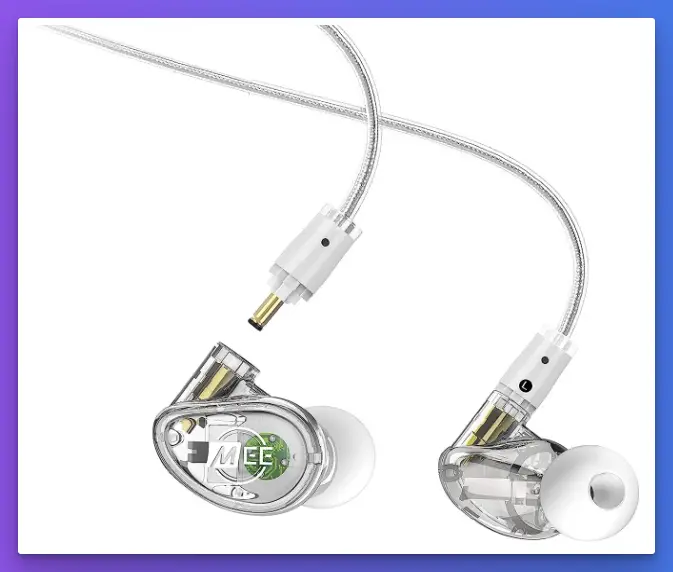
Dual-Driver Hybrid Configuration: The EP-MX2PRO-CL features a dual-driver hybrid setup, combining a balanced armature and dynamic drivers’ power. This synergy results in a well-balanced sound, with clear mids and sparkling highs, while the dedicated subwoofer adds a punchy and realistic bass response, allowing drummers to feel the rhythm in their core.
Noise Isolation for Focus: Drumming can occur in noisy environments, but the EP-MX2PRO-CL provides excellent noise isolation, allowing drummers to concentrate solely on their music without distraction.
Optional Customization: To ensure the perfect fit, these IEMs offer optional customization, including custom-molded ear tips, providing a personalized and comfortable fit for every drummer.
Detachable Cables for Convenience: The EP-MX2PRO-CL comes with detachable cables, offering convenience and versatility. Drummers can easily replace the cables if needed or use different cable options based on their preferences.
Durable Build for Professional Use: The EP-MX2PRO-CL is built to withstand the demands of professional use, making them a reliable companion for drummers during intense studio sessions and live performances.
In conclusion, the MEE audio EP-MX2PRO-CL stands as the best in-ear monitors for drummers seeking precision, realistic bass, noise isolation, and customization.
With its dual-driver hybrid configuration, dedicated subwoofer, and detachable cables, these IEMs provide an exceptional auditory experience, empowering drummers to deliver outstanding performances with confidence and flair. Embrace the innovation and clarity of the EP-MX2PRO-CL and take your drumming to the next level of excellence.
Pros:-
Dual-Driver Hybrid Configuration: The EP-MX2PRO-CL’s dual-driver hybrid setup combines balanced armature drivers and dynamic drivers, providing a well-balanced sound with clear mids, sparkling highs, and a dedicated subwoofer for realistic bass, enhancing the drumming experience.
Noise Isolation: These IEMs offer excellent noise isolation, allowing drummers to focus on their music without being disturbed by external noise, ensuring a more immersive practice or performance session.
Optional Customization: The EP-MX2PRO-CL provides optional customization, including custom-molded ear tips, which ensures a personalized and comfortable fit, reducing listening fatigue during extended drumming sessions.
Detachable Cables: The inclusion of detachable cables adds convenience and versatility. Drummers can easily replace the cables if needed or use different cable options based on their preferences.
Durable Build: Designed to withstand the demands of professional use, the EP-MX2PRO-CL offers a durable build, making them reliable companions for drummers during intense studio sessions and live performances.
Cons:-
Higher Price Range: The premium features of the EP-MX2PRO-CL may result in a higher price point, which could be a consideration for budget-conscious drummers.
Less Recognizable Brand: MEE audio may have less brand recognition than established IEM manufacturers, leading to uncertainty for potential buyers.
Limited Connectivity Options: The EP-MX2PRO-CL may not offer wireless connectivity, which could be a preference for drummers who prefer cable-free movement on stage.
Limited Color Options: The EP-MX2PRO-CL may come in limited color options, which may not cater to the aesthetic preferences of all drummers.
In conclusion, the MEE audio EP-MX2PRO-CL in-ear monitors present a compelling package of dual-driver hybrid configuration, realistic bass, noise isolation, and optional customization.
While the higher price range and limited connectivity options may be considerations for some, the overall performance, durability, and comfort of the EP-MX2PRO-CL make them a valuable investment for drummers seeking top-tier sound quality and reliable performance during their drumming endeavors.
11. Shure SE215 PRO – Best Budget Option
When it comes to drumming, having the right gear can make all the difference, and the Shure SE215 PRO stands out as the ultimate choice for budget in-ear monitors for drummers.
These wired earbuds offer a winning combination of professional sound-isolating technology, clear audio, and deep bass, ensuring drummers can focus on their rhythm without breaking the bank.
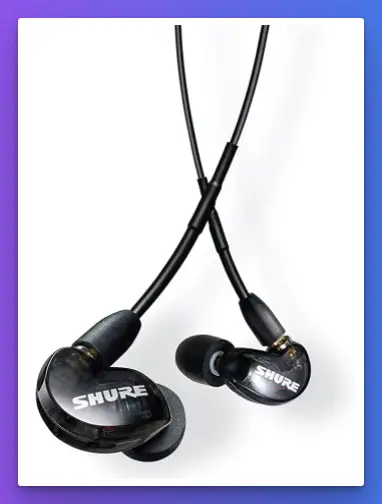
Professional Sound Isolation: The SE215 PRO features sound-isolating technology that effectively blocks out external noise, providing drummers an immersive experience that helps them stay in sync with their music during rehearsals and performances.
Clear Sound and Deep Bass: Equipped with a single dynamic micro driver, the SE215 PRO delivers clear audio reproduction with a powerful and deep bass response, allowing drummers to feel the rhythm in their core.
Secure Fit In-Ear Monitor: The ergonomic design of the SE215 PRO ensures a secure and comfortable fit, providing a snug seal that reduces listening fatigue during extended drumming sessions.
Carrying Case and Fit Kit: The included carrying case and fit kit add convenience, allowing drummers to carry their IEMs safely and choose from multiple ear tip options for the perfect fit.
In conclusion, the Shure SE215 PRO is the best budget in-ear monitors for drummers seeking professional sound isolation, clear audio, and deep bass without compromising quality. With its secure fit and included carrying case and fit kit, these wired earbuds are a valuable investment for drummers looking to enhance their drumming experience without breaking the bank.
Embrace the affordability and performance of the SE215 PRO and take your drumming to the next level with confidence and precision.
Pros:-
Professional Sound Isolation: The SE215 PRO offers excellent sound isolation, blocking out external noise and allowing drummers to focus solely on their music, enhancing concentration and performance.
Clear Sound and Deep Bass: Equipped with a single dynamic microdriver, these IEMs deliver clear audio with a powerful and deep bass response, providing a rich and immersive drumming experience.
Secure Fit In-Ear Monitor: The ergonomic design ensures a secure and comfortable fit, keeping the IEMs in place during intense drumming sessions and reducing listening fatigue.
Budget-Friendly: The SE215 PRO is a budget-friendly option, making it accessible to drummers who seek high-quality sound without breaking the bank.
Carrying Case and Fit Kit: The included carrying case and fit kit offer added convenience, allowing drummers to safely protect and carry their IEMs and choose from multiple ear tip options for the perfect fit.
Cons:-
Wired Connectivity: The SE215 PRO has wired connectivity, which might be less preferable for drummers who prefer cable-free movement on stage.
Single Microdriver: While the single dynamic microdriver provides quality sound, some drummers may prefer more drivers for a more intricate audio experience.
Fewer Customization Options: The SE215 PRO may have limited customization options compared to higher-end models, which could affect the fit for some users.
Limited Color Options: These IEMs may come in limited color options, which may not cater to the aesthetic preferences of all drummers.
In conclusion, the Shure SE215 PRO in-ear monitors offer drummers a budget-friendly option with professional sound isolation, clear audio, and deep bass.
While the wired connectivity and single microdriver may not suit every drummer’s preferences, the secure fit, carrying case, and fit kit make these IEMs valuable for drummers seeking quality sound without exceeding their budget.
Embrace the performance and affordability of the SE215 PRO and elevate your drumming experience with clarity and precision.
Understanding the Tech: Wired vs. Wireless In-Ear Monitors
In the professional audio and music world, in-ear monitors (IEMs) have revolutionized how musicians experience their performances. These compact and personal audio devices deliver tailored sound directly to the ears, allowing musicians to monitor their music precisely and make real-time adjustments as needed.
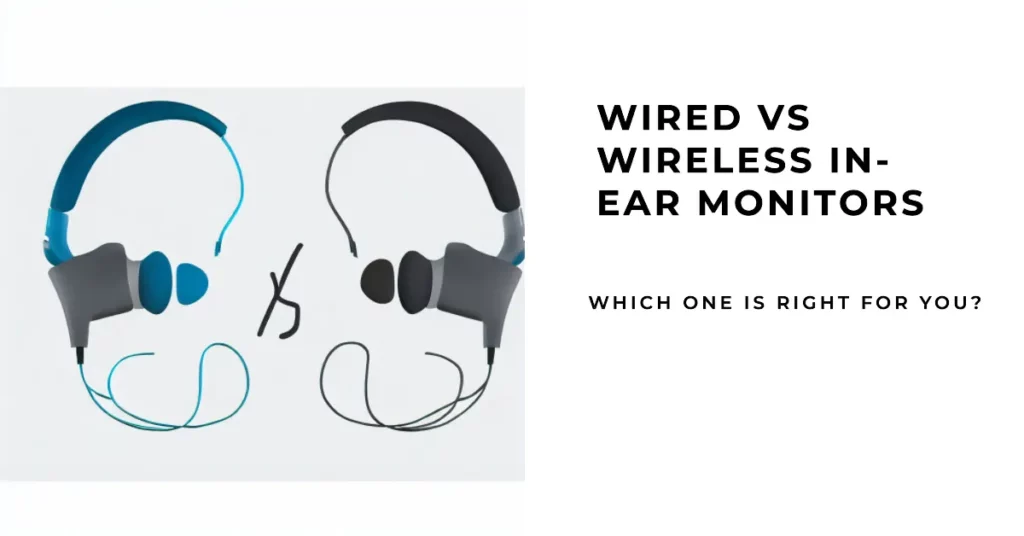
As technology advances, the choice between wired and wireless in-ear monitors has become a significant consideration for musicians seeking the best audio experience during rehearsals, live performances, and studio recordings.
Let’s explore the differences, advantages, and considerations of wired and wireless IEMs, helping you decide based on your unique needs and preferences.
Understanding Wired In-Ear Monitors:-
Wired in-ear monitors have been a staple in the music industry for decades. Using a physical cable, these IEMs are directly connected to the audio source, such as a mixing console or personal monitor system.
The cable typically terminates in a standard 3.5mm or 1/8-inch audio jack, which plugs into the IEMs’ earpieces. This wired connection ensures a stable and consistent audio signal with minimal latency, making wired IEMs ideal for professional stage performances where reliability is paramount.
Advantages of Wired In-Ear Monitors:-
Stable Audio Connection: One of the primary advantages of wired IEMs is their stable audio connection. The physical connection ensures a reliable and consistent audio signal during performances, eliminating the risk of dropouts or signal interference.
Lower Latency: Wired IEMs offer minimal latency, meaning there is virtually no delay between the audio source and the earpieces. This low latency is crucial for musicians who must stay perfectly in sync with the music, especially in live performances and complex musical arrangements.
No Battery Dependency: Unlike wireless IEMs, wired models do not rely on internal batteries for operation. This means musicians do not have to worry about charging the IEMs or replacing batteries during performances, ensuring uninterrupted use throughout the show.
Considerations for Wired In-Ear Monitors:-
Limited Mobility: The primary drawback of wired IEMs is the physical cable, which can restrict movement on stage. Musicians must properly manage the cable to avoid tangling or accidental disconnection during performances.
Cable Management: Proper cable management is essential when using wired IEMs. Musicians may need to use cable clips or clothing accessories to keep the cable in place and prevent it from distracting during performances.
Understanding Wireless In-Ear Monitors:-
Wireless in-ear monitors have gained significant popularity recently, providing musicians with enhanced mobility and freedom of movement on stage. These IEMs use advanced wireless technology, such as Bluetooth or radio frequency (RF), to transmit audio signals from the audio source to the earpieces.
Wireless IEMs offer convenience and flexibility, making them preferred for musicians seeking unrestricted movement during performances.
Advantages of Wireless In-Ear Monitors:-
Enhanced Mobility: Wireless IEMs allow musicians to move freely on stage without the constraint of cables, providing a more dynamic and engaging performance experience. This enhanced mobility enables performers to interact with the audience, move across the stage, and deliver a captivating show.
Convenient Set-Up: Wireless IEMs offer a more convenient set-up process than wired counterparts. Musicians can connect wirelessly to the audio source, eliminating the need for cable management and reducing the time required for setup and soundcheck.
Multiple Connectivity Options: Wireless IEM systems often support multiple connectivity options, such as Bluetooth, RF, or digital transmission. This versatility allows musicians to connect to various audio sources, making them suitable for different performance scenarios.
Considerations for Wireless In-Ear Monitors:-
Battery Life: Wireless IEMs rely on internal batteries for operation. Musicians must manage battery life and ensure enough charge for the entire performance. Some high-end wireless systems offer extended battery life, but planning accordingly is essential to avoid any unexpected audio disruptions during shows.
Latency and Interference: Wireless transmission may introduce slight latency, especially in digital wireless systems. While modern wireless IEM systems aim to minimize latency, choosing reputable brands and models is essential to ensure a seamless and reliable audio experience.
Additionally, wireless signals can be susceptible to interference from other wireless devices or physical obstacles, so proper frequency management is crucial in high-density performance environments.
Choosing the Right In-Ear Monitors:-
The decision between wired and wireless in-ear monitors ultimately depends on the specific needs and preferences of the musician. Both options offer unique advantages and considerations that cater to different performance scenarios.
Choose Wired In-Ear Monitors If:-
- You prioritize stable audio connection and minimal latency for precise monitoring during live performances.
- Unrestricted movement on stage is not a priority, and you can manage cable effectively during shows.
- You prefer not to deal with batteries and want a straightforward plug-and-play setup.
Choose Wireless In-Ear Monitors If:-
- Enhanced mobility and freedom of movement on stage are essential for your performance style.
- You need a convenient and faster setup process without the hassle of cable management.
- Your performance requires multiple connectivity options, such as Bluetooth or digital transmission.
Ultimately, wired and wireless in-ear monitors offer musicians a powerful tool to enhance their musical experience and performance. By understanding the technology and weighing the advantages and considerations, you can make a well-informed decision that aligns with your musical goals and preferences.
Whether wired or wireless, investing in high-quality in-ear monitors ensures an enhanced and immersive musical experience for every performer on stage.
Tips for Using and Maintaining In-Ear Monitors
In-ear monitors (IEMs) have become an indispensable tools for musicians, audio engineers, and audiophiles, offering personalized and high-fidelity sound reproduction.
These compact earphones provide precise monitoring during live performances, studio recordings, and everyday listening. To ensure optimal performance and longevity of your in-ear monitors, following proper usage and maintenance practices is essential.
Let’s explore valuable tips for using and caring for your IEMs to enhance your audio experience and protect your investment.
Using In-Ear Monitors:-
Achieve the Perfect Fit: A secure and comfortable fit is vital for sound quality and isolation. Experiment with different ear tips or consider custom-molded ones to find the perfect fit for your ears.
Mind Your Volume Levels: Start with a lower volume level and gradually increase it to avoid potential hearing damage. Overly loud volumes can lead to long-term hearing issues, so practice responsible volume management.
Perform Sound Checks: Conduct thorough sound checks before every performance to ensure your IEMs are working correctly. Verify that all audio sources and mix settings are accurate for an optimal monitoring experience.
Invest in Quality Cables: High-quality cables ensure reliable audio transmission. Consider investing in reputable and durable cables to prevent signal loss and interference.
Utilize Noise Isolation: Embrace the noise isolation capabilities of your IEMs to block out external noise, allowing you to focus on your music and protect your hearing.
Limit Stage Volume: With precise monitoring through IEMs, you can request a lower stage volume. This reduces the risk of hearing damage and enhances overall sound quality.
Maintaining In-Ear Monitors:-
Regular Cleaning: Keep your IEMs clean by wiping the ear tips and earpieces with a soft, dry cloth. This removes sweat, earwax, and debris, maintaining optimal sound clarity.
Proper Storage: Store your IEMs in a protective case when not in use. Avoid leaving them lying around, as exposure to dust and potential physical damage can affect performance.
Secure Cable Management: Gently coil and secure the cables when storing or transporting your IEMs. Avoid excessive twisting or bending to prevent damage to internal wires.
Replace Worn-out Cables: If your IEMs have detachable cables and you notice signs of wear, consider replacing them. High-quality replacement cables can improve sound transmission and longevity.
Inspect Connectors: Regularly inspect the connectors for dirt, debris, or damage. Ensure they are clean and free from obstructions for seamless connections.
Avoid Excessive Tension: Be cautious about pulling or tugging on the cables, as excessive tension can strain connectors and lead to connection issues.
Scheduled Checkups: Schedule periodic checkups with a professional technician to assess and maintain your IEMs. They can address potential issues and perform necessary repairs.
Environmental Protection: Protect your IEMs from extreme temperatures and humidity, as these conditions can adversely affect their performance and lifespan.
Battery Management (For Wireless IEMs): If your IEMs are wireless and have rechargeable batteries, manage battery life carefully. Charge them before each use to ensure uninterrupted listening.
Travel Tips:-
Carry-On Your IEMs: When traveling, keep your IEMs in your carry-on luggage to avoid the potential damage that could occur in checked baggage.
Durable Travel Case: Invest in a sturdy and protective travel case for your IEMs to safeguard them during journeys.
By adhering to these tips for using and maintaining in-ear monitors, you can enjoy an enhanced audio experience and extend the lifespan of your valuable audio equipment.
Proper care and attention will ensure that your IEMs continue to deliver exceptional sound quality, making them a reliable companion for your musical journey.
📗FAQ’s
What in-ear monitors do professional drummers use?
Professional drummers often prefer custom-molded in-ear monitors from well-known brands like Shure, Westone, or Ultimate Ears. These IEMs provide a secure fit, exceptional sound isolation, and high-fidelity audio reproduction.
What is the best in-ear for drummers?
The best in-ear monitor for drummers depends on individual preferences and budget. Some popular options include Shure SE215, Westone UM Pro 30, and Ultimate Ears UE 11 Pro.
Why do drummers wear earpieces?
Drummers wear earpieces, such as in-ear monitors, to monitor their own performance and the band’s mix while blocking out excessive stage noise, protecting their hearing in the process.
What is the best budget IEM for drummers?
For budget-conscious drummers, KZ ZST Pro, MEE audio M6 Pro, and BASN Bsinger+Pro offer good sound quality without breaking the bank.
How do drummers prevent hearing loss?
Drummers can prevent hearing loss by wearing ear protection, such as custom-fit earplugs or in-ear monitors, to reduce exposure to loud sound levels during rehearsals and performances.
Do professional drummers wear earplugs?
Many professional drummers wear custom-molded earplugs to protect their hearing while maintaining a clear sense of sound during performances.
What percent of drummers have hearing loss?
The percentage of drummers with hearing loss varies, but studies suggest that musicians, including drummers, are at a higher risk of hearing damage than the general population.
Do most drummers have tinnitus?
Tinnitus prevalence among drummers varies, but exposure to loud music can increase the risk. Tinnitus is a persistent ringing or buzzing in the ears.
Why is IEM so expensive?
In-ear monitors can be expensive due to the precision engineering, customizations, and high-quality materials required for accurate sound reproduction and comfort.
Why do drummers sit on stools?
Drummers sit on stools to maintain a stable and comfortable position while playing drums, enabling better posture and reducing the strain on their bodies during extended performances.
Why do drummers have a glass wall around them?
The glass wall, known as a drum shield, helps to control drum volume on stage, preventing sound bleeding into microphones and allowing for clearer sound mixing during live performances.
How much should I pay a drummer?
The pay for drummers varies based on experience, location, and gig requirements. Rates can range from hourly fees to per-gig rates.
Are cheap IEMs worth it?
Cheap IEMs can offer decent sound quality for casual use, but investing in higher-quality options can significantly improve audio accuracy and longevity for professional musicians.
What should a beginner drummer buy?
Beginner drummers should start with a basic drum set, drumsticks, practice pads, and budget-friendly IEMs or earplugs for hearing protection.
What does drumming do to the brain?
Drumming can enhance brain function by stimulating various regions involved in motor coordination, rhythm processing, and creative expression.
How do you quiet a loud drummer?
Consider using drum mutes or practice pads on the drum kit, low-volume cymbals, or encouraging dynamic control during practice to quiet a loud drummer.
Do drummers always count in their head?
Yes, drummers often count in their heads to maintain precise timing and coordination during performances.
Are drummers physically fit?
Drummers can develop physical fitness due to the demanding nature of drumming, which requires stamina, coordination, and controlled movements.
Are drummers’ brains wired differently?
Drummers’ brains may show differences in neural connectivity related to rhythm processing, motor control, and creativity, shaped by their musical training.
Why do drummers hold their sticks differently?
Different stick grips, such as traditional and matched grip, offer unique playing techniques and suit various drumming styles.
Why is it so hard to be a drummer?
Drumming requires precise timing, limb independence, and physical endurance, making it a challenging instrument to master.
Do drummers’ brains work differently?
The brain activity of drummers can differ from non-musicians, reflecting specialized neural pathways associated with rhythm and motor skills.
What famous drummer is deaf?
Famous drummer Evelyn Glennie is deaf, yet her extraordinary talent and ability to feel vibrations make her a renowned percussionist.
Is drumming a natural talent?
While some individuals may have a natural inclination towards rhythm and coordination, drumming, like any skill, requires practice and training to excel.
Who is the loudest drummer of all time?
The title of the loudest drummer is subjective and varies over time, with John Bonham of Led Zeppelin and Keith Moon of The Who being renowned for their powerful playing.
Do drummers have to be strong?
Drummers benefit from physical strength and endurance to maintain energetic and dynamic performances.
Why do audiophiles like IEMs?
Audiophiles appreciate IEMs’ precise sound reproduction, noise isolation, and ability to deliver a rich listening experience.
Can IEMs sound as good as headphones?
Yes, high-quality IEMs can rival over-ear headphones in sound quality, offering accurate audio representation and exceptional clarity.
What to look for when buying IEM?
When buying IEMs, consider factors like sound quality, fit, isolation, durability, and the option of detachable cables for customization.
Why do drummers open their mouths?
During intense playing, drummers may open their mouths to increase air intake, improving oxygen flow and endurance.
Is drumming hard on your body?
Drumming can be physically demanding, placing stress on wrists, shoulders, and back. Proper technique and warm-ups can mitigate potential issues.
Why do drummers put carpet under their drums?
Drummers use carpets or rugs under their drum kits to prevent drum movement during performances and protect floor surfaces.
Why do some drummers wear gloves?
Drummers may wear gloves for grip, to protect their hands, or to reduce friction between their skin and drumsticks.
What is drummer’s wrist?
Drummer’s wrist refers to wrist pain or injuries caused by repetitive motions during drumming.
How do drummers remember everything?
Drummers remember complex patterns and songs through practice, muscle memory, and mental rehearsal.
Why do some drummers play barefoot?
Playing barefoot allows drummers to feel the pedals and drumheads better, enhancing control and sensitivity.
Why don’t drummers wear gloves?
Some drummers prefer not to wear gloves to have direct contact with the drumsticks, which provides a better sense of control and finesse.
How many hours should a drummer practice?
The amount of practice varies, but regular practice sessions of 30 minutes to an hour several times a week can be effective.
How many hours does it take to be a drummer?
The time it takes to become a skilled drummer depends on individual dedication, but years of practice and training are typically required.
Is drumming an expensive hobby?
Drumming can be expensive, considering the cost of a drum kit, accessories, lessons, and quality IEMs or headphones.
What are the best IEMs under $100?
Shure SE215, 1MORE Triple Driver, and MEE audio M6 Pro are popular for high-quality IEMs under $100.
Do IEMs need to be broken in?
While some believe IEMs benefit from a break-in period, no scientific evidence supports significant changes in sound quality over time.
Do your ears get used to IEMs?
With time and proper usage, ears can acclimate to IEMs, improving comfort and sound perception.
Is 30 too late to learn drums?
It’s never too late to learn drums, as people of all ages can enjoy drumming and progress with practice and dedication.
Is there a demand for drummers?
Yes, there is a demand for skilled drummers in various music genres and settings, including live performances, studio recordings, and teaching.
Is 50 too old to learn drums?
No, drumming can be learned at any age, and many individuals start drumming later in life as a rewarding hobby.
Is drumming hard on the heart?
Drumming can elevate heart rate during intense performances, providing a cardiovascular workout.
Conclusion
After a detailed dive into the world of in-ear monitors for drummers, we hope this guide has clarified the importance of these devices and how they can elevate your performance while protecting your hearing health.
The “Best In-Ear Monitors for Drummers” isn’t a one-size-fits-all solution, but rather, they depend on your individual needs, preferences, and budget.
Whether you opt for budget-friendly models that offer great value or a high-end option that delivers exceptional sound quality, comfort, and durability, remember the key features to consider. Sound quality, comfort, fit, durability, and price are paramount in your decision.
Ultimately, harmonizing with your music and bandmates creates a captivating performance. And the right in-ear monitor can be the tool that brings that harmony to life, providing you with the ability to perform at your best while ensuring your hearing remains protected.
We encourage you to make this worthy investment and experience the difference it makes to your drumming journey.