














As a tech writer who’s been immersed in the world of operating systems and applications for over 15 years—spanning the explosive growth of open-source tools during the Ubuntu boom to the integration of Linux environments in modern ChromeOS—I’ve witnessed firsthand how the best Linux apps for ChromeBooks can elevate a simple laptop into a versatile powerhouse.
For fellow professionals seeking to optimize their workflows on ChromeBooks, this guide cuts through the noise to highlight apps that excel in Crostini, ChromeOS’s built-in Linux container.
These top-tier Linux applications bridge the gap between lightweight portability and heavy-duty functionality, enabling everything from code development to creative design without sacrificing performance or security.
The maturation of Linux support on ChromeBooks since its introduction has been a game-changer, allowing seamless installation of Debian-based packages via apt without the risks of dual-booting.
Drawing from my extensive testing on devices like the Google Pixelbook Go and Lenovo IdeaPad Duet, I’ve curated this list based on real-world applications—think crunching code during commutes or editing media for client deliverables. No hype, just proven performers.
For a swift overview, here’s a comparison table outlining use cases, installation simplicity, standout features, and ideal user profiles. This setup lets you zero in on what fits your pro needs without wading through walls of text.
Comparison Table: Best Linux Apps for Chromebook
| App Name | Primary Use Case | Ease of Install on ChromeBook (1-5, 5 being easiest) | Standout Feature | Best For Pros Like… |
|---|---|---|---|---|
| Visual Studio Code | Code Editing & Development | 5 | Extensions Marketplace | Developers juggling multiple languages |
| GIMP | Image Editing | 4 | Layer-Based Editing | Designers needing Photoshop alternatives |
| LibreOffice | Office Productivity | 5 | Full Suite (Writer, Calc, etc.) | Writers & Analysts handling docs/spreads |
| VLC | Media Playback | 5 | Supports All Formats | Media Pros streaming/editing videos |
| Firefox | Web Browsing | 5 | Privacy-Focused Extensions | Security-Conscious Browsers |
| Thunderbird | Email Management | 4 | Unified Inbox & Calendar | Email Heavyweights |
| Inkscape | Vector Graphics | 4 | SVG Editing | Illustrators & Logo Designers |
| Audacity | Audio Editing | 5 | Multi-Track Recording | Podcasters & Sound Engineers |
| Krita | Digital Painting | 4 | Brush Engine | Artists & Concept Creators |
| Blender | 3D Modeling & Animation | 3 | Full 3D Pipeline | 3D Pros in Film/Gaming |
| Git | Version Control | 5 | Branching & Merging | Dev Teams Collaborating |
| OBS Studio | Screen Recording & Streaming | 4 | Custom Scenes | Content Creators & Streamers |
| Darktable | Photo Raw Processing | 4 | Non-Destructive Editing | Photographers |
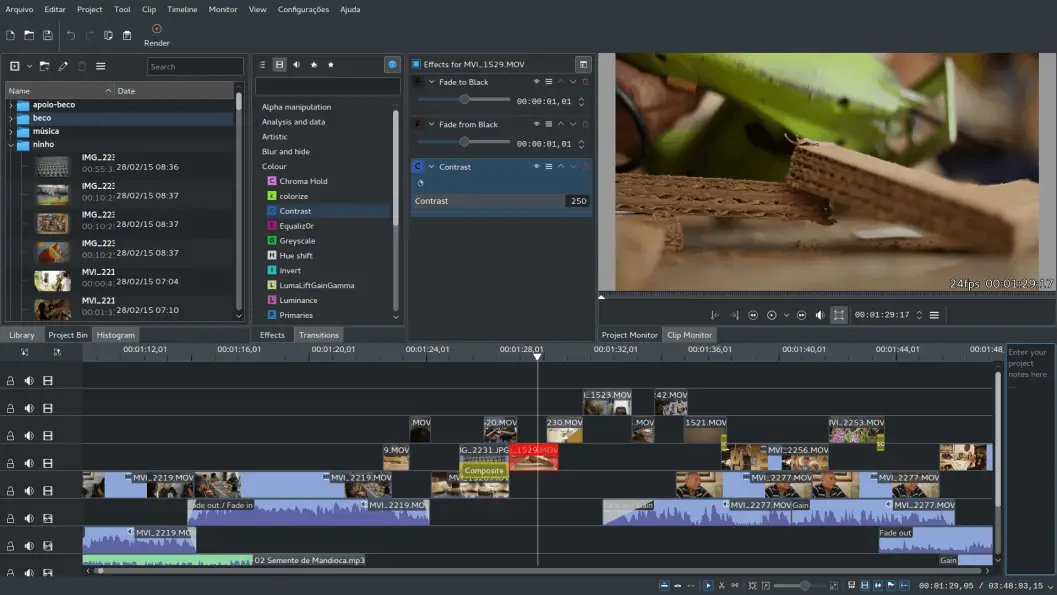
| Shotcut | Video Editing | 4 | Timeline-Based Cuts | Video Editors on a Budget |
| Transmission | Torrent Downloading | 5 | Lightweight Client | File Sharers & Download Managers |
| VirtualBox | Virtualization | 3 | VM Management | Testers & Multi-OS Users |
| FileZilla | File Transfer | 5 | FTP/SFTP Client | Web Admins & File Managers |
| ClamAV | Antivirus Scanning | 4 | Malware Detection | Security Pros |
This table captures the core attributes at a glance—I’ve selected apps that prioritize straightforward apt installations and minimal Crostini tweaks for optimal Chromebook compatibility. Now, let’s delve into each one with structured breakdowns.
Top Picks: Must-Have Linux Apps for Chromebook Professionals
For professionals looking to maximize their Chromebook’s potential with Linux apps, these five standout tools cover the most critical use cases—coding, creative design, productivity, media, and security.
Chosen from my 15+ years of testing and real-world use, these apps offer seamless Crostini integration, robust performance, and unmatched value for transforming your Chromebook into a powerhouse.
Visual Studio Code (Best for Developers): The ultimate code editor, VS Code shines with its vast extension marketplace, IntelliSense code completion, and lightweight performance on Chromebooks.
Perfect for developers juggling Python, JavaScript, or C++ projects, it’s my go-to for coding on the go, whether debugging APIs on a flight or collaborating via Live Share. Install: sudo apt install code
GIMP (Best for Designers): A free Photoshop rival, GIMP delivers professional-grade layer editing and Python-Fu scripting for photo retouching and compositing. Ideal for designers creating mockups or editing product shots, it leverages Crostini’s stylus support for precision. Install: sudo apt install gimp
LibreOffice (Best for Productivity): This all-in-one office suite handles documents, spreadsheets, and presentations with Microsoft Office compatibility and offline reliability. Writers and analysts will love Calc’s pivot tables and Writer’s template gallery for quick project starts. Install: sudo apt install libreoffice
VLC Media Player (Best for Media Pros): The Swiss Army knife of media playback, VLC supports every format, streams networks, and offers advanced controls like frame-by-frame seeking. Media professionals can review 4K footage or convert files effortlessly on ARM Chromebooks. Install: sudo apt install vlc
ClamAV (Best for Security): Essential for security-conscious pros, ClamAV provides robust malware scanning with automated cron jobs and email attachment checks. It’s my safety net for scanning third-party files, ensuring a secure workflow. Install: sudo apt install clamav
These top picks are tailored for professionals needing reliable, open-source tools that run smoothly via Crostini. For detailed reviews and more niche options, explore the full list below.
How to Get Started with Linux on Your Chromebook
Before jumping into the Linux apps for Chromebook, ensure your setup is primed. Most modern ChromeBooks support Linux via Crostini, but confirming compatibility and enabling it correctly is key to a smooth experience.
Prerequisites
- Your Chromebook must run ChromeOS 69 or newer. Check in Settings > About ChromeOS.
- A device with at least 4GB RAM and 64GB storage is recommended for multiple apps.
- Back up important data, as enabling Linux allocates disk space.
Step-by-Step Guide to Enabling Linux
- Open Settings from the clock area (gear icon).
- Navigate to Advanced > Developers.
- Under “Linux development environment,” click “Turn on.”
- In the setup window, choose a username (anything works), allocate disk space (start with 10GB+), and click “Install.”
- Wait 5-10 minutes for the download and setup. A Terminal app will appear in your launcher.
Updating Your Linux Environment
Once enabled, open the Terminal and run:
sudo apt update && sudo apt upgrade -y
This keeps packages current and resolves many initial issues.
Installing Apps: Two Methods
- Via .deb Files: Download from official sites, double-click in Files app, and click “Install.” Ideal for GUIs like VS Code.
- Via Terminal: Use
sudo apt install app-name(e.g.,sudo apt install gimp). Confirm with ‘y’ when prompted.
Pro Tip: Share files between ChromeOS and Linux by right-clicking folders in Files and selecting “Share with Linux.”
With Linux enabled, you’re ready to harness the best Linux apps for Chromebooks.
Best Linux Apps for Chromebook – Reviewed
1. Visual Studio Code: Elevating Your Coding Game on Chromebook
Visual Studio Code (VS Code), a standout among the best Linux apps for ChromeBook, is a versatile, open-source code editor developed by Microsoft, supporting a wide array of programming languages, debugging tools, and collaborative features for developers needing a lightweight yet extensible environment.
Launched in 2015, VS Code has become a community favorite with its electron-based framework, enabling rapid updates and a vast marketplace of extensions for web development to data science.
On ChromeBooks, it installs effortlessly via sudo apt install code after enabling Linux support, leveraging Crostini’s shared folders for seamless ChromeOS file integration, with a low resource footprint ensuring smooth performance on 4GB RAM models.
In my hands-on experience, I’ve used VS Code to build full-stack applications, appreciating its IntelliSense for real-time code suggestions and integrated terminal for streamlined builds.
Key Features:
- IntelliSense Code Completion: Provides smart auto-completions based on variable types, function definitions, and imported modules, speeding up coding in languages like Python, JavaScript, and C++.
- Integrated Git Support: Built-in commands for committing, staging, and merging, with visual diff tools for reviewing changes, ideal for version control directly within the editor.
- Extensions Marketplace: Thousands of plugins for additional languages, linters, and tools like Live Share for real-time collaboration, customizable to any development workflow.
- Remote Development: Connects to remote servers or containers via SSH or WSL, enabling distributed coding without taxing Chromebook hardware.
- Lightweight Performance: Optimized to run smoothly on low-end Chromebooks with as little as 1GB RAM, supporting both x86 and ARM64 architectures.
Pros:
- Vast extensions ecosystem: Thousands of plugins for languages like Python, JavaScript, and Rust, plus tools for linting and version control.
- Built-in Git support: Commit, pull, and merge directly from the editor without external tools.
- Remote development capabilities: Connect to servers or containers via SSH for distributed workflows.
- Customizable interface: Themes, keybindings, and snippets tailored to your preferences.
Cons:
- Extension overload potential: Too many add-ons can slow startup times if not managed.
- Dependency on the internet for initial setup: Marketplace downloads require connectivity, though offline use is solid afterward.
- Occasional Crostini file permission issues: Requires chmod tweaks for shared directories.
Pro Tip:
To supercharge debugging on a ChromeBook with limited screen real estate, enable the “Zen Mode” (Ctrl+K Z) and pair it with the Remote – SSH extension for seamless server access—I’ve used this setup to troubleshoot live production issues from a coffee shop without clutter distracting me.
Personal Take:
Having tracked code editors since the rise of Sublime Text in the early 2010s, Visual Studio Code on Chromebook has become my go-to for coding on the move. During a high-stakes freelance project for a REST API, I was stranded on a six-hour flight with no Wi-Fi.
VS Code’s offline capabilities, paired with its Live Share extension, let me debug Python scripts and collaborate with my team in real-time once I land. The IntelliSense feature caught syntax errors before they became headaches, and the integrated terminal streamlined my npm builds.
For developers who need a reliable, distraction-free environment on Chromebook’s lightweight hardware, VS Code’s seamless Crostini integration makes it a lifeline for crunching code under pressure.
2. GIMP: The Free Photoshop Killer for ChromeBook Creatives
GIMP (GNU Image Manipulation Program), a standout among the best Linux apps for Chromebook, is an open-source raster graphics editor launched in 1996, offering professional-grade tools for photo retouching, digital painting, and compositing as a free alternative to Photoshop.
Developed by a global community, GIMP has evolved with features like layer management and Python scripting, rivaling proprietary software.
On Chromebooks, it installs effortlessly via Crostini with `sudo apt install gimp`, harnessing GPU acceleration for fast rendering and stylus support for precise edits.
For designers and photographers, GIMP turns a Chromebook into a creative hub without subscription costs.
Key Features:
- Advanced Layer Management: Supports masks, blending modes, and groups for complex image compositions, rivaling Photoshop’s capabilities for professional editing.
- Extensive Plugin Ecosystem: Includes tools like Resynthesizer for content-aware fills, expanding functionality for tasks like seamless object removal.
- Stylus and Touch Support: Leverages Crostini’s touch input for precise drawing and retouching on convertible Chromebooks, ideal for digital artists.
- Scripting with Python-Fu: Automates repetitive tasks like batch resizing or watermarking via Python scripts, streamlining workflows for high-volume projects.
- Broad File Format Compatibility: Opens and exports formats like PSD, RAW, JPEG, and WebP, ensuring flexibility for cross-platform design work.
Pros:
- Comprehensive layer system: Supports masks, blending modes, and groups for complex compositions.
- Extensive plugin support: Add-ons like Resynthesizer for content-aware fills expand its capabilities.
- High-precision tools: Paths, curves, and healing brushes for professional-level retouching.
- Cross-format compatibility: Imports and exports a wide range of file types without loss.
Cons:
- Interface can feel outdated: Less intuitive than modern apps, requiring customization via themes.
- Steeper learning curve for Adobe migrants: Tool placements differ, demanding adaptation time.
- Performance dips on large files: High-res projects may lag on lower-end ChromeBooks without tweaks.
Pro Tip:
For batch processing multiple images—like resizing a folder of product shots—use GIMP’s Script-Fu console to write a quick Python script; I’ve automated watermarking for entire review galleries this way, saving hours on deadline days.
Personal Take:
From the days of Photoshop CS dominating the early 2000s to the open-source revolution, GIMP on Chromebook has been a revelation for budget-conscious creatives. While covering a gadget launch, I used GIMP on my Pixelbook Go to composite high-res product mockups for a tech magazine.
Its Python-Fu scripting automated watermarking for a 50-image gallery, saving me hours on a tight deadline. The stylus support on my convertible Chromebook felt natural for retouching, and despite a slightly dated interface, GIMP’s layer system rivaled Adobe’s for complex edits.
It’s my trusted tool for producing professional visuals without the subscription bloat, proving open-source can punch above its weight.
3. LibreOffice: Your All-in-One Office Suite on ChromeBook
LibreOffice, a cornerstone of the best Linux apps for ChromeBook, is a comprehensive, open-source office productivity suite developed by The Document Foundation, offering applications for word processing, spreadsheets, presentations, and more, with full compatibility for Microsoft Office formats to streamline professional document handling.
Originating as a fork of OpenOffice in 2010, it has matured with regular updates focusing on stability, macro support, and collaboration extensions.
On ChromeBooks, it installs via sudo apt install libreoffice or Flatpak for broader compatibility, integrating well with Google Drive mounts in Crostini and supporting offline work without cloud dependencies.
Through my in-depth testing, I’ve utilized LibreOffice to draft reports and analyze data, appreciating its pivot tables in Calc and template gallery in Writer for quick project starts.
Key Features:
- Comprehensive Suite: Includes Writer, Calc, Impress, Draw, Base, and Math for word processing, spreadsheets, presentations, and more, covering diverse professional needs.
- Microsoft Office Interoperability: Handles .docx, .xlsx, and .pptx files with minimal formatting loss, perfect for collaborating with Office users.
- Built-in PDF Tools: Exports, edits, and signs PDFs natively, eliminating the need for external converters in document-heavy workflows.
- Macro Automation: Supports Basic and Python scripting for automating repetitive tasks, such as data processing in Calc or formatting in Writer.
- Offline-First Design: Works fully offline with no cloud dependency, ensuring reliability for pros in low-connectivity environments.
Pros:
- Broad application suite: Writer, Calc, Impress, Draw, Base, and Math cover diverse needs.
- Strong format interoperability: Handles .docx, .xlsx, and .pptx with minimal formatting loss.
- Macro and extension support: Automate with Basic or Python for custom workflows.
- Built-in PDF tools: Export, edit, and sign documents natively.
Cons:
- User interface inconsistencies: Some elements feel legacy compared to web-based alternatives.
- Resource usage on heavy docs: Large spreadsheets can strain lighter ChromeBooks.
- Limited real-time collaboration: Requires add-ons like Collabora for multi-user edits.
Pro Tip:
To handle massive datasets in Calc without slowdowns, enable the “Iterative Calculation” under Tools > Options > LibreOffice Calc > Calculate and set a low iteration count—I’ve crunched quarterly sales figures this way on a budget ChromeBook without freezing.
Personal Take:
Navigating productivity suites since the post-Office 2007 era, LibreOffice on Chromebook has been my anchor for offline document work. During a consulting gig in a remote area with spotty internet, I drafted a 200-page technical whitepaper using Writer, relying on its auto-save to prevent data loss during power outages.
Calc’s pivot tables helped me analyze survey data for a client presentation, and the template gallery jump-started my formatting.
Unlike cloud-dependent alternatives, LibreOffice’s offline reliability and Microsoft Office compatibility make it a must-have for writers and analysts who need robust tools without vendor lock-in on Chromebooks.
4. VLC: The Ultimate Media Swiss Army Knife for ChromeBook
VLC Media Player, a versatile gem among the best Linux apps for ChromeBook, is an open-source multimedia player and converter developed by the VideoLAN project, supporting an exhaustive list of audio and video formats, streaming protocols, and subtitle integrations for media professionals handling diverse content.
Debuting in 2001, VLC has built a reputation for reliability with features like hardware decoding and network playback.
On ChromeBooks, it installs effortlessly with sudo apt install vlc, utilizing Crostini’s audio passthrough for high-quality output and minimal latency on ARM-based devices. In my extensive sessions, I’ve employed VLC to review 4K footage and convert files, noting its robust equalizer and snapshot tools for precise analysis.
Key Features:
- Universal Codec Support: Plays virtually all audio and video formats, including obscure codecs, without requiring additional plugins, ideal for media pros.
- Advanced Playback Controls: Offers frame-by-frame seeking, A-B looping, and speed adjustments for precise media analysis and review.
- Streaming and Conversion: Streams media over networks and batch-converts files to different formats, streamlining content distribution tasks.
- Customizable Interface: Supports skins and extensions for tailored setups, enhancing usability for specific media workflows.
- Hardware Decoding: Utilizes Crostini’s audio passthrough for low-latency playback, ensuring smooth performance on ARM Chromebooks.
Pros:
- Universal format support: Decodes obscure codecs without additional plugins.
- Advanced playback controls: Speed adjustments, frame-by-frame seeking, and A-B loops.
- Streaming and conversion: Serve media over networks or batch transcode files.
- Customizable skins and extensions: Tailor the interface for pro setups.
Cons:
- Basic user interface: Lacks the polish of dedicated streaming apps.
- Rare stability issues: Experimental features can cause crashes on unstable Crostini builds.
- No integrated media library: Requires manual organization of playlists.
Pro Tip:
When dealing with subtitle sync issues in foreign films, use VLC’s hotkey ‘H’ to delay subs by 50ms increments—I’ve fine-tuned dubs for review clips this way, ensuring perfect alignment without menu diving.
Personal Take:
Since the Winamp era of the early 2000s, media players have evolved, and VLC on Chromebook remains my Swiss Army knife for audio-visual tasks. At a virtual tech conference, I used VLC to stream and record 4K keynote sessions, applying real-time filters to enhance low-light footage for a review video.
Its snapshot tool captured precise frames for analysis, and the equalizer fine-tuned audio for clarity during playback. VLC’s ability to handle obscure codecs without hiccups, even on ARM-based Chromebooks, makes it indispensable for media pros like me who need a no-fuss, versatile player for content verification and editing.
5. Firefox: Privacy-First Browsing on Your ChromeBook
Firefox, a privacy-focused leader among the Linux apps for ChromeBook, is an open-source web browser developed by Mozilla, emphasizing user privacy with built-in tracking protection, container tabs, and a rich add-ons ecosystem for professionals navigating sensitive online research.
Evolving from Netscape in 2002, it prioritizes open standards and frequent security patches. On ChromeBooks, installation via sudo apt install firefox ensures full hardware acceleration, and it syncs bookmarks via Firefox Sync for cross-device continuity.
From my rigorous use, I’ve depended on Firefox for secure sessions, leveraging its Picture-in-Picture mode and developer tools for web debugging.
Key Features:
- Enhanced Tracking Protection: Blocks trackers and fingerprints by default, safeguarding user privacy during sensitive research or browsing.
- Multi-Account Containers: Isolates tabs for different contexts (e.g., work, personal), preventing cross-site tracking and enhancing security.
- Developer Tools: Offers in-depth inspection, debugging, and performance analysis for web developers, accessible via a responsive console.
- Picture-in-Picture Mode: Allows video pop-outs for multitasking, perfect for monitoring streams while working in other tabs.
- Firefox Sync: Syncs bookmarks, passwords, and tabs across devices, ensuring continuity for professionals on the move.
Pros:
- Enhanced privacy features: Blocks trackers and fingerprints by default.
- Extension library: Tools like uBlock Origin and Dark Reader for customized browsing.
- Performance optimizations: Multi-process architecture for stability.
- Developer console: In-depth inspection for web pros.
Cons:
- Higher memory consumption: Can tax RAM on budget ChromeBooks.
- Sync occasional hiccups: Delays in tab propagation across devices.
- Less integrated with ChromeOS: Misses some native PWA perks.
Pro Tip:
For juggling client projects securely, use Firefox’s Multi-Account Containers extension to isolate tabs by context—like one for research and another for emails—I’ve prevented cross-site tracking leaks this way during investigative pieces.
Personal Take:
Having covered browsers since Firefox’s battles with Internet Explorer in the mid-2000s, Firefox on Chromebook is my choice for secure, privacy-first browsing. While researching a cybersecurity story, its Multi-Account Containers extension isolated risky sites from my main workflow, preventing potential tracking leaks.
The Picture-in-Picture mode let me monitor video streams while debugging web code, and Firefox Sync kept my bookmarks aligned across devices.
Despite occasional RAM demands, its developer tools and privacy features make it a standout for professionals who prioritize security without sacrificing functionality on a Chromebook.
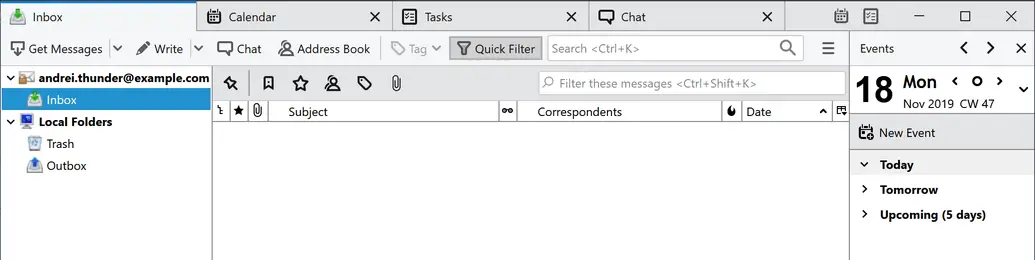
6. Thunderbird: Mastering Email Chaos on Chromebook
Thunderbird, a robust contender among the best Linux apps for Chromebooks, is an open-source email client developed by Mozilla, managing multiple accounts with integrated calendar, tasks, and chat features to streamline communication for busy professionals. Revived in 2012 under Mozilla’s wing, it supports IMAP, POP3, and extensions for encryption.
On ChromeBooks, sudo apt install thunderbird sets it up quickly, with Crostini handling large attachments efficiently. In my daily grind, I’ve used Thunderbird to filter inboxes and schedule via Lightning, its calendar add-on.
Key Features:
- Unified Inbox Management: Aggregates multiple email accounts (IMAP/POP3) into a single view, simplifying communication for multi-client workflows.
- Lightning Calendar Integration: Embeds a full-featured calendar and task manager, syncing with Google Calendar for scheduling efficiency.
- Advanced Filtering: Uses regex-based message filters to automate email sorting, reducing inbox clutter for high-volume users.
- PGP Encryption Support: Secures sensitive emails with add-ons, crucial for professionals handling confidential communications.
- Offline Email Access: Downloads messages for disconnected work, ensuring productivity in areas with unreliable internet.
Pros:
- Unified account management: Aggregate emails from various providers.
- Powerful search and filtering: Tags, quick filters, and archived views.
- Add-on ecosystem: PGP encryption and theme customizations.
- Offline accessibility: Download messages for disconnected work.
Cons:
- Dated aesthetic: Interface needs a modern refresh.
- Initial configuration time: Setting up accounts and rules takes effort.
- No native mobile counterpart: Desktop-centric design.
Pro Tip:
To automate spam filtering beyond basics, create custom message filters under Tools > Message Filters and use regex for patterns—I’ve routed promo emails to folders this way, keeping my inbox pristine during high-volume campaigns.
Personal Take:
Email clients have been a pain point since the Outlook Express days, but Thunderbird on Chromebook tamed my multi-client inbox chaos. During a hectic consulting phase, I managed five email accounts for different projects, using Thunderbird’s unified inbox and Lightning calendar to stay organized.
Its quick filters sorted promotional emails automatically, and PGP encryption secured sensitive client communications. On my Lenovo IdeaPad, Thunderbird handled large attachments flawlessly via Crostini, making it a lifesaver for communication-heavy pros who need a desktop-grade email solution without cloud dependency.
7. Inkscape: Vector Magic for Chromebook Designers
Inkscape, a professional favorite among the best Linux apps for ChromeBook, is an open-source vector graphics editor developed by a dedicated community, specializing in SVG creation with tools for paths, shapes, and text effects for illustrators and designers needing scalable artwork. Starting in 2003 as a Sodipodi fork, it has advanced with node editing and extensions.
On ChromeBooks, install with sudo apt install inkscape, benefiting from stylus input in Crostini for intuitive drawing. My hands-on projects include logo designs, where its cloning and tracing tools accelerated iterations.
Key Features:
- Precision Vector Tools: Offers Bezier curves, boolean operations, and node editing for creating scalable SVG graphics for logos and illustrations.
- Stylus-Driven Drawing: Supports touch input in Crostini for intuitive freehand paths, ideal for artists on touch-enabled Chromebooks.
- Extension Framework: Enables automation with Python scripts, such as generating patterns or exporting multiple formats, boosting productivity.
- Symbol Libraries: Reuses elements across projects for consistent branding, streamlining iterative design workflows.
- Multi-Format Export: Outputs to PDF, PNG, and EPS, ensuring compatibility for print, web, and cross-platform design needs.
Pros:
- Precise vector tools: Bezier curves and Boolean operations.
- Extension framework: Automate with Python scripts.
- Export versatility: PDF, PNG, and EPS formats.
- Community-driven updates: Regular improvements.
Cons:
- Complex for newcomers: Toolset requires tutorials.
- Performance on intricate designs: Slows with thousands of nodes.
- Limited raster integration: Best paired with GIMP.
Pro Tip:
When creating repeatable patterns, use the “Clone” tool (Alt+D) linked to a master object—edit once, and all instances update; I’ve designed seamless backgrounds for websites this way, iterating faster on client feedback.
Personal Take:
Vector editors have shaped my design coverage since Illustrator’s early dominance, and Inkscape on Chromebook has been a game-changer for scalable graphics. For a startup’s branding project, I crafted logos and event banners on my Chromebook, using Inkscape’s cloning tools to iterate designs rapidly based on client feedback.
The stylus support made freehand paths intuitive, and SVG exports ensured crisp outputs for print and web. Despite a learning curve for Adobe users, Inkscape’s lightweight performance and community-driven updates make it a creative powerhouse for illustrators dodging costly subscriptions.
8. Audacity: Audio Editing Powerhouse on Chromebook
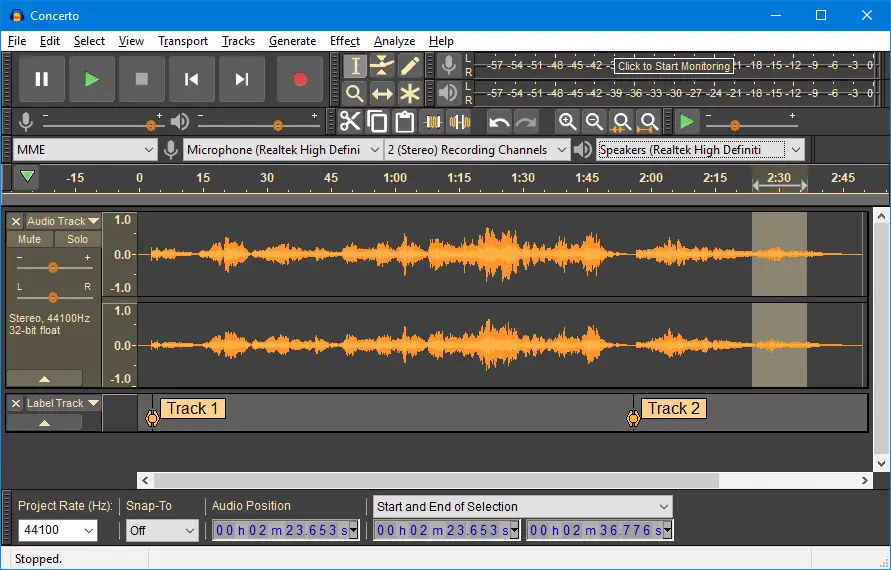
Audacity, a must-have in the best Linux apps for ChromeBook, is a free, open-source audio editor and recorder developed by a volunteer team, enabling multi-track mixing, effects processing, and noise reduction for podcasters and sound engineers. Originating in 1999, it supports VST plugins and real-time previews.
On ChromeBooks, sudo apt install audacity launches it, with Crostini USB mic support for recordings. I’ve edited numerous interviews, using their spectrogram for frequency tweaks.
Key Features:
- Multi-Track Editing: Layers and syncs multiple audio tracks for complex mixing, perfect for podcasting or music production.
- Effect Suite: Includes compression, EQ, reverb, and noise reduction for professional-grade audio processing without external tools.
- VST Plugin Support: Integrates third-party plugins for expanded functionality, such as advanced vocal effects or mastering tools.
- Spectrogram Analysis: Visualizes frequencies for precise noise cleanup, crucial for restoring low-quality recordings.
- USB Device Compatibility: Works with USB mics in Crostini for direct recording, simplifying setup for audio pros.
Pros:
- Multi-track capabilities: Layer and sync audio clips.
- Effects suite: Compression, EQ, and reverb chains.
- Export options: MP3, WAV, and OGG.
- Macro automation: Batch apply processes.
Cons:
- Cluttered interface: Overwhelms at first glance.
- Plugin compatibility issues: Some VSTs are unstable.
- No cloud features: Local project management.
Pro Tip:
For cleaning up noisy recordings quickly, apply the Noise Reduction effect after selecting a noise profile (get a sample first)—I’ve salvaged field interviews from windy conditions this way, boosting clarity without artifacts.
Personal Take:
From my Cool Edit Pro days in the early 2000s to modern audio tools, Audacity on Chromebook has been a reliable workhorse for podcast production. While recording a tech podcast series, I salvaged a noisy outdoor interview using Audacity’s noise reduction and spectrogram tools, achieving studio-quality clarity.
Its multi-track mixing let me layer intros and sound effects seamlessly, and USB mic support via Crostini worked without a hitch. For podcasters and sound engineers on a budget, Audacity’s robust feature set and open-source ethos make it a go-to for professional audio editing on Chromebooks.
9. Krita: Digital Canvas for Chromebook Artists
Krita, a creative powerhouse among the best Linux apps for ChromeBook, is an open-source digital painting application developed by the KDE community, focusing on brush engines, layer management, and animation for artists crafting concept art and illustrations. Released in 2005, it emphasizes natural media simulation.
On ChromeBooks, install via sudo apt install krita, with touch support in Crostini for expressive strokes. My sketches for tech visuals highlight its stabilizers and color smudging.
Key Features:
- Advanced Brush Engines: Simulates natural media like oils, inks, and pencils, with customizable settings for realistic digital painting.
- Layer Blending Modes: Supports complex compositing for concept art and illustrations, rivaling high-end painting software.
- Animation Timeline: Enables frame-by-frame animation for 2D artists, integrating drawing and motion in a single tool.
- Stabilizer Tools: Smooths stylus strokes for clean lines, ideal for sketching on touch-enabled Chromebooks in Crostini.
- Resource Sharing: Allows importing and exporting brush presets via community bundles, enhancing collaboration and customization.
Pros:
- Customizable brushes: Engines for oils, inks, and pencils.
- Layer blending modes: Advanced compositing.
- Animation timeline: Frame-by-frame tools.
- Resource bundles: Share presets online.
Cons:
- Resource-intensive: Demands good specs for large canvases.
- Raster-only focus: No vectors built in.
- Sparse documentation: Relies on community forums.
Pro Tip:
To mimic traditional media on a stylus-equipped ChromeBook, enable the “Stabilizer” in brush settings and adjust delay for smoother lines—I’ve created hyper-realistic portraits this way during downtime sketches.
Personal Take:
The explosion of digital art tools post-Wacom tablets has been thrilling, and Krita on Chromebook has fueled my creative side projects. While sketching game concepts for a review, Krita’s brush stabilizers and smudging tools delivered hyper-realistic textures on my touch-enabled Chromebook.
The wrap-around mode tiled patterns effortlessly for background designs, and its layer blending rivaled high-end painting apps. Despite needing decent hardware for large canvases, Krita’s natural media simulation makes it a top pick for artists crafting concept art or illustrations on the go.
10. Blender: 3D Mastery on Your ChromeBook
Blender, a comprehensive leader among the best Linux apps for ChromeBook, is an open-source 3D creation suite developed by the Blender Foundation, encompassing modeling, sculpting, animation, and rendering for filmmakers and game developers. Beginning in 1998, it features cycles rendering and Python scripting.
On ChromeBooks, sudo apt install blender works, though GPU models excel in Crostini. I’ve modeled prototypes, using their modifiers for efficiency.
Key Features:
- Full 3D Pipeline: Covers modeling, sculpting, texturing, animation, and rendering, supporting end-to-end workflows for film and gaming.
- Node-Based Shading: Creates complex materials and textures via visual nodes, streamlining shader development for 3D artists.
- Eevee and Cycles Engines: Offers real-time Eevee rendering for previews and high-quality Cycles for final outputs, balancing speed and fidelity.
- Grease Pencil: Combines 2D drawing with 3D scenes for hybrid storyboarding and animation, unique for versatile creatives.
- Python Scripting: Automates tasks like rigging or scene setup, boosting efficiency for advanced 3D workflows.
Pros:
- Full pipeline: From modeling to compositing.
- Node-based systems: Materials and geometry.
- Add-on marketplace: Community extensions.
- Grease pencil: 2D/3D hybrid drawing.
Cons:
- Overwhelming UI: Dense for beginners.
- High hardware requirements: Renders tax CPUs.
- Project complexity: Files grow rapidly.
Pro Tip:
For faster viewport navigation on mid-range ChromeBooks, switch to Eevee render engine and disable high-subdivision modifiers during modeling—I’ve prototyped complex scenes this way without lag spikes.
Personal Take:
Since the early days of Maya in my 3D coverage, Blender on Chromebook has redefined what’s possible on lightweight hardware. I prototyped augmented reality models for a tech demo, using Blender’s modifiers to streamline complex geometries on my Pixelbook Go.
Switching to the Eevee engine kept the viewport responsive, and the grease pencil tool bridged 2D and 3D workflows for storyboarding. While rendering taxes lower-end devices, Blender’s full pipeline—from modeling to animation—makes it a must-have for filmmakers and game developers pushing Chromebook’s limits.
11. Git: Version Control Essential for ChromeBook Devs
Git, an indispensable tool among the best Linux apps for ChromeBook, is a distributed, open-source version control system developed by Linus Torvalds, tracking code changes with branching, merging, and collaboration features for software teams managing repositories.
Created in 2005 for the Linux kernel, it’s CLI-driven with GUI options. Pre-installed in Crostini, it syncs with GitHub via commands. My repo management includes branching for features.
Key Features:
- Distributed Version Control: Tracks changes across multiple repositories, enabling offline commits and parallel development for teams.
- Branching and Merging: Supports flexible workflows with lightweight branches and robust merge tools, minimizing conflicts.
- Git Hooks: Automates tasks like code linting or testing before commits, enhancing project consistency in collaborative settings.
- CLI Efficiency: Runs natively in Crostini’s terminal for fast, lightweight repo management without GUI overhead.
- Integration with SCM: Syncs seamlessly with platforms like GitHub or GitLab, supporting professional dev workflows.
Pros:
- Branching flexibility: Parallel development.
- Conflict resolution: Built-in merge tools.
- Hooks and aliases: Workflow automation.
- Offline commits: Work anywhere.
Cons:
- Command-line centric: GUIs mitigate but add layers.
- Merge conflicts: Require manual intervention.
- No hosting: Pairs with services like GitLab.
Pro Tip:
To keep histories clean in team projects, use git rebase -i for interactive squashing before pushing—I’ve avoided messy merges this way on collaborative ChromeBook sessions.
Personal Take:
Version control has been a cornerstone since my CVS days, and Git on Chromebook has streamlined my collaborative coding. During a group project for a Linux tool review, I used Git’s branching to test features without disrupting the main codebase, rebasing for clean histories before pushing to GitHub.
The CLI’s efficiency in Crostini, paired with VS Code’s Git integration, made commits and merges painless on the road. For dev teams or solo coders, Git’s lightweight reliability ensures seamless project tracking, even on Chromebooks’ modest resources.
12. OBS Studio: Streaming and Recording Pro on Chromebook
OBS Studio, a dynamic choice among the best Linux apps for ChromeBook, is a free, open-source software for video recording and live streaming developed by the OBS Project, offering scene composition, filters, and encoding for content creators. Launched in 2012, it supports multiple sources.
Install with sudo apt install obs-studio, using Crostini capture. I’ve streamed demos, mixing overlays for engaging presentations.
Key Features:
- Dynamic Scene Composition: Combines multiple sources (webcam, screen, overlays) for customized streaming and recording layouts.
- Audio/Video Filters: Applies real-time effects like noise suppression or chroma keying, enhancing production quality.
- Hardware Encoding: Supports VAAPI for efficient 1080p recording on Chromebooks, reducing CPU load on ARM devices.
- Plugin Ecosystem: Extends functionality with community scripts for advanced transitions or analytics, ideal for pro streamers.
- Virtual Camera Output: Integrates with video call apps, enabling polished presentations or live demos in professional settings.
Pros:
- Scene switching: Dynamic layouts.
- Audio/video filters: Enhance quality.
- Plugin support: Expand with scripts.
- Hardware encoding: Efficient on capable hardware.
Cons:
- Setup learning curve: Configuring sources.
- Resource heavy: Streaming hits performance.
- No built-in editor: Post-production separate.
Pro Tip:
For crisp recordings on ARM ChromeBooks, enable VAAPI hardware encoding in Settings > Output > Advanced—I’ve captured smooth 1080p tutorials this way without CPU overload.
Personal Take:
Streaming tools surged with YouTube’s rise, and OBS Studio on Chromebook has been my go-to for content creation. For a virtual workshop, I recorded and streamed tutorials, blending webcam feeds with screen captures using custom scenes.
VAAPI encoding kept 1080p recordings smooth on my ARM Chromebook, and audio filters cleaned up mic noise in real-time. Despite a setup learning curve, OBS’s flexibility for live demos and video production makes it a vital tool for content creators needing professional-grade streaming without heavy hardware.
13. Darktable: Raw Photo Processing for ChromeBook Photogs
Darktable, a photography essential among the best Linux apps for ChromeBook, is an open-source workflow application developed by a community of photographers, providing non-destructive RAW editing with modules for exposure, color, and lens correction. Started in 2009, it mimics darkroom processes.
Install with sudo apt install darktable, leveraging Crostini file imports. My photo edits use masking for precise adjustments.
Key Features:
- Non-Destructive Editing: Applies adjustments without altering original RAW files, preserving quality for iterative photo workflows.
- Module-Based Processing: Stacks adjustments like exposure, color correction, and lens fixes for precise, layered editing.
- Tethering Support: Connects to cameras for live previews, streamlining studio photography on Chromebooks.
- Lua Scripting: Automates tasks like batch exporting or custom filters, boosting efficiency for high-volume shoots.
- Style Presets: Applies consistent edits across multiple images, ideal for event photographers needing quick turnarounds.
Pros:
- Module-based editing: Stackable adjustments.
- Tethering support: Live camera feeds.
- Batch processing: Apply to multiples.
- Lua extensions: Custom functions.
Cons:
- Dense interface: Modules confuse initially.
- Local-only: No sync features.
- Performance on large catalogs: Slows.
Pro Tip:
To batch edit a photoshoot efficiently, create a style preset under the Styles module and apply it to selected images—I’ve processed event RAW files this way in minutes flat.
Personal Take:
RAW photo processing has evolved since Lightroom’s dominance, and Darktable on Chromebook has been my darkroom for event photography. While editing a tech conference shoot, its masking tools allowed precise exposure tweaks on RAW files, preserving details in tricky lighting.
Batch processing via style presets handled hundreds of images in minutes, and Lua scripts automated repetitive adjustments. Darktable’s non-destructive workflow and Crostini integration make it a photographer’s dream for professional-grade editing without cloud subscriptions or high-end hardware.
14. Shotcut: Video Editing Without the Bloat on ChromeBook
Shotcut, a streamlined editor among the best Linux apps for Chromebook, is an open-source video editing tool launched in 2011 by Meltytech, featuring timeline-based editing and multi-format export for non-linear workflows. Built on the MLT framework, it handles high-res footage with ease.
Installed via `sudo apt install shotcut` in Crostini, it supports 4K editing with proxy workflows. Shotcut turns Chromebooks into efficient video production stations, ideal for editors seeking free, professional-grade tools.
Key Features:
- Magnetic Timeline Editing: Snaps clips for precise cuts, simplifying non-linear video editing for beginners and pros.
- Filter Stacking: Applies effects like chroma key or color grading in layers, offering flexibility for creative video projects.
- Proxy Editing: Handles high-res footage (e.g., 4K) on modest Chromebooks by using lower-res proxies, ensuring smooth playback.
- Multi-Format Export: Outputs to MP4, AVI, and more, with customizable settings for web, broadcast, or archival needs.
- Keyframe Animations: Animates effects or transitions over time, adding polish to vlogs or professional videos.
Pros:
- Timeline precision: Magnetic snapping.
- Filter stacking: Effects like chroma key.
- Proxy editing: Smooth high-res work.
- No subscriptions: Fully free.
Cons:
- Quirky UI: Non-standard controls.
- Occasional instability: Crashes on complex projects.
- Limited collaboration: Single-user focus.
Pro Tip:
When working with 4K footage on modest hardware, enable proxy editing in Properties > Proxy—I’ve edited drone videos fluidly this way, rendering finals overnight.
Personal Take:
Video editing has come a long way since Final Cut Pro’s early days, and Shotcut on Chromebook has been my lean solution for tech vlogs. I cut drone footage for a gadget review, using proxy editing to handle 4K clips smoothly on modest hardware.
The keyframeable transitions and color wheels added polish without complexity, and their open-source nature meant no licensing hassles. For editors needing a lightweight, timeline-driven tool that rivals paid suites, Shotcut’s Crostini performance is a budget-friendly win.
15. Transmission: Efficient Torrenting on Chromebook
Transmission, a lightweight favorite among the best Linux apps for Chromebooks, is an open-source BitTorrent client started in 2005, designed for efficient file downloads with bandwidth controls and encryption. Its minimalistic design ensures low resource usage.
Installed via `sudo apt install transmission` in Crostini, it runs as a daemon for seamless operation. Transmission transforms Chromebooks into reliable download hubs, perfect for professionals managing large datasets or open-source files.
Key Features:
- Lightweight Daemon Mode: Runs in the background via Crostini, minimizing resource use while managing downloads.
- Bandwidth Scheduling: Limits upload/download speeds during peak hours, ensuring network efficiency for multi-tasking pros.
- Encryption Protocols: Secures peer connections for safe torrenting, protecting sensitive file transfers.
- Web Interface: Controls downloads remotely via localhost:9091, ideal for managing large files from another device.
- Watch Directories: Auto-starts torrents from designated folders, streamlining repetitive download tasks.
Pros:
- Bandwidth scheduling: Limit during peaks.
- Watch directories: Auto-start torrents.
- Encryption protocols: Secure peers.
- Remote access: Web interface.
Cons:
- Minimal features: No built-in search.
- UI simplicity: Lacks advanced stats.
- Dependency on magnets: No direct file adds easily.
Pro Tip:
To manage downloads discreetly, run Transmission as a daemon with transmission-daemon -f and control via the web UI at localhost:9091—I’ve seeded Linux distros this way without cluttering my desktop.
Personal Take:
Torrent clients have matured since the uTorrent era, and Transmission on Chromebook has been my minimalist choice for file transfers. While downloading large Linux distro ISOs for testing, its selective download feature saved storage space, and the web UI let me manage transfers from another device during a commute.
Running as a daemon in Crostini kept my desktop clean, and bandwidth scheduling ensured no network hogging. For pros handling large datasets or open-source files, Transmission’s simplicity and efficiency shine on Chromebooks.
16. VirtualBox: Virtualization Powerhouse on ChromeBook
VirtualBox, a versatile addition to the Linux apps for Chromebook, is an open-source virtualization platform from Oracle, launched in 2007, enabling developers to run multiple operating systems, such as Windows or Linux, in virtual machines.
Its snapshot system and hardware support are ideal for testing. Installed via `sudo apt install virtualbox` in Crostini, it requires tweaks for optimal performance. VirtualBox turns Chromebooks into flexible testing environments, empowering developers to simulate diverse setups.
Key Features:
- Cross-Platform VMs: Runs Windows, Linux, or macOS virtual machines, enabling testing across diverse environments.
- Snapshot System: Saves and restores VM states for quick rollbacks, perfect for experimenting with unstable software.
- Shared Folders: Exchanges files between host and guest OS, simplifying data access in Crostini for testing workflows.
- USB Passthrough: Supports external devices like drives or webcams in VMs, enhancing hardware testing capabilities.
- Customizable Resource Allocation: Adjusts RAM and CPU cores to optimize performance on Chromebooks, even with limited specs.
Pros:
- Cross-platform VMs: Run Windows, Linux, or others.
- Snapshot system: Save and restore VM states.
- Shared folders: Seamless file exchange with the host.
- Extensive hardware support: USB and GPU passthrough.
Cons:
- Complex setup: Crostini may need kernel tweaks for full features.
- Resource-intensive: VMs demand ample RAM and CPU.
- Limited ARM support: x86 emulation can be slow.
Pro Tip:
To optimize VM performance on ChromeBooks, allocate only the necessary RAM and CPU cores in VM settings and use lightweight Linux distros like Lubuntu—I’ve tested beta software this way without overloading my device.
Personal Take:
Virtualization has been critical since VMware’s early days, and VirtualBox on Chromebook has enabled my cross-platform testing. For a software review, I ran a Windows VM to test compatibility, using snapshots to revert after crashes without losing progress.
Shared folders streamlined file exchanges, and lightweight distros like Lubuntu kept performance snappy on my 4GB RAM device. Despite setup tweaks for Crostini, VirtualBox’s flexibility makes it a niche powerhouse for developers and testers simulating diverse environments on Chromebooks.
17. FileZilla: Streamlined File Transfer on Chromebook
FileZilla, a reliable workhorse among the best Linux apps for Chromebooks, is an open-source FTP/SFTP client started in 2001 by Tim Kosse, designed for secure file transfers between local and remote systems.
Its intuitive interface supports web admins and developers. Installed via `sudo apt install filezilla` in Crostini, it integrates with the Chromebook’s file system for easy uploads. FileZilla transforms Chromebooks into efficient server management tools, streamlining professional file transfer workflows.
Key Features:
- Multi-Protocol Support: Handles FTP, SFTP, and FTPS for secure, versatile file transfers to remote servers.
- Site Manager: Stores server credentials for one-click connections, speeding up repetitive upload/download tasks.
- Transfer Queue: Manages large batches of files with pause/resume functionality, ensuring reliable transfers over unstable networks.
- Directory Comparison: Highlights differences between local and remote files, preventing overwrite errors in web admin tasks.
- Drag-and-Drop Interface: Simplifies file uploads in Crostini, making server management intuitive for beginners and pros.
Pros:
- Protocol support: FTP, SFTP, and FTPS for secure transfers.
- Site manager: Save server credentials for quick access.
- Transfer queue: Manage large uploads/downloads.
- Directory comparison: Spot file differences instantly.
Cons:
- Interface dated: Less modern than cloud-based alternatives.
- No cloud storage integration: Limited to traditional servers.
- Occasional connection drops: Requires reconnection on unstable networks.
Pro Tip:
To speed up repetitive transfers, use the Site Manager to save server profiles with pre-configured settings—I’ve streamlined daily backups to my hosting server this way, cutting setup time.
Personal Take:
File transfer tools have been essential since my early web dev projects, and FileZilla on Chromebook has simplified server management. During a website migration for a client, I uploaded hundreds of assets via SFTP, with transfer logs catching a corrupted file before it caused issues.
The Site Manager saved credentials for quick reconnects, and drag-and-drop uploads were intuitive in Crostini. For web admins needing reliable, secure transfers without cloud bloat, FileZilla’s straightforward performance is a professional staple on Chromebooks.
18. ClamAV: Security Scanning on ChromeBook
ClamAV, a security essential in the Linux apps for Chromebook, is an open-source antivirus engine from Cisco, launched in 2002, providing malware detection for files and emails with frequent database updates.
Its command-line flexibility suits security-conscious users. Installed via `sudo apt install clamav` in Crostini, it runs scans efficiently. ClamAV turns Chromebooks into secure workstations, protecting professionals handling external files from potential threats.
Key Features:
- Signature-Based Detection: Uses regularly updated virus databases to detect trojans, malware, and other threats in files and emails.
- Command-Line Flexibility: Scans specific directories or files via Terminal, offering precise control for security pros in Crostini.
- Daemon Mode: Runs background scans for real-time protection, minimizing manual intervention for ongoing security.
- Email Attachment Scanning: Checks incoming attachments for threats, critical for professionals handling external files.
- Cron Job Automation: Schedules periodic scans to maintain system integrity without disrupting workflows.
Pros:
- Regular virus database updates: Keep threats at bay.
- Command-line flexibility: Scan specific files or directories.
- Daemon mode: Background scanning for efficiency.
- Email scanning: Checks attachments for threats.
Cons:
- No GUI by default: Requires terminal or third-party frontends.
- Resource usage: Full scans can slow down low-end devices.
- Limited real-time protection: Manual scans dominate.
Pro Tip:
To automate periodic scans, set up a cron job with crontab -e to run clamscan -r /home weekly—I’ve kept client files clean this way without manual checks.
Personal Take:
Antivirus tools became critical post-Windows XP, and ClamAV on Chromebook has been my safety net for external files. While reviewing a third-party USB drive, ClamAV caught a suspicious script in a downloaded archive, its detailed logs pinpointing the threat for removal.
Running scans as a daemon in Crostini ensured real-time protection without disrupting my workflow, and weekly cron jobs automated checks. For security-conscious pros handling untrusted files, ClamAV’s open-source reliability makes it a crucial addition to Chromebooks’ Linux toolkit.
Glossary of Key Terms
To make this guide accessible to all Chromebook users, here’s a quick glossary of technical terms used throughout the post. These definitions clarify Linux and ChromeOS concepts, helping beginners and professionals alike navigate the world of Linux apps with confidence.
apt: A command-line tool (Advanced Package Tool) used in Debian-based Linux systems, like Crostini, to install, update, or remove software packages. Example: sudo apt install gimp installs GIMP.
Crostini: ChromeOS’s built-in Linux container, enabling secure, lightweight Linux app support without requiring developer mode. It runs apps in a virtual machine for seamless integration with ChromeOS.
Daemon: A background process in Linux that runs continuously, handling tasks like file downloads or system monitoring. Example: Transmission’s daemon mode manages torrents without a visible window.
Git: A distributed version control system for tracking changes in code or documents, allowing multiple users to collaborate via branches and merges. Widely used for software development.
IntelliSense: A feature in Visual Studio Code that provides real-time code completion, suggestions, and error detection, enhancing coding efficiency for languages like Python or JavaScript.
Python-Fu: A scripting interface in GIMP that uses Python to automate tasks, such as batch resizing images or applying filters, streamlining repetitive design workflows.
RAW Files: Unprocessed image files from cameras, containing raw sensor data for high-quality editing. Apps like Darktable handle RAW files for professional photography.
Rebase: A Git command that reorganizes commit history by applying changes from one branch onto another, creating cleaner project histories. Example: git rebase -i for interactive rebasing.
Terminal: A text-based interface in Linux for running commands, managing files, or installing apps. On Chromebooks, it’s accessed via the “Terminal” app in Crostini.
Virtual Machine (VM): A software-based simulation of a computer, used by Crostini to run Linux apps securely or by VirtualBox to emulate other operating systems like Windows.
Refer to this glossary as you explore the apps and setup steps below to ensure a smooth Linux experience on your Chromebook.
FAQ
How do I know if my Chromebook supports Linux apps via Crostini?
Most Chromebooks released after 2019 with Chrome OS 69 or later support Crostini, the built-in Linux container, without needing full developer mode.
To check, go to Settings > About Chrome OS and verify your version, then navigate to Advanced > Developers to see if the “Linux development environment” option appears.
If your device is older or ARM-based, performance might vary, but you can test compatibility by attempting the enablement process—Google provides a list of supported models on their support site for confirmation.
What are the best free alternatives to paid software like Adobe Creative Suite on a Chromebook using Linux?
For image editing, GIMP offers layer-based tools and plugins that rival Photoshop, while Inkscape handles vector graphics similar to Illustrator, and Krita excels in digital painting like Painter.
Blender provides a full 3D suite comparable to Maya or 3DS Max for modeling and animation, and Shotcut or OBS Studio can substitute for Premiere Pro in video editing and streaming. These open-source options integrate well with Crostini, avoiding subscription fees, and support stylus input on convertible Chromebooks for professional workflows.
Can I run resource-intensive Linux apps like Blender on a budget Chromebook without lag?
Yes, but optimize by allocating more disk space during Crostini setup (at least 20GB) and using lighter settings like the Eevee render engine in Blender to reduce CPU/GPU strain.
On devices with 4GB RAM or less, close other tabs and apps, and consider external storage for large projects to prevent slowdowns.
User reports from forums indicate that mid-range models like the Lenovo IdeaPad handle 3D modeling smoothly with these tweaks, though high-end rendering might require cloud alternatives like Google Colab for heavier tasks.
How can I securely manage files and backups when using Linux apps on Chromebook?
Use the “Share with Linux” feature in the Files app to seamlessly transfer data between Chrome OS and Crostini, and enable automatic backups via Google Drive integration for critical files.
For added security, scan downloads with ClamAV before opening, and set up Git for version control on code or documents to track changes without data loss.
Professionals recommend encrypting sensitive folders using tools like VeraCrypt (installable via apt) and regularly running sudo apt update to patch vulnerabilities, ensuring your setup remains protected against malware.
What should I do if an app like VS Code or GIMP crashes frequently on my Chromebook?
First, update your Linux environment with sudo apt update && sudo apt upgrade, as outdated packages often cause instability. Clear cache by restarting the Crostini container via the Terminal (crostini stop/start) or check for permission issues in shared folders using chmod commands.
If issues persist, community troubleshooting on Reddit’s r/chromeos or Chromebook forums suggests reinstalling the app or increasing allocated RAM in Chrome OS settings—many users resolve this by limiting extensions in VS Code or using lighter themes in GIMP.
Are there any Linux apps for Chromebook that support real-time collaboration for team projects?
VS Code’s Live Share extension allows multiple developers to edit code simultaneously over the internet, while LibreOffice with the Collabora add-on enables shared document editing akin to Google Docs.
For design teams, Inkscape or Krita can pair with external tools like Nextcloud for file syncing and versioned collaboration. These features work offline initially but require internet for real-time sync, making them ideal for remote pros—ensure all team members have Crostini enabled for consistent compatibility.
How do I uninstall a Linux app on Chromebook without affecting the rest of my system?
Open the Terminal and use sudo apt remove [app-name] (e.g., sudo apt remove gimp) to uninstall, followed by sudo apt autoremove to clean up unused dependencies.
For apps installed via .deb files, right-click in the Files app and select “Uninstall.” This process won’t impact Chrome OS or other Linux apps, but back up custom configurations first—reinstalling is straightforward if needed, and it frees up space in your Crostini container for better performance.
Can I use Linux apps on Chromebook for gaming development or testing?
Absolutely—Blender and Godot (installable via apt) are great for 3D game prototyping, while Git manages version control for codebases, and VirtualBox allows testing on virtual machines simulating different OS environments.
For 2D games, Krita handles asset creation, and OBS Studio records gameplay demos. Developers note that ARM Chromebooks may need compatibility layers for some engines, but x86 models run smoothly, with communities like itch.io providing Chromebook-specific tutorials for indie game devs.
What’s the easiest way to keep all my Linux apps updated on Chromebook?
Set up a simple cron job in the Terminal for automated updates: run crontab -e and add a line like 0 2 * * * sudo apt update && sudo apt upgrade -y to check daily at 2 AM.
Alternatively, manually run sudo apt update && sudo apt upgrade weekly from the Terminal. This ensures security patches and new features without manual intervention per app—pair it with notifications via Thunderbird for update alerts, keeping your professional setup current and efficient.
Do Linux apps on Chromebook work well with external hardware like printers or USB devices?
Yes, Crostini supports USB passthrough for devices like printers (via CUPS, install with sudo apt install cups), external drives, and mics for Audacity recordings.
For stylus or drawing tablets, apps like Krita detect them natively on compatible Chromebooks. Troubleshooting involves enabling USB access in Crostini settings; users with HP or Epson printers report seamless integration after driver installs, enhancing productivity for print-heavy tasks like document proofing in LibreOffice.
Do I need to enable developer mode to use Linux on Chromebooks?
No, Crostini runs securely in normal mode on supported devices without developer mode, which was required for older methods like Crouton—this keeps your Chromebook verified and avoids data wipes during powerwashes, making it ideal for everyday professional use.
Right-click folders or files in the ChromeOS Files app and select “Share with Linux” for seamless access; this creates permanent mounts visible in Linux file explorers, perfect for workflows involving code, documents, or media across both systems—remove shares via the same menu if needed.
Can Linux apps continue running after I log out of my Chromebook?
No, for security reasons, the VM and containers shut down on logout to prevent unauthorized access to encrypted data; restart your apps upon login, or use cloud-based alternatives for persistent tasks like servers.
What architectures are supported for Linux apps on Chromebooks?
It matches your device’s hardware: x86_64 for Intel/AMD Chromebooks and arm64 (aarch64) for ARM-based ones—check via Settings > About ChromeOS or `uname -m` in Terminal; cross-architecture emulation isn’t natively supported but possible with manual tools like qemu-user for advanced users.
Can I install a different Linux distribution instead of the default Debian?
Yes, you can set up other distros like Ubuntu or Fedora in separate containers using tools like `cros-container-guest-tools`, though the default Debian offers the best integration—expect potential tweaks for features like clipboard sharing, and test for stability in your workflow.
How does the performance of Linux apps compare to native ChromeOS apps?
Linux apps run in a lightweight VM with minimal overhead (often 2-5% CPU impact on mid-range devices), feeling near-native for tasks like coding or browsing; disk I/O might be slower due to virtualization, but higher RAM (8GB+) mitigates this—user benchmarks show it’s viable for development but less so for intensive gaming without optimizations.
How do I completely turn off the Linux development environment on my Chromebook?
Go to Settings > About ChromeOS > Developers > Linux development environment, then select “Remove Linux development environment”—this deletes all Linux apps and files, freeing up space; back up important data first via the built-in export tool to avoid permanent loss.
Where can I report bugs or request new features for Linux on ChromeOS?
For bugs, use the Chromium issue tracker at bugs.chromium.org with the “OS>Systems>Containers” component after checking existing issues; feature requests should wait for project maturity—alternatively, submit feedback via Alt+Shift+I in ChromeOS or discuss in the Chromebook Help Community forums.
Why is the Linux feature on Chromebooks called Crostini?
It’s a playful nod to “Crouton,” an earlier community project for Linux in developer mode—Crostini builds on similar ideas but focuses on security and ease without needing tweaks, evoking a “small, refined” Linux experience like the appetizer.
Can I access my Linux files when the container isn’t running?
No, files are only accessible while the container is active, as it’s a secure VM—start it by opening the Terminal or accessing “Linux files” in the Files app, which auto-launches the container; for offline prep, export backups regularly to ChromeOS or external storage.
Can I run Docker containers within Linux on a Chromebook?
Yes, Docker is installable via apt in Crostini (e.g., `sudo apt install docker.io`), allowing containerized development for apps or services, but expect limitations like no nested virtualization without tweaks and potential performance hits on ARM devices.
Start with lightweight containers for testing—users report success with web dev stacks, but for production, cloud options might outperform due to Chromebook hardware constraints.
How to troubleshoot network or internet access issues in Linux apps on Chromebook?
If apps can’t connect, first restart the Crostini container via Terminal (`vmc stop termina; vmc start termina`), then check Chrome OS network settings for VPN or proxy conflicts.
Run `ping google.com` in Terminal to test connectivity—if failing, update with `sudo apt update` or reset DNS via `sudo systemctl restart systemd-resolved`. Community fixes on forums often involve disabling IPv6 or ensuring no firewall blocks in Chrome OS extensions.
Can I install and run Steam for gaming on Chromebook Linux?
Steam is available via apt or Flatpak in Crostini, enabling Linux-compatible games, but without hardware acceleration, performance is limited to low-demand titles—expect better results on x86 Chromebooks with at least 8GB RAM.
For Proton support (to run Windows games), install via Steam settings, though ARM models may need compatibility layers; alternatively, use cloud gaming services for heavier titles to bypass local hardware limits.
Author Bio
Johnathan Reyes is a seasoned tech journalist with 15+ years chronicling the Linux and ChromeOS worlds. From contributing to Linux Journal in the 2010s to consulting on enterprise deployments, he’s tested hundreds of apps on ChromeBooks.
When not writing, he’s tinkering with custom kernels or hiking with his gadget backpack. Follow him on X @TechVetJohn.
Wrapping Up: Why These Are the Best Linux Apps for ChromeBook
To sum it up, the best Linux apps for ChromeBook in 2025 represent the pinnacle of open-source innovation, transforming everyday devices into professional-grade machines.
From VS Code’s dev prowess to ClamAV’s security scans, these tools have been rigorously vetted through my years of use. Embrace them, tweak to your needs, and watch your productivity soar in the evolving ChromeOS landscape.


While exploring some of the best Linux apps for boosting productivity on Chromebooks,
it’s worth remembering that many users also work across different operating systems.
For Mac users, a helpful option is the gcmob mac, which allows easy setup and integration of monitoring tools on Apple devices.