






















All dog owners and parents must train their dogs to make them smart, healthy, and efficient. That’s why dog owners and parents want to provide their dogs with the best training.
But training your dog can be costly and time-consuming, and if you are thinking of a dog trainer, that’s even more expensive. But what to do?
We can’t leave our dog like that, right? If you face the same problems, I’ve got the solution for you.
To ease your problem, I’ve created a list of the 15 best dog training apps to help you train your dog at home without any trainer.
These apps require very little effort and money to be helpful to all. So, let’s proceed with the list.
Best Dog Training Apps – Our Top Pick👌👌
1. Doggy Time: Puppy Training & Potty Assistant
The first name on our list is Doggy Time. Doggy Time is one of the best and easy training apps.
Many beneficial features on the Doggy Time app help you to train your dog efficiently.
With Doggy Time’s help, you can track your dog’s health and daily habits. Doggy Time app also has various training activities you can perform with your dog to train efficiently.
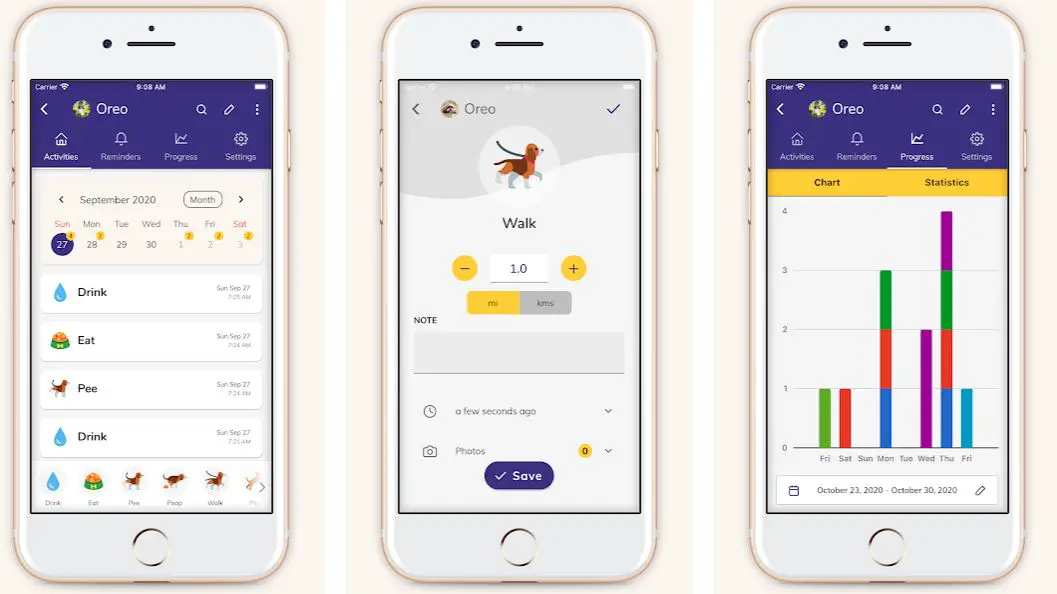
You can also set reminders for various dog training on the Doggy Time app. Doggy Time also allows you to create a personalized training plan for your dog, which can be helpful.
With the help of the Doggy Time app, you can also get access to your dog’s activities.
There are some very cool and helpful dog training features on Doggy Time, like- puppy potty tracker, pee tracker, etc. Doggy Time is the app you need to cover all the aspects of dog training.
Caregivers and pet sitters are also on this app to provide you with dog training services. You can also track the ongoing dog training process with the help of the Doggy Time app.
Features:-
- Easy Dog Training
- Track Habit and Health
- Training activities
- Create Schedule
- Walking and Running Tracker
- Caregivers & Sitters
- Track training
- No Login Required
- No Internet Required
- Meal Tracker
- Sleep Tracker
Devices: Android, IOS
Ratings: 4.6/5 On Play Store, 4.7/5 On App Store
Download the App from Google Play Store
Download the App from Apple App Store
2. Puppr – Dog Training & Tricks
The second name of this list is Puppr. Puppr is a great app you can use to provide your dog training at home. You can train your dog efficiently and without any trainer, just with the Puppr app.
On Puppr, you can also train your dog about the potty, which will help your dog clean up your house.
Puppr has training for every kind of dog, ultimately transforming your dog into a good puppy.
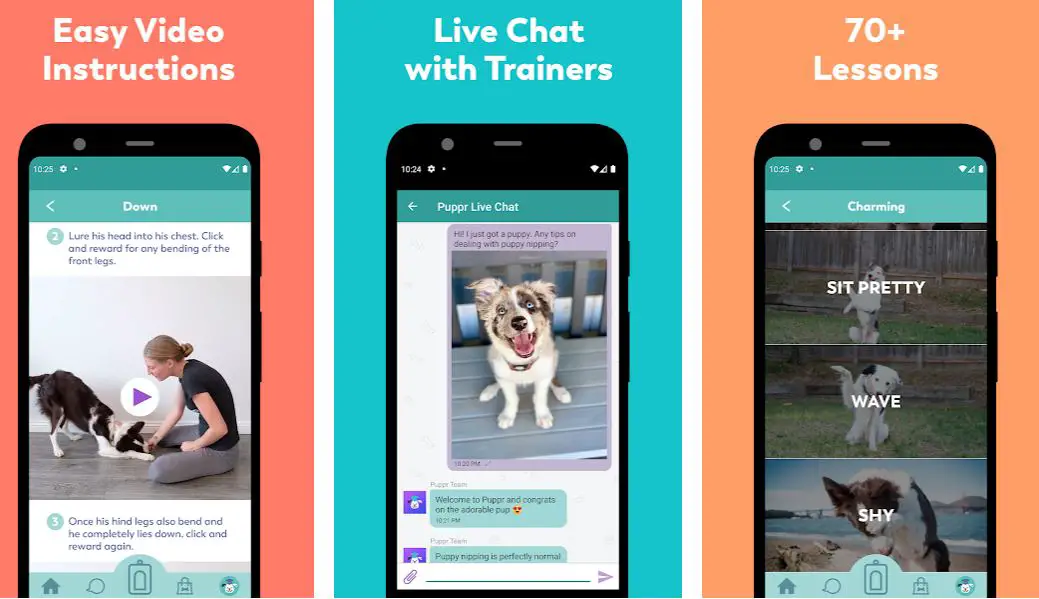
Many dog training techniques on Puppr are built to provide the best dog training experience. On Puppr, you’ll get clicker training, trick training, etc.
Puppr also allows you to create a training program for your dog. Puppr provides you with quality dog training tutorials, videos, and articles to ease down dog training.
On Puppr, you can chat and contact thousands of pro-dog trainers. Ask those trainers for dog training techniques, activities, and plans. There are more than 70+ dog training lessons on Puppr that you can make use of.
With the help of Puppr, you can track your dog’s training and how it’s progressing, and also you can shop for products for your dog.
Features:-
- Train your Dog at Home
- Without trainer
- Trick training, Clicker Training
- High-Quality videos, Articles
- Pro Dog trainers
- Training Techniques, Activities
- 70+ Training Lessons
- Training Progress Tracking
- Shop Products
Devices:- Android, IOS
Ratings:- 4.6/5 On Play Store, 4.8/5 On App Store
Download the App from Google Play Store
Download the App from Apple App Store
3. Dogo: Dog & Puppy Training App with Clicker
Dogo is a great app for dog training, and it has gained popularity all across the globe. Many beneficial features on the Dogo app helps you to train your dog efficiently.
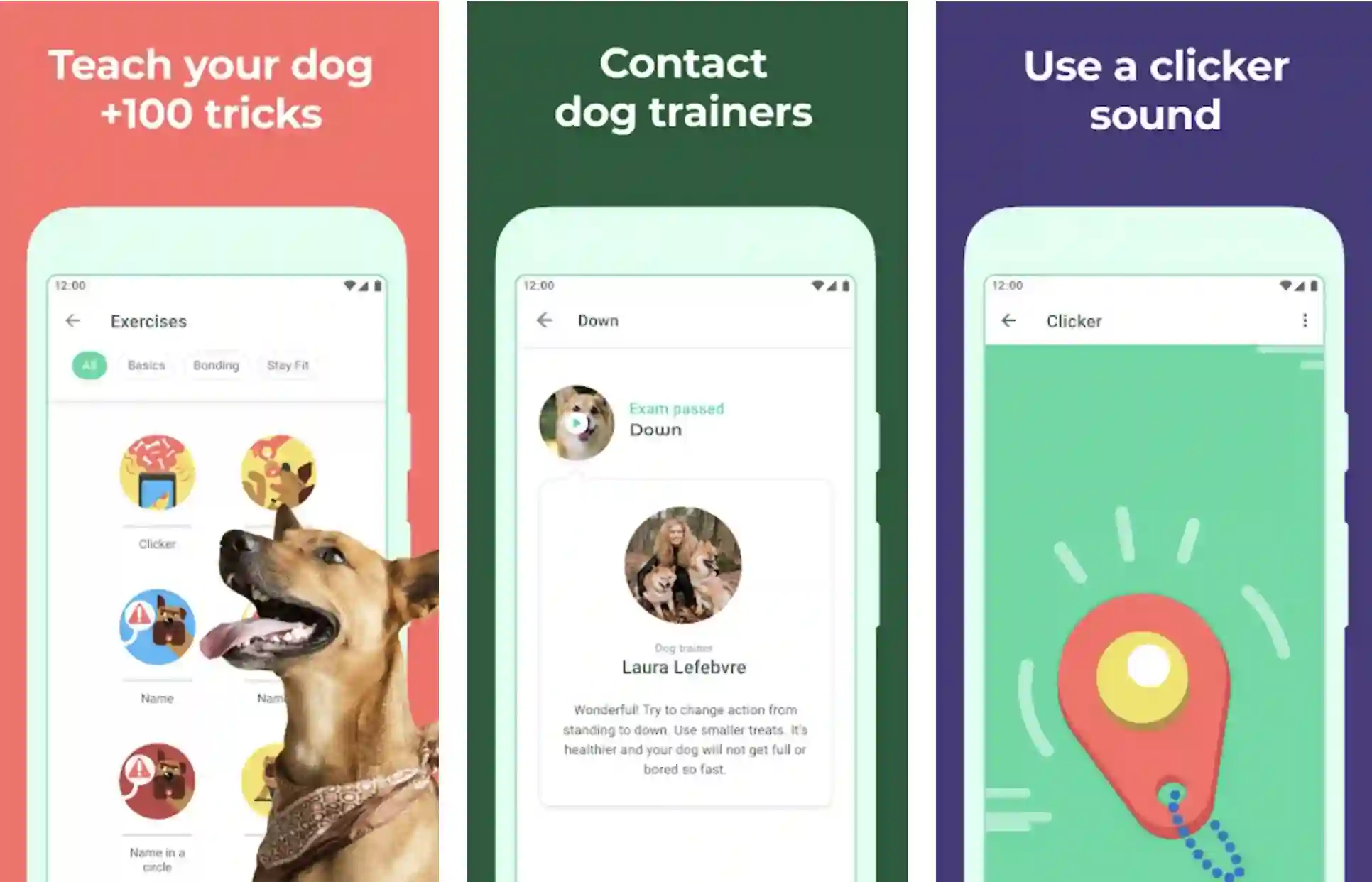
With the help of Dogo, you’ll be able to track your dog’s health and daily habits. Dogo app has various training activities you can perform with your dog to train efficiently. You can also set reminders for various dog training on the Dogo app.
Dogo also allows you to create a personalized training plan for your dog, which can be helpful. With the help of the Dogo app, you can also access your dog’s activities.
All the features on Dogo are built and designed to provide you with the most helpful information about dog training. Download Dogo and take your dog training to a different level.
Features:-
- 100+ Training Tricks
- Connect with Pro Dog Trainers
- Clicker Sounds
- Custom Training
- Visual and text Instructions
- 100+ Dog Commands
- Track Training Progress
Devices: Android, IOS
Ratings: 4.7/5 On Play Store, 4.8/5 On App Store
Download the App from Google Play Store
Download the App from Apple App Store
4. Go Dog: Puppy & Dog Training
Another great app to train your dog is Go Dog. Go Dog helps you convert your dog into a healthy, smart, and happy one. Go Dog and Canine experts create all its training plans, so it’s very effective.
With the help of the Go Dog app, you can get set reminders about your dog’s health and hygiene. On Go Dog, you will get the support of a clicker and whistle for better dog training.
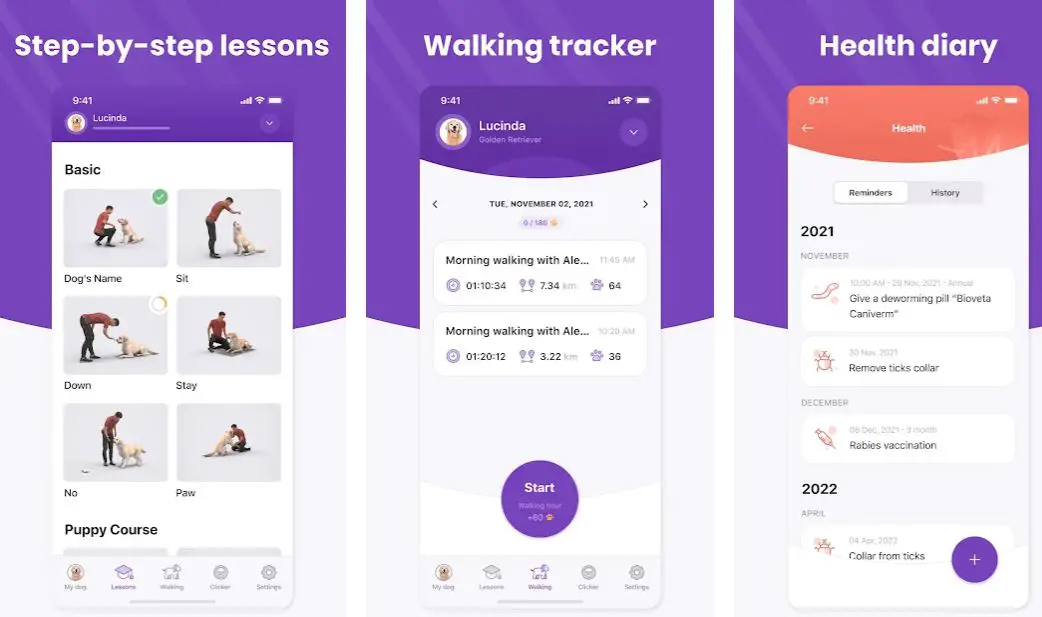
You’ll get step-by-step dog training instructions and lessons with the help of the Go Dog app. On Go Dog, you can also get a walking and running tracker that you can use to track.
Go Dog app has a health dairy feature that provides daily health tips and tricks. You’ll get video instructions and articles about dogs’ health.
There are many pro dog trainers; you can get tips and information from them on the Go Dog app. Go Dog app has a built-in dog clicker that can help you train dogs.
Features:-
- Health and Hygiene Reminders
- Clicker and Whistle Training
- Step-by-Step lessons
- Health Dairy
- Walking Tracker
- Video Instructions
- Pro Dog Trainers
- Mobile Dog Handler
- Build-in Dog Clicker
Devices: Android, IOS
Ratings: 4.4/5 On Play Store, 4+/5 On App Store
Download the App from Google Play Store
Download the App from Apple App Store
5. hundeo: Dog & Puppy Training
hundeo is an app created to train dog owners to live happily with their dogs through a cordial human-dog relationship. The app promotes this through play.
The app’s mission is to improve the relationship between humans and dogs. The app has simplified features that will help you train your dog, and at the same time, you can have so much fun and good memories.
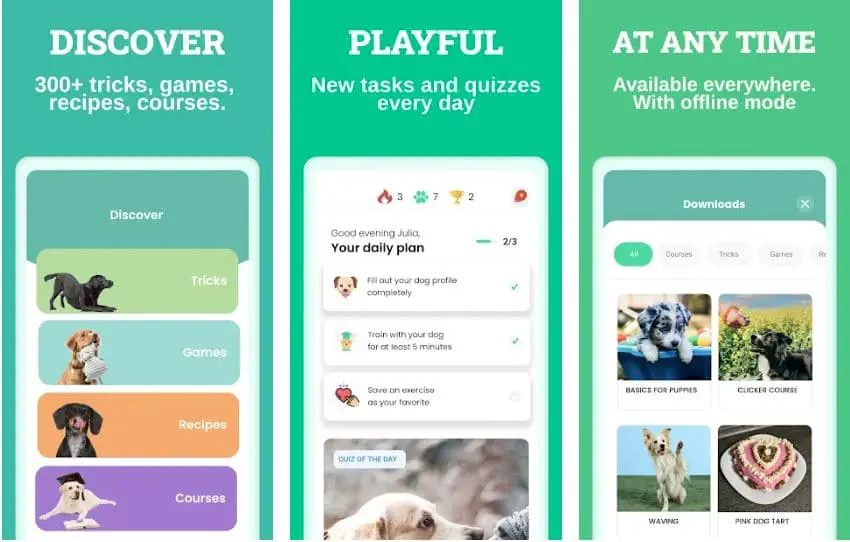
The hundeo app has many advantages that will enhance your everyday life with your dog. It has various structured exercises so you can easily reach your set goals.
It comes with step-by-step instructions that guide you as you use the app. Another benefit of this app is that you can use it anywhere and access it anytime on your device. Therefore, nothing will come between you and your exercises.
Additionally, the app has a very playful structure to which you and your dog can easily adapt. You can download the app for free on PlayStore and the App Store; most features are free.
Thanks to the hundeo app, any dog owner can successfully train their dog. There are many small exercise sessions that you can hold, and if necessary, you can set a reminder to stay on track.
Watch the step-by-step instructional videos and repeat the exercises.
Features:-
• More than 300 tricks and dog games
• Healthy recipes and nutritional guides
• Excellent training courses for puppies and older dogs
• Step-by-step instructions in video format
• Tailored to fit the individual use
• You can access it anywhere and anytime
• An offline mode
• You can record your progress
• Share your progress and any achievements with friends
Devices: Android, iOS
Ratings: 4.6/5 On Play Store, 4.5/5 On App Store
6. Pawsitive
Pawsitive is another great app that can help you efficiently train your dog. Pawsitive is one of the best apps for dog training, and it’s very popular all across the globe.
On Pawsitive, you’ll get step-by-step guides and tutorials for effective dog training. There are various other dog training features on Pawsitive as well.
You’ll also get a food guide for your dog on the Pawsitive app that will gain you access to track every meal and provide the right meals for your dog.
Pawsitive is a very fun and instructive app you can use to train your dog.
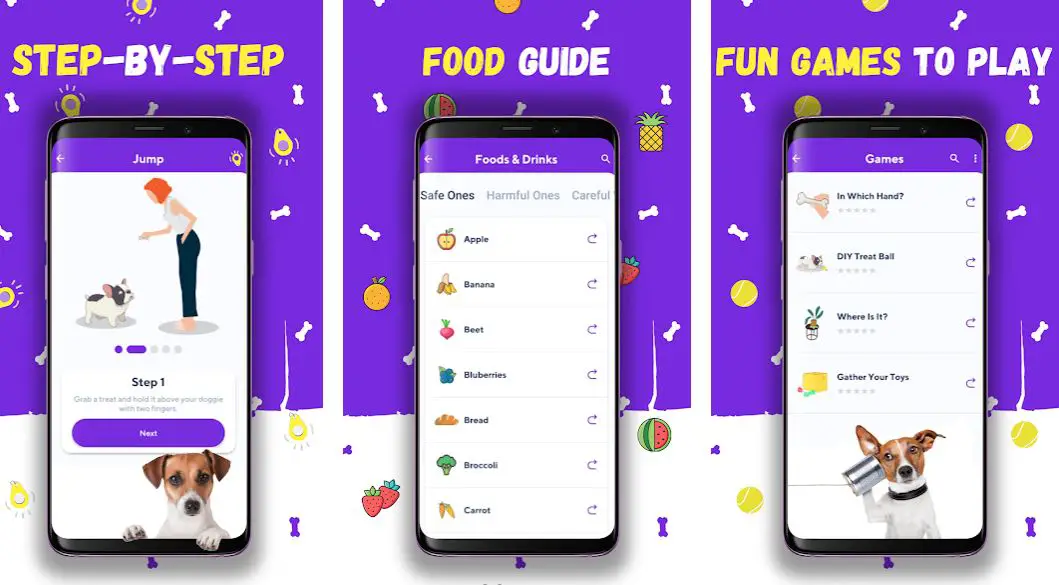
You’ll get the support of dog training clickers on Pawsitive, which allows you to train your dog through clickers. Pawsitive also provides various positive dog training techniques to train.
The best part of Pawsitive is that it’s accessible to everyone in any corner of the globe.
Get the support of expert and certified dog trainers, ask them any dog training-related queries, and get effective answers. Pawsitive monitors dog grooming to keep your dog groomed and healthy.
Features:-
- Dog Training Techniques
- Step-by-step Guides
- Helpful articles
- Dog Training Clickers
- Positive Puppy Training
- Easy Access
- Grooming
- Pro Trainers
- Tracker
Devices: Android
Ratings: 4.7/5 On Play Store
Download the App from Google Play Store
7. My Dog Training App – 30 Days Puppy Training
The next name on our list is My Dog Training App. This app is one of the best dog training apps because it’s the easiest and most helpful.
You’ll get multiple smart learning about dog training that will help you to train your dog.
All these smart training would be in high-quality animation to provide you with the best instructions. This training app has got a built clicker that can help you in your dog’s training.
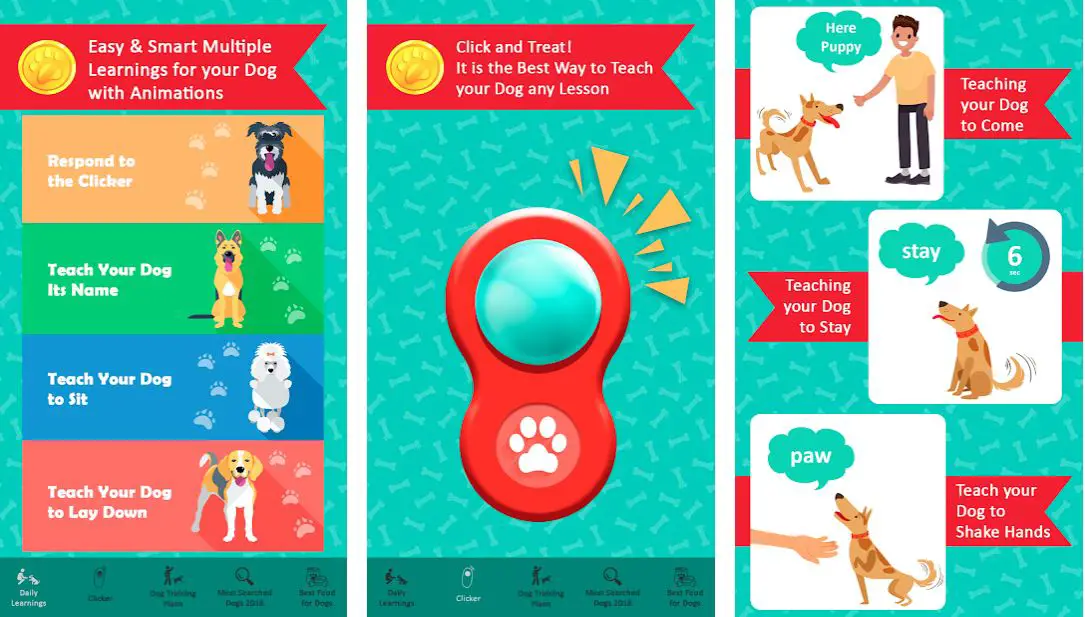
With the help of this dog training app, you’ll be able to teach your dog to sit, lay down, or stand up. You’ll get the best lessons on the My Dog Training App that can help you to parent your dog.
You can train your dog at home with all the My Dog Training App features. You’ll also train your dog to bark and stop with certain comments.
You can also train your dog for personal security with the My Dog Training App. Get the My Dog Training app’s various dog training exercises, activities, and lessons.
Features:-
- Easy Training
- Smart Multiple Learnings
- Animated Lessons
- Teach various things
- Clickers
- Teach for Personal Security
- Know about your Dog
Devices: Android
Ratings: 4.2/5 On the Play Store
Download the App from Google Play Store
8. Pupford: Dog & Puppy Training
Another great app to train your dog efficiently is Pupford. Pupford is especially on the free classes provided by Zak George. With the help of Pupford, you’ll be able to track and train over 20 behaviors in your dog.
Pupford is full of videos and text articles that will help you to train your dog more efficiently. Through the solutions and features of the Pupford app, you can easily get the answer to any problem related to dog behavior in minutes.
Many video tutorials and text articles on Pupford ensure you get all the answers to your queries. All the features of Pupford are so helpful and realistic for real-life usage.

On Pupford, you can also shop for your beloved dog and make their living smoother and happier. You’ll get every puppy product and service on Pupford you need in your dog’s upbringing.
With Pupford, you can also get access to the private dog owner community access. Get various dog training techniques and guides, and track your dog’s training progress with the help of the Pupford app.
On Pupford, you’ll get the support of chats, e-books, Pupford Academy, etc. There are many accessible dog training features on Pupford; download Pupford to explore those.
Features:-
- Effective Dog Training
- 100% Free Classes
- 20+ Behavior Training
- Dog Product shopping
- Track Progress
- E-book and Academy
- 75+ Behavior tricks
Devices: Android, IOS
Ratings: 4.6/5 On Play Store, 4.8/5 On App Store
Download the App from Google Play Store
Download the App from Apple App Store
9. GoodPup: Dog Training at Home
The next name on our list is GoodPup. While searching for dog training apps, I found out about this app, and because of all its features and training tools, I’ve selected it.
Surely, this training app is one of the best among all the other apps. With the help of this dog training app, you can easily convert any of your dogs into smart, healthy, and trained dogs.
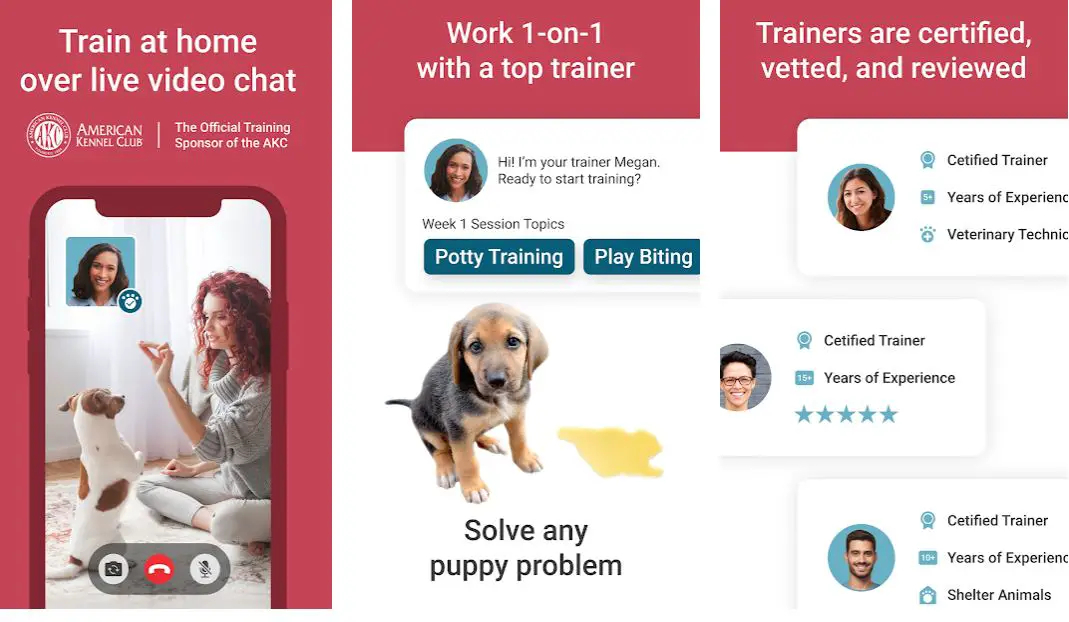
GoodPup provides you with great features, and with all those features, you can train your dog at home effectively. With GoodPup, you’ll get dog training tips and information from pro dog trainers.
On GoodPup, you can also work 1on1 with various certified and pro dog trainers all across the globe, which can be very beneficial.
GoodPup helps you find the answer and solve puppy problems by consulting trainers and pet doctors.
You can also create dog training programs and schedules to train your dog efficiently and give the best parenting. Get weekly and monthly dog training courses and train your dog.
Features:-
- Train at Home
- Solve Puppy Problem
- Certified trainers and Doctors
- Create a Dog Training Schedule
- Weekly and Monthly Dog Training Courses
- Set Training Goals
Devices: Android, IOS
Ratings: 3.8/5 On Play Store, 4.8/5 On App Store
Download the App from Google Play Store
Download the App from Apple App Store
10. Pocket Puppy School
I’ve selected the Pocket Puppy School app to ease your dog training. This dog training app is very popular and known for its easy accessibility.
You’ll get simple and easy dog training guides on Pocket Puppy School to help you train your dog.
On Pocket Puppy School, you’ll get all the guides and descriptions with full description that helps provide quality training to your dog.
![How to use Pocket Puppy School - dog training app [2020]](https://i.ytimg.com/vi/V4WxtYCTCgY/0.jpg)
Create a profile of your puppy on Pocket Puppy School and track your dog’s progress. Search for dog training queries and lessons on the Pocket Puppy School app and get your dog training solutions.
Pocket Puppy School has a great community of dog parents; you can contact them for dog training experience. Pocket Puppy School also helps you to provide great potty training.
Take training actions, make schedules, and track training progress with the help of the Pocket Puppy School app. All the dog training plans of Pocket Puppy School are very simple and easy to understand so you can access those seamlessly.
Features:-
- Easy Dog Training
- Simple Guides
- With full descriptions
- Create Puppy Profiles
- Dog Community
- Search for Lessons
- Potty Training
- Create schedule
- Track Progress
- Training Plans
Devices: Android, IOS
Ratings: 4.7/5 On Play Store, 5.0/5 On App Store
Download the App from Google Play Store
Download the App from Apple App Store
11. Every Doggy Dog whistle & training app
Another great app for dog training is Every Doggy. This dog training app is very popular and also one of the best dog training apps.
Every Doggy has got more than 300k+ happy dog owners all across the globe.
On Every Doggy, you’ll get 300+ dog training videos for quality dog training tips and lessons.
With Every Doggy, you can train your dog for various things. You’ll be able to provide your dog potty training, security training, play training, etc.
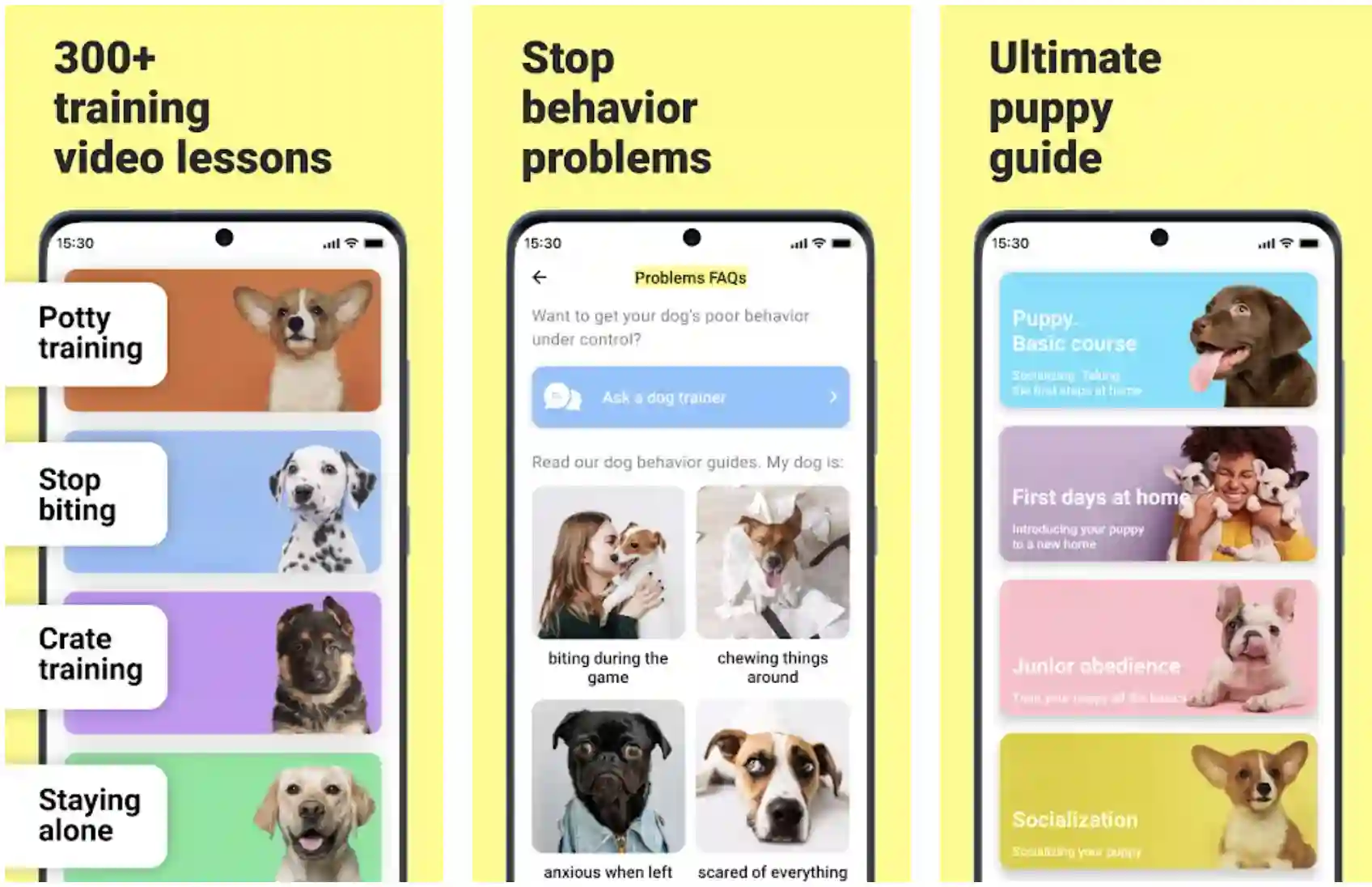
With Every Doggy’s help, you can train dogs to stop barking and biting on certain commands. Create your dog’s training plans and solve all the problems related to dog training.
On Every Doggy, you can get an unlimited puppy guide to ease your dog training process. Every Doggy has various clickers and whistle sounds for effective dog training.
You’ll also get 60+ tricks and games for dog training and a lot to learn from the Doggy app. Get easy and effective dog training tools with Every Doggy and make a difference in your dog training.
Features:-
- 300+ Training Videos
- Various aspect Training
- Create Training
- Solve behavior problems
- Unlimited puppy guide
- Clicker and Whistle
- 60+tricks and games
- Easy and effective tools
- High-frequency sounds
Devices: Android, IOS
Ratings: 4.3/5 On Play Store, 4.6/5 On App Store
Download the App from Google Play Store
Download the App from Apple App Store
12. Dog Whistle
Dog Whistle is another app that can be perfect for all dog trainers. This dog training app is popular for all the sound training it provides.
With the help of Dog Whistle, you can train your dog efficiently with various ultrasounds. This ultrasound feature of Dog Whistle is a great tool for dog trainers.
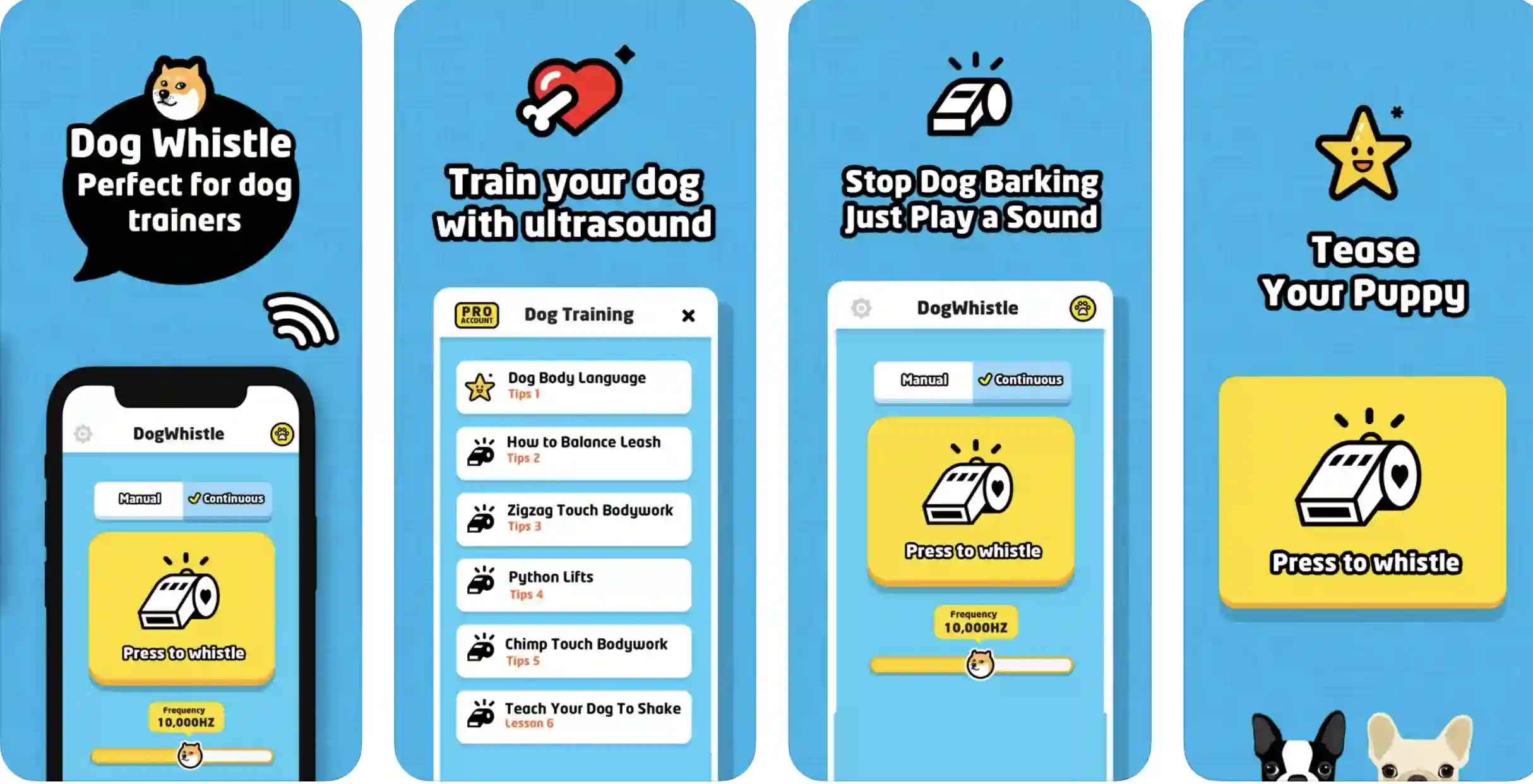
With Dog Whistle, you can stop your dog from barking at other people and dogs by playing with some sounds. You’ll also get many interesting dog training tips and tricks on the Dog Whistle app.
Dog Whistle allows a whistle range between 16000 Hz to 40000 Hz, and you’ll also get various frequency tones that will help you. Dog Whistle has a sound level meter to help you with the perfect sounds for dog training.
You can also track your dog’s walks, runs, and other activities through the Dog Whistle app.
Features:-
- Ultrasound support
- Barking solutions
- Interesting Tips and Games
- Sound Level Meter
- Various modes
- Dog activity tracking
Devices: IOS
Ratings: 4.0/5 On the App Store
Download the App from Apple App Store
13. iTrainer Dog Whistle and Clicker
iTrainer Dog Whistle and Clicker apps are among the best and most popular IOS apps. This IOS dog training app is well known for the whistle feature it provides for dog training.
On iTrainer Dog Whistle and Clicker app, you’ll get whistle sounds between 100-35k Hz, providing you with the right balance for dog training.
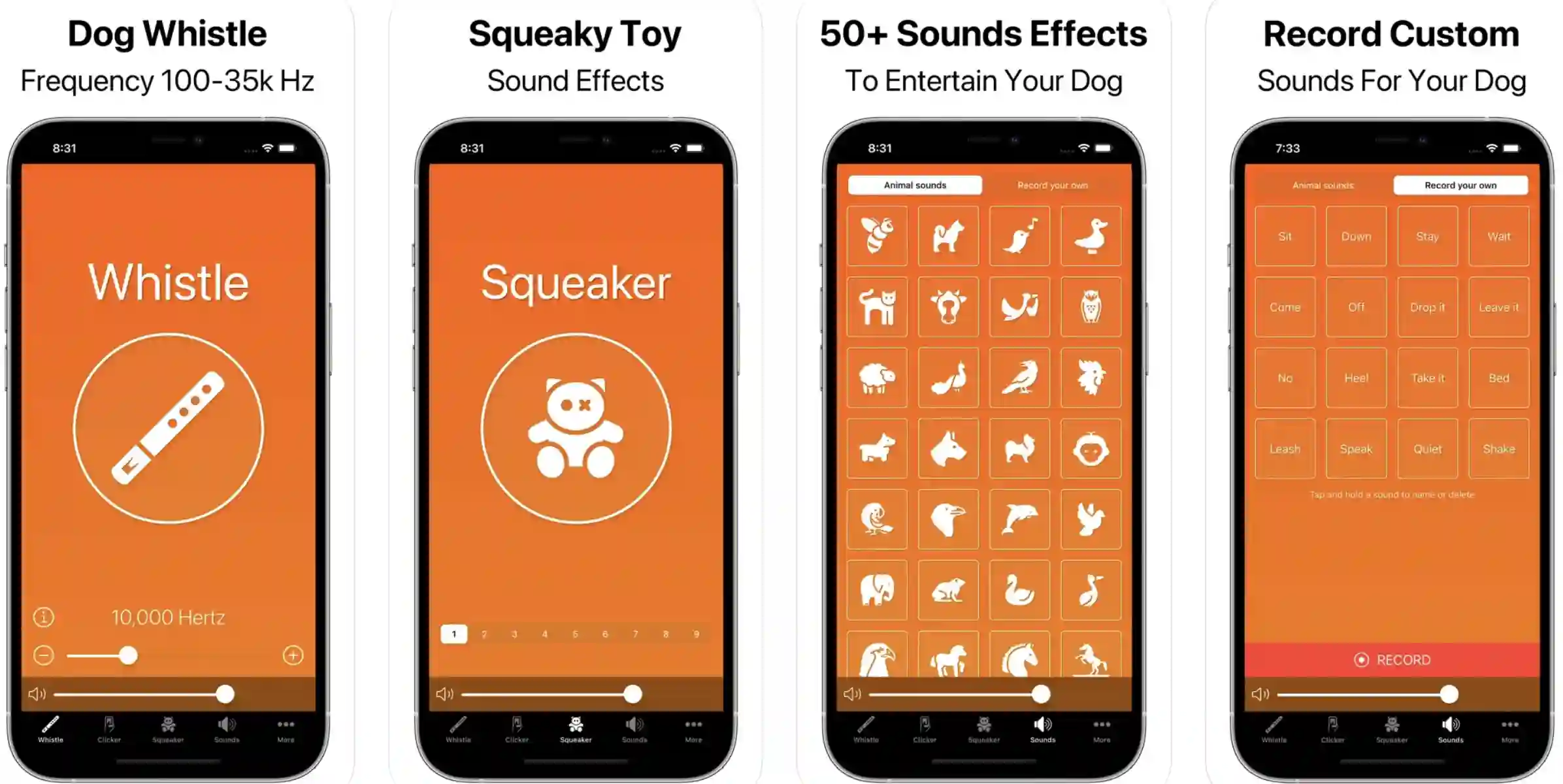
With the iTrainer Dog Whistle and Clicker app, you can get 50+ sound effects that your dog can understand and behave accordingly.
You can also entertain your dog with iTrainer Dog Whistle and Clicker app and give him/her the perfect behavior training. With the iTrainer Dog Whistle and Clicker app, you’ll also get a custom record option that will help you track and record your dog’s activity.
There are five different and unique clicker sounds on iTrainer Dog Whistle and Clicker app that help in multipurpose training.
With the iTrainer Dog Whistle and Clicker app, you can get different and useful tips and instructions for quality dog training.
iTrainer Dog Whistle and Clicker app has dark mode support, apple watch support, positive training support, etc.
Features:-
- 100-35k Whistle Frequency
- 50+ Sounds Effect
- Dog entertainer
- Custom Record
- 5 Unique Clickers
- 50+ Sound effects
- 5 different Whistle Training
- Dark Mode, Apple Watch Support
- 100% positive training
Devices: IOS
Ratings: 4.5/5 On the App Store
Download the App from Apple App Store
14. Dog Training Clicker
Another great app for dog training is Dog Training Clicker. Many cool and awesome dog training features on Dog Training Clicker will help you train your dog more efficiently.
Dog Training Clicker has some unique features, making this app one of the best dog training apps. You’ll get various training sounds on the Dog Training Clicker app, which will help you train.
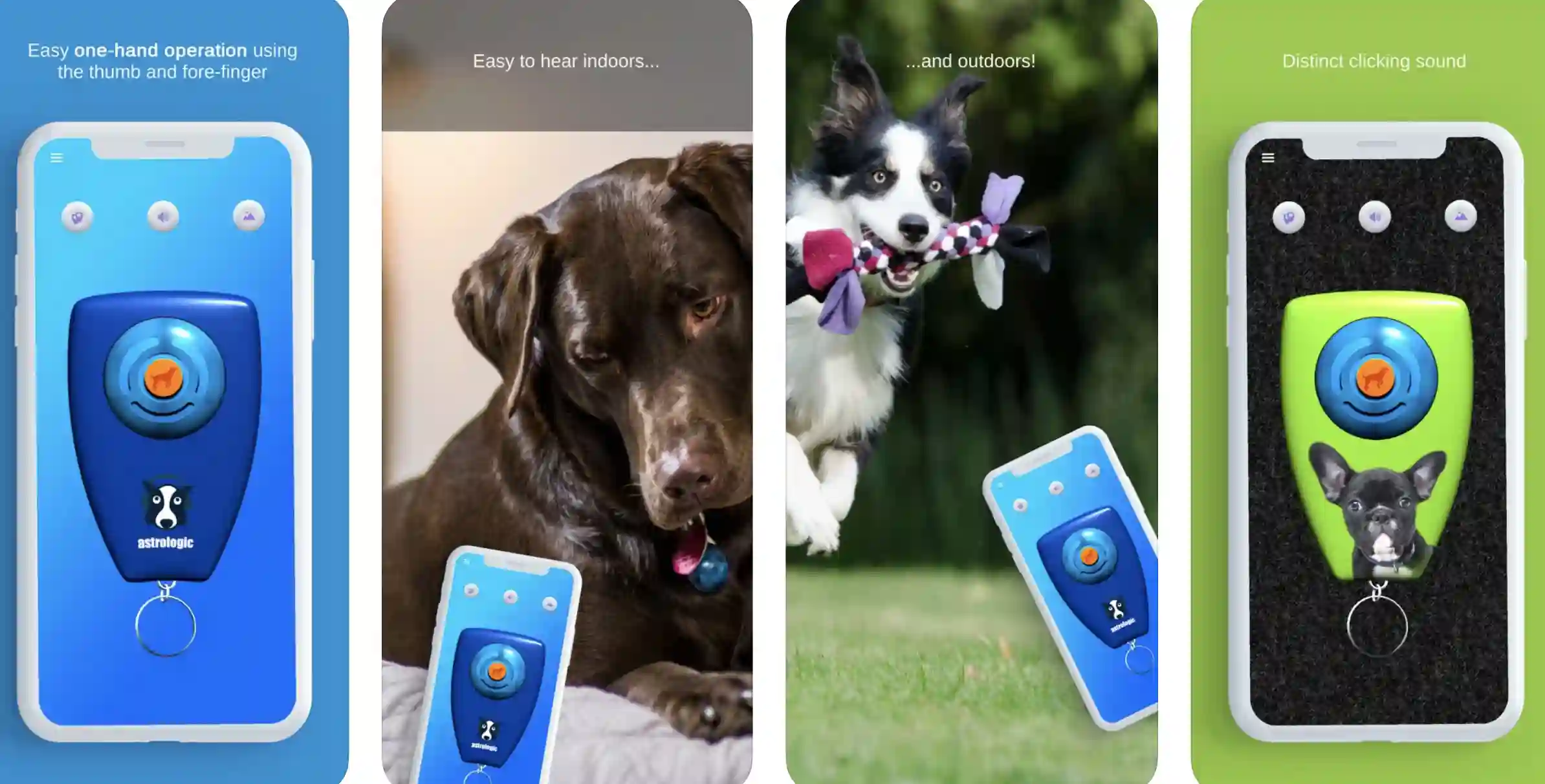
With the help of Dog Training Clicker, you can also track your dog’s activity and noises. Dog Training Clicker keeps a deep eye on the hygiene and health of your dog.
Various clickers and whistle sounds on Dog Training Clicker will simplify your dog training process. You’ll also get various dog training video tutorials and articles on this app to provide you with better dog training knowledge.
I’ve tested the Dog Training Clicker app, which works well. All the features of the Dog Training Clicker app combined make this app perfect.
Features:-
- Various Clickers
- Dog Training Features
- Various Training Sounds
- Track activity and noises
- Video Tutorials and Articles
Devices: IOS
Ratings: 3.6/5 On the App Store
Download the App from Apple App Store
While exploring the best free puppy training app, To Train Your Dog At Home, to our readers, I found an awesome video on “12 Harmful Things You Do to Your Dog Without Realizing It,” worth watching.😍😎😎

15. Train Away
The next name on our list is Train Away. Puppr is a great app you can use to provide your dog training at home. With the Train Away app, you can train your dog efficiently and without any trainer.
With the help of the Train Away app, you can get set reminders about your dog’s health and hygiene. On Train Away, you will get the support of a clicker and whistle for better dog training.
You’ll get step-by-step dog training instructions and lessons with the help of the Train Away app. On Train Away, you can also get a walking and running tracker that you can use to track.
Train Away is only on Android, so you can’t access it on IOS and Apple watches which can be a drawback for many dog trainers and owners. Train Away is a very underrated dog training app, but it provides one of the best values.
Features:-
- Dog Training at Home
- Create Dog Training Plans
- Track your Dog
- Video Instructions
- Dog Health Articles
- Clickers and Sounds
Devices: Android
Ratings: 3.7/5 On the Play Store
Download the App from Google Play Store
16. Dog Clicker – Clicker Training & Dog Training
The last name on our list is Dog Clicker. Dog Clicker is another great app that can help train your dog efficiently.
On Dog Clicker, you’ll get step-by-step guides and tutorials for effective dog training.
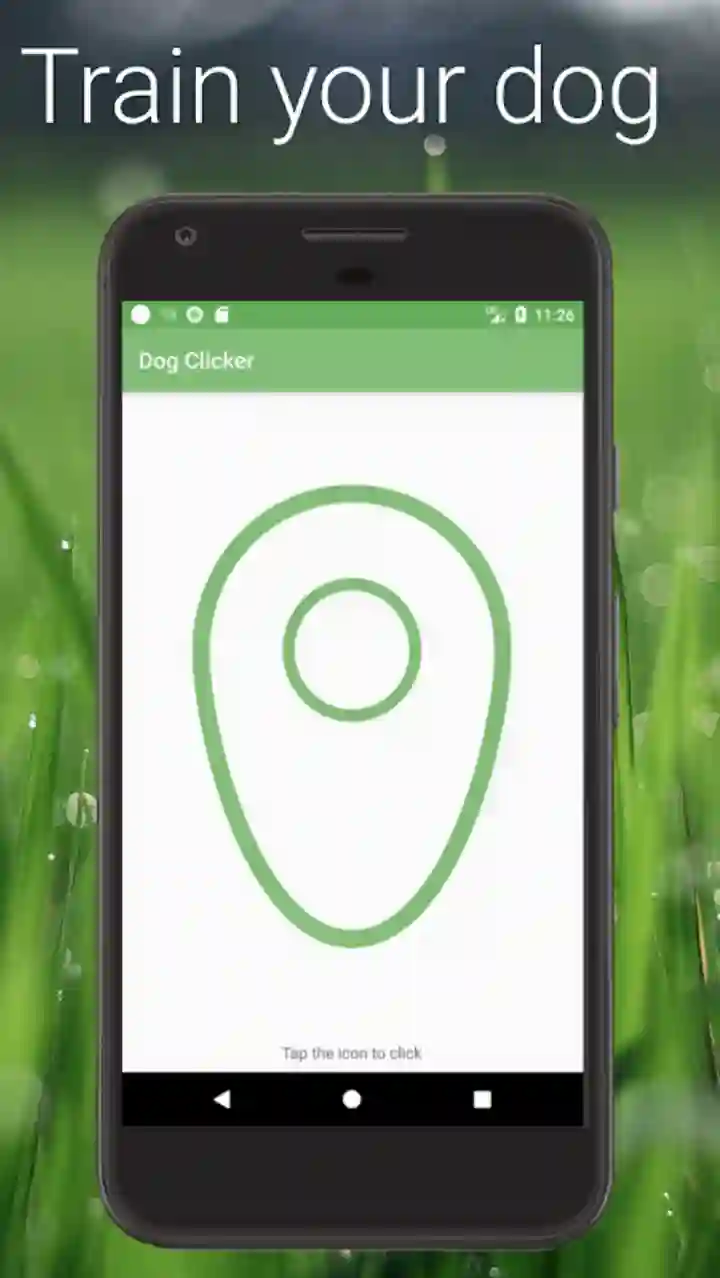
There are various other dog training features on Dog Clicker as well. With the help of Dog Clicker, you can track and train your dog’s behaviors. Dog Clicker is full of videos and text articles that will help you to train your dog more efficiently.
Through the solutions and features of the Dog Clicker app, you can easily get the answer to any problem related to dog behavior in minutes.
Many video tutorials and text articles on Dog Clicker ensure you get all the answers to your queries.
On Dog Clicker, you can also shop for your beloved dog and make their living smoother and happier. You’ll get every puppy product and service you need on Dog Clicker.
Features:-
- Easy Dog Training
- Track Habit and Health
- Training activities
- Create Schedule
- Health Dairy
- Walking Tracker
- Video Instructions
- Pro Dog Trainers
Devices: Android
Ratings: 4.6/5 On the Play Store
Download the App from Google Play Store
📗FAQ
Are there free dog training apps?
Yes, several free dog training apps are available for both iOS and Android devices. Some popular free options include Puppr, Dogo, and Clicker Training.
Are dog training apps worth it?
It can be worth it for those looking for a convenient and affordable way to train their dogs. However, the app’s effectiveness depends on the dog and its learning style.
What app helps you train your dog?
Many apps are available to help train your dog, including Puppr, Dogo, Clicker Training, and Wag! Dog Training.
What is the number one rule in dog training?
The number one rule in dog training is to be consistent. Consistency in training methods, rewards, and punishments will help your dog learn faster and retain the information better.
Is Wag app free?
The Wag app is free to download, but their dog training services come at a cost.
How can I teach my dog commands for free?
You can teach your dog commands for free through online resources such as YouTube videos, training blogs, and free training apps like Puppr and Dogo.
Is it better to train your dog yourself or a trainer?
It ultimately depends on the individual and their dog’s needs. If you have experience and confidence in your ability to train your dog, then doing it yourself may be sufficient.
However, if your dog has behavioral issues or you are not confident in your training abilities, seeking the help of a professional trainer may be the better option.
How often should you try to train your dog?
Training your dog for short periods every day rather than long sessions once a week is recommended. Consistency is key to effective dog training.
Are dogs happier with training?
Yes, dogs are generally happier when trained, giving them a sense of structure and purpose. Training also strengthens the bond between the dog and its owner.
What is the fastest way to train a dog?
The fastest way to train a dog is through positive reinforcement, consistency, and patience.
What is the most training command taught to dogs?
The most common training command taught to dogs is “sit.”
How do I train my dog everyday?
Training your dog everyday can be done by setting aside short periods for training sessions, using positive reinforcement, and gradually increasing the difficulty of the training exercises.
What are the 7 C’s of dog training?
The 7 C’s of dog training are: clarity, consistency, consequence, criteria, cue, concentration, and control.
What are the 5 golden rules of dog training?
The 5 golden rules of dog training are: be consistent, be patient, use positive reinforcement, set realistic expectations, and end on a positive note.
What is the 5 second rule in dog training?
The 5 second rule in dog training is that if a reward is not given within 5 seconds of a desired behavior, the dog may not associate the behavior with the reward.
What percent does wag take?
Wag takes a 40% commission from the dog walker’s earnings.
Which dog walking app pays the most?
The amount dog walking apps pay their walkers can vary, but some of the highest-paying apps include Rover and Wag.
Does wag actually work?
Wag can work for those looking for a flexible and convenient dog-walking service. However, the quality of the dog walkers and their services can vary.
What free app makes dogs talk?
Several apps are available that use AI to create a talking dog effect, such as My Talking Pet and Woofbert.
How many commands can you teach a dog in a day?
It is recommended only to teach one or two commands to a dog daily to prevent overwhelming them and allow for better retention of the information.
What is the hardest thing to train a dog to do?
The hardest thing to train a dog to do can vary depending on the individual dog and its personality. However, many find training their dog to have a reliable recall (coming when called) difficult.
What age is it easier to train a dog?
It is generally easier to train a dog when they are younger, around 8 to 16 weeks old. However, it is never too late to start training your dog.
Are some dogs harder to train?
Some dogs can be harder to train than others, depending on their breed, personality, and previous training experience.
What is the hardest age to train a dog?
The hardest age to train a dog can vary depending on the individual dog. Still, many people find that adolescence (6 to 18 months old) can be challenging to train due to their increased independence and stubbornness.
How long is too late to train a dog?
It is never too late to train a dog, but it may take more time and patience to train an older dog than a younger one.
What to do if dog ignores command?
If your dog ignores a command, it may be helpful to break it down into smaller steps and gradually build up to the full command. It is also important to ensure that your dog understands the command and that you are using consistent and clear communication.
Do untrained dogs learn from trained dogs?
Yes, untrained dogs can learn from trained dogs through observation and mimicry.
Do dogs need off-leash time?
Dogs can benefit from off leash time, but it is important to ensure their safety and obedience before allowing them off leash in public areas.
Are smarter dogs easier to train?
Smarter dogs may be easier to train due to their increased ability to learn and problem solve, but this can also depend on the individual dog and their personality.
What is a good recall word for dogs?
A good recall word for dogs can be anything short and easy to remember, such as “come,” “here,” or their name.
How do I train my dog to come when called every time?
Training your dog to come when called every time can be done by using positive reinforcement, gradually increasing the distance and distractions during training, and ensuring that the dog has a strong bond and trust with their owner.
What is one of the hardest dogs to train?
The Afghan Hound is often cited as one of the most difficult dogs to train due to their independent and stubborn nature.
What are the release words for dog training?
The release words for dog training can be any word or phrase that indicates to the dog that they have completed a command or exercise, such as “okay” or “free.”
What are the three keys to dog training?
The three keys to dog training are consistency, positive reinforcement, and patience.
How many days does it take to train a dog?
The amount of time it takes to train a dog can vary depending on the individual dog, its personality, and the desired level of training. Basic obedience training can take a few weeks to several months, while more complex training can take longer.
What is the best time of day to train your dog?
The best time of day to train your dog can depend on the individual dog’s schedule and energy levels, but many people find that training sessions in the morning or early afternoon are the most effective.
How do I train my dog not to pull on the leash?
Training your dog not to pull on the leash can be done by using positive reinforcement, gradually increasing the distance and distractions during training, and rewarding your dog for walking calmly beside you.
What are the 4 D’s of dog training?
The 4 D’s of dog training are duration, distance, distraction, and difficulty. These four elements can be gradually increased during training to challenge and improve your dog’s obedience.
What are the 4 types of dog training?
The 4 types of dog training are positive reinforcement, negative reinforcement, positive punishment, and negative punishment. Positive reinforcement is the most commonly used method, rewarding desired behaviors with treats or praise.
What does ABC stand for in dog training?
ABC stands for antecedent, behavior, consequence. This is a framework used in dog training to analyze and modify behaviors.
What is the 90 10 rule dog?
The 90 10 rule in dog training suggests that 90% of a dog’s behavior results from their environment and upbringing, while only 10% is determined by their genetics.
What is the 80 20 rule in dog training?
The 80 20 rule in dog training suggests that 80% of the training should focus on positive reinforcement, while only 20% should focus on correction or punishment.
What is the 3 by 3 rule dogs?
The 3 by 3 rule in dog training involves practicing a behavior in three different locations and for three minutes at a time to reinforce the behavior and ensure it is generalized across different situations.
What is 1 2 3 dog training method?
The 1 2 3 dog training method uses a specific sequence of commands and rewards to teach a dog a new behavior. It involves using a marker word, followed by the command, and then rewarding the behavior.
What is the 15 minute rule dog?
The 15 minute rule in dog training involves setting aside short, 15 minute training sessions throughout the day to teach and reinforce new behaviors. This can help prevent frustration or burnout for both the dog and the owner.
Are there any free dog training apps?
Yes, Doggy Time, Puppy, Dogo, Go Dog, hundeo, Pawsitive, etc., are among the best free dog training apps you can try to completely transform the way you have been training your four-leg friend.
What are the seven dog commands?
To become a decent canine citizen, a well-behaved puppy should respond to the seven commands Sit, Down, Stay, Come, Heel, Off, and No.
Is the Woofz app worth it?
Indeed, the Woofz app is worthwhile. Woods is more than just your ally in fluffy friend training. It enables you to understand your pet better and establish a more positive pet-person bond.
The incredible dog training software has the following features: – Dog training activities
– Hints and tricks
– A calendar for dogs
– Beneficial video and audio teachings
And a lot more
Is Zig Zag dog app free?
You can download the Zig Zag dog app and enjoy many exciting features.
How much does Pupford cost?
The Pupford app is free and offers various in-app purchases at $1.99 – $199.99 per item.
Is the Everydoggy app good?
Top dog experts develop every doggy and is not only good but one of the finest puppy & dog training applications.
The app lets you learn tricks, play games, and enjoy a joyful life with your furry buddy. You receive 150+ exclusive guided videos for all crucial abilities and behaviors (reliable recall, leash training, toilet training, sit, down, stay, and more).
Why use a clicker when training a dog?
The clicker is useful since it lets your dog know precisely which behavior you’re praising. You can “mark” the exact instant your dog performed the desired action by clicking at the appropriate time.
As a result, the click informs your dog exactly what they did properly rather than forcing them to guess what you liked.
How much is Wiglo?
Three recurring payment options are available: annual, quarterly, or monthly. 1) The monthly fee for the yearly membership is $9.99, due every 12 months. 3) A monthly fee of $14.99 for the three-month membership is charged every three months. 2) The recurring monthly fee for the membership is $24.99.
What is the most effective way to train a dog?
Most veterinarians concur that positive reinforcement is the most effective way to train a dog. Positive reinforcement training emphasizes praising your pet for appropriate conduct rather than punishing inappropriate behavior.
Reward your dog whenever they behave well and comply with your instructions. Rewarding excellent conduct strengthens the link between good behavior and positive outcomes.
Ensure you’re not unintentionally rewarding undesirable behavior, which is also crucial.
Can an untrained dog be trained?
This is doable, but it’s crucial to make sure your dog is proficient in the fundamental commands such as “place,” “sit,” “stay,” and “come.”
Older dogs could take a little longer to pick things up since they require a strong foundation of fundamental instructions before learning more difficult tasks.
Can I train my dog myself?
Among your dog’s basic needs are socialization and proper training. So start teaching your dog to sit, stay, come, go to their crate, and go potty outdoors as soon as possible. And believe it or not, even a newbie can do it themselves.
Training your dog can be daunting, especially if it’s your first dog. It’s a huge undertaking, but training your dog is. The task will seem far less intimidating if you approach it piecemeal.
What is the first thing you should train your puppy?
The greatest strategy is to think about what you want your puppy to do; what is the intended response to a circumstance or cue? Several instances include:-
- Where the puppy should relax or sleep.
- When the puppy sees a person
- When the puppy hears her name
- When the puppy sees another animal
- When the dog hears the doorbell, How to it put on his leash or harness?
- How to react to combing, grooming, and medical attention.
What are the five steps to training a dog?
- Be tolerant. Training requires time, effort, and energy!
- Don’t ever blame the dog. Many experts agree that patience is essential and emphasize the need to develop your mindset.
- Train When It Is Time.
- Utilize the Proper Treats.
- Give kudos.

How do you train a dog for beginners?
Here are nine easy steps for new dog trainers:
#1 Sign up for obedience classes.
#2 Use positivity
#3: Limit the length of your workouts.
#4: Use little rewards.
#5: Only utter a cue word once.
#6: Plan your activities before meals.
#7: Choose a Training Session When There Are No Distractions.
#8: Avoid Training Your Puppy If He Is Not Moody.
#9: Avoid yelling at your puppy.
Conclusion
So, this was the list of the 15 best dog training apps you can use to provide your dog with the best possible training. Almost all these training apps are free, but some require a small subscription to gain access.
Being free apps, all these apps can be helpful for all. Download these apps and make your dog training experience completely different.