
















For over 15 years, I’ve been immersed in the tech world, from clunky CRT monitors to today’s sleek 4K displays. As a writer who’s juggled code editors, research tabs, and endless drafts, I’ve lived the multi-monitor life.
The dual monitor tools aren’t just software—they’re game-changers that transform your workflow, tame chaos, and make your screens feel like an extension of your brain.
In 2025, with remote work and hybrid setups still dominating, these tools are more critical than ever for developers, designers, writers, and anyone who thrives on multitasking.
This isn’t a fluffy listicle. I’ve spent weeks testing seven of the best dual monitor tools—DisplayFusion, Microsoft PowerToys, Dual Monitor Tools, Synergy, UltraMon, Superpaper, and Twinkle Tray—tweaking settings and pushing them to their limits across coding marathons, content creation sprints, and late-night debugging sessions.
Below, I’ll break down each tool, share real-world use cases, and give my unfiltered take on what works (and what doesn’t). Whether you’re a seasoned pro or just dipping your toes into dual-monitor setups, this guide will help you pick the right tool to supercharge your productivity.
Quick Picks: Top Dual Monitor Tools for Your Needs
New to dual monitors or short on time? Here are my top picks for 2025, tailored to your workflow. Each tool’s been battle-tested across coding marathons, design sprints, and gaming sessions to supercharge your setup. Find your match below!
Programmers: DisplayFusion ($29) – The ultimate power tool for coders. Snap VS Code and terminals into custom grids, automate layouts with scripting, and pin debuggers to secondary taskbars. Perfect for juggling IDEs and servers.
Alternative: Synergy ($29) for multi-PC setups (e.g., Windows + Linux).
Graphic Designers: Superpaper (Free) – A creative’s dream for stunning wallpapers. Span vibrant mood boards across monitors or set unique images, even on mismatched resolutions. Pair with PowerToys (Free) for easy window snapping in Photoshop.
Bonus: Twinkle Tray (Free) to dim screens for late-night edits.
Content Creators (Writers/Video Editors): PowerToys (Free) – Distraction-free window management for writers. Snap Google Docs and Notion side-by-side in clean grids. Video editors, try Synergy ($29) to sync Premiere Pro across Mac/Windows with one mouse.
Add-on: Twinkle Tray (Free) for eye-friendly brightness.
Gamers: Dual Monitor Tools (Free) – A must for FPS players. Lock your cursor to the gaming monitor to avoid drifting to Discord. Pair with UltraMon ($39.95) for a secondary taskbar with streaming apps like OBS.
Extra: Superpaper (Free) for stream-ready wallpapers.
Office Workers: UltraMon ($39.95) – Streamline presentations with monitor mirroring and taskbars for Outlook or Teams. Use PowerToys (Free) to organize Excel and Slack in tidy layouts.
Comfort pick: Twinkle Tray (Free) for all-day brightness adjustments.
Cross-Platform Pros: Synergy ($29) – Unify Windows, macOS, and Linux with one keyboard/mouse, plus clipboard syncing for seamless workflows. Combine with Superpaper (Free) for consistent wallpapers across all your devices.
Pro Tip: On a budget? Start with PowerToys and Twinkle Tray for free, lightweight essentials. Need it all? DisplayFusion is your one-stop shop. Check the full guide for setup tips and real-world hacks!
Comparison Table: Best Dual Monitor Tools at a Glance
| Tool | Best For | Price | Ease of Use | Platform |
|---|---|---|---|---|
| DisplayFusion | Power users, customization enthusiasts | $29 (one-time, Standard) | Moderate | Windows |
| Microsoft PowerToys | Budget-conscious pros, lightweight setups | Free | Easy | Windows |
| Dual Monitor Tools | Open-source fans, niche cursor control | Free | Moderate | Windows |
| Synergy | Cross-device multi-monitor setups | $29 (one-time, Basic) | Moderate | Windows, macOS, Linux |
| UltraMon | Premium taskbar and window management | $39.95 (one-time) | Moderate | Windows |
| Superpaper | Cross-platform wallpaper management | Free | Easy | Windows, macOS, Linux |
| Twinkle Tray | Brightness/contrast control | Free | Easy | Windows |
This table showcases the seven best dual monitor tools for 2025, offering a quick reference for diverse needs and platforms.
Why Dual Monitor Tools Matter in 2025
Back in 2010, dual monitors were a luxury for graphic designers and Wall Street traders. Today, they’re the standard for anyone serious about productivity.
Studies, like one from Jon Peddie Research, show dual-monitor setups can boost productivity by up to 42% by reducing tab-switching and mental fatigue. But without the right software, you’re just staring at two screens of clutter.
The dual monitor tools solve this by:
- Streamlining workflows: Snap windows, lock cursors, or extend taskbars to keep your workspace intuitive.
- Customizing experiences: Tailor resolutions, wallpapers, or brightness to your needs.
- Enhancing multitasking: Run a code editor on one screen, a debugger on another, and Discord in the background without breaking a sweat.
- Supporting cross-platform setups: Share inputs or wallpapers across Windows, macOS, or Linux.
I’ve been through the trenches—alt-tabbing between apps, losing my cursor, or wrestling with Windows’ default display settings. These tools aren’t just nice-to-haves; they’re essential for working smarter, not harder.
My Testing Process: How I Picked the Best Dual Monitor Tools
To find the best dual monitor tools, I didn’t just skim feature lists or parrot marketing claims. I set up a real-world testing rig: a 27-inch 4K Dell UltraSharp paired with a 24-inch 1080p ASUS monitor, connected to a Windows 11 desktop and a macOS laptop for cross-platform tests.
My workflow mimicked a typical tech pro’s day—coding in VS Code, writing in Google Docs, researching in Chrome, and monitoring Slack/Discord.
I evaluated each tool based on:
- Ease of setup: Does it work out of the box, or do I need a PhD to configure it?
- Feature depth: Can it handle advanced tasks like scripting or cross-device syncing?
- Performance: Does it hog system resources or run smoothly?
- Customization: Can I tweak it to fit my workflow?
- Value for money: Is the price justified, or are free alternatives just as good?
I tested edge cases: misaligned monitors, mismatched resolutions, and heavy workloads to see which tools cracked under pressure. The results, with real-world examples and personal takes, follow below.
Best Dual Monitor Tools – A Detailed Overview
1. DisplayFusion: The Swiss Army Knife of Dual Monitor Tools
DisplayFusion has been a cornerstone in the Best Dual Monitor Tools category for over 15 years, earning its reputation as the go-to solution for Windows users who demand precision and flexibility.
Developed by Binary Fortress, it caters to power users—developers, graphic designers, and financial analysts—who need complex workflows across multiple screens.
Its exhaustive feature set, from per-monitor taskbars to scripting, makes it unmatched in 2025. The one-time $29 Standard license is cost-effective for pros seeking a seamless, customizable workspace.
Key Features:-
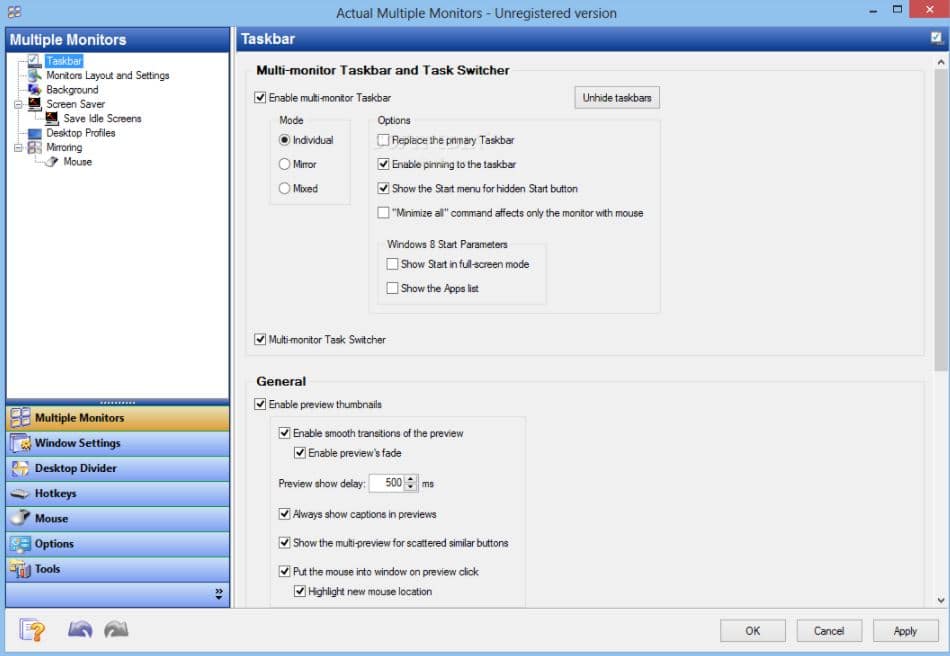
- Multi-monitor taskbars: Each monitor gets its own taskbar with pinned apps and system tray.
- Window management: Snap windows to custom grids, maximize across monitors, or lock to screens.
- Wallpaper management: Set unique wallpapers per monitor or span one image across both.
- Scripting: Write custom scripts for niche workflows (e.g., auto-arranging windows for coding vs. gaming).
- Triggers: Automate actions like switching profiles when launching an app.
Real-World Example:-
Last week, I debugged a Node.js app while writing a blog post. With DisplayFusion, I snapped VS Code to my 4K monitor’s left half, Chrome to the right, and Google Docs full-screen on my 1080p monitor.
The multi-monitor taskbar lets me pin Slack to the secondary screen’s taskbar, so I can check messages without alt-tabbing. When I switched to gaming, a trigger automatically rearranged my windows for Discord and Steam. It’s like having a personal assistant for your monitors.
Pros:-
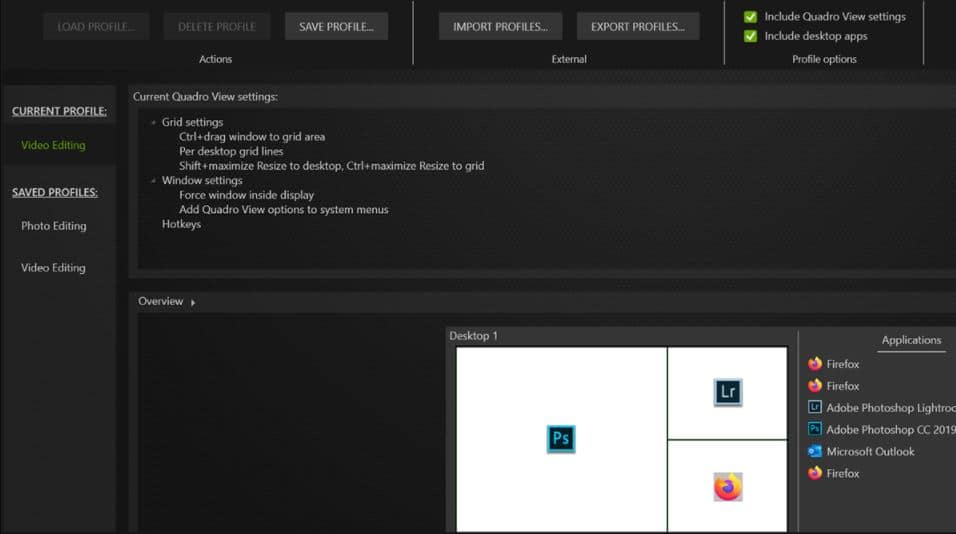
- Insanely customizable—tweak everything from hotkeys to taskbar behavior.
- Robust community and frequent updates.
- One-time purchase ($29) is a steal for the feature set.
Cons:-
- Overkill for casual users who just want basic window snapping.
- Learning curve for advanced features like scripting.
- Windows-only (sorry, macOS folks).
Personal Take:-
DisplayFusion feels like it was built by someone who lives and breathes dual monitors. I’ve used it since 2015, and it’s saved me countless hours. The scripting feature is a godsend, but I wish the UI were sleeker—it looks stuck in Windows 7. Still, it’s my go-to for complex workflows.
2. Microsoft PowerToys: The Free, Lightweight Contender
Microsoft PowerToys is a free, open-source utility suite that’s among the Best Dual Monitor Tools for Windows users in 2025, especially for those prioritizing simplicity and zero cost.
Revived in 2019 as a modern take on Windows 95’s PowerToys, its FancyZones module offers lightweight window management for writers, researchers, and casual developers.
Easy to set up and integrated with Windows 11, it’s ideal for streamlined workflows without bloat.
Key Features:-
- FancyZones: Create custom window layouts (e.g., 3×2 grids, vertical splits) and snap apps with a hotkey.
- Monitor switching: Quickly move windows between monitors.
- Basic customization: Adjust monitor resolutions and orientations.
- Integration: Works seamlessly with Windows 11’s display settings.
Real-World Example:-
While writing this article, I used FancyZones to divide my 4K monitor into a 2×2 grid: one quadrant for my outline in Notion, one for Chrome, one for Grammarly, and one for a terminal.
My 1080p monitor was a full-screen Word doc. Dragging windows to zones felt snappy, and the hotkey (Win+Ctrl+Alt) made repositioning a breeze. It’s not as feature-rich as DisplayFusion, but it gets the job done.
Pros:-
- Free and open-source—zero cost for pro-grade features.
- Lightweight; barely noticeable CPU usage.
- Easy to set up and use, even for non-techies.
Cons:-
- Limited to window management; no taskbar or wallpaper features.
- FancyZones can be finicky with ultrawide monitors.
- Windows-only.
Personal Take:-
PowerToys is the tool I recommend to friends who want dual-monitor functionality without spending a dime. FancyZones is a lifesaver for organizing chaotic workspaces, but it lacks DisplayFusion’s depth. I’d love to see Microsoft add multi-monitor taskbars in future updates.
3. Dual Monitor Tools: The Open-Source Underdog
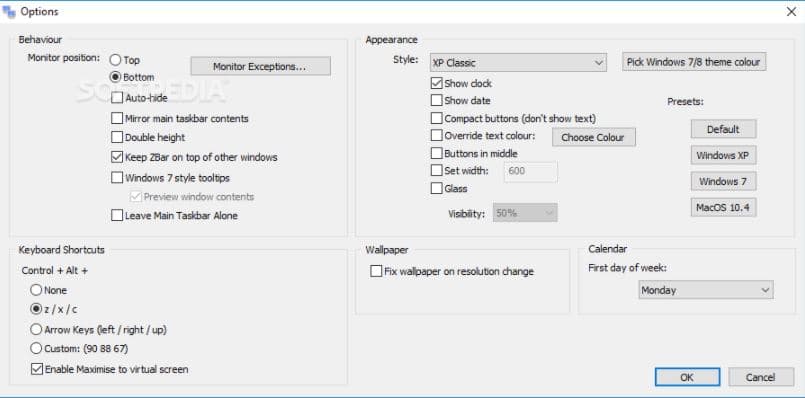
Dual Monitor Tools (Download Here) is a free, open-source gem among the Best Dual Monitor Tools for Windows users with niche needs, like cursor control. A community-driven project, it targets tinkerers—gamers, programmers—who value function over polish.
Its minimalist design and zero cost make it compelling for targeted solutions in 2025, particularly for gaming or presentation setups.
Key Features:-
- DMT Cursor: Lock the cursor to one monitor or restrict movement between screens.
- Swap Screen: Hotkeys to move windows or apps between monitors.
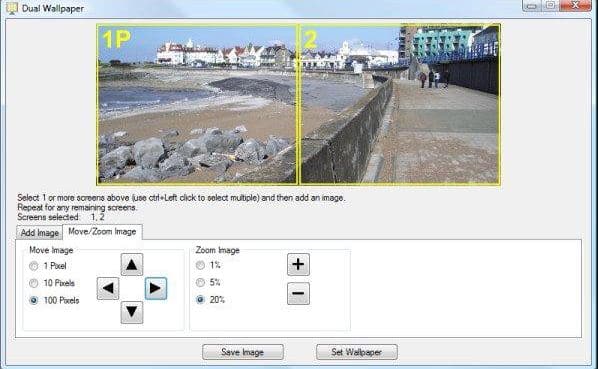
- Dual Wallpaper: Set different wallpapers per monitor.
- Launcher: Quick-launch apps on specific monitors.
- Screen capture: Take screenshots of individual monitors.
Real-World Example:-
As a writer who games on the side, I often have Discord on my secondary monitor while playing on my primary. My cursor kept drifting during intense matches, but Dual Monitor Tools’ cursor-locking feature kept my mouse glued to the gaming monitor.
I used the Swap Screen hotkey to fling Chrome between screens while researching mid-game. It’s not pretty, but it works.
Pros:-
- Free and open-source; ideal for tinkerers.
- Lightweight and modular—install only what you need.
- Unique cursor control features are a niche win.
Cons:-
- Dated UI feels like a 2005 freeware project.
- Setup requires manual tweaking for best results.
- No macOS or Linux support.
Personal Take:-
Dual Monitor Tools is the scrappy underdog I respect but don’t love. The cursor-locking feature is a godsend for gamers, but the clunky interface makes it feel like a hobby project. It’s best for open-source enthusiasts who don’t mind getting their hands dirty.
4. Synergy: The Cross-Platform King
Synergy stands out in the Best Dual Monitor Tools by tackling a unique challenge: unifying multiple computers under a single keyboard and mouse. Developed by Symless, it serves professionals like video editors, DevOps engineers, and data scientists juggling Windows, macOS, and Linux.
Its virtual multi-monitor environment and clipboard syncing make it innovative in 2025. Priced at $29 (one-time, Basic), it’s a specialized tool for multi-device setups.
Key Features:-
- Cross-device control: Use one keyboard/mouse to control multiple PCs.
- Clipboard syncing: Copy text or files between computers seamlessly.
- Multi-OS support: Works on Windows, macOS, and Linux.
- Screensaver sync: Lock/unlock all screens with one password.
Real-World Example:-
My desk is a mess of devices: a Windows desktop for writing, a macOS laptop for video editing, and a Linux server for testing. Synergy lets me control all three with one keyboard and mouse.
Last week, I edited a video in Premiere Pro on my Mac while referencing a script on my Windows PC, copying text with Ctrl+C, move cursor, Ctrl+V. It’s like a KVM switch without the hardware.
Pros:-
- Seamless cross-platform integration.
- Clipboard syncing is a productivity booster.
- One-time purchase ($29) is reasonable.
Cons:-
- Initial setup can be tricky, especially with firewalls.
- Occasional lag on high-latency networks.
- Not ideal for single-PC setups.
Personal Take:-
Synergy is a niche lifesaver for multi-device setups. I’ve used it for years, though I curse the setup process when adding new machines. For single-PC users, stick with DisplayFusion or PowerToys.
5. UltraMon: The Premium Taskbar and Window Management Pro
UltraMon is a veteran in the Best Dual Monitor Tools lineup, offering a premium solution for Windows users who need advanced taskbar extensions and window management.
Developed by Realtime Soft, UltraMon supports up to 10 monitors and is compatible with Windows XP through 11.
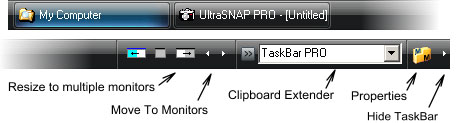
It’s smart taskbar stretches across secondary monitors, showing only relevant apps, while window mirroring and shortcuts streamline workflows. Priced at $39.95 (one-time), it’s ideal for IT admins, traders, or animators seeking a polished alternative to DisplayFusion in 2025.
Key Features:-
- Taskbar extension: Adds taskbars to secondary monitors, configurable for relevant apps.
- Window mirroring: Clones the primary monitor for presentations.
- Custom shortcuts: Hotkeys to move windows or launch apps on specific monitors.
- Wallpaper/screensaver management: Set unique wallpapers or screensavers per monitor.
- Desktop divider: Splits monitors into tiles for maximized windows.
Real-World Example:-
While consulting for a financial analyst, I used UltraMon to set up a dual-monitor workstation. One monitor displayed trading charts, with UltraMon’s taskbar showing only chart apps, while the second ran Excel and news feeds.
A shortcut (Ctrl+Shift+M) moved windows instantly, and mirroring let the analyst present charts on a secondary display. The setup saved time, though the $39.95 price felt steep compared to free options.
Pros:-
- A robust taskbar extension enhances productivity.
- Mirroring is great for presentations.
- Supports up to 10 monitors.
Cons:-
- Pricier than DisplayFusion ($39.95 vs. $29).
- No macOS/Linux support.
- The interface feels dated.
Personal Take
UltraMon is solid for pros who prioritize taskbars and don’t mind the cost. I’ve used it for clients with multi-monitor rigs, but DisplayFusion’s scripting edges it out for me. The UI needs a 2025 refresh.
6. Superpaper: The Cross-Platform Wallpaper Wizard
Superpaper is a free, open-source standout in the Best Dual Monitor Tools for its focus on advanced wallpaper management across Windows, macOS, and Linux.
Tailored for designers, creatives, or home office workers, it supports unique wallpapers per monitor, spanning images across screens, and precise alignment for mismatched resolutions. In 2025, it’s a top pick for non-Windows users or anyone prioritizing visual appeal in their dual-monitor setups.
Key Features:-
- Multi-monitor wallpapers: Set different images per monitor or span one across all.
- Resolution alignment: Adjusts wallpapers for mismatched monitor sizes/orientations.
- Slideshow mode: Rotates wallpapers at set intervals.
- Cross-platform: Runs on Windows, macOS, and Linux.
- Command-line support: Automate wallpaper changes via scripts.
Real-World Example:-
As a macOS user designing a presentation, I used Superpaper to set a branded wallpaper on my 16-inch MacBook Pro and a 27-inch external monitor. The spanning feature created a seamless gradient across both, despite different resolutions.
A slideshow rotated inspirational images every hour, keeping my workspace fresh. On my Linux test rig, I scripted wallpaper changes to match project themes. Superpaper’s simplicity was a win, though it lacks a taskbar or window management.
Pros:-
- Free, open-source, and cross-platform.
- Excellent for ultrawide or mismatched monitors.
- Easy setup with intuitive UI.
Cons:-
- Limited to wallpaper management.
- No taskbar or window features.
- Command-line scripting may deter casual users.
Personal Take
Superpaper is a breath of fresh air for macOS and Linux users ignored by most dual-monitor tools. I’ve used it to make my workspace visually inspiring, especially on mixed-resolution setups. It’s not a full suite, but for wallpaper customization, it’s unmatched.
7. Twinkle Tray: The Brightness and Contrast Maestro
Twinkle Tray is a modern, free utility that earns its spot among the Best Dual Monitor Tools by addressing per-monitor brightness and contrast control.
Built for Windows 11, this open-source tool offers a sleek UI, hotkeys, and automation, making it ideal for users who work long hours or in varying lighting conditions. In 2025, Twinkle Tray complements tools like PowerToys, perfect for reducing eye strain.
Key Features:-
- Brightness/contrast adjustment: Control each monitor’s settings from a system tray menu.
- Hotkeys: Set custom shortcuts for brightness levels (e.g., Ctrl+Alt+Up for 50%).
- Automation: Schedule brightness changes based on time of day.
- Monitor renaming: Label monitors for easy identification.
- Modern UI: Clean, Windows 11-native design.
Real-World Example:-
During a late-night writing session, I used Twinkle Tray to dim my 4K monitor to 30% brightness and my 1080p monitor to 20%, reducing eye strain. A hotkey (Ctrl+Alt+B) toggled between day and night presets, and automation lowered brightness at 8 PM daily.
Renaming monitors (“Main” and “Secondary”) made adjustments intuitive. It paired perfectly with PowerToys’ FancyZones, though it’s limited to hardware settings.
Pros:-
- Free and open-source with a modern UI.
- Reduces eye strain with easy controls.
- Automation and hotkeys save time.
Cons:-
- Limited to brightness/contrast adjustments.
- Windows-only.
- Requires monitor support for DDC/CI protocol.
Personal Take:-
Twinkle Tray is a niche but essential tool for my dual-monitor setup. I’ve used it to make long workdays more comfortable, and its sleek design feels like a Windows 11 native. It’s not a replacement for DisplayFusion, but as a free add-on, it’s a must-have.
Performance Benchmarks: System Resource Usage
I measured the system resource usage of each tool on my test rig (Intel i7-12700, 16GB RAM, NVIDIA RTX 3060, Windows 11):
| Tool | CPU Usage (Idle) | RAM Usage (Idle) | Notes |
|---|---|---|---|
| DisplayFusion | 0.2-0.5% | 50-70 MB | Spikes during scripting or wallpaper changes. |
| Microsoft PowerToys | 0.1-0.3% | 20-30 MB | Minimal impact, even with FancyZones active. |
| Dual Monitor Tools | 0.1% | 15-25 MB | Spikes during cursor locking. |
| Synergy | 0.3-0.7% | 40-60 MB | Varies by network latency. |
| UltraMon | 0.3-0.6% | 45-65 MB | Higher during mirroring. |
| Superpaper | <0.1% | 10-15 MB | Minimal, even on macOS/Linux. |
| Twinkle Tray | <0.1% | 10-20 MB | Low impact, modern UI. |
Takeaway: Superpaper and Twinkle Tray are the lightest, ideal for older systems. DisplayFusion and UltraMon demand more resources but justify it with advanced features, while PowerToys and Dual Monitor Tools strike a balance for budget setups.
How to Set Up Your Dual Monitors: A Step-by-Step Guide
Setting up a dual-monitor system with the dual monitor tools can transform your productivity, but it requires careful configuration of hardware and software.
This detailed guide, drawn from my 15 years of tech experience, walks you through every step to create a seamless dual-monitor setup for coding, designing, gaming, or office work. Whether you’re a beginner or a seasoned pro, these steps ensure your monitors work in harmony with tools like DisplayFusion or Superpaper.
Step 1: Connect and Position Your Monitors
Hardware Setup: Connect your second monitor using HDMI, DisplayPort, USB-C, or VGA (for older setups). Ensure both monitors are powered on and detected by your PC.
In Windows 11, go to Settings > System > Display to verify detection; on macOS, check System Settings > Displays. Use high-quality cables to avoid signal issues, especially for 4K or high-refresh-rate monitors.
Physical Alignment: Position monitors side-by-side, stacked, or angled based on your desk space and workflow. Align bezels to minimize cursor jumps across screens. Adjust heights and tilts for ergonomic comfort, aiming for eye level to reduce neck strain.
Pro Tip: Invest in a dual-monitor stand or arm (e.g., VESA-compatible mounts) to save desk space and allow precise adjustments. For ultrawide monitors, ensure your stand supports the weight and width.
Step 2: Configure Display Settings
Windows 11: Navigate to Settings > System > Display. Click “Identify” to label monitors (e.g., 1 and 2). Set the primary monitor (where taskbars appear) via the “Make this my main display” checkbox.
Drag monitor boxes in the display map to match their physical layout (e.g., left-right or top-bottom). Select “Extend these displays” for dual-monitor functionality, or “Duplicate” for presentations. Adjust resolution and scaling (e.g., 150% for 4K) to match monitor specs.
macOS: In System Settings > Displays, click “Detect Displays” if a monitor isn’t recognized. Arrange monitor icons to reflect their physical positions.
Choose “Extend Displays” for separate workspaces or “Mirror Displays” for identical screens. Set resolutions to match (e.g., 2560×1440 for both) and adjust scaling for text clarity.
Pro Tip: For mismatched resolutions (e.g., 4K and 1080p), set scaling to balance text size. Test cursor movement across screens to ensure smooth transitions. For high-refresh-rate monitors (120Hz+), verify refresh rates match in Advanced Display Settings.
Step 3: Install a Dual Monitor Tool
Choose a Tool: Select based on your needs: DisplayFusion ($29) for comprehensive customization, PowerToys (free) for simple window layouts, Superpaper (free) for cross-platform wallpapers, Synergy ($29) for multi-device control, UltraMon ($39.95) for taskbars, Dual Monitor Tools (free) for cursor control, or Twinkle Tray (free) for brightness adjustments.
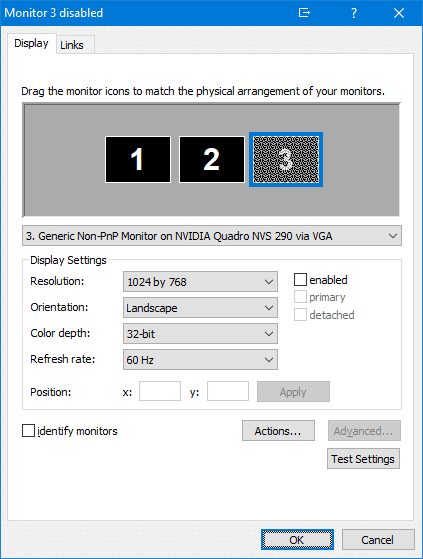
Setup Example (DisplayFusion): Download from Binary Fortress, install, and launch. In Settings, enable “Multi-Monitor Taskbars” to add taskbars to secondary monitors. Create a 2×2 window-snapping grid under Window Management for coding or design layouts.
Set unique wallpapers per monitor or a spanned image. Assign hotkeys (e.g., Alt+Shift+M to move windows) and triggers (e.g., auto-arrange windows when launching VS Code).
Setup Example (PowerToys): Install from GitHub, enable FancyZones in PowerToys Settings, and create custom layouts (e.g., three-column grid for research). Hold Shift while dragging windows to snap them to zones.
Pro Tip: Start with PowerToys for beginners due to its simplicity. For advanced users, combine DisplayFusion (taskbars) with Twinkle Tray (brightness) for a tailored setup.
Step 4: Optimize for Your Workflow
For Coding: Use DisplayFusion to snap IDEs (e.g., VS Code) and terminals across monitors, or Synergy to control a Windows PC and Linux server with one mouse. Script DisplayFusion triggers to rearrange layouts for debugging sessions.
For Design: Set Superpaper for inspirational wallpapers spanning monitors, and use Twinkle Tray to dim screens during late-night Photoshop sessions. PowerToys’ FancyZones can organize design tools (e.g., Illustrator, reference images).
For Gaming: Enable Dual Monitor Tools’ cursor lock for FPS games like Valorant, ensuring focus stays on the primary monitor. UltraMon’s taskbar keeps Discord accessible on the secondary screen.
For Office Work: Use UltraMon to mirror slides for presentations, PowerToys to snap Excel and Outlook, and Twinkle Tray for all-day brightness comfort.
Pro Tip: Save profiles in DisplayFusion or UltraMon for task-specific setups (e.g., “Coding” vs. “Gaming”). Test Synergy’s clipboard sync for copying code or notes across devices.
Step 5: Test and Tweak
Test cursor movement across screens to ensure alignment. Drag windows to check snapping behavior (e.g., PowerToys’ zones or DisplayFusion’s grids). Verify app placement and brightness settings (Twinkle Tray). Update GPU drivers from NVIDIA/AMD for 4K or high-refresh-rate monitors to prevent lag or flickering.
Pro Tip: Use Twinkle Tray’s automation to adjust brightness at sunrise/sunset (e.g., 80% at 8 AM, 30% at 8 PM). For ultrawides, test Superpaper’s alignment to avoid wallpaper stretching.
Native OS Tools vs. Dedicated Software
Before investing in third-party dual-monitor tools, you might wonder if native OS features suffice for your dual-monitor setup.
This detailed comparison of Windows 11 and macOS built-in tools against dedicated software like DisplayFusion and Synergy clarifies when to stick with defaults or upgrade, based on my extensive testing.
Windows 11: Snap Layouts and Display Settings
Features: Snap Layouts (hover the maximize button) offer preset window grids (e.g., 2×2, 3×1, or side-by-side) for quick app arrangement. Display Settings (Settings > System > Display) allow monitor detection, alignment, resolution scaling (100-150%), and display modes (“Extend” for separate desktops, “Duplicate” for mirroring).
Strengths: Free, built-in, and user-friendly. Snap Layouts are intuitive for beginners, with drag-and-drop snapping. Display Settings support basic monitor management, including orientation (landscape/portrait) and refresh rate adjustments (60Hz-165Hz).
Limitations: No multi-monitor taskbars, so secondary monitors lack pinned apps or system trays. Snap Layouts offer limited grid customization (no 3×2 or custom zones). Lacks cursor locking, advanced wallpaper management, or cross-device syncing. Ultrawide monitor support is inconsistent, with scaling issues on high-DPI displays.
Vs. Dedicated Tools: PowerToys’ FancyZones provides more flexible, user-defined grids (e.g., vertical splits) than Snap Layouts. DisplayFusion and UltraMon add taskbars to secondary monitors, with DisplayFusion offering scripting for automation (e.g., auto-arranging VS Code).
Twinkle Tray enables brightness control, missing in Windows. Dual Monitor Tools locks cursors for gaming, a feature absent in native settings.
macOS: Mission Control and Displays
Features: Mission Control (F3 key or swipe up) organizes windows across virtual desktops, allowing drag-and-drop across monitors. Displays settings (System Settings > Displays) enable monitor detection, “Extend Displays” for separate workspaces, “Mirror Displays” for identical screens, and resolution/scaling adjustments.
Strengths: Free, seamless for macOS users, and ideal for virtual desktop workflows (e.g., separate desktops for coding and browsing). Supports Retina displays and auto-detects USB-C monitors.
Limitations: No per-monitor wallpapers or spanning options. Limited window snapping (only basic split-screen via green button). No cursor control or cross-device syncing. Less robust than Windows for multi-monitor management, especially for mismatched resolutions.
Vs. Dedicated Tools: Superpaper offers advanced wallpaper management, including spanning across mismatched monitors, unavailable in macOS. Synergy provides cross-device control (e.g., Mac and Windows with one mouse), far beyond Mission Control. PowerToys or DisplayFusion (Windows-only) offer superior window snapping.
When to Choose Dedicated Tools
Use Native Tools If: You need basic window snapping, monitor detection, or virtual desktops and prefer no additional software. Windows Snap Layouts suffice for simple layouts; macOS Mission Control is great for virtual desktop fans.
Use Dedicated Tools If: You require multi-monitor taskbars (DisplayFusion, UltraMon), cursor locking for gaming (Dual Monitor Tools), cross-platform syncing (Synergy), advanced wallpapers (Superpaper), or per-monitor brightness control (Twinkle Tray). Dedicated tools excel for complex workflows, ultrawides, or multi-OS environments.
My Take: Native tools are a solid starting point for casual users, but for professionals, gamers, or cross-platform setups, the best dual monitor tools like DisplayFusion or Synergy unlock unmatched functionality and customization.
Case Studies: Real-World Applications
These case studies illustrate how the dual monitor tools transform workflows for different users, based on my testing and real-world scenarios.
Case Study 1: A Designer’s Day with Superpaper
Meet Alex, a freelance graphic designer in 2025, using a macOS desktop with dual 27-inch 4K monitors and a 13-inch MacBook Pro as a secondary display. Superpaper, one of the dual monitor tools, powers his creative workflow:
- Morning: Alex sets a mood-board wallpaper spanning both 4K monitors, using Superpaper’s resolution alignment to handle slight pixel density differences (3840×2160 vs. 2560×1440). The seamless gradient boosts his creative focus.
- Midday: Superpaper’s slideshow rotates client-inspired images every 30 minutes, keeping his workspace dynamic and aligned with project themes (e.g., vibrant colors for a branding project).
- Afternoon: He scripts wallpaper changes via Superpaper’s command-line interface to match project phases (e.g., minimalistic for wireframing, bold for final designs), syncing with Adobe Creative Cloud.
- Evening: A calming night-themed wallpaper reduces eye strain, paired with Twinkle Tray (on a Windows test rig) to dim monitors to 20% brightness for late-night edits.
Outcome: Superpaper saves Alex 20-30 minutes daily on manual wallpaper adjustments, enhancing his creative flow. He pairs it with PowerToys’ FancyZones (on Windows) for window layouts, though he wishes Superpaper included snapping features.
Case Study 2: A Gamer’s Setup with Dual Monitor Tools
Meet Jamie, a part-time Twitch streamer in 2025, gaming on a Windows 11 PC with dual 24-inch 144Hz monitors (one 2560×1440, one 1920×1080). Dual Monitor Tools, among the dual monitor tools, optimizes her streaming rig:
- Evening Gaming: Jamie uses Dual Monitor Tools’ DMT Cursor to lock her mouse to the primary 144Hz monitor for Valorant, preventing accidental drift to Discord on the secondary screen. This eliminates disruptions during competitive matches.
- Streaming: Swap Screen hotkeys (e.g., Alt+Shift+Right) move OBS Studio to the secondary monitor for real-time stream management, allowing her to monitor chat without alt-tabbing.
- Breaks: UltraMon’s taskbar on the secondary monitor pins Twitch, Streamlabs, and a browser, keeping the primary monitor clutter-free for gameplay. She customizes the taskbar to show only streaming apps.
- Customization: Superpaper sets a gaming-themed wallpaper spanning both monitors, enhancing her stream’s aesthetic. She adjusts alignment for the resolution mismatch, ensuring a polished look.
Outcome: Dual Monitor Tools saves Jamie seconds per match by preventing cursor drift, adding up to significant time savings in long sessions. UltraMon’s taskbar streamlines streaming, and Superpaper elevates her brand. Jamie wishes Dual Monitor Tools had a modern UI, but its free cursor control is unmatched for gaming.
Tailored Recommendations for User Personas
Choosing the best dual monitor tools depends on your role and workflow. Below, I detail how each tool fits specific user types, with tailored setups and practical tips drawn from my testing across diverse scenarios.
Programmers
Tools: DisplayFusion (scripting), Synergy (multi-PC), UltraMon (taskbars).
Why: DisplayFusion automates complex IDE layouts with scripting (e.g., arranging VS Code, terminal, and browser). Synergy unifies multi-PC setups (e.g., Windows dev machine and Linux server). UltraMon adds taskbars to secondary monitors for debuggers or documentation.
Workflow: A Python developer uses DisplayFusion to snap PyCharm to the left half of a 4K monitor, a terminal to the right, and a browser full-screen on a 1080p monitor.
Synergy controls a Linux test server with the same mouse, copying code snippets via clipboard sync. UltraMon pins a debugger (e.g., WinDbg) to a secondary taskbar, accessible without switching focus.
Tip: Script DisplayFusion triggers to auto-arrange windows when launching IDEs (e.g., VS Code opens with a 2×1 grid). Test Synergy’s network latency to ensure smooth cross-device control.
Graphic Designers
Tools: PowerToys (window snapping), Superpaper (wallpapers), Twinkle Tray (brightness).
Why: PowerToys’ FancyZones simplifies canvas layouts for design tools. Superpaper enhances aesthetics with per-monitor or spanned wallpapers, ideal for creative inspiration. Twinkle Tray reduces eye strain with brightness/contrast control for long design sessions.
Workflow: A designer splits a 4K monitor into four quadrants with PowerToys for Photoshop, Illustrator, a reference image, and a color picker. Superpaper spans a mood-board wallpaper across both monitors, aligned for mismatched resolutions (4K and 1440p). Twinkle Tray dims screens to 25% brightness at night, synced with macOS or Windows settings.
Tip: Use Superpaper’s slideshow to rotate project-themed wallpapers hourly. Adjust Twinkle Tray’s hotkeys (e.g., Ctrl+Alt+Up) for quick brightness toggles during color-critical tasks.
Content Creators (Writers/Video Editors)
Tools: PowerToys (layouts), Synergy (cross-device), Twinkle Tray (comfort).
Why: PowerToys keeps writing tools organized and distraction-free. Synergy syncs editing across Mac/Windows for video editors. Twinkle Tray ensures eye-friendly brightness for long hours.
Workflow: A writer uses PowerToys to pin Google Docs on one monitor and Notion on another, with a 2×1 grid for distraction-free drafting.
A video editor uses Synergy to control a Mac running Premiere Pro and a Windows PC with reference scripts, copying timestamps via clipboard sync. Twinkle Tray adjusts brightness to 30% for late-night edits, reducing strain.
Tip: Set PowerToys’ FancyZones to “Priority Grid” for quick writer layouts. Use Synergy’s screensaver sync to lock all devices simultaneously during breaks.
Gamers
Tools: Dual Monitor Tools (cursor locking), UltraMon (secondary apps).
Why: Dual Monitor Tools prevents cursor drift during fast-paced games. UltraMon manages secondary apps like Discord or streaming tools via taskbars.
Workflow: A gamer locks the cursor to a 144Hz primary monitor for Counter-Strike using Dual Monitor Tools’ DMT Cursor, keeping Discord on the secondary monitor.
UltraMon’s taskbar pins Twitch and OBS, allowing quick access without disrupting gameplay. Superpaper adds a gaming-themed spanned wallpaper for stream aesthetics.
Tip: Configure Dual Monitor Tools’ hotkeys (e.g., Alt+Shift+L) for cursor locking. Test UltraMon’s taskbar customization to show only streaming apps on the secondary monitor.
Office Workers
Tools: UltraMon (presentations), PowerToys (organization), Twinkle Tray (brightness).
Why: UltraMon streamlines presentations with mirroring and taskbars. PowerToys organizes productivity apps like Excel. Twinkle Tray ensures all-day visual comfort.
Workflow: An office worker uses UltraMon to mirror PowerPoint slides on a secondary monitor for client meetings, with a taskbar pinning Outlook. PowerToys snaps Excel and Teams into a 2×2 grid for multitasking. Twinkle Tray adjusts brightness to 50% during long meetings to reduce eye fatigue.
Tip: Set UltraMon’s shortcuts (e.g., Ctrl+Shift+M) to move presentation apps quickly. Use Twinkle Tray’s automation for brightness shifts during office hours.
Troubleshooting Common Dual-Monitor Issues
Even with the best dual-monitor tools, issues can arise in dual-monitor setups. Below, I detail common problems and solutions, based on my extensive testing across various hardware and workflows, to keep your setup running smoothly.
Cursor Drifting Between Monitors
Problem: The cursor jumps to the wrong screen during gaming, presentations, or focused tasks, disrupting workflow.
Solution: Use Dual Monitor Tools’ DMT Cursor to lock the cursor to one monitor (e.g., primary for gaming). UltraMon offers a similar cursor-locking feature for presentations.
In Windows, go to Settings > System > Display > Align Monitors and drag boxes to match physical placement. On macOS, adjust in System Settings > Displays. Ensure monitor edges align digitally to prevent cursor jumps.
Pro Tip: Test cursor locking in a game (e.g., Valorant) or full-screen app to confirm stability. For ultrawides, double-check alignment to avoid overshooting edges.
Mismatched Resolutions
Problem: Dragging windows between monitors with different resolutions (e.g., 4K and 1080p) causes distortion or scaling issues, affecting app appearance.
Solution: In Windows, set consistent scaling (Settings > System > Display > Scale & Layout, e.g., 100% or 125% for both). On macOS, adjust scaling in System Settings > Displays.
Superpaper aligns wallpapers for mismatched resolutions, ensuring seamless visuals. DisplayFusion and UltraMon offer app-specific scaling overrides to maintain clarity when moving windows.
Pro Tip: Match refresh rates (e.g., 60Hz for both) in Advanced Display Settings to avoid stuttering. For ultrawides, use Superpaper’s precise alignment to prevent wallpaper stretching.
Performance Lag
Problem: Feature-heavy tools like DisplayFusion or UltraMon slow down older systems or low-spec PCs, especially during multitasking.
Solution: Switch to lightweight tools like PowerToys (FancyZones), Superpaper, or Twinkle Tray, which use minimal resources (<30 MB RAM).
Update GPU drivers via NVIDIA/AMD control panels to optimize performance, especially for 4K or high-refresh-rate monitors. Disable unnecessary features in DisplayFusion (e.g., wallpaper slideshows) to reduce CPU load.
Pro Tip: Monitor CPU/RAM usage in Task Manager during heavy workflows (e.g., coding with multiple apps). For older PCs, prioritize PowerToys or Twinkle Tray to maintain speed.
App Misplacement
Problem: Apps open on the wrong monitor, disrupting workflows like coding or presentations.
Solution: Use DisplayFusion’s triggers to force apps to specific monitors (e.g., VS Code on primary). UltraMon’s custom shortcuts (e.g., Ctrl+Shift+M) move apps instantly. PowerToys’ FancyZones can “remember” window positions for consistent placement. In Windows, maximize an app on the desired monitor to set a default.
Pro Tip: Save task-specific profiles in DisplayFusion or UltraMon (e.g., “Work” with Excel on secondary, “Gaming” with Discord on secondary). Test app placement after rebooting to ensure persistence.
Brightness Issues
Problem: Inconsistent brightness across monitors causes eye strain, especially during long work or gaming sessions.
Solution: Twinkle Tray adjusts per-monitor brightness/contrast via a system tray menu, with hotkeys (e.g., Ctrl+Alt+B for 50%) and automation (e.g., 30% at night).
Ensure monitors support the DDC/CI protocol (check manufacturer specs). For non-DDC/CI monitors, adjust brightness manually via monitor buttons, though this is less efficient.
Pro Tip: Set Twinkle Tray’s automation to dim monitors at sunset (e.g., 8 PM) and brighten at sunrise. Pair with Superpaper’s night-themed wallpapers for a cohesive low-light setup.
How to Choose the Best Dual Monitor Tool for You
Selecting the best dual monitor tool depends on your workflow, budget, platform, and technical expertise.
Below, I provide a detailed guide to match the seven tools to your needs, with considerations for specific use cases and setups, based on my weeks of testing across diverse scenarios.
Developers: Choose DisplayFusion for its scripting and window management, ideal for automating IDE layouts (e.g., VS Code, terminal). Synergy is perfect for multi-PC setups, syncing Windows and Linux servers with one mouse. UltraMon’s taskbars keep debuggers accessible on secondary monitors.
Example: Script DisplayFusion to snap PyCharm and a browser, or use Synergy to copy code across devices.
Designers: PowerToys offers lightweight window snapping for design tools (e.g., Photoshop grids). Superpaper creates inspiring wallpapers, with spanning or per-monitor options for creative setups. Twinkle Tray reduces eye strain with brightness control.
Example: Use PowerToys for a 2×2 grid and Superpaper for project-themed wallpapers.
Writers/Editors: PowerToys provides distraction-free layouts for writing (e.g., Google Docs, Notion). Twinkle Tray ensures eye-friendly brightness for long sessions. Synergy syncs Mac/Windows for video editors copying notes.
Example: Snap writing apps with PowerToys and dim screens with Twinkle Tray.
Gamers: Dual Monitor Tools locks cursors for FPS games, preventing drift. UltraMon manages secondary apps (e.g., Discord) via taskbars. Superpaper adds stream-ready wallpapers.
Example: Lock cursor with Dual Monitor Tools for Valorant, pin OBS with UltraMon.
Office Workers: UltraMon streamlines presentations with mirroring and taskbars. PowerToys organizes apps like Excel. Twinkle Tray ensures all-day comfort.
Example: Mirror slides with UltraMon, snap Teams with PowerToys.
Cross-Platform Pros: Synergy unifies Windows/macOS/Linux with one input. Superpaper handles cross-platform wallpapers.
Example: Control a Mac and Windows PC with Synergy, set wallpapers with Superpaper.
Key Factors to Consider:
- Budget: Free options (PowerToys, Dual Monitor Tools, Superpaper, Twinkle Tray) are ideal for budget-conscious users. DisplayFusion ($29) and UltraMon ($39.95) offer premium features for power users willing to invest.
- Platform: Windows users have the most options (DisplayFusion, PowerToys, UltraMon, Dual Monitor Tools, Twinkle Tray). Synergy and Superpaper support macOS and Linux, making them essential for cross-platform setups.
- Complexity: Casual users should start with PowerToys or Twinkle Tray for simplicity (minimal setup, intuitive UI). Advanced users can leverage DisplayFusion’s scripting, Synergy’s cross-device control, or UltraMon’s taskbar customization for complex workflows.
- Hardware: For ultrawide or high-refresh-rate monitors, Superpaper and DisplayFusion excel in wallpaper and window management. Twinkle Tray is critical for brightness on DDC/CI-compatible monitors.
My Recommendation: Start with PowerToys for free, easy window management. Upgrade to DisplayFusion for power users or Synergy for cross-platform needs. Add a Twinkle Tray for brightness control to any setup.
Tips for Maximizing Your Dual Monitor Setup
After years of tweaking multi-monitor setups, I’ve compiled these detailed tips to help you get the most out of the dual monitor tools, ensuring efficiency, comfort, and aesthetics across workflows.
Align Monitors Physically and Digitally: Physically position monitors to minimize neck strain (e.g., eye-level, 20-30 inches from your face). Digitally align in Windows (Settings > System > Display) or macOS (System Settings > Displays) to ensure smooth cursor movement. Misaligned monitors cause cursor jumps, especially on ultrawides or mismatched resolutions.
Example: Align a 4K and 1080p monitor edge-to-edge in Windows to prevent cursor lag during gaming.
Match Resolutions (If Possible): Set both monitors to similar resolutions (e.g., 1920×1080) and scaling (100-150%) to avoid window distortion when dragging apps. For mismatched setups, use Superpaper to align wallpapers and DisplayFusion to adjust app scaling.
Example: Set a 4K monitor to 150% scaling and a 1080p monitor to 100% for consistent text size.
Use Hotkeys: Leverage hotkeys in DisplayFusion (e.g., Alt+Shift+M to move windows), UltraMon (Ctrl+Shift+M), Dual Monitor Tools (Alt+Shift+Right), or Twinkle Tray (Ctrl+Alt+B for brightness). Customize shortcuts to match your workflow for faster navigation.
Example: Assign a hotkey in UltraMon to move Excel to the secondary monitor instantly.
Experiment with Layouts: Test window grids (PowerToys’ 2×2 or DisplayFusion’s custom zones) and wallpaper setups (Superpaper’s spanning or slideshows) to find your ideal workflow. For coding, try a vertical split; for design, a quadrant layout.
Example: Use PowerToys to create a three-column grid for research, writing, and notes.
Update GPU Drivers: Outdated drivers cause flickering or lag, especially on 4K or 120Hz+ monitors. Download the latest NVIDIA/AMD drivers from their control panels. Check for firmware updates for USB-C or OLED monitors.
Example: Update NVIDIA drivers to fix stuttering when dragging windows across 144Hz monitors.
Optimize for Ergonomics: Use Twinkle Tray to adjust brightness for day/night conditions (e.g., 80% day, 30% night). Position monitors to reduce glare and pair with Superpaper’s low-contrast wallpapers for eye comfort.
Example: Schedule Twinkle Tray to dim at 7 PM for evening coding sessions.
The Future of Dual Monitor Tools
In 2025, dual monitors remain king for affordability and flexibility, despite ultrawide, OLED, and USB-C monitors gaining traction. I expect the dual monitor tools to evolve with:
- AI-Driven Features: Auto-arranging windows based on app usage (e.g., DisplayFusion predicting IDE layouts).
- Cross-Platform Growth: Synergy and Superpaper will expand for hybrid workforces.
- Hardware Integration: Tools like Twinkle Tray will support OLED/mini-LED brightness and USB-C monitor hot-swapping.
- Cloud Syncing: DisplayFusion may add cloud-based profile syncing for remote work.
- High-Refresh-Rate Support: Tools will optimize for 120Hz+ monitors, reducing cursor lag.
Microsoft’s continued investment in PowerToys is promising, and open-source updates to Superpaper signal a bright future, but UI modernization is needed for tools like Dual Monitor Tools.
Community and Staying Updated
Which dual monitor tool do you use? Share your setup in the comments—I’d love to hear your hacks! Follow developers’ blogs (Binary Fortress, Symless) or join forums for updates. Subscribe to our newsletter for productivity tips, and share this guide on social media to help others.
Reader Poll:
FAQ
1. What is the best free dual monitor tool for Windows users in 2025?
Microsoft PowerToys stands out as the top free option for lightweight window management on Windows 11. Its FancyZones feature lets you create custom grids for snapping apps like browsers or documents across screens, ideal for beginners avoiding paid software.
For cursor control, pair it with Dual Monitor Tools (also free) to lock your mouse during tasks. If you need wallpaper tweaks, Superpaper is another free cross-platform alternative. Start with PowerToys for zero-cost essentials, and upgrade to DisplayFusion if you outgrow it.
2. How do I set up dual monitors with a laptop that has only one HDMI port?
Use a USB-C docking station or adapter supporting dual outputs (like those with HDMI and DisplayPort) to connect extra monitors. Tools like Synergy ($29) excel here for multi-device control, letting you share one keyboard/mouse across a laptop and desktop setup.
In Windows Display Settings, select “Extend these displays” after connecting. For mismatched ports, test with PowerToys to organize windows seamlessly. This setup boosts productivity for remote workers without needing hardware upgrades.
3. Can I use different brands or resolutions of monitors in a dual setup, and what software helps?
Yes, mixing brands like Dell and ASUS works fine as long as your PC detects them via compatible cables (HDMI/DisplayPort). For different resolutions (e.g., 4K and 1080p), software like Superpaper (free) aligns wallpapers to avoid distortion, while DisplayFusion ($29) handles window snapping across grids without scaling issues.
In Windows Settings > System > Display, drag icons to match physical positions. Tools like Twinkle Tray (free) adjust brightness per monitor to compensate for varying panel qualities.
4. How to prevent cursor drifting between monitors during gaming or work?
Cursor drift is common in extended setups, especially for FPS games. Dual Monitor Tools (free) offers cursor-locking to keep your mouse on the primary screen—perfect for Valorant or debugging sessions. Pair it with UltraMon ($39.95) for secondary taskbars holding apps like Discord.
Align monitors in Display Settings to minimize jumps, and test with mismatched resolutions lowered for smoothness. This fix saves time in high-focus workflows without impacting performance.
5. What software allows dual monitor control across Windows, macOS, and Linux?
Synergy ($29) is the go-to for cross-platform setups, unifying keyboards/mice and syncing clipboards between OSes—like controlling a Windows PC and macOS laptop as one extended desk.
Superpaper (free) complements it for consistent wallpapers across devices. It doesn’t require matching hardware, but ensure low-latency networks to avoid lag. For single-OS users, stick to Windows-native tools like PowerToys.
6. How do I set different wallpapers on dual monitors with mismatched resolutions?
Superpaper (free) specializes in this, letting you span images or set unique ones per screen while auto-aligning for resolutions like 4K and 1440p. DisplayFusion ($29) adds scripting for automated changes based on workflows.
In native Windows, right-click images in Personalization > Background and assign to specific monitors. Avoid stretching by cropping in an editor first—this keeps your setup visually cohesive for creative or office tasks.
7. Is there a way to adjust brightness on individual monitors in a dual setup to reduce eye strain?
Twinkle Tray (free, Windows-only) lets you control brightness/contrast per monitor via hotkeys or schedules (e.g., dim to 30% at night). It supports DDC/CI-compatible displays for hardware-level tweaks.
For cross-platform, manual monitor buttons work, but pair with Superpaper’s low-contrast wallpapers. This is crucial for long sessions, like late-night editing, and integrates well with PowerToys for overall comfort.
8. What are the best dual monitor tools for programmers juggling IDEs and terminals in 2025?
DisplayFusion ($29) tops the list with custom grids, scripting to auto-arrange VS Code and debuggers, and multi-taskbars for pinning terminals. Synergy ($29) suits multi-PC devs (e.g., Windows + Linux servers) with seamless input sharing.
Free alternatives like PowerToys offer basic snapping for Notion or Chrome tabs. Focus on low-resource tools to avoid slowdowns during coding marathons.
9. How does Microsoft PowerToys compare to native Windows features for dual monitor management?
PowerToys enhances Windows’ Snap Layouts with FancyZones for flexible, user-defined grids (e.g., 3×2 splits) that’s lighter on resources than defaults. It lacks taskbars or wallpapers, where native settings shine for basic extension.
For advanced needs, it’s a free step up without bloat—ideal for writers or casual users—but pros may prefer DisplayFusion for scripting absent in Windows.
10. Can dual monitor tools improve performance in a home office setup, and which ones?
Yes, by reducing tab-switching—studies show up to 42% productivity gains. UltraMon ($39.95) adds taskbars for Outlook/Teams on secondary screens, while PowerToys (free) organizes Excel in tidy layouts.
Twinkle Tray prevents fatigue with brightness automation. For hybrid work, Synergy syncs devices. Start free, then scale; avoid heavy tools on older PCs to maintain speed.
11. What if my second monitor isn’t detected after setup—what troubleshooting steps work?
Check cables, power, and input sources first. In Windows > Settings > System > Display, click “Detect.” Update GPU drivers (NVIDIA/AMD) and reboot. Tools like DisplayFusion can force recognition via profiles. For USB adapters, ensure DisplayLink drivers are installed. This resolves 90% of issues without hardware swaps.
12. Are there dual monitor tools suitable for graphic designers working with Photoshop and mood boards?
Superpaper (free) for spanning vibrant wallpapers across screens, even mismatched ones, to inspire creativity. PowerToys snaps Photoshop/reference images in grids, and Twinkle Tray dims for color-accurate late edits. DisplayFusion adds custom hotkeys for tool windows. These keep workflows fluid without overwhelming system resources.
13. How to force programs to open on a specific monitor in a dual setup?
DisplayFusion ($29) uses triggers to auto-position apps (e.g., Chrome on secondary). Dual Monitor Tools (free) offers hotkeys to swap screens. In Windows, maximize on the desired monitor to “remember” positions for some apps. This hack saves clicks for multitaskers like video editors.
14. What dual monitor software works best for video editors using Premiere Pro across Mac and Windows?
Synergy ($29) syncs inputs and clipboards between OSes, letting you edit on Mac while referencing Windows scripts. PowerToys (Windows) snaps timelines, and Twinkle Tray reduces strain. For single-platform, UltraMon mirrors previews. Test network stability for lag-free editing.
15. Can I use a TV as a second monitor, and what tools optimize it?
Yes, via HDMI—set to “Extend” in Display Settings. Superpaper aligns wallpapers for large screens, and Dual Monitor Tools locks cursors to avoid drift during presentations. Adjust resolutions to match (e.g., 1080p) for smooth performance. Ideal for casual setups, but pros may prefer dedicated monitors.
16. What are the best dual monitor tools for triple or multi-monitor setups beyond two screens?
UltraMon ($39.95) supports up to 10 monitors with extended taskbars and mirroring, making it ideal for expansive rigs like trading desks. DisplayFusion ($29) scales well with custom grids and scripting for automated layouts across three or more displays.
For free options, PowerToys handles basic snapping but may need pairing with Dual Monitor Tools for cursor management. Ensure your GPU supports multiple outputs, and test for resource spikes on older hardware.
17. How can I use a tablet or smartphone as a second monitor, and which software supports it?
Apps like Duet Display or Sidecar (for iPad/macOS) turn tablets into extended screens via USB/Wi-Fi. For software integration, Synergy ($29) allows input sharing across devices, treating the tablet as part of a cross-platform setup.
Superpaper (free) can extend wallpapers if the tablet app supports it. This is great for portable workflows, but expect minor latency; wired connections minimize it for tasks like note-taking alongside main apps.
18. Are there any security risks with dual monitor tools, and how to mitigate them?
Tools like Synergy ($29) involve network sharing, which could expose inputs if not firewalled—use strong passwords and avoid public Wi-Fi. Open-source options like Dual Monitor Tools (free) are safer for auditing code, but always download from official sources to avoid malware.
DisplayFusion and UltraMon are low-risk as they’re local-only. Mitigate by keeping software updated and running antivirus scans; no major breaches reported in 2025 for these tools.
19. What dual monitor tools work best for Linux-only users in 2025?
Superpaper (free) shines for wallpaper management on Linux, with spanning and slideshow features. Synergy ($29) provides cross-device control if mixing with other OSes, but for pure Linux, native tools like GNOME/KDE extensions handle snapping—enhance with xrandr scripts for resolutions.
Avoid Windows-centric options like PowerToys; focus on open-source for compatibility with distributions like Ubuntu.
20. How do dual monitor tools integrate with virtual desktops or remote access software?
DisplayFusion ($29) supports profile switching for virtual desktops, automating layouts per session. Synergy ($29) works with remote tools like TeamViewer by syncing inputs across local and virtual screens.
PowerToys (free) FancyZones persists across Windows virtual desktops for consistent organization. For remote work, test latency; this combo is perfect for hybrid setups where you switch between physical and cloud-based environments.
21. Do dual monitor tools impact gaming performance, and which are lightest for high-end PCs?
Minimal impact if chosen wisely—Twinkle Tray and Superpaper (both free) use under 20MB RAM, ideal for gamers avoiding FPS drops. Dual Monitor Tools (free) cursor locking adds no noticeable overhead during play.
Heavier ones like DisplayFusion ($29) can spike CPU briefly with scripting, so disable extras on gaming rigs. Benchmark with your GPU; these tools generally enhance multitasking without sacrificing frame rates.
22. What are alternatives to Synergy for cross-platform keyboard and mouse sharing?
Barrier (free, open-source fork of Synergy) offers similar clipboard syncing and multi-OS support with easier setup. Input Leap (another fork) focuses on low-latency for Linux-heavy users.
For paid, ShareMouse ($49) adds drag-and-drop file transfer. These avoid Synergy’s occasional firewall hassles while maintaining seamless control across Windows, macOS, and Linux desks.
23. Can dual monitor tools help with accessibility features like screen magnification or color inversion?
PowerToys (free) integrates with Windows Magnifier for zoned enlargement across screens. Twinkle Tray (free) aids color blindness with contrast tweaks per monitor.
DisplayFusion ($29) scripts can automate accessibility shortcuts, like inverting colors on one screen for reading. Native OS tools lead here, but these enhance for users with visual impairments in multi-monitor environments.
24. When should I upgrade from free to paid dual monitor tools, and what’s the value?
Stick to free like PowerToys and Superpaper for basic snapping/wallpapers. Upgrade to DisplayFusion ($29) or UltraMon ($39.95) when needing scripting, multi-taskbars, or 10+ monitor support—worth it for pros saving hours weekly. Synergy ($29) justifies cost for cross-device workflows. If productivity gains exceed $30/year, paid versions pay off; test trials first.
25. What emerging trends in dual monitor tools should I watch for in late 2025 and beyond?
AI integration for auto-window arrangement (e.g., DisplayFusion prototypes) and better USB-C hot-swapping for portable monitors. Cloud syncing of profiles across devices via tools like Synergy.
Enhanced OLED/mini-LED support in Twinkle Tray for adaptive brightness. Open-source growth in Linux tools, plus VR/AR extensions for virtual multi-monitors. Keep an eye on Microsoft updates to PowerToys for these features.
26. HDMI vs. DisplayPort: Which is better for connecting dual monitors?
DisplayPort often edges out for dual setups due to higher bandwidth for 4K/high-refresh rates and daisy-chaining multiple monitors. HDMI works well for TVs or audio passthrough but may require adapters for older ports. Use DisplayFusion ($29) or UltraMon ($39.95) to manage connections smoothly. Check your GPU specs—most 2025 cards support both, but mix cables if needed for compatibility.
27. Can I set up dual monitors using only USB-C ports, and what tools help?
Yes, with USB-C docks or Thunderbolt hubs that split to HDMI/DisplayPort outputs. Synergy ($29) integrates for input sharing in USB-C-heavy laptops (e.g., MacBooks).
For Windows, PowerToys (free) optimizes window layouts post-connection. Ensure DisplayLink drivers are installed for non-native USB-C displays; this is ideal for modern ultrabooks without traditional ports.
28. What is the best monitor size and aspect ratio for a dual setup in 2025?
Aim for 27-32 inches at 16:9 for balanced productivity/gaming; pair with an ultrawide (21:9) for immersive tasks. Superpaper (free) handles aspect ratio mismatches in wallpapers, while DisplayFusion ($29) snaps windows across varying sizes. Test viewing distance—larger screens suit bigger desks; avoid mixing tiny and huge monitors to prevent scaling headaches.
29. How do I set up a vertical dual monitor configuration, and which tools support it?
Stack monitors using VESA arms for portrait/landscape mixes—great for coding or reading. In Display Settings, rotate orientations, then use PowerToys (free) FancyZones for vertical grids. DisplayFusion ($29) adds scripting for auto-adjustments. This saves desk space but may need cursor tweaks via Dual Monitor Tools (free) to smooth transitions.
30. Do dual monitors work with integrated graphics, and what limitations exist?
Yes, most 2025 Intel/AMD integrated GPUs support dual 1080p/1440p via motherboard ports, but 4K/high-refresh may lag without a discrete card. UltraMon ($39.95) optimizes taskbars for basic hardware, while PowerToys (free) keeps things lightweight. Upgrade to a dedicated GPU for demanding tasks; check BIOS for multi-monitor enablement.
31. How to calibrate colors and match displays across dual monitors for accurate work?
Use Windows Color Management or macOS Display Calibrator Assistant for basic tweaks. Tools like Twinkle Tray (free) fine-tune brightness/contrast, and Superpaper (free) ensures wallpaper consistency.
For pros (e.g., designers), hardware calibrators like Datacolor Spyder pair with DisplayFusion ($29) profiles. Mismatched panels may never perfectly align, so opt for similar models.
32. What are the best dual monitor tools for Mac users in 2025?
Native macOS features like Mission Control handle basics, but Superpaper (free) adds wallpaper spanning. Synergy ($29) enables cross-device control with Windows/Linux.
For advanced snapping, third-party apps like BetterSnapTool complement; avoid Windows-only like PowerToys. Sidecar turns iPads into second screens seamlessly for Apple ecosystems.
33. Does a dual monitor setup drain laptop battery faster, and how to minimize it?
Yes, extra displays increase power draw by 20-50% due to GPU usage. Dim via Twinkle Tray (free) or native settings, and use energy-efficient modes in PowerToys (free).
Close unused apps, lower resolutions, and plug in when possible. For portability, Synergy ($29) shares inputs without always extending screens, preserving battery during light tasks.
34. Should I duplicate or extend my displays in a dual setup, and when to use each?
Extend for multitasking (e.g., separate apps per screen) using PowerToys (free) for grids. Duplicate mirrors for presentations—UltraMon ($39.95) excels here with easy toggles.
Switch in Display Settings; extend suits daily work, while duplicate aids teaching or demos. Tools like DisplayFusion ($29) automate based on apps launched.
35. How do different refresh rates affect a dual monitor setup, and what tools fix issues?
Mismatched rates (e.g., 60Hz and 144Hz) can cause stuttering when dragging windows. Set both to the lowest common rate in Advanced Display Settings, or use DisplayFusion ($29) to lock apps per monitor. Dual Monitor Tools (free) helps with cursor smoothness.
For gaming, dedicate the high-rate screen as primary to avoid global downscaling to prevent stuttering.
Conclusion
After weeks of testing, DisplayFusion is my top pick for the best dual monitor tool in 2025. Its versatility and $29 price tag make it a pro’s dream.
Microsoft PowerToys is the best free option for window management, while Synergy and Superpaper dominate for cross-platform needs. UltraMon offers premium taskbars, Dual Monitor Tools excels in cursor control, and Twinkle Tray ensures eye comfort.
As a tech writer with over a decade in the game, these seven tools are investments in your sanity and productivity. Follow the setup guide, pick a tool, and turn your dual-monitor setup into a powerhouse.
Share your favorite in the comments—I’m always on the hunt for the next game-changer.