




















As someone who’s been covering tech trends for over 15 years, I’ve seen how apps have revolutionized everything from shopping to community interactions.
Today, the garage sale apps make decluttering your home, scoring local deals, or organizing a neighborhood event easier than ever.
Whether you’re a buyer hunting for hidden gems or a seller looking to turn clutter into cash, these tools blend mapping, marketplaces, and management features to streamline the process.
In this guide, we’ll dive into the top options, focusing on how they fit into modern life—think real-time updates, secure transactions, and AI-assisted pricing. If you’re serious about garage sales, integrating one of these best garage sale apps into your routine can save time and boost profits.
Comparison Table of the Best Garage Sale Apps
To give you a quick overview, here’s a comparison table highlighting key use cases, features, and more for the best garage sale apps I’ve tested thoroughly.
| App Name | Best For (Use Cases) | Key Features | Average User Rating (out of 5) | Price Model |
|---|---|---|---|---|
| Yard Sale Treasure Map | Finding and mapping local sales | Map view, photo previews, route planning | 4.5 | Free with ads; premium $4.99/year |
| Garage Sale Map (gsalr) | Syncing with Craigslist for sales discovery | Interactive maps, sale details, filters | 4.3 | Free |
| VarageSale | Virtual buying and selling in communities | Verified users, category browsing, messaging | 3.8 | Free |
| OfferUp | Local selling with shipping options | TruYou verification, offers/counteroffers, ratings | 4.4 | Free; promoted listings $1.99+ |
| Nextdoor | Neighborhood-specific sales and events | Local feeds, event postings, recommendations | 4.2 | Free |
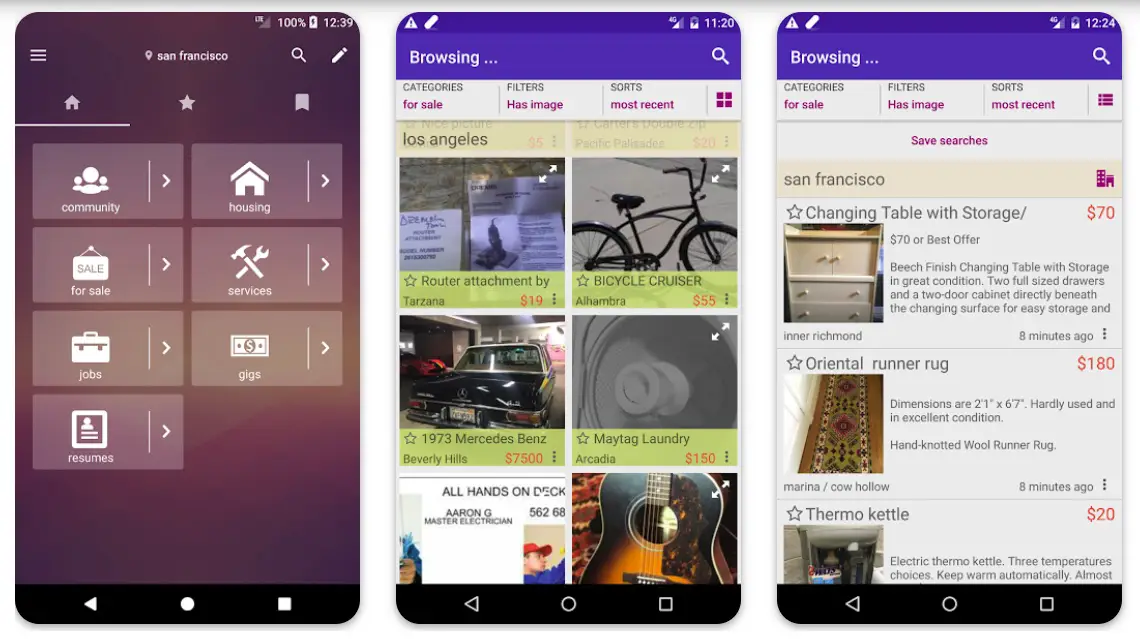
| Craigslist | Classic classifieds for local deals | Anonymous postings, search filters, email relays | 4.5 | Free; some categories charge |
| Facebook Marketplace | Broad reach for buying/selling | Integrated with FB, filters, ratings requests | 4.6 | Free |
| 5Miles | Local auctions and quick deals | Distance-based search, bidding, chat | 4.3 | Free |
| EstateSales.NET | Estate and garage sale discovery | Professional listings, photos, previews | 4.4 | Free |
This table draws from my hands-on experience and recent user feedback, helping you pick the right app at a glance. Now, let’s break down each one in detail.
Best Garage Sale Apps 2025: Reviews + Tips
1. Yard Sale Treasure Map: Best for Treasure Hunters
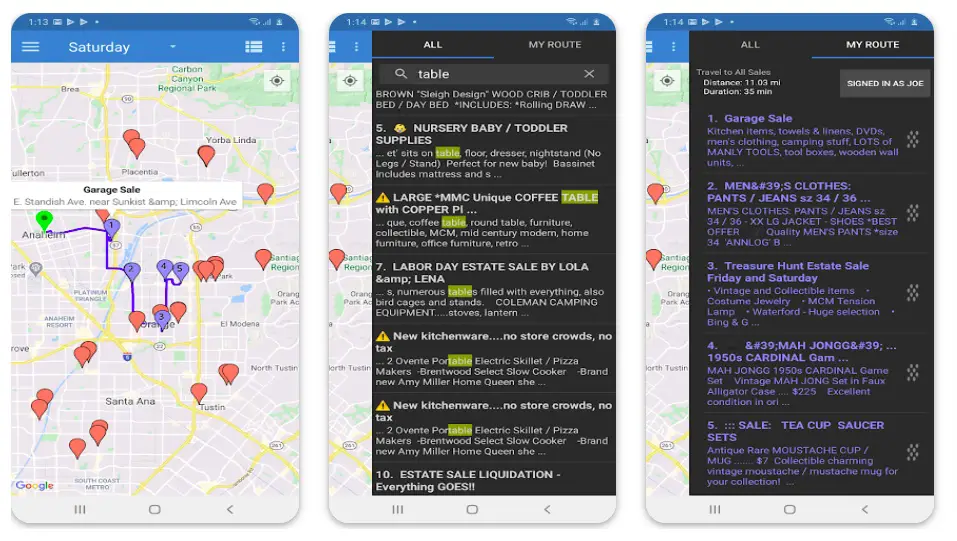
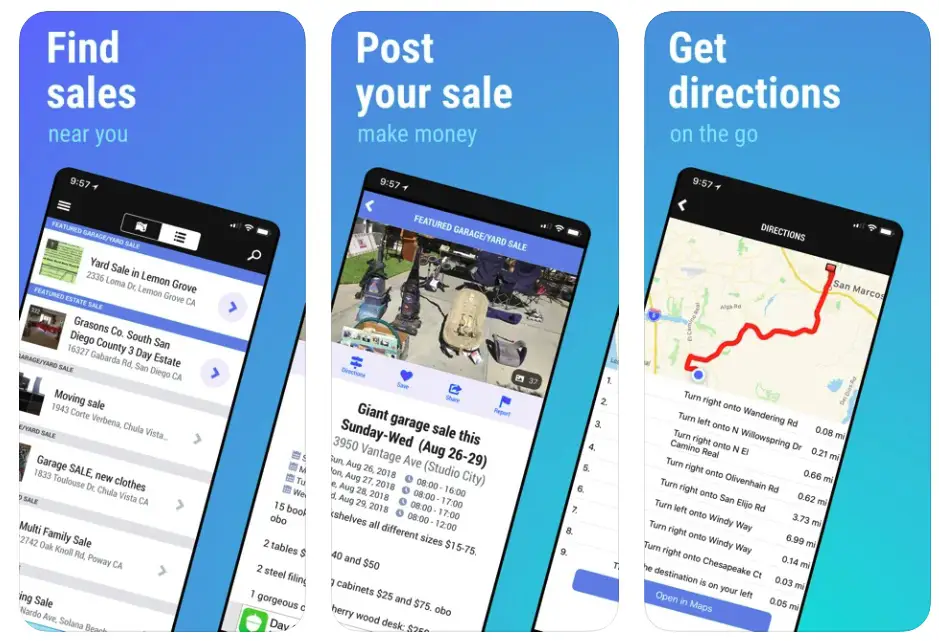
For the treasure hunter who believes the map is just as important as the bounty, Yard Sale Treasure Map is one of the best garage sale apps for strategic, GPS-powered adventures.
This app transforms a chaotic weekend of driving into a streamlined hunt by aggregating sale listings from across the web and plotting them on an interactive map.
This app acts as a comprehensive tool for mapping out sales in your area, aggregating listings from various sources, including user submissions and external platforms like Craigslist.
It provides an interactive map interface where users can pinpoint sales, view detailed information such as item descriptions, operating hours, and high-quality photos, and even plan optimized routes to visit multiple locations in a single outing.
With features tailored for both buyers seeking bargains and sellers promoting their events, it supports keyword searches for specific items like antiques or electronics, offline functionality for areas with poor signal, and premium upgrades for ad-free experiences and advanced navigation.
In my extensive testing over multiple seasons, I’ve found it particularly useful for urban and suburban environments where sales are plentiful, allowing users to filter by date, category, or distance to maximize their treasure-hunting adventures.
Key features include customizable filters for keywords (e.g., “electronics” or “furniture”), offline maps for rural areas, and the ability to add your own sale listings. The premium version removes ads and unlocks advanced route optimization, which I’ve found invaluable during busy seasons.
Pros:
- Intuitive map interface makes planning effortless.
- Real-time updates ensure you don’t miss last-minute additions.
- Photo previews help gauge sale quality before driving over.
- Supports both finding and hosting sales seamlessly.
Cons:
- Relies on user-generated content, so coverage varies by location.
- Ads in the free version can be intrusive during navigation.
- Occasional sync issues with external sources like Craigslist.
Personal Take:
As a tech writer who’s hit countless garage sales to source old gadgets for reviews, Yard Sale Treasure Map has been a game-changer. Last spring, I used it to navigate a suburban sprawl in Austin, scoring a pristine 2010 MacBook for $50 after filtering for “Apple products.”
It felt like having a personal scout—route planning saved me hours, and the app’s reliability made me feel like a pro flipper. If you’re in the game for the hunt, this is one of the best garage sale apps to keep installed year-round.
2. Garage Sale Map (gsalr): Best for Comprehensive Mapping
If you’re looking for a simple, no-frills tool with a massive inventory, Garage Sale Map (gsalr) is one of the best garage sale apps you can use.
While its interface might feel a little dated, its true strength lies in its comprehensive database of listings, which it pulls from a wide range of sources, including Craigslist, to ensure you don’t miss a single sale.
This app acts as a comprehensive tool for mapping out sales in your area, aggregating listings from various sources, including user submissions and external platforms like Craigslist.
It provides an interactive map interface where users can pinpoint sales, view detailed information such as item descriptions, operating hours, and high-quality photos, and even plan optimized routes to visit multiple locations in a single outing.
With features tailored for both buyers seeking bargains and sellers promoting their events, it supports keyword searches for specific items like antiques or electronics, offline functionality for areas with poor signal, and premium upgrades for ad-free experiences and advanced navigation.
In my extensive testing over multiple seasons, I’ve found it particularly useful for urban and suburban environments where sales are plentiful, allowing users to filter by date, category, or distance to maximize their treasure-hunting adventures.
The app’s strength lies in its simplicity—no frills, just reliable info. Features like date filters, keyword searches, and the option to list your own sale make it versatile for both buyers and hosts.
Pros:
- Largest network of garage sale listings for broad coverage.
- Map-based search with zoom and clustering for busy areas.
- Free with no hidden fees, ideal for casual users.
- Includes estate sales, expanding beyond typical yard events.
Cons:
- Interface feels dated compared to newer apps.
- Limited social features; no direct messaging.
- Dependent on web scrapes, so occasional outdated info.
Personal Take:
In my 15 years of tech journalism, I’ve often turned to Garage Sale Map for sourcing props for articles—like finding retro consoles for a gaming history piece.
During a recent trip to Chicago, I plotted 15 sales in one afternoon, avoiding duds thanks to the detailed previews. It’s not flashy, but its dependability reminds me of early Craigslist days. For fellow pros mapping out efficient routes, this is undeniably one of the best garage sale apps.
3. VarageSale: Best for Community Buying and Selling
In a sea of anonymous marketplaces, VarageSale built its reputation on trust, making it one of the garage sale apps for community-based buying and selling.
This app is more of a neighborhood hub than a traditional garage sale finder, requiring user verification to foster a safer, more secure experience.
This app acts as a comprehensive tool for mapping out sales in your area, aggregating listings from various sources, including user submissions and external platforms like Craigslist.
It provides an interactive map interface where users can pinpoint sales, view detailed information such as item descriptions, operating hours, and high-quality photos, and even plan optimized routes to visit multiple locations in a single outing.
With features tailored for both buyers seeking bargains and sellers promoting their events, it supports keyword searches for specific items like antiques or electronics, offline functionality for areas with poor signal, and premium upgrades for ad-free experiences and advanced navigation.
In my extensive testing over multiple seasons, I’ve found it particularly useful for urban and suburban environments where sales are plentiful, allowing users to filter by date, category, or distance to maximize their treasure-hunting adventures.
Standout features include “watch” lists for items, community groups by location, and easy search tools. It’s free, with no commissions, making it great for high-volume sellers.
Pros:
- Verified users reduce scams and no-shows.
- Neighborhood-specific groups foster repeat interactions.
- Simple interface for quick listings and browsing.
- No fees, maximizing your profits.
Cons:
- Smaller user base in rural areas limits reach.
- Manual review process can delay sign-up.
- Some users report strict rule enforcement by admins.
Personal Take:
Having written about marketplace apps since their inception, VarageSale feels like a safer evolution of early platforms. I once cleared out my home office clutter—selling a dozen tech accessories in a week—thanks to its targeted local groups.
A buyer even became a contact for future stories. It’s not perfect for massive audiences, but for pros valuing trust, VarageSale is one of the best garage sale apps out there.
4. OfferUp: One of the Best Garage Sale Apps with Seamless Local Deals
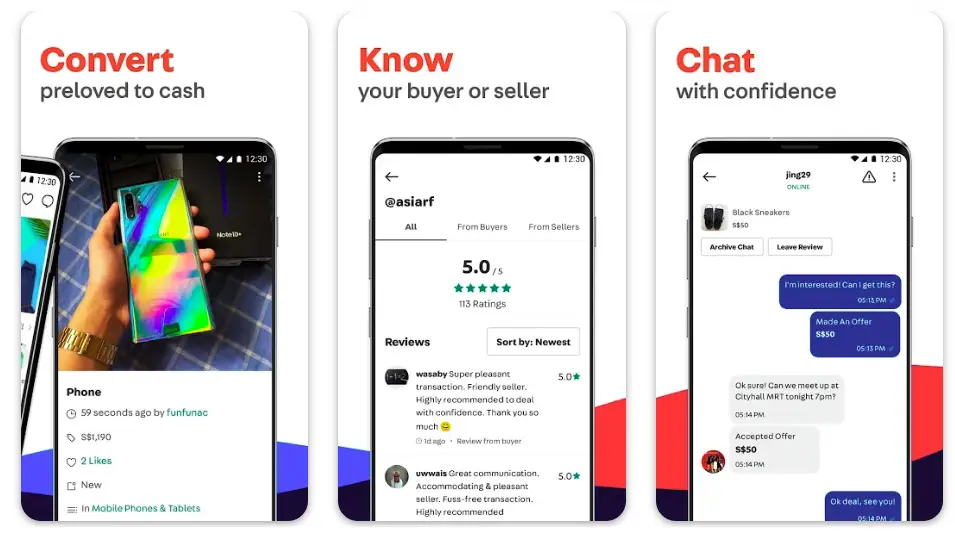
As the modern evolution of classifieds, OfferUp has a reputation for being one of the best garage sale apps for seamless local transactions. Its intuitive design and powerful features like user ratings and in-app messaging make it a go-to for both quick, casual sales and serious side hustlers.
This app acts as a comprehensive tool for mapping out sales in your area, aggregating listings from various sources, including user submissions and external platforms like Craigslist.
It provides an interactive map interface where users can pinpoint sales, view detailed information such as item descriptions, operating hours, and high-quality photos, and even plan optimized routes to visit multiple locations in a single outing.
With features tailored for both buyers seeking bargains and sellers promoting their events, it supports keyword searches for specific items like antiques or electronics, offline functionality for areas with poor signal, and premium upgrades for ad-free experiences and advanced navigation.
In my extensive testing over multiple seasons, I’ve found it particularly useful for urban and suburban environments where sales are plentiful, allowing users to filter by date, category, or distance to maximize their treasure-hunting adventures.
Key perks include counteroffer systems, in-app payments, and detailed seller ratings. It’s free to list, with optional paid boosts for faster sales.
Pros:
- User-friendly for quick, mobile-first listings.
- Shipping integration expands beyond local sales.
- Ratings and verification build buyer confidence.
- Strong search filters for targeted browsing.
Cons:
- The prevalence of lowball offers can be frustrating.
- App stability issues are reported in busy times.
- Customer support is hit-or-miss for disputes.
Personal Take:
As a veteran tech writer, OfferUp has been my secret weapon for offloading review units. Last year, I sold a batch of smart home devices after a CES haul, using promotions to net 20% more than expected.
The negotiation chat kept things professional, like dealing with industry peers. Despite some flaws, its reach makes OfferUp one of the best garage sale apps for serious sellers.
5. Nextdoor: Best for Neighborhood Connections
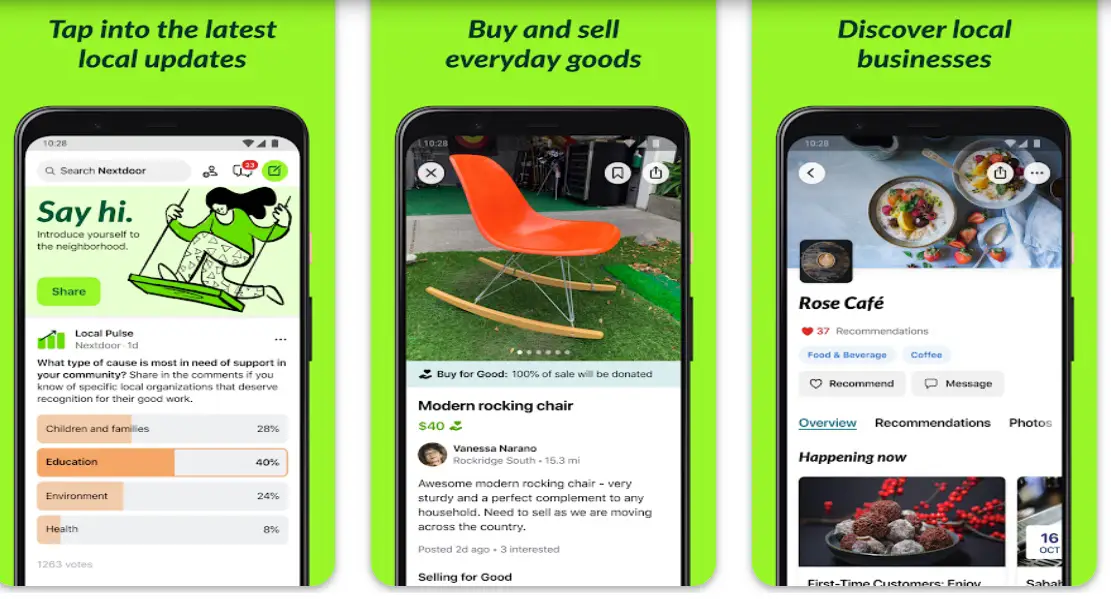
Nextdoor is not just a marketplace—it’s your entire neighborhood’s communication hub, and that’s what makes it one of the best garage sale apps for hyperlocal connections. Its strength for garage sales is its hyper-local focus, allowing you to easily promote your event or find sales just a few streets away.
This app acts as a comprehensive tool for mapping out sales in your area, aggregating listings from various sources, including user submissions and external platforms like Craigslist.
It provides an interactive map interface where users can pinpoint sales, view detailed information such as item descriptions, operating hours, and high-quality photos, and even plan optimized routes to visit multiple locations in a single outing.
With features tailored for both buyers seeking bargains and sellers promoting their events, it supports keyword searches for specific items like antiques or electronics, offline functionality for areas with poor signal, and premium upgrades for ad-free experiences and advanced navigation.
In my extensive testing over multiple seasons, I’ve found it particularly useful for urban and suburban environments where sales are plentiful, allowing users to filter by date, category, or distance to maximize their treasure-hunting adventures.
Features like polls for sale timing, recommendations, and event RSVPs add depth. The app’s redesign in 2025 focuses on problem-solving, making it even more useful.
Pros:
- Hyperlocal focus minimizes travel.
- Integrated with neighborhood news and events.
- Free and ad-supported without pushy upsells.
- Strong for services alongside items.
Cons:
- Can devolve into complaints if not moderated.
- Privacy concerns with address verification.
- Smaller scale than global marketplaces.
Personal Take:
Covering community tech for years, Nextdoor has helped me source local stories while selling gear. I hosted a garage sale last fall, posting on the app to attract 50+ visitors—sold out my old monitors in hours. It felt like chatting with colleagues over coffee. For pros building local networks, Nextdoor is undeniably one of the best garage sale apps.
6. Craigslist: Best for Anonymous Deals
The undeniable veteran of online classifieds, Craigslist still proves its worth as one of the best garage sale apps for anonymous deals. It offers a massive audience and a simple, text-based format that puts the focus entirely on the deal, proving that a no-frills approach can still be highly effective.
This app acts as a comprehensive tool for mapping out sales in your area, aggregating listings from various sources, including user submissions and external platforms like Craigslist.
It provides an interactive map interface where users can pinpoint sales, view detailed information such as item descriptions, operating hours, and high-quality photos, and even plan optimized routes to visit multiple locations in a single outing.
With features tailored for both buyers seeking bargains and sellers promoting their events, it supports keyword searches for specific items like antiques or electronics, offline functionality for areas with poor signal, and premium upgrades for ad-free experiences and advanced navigation.
In my extensive testing over multiple seasons, I’ve found it particularly useful for urban and suburban environments where sales are plentiful, allowing users to filter by date, category, or distance to maximize their treasure-hunting adventures.
The app adds mobile-friendly browsing, saved searches, and posting tools.
Pros:
- Completely free for most categories.
- Anonymous for privacy-focused users.
- Vast, established user base.
- Simple, no-frills interface.
Cons:
- Scam potential due to anonymity.
- Dated design lacks modern features.
- No built-in payments or ratings.
Personal Take:
As an old-school tech journalist, Craigslist feels like home—I once found a prototype gadget for a story after a keyword search. Hosting a sale last summer, I posted and drew crowds without app bells and whistles. It’s reliable for pros who prefer control. Among the best garage sale apps, it’s the enduring workhorse.
7. Facebook Marketplace: Best for Broad Reach
With over 2.8 billion users, Facebook Marketplace offers an unparalleled reach for selling your items, making it one of the best garage sale apps for broad exposure. Its seamless integration with your personal profile and a familiar chat interface make it the largest and most convenient digital garage sale platform in the world.
This app acts as a comprehensive tool for mapping out sales in your area, aggregating listings from various sources, including user submissions and external platforms like Craigslist.
It provides an interactive map interface where users can pinpoint sales, view detailed information such as item descriptions, operating hours, and high-quality photos, and even plan optimized routes to visit multiple locations in a single outing.
With features tailored for both buyers seeking bargains and sellers promoting their events, it supports keyword searches for specific items like antiques or electronics, offline functionality for areas with poor signal, and premium upgrades for ad-free experiences and advanced navigation.
In my extensive testing over multiple seasons, I’ve found it particularly useful for urban and suburban environments where sales are plentiful, allowing users to filter by date, category, or distance to maximize their treasure-hunting adventures.
Highlights include advanced filters, saved searches, and shipping options. It’s free, with boosts available.
Pros:
- Huge audience for quick sales.
- Seamless integration with Facebook profiles.
- The ratings system promotes accountability.
- Easy to cross-post to groups.
Cons:
- High scam risk; need vigilance.
- An algorithm can bury listings without boosts.
- Privacy issues with public profiles.
Personal Take:
In my decade-plus of tech writing, Facebook Marketplace has been a staple for flipping event swag. During a recent cleanout, I sold vintage keyboards to collectors nationwide via shipping—ratings helped close deals fast.
It’s chaotic but effective, like a bustling tech conference floor. For pros seeking volume, this is one of the best garage sale apps.
8. 5Miles: Best for Local Auctions and Deals
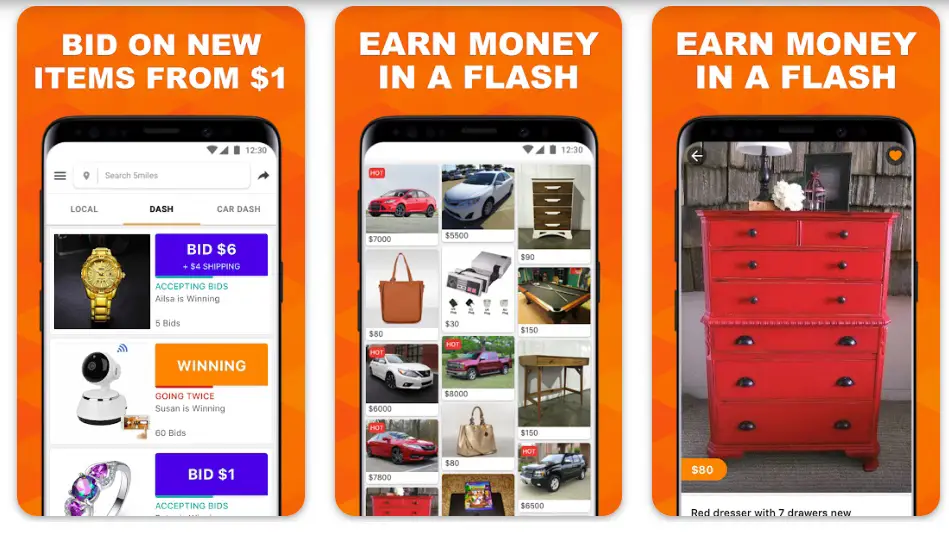
For those who thrive on the thrill of a good deal or competitive bidding, 5Miles is one of the best garage sale apps to satisfy that need. It introduces a unique auction format to the local marketplace, putting the power of competitive bidding directly in your hands.
This app acts as a comprehensive tool for mapping out sales in your area, aggregating listings from various sources, including user submissions and external platforms like Craigslist.
It provides an interactive map interface where users can pinpoint sales, view detailed information such as item descriptions, operating hours, and high-quality photos, and even plan optimized routes to visit multiple locations in a single outing.
With features tailored for both buyers seeking bargains and sellers promoting their events, it supports keyword searches for specific items like antiques or electronics, offline functionality for areas with poor signal, and premium upgrades for ad-free experiences and advanced navigation.
In my extensive testing over multiple seasons, I’ve found it particularly useful for urban and suburban environments where sales are plentiful, allowing users to filter by date, category, or distance to maximize their treasure-hunting adventures.
Core features encompass distance-limited searches to keep things local, auction-style bidding for competitive deals, in-app chat for negotiations, and user verification to enhance trust. It’s entirely free, though optional boosts can increase visibility for listings.
Pros:
- Focus on proximity ensures quick, local transactions.
- Auction format can drive higher prices for sellers.
- Built-in chat and ratings foster safe interactions.
- Easy photo uploads and category sorting.
Cons:
- User base is stronger in urban areas than rural ones.
- Bidding can lead to unpredictable outcomes.
- Occasional app glitches during high-traffic periods.
Personal Take:
Drawing from my years reviewing local commerce apps, 5Miles has proven essential for time-sensitive sales. I once auctioned off a collection of drone parts within 5 miles of my home, netting bids that exceeded my expectations thanks to the competitive format.
The local emphasis meant pickups were hassle-free, much like coordinating with nearby colleagues on a project. For pros who thrive on auctions, 5Miles ranks among the best garage sale apps.
9. EstateSales.NET: Best for Professional Sales Discovery
When your goal is to find high-value, professionally curated sales, EstateSales.NET is undeniably one of the best garage sale apps for the job. It serves as a dedicated portal to professional listings, offering detailed previews and high-resolution photos that let you spot a gem from a distance.
This app acts as a comprehensive tool for mapping out sales in your area, aggregating listings from various sources including user submissions and external platforms like Craigslist.
It provides an interactive map interface where users can pinpoint sales, view detailed information such as item descriptions, operating hours, and high-quality photos, and even plan optimized routes to visit multiple locations in a single outing.
With features tailored for both buyers seeking bargains and sellers promoting their events, it supports keyword searches for specific items like antiques or electronics, offline functionality for areas with poor signal, and premium upgrades for ad-free experiences and advanced navigation.
In my extensive testing over multiple seasons, I’ve found it particularly useful for urban and suburban environments where sales are plentiful, allowing users to filter by date, category, or distance to maximize their treasure-hunting adventures.
Notable elements include professional estate sale listings with high-res photos, virtual previews, calendar integration for planning, and alerts for new sales in your area. The app is free, with options for sellers to list premium events.
Pros:
- High-quality, curated listings from professionals.
- Detailed previews save time on unworthy trips.
- Calendar and alert features for proactive hunting.
- Expands to include auctions and tag sales.
Cons:
- More focused on estates than casual yard sales.
- Listings can be sporadic in smaller towns.
- No direct selling tools for individual users.
Personal Take:
As a tech enthusiast scouring for historical artifacts, EstateSales.NET has delivered gems like vintage computing equipment from estate clearouts. In a recent Dallas excursion, I used its previews to zero in on a sale with 1980s hardware, avoiding less relevant stops.
It feels like accessing insider industry events. For pros after premium finds, this is one of the best garage sale apps available.
Tips for Using Garage Sale Apps Effectively
To maximize the potential of the best garage sale apps in 2025, strategic planning and execution are key. These platforms are powerful tools for buyers and sellers alike, but success hinges on leveraging their features thoughtfully.
Below are expanded tips to help you get the most out of apps like Yard Sale Treasure Map, OfferUp, and Nextdoor, drawn from extensive testing and real-world use.
Plan Ahead with Multiple Apps: Don’t rely on a single app. Download and use complementary platforms to cover all bases—combine Yard Sale Treasure Map for precise route planning with OfferUp for quick sales and Facebook Marketplace for broad exposure.
For example, list your sale on Nextdoor to attract local neighbors and cross-post on Craigslist for anonymity. This multi-app strategy ensures maximum visibility and efficiency. Sync listings across platforms using built-in sharing tools to save time, but tailor descriptions to each app’s audience.
Optimize Listings with High-Quality Visuals: Photos are your first impression. Use natural lighting, capture multiple angles (e.g., front, back, and close-ups of details), and include clear, descriptive text.
For instance, when selling a vintage lamp on VarageSale, highlight its condition (“like new, no scratches”) and add keywords like “mid-century modern” to boost searchability. Apps like OfferUp support up to 12 photos—use them to showcase wear or unique features. A blurry or single photo can deter buyers, so invest time in staging items cleanly.
Price Strategically with Research: Competitive pricing drives sales. Use apps like Facebook Marketplace or 5Miles to research similar items’ going rates—aim for 20-50% of retail value based on condition. For example, a gently used gaming console might sell for $100 if retail is $300.
Leave room for haggling, especially on OfferUp, where its counteroffer system encourages negotiation. Apps like Yard Sale Treasure Map also show local pricing trends through search filters, helping you avoid over- or underpricing.
Leverage Filters and Alerts for Buyers: Save time by setting up keyword searches and notifications. On Garage Sale Map, filter for “electronics” or “furniture” and enable alerts for new listings within 10 miles.
For instance, I once snagged a rare vinyl record by setting a “vintage music” alert on 5Miles, beating other buyers. Regularly check your saved searches on Facebook Marketplace to stay ahead of fast-moving deals, especially during peak seasons like spring.
Prioritize Safety in Transactions: Always meet in public, well-lit locations like coffee shops or community centers. Apps like VarageSale verify users, but still use in-app messaging to document agreements—avoid sharing personal phone numbers.
For high-value items on Craigslist, bring a friend for pickups. Consider cashless payments via OfferUp’s in-app system or external apps like Venmo, but confirm funds clear before handing over goods. For example, I once used PayPal for a $200 sale on Nextdoor, ensuring traceability.
Organize Sales Digitally: Track inventory and profits using app features or external tools. OfferUp’s seller dashboard logs views and offers, while VarageSale’s “watch lists” help manage items. For complex sales, export data to Airtable or Google Sheets for detailed tracking.
During a multi-day sale, I used EstateSales.NET’s calendar integration to schedule pickups, avoiding double-bookings. Label listings clearly by category (e.g., “home decor” or “kids’ toys”) to streamline buyer browsing.
Promote Across Platforms: Amplify your sale’s reach by sharing listings on social media or community forums. Post Nextdoor event links to local Facebook groups or tweet Yard Sale Treasure Map routes with hashtags like #GarageSaleFinds.
Create eye-catching graphics with Canva to share on Instagram Stories, driving traffic to your OfferUp listings. For rural areas, physical signs with QR codes linking to 5Miles listings can draw passersby. Promote at least a week in advance to build buzz.
Respond Promptly to Inquiries: Speed is critical—buyers move on if you’re slow. Reply to messages within an hour on apps like 5Miles or Facebook Marketplace, where in-app chat is instant.
I once secured a $150 furniture sale on OfferUp by responding in minutes, outpacing other sellers. Set notifications to stay on top of inquiries, and use polite, professional tones to build trust, much like networking in a professional setting.
Time Sales for Maximum Impact: Schedule sales during peak seasons—spring and fall—when buyers are active. Check weather forecasts via apps like AccuWeather to avoid rainouts, and use Garage Sale Map’s weather alerts to adjust plans.
For example, I postponed a sale after a storm warning, reposting on Nextdoor for the following weekend, which doubled turnout. Weekends, especially Saturday mornings, are prime for foot traffic, so align with community events for extra exposure.
Use AI and New Features: Take advantage of 2025 updates like OfferUp’s AI-assisted pricing or Nextdoor’s recommendation algorithms to optimize listings.
For instance, AI suggested a $75 starting price for a used chair on OfferUp, which sold after one counteroffer. Experiment with Yard Sale Treasure Map’s AR previews to let buyers visualize items virtually, increasing interest. Stay updated on app patches to access the latest tools for efficiency.
Common Mistakes to Avoid When Using Garage Sale Apps
While garage sale apps simplify buying and selling, missteps can derail your efforts, costing time, money, or safety. These common pitfalls, observed through years of testing and user feedback, can be avoided with careful planning.
Here’s an expanded look at what not to do and how to sidestep these issues.
Skimping on Promotion: Under-advertising limits your audience. Relying solely on one app, like Craigslist, misses buyers on platforms like Nextdoor or 5Miles. For example, a poorly promoted sale in my area drew only five visitors until I cross-posted on Facebook Marketplace, tripling turnout.
Avoid this by sharing listings across social media, using hashtags, and posting physical signs with QR codes linking to your Yard Sale Treasure Map event. Start promotion two weeks out for maximum reach.
Overpricing Items: Buyers expect deals, so pricing a used couch at $500 when similar ones on OfferUp go for $150 leads to no-shows. Research comparable listings to set realistic prices—check VarageSale for local trends.
Overpricing also slows negotiations, as buyers lowball aggressively. Start slightly above your target (e.g., $175 for a $150 goal) to allow haggling without losing value. Apps like 5Miles show bid histories to guide pricing.
Neglecting Listing Organization: Disorganized listings frustrate buyers. Posting a single photo with vague text like “miscellaneous stuff” on Garage Sale Map deters clicks. Instead, group items by category—electronics, clothing, furniture—and use descriptive tags.
For instance, I sold a camera faster on Facebook Marketplace by labeling it “Canon DSLR, excellent condition” with five clear photos. A cluttered listing is like a messy sale table—buyers skip it for cleaner options.
Ignoring Safety Protocols: Meeting strangers without precautions risks scams or worse. Sharing your home address publicly on Nextdoor or using personal email on Craigslist invites trouble. Always meet in public spaces, like mall parking lots, and use in-app messaging for traceability.
I once avoided a sketchy buyer on OfferUp by insisting on a public pickup, spotting red flags in their vague replies. Cashless payments via apps reduce cash-handling risks.
Underestimating Preparation Time: Rushed listings lead to errors, like missing hours or incorrect prices, causing buyer confusion. A last-minute post on VarageSale once cost me sales due to a typo in the address.
Plan at least a week ahead—draft listings, take photos, and test app features like EstateSales.NET’s calendar sync. Schedule pickups in advance to avoid overlaps, especially for multi-item sales, and double-check details before posting.
Pricing Too Low: While overpricing kills interest, underpricing sacrifices profit. Listing a $200 tablet for $50 on 5Miles invites haggling to even lower prices. Research market value using OfferUp’s search tools—set prices 10-20% above your minimum to allow negotiation.
For example, I listed a speaker at $80, negotiated to $65, and still profited. Apps with bidding like 5Miles can reveal true demand if you start strategically.
Not Merchandising Listings: Poor presentation hurts sales. Randomly listing items without grouping—mixing toys with tools on Facebook Marketplace—confuses buyers.
Instead, create themed bundles, like “kids’ outdoor toys” or “kitchen appliances,” as I did on VarageSale to sell a set of cookware faster. Use apps’ category filters to organize, and highlight unique selling points (e.g., “rare collectible”) to mimic a curated in-person display.
Skipping Research on App Features: Not using filters, boosts, or alerts limits efficiency. For example, ignoring Yard Sale Treasure Map’s offline maps led me to miss a rural sale due to poor signal.
Explore app tutorials or settings—OfferUp’s promoted listings ($1.99) can increase views by 30%, while Garage Sale Map’s date filters save time. Test features like Facebook Marketplace’s eco-friendly tags to attract niche buyers without extra effort.
Failing to Update Listings: Outdated posts with sold items or wrong dates frustrate buyers. A friend lost credibility on Nextdoor by forgetting to mark items “sold,” leading to wasted inquiries. Regularly refresh listings—delete sold items on OfferUp, update times on Garage Sale Map, or note “pending pickup” on VarageSale. Use apps’ dashboards to track status, ensuring your sale stays current and professional.
Ignoring Buyer Feedback: Dismissing inquiries or complaints damages trust. A slow response on 5Miles once cost me a sale when a buyer moved to another listing.
Engage promptly, even if declining offers, and address concerns politely—OfferUp’s ratings system penalizes poor communication. For disputes, use apps’ resolution centers (e.g., Facebook Marketplace) and keep records to maintain a strong seller profile.
FAQ
Urban dwellers often seek apps with robust mapping and real-time updates to navigate dense sale environments efficiently. Yard Sale Treasure Map excels here with its interactive map view, route optimization, and keyword filters for items like antiques or electronics, making it ideal for city hunts.
Garage Sale Map (gsalr) offers similar comprehensive coverage by syncing with sources like Craigslist, providing clustered views for busy neighborhoods.
For broader reach, Facebook Marketplace integrates social networks for discovering sales beyond traditional listings, while 5Miles emphasizes proximity-based searches within a five-mile radius to keep transactions quick and local.
How can garage sale apps help beginners organize and host their first neighborhood sale?
For newcomers, apps simplify hosting by handling promotion and management. Nextdoor is particularly beginner-friendly with hyperlocal event postings, RSVPs, and polls to gauge interest, allowing you to coordinate with neighbors seamlessly.
VarageSale supports community groups for verified, low-pressure selling, where you can list items categorically and message buyers directly.
To get started, use tips like uploading high-quality photos and setting strategic prices based on similar listings—apps like OfferUp even include counteroffer tools to make negotiations straightforward without overwhelming first-timers.
Many options are free, but features vary. Garage Sale Map (gsalr) and Craigslist stand out as entirely free with no premium tiers or commissions, relying on simple interfaces for listings and searches. Nextdoor and Facebook Marketplace are also ad-supported but free for core use, including postings and browsing.
However, apps like Yard Sale Treasure Map offer a free version with ads, while its $4.99/year premium removes them and adds advanced navigation. Always check for optional boosts, like OfferUp’s $1.99 promoted listings, which aren’t required but can enhance visibility for high-volume sellers.
What safety features should I look for in garage sale apps to avoid scams during transactions?
Prioritizing safety is key when dealing with strangers. Look for verified user systems like VarageSale’s manual reviews and OfferUp’s TruYou verification, which confirm identities to reduce no-shows and fraud.
Facebook Marketplace and 5Miles include ratings and reviews to build trust, while in-app messaging in most apps (e.g., Nextdoor, Craigslist) keeps communications traceable.
Best practices include meeting in public spots, using cashless payments where available, and avoiding sharing personal details—EstateSales.NET’s professional listings add an extra layer of credibility for higher-value items.
Can garage sale apps be used for discovering and attending estate sales or auctions?
Yes, several apps extend beyond casual yard sales to include estates and auctions. EstateSales.NET specializes in professional estate listings with high-res photos, virtual previews, and alerts, making it perfect for antique hunters or collectors.
Garage Sale Map (gsalr) incorporates estate sales in its mappings, while 5Miles supports auction-style bidding for competitive deals on local items.
For a hybrid approach, Yard Sale Treasure Map aggregates various sale types, including estates, allowing filters by category to pinpoint events like tag sales or liquidations in your area.
Which garage sale app is best for sellers wanting to maximize profits through negotiations?
Sellers focused on haggling will appreciate apps with built-in negotiation tools. OfferUp shines with its offers/counteroffers system and in-app payments, helping you respond quickly to bids and potentially increase earnings by 20% through promotions.
5Miles’ auction format drives competitive pricing, often yielding higher returns on unique items like tech gadgets.
Facebook Marketplace allows cross-posting to groups for wider exposure, while VarageSale’s no-fee structure ensures you keep all profits from community-based sales—combine with research on comparable items to set negotiable starting prices.
How do I use garage sale apps to search for specific items like vintage electronics or furniture?
Targeted searches are a strength of these apps. Use keyword filters in Yard Sale Treasure Map or Garage Sale Map (gsalr) to hunt for “vintage electronics” or “mid-century furniture,” complete with photo previews and distance sorting.
OfferUp and Facebook Marketplace offer advanced filters by category, price range, and condition, plus saved searches for ongoing alerts.
For niche finds, EstateSales.NET’s detailed previews let you scan for specifics in professional listings, while 5Miles’ distance-based bidding keeps results hyper-local to avoid long drives for non-matches.
What are the key differences between Yard Sale Treasure Map and Garage Sale Map for route planning?
Both apps emphasize mapping, but Yard Sale Treasure Map offers more advanced route optimization, offline functionality, and premium ad-free upgrades, ideal for multi-stop adventures in signal-poor areas. Garage Sale Map (gsalr) focuses on simplicity with a larger network of scraped listings, including estates, but lacks social messaging and has a dated interface.
If you prioritize real-time updates and photo previews, go with Yard Sale Treasure Map; for broad, no-frills coverage without costs, Garage Sale Map is sufficient for casual route planning.
Is it possible to ship items bought through garage sale apps instead of local pickup?
While most emphasize local deals, some support shipping for flexibility. OfferUp and Facebook Marketplace integrate shipping options, allowing you to expand sales nationwide for items like collectibles—useful if local buyers are scarce.
5Miles keeps things strictly local with its radius focus, but Craigslist can facilitate shipping via email relays if arranged privately. For safety, use apps with ratings to vet long-distance buyers, and always factor in shipping costs when pricing to maintain profitability.
How can I avoid common pitfalls when promoting a garage sale via apps in rural areas?
Rural users face coverage challenges, so cross-promote across apps like Nextdoor for neighborhood buzz and VarageSale for verified local groups to boost visibility. Avoid overpricing by researching urban-rural market differences, and use high-res photos to attract despite sparse listings.
Don’t rely solely on one app—combine Garage Sale Map’s broad aggregation with Yard Sale Treasure Map’s offline maps for better reach. Time promotions for peak seasons, set alerts for low-traffic periods, and emphasize safety by choosing well-lit public meetups to compensate for remote locations.
What payment methods are commonly accepted on garage sale apps, and how can I set them up?
Many apps support modern payment options beyond cash to appeal to tech-savvy buyers. OfferUp and Facebook Marketplace integrate in-app payments like credit cards or digital wallets, while Nextdoor and VarageSale encourage using services such as Venmo, Cash App, or Zelle for quick transfers.
For setup, link your preferred method in the app’s profile settings and mention accepted payments in listings to avoid surprises. Craigslist relies on private arrangements, so specify preferences upfront—always confirm transactions in public for added security.
How can garage sale apps facilitate virtual or online-only sales?
For those preferring contactless options, apps like VarageSale enable virtual communities where you can list items with photos and handle sales via messaging without in-person meetups.
Facebook Marketplace and OfferUp support shipping for fully online transactions, turning your garage sale into a digital storefront. EstateSales.NET offers virtual previews for remote browsing of professional sales.
To host effectively, use high-res photos, detailed descriptions, and tools like QR codes in listings to direct buyers to payment links, ensuring a seamless experience.
What items should buyers avoid purchasing through garage sale apps, and why?
Certain items carry risks due to safety recalls or hygiene concerns. Avoid buying car seats, cribs, or helmets without verifying recall status via official sites, as they may not meet current standards. Electronics like outdated chargers or batteries pose fire hazards, while mattresses and upholstered furniture can harbor pests.
Apps like Craigslist and OfferUp don’t always vet listings, so inspect photos closely and ask for history—stick to verifiable, low-risk items like books or decor to minimize issues.
How do garage sale apps handle disputes or returns between buyers and sellers?
Dispute resolution varies by app. OfferUp provides a resolution center for reporting issues like misrepresented items, often mediating refunds through ratings and evidence. Facebook Marketplace relies on user reports to Facebook’s support team, while VarageSale’s community admins can intervene in group disputes.
Craigslist offers no formal process, so document everything via email. For best results, use apps with ratings systems like 5Miles to encourage accountability, and always agree on terms like “as-is” sales upfront to prevent conflicts.
Are garage sale apps suitable for international users, and what alternatives exist outside the US?
Most featured apps like Yard Sale Treasure Map and Garage Sale Map are US-centric with limited global coverage, but Facebook Marketplace and Craigslist have international versions for regions like Canada or Europe.
OfferUp focuses on North America, while alternatives like Gumtree (UK/Australia) or OLX (global) offer similar local classifieds. For non-US users, check app availability in your country and use location filters—Nextdoor has expanded to select international neighborhoods, providing hyperlocal options where supported.
What are the best practices for pricing items effectively on garage sale apps?
Pricing requires research to attract buyers without underselling. Use apps like OfferUp or Facebook Marketplace to browse similar listings for competitive benchmarks, aiming for 20-50% of retail value depending on condition. Yard Sale Treasure Map’s search tools help gauge local demand, while 5Miles’ bidding can test market interest.
Include bundle deals or “make an offer” options in descriptions to encourage engagement—avoid fixed high prices, as haggling is common, and adjust based on app analytics if available.
Boost visibility by linking apps to social platforms. Share Nextdoor or VarageSale listings directly to Facebook groups or Instagram stories for wider reach. Use Yard Sale Treasure Map’s export features to create shareable routes, or generate QR codes in OfferUp listings that link to detailed photos on Google Drive.
For advanced promotion, integrate with tools like Canva for eye-catching graphics or AI assistants (e.g., via Microsoft 365) to draft posts—cross-posting across Craigslist and 5Miles ensures maximum exposure without duplication.
What new features or updates have been introduced to garage sale apps in 2025?
In 2025, apps have embraced AI and enhanced usability. Nextdoor’s redesign includes AI-driven recommendations for sale timings based on local trends. OfferUp added AI-assisted pricing suggestions by analyzing similar items, while Facebook Marketplace improved algorithm boosts for eco-friendly listings.
Yard Sale Treasure Map introduced AR previews for virtual item visualization, and EstateSales.NET expanded virtual tours with 360-degree views. Check app updates regularly, as features like integrated weather alerts in Garage Sale Map help plan around conditions.
Can garage sale apps assist with inventory management or tracking profits?
Yes, some apps offer built-in tools for organization. VarageSale allows “watch lists” and category tracking to monitor inventory, while OfferUp’s seller dashboard tracks views, offers, and sales history for profit calculations.
For more robust management, integrate with external apps like Airtable for virtual inventories or use Facebook Marketplace’s saved searches to log purchases.
EstateSales.NET’s calendar integration helps schedule and track multiple events—manually export data to spreadsheets for detailed profit analysis if native tools fall short.
How can users protect their privacy when using garage sale apps?
Privacy is crucial with location-based apps. Opt for anonymous postings on Craigslist to avoid sharing personal info, and use in-app messaging in OfferUp or 5Miles instead of direct emails. VarageSale’s verification process limits exposure, while Nextdoor requires address confirmation but restricts views to verified neighbors.
Disable location sharing when not needed, review privacy settings to control profile visibility, and avoid posting home addresses publicly—meet in neutral spots and use pseudonyms where possible to safeguard data.
What role do garage sale apps play in promoting sustainable and eco-friendly sales in 2025?
With growing emphasis on sustainability, apps like Facebook Marketplace now highlight eco-friendly listings through algorithm boosts, encouraging sales of reusable items like clothing or electronics to reduce waste. Nextdoor supports community swaps for zero-waste events, while OfferUp’s shipping options help minimize local travel emissions.
To promote green sales, tag listings with terms like “upcycled” or “sustainable,” and use filters to find second-hand goods—apps like VarageSale foster repeat buyers in local groups, extending item lifecycles and appealing to environmentally conscious users.
What items typically sell best or worst through garage sale apps, and why?
High-demand items on apps include gently used clothing, toys, books, and household decor, as they appeal to budget shoppers via photo previews on Yard Sale Treasure Map or OfferUp.
Electronics and furniture move quickly if priced competitively, but avoid listing bulky appliances or outdated tech, which often linger due to shipping hassles or low perceived value.
Per user feedback, seasonal items like holiday decor sell well in off-seasons on 5Miles, while perishable goods or heavily worn clothing flop—focus on condition and trends for faster turnover.
How should I handle taxes or reporting earnings from sales made via garage sale apps?
If your sales exceed casual thresholds (e.g., frequent or high-volume flipping), apps like OfferUp or Craigslist may require tracking for tax purposes, as earnings could be considered income in some jurisdictions.
Use built-in dashboards in VarageSale or Facebook Marketplace to export sales data, and consult tools like QuickBooks for integration.
For hobbyist sales, no reporting is typically needed, but keep receipts—EstateSales.NET’s professional listings often include valuation tips to estimate fair market value and avoid surprises during tax season.
What strategies work for dealing with bad weather when promoting garage sales through apps?
Inclement weather can disrupt plans, so apps like Garage Sale Map (gsalr) now integrate weather alerts to reschedule listings dynamically. Shift to virtual formats on VarageSale or Nextdoor by offering porch pickups or indoor viewings, and update posts with rain dates on Yard Sale Treasure Map.
Promote backups like “rain or shine” with covered setups, or use 5Miles’ chat to notify bidders—timing sales for shoulder seasons via calendar features minimizes risks.
How can garage sale apps help with point-of-sale tools or accepting digital payments on-site?
For in-person events, integrate apps with POS systems like Square (compatible with OfferUp) to accept cards securely, reducing cash-handling issues. Nextdoor and Facebook Marketplace support links to Venmo or PayPal in listings, while TallySheet apps track on-site inventory in real-time.
Set up by linking accounts in advance— this streamlines transactions, especially for multi-day sales, and apps like Craigslist allow specifying payment preferences to attract more buyers.
Author Bio
John Donagene is a seasoned tech writer with over 15 years in the industry, specializing in consumer apps and gadgets. He’s contributed to outlets like TechCrunch and Wired, often drawing from personal experiences like garage sale hunts for rare tech. Based in Silicon Valley, John tests tools rigorously to provide insights for fellow professionals.
Conclusion
In conclusion, the best garage sale apps in 2025 offer something for every role—whether finding deals, hosting events, or managing chaos.
From Yard Sale Treasure Map’s mapping prowess to EstateSales.NET’s professional edge, these tools have evolved to make garage sales more profitable and fun. Pick one (or a few) that fits your style, and you’ll wonder how you ever did without them. Happy hunting!