
























Kegel exercises are undoubtedly one of the most effective ways to achieve your fitness goals, especially if you want to strengthen your pelvic floor muscles. The best part about Kegel exercises is that they are more than suitable for both men and women.
These exercises can be the best options if you cannot do hard exercises but want to keep your body in shape or shut off some extra pounds. Kegel exercises are also known for improving the overall blood circulation of the pelvic area of your body.
And to simplify things, I have developed a list of some of the most innovative Kegel exercise apps for you.
These apps are designed to bring various exercises to your home. You can perform them without any problem, even if you don’t have specific fitness training or experience.
These applications are available very easily on both Apple Store and Google Play Store and can finally burst all your confusion related to Kegel exercises.
Let’s take stock of these apps that make exercising full of fun, innovative, and result-oriented.
Best Kegel Exercise Apps – Our Top Pick👌👌
1. Kegel Talent PFM Exercises
Kegel Talent PFM Exercises app is my number one choice for some obvious reasons. If you are unaware of kegel exercises, you can easily learn from the app, as there is a wide variety of exercises for beginners.
The app offers many features, user-customized training content, daily automatic reminders, chat recording progress, and more!
To begin with, the app is as easy as you can think! Thanks to the easy-to-operate user interface, you won’t be confused while trying to learn different types of kegel exercises.
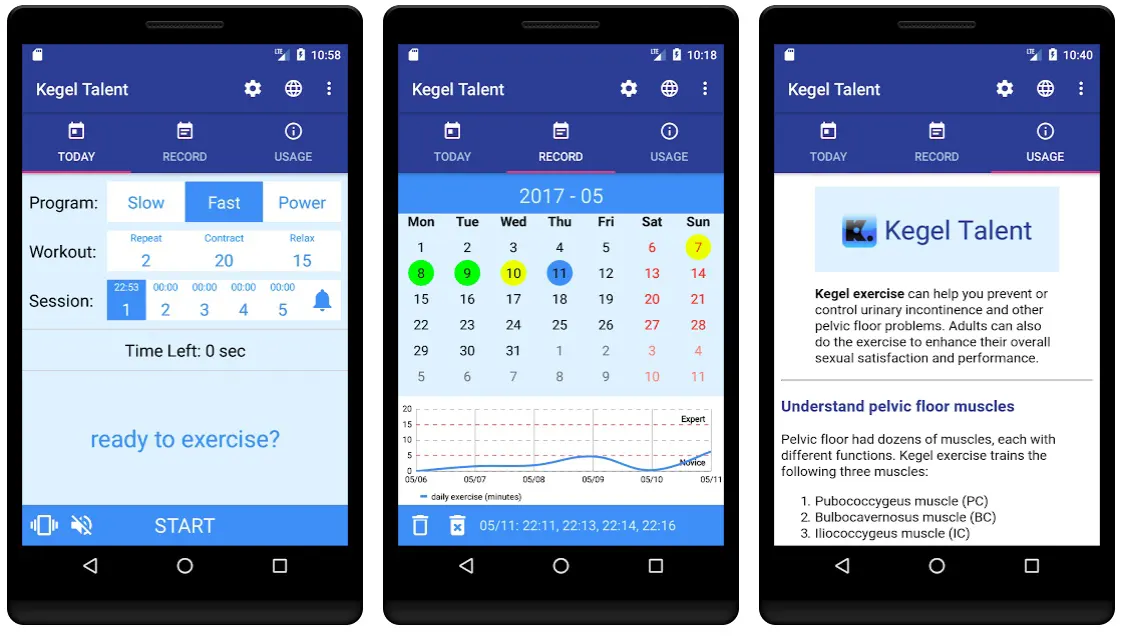
The app is equally effective for both men and women and can go a long way in strengthening your pelvic floor muscles.
Opt for a kegel training program, press the start button, and carefully follow all the instructions on the screen.
You can explore multiple exercise sessions in a day based on your preferences. The app automatically records all your exercise sessions and makes it easy for you to refer to them in the future.
It’s never practical to continuously look at the phone while exercising. To sort it out, the app gives you an option of voice guide mode, which trains you perfectly even without requiring you always to see the screen.
Features of Kegel Talent PFM Exercises:-
- Simple and easy-to-operate user interface
- More than suitable for both men and women
- Offers a wide range of kegel exercises for beginners
- User-customized and full-featured training content
- Voice guide mode for undisturbed experience
Devices – Android and iOS
Ratings on Apple Store – 5.0 / 5 | Ratings on Google Play Store – 4.3 / 5
Download the App from Google Play Store
Download the App from Apple App Store
2. Go Kegel – Kegel Exercises
Go Kegel is one of the most medically accurate kegel exercise apps designed to improve the overall strength of your pelvic floor.
Through this interactive app, you can learn to perform kegel exercises daily and train your entire pelvic floor muscles in the best possible way. And you get all this without any cost whatsoever.
The app is more dangerous and suitable for both men and women and can work as a personal trainer for you. Spending only a few minutes daily can give surprising results within a few weeks.
If you don’t know how kegel exercises are performed, the worrying days are over now!
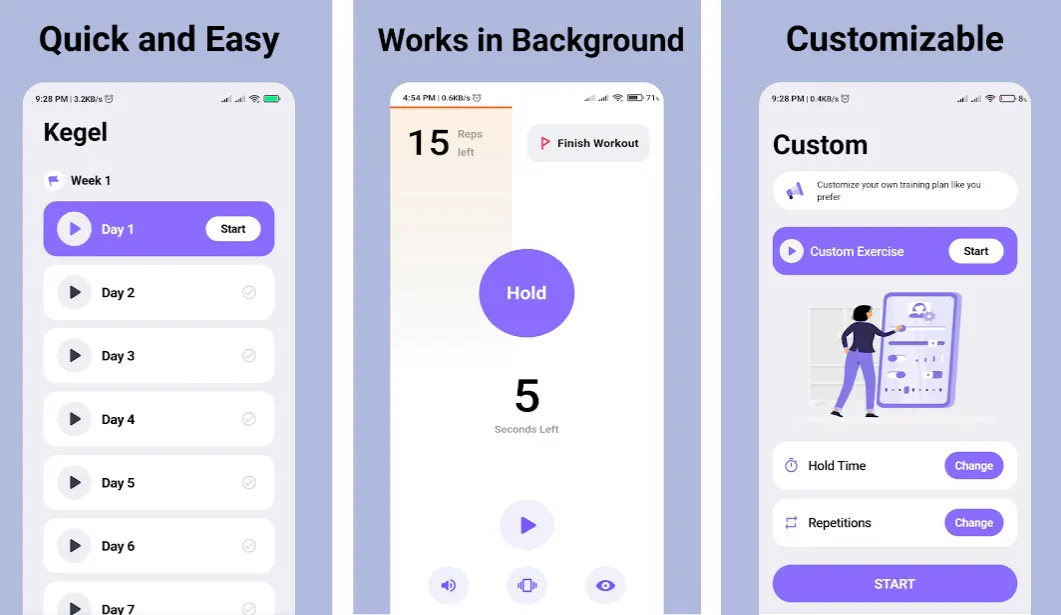
With a personalized add highly customizable kegel trainer, you can finally start your journey to become the best version of yourself.
The app works without interruption, even in the background, and promises a pleasing and uninterrupted training session.
If you want to know different aspects of kegel exercises, the app is featured a wide range of articles written by world-class fitness trainers and kegel experts.
Thanks to an eye-catching user interface, you will never feel bored while learning the art of kegel with the app!
Features of Go Kegel:-
- Workouts available in a wide range of intensity
- It helps you locate the pelvic floor muscle accurately
- Visual and audio guide for an improved experience
- Progress graph to keep you on track
- Both light and dark themes are available
Device – Android
Ratings on Google Play Store – 4.8 / 5 | 50,000+ Downloads
Download the App from Google Play Store
3. Kegel Trainer PFM Exercises
Simple, easy-to-follow Kegel sessions complemented perfectly with daily reminders are the major highlights of this easy yet effective kegel exercise app. The app lets you find various ways to improve your pelvic floor muscles.
If you are bored with your normal exercise routine and want to push harder, this app is exclusively curated for you!
The app offers ten different and highly interactive sessions to improve your body. It means you are always in for a new challenge to push yourself harder than ever.
All sessions in the app are between 30 seconds and 3 minutes and are more than suitable for those who are always busy.
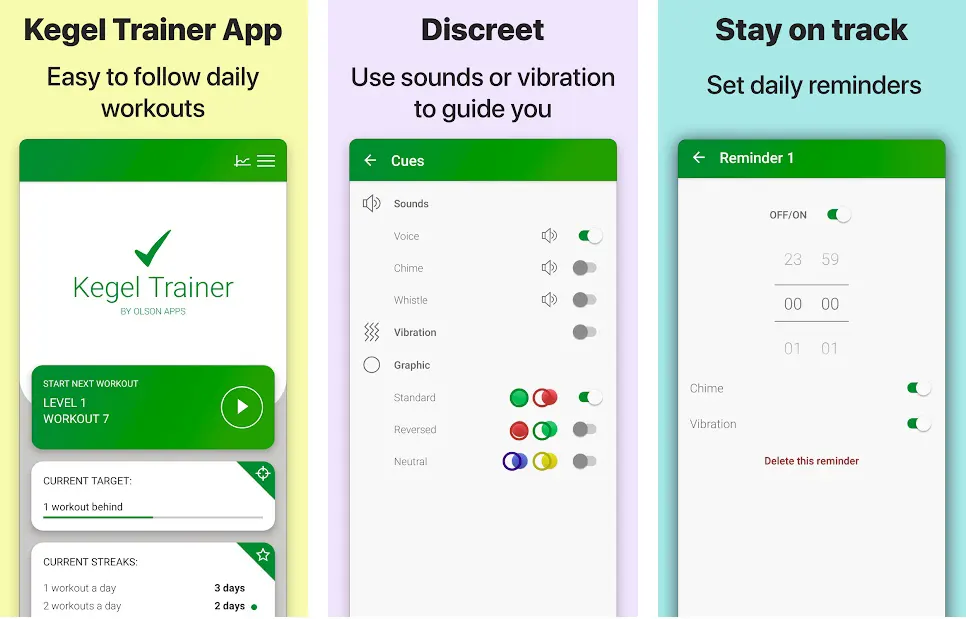
If you habitually forget your fitness regime, the app also features a customizable reminder that reminds you to start your day positively.
So, never forget your kegel exercise routine, and let the app do it! Stay motivated by completing different exercises, breaking your previous records, and unlocking exciting achievements and rewards.
In addition to an audio and visual guide, the app helps you with vibration cues to make things easier.
Features of Kegel Trainer PFM Exercises:-
- Simple, easy-to-follow kegel exercise routine
- Short sessions of only 2 to 3 minutes
- Choose from audio, visual, and vibration guide
- Stay on track with daily reminders
- One of the easiest ways of strengthening your pelvic floor muscles
Devices – Android and iOS
Ratings on Apple Store – 4.8 / 5 | Ratings on Google Play Store – 4.7 / 5
Download the App from Google Play Store
Download the App from Apple App Store
4. Kegel exercise-Daily pelvic floor muscles trainer
Here is one of the most inspiring kegel exercise apps for both men and women, featured with a wide range of home workouts.
Exercises in the app are collected from a special type of training to maintain your inner body health and overall physical fitness.
The interactive virtual instructor in the app is there to assist you in creating a healthy exercise routine that is easy to follow.
This app can be miraculous for you if you are going through your pregnancy or have been blessed with a child recently. It can go a long way if you try your best to eliminate post-delivery pain syndromes.
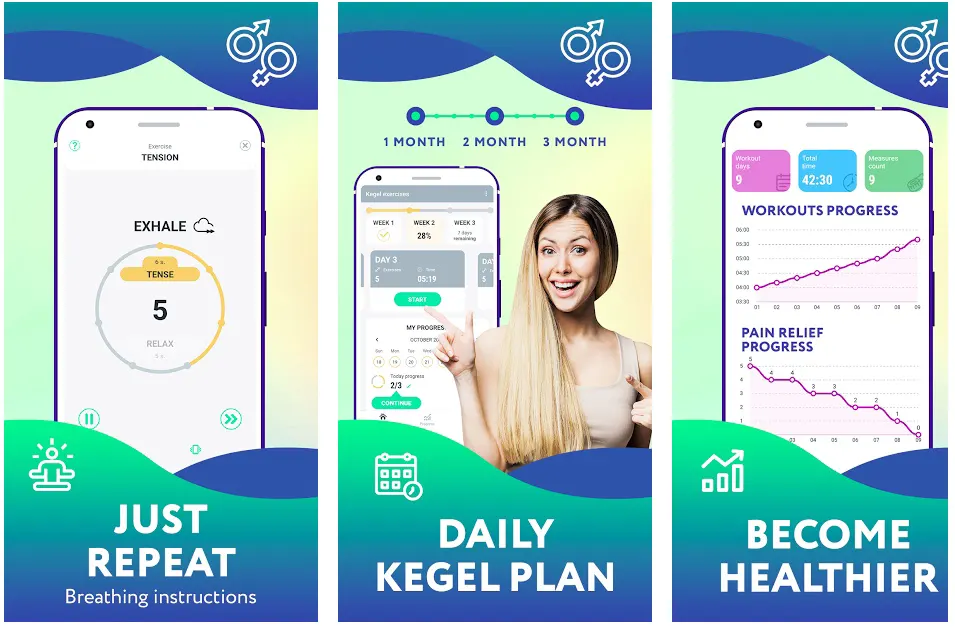
The app features as many as ten exercises, including short and long tension, pelvic floor pressure, and others, to train your pelvic muscles and relieve unwanted tension.
Thanks to the simple and sophisticated breathing exercises, the overall training becomes much more effective with the app. And if you want to remain informed about your progress, you can also check detailed workout statistics in the app.
Track important changes in your posture, body weight, shape, and all important body measurements.
Features of Kegel exercise-Daily pelvic floor muscles trainer:-
- A wide range of kegel exercises for both men and women
- Detailed breathing instructions for better results
- Daily kegel plan based on your preferences
- Become healthier by tracking your progress
- It makes it very easy for you to schedule your exercise routine
Device – Android
Ratings on Google Play Store – 4.8 / 5 | 50,000+ Downloads
Download the App from Google Play Store
5. Elvie Trainer – free kegel exercise app
Elvie trailer is a simple, sophisticated, fun, and easy kegel application to tone your pelvic muscles and improve your overall strength.
If you follow the instructions properly, you will notice the difference within a couple of weeks.
The app works like a personal trainer, keeps you motivated through genuine and real-time feedback, and ensures you are good enough with your daily exercise routine.
Features like timely reminders, measurable progress, and personalized targets are also there in the app to make things possible for you. Get the most out of here kegel routine, and reap the rewards in the best possible way.
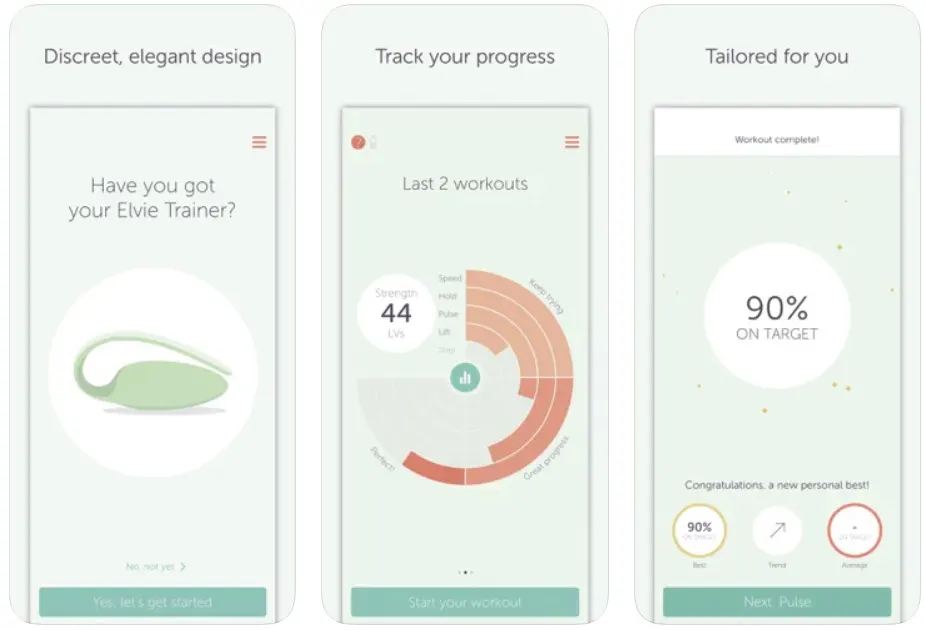
Thanks to modern and cutting-edge technology, the Elvie Trainer app automatically visualizes your muscle movements and checks whether you are doing exercises correctly or not.
It helps you improve your posture, maintain a decent workout position, and ensure you get better with each day.
It is curated exclusively to keep the bodies and lives of special women and is dedicated to making their lifestyle better, more active, and healthier.
The app has earned more than 15 esteemed awards and is recommended by hundreds of health professionals. Download the app to know exactly why.
Features of Elvie Trainer:-
- Your kegel trainer
- Simple, elegant, discreet user interface
- Tailored especially for hardworking and dedicated women
- Let you track your overall progress
- Workout like a professional and reap the rewards
Devices – iOS Devices, Including iPhone and iPad
Ratings on Apple Store – 4.7 / 5
Download the App from Apple App Store
6. Perifit
One of the best kegel exercise apps for those mastering the art through PERIFIT! The app is revolutionary for a perfect, result-oriented kegel workout routine.
If you combine the Perifit exerciser with the app, you are in for a workout experience like never before!
The app is designed with consultation from some of the most popular pelvic floor strengthening experts and is more than suitable for people of all stages of life.
Enjoy your exercise routine with multiple fun video games and unique kegel exercises, and achieve your fitness goals.
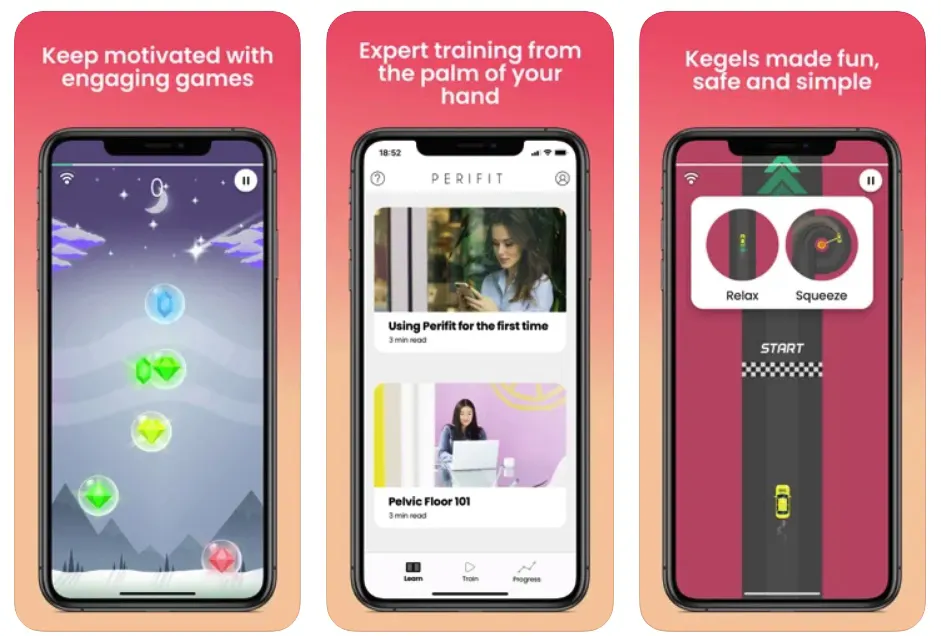
Stay in action, visualize your contractions, and challenge yourself to increase your level. The app keeps you on your toes by monitoring your overall progress through an interactive workout tracker.
With the app, you can attain the physical strength of your dreams and achieve the highest level of emotional wellness.
The best part about the app is it is featured a modern, innovative, patented solution.
And, with a 100% risk-proof design, you can remain in shape without worrying about muscle strains or injuries due to wrong postures.
Features of Perifit:-
- Perfect kegel workout routines for Perifit users
- Interactive games to keep you motivated
- Kegel exercises are made simple, fun, and safe
- Grow your confidence with a thorough fitness approach
- Developed by top kegel experts
Devices – iOS Devices, Including iPhone and iPad
Ratings on Apple Store – 4.7 / 5
Download the App from Apple App Store
7. Dr. Kegel: kegel exercises for men
Why should Kegel exercises be limited to women only? Here is a revolutionary kegel exercise app designed to improve men’s overall intimate health effectively and scientifically.
If you have been confused with a wide range of kegel exercise options, this app is designed especially for you! You can also get a personal, customizable exercise plan within a few minutes after downloading.
As we all know, pelvic floor muscles play a very important role in men’s intimate health. They are responsible for controlling and supporting male organs. And, if you are worried after losing the Tonicity of these muscles, you don’t need to worry anymore!
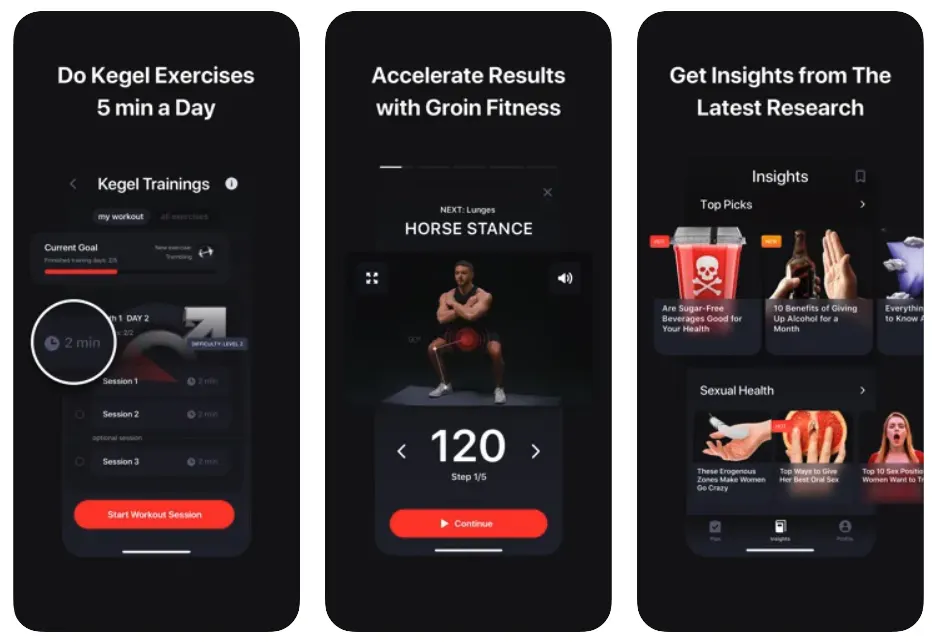
The app features multiple kegel exercises, including video training, a practice center, kegel fitness, a progress tracker, and detailed insights. You can finally improve your overall intimate health with the help of Vibro training and other exercise techniques.
Beginners can easily perform these exercises and are perfect even for those who are always super busy. Take regular body measurements, and stay motivated for your fitness regime.
Get daily, weekly, and monthly statistics to track your progress—an extraordinary app for those men who want to learn in detail about kegel.
Features of Dr. Kegel: For Men’s Health:-
- Improve your intimate health with effective kegel exercises
- More than suitable for men of all ages
- Short exercises to perform easily and effectively
- Get access to the latest research and expert insights
- Build a healthy lifestyle by tracking your progress
Devices – iOS Devices, Including iPhone and iPad
Ratings on Apple Store – 4.7 / 5
Download the App from Apple App Store
8. Kegel Exercises – best free kegel app
Kegel Exercises can be one of the most useful kegel exercise apps, especially if you don’t know how to do exercises correctly.
Specialized exercises for both men and women are designed to strengthen pelvic muscles.
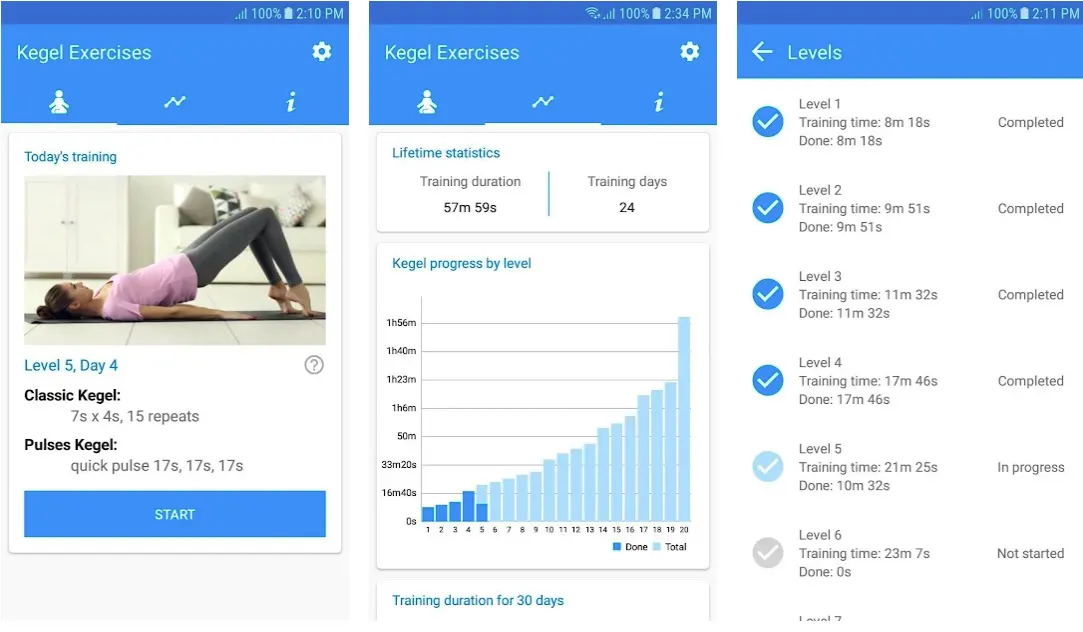
You can find exercises from beginner to intermediate and advanced levels. Being healthy got easier with a very simple and sophisticated kegel trainer—Master the art by learning exercises for each day of the week.
Avoid a wide range of bladder problems by effectively targeting your pelvic muscles. There are specialized kegel exercises for pregnant women as well as new mothers.
You may find exercises too easy in the beginning and find them a bit boring. But, if you are unaware of kegel exercises, you should go through the process. You will find things getting challenging with an increase in the level.
There are as many as 20 free levels ranging from easy to difficult. With detailed graphical representation, you can always check your progress and find whether you are moving in the right direction.
There is also a reminder option to keep you on track with your exercise routine and never go off track. Only a few seconds per day with the app can positively impact your health.
Features of Kegel Exercises:-
- A wide range of kegel exercises across various levels
- Statistical data to check your progress
- Simple, clean, easy user interface
- Exercises for each day of the week
- Gradual increase in difficulty for proper learning
Device – Android
Ratings on Google Play Store – 4.6 / 5 | 5,00,000+ Downloads
Download the App from Google Play Store
9. Kegel Exercises for Women – Kegel Trainer PFM
Easy to follow, highly effective kegel exercise routine for women, especially those going through pregnancy or recently blessed with a baby.
Various exercises targeting the pelvic floor muscles are beautifully designed across different durations. By spending 3 to 9 minutes daily, you can greatly improve your pelvic muscles.
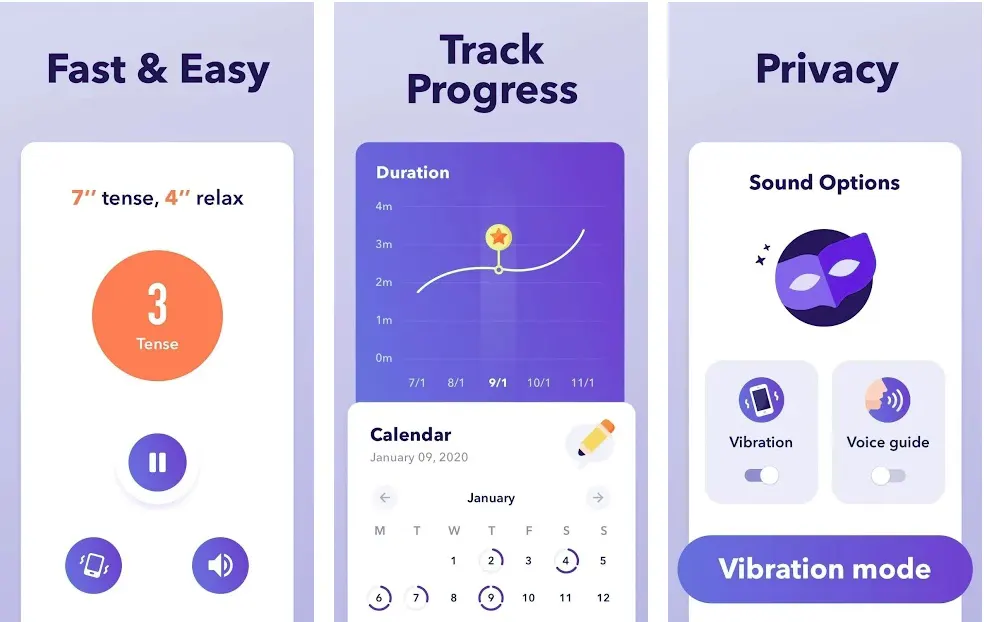
Strengthening pelvic muscles can be very beneficial for the bladder, uterus, and bowels and can also reduce labor pain.
Strong pelvic muscles also play an important role in shortening labor time and speeding up recovery after delivery.
And, if you are unsure what exercises to do, this app might be more than helpful. Perform exercises whenever you want from the comfort of your home.
You get simple and easy-to-follow kegel exercise routines suitable for beginners and professionals. Experience the gradual increase in intensity, and exercise properly with the visual and audio guide.
Enjoy a disciplined routine with customizable workout reminders. And, if you want to make things a bit more interesting, you can also check out different themes in the app.
Features of Kegel Exercises for Women – Kegel Trainer PFM:-
- Personal kegel trainer for both men and women
- Simple, fast, and easy to follow
- Detailed analysis through graphs to track your progress
- Voice guide with vibration mode
- Customizable reminders to keep you on track
Device – Android
Ratings on Google Play Store – 4.5 / 5 | 5,00,000+ Downloads
Download the App from Google Play Store
10. Kegel – Kegel Trainer
Kegel – Kegel Trainer is next on my list of the best kegel exercise apps. With the app, you can start exercising today and improve your pelvic floor muscle. Strengthen the muscles and improve the overall tonicity by targeting them correctly.
Whether you are worried about unhealthy muscles post-delivery or struggling with different physiological stresses at any stage of pregnancy or after childbirth, this app might be more than helpful.
Find the most suitable exercise regime, or create a customizable workout routine based on your preferences.
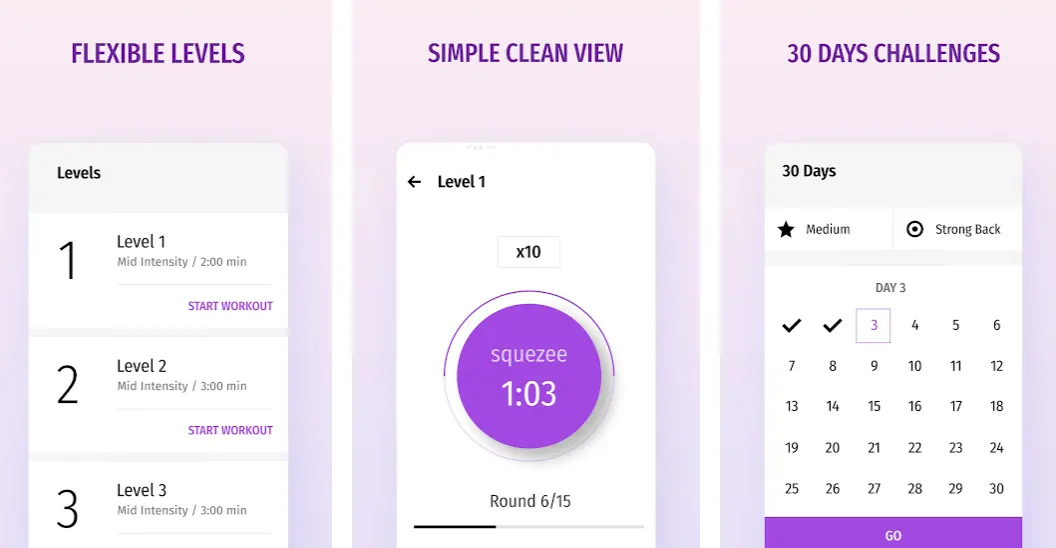
With a simple, easy-to-follow user interface, and clear instructions, you will find doing kegel exercises as simple as you can think.
Stop worrying about your hectic schedule; the app helps you with timely reminders and keeps you on track for a healthy lifestyle.
You will feel like you are playing an interactive game when you exercise with the app – that’s how easier it makes everything.
All the features in the app are easy to navigate, and you can enjoy beep and voice prompt along with a simple and effective timer.
With an in-app calendar, you can always remain on top of your weekly and monthly kegel routine.
Features of Kegel – Kegel Trainer:-
- Easy-to-follow and flexible exercises for beginners
- Simple, clean, and easy user interface
- Multiple 30 days of challenges across different levels
- Daily statistics to keep you motivated
- Easily integrated with your phone’s calendar
Device – Android
Ratings on Google Play Store – 4.5 / 5 | 1,00,000+ Downloads
Download the App from Google Play Store
11. Squeeze Time for Men
Squeeze Time for Men is the last, but not the least, on my list of top kegel exercise apps. This particular app is more than suitable, especially for men trying their best to train pelvic floor muscles.
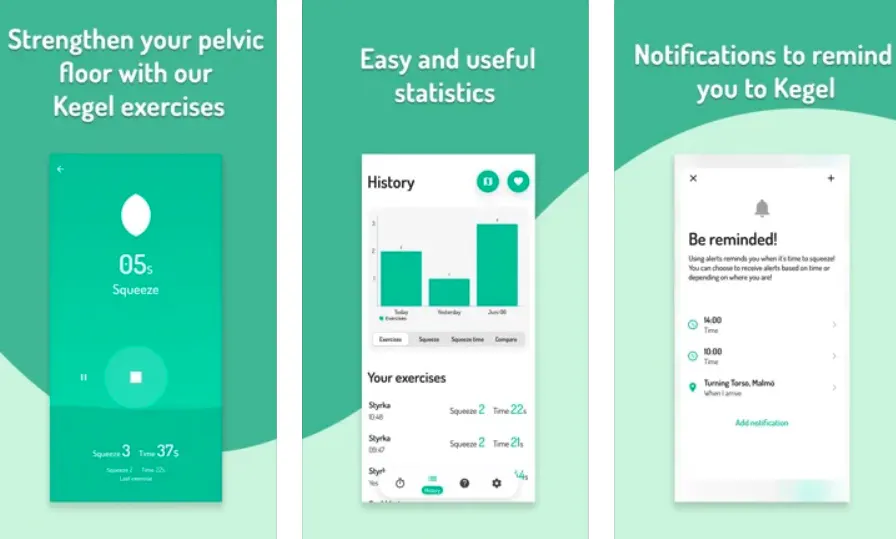
The app is designed to make things more than possible with fun statistics, great exercises, and timely notifications. Never skip your kegel routine, and start exercising whenever and wherever you want.
The app even enables you to create your customizable kegel routine. Be informed with useful data, and track your progress very effectively.
Be a part of a highly motivated community, get inspired, and inspire others for a healthy and active lifestyle. Work with other members to find the goals, especially curated food.
The app automatically selects and displays your best efforts interactively to inspire you. So, if you are struggling with your pelvic floor muscles, it’s time to “Squeeze” them in a very professional manner!
Check out the app, find out some other extraordinary features, add never get bored with an interesting and interactive kegel exercise routine.
Features of Squeeze Time for Men:-
- Get inspired with a wide range of effective Kegel exercises
- Create your customizable routine based on your preferences
- Get detailed statistical reports to track your progress
- Be a part of the dedicated Squeeze community
- Share your exercises with friends, and inspire them with kegel exercise pictures for man.
Devices – iOS Devices, Including iPhone and iPad
Ratings on Apple Store – 4.7 / 5
Download the App from Apple App Store
✅FAQ
What is the best free Kegel app?
There are many free Kegel apps available for both iOS and Android devices. Some popular ones include Kegel Trainer, Squeezy, and Kegel Exercises. It’s best to try a few different apps and see which one works best for you.
What are the Dr Kegel exercises?
Dr Kegel exercises are a type of pelvic floor exercise that involves contracting and relaxing the muscles that support the bladder, uterus, and rectum.
These exercises were developed by Dr Arnold Kegel, a gynecologist who recognized the importance of strong pelvic floor muscles in preventing and treating various health issues.
Best pelvic floor apps?
Top-rated options include Pelvic Floor Trainer, providing customized workouts and progress tracking, and Squeezy, a comprehensive app with reminders, educational videos, and progress tracking.
Elvie Trainer, a personalized workout and real-time feedback provider, pairs with a pelvic floor exercise tracker.
Kegel Trainer – Pelvic Floor Exercise allows customization of exercises and includes educational materials.
PFEI: Pelvic Floor Exercises offers a simple interface with a timer and reminders for exercise tracking.
How long does it take to see results with Kegel?
The time it takes to see results from Kegel exercises varies from person to person. Some people may notice improvements in bladder control and pelvic floor strength within a few weeks, while others may take several months.
Consistency is key, so continuing Kegel exercises regularly is important to see the best results.
How long does it take to see results from Kegel8?
Kegel8 is a pelvic floor exerciser device that can help strengthen the pelvic floor muscles. The time it takes to see results with Kegel8 varies depending on the individual and how frequently they use the device.
Some people may see improvements in bladder control and pelvic floor strength within a few weeks, while others may take several months.
What triggers tight pelvic floor?
A tight pelvic floor can be triggered by various factors, including stress, anxiety, trauma, childbirth, surgery, or chronic constipation.
Identifying the underlying cause of tightness and working with a healthcare professional to develop a treatment plan that addresses the root cause is important.
Is it ever too late to start Kegel exercises?
It’s never too late to start doing Kegel exercises! These exercises can benefit individuals of all ages and genders and can help improve bladder control, sexual function, and overall pelvic floor health.
What if you can’t hold a Kegel for 3 seconds?
If you have difficulty holding a Kegel contraction for 3 seconds, start with shorter holds and gradually work up to longer ones over time. It’s also important to properly identify and engage the correct muscles during the exercise.
Best kegel exercises?
Kegel exercises are an effective way to strengthen pelvic floor muscles. These muscles can help with bladder control, sexual function, and postpartum recovery.
Here are some tips for performing Kegel exercises:-
- Identify pelvic floor muscles by stopping urine flow mid-stream. This indicates the right muscles.
- Contract the pelvic floor muscles for 5-10 seconds, then release for the same duration.
- Repeat the contraction and release cycle 10-15 times.
- Gradually increase the duration and intensity of contractions over time.
- Be consistent by performing the exercises at least thrice daily.
| Key Information | Description |
|---|---|
| What are kegel exercises? | Kegel exercises, also known as pelvic floor exercises, involve repeatedly contracting and relaxing the muscles that form part of the pelvic floor. These exercises can help strengthen the pelvic floor muscles, improving bladder control and sexual function. |
| How to perform kegel exercises | To perform kegel exercises, first identify the muscles used to stop urination mid-stream or to tighten the muscles that prevent passing gas. Contract these muscles and hold for 5-10 seconds before releasing. Repeat for 10-15 repetitions, 3-4 times a day. |
| Benefits of kegel exercises | Kegel exercises can help improve bladder control, reduce urinary incontinence, enhance sexual function, and improve recovery after childbirth or prostate surgery. They can also help prevent prolapse and improve core strength. |
| Who can benefit from kegel exercises? | Kegel exercises can benefit both men and women of all ages. They are particularly useful for women who are pregnant, postpartum, or experiencing urinary incontinence. Men can also benefit from kegel exercises to improve bladder control and sexual function. |
| Precautions | It’s important to perform kegel exercises correctly to avoid injury or strain. Do not contract your abdominal or thigh muscles during kegel exercises, and avoid holding your breath. If you have any medical conditions or concerns, consult with a healthcare professional before starting kegel exercises. |
It’s important not to overdo Kegel exercises, which can cause more harm than good. Consult a healthcare professional if unsure about proper technique or pelvic floor health.
What is the easiest Kegel position?
The easiest position to do Kegel exercises is lying down on your back with your knees bent and feet flat on the floor. This position helps to take the weight off the pelvic floor muscles and makes it easier to isolate and engage the correct muscles during the exercise.
How do you sit to loosen your pelvic floor?
To loosen the pelvic floor muscles while sitting, try sitting on a cushion or exercise ball to help reduce pressure on the area. You can also try gentle pelvic tilts or stretching exercises to help relax the muscles.
Are pelvic exercises the same as Kegels?
Pelvic exercises can include various exercises targeting the pelvic floor muscles, including Kegel exercises. However, not all pelvic exercises are Kegels, and it’s important to ensure you properly identify and engage the correct muscles during your exercise routine.
What is reverse Kegel?
Reverse Kegel exercises involve relaxing and lengthening the pelvic floor muscles instead of contracting them. These exercises can be helpful for individuals with tight pelvic floor muscles or those who experience pain during intercourse.
How long should a man hold a Kegel?
Men should aim to hold a Kegel contraction for 3-5 seconds, then relax for 3-5 seconds before repeating the exercise.
It’s important to start with shorter holds and gradually work up to longer holds over time. Men can do Kegel exercises in various positions, including lying down, sitting, or standing.
Can you do Kegel exercises while sitting on the toilet?
While it’s possible to do Kegel exercises while sitting on the toilet, doing them in a seated or lying down position is generally recommended.
This helps isolate and engage the correct muscles and ensures that the exercises are done effectively.
What’s the fastest way to tighten pelvic floor muscles?
There is no “fast” way to tighten pelvic floor muscles. Consistent exercise, healthy lifestyle habits, and addressing any underlying health issues are the most effective ways to improve pelvic floor strength and function over time.
Can Kegel exercises reduce belly fat?
Kegel exercises alone are not likely to reduce belly fat. However, improving pelvic floor strength and function through regular exercise and healthy lifestyle habits can contribute to weight loss and healthier body composition.
How can I tighten my pelvic floor without Kegels?
Many other exercises and lifestyle habits can help improve pelvic floor strength and function, including yoga, Pilates, weight lifting, and maintaining a healthy weight.
Working with a healthcare professional to develop a customized plan that addresses your needs is important.
Does walking strengthen pelvic floor muscles?
Walking alone is not likely to strengthen pelvic floor muscles. However, incorporating regular exercise and healthy lifestyle habits can contribute to overall pelvic floor health and function.
Is walking a Kegel exercise?
No, walking is not a Kegel exercise. Kegel exercises involve contracting and relaxing the pelvic floor muscles, while walking involves movement of the legs and hips.
How long does it take for Kegels to make you tighter?
The time it takes to see improvements in pelvic floor strength and function through Kegel exercises varies from person to person.
Consistency and proper technique are key, and it may take several weeks or months to see significant improvements.
Working with a healthcare professional to develop a customized plan that addresses your individual needs and goals is important. They can help ensure that you properly identify and engage the correct muscles and can guide the frequency and intensity of your Kegel exercises.
Remember to be patient and persistent, as improving pelvic floor strength and function can take time and effort.
What is the best Kegel app?
“Kegel Talent PFM Exercises” is the best Kegel app with amazing features and an easy-to-follow Kegel exercise routine.
What’s the best Kegel exercise app for men?
Go Kegel is the best Kegel exercise app for men, with a user-friendly interface and exercises suitable for a man’s physique.
How many Kegels s should a woman do a day?
It purely depends on your body type, limitations, various health conditions, body weight, body mass index, and more.
There is no clear-cut answer to this question. If you are unsure, you should consult your healthcare provider first.
Is there an app for Kegel exercises?
Yes, applications like Go Kegel, Elvie Trainer, Perifit, etc., are very suitable for many Kegel exercises for both men and women.
Is the Squeezy app any good?
Yes, the Squeezy app is a decedent application and might be very helpful for you to follow a healthy and safe exercise routine and get your fitness back.
How do you squeeze your pelvic muscles?
You should try squeezing in the muscles around your front passage or your urethra as if you have to stop the urine flow.
How do I know if I am doing Kegel s right?
If you place your left or right hand on the abdomen and feel clenching of belly muscles, you are not targeting the right place. It’s not about your abdomen.
You should feel your butt cheeks slightly tightening while doing Kegel s, which means you are doing them correctly.
What are the side effects of Kegel exercise?
Improper Kegel exercises can weaken your pelvic floor muscles and cause progressive kidney and bladder problems. Excessive pressure on the below part of your body can even cause rigidness of vaginal muscles as well.
Can you overdo Kegels?
No, there is no way you can overdo Kegels. If you overdo, you may have to deal with muscular and movement-related problems.
How long does it take to see results from Kegels?
It solely depends on your type of body, how dedicated you are, what your physical limitations are, and how consistent you are with your Kegel exercises.
On average, you should notice differences after three to four weeks of constant Kegel exercises.
How can I tighten my pelvic floor muscles fast?
According to various studies, Yoga is a faster and more effective way to strengthen your pelvic floor muscles than Kegel exercises.
What are reverse Kegels?
Relaxing your pelvic floor muscles, also known as reverse Kegel s, is like down-training the muscles after performing Kegel exercises. You should try visualization and deep breathing while involving yourself in town training.
The Final Words on the kegel exercise apps list
Kegel exercises can be proven highly effective in improving the strength and tonicity of the pelvic floor muscles. And these amazing Kegel exercise apps take the concept to a completely different level.
You can’t only learn the correct way of doing Kegel, but you can also get the best out of your exercise routine. If you are super busy with your lifestyle, you can even explore a wide range of exercises of a very short duration – 3 to 9 minutes!
Some apps are designed to give you exercises for each day of the week, so you don’t feel stuck with your routine!
Explore these wonderfully useful apps, find out which suits you the most, overcome the complications related to your pelvic floor muscles, and attain the physique of your dreams!