
























Buying a laptop is not an easy process. Since it is an object that costs a lot of money, there is a lot that factors into choosing the right one.
After all, you don’t want to have spent a huge chunk of money on something that doesn’t even work as you expected.
There are a lot of factors that are to be considered, as mentioned before. Money is the first among these factors, but another is needed.
You may have noticed that laptops have fans, and you can hear them whirring occasionally. This is important in every laptop because the system’s heat can damage it.
So, a fan is needed because the cooling system keeps the laptop working for a long time. This is why you should choose laptops with the best cooling when buying one.
Why is a Cooling System Needed?
You would’ve heard a slight noise from the laptop fan when you use a laptop. Have you ever thought about why every laptop or PC has this fan in it? It is essential to understand that system-generated heat can irrevocably damage the system.
Once this happens, the laptop cannot be repaired, and the only solution is to buy a new laptop. The issue is that not everyone can buy a new laptop every once in a while.
A new laptop is an investment; all these things must be considered.
Heat sinks are in different parts of the most advanced laptops compared to a fan. A CPU and a gaming laptop are the most important features that generate a lot of heat.
The CPU and the GPU are working continuously, which is why this happens. This means that any laptop with fans or heating sinks around the CPU would be the one you need to buy.
Most laptops with the best cooling have liquid cooling systems, like the HP Omen. Here the pipes are the ones that have the cooling gel, and this is quite like how it is in refrigerators.
The liquids used in cooling systems like these need to be ones with a higher heat capacity, which would be like water. But, it is imperative to know if the system is secure to keep the liquid in when picking a laptop with a liquid-filled cooling system.
Another thing to understand is that you may notice prolonged performance with older versions of laptops. This is sole because the cooling systems in them are inadequate.
That is precisely why newer and advanced laptops work much faster than older ones with primitive cooling systems. This is because the newer laptops have better systems.
The CPU is the most temperature-sensitive feature, and since it cannot be made heat-resistant, a cooling system is the only solution. Other processors and the RAM are also get affected by the heat.
This is why finding laptops with best cooling is important for long-term use and ends up being an investment worth the price paid.
Components for Cooling:-
Cooling Fans:-
The most crucial component when it comes to cooling is the cooling fan. Fans used in desktop PCs are not the same as the ones used in laptops.
The ones for laptops are smaller and have more fins. Having a cooling fan is important, but more than that, the cooling module, which is the location of the said fan, is extremely crucial. This is because a good aerodynamic structure is imperative for airflow so that overheating can be reduced.
Cooling fans have two main functions in any laptop, gaming or otherwise. Firstly, they draw in the cooler air that is outside the laptop, inside it.
The other is vice versa, which means that the hot air inside the laptop is exhausted to the exterior. This means the laptop will remain cool as long as the fans work well.
Heat Sink And Thermal Pipes:-
Cooling fans are attached via thermal paste to the thermal pipes. These are pipes made of copper, and the cooling effect is transferred to the GPU, Processor, and Motherboard. The heat sink is a component of the cooling module used to exhaust heat from the interiors of the laptop.
The heat sink acts as a conductor that removes the heat from the CPU and takes it to the fins. Since they have a larger surface area, it is easy for the heat to dissipate quickly. This is how the Processor remains cool even if you’re using it for long periods.
Chassis:-
There are metal chassis and plastic ones. Metal ones are usually made from aluminum since that is the preferred metal. In other cases, copper is also used since it is a good conductor, and these chassis are used as a passive source to dissipate heat.
Plastic ones are good but not very efficient, which is why metal, specifically aluminum, is the chosen metal.
Laptops With Best Cooling Systems – Our Pick👌
1. ASUS ROG Strix Scar 15 Gaming Laptop
The ASUS ROG Strix Scar 15 Gaming Laptop is a solid pick for laptops with best cooling abilities.
High-speed gaming is made possible by the device’s 240Hz 15.6″ FHD 3ms IPS display, Intel Core i7-10875H CPU, and NVIDIA GeForce RTX 2070 Super graphics card.
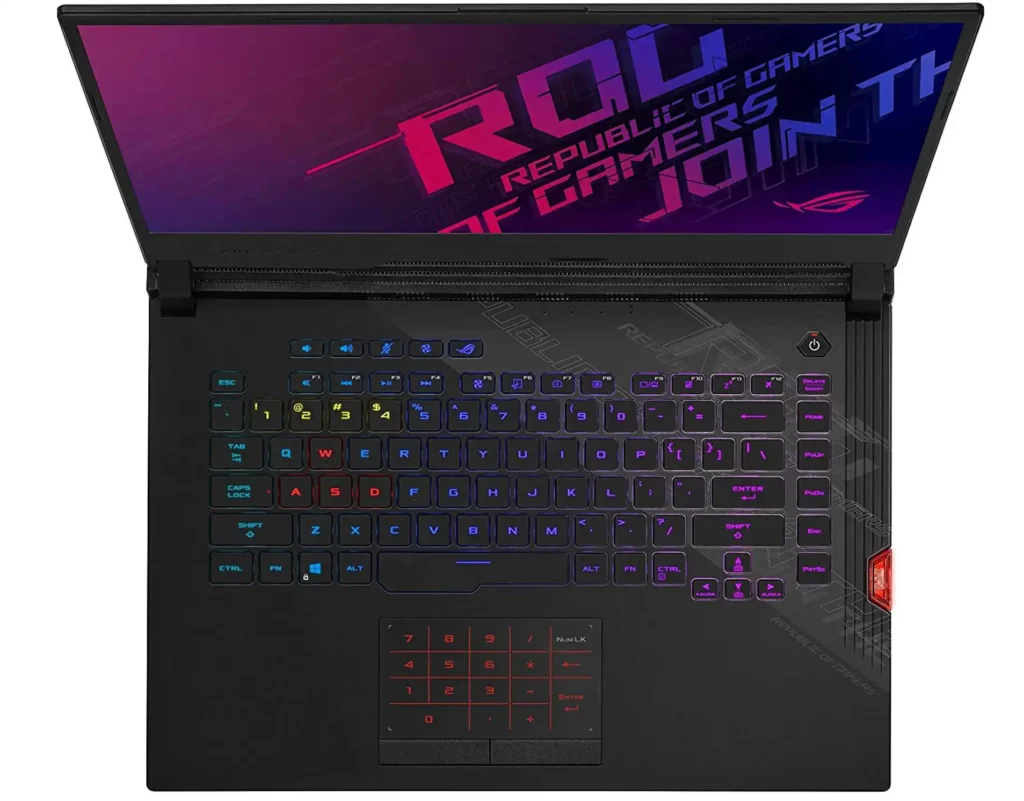
But this laptop’s sophisticated cooling system is what makes it stand out. Even during lengthy gaming sessions, the CPU and GPU function at ideal temperatures thanks to the dual-fan architecture and intelligent ventilation technology. This increases the laptop’s overall performance while also extending its useful life.
The ASUS ROG Strix Scar 15 has an outstanding cooling system, 16GB of DDR4 RAM, and a 1TB PCIe SSD for lightning-fast storage and easy access to your favorite games and programs.
You may have an immersive gaming experience thanks to per-key RGB lighting and Wi-Fi 6 connectivity.
The ASUS ROG Strix Scar 15 is a great option for gamers who need the best performance and cooling. This laptop includes everything you need to advance your gaming, whether competitive or casual.
Features:-
A 240Hz 15.6″ FHD 3ms IPS screen: This high refresh-rate screen enables fluid gameplay with little input lag.
Using a Core i7-10875H CPU from Intel Gaming and other resource-intensive tasks are suited for this potent processor’s quick and effective performance.
This dedicated graphics card provides a GeForce RTX 2070 Super: Stunning images and fluid gameplay, even at high settings.
16GB of DDR4 RAM: With this much memory, multitasking is swift and fluid, so you can switch between applications without experiencing any lag.
A 1TB PCIe SSD: This ultra-fast storage option guarantees speedy boot and load times, allowing you to return to action quickly.
Per-key RGB lighting: With this programmable lighting setup, you can better alter your laptop’s looks to suit your gaming preferences.
Connectivity with Wi-Fi 6: This most recent wireless technology enables quick and dependable internet connections, even in congested settings.
The user-friendly Windows 10 operating system offers a variety of features and tools to help you make the most of your laptop.
Check Price on Amazon2. Razer Blade Pro 17 Gaming Laptop (RTX 2070 Max-Q)
When it comes to laptops with the best cooling, it is a given that you would look for gaming laptops. And this is one of them and is called a zero-compromise powerhouse.
It has been built for creative work as well as gaming, and this is in a 0.78″ thin CNC aluminum unibody. There is high-performance vapor chamber cooling, so you can rest assured that this feature is taken care of.
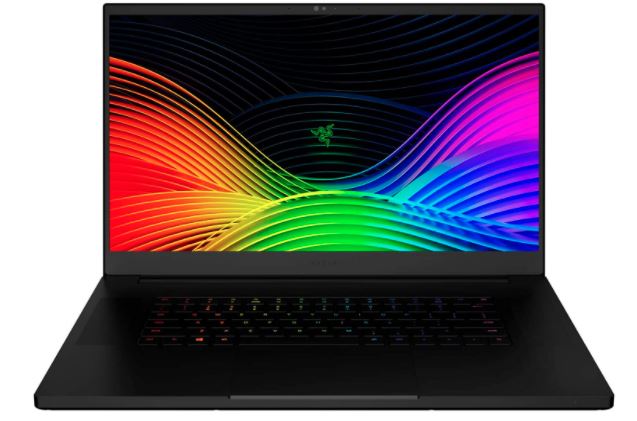
The design is futureproofed, proving that this is a long-term investment. There is dual-channel memory and SSD upgradeability. Thunderbolt 3 has also been enabled, making it compatible with the Razer Core X external GPU enclosures.
This is for more graphic power. There is a matte screen that is 100% sRGB and factory-calibrated. The refresh rate is 144HZ so users get the best experience using it for gaming or other work.
The individual key lighting is customizable, and dozens of preset profiles and 16.8 million colors are available. There is also Windows Hello instant face unlock here with the IR sensor and integrated webcam.
Connectivity here includes Wi-Fi 6 (802.11ax), 1x 2.5 Gbit Ethernet ports, 1x UHS-III SD card reader, 1x HDMI, 3x USB 3.2 Gen 2 Type-A, 1x USB-C 3.2 Gen 2, and 1x Thunderbolt 3.
The 9th Gen Intel Core i7-9750H Processor and the Turbo Boost of 4.5GHz give higher performance, and the base clock speed at 2.6GHz makes the laptop fast for greater efficiency. It can run AAA games without any lag whatsoever.
Pros:-
- The display is excellent, and so is the color ratio.
- The keyboard is great when it comes to functionality as well as aesthetics.
- The trackpad is said to be better than a Mac Pro.
- No lags, and the system is fast.
- It has a great build.
Cons:-
- It is expensive for the features offered when compared to other laptops.
3. Razer Blade 15 Base Gaming Laptop
Razer Blade 15 is another one of the laptops with best cooling and is an ultra-compact NVIDIA laptop that GeForce powers.
It has the latest 10th Gen Intel Core i7 5-core processor to deliver amazing portability and performance. The insanely fast and immersive experience for gaming and more is provided by the 15.6″ 120Hz thin bezel Full HD display.
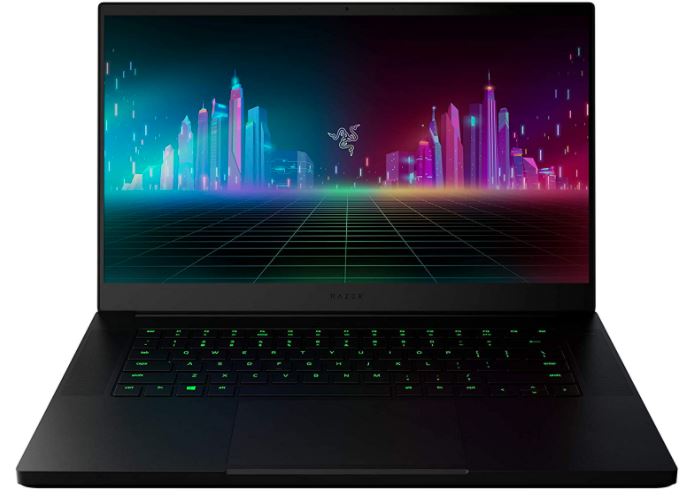
The Intel Core Processor gives more power and the ultimate performance in this laptop, and this has six cores and a 5.0GHz Max Turbo.
Another great feature is the NVIDIA GeForce GTX 1660 Ti graphics. This is an extremely fast supercharger that is excellent for the most popular games that are being played today.
This system also gets more frames since the fast 120Hz 15.6″ Full HD thin-bezel display has been paired with excellent performance. Additionally, the CNC aluminum unibody frame is thin and compact.
It houses great performance in a form that is compact, and this makes it 0.78″ thin yet durable. It has also been loaded with connectivity features including but not limited to 2X Type-C ports, 2X USB Type-A, Bluetooth 5, wireless-AC, and a webcam.
The maximum screen resolution you can get on this is 1920 x 1080 Pixels, and the hard drive is SSD. The wireless type is 802.11a/b/g/n/ac, and this particular system has three 3.0 USB ports.
The keyboard is RGB and is greatly customizable, so you can have it look however you would want it to. Another great aspect here is that it has no bloatware.
Pros:-
- Great laptop for gamers and programmers.
- The finish and workmanship on this are excellent.
- The RGB keyboard is a great addition and is customizable.
- The screen is great.
- No bloatware.
Cons:-
- It can get heated with long usage.

4. ASUS ROG Strix Scar 15
The ROG Strix SCAR 15 is one of the best laptops for Windows 10 gaming, with its exceptional performance, power, and speed.
It has powerful GeForce graphics and the latest AMD Ryzen, 5000 series processors. The cutting-edge 300Hz/3ms gaming panel is excellent and can take you to the next level regarding pro esports speed.
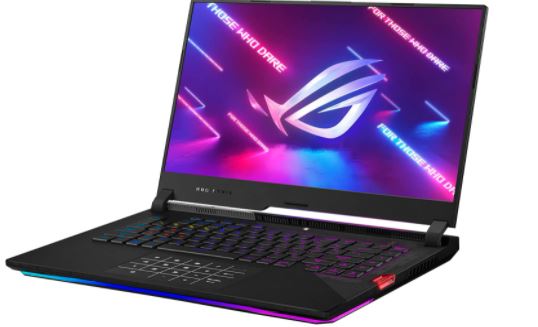
This laptop is one of the ROG RTX 30 Series laptops and is one of the fastest in creating and gaming.
It has been built with an Ampere—NVIDIA’s 2nd gen RTX architecture—that is award-winning, along with streaming multiprocessors, Tensor Cores, and new RT cores so that the ray-traced graphics and AI features are most realistic.
This machine is designed and tailored to given triple-digit frame rates. The graphics give fluid as well as ultra-fast gameplay. The extremely fast DDR4 RAM paired with the overclockable AMD CPU gives a boost when you want to multitask or have a heavy workload.
The refresh rate is 300 Hz, and the fast-paced action looks smooth. For precision target tracking and minimization of motion blur, there is a 3ms grey-to-grey response time.
This is one of the laptops with best cooling, and this is owed to the ROG intelligent cooling philosophy. Performance is boosted with the CPU’s well-ventilated exterior and the liquid metal compound.
The keyboard is an option-mechanical one, giving nearly instantaneous activation, extreme durability, better accuracy, and more responsive input.
There is also the USB 3.2 Type-C with DisplayPort 1.4, multiple Type-A USB 3.2 Gen 1, and more for better connectivity.
Pros:-
- Has really good speakers for a laptop.
- Build quality is excellent.
- It works fast, and there are no performance or lag issues.
- Has many IO ports.
Cons:-
- RGB presets sometimes get buggy.
5. GIGABYTE AORUS 17G YC
Gigabyte Aorus has one of the laptops with the best cooling and has groundbreaking AI rendering owing to the NVIDIA DLSS. It has a GeForce RTX 3080 with the GPU being 8GB.
For better and enhanced performance, the 10th Gen Intel Core i7-10870H is 2.2GHz – 5.0GHz.
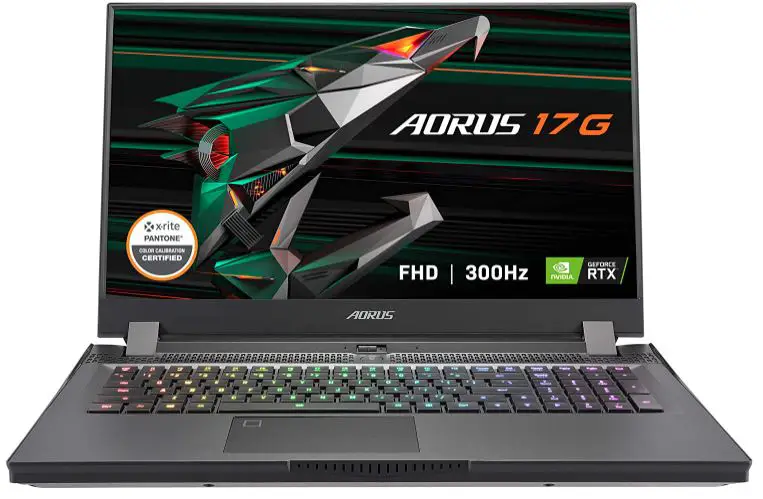
The RAM capacity is 32 GB but can be upgraded to a maximum of 64 GB. Additionally, there is also the 1 TB PCIe SSD. There are 2x M.2 SSD slots, which are Type 2280. It supports 1x NVMe PCIe & SATA/ 1x NVMe PCIe.
There is also the immersive experience with the screen being 17.3″ thin bezel FHD. The maximum screen resolution is 1920×1080, and what’s more, is that the Display LCD is IPS-level as well as anti-glare. The refresh rate is 300 Hz, and you can also see the 72% NTSC.
Gigabyte Aorus offers X-Rite Pantone Certified Display which has been factory calibrated individually. It has WINDFORCE Infinity Next-Gen Cooling, which is why it is one of the best laptops for excellent cooling.
It has NAHIMIC 3 Surround Sound and incredible connectivity with 1 x HDMI 2.1, 3 x USB 3.2 Gen 1 (Type-A), 1 x Mini DisplayPort 1.4, and 1 x Thunderbolt 3 (Type-C). It also has a UHS-II SD Card Reader, 1x Microphone-in, and 1x Headphone-out.
It weighs about 5.95 pounds, and the Graphics Graphics Card RAM size is about 8GB. It is extremely fast, has great cooling, no lag issues, and is overall an excellent laptop where no space is wasted in building it.
Pros:-
- Extremely fast with no lagging issues.
- Well built and has a nice finish.
- The fan is very quiet.
- The temperature doesn’t rise under heavy load.
- Excellent keyboard.
Cons:-
- The speakers are at the bottom to avoid wasting space, meaning the sound is not great.
6. HP OMEN 15-en0029nr Gaming Laptop
HP Omen, as mentioned earlier, is one of the laptops with best cooling owing to it being advanced and having heat sinks.
This laptop is excellent for gaming, can also be used for work, and can handle multiple software. It has a Ryzen 7 4800H Processor – 8 Core and an 8 MB cache. The clock speed is 2.9GHz to 4.2GHz.
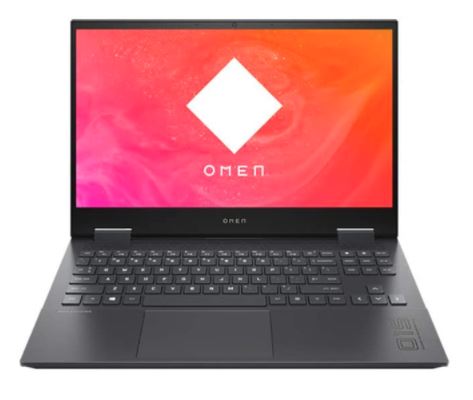
It has dedicated graphics, has NVIDIA GTX 1660 Ti 6GB GDDR6, and is VR-ready.
The blacklight keyboard and display have a maximum resolution of 1920×1080 and 15.6″ IPS Full HD. The Windows 10 Home has been pre-installed and has 512GB of SSD storage and 16 GB of RAM.
It weighs about 5 pounds and has a processor count of 8. The computer memory type is DDR4 SDRAM, and lithium-ion batteries are included. The keyboard is RGB but blacklight white, as mentioned. The weight is not too much, especially for its size of it.
The battery is good, and a high-performance laptop is extremely fast. There are no lag issues, and the graphics are excellent as well.
It is a multi-purpose laptop, so you can buy it for gaming and work. It supports easy and fast software usage like CAD, Adobe, and more.
Pros:-
- Build quality is excellent.
- Extremely fast with high performance.
- The visuals and graphics are also great.
- One of the best for gaming and work, and using the software.
- Battery life is also good.
Cons:-
- Sometimes the keys may not register if multiple keys are pressed at once.
7. Acer Predator Triton 500 PT515-52-73L3
Acer Predator is a laptop that is known for the excellent and immersive experience that it provides when it comes to gaming. Here are the features that make this such a popular laptop.
If you want realistic, fast, and AI-enhanced gaming experiences, then the Predator Triton 500 is the one for you.
It has incredible graphics and is powered by GeForce RTX 2070. The 10th Gen Intel processor is another great feature of this laptop.
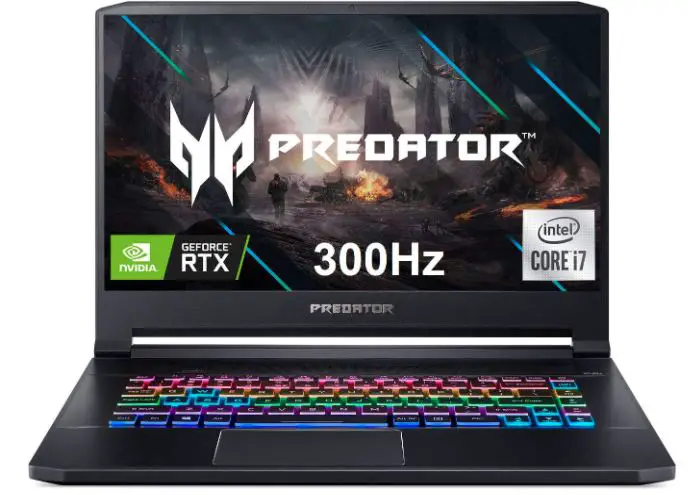
It gives you cinematic-quality rendering to any game you play. The refresh rates are up to 300 Hz, and the display is 15.6″ FHD G-SYNC.
There is also a per-key RGB keyboard that is offered as well as excellent audio. There are many different colors that you can use, and each key can be programmed individually. For overclocking, you need to tap Turbo.
It is one of the laptops with best cooling and has Killer AX1650 WiFi and Killer’s E3100G Ethernet Controller. This laptop is just 0.70 inches making it sleek and thin.
It has extensive connectivity and multiple display outlets. You can play in a 3-monitor super-wide setup with this laptop’s capabilities.
DTS X Ultra gives you excellent sound that is 360° surround sound. You can have real-world spatial sound for your games, music, and movies. This is a great laptop with a PredatorSense key, and you have command over game profiles, overclocking, fan speed, and lighting.
It can be used for any work as well, but when it comes to gaming, this is a great laptop. It also offers high-speed performance with no lag issue whatsoever.
If you switch to this laptop from an older, slower one, you will be no less than amazed by all this laptop offers.
Pros:-
- Slim laptop but has great power.
- This is a well-balanced laptop.
- The screen is excellent and has a G-SYNC.
- Excellent cooling.
- Super-fast performance with no lags.
Cons:-
- Has too much-unneeded software.
8. Alienware Area 51M Gaming Laptop
This is a laptop that has incredible processing power, and both the GPU as well as the CPU can be upgraded. Advanced cooling makes it one of the laptops with best cooling, and the design is also revolutionary and premium.
It is aesthetic to look at while being incredibly powerful in the performance that it gives its users.
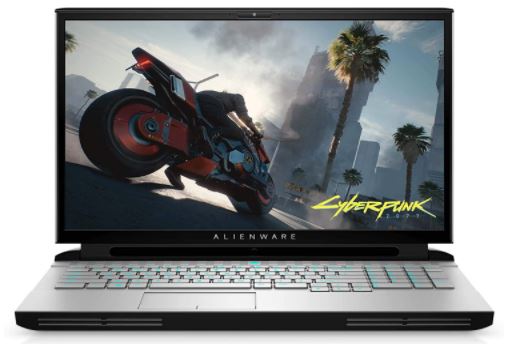
It has a refresh rate of 300 Hz, NVIDIA GeForce RTX 2070<, and 1 TB NVMe M.2PCle SSD. The keyboard is the Alienware TactX one, and there is also N-key rollover technology which offers more than 103 key commands.
It gives 2.5 times the amount of Ethernet connections (wired) with 2.5Gbps ethernet so that file transfers are incredibly fast.
The multi-use port can be used as a USB 3.0 port, is a Thunderbolt Type-C port, and gives about 10Gbps for data transfer. Up to 4x SSDs are supported here for great storage, and even the speakers are excellent.
It has next-generation Tobii eye-tracking, giving another form of immersive gaming. It has smaller sensors equipped with wake capabilities, and there is also great sensibility to track eye positions, fine gaze, face ID, and head pose.
This laptop is a power brick for a reason and gives an insane performance, speed, storage, and more.
Alienware is well-known for being a great company when it comes to gaming, and this particular model does not disappoint. It also has great cooling so it can take on a heavy load for gaming or work.
It’s not the lightest laptop, but it gives you all the advertised features and more.
Pros:-
- Excellent and responsive keyboard.
- No lags and great performance.
- Great cooling and no overheating.
- Offers customization.
- Graphics and visuals are also good.
Cons:-
- The screen crashes sometimes.
9. Dell Gaming G3 15 3500
The Dell Gaming G3 is one of the laptops with best cooling and has NVIDIA GeForce RTX 2060 6GB GDDR6 for high performance and power.
The refresh rate is 144Hz, and it has a 15.6-inch FHD display. The maximum resolution here is 1920×1080, and the display is 300 nits, is IPS anti-glare, and has an LED-Backlit display. All of this is complemented by the narrow bezel that is two-sided.
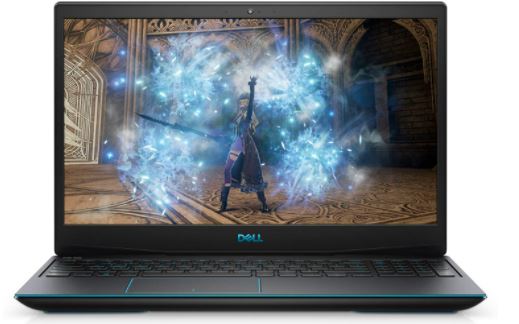
The laptop has a dual-fan cooling system to keep the system responsive and the heat out. The fans’ speed is maximized when you’re working to keep the system from heating up.
This Dell G Series has the Alienware CommandCenter, which means you can fine-tune your settings to improve and enhance your gaming performance.
You can also easily personalize the setup and space so that the software looks how you want it. You can also make a unique game profile, and it will remain the same wherever you launch it.
It also has Bluetooth 5.1 and Killer Wi-Fi 6 AX1650 (2×2). This curved gaming monitor is 27″ QHD (2560 x 1440). It has good connectivity as well, making it a multi-purpose laptop. You can use it for gaming and work, no matter what.
It has Cherry MX low-profile Red switches that are industry-loading. The laptop has fast visuals and great clarity, which is good for focus.
There is also 7.1 immersive virtual surround sound. The keys are completely programmable for key assignments and macros. There is also AMD FreeSync Premium Technology for responsive and swift gameplay.
Pros:-
- It runs smoothly no matter what the task is.
- Excellent upgradeability.
- Great graphics and screen.
- Fans are quiet.
- The design is also good.
Cons:-
- It heats up if used for a long stretch.
10. MSI GL75 Gaming Laptop
The MSI GL7 is one of the laptops with best cooling and has the 9th Gen Intel Core i7-9750H Processor 2.6GHz for great performance and power.
This is one of the reasons why it is an excellent laptop for gaming. It has NVIDIA GeForce GTX 1660 Ti 6GB Graphics to give an immersive and enhanced gaming experience.
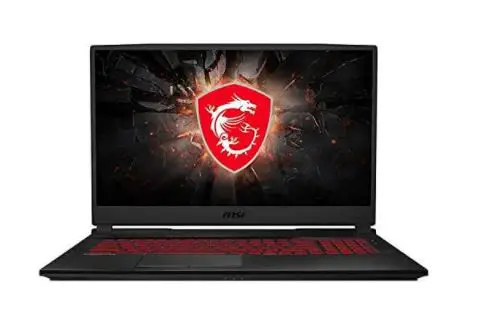
Furthermore, it is equipped with 16GB DDR4 2666MHz RAM. It also has a 1TBH Hard Drive and a 256GB NVMe Solid State Drive.
The speed and storage are incredible with the MSI GL75 laptop. There is also an integrated webcam with 720P HD and a 10/100/1000 Gigabit Ethernet, specifically RTL8111HS.
There is also extensive connectivity, as is seen by the 802.11 Bluetooth 5.0 and the wireless-AC 2×2 WLAN.
The keyboard is aesthetic and pleasant while being functional. The Steel Series single blacklight keyboard has a silver lining and an anti-ghost key.
The maximum resolution is 1920×1080, with the screen being 17.3″ FHD. The refresh rate is 144 Hz, and there is a 3ms display. This laptop also has great audio since it has 2x 3W giant speakers.
It has connectivity for USB, and HDMI, as well as for a media card reader and a mini-display port. There are mic-in and headphone-out jacks as well. The battery is a 6-cell lithium-ion, and the laptop weighs about 5.51 lbs.
This laptop is excellent for gaming since it gives an immersive experience and fast performance on every end.
It has great cooling, which is imperative for multi-tasking and heavy work loads. This laptop can also be used for work-related purposes, making it multi-purpose/functional.
Pros:-
- Worth the price paid for the laptop.
- Great cooling.
- No performance or lag issues.
- Internal hardware is excellent.
- Build quality is great.
Cons:-
- Battery life is not that great, especially for a gaming laptop.
11. ASUS ROG Zephyrus G14
This ASUS system is one of the laptops with best cooling and has the powerful AMD Ryzen 7 4800HS processor that has machine intelligence where your needs are anticipated.
You can create, design, and imagine with no boundaries. You see impeccable responsiveness with the 8 Core processor and the 10th Gen Intel Core i7-10750H, so you get the best performance.
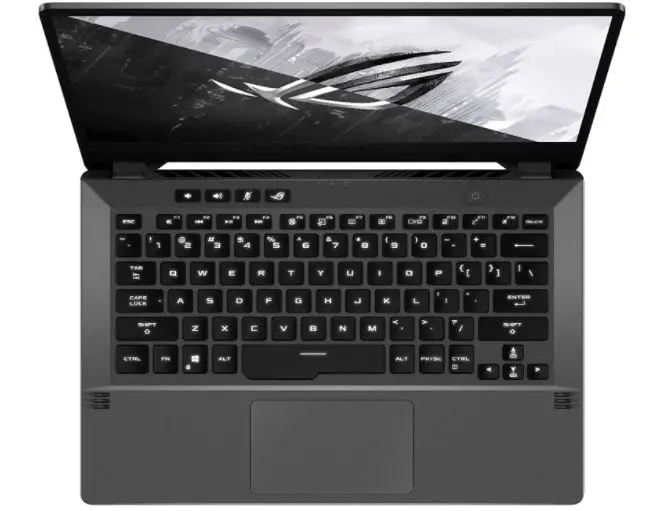
The full HD display is 14″ and the maximum resolution is 1920×1080, so you get impressive clarity and color. The LED backlight is energy-efficient, and for advanced multitasking, there is high-speed system memory of 3200 megahertz.
The RAM has substantial high bandwidth so that you can run multiple programs, browser tabs, video, and photo editing applications, and games simultaneously.
The laptop also can store more data and save files very quickly. There is advanced communication power and great storage here because of the PCI-e SSDs.
These are excellent for daily backups, multiple services, major gaming applications, and more.
It has been backed by a dedicated video memory that is 4GB so that you have an advanced GPU for your games.
It also has the needed specs to run Virtual Reality software and hardware while being compatible with Windows Mixed Reality Ultra, HTC Vive, and Oculus Rift.
It is super thin, 0.7″, and weighs about 3.64 lbs. This gives you maximum portability and has a smaller screen size, so you can get a compact form factor as the DVD/CD drive has been omitted.
You can connect to a high-definition monitor to set two screens next to each other or connect to an HDTV with HDMI output.
Pros:-
- Excellent battery life.
- GPU performs well.
- CPU is also exceptional.
- Build quality is great.
- Very fast performance and no lagging.
Cons:-
- The packaging of the laptop for online delivery is not great.
12. CUK ROG Strix G17 Gaming Notebook
The CUK ROG Strix laptop has the best cooling and elevates the Windows 10 gaming experience.
It has a GeForce RTX 3060 GPU and AMD Ryzen 9 5900HX CPU making it powerful and extremely fast so that you can easily game and multi-task while having the same great performance.
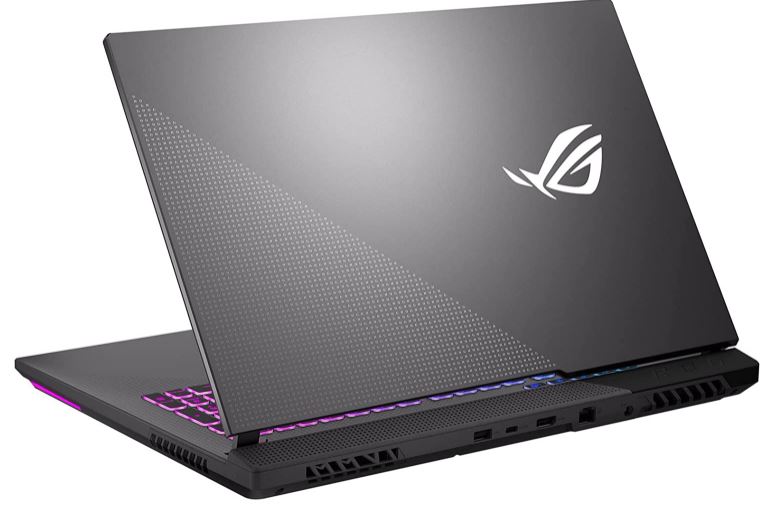
You get a competition-grade display to go all-out for esports speed. You also get ultra-smooth gameplay with adaptive sync, and they have advanced thermal upgrades for great cooling.
The high-performance DDR4-3200 RAM lets you stream, game, and switch easily. For accelerated load timing for apps and games, there is the NVMe SSD storage.
Everyday usability and comfort are improved with the active touchpad area and about 85% larger than the previous generations.
More space on this system also gives you better precision, with gestures and hand movements more comfortable as you navigate. The glass pad has a matte finish, giving you a silky smooth feel and durability.
Cooling is also quieter and more effective in keeping a low profile. There are 84 blades each in the Arc Flow fans that push air out, which is down with little turbulence.
There are four heat sinks and dan outlets from which air flows so that heat can be rapidly expelled.
Other improvements are also made so that ROG Boost can overclock the GPU in Turbo mode. There is extra thermal headroom, so a better GPU clock can be pursued with the CPU being overclocked. This gives you great performance with excellent cooling and no overheating.
Pros:-
- The price is worth it.
- Battery life is great.
- Excellent for gaming.
- Fast performance with no lagging issues.
- Has good cooling.
Cons:-
- Comes with unnecessary software.
13. Razer Blade 15 Advanced Gaming Laptop
The Razer Blade 15 Advanced is one of the laptops with best cooling and has an 8-core processor that is 10th Gen Intel Core i7-10875H. Up to 5. 1GHz, Max Turbo is offered here with impeccable performance and speed.
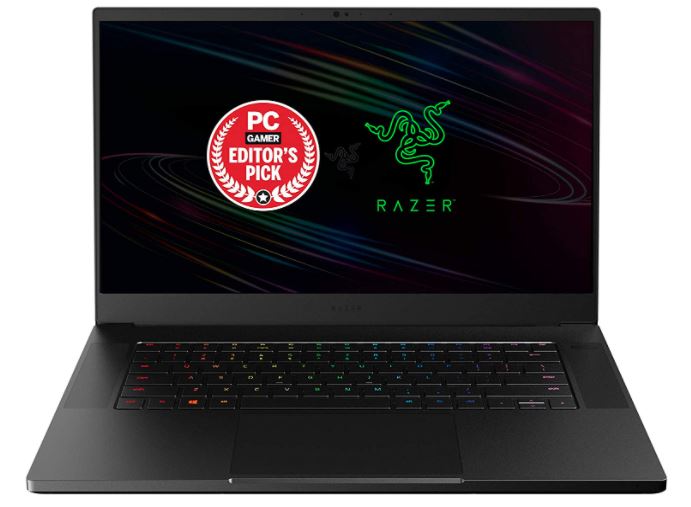
When it comes to graphics, there is the Max-Q Design (8GB GDDR6 VRAM) and the NVIDIA GeForce RTX 2080 Super. This is about 25% faster when compared to the RTX 20 Series, which is the original and has higher clocks and more cores.
It also has the Intel Wi-Fi 6 AX201. The display is a thin bezel 15.6″ Full HD with a refresh rate being 300 Hz for high FPS gaming so that you can edge out the win when paired with excellent performance.
The graphics are faster and better. All this, however, is packed into a thin and compact form. It is just 0. 7″ thin and is very durable as it is a precision-crafted aluminum chassis.
Since it has been made from temper six aluminum, there is more rigidity and durability in the CNC unibody. They have also electrochemically bonded the color so that you get a stronger finish and that scuffs and minor scratches can be avoided.
The display gives great support and clarity regarding sRGB color, and it has been custom calibrated for better color perfection and accuracy.
This is a laptop that packs great performance with incredible speed and graphics. There is already plenty of storage, which has been made better because this laptop has no bloatware. It is a good laptop for gaming as well as for work.
Pros:-
- Great build quality,
- Performance is fast with no lags.
- No bloatware with this laptop.
- The screen is excellent.
- RGB configuration is good.
Cons:-
- If used for too long, it may heat up a bit.
Note:-
Bear in mind that while these laptops have best cooling, there is a certain risk to ordering online. While there is a warranty for defects, it may not cover all issues.
Therefore, buying a laptop from a physical store is better. But if you cannot, rest assured that there is a far higher rate of getting a fully functional laptop than getting a defective one.
We have listed out twelve different laptops with great cooling here. These are mostly gaming laptops since they can take heavy loads with great cooling.
But people who want to work on heavy software usually prefer gaming laptops for the same reason.
Cooling plays a major role in the efficiency and comfort of using a laptop. This is why it is important to be careful when buying a laptop.
This way, it will be worth the money you have spent on it while also being something that will last you for years. As we keep saying, buying a laptop is an investment, so only the best should be purchased.
📗FAQs on the laptops with best cooling list📗
Which laptop have the best cooling system?
Apple MacBook Pro, Razer Blade 15, HP OMEN 15, Lenovo IdeaPad Gaming 3, MSI GP66, etc., are the best laptop options with a quality cooling system.
Do bigger laptops have better cooling?
It is better when the laptops are bigger. The bigger ones will have more cooling fans. As a result, the heat will be dispersed more effectively. On the other hand, smaller ones are compact and harder to cool.
Are laptop coolers effective?
One will experience varying degrees of cooling with the laptop cooling pads. After multiple tests, it was noticed that both internal and external temperatures came down.
Is there a gaming laptop that doesn’t run hot?
The cutting-edge Vapor Cooling Chamber makes the Razer Blade 15 Advanced Gaming Laptop the best option. With the help of thermal materials, the chambers disperse the heat as quickly as possible.
Do HP laptops run hot?
The accumulation of dust in the air vents can make your HP laptop overheat because the dust prevents the outflow of air within the laptop.
Which laptop has no heating issues?
Since laptops feature many heat-generating components, including the CPU, GPU, and hard drive, they are not uncommon to heat up slightly when used. However, certain laptops might have a stronger ability than others to control heat and prevent overheating.
The cooling system’s design, the caliber of the thermal compound used to transmit heat from the components to the heat sink, and the general quality of the laptop’s construction are a few variables that can impact a laptop’s capacity to manage heat.
Look for a laptop with a high-quality thermal compound and a well-designed cooling system, such as many fans or a combination of fans and heat pipes, if you want to locate one with few heating concerns.
High-quality materials like aluminum or magnesium, which can aid in dissipating heat more effectively, may also be something to keep in mind while looking at laptop construction.
It would be best if you also thought about the tasks you will be using the laptop for because some of them can be more taxing on the hardware and result in higher temperatures.
Typically, laptops for gaming or other resource-intensive tasks may be more prone to overheating than simpler versions.
Do bigger laptops have better cooling?
In general, larger laptops may be better at cooling since they have more room for a more powerful and expansive cooling system.
A bigger laptop may accommodate more fans or fans and heat pipes combined, which can assist in dissipating heat more effectively.
The size of the laptop is just one component that may impact how well it cools; it is vital to remember that.
Other elements, including the cooling system’s design, the caliber of the thermal compound used to transmit heat from the components to the heat sink, and the general caliber of the laptop’s building can also be important.
The laptop’s cooling capabilities can also be impacted by the nature and complexity of the tasks you want to use it for. No matter how big they are, laptops made expressly for gaming or other resource-intensive applications may be more prone to overheating.
Overall, when selecting a laptop, it is crucial to consider several variables and to carefully investigate the cooling capabilities of any laptop you are considering before making a purchase.
How hot is too hot for a laptop?
The internal parts of a laptop shouldn’t generally be heated above 70–80°C (158–176°F). When the temperature exceeds this range, the cooling mechanism may not work properly and the laptop may be overheated.
Are laptop cooling pads actually useful?
In some circumstances, using laptop cooling pads to lower your laptop’s temperature and maybe boost performance can be helpful.
A cooling pad may be useful in the following circumstances:-
1. The CPU and GPU on your laptop can produce heat if you use them for resource-intensive tasks like gaming. This heat can be removed with a cooling pad, keeping the laptop from overheating.
2. When using a laptop on a soft surface, such as a bed or couch, the heat from the device may be absorbed by the material, raising the surface’s temperature. The laptop can be kept cooler using a cooling pad with a fan or several fans.
3. The ambient temperature can result in greater laptop temps if you use your computer in a warm environment or live in a hot location. In these circumstances, a cooling pad can assist in lowering the laptop’s temperature.
Can cold air break laptop?
A laptop shouldn’t be damaged by cold air on its own. A laptop may develop condensation on its surface or inside if exposed to extremely cold conditions and brought back to a warmer environment.
If the condensation is not allowed to evaporate before the laptop is turned on, this might potentially harm the electronic components.
It is typically advised to let a laptop warm up to room temperature before turning it on if it has been exposed to extremely cold conditions to prevent this. Taking a laptop from a chilly location into a warm, humid environment is also not a good idea because condensation can form more quickly.
When transporting a laptop in cold weather, it’s a good idea to keep it as warm as you can and give it time to warm up gradually before using it.
Why do new laptops get so hot?
A new laptop may become warm for several reasons, including:-
CPU and GPU usage:- To complete tasks, laptops feature a central processing unit (CPU) and a graphics processing unit (GPU). As they operate, these parts produce heat; the more they are used, the hotter the laptop will become.
Lack of ventilation:– Laptops are made to dissipate heat through vents and fans. The laptop may not be able to dissipate heat adequately and become heated if these vents are clogged, or the fans are not functioning properly.
Overclocking:– Some users might attempt to overclock their laptops by raising the CPU or GPU clock speed above the factory defaults. This could result in the laptop producing more heat than it can handle and overheating.
Age:– Older laptops may produce more heat since their internal parts are less efficient. Overheating may result from this as well.
Keep the laptop clean and free of dust, check that the vents are not clogged, and use it in a cool, well-ventilated place to help prevent overheating.
Is 75 degrees Celsius hot for a CPU laptop?
The CPU slows down to prevent overheating if the temperature is persistently above 75 degrees Celsius, which could mean the laptop is undergoing thermal throttling.
If the problem is not resolved, it may impact the laptop’s performance and possibly harm the CPU over time.
Do all laptops heat up?
Yes, all laptops emit heat due to the internal parts’ ongoing energy generation. This is typical and anticipated.
However, several variables, including the type of CPU, the strain placed on the CPU, the age of the laptop, and the effectiveness of the cooling system, can affect the quantity of heat generated and the temperature of the laptop.
Due to their construction materials or design, certain laptops may run hotter than others. High-performance laptop CPUs, for instance, could produce more heat than laptops with lower-performance CPUs.
Similar to how insufficient or poorly built cooling systems can cause computers to run hotter than those with more effective cooling systems.
Do gaming laptops overheat?
Gaming laptops may overheat if not adequately cooled or used for long periods while under a lot of strain.
Like any computer, a gaming laptop produces heat while operating, and this heat needs to be removed to keep the system functioning properly and protect the components.
The majority of gaming laptops come with a cooling system that contains one or more fans and heat pipes to aid in heat dissipation to help with this.
How do I keep my laptop cool while gaming?
You can attempt the following methods to keep your laptop cool while gaming:-
1. Ensure good airflow around your laptop. Try relocating your laptop from your bed or couch to a desk or table to improve air circulation.
2. Your laptop’s air vents should be cleaned. Your laptop may overheat if dust and dirt clog the vents and obstruct sufficient ventilation. To carefully clean the vents, use a small brush or a can of compressed air.
3. Invest in a laptop cooler. These are little, transportable items that go under your laptop and aid with heat dissipation.
4. A soft surface should not be used for your laptop. The air vents on your laptop may become blocked and improper airflow may result from placing it on a soft surface like a bed or couch.
5. Try lowering the CPU and GPU clock speeds. Reduce the clock speed of your processor and graphics card by underclocking. This can assist in bringing your laptop’s temperature down while gaming.
6. Install the most recent drivers and updates if necessary. Your laptop may operate less effectively and produce more heat if its drivers and software are outdated.
7. Upgrade the cooling system on your laptop, if necessary. If your laptop is still overheating after trying all the solutions above, you might consider replacing the cooling system.
This can need changing the thermal paste or including more fans.
Do cooling pads hurt laptop?
Cooling pads for laptops can benefit them and increase their lives by minimizing overheating. A cooling pad must be used properly to avoid causing harm to the laptop.
The following advice will help you use a cooling pad safely:-
1. Use a cooling pad that is made for your laptop’s size and weight.
2. Verify that the laptop is level on the cooling pad and is not inclined or unsteady.
3. While the laptop is on the cooling pad, do not obstruct any vents or fans.
4. On top of the laptop or cooling pad, avoid placing any heavy things.
You should be able to utilize a cooling pad to keep your laptop running cool by following these instructions safely and successfully.
Do you need a cooling pad for gaming laptop?
A cooling pad should normally be used with a gaming laptop to keep it cool and prevent overheating.
Due to the demanding nature of many games and the high-performance components used in gaming laptops, a lot of heat is produced. A cooling pad can assist in removing this heat and preserving the laptop’s performance.
What is laptop cooling?
Laptop cooling is a very important aspect of any laptop. Laptop cooling makes sure that the laptop doesn’t get overheated. A lot of heat is generated by the system when it is working. Since this can be harmful, laptops have heat sinks or cooling fans.
Laptop cooling is a very important factor in gaming laptops since the laptop takes a heavy load. This is why there are specific gaming laptops, and not every laptop can be used for gaming long-term as another laptop would slow down.
With fans and heat sinks, the hot air from the laptop’s interior gets exhausted to the exterior to prevent overheating.
Is it important to invest in a laptop with cooling?
Cooling in a laptop is a very important factor. Laptops are expensive, especially good ones that would last a long time. They are considered an investment for all the work they can do. This is why it is essential to consider multiple factors.
Cooling is one such factor since it prevents overheating from the system-generated heat. If the fans are damaged, an overheated laptop cannot be repaired. The only solution is to buy a new one, which is costly.
This is why investing in a laptop with good cooling is important to have fast performance and use the laptop long-term.
What component is better for cooling?
When it comes to cooling in a laptop, there are various options. You have cooling fans, heat sinks, and a combination.
Then there are cooling pipes and then the water cooler. All of these have been listed in order of efficiency, and the price also goes up as you choose to upgrade. You can also buy a cooling pad.
If you can spare the money, it is recommended that you get a laptop with a water cooler and features that are worth the price. If not, the best in-between would either be a cooling pad or a combination of a heat sink and a cooling fan.
With these options, the price is not too high, but you still get the efficiency and benefits you want for your laptop.
Does cooling for laptops work?
While there certainly are things that salesmen try to sell that are unneeded for a laptop, cooling is not one of them.
Cooling fans, heat sinks, cooling pads, pipes, and water coolers are all components that work and prevent overheating in a laptop.
Investing in them will ensure that your laptop works for a long-time, and you will also get the performance you want. A damaged cooling component will result in the laptop overheating, and that, in turn, will irrevocably damage the laptop. The only fix here is to buy a new laptop.
So, cooling for laptops does work, but there is no need to spend excessive money on it.
Laptops with best cooling have heat sinks and fans compared to their more expensive counterparts, and they work quite well.
Conclusion on the laptops with the best cooling systems list
A laptop is an investment, especially since they are used long-term, and some of the best ones require a lot of money. It is, therefore, important to buy laptops that give you your money’s worth in all of their features. There are a lot of factors and aspects that one needs to consider when purchasing a laptop.
High performance is one of them, but another is that you would need laptops with best cooling. There is no repairing a laptop whose fans have come apart since the system will overheat, and the only option is to buy a new one.
And the laptops that are known for excellent cooling are precisely the ones that we listed in this article for you. We also put down the links to buy them from and the pros and cons of said laptops. This way, you can buy the laptop that suits you best.