



















Are you curious about what your students really think about your teaching performance?
As a teacher, you may feel like you’re doing your best to engage and inspire your students, but sometimes it’s hard to know if your efforts are paying off.
Without feedback from your students, improving your teaching skills and adapting to their needs is challenging.
That’s where teacher ratings come in. By collecting anonymous feedback from your students, you can gain valuable insights into your strengths and weaknesses as a teacher and make data-driven decisions to enhance your classroom experience.
Whether you’re a new teacher looking to build your reputation or a seasoned educator seeking to refresh your approach, teacher ratings can help you grow and evolve.
Keep reading if you’re curious to learn more about how teacher ratings work and how you can use them to improve your teaching performance.
In this article, we’ll explore the benefits of teacher ratings, the different types of feedback you can collect, and some tips for interpreting and applying your results.
Let’s get started!
What is the Purpose of Teacher Rating Sites?
Teacher rating sites serve as online platforms where students, parents, and fellow educators can evaluate and provide feedback on teachers’ performance and teaching effectiveness.
These websites promote transparency in the education system by allowing users to share their experiences and opinions.
The purpose of teacher rating sites is twofold. Firstly, they provide a valuable resource for individuals seeking information and insights when making educational decisions.
Students and parents can access reviews and ratings to assess the quality of teaching before enrolling in a course or selecting a specific teacher. This empowers them to make informed choices that align with their learning preferences and goals.
Secondly, teacher rating sites offer an opportunity for continuous professional development. Educators can receive constructive feedback from students and peers, allowing them to identify areas for improvement and refine their teaching practices.
These platforms foster a culture of accountability by encouraging teachers to reflect on their methods and adapt to the evolving needs of their students.
Teacher rating sites aim to create a community of stakeholders in education, facilitating collaboration and sharing best practices.
By providing a platform for open dialogue, these sites can help elevate the quality of education and inspire innovation in teaching approaches.
In summary, teacher rating sites are online platforms designed to foster transparency, enable informed decision-making, and support professional growth in education.
Best Sites To Check Teacher Ratings 👌
1. Rate My Teachers
One of the best teacher ratings websites is Rate My Teachers. It mainly focuses on elementary and secondary school teachers and professors.
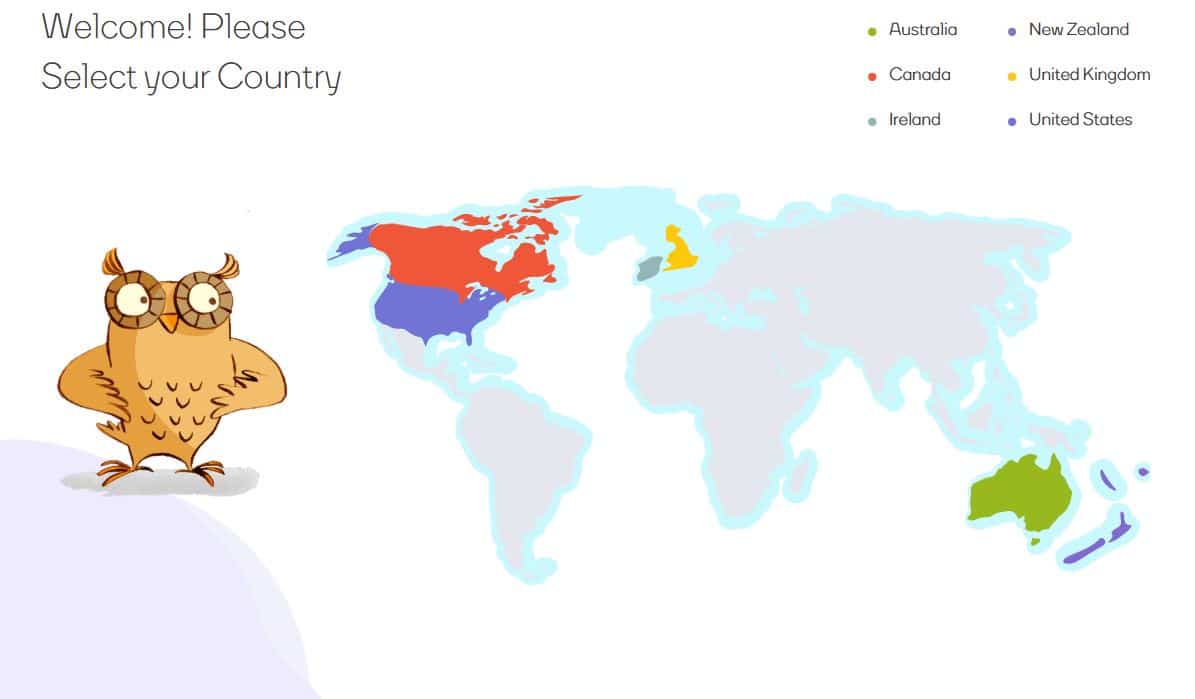
You will be asked to choose your country whenever you open this website.
Since its creation, it has changed many hands between different owners. It had a redesign by its new owners. However, Rate My Teachers provides all the same features as the other websites to rate professors.
Also, this website is one of the best platforms to offer first-hand information to the students about the professors and teachers.
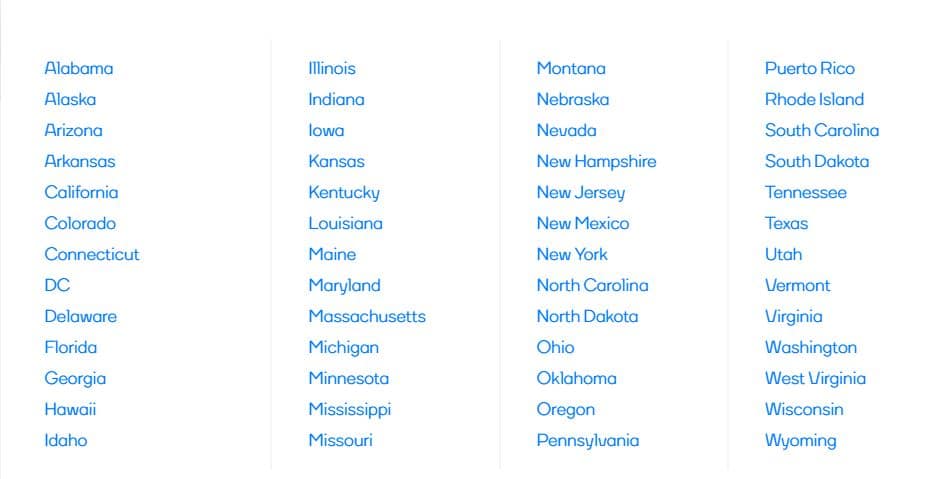
You can find teachers by their school, college, or university names on this website. Simply put, if you want to rate a teacher or professor of a particular school, you need to open the school name.
After that, you can get the teacher’s link to give him/her ratings. However, this process has pros and cons. One of the best things about this process is that anyone will make mistakes while rating the teachers.
Also, the good thing is that Rate My Teachers has some schools in some particular countries, such as the UK, Canada, Australia, Ireland, New Zealand, and the USA.
The disadvantage of the Rate My Teachers’ website is that you must go through many options to search for that particular teacher in that institute.
Rate My Teachers’ website attempted to stop the student’s negative reviews by breaking them down into a rating. Students couldn’t say what was good and bad about their teachers.
Thus, they could make their voices heard via the application form. However, this website has opened up to reviews after a demand. They are tightening their rules and guidelines so that the negative reviews will get removed.
Some of the characteristics that include in the rating system are:-
- Effective
- Respect
- Homework
- Determination
- Empathy
- Integrity
One of the best things about this website is that you can add your school to the database if you don’t find it. Initially, you need to visit their website, create an account, find the school, get the teacher, and rate him/her.
2. Rate My Professors
Try the Rate My Professors website if you want to see more personal ratings of students. It is one of the most popular teachers rating websites online.
According to their website, almost 25 million ratings were added for almost a million teachers. And nearly thousands of schools from Canada, the USA, and the UK are included on this website. However, it is widely used by students.
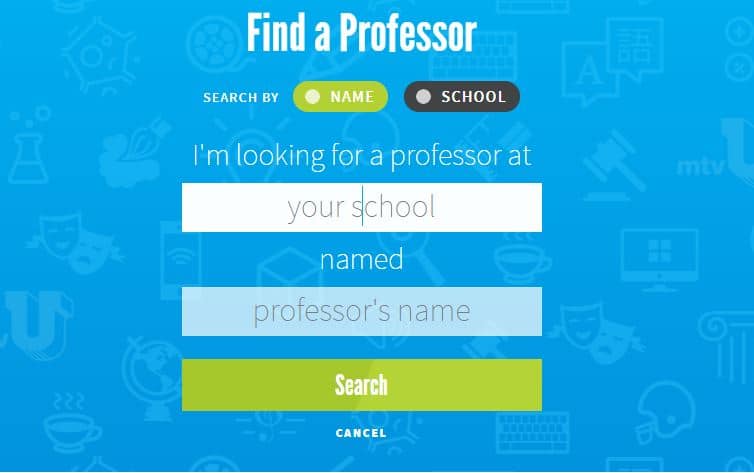
Rate My Professors is easy to use. All you need to do is find the school’s name or the professor you want to rate.
After that, you will see an overall rating and reviews about the teacher and whether the student would take a class from them.
Do you know that you can compare schools by looking at the overall scores of the teachers? Yes, it is possible on this website.
It displays every school page, the top ratings of the professors, the average professor’s ratings, and how that school stacks up to similar schools.
The professor’s quality and difficulty level on this website will also be seen.
Rate My Teachers’ website provides a vast list of teachers’ names. Thus, you can get your teachers and rate him/her easily.
However, finding someone on this website doesn’t take much time. It is because it makes you search for your teachers by name, school name, or educational institution name.
You can find the search option and type your professor’s name after visiting the Rate My Professors website. After that, you need to find him or her from the search results. Finally, you can check the place of his or her occupation. Thus, you can ensure the person.
On this Rate My Professors website, it is possible to filter the search results by school name and professor name.
You can click the Rate This Professor button if you find your professor on the website. It also shows all the previous ratings from the students. Thus, you can get an idea about the professor.
Most students believe that only constant reviews are correct and are trusted. However, let us not forget that we must read between the full lines. Some of the students might give negative reviews due to their issues.
3. Rate Your Lecturer
Rate Your Lecturer is one of the best teachers rating websites available online. One of the best things about Rate Your Lecturer is that this website engages the student in evaluating their universities, schools, colleges, and cities.
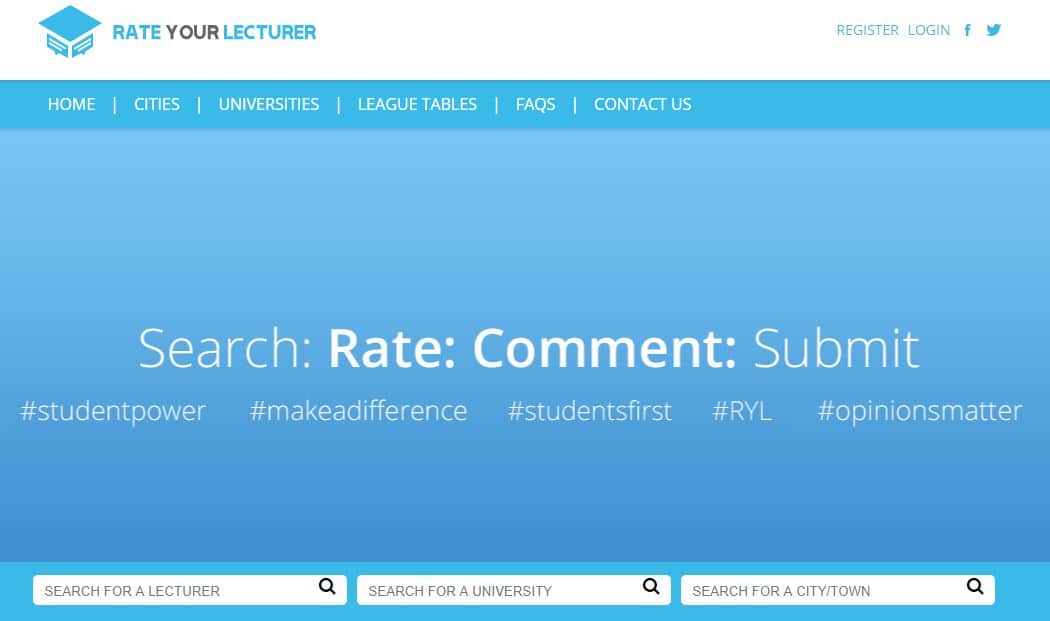
Also, finding someone is very straightforward for anyone to rate. It takes less time to rate teachers.
There are three different options to find someone on this website. They are:
- By the teacher’s name
- By the university’s name
- By the location name
You can read all the previous reviews, ratings, and comments about a person. It also allows you to rate the various skills of a professor or a teacher. For example, students can rank the teacher’s quality of:
- Seminars
- Tutorials
- Office hours
- Feedback
- Intranet support
- Teaching style
- Approachability
- Lectures
Each rating will be from 0 to 10 stars, with an overall score for the teacher based on the individual rankings. You can also add your teacher and provide the rating if you don’t see your teacher’s name on the list.
4. Koofers
Over a million college students rate their teachers or professors using the Koofers website. Koofers is one of the best websites where thousands of teachers and professors get ratings.
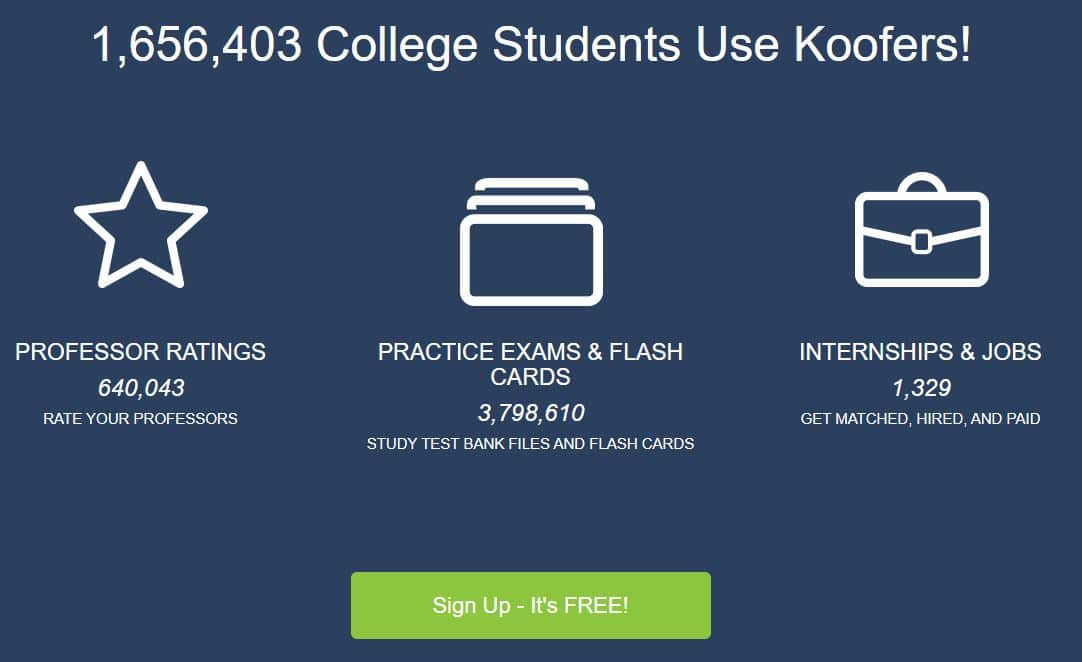
Koofers offer you the best understanding of the teachers to students. Moreover, the main intention of the Koofers’ developers is to give easy access. You don’t have to spend much time writing reviews on a teacher.
It also shows overall ratings by all the students who have taken classes. Student ratings of teachers include:-
- Helpfulness
- Clarity
- Exam difficulty
- Knowledge
- Easiness
- Textbook use
Koofers is a great resource for learning more about the course and the teachers before signing up for the class. Koofers allow the students to rate their teachers. Also, this website shows the grades that teachers give the students.
Thus, this website is helpful for students in choosing the best teacher. Students can get many more advantages from using Koofer’s websites. Almost millions of study material files will be available on their website.
You can get study material for free of access from Koofers. Also, you can get a paid subscription to rate a teacher and get all the study materials for that particular course.
The developers of Koofers also apply some rules and conditions to rate the best teachers on their website. One of the best things about Koofers is that it can help students with internships and jobs. It is worth visiting any student looking for assistance and guidance.
Koofers gives students access to other resources, such as:-
- Test banks
- Study materials
- Practice exams
- Class schedule maker
- Flashcards
- Grade distribution data
At the time of our research on Best Sites To Check Teacher Ratings, we found a video about “21 SHOCKING AND FUNNY FACTS THEY DIDN’T TEACH YOU AT SCHOOL” worth watching. 🤴😎

5. Uloop
Uloop is one of the best websites to rate teachers. The Uloop database covers almost all the schools in the USA. On this website, students at any school rate their professors and lecturers.
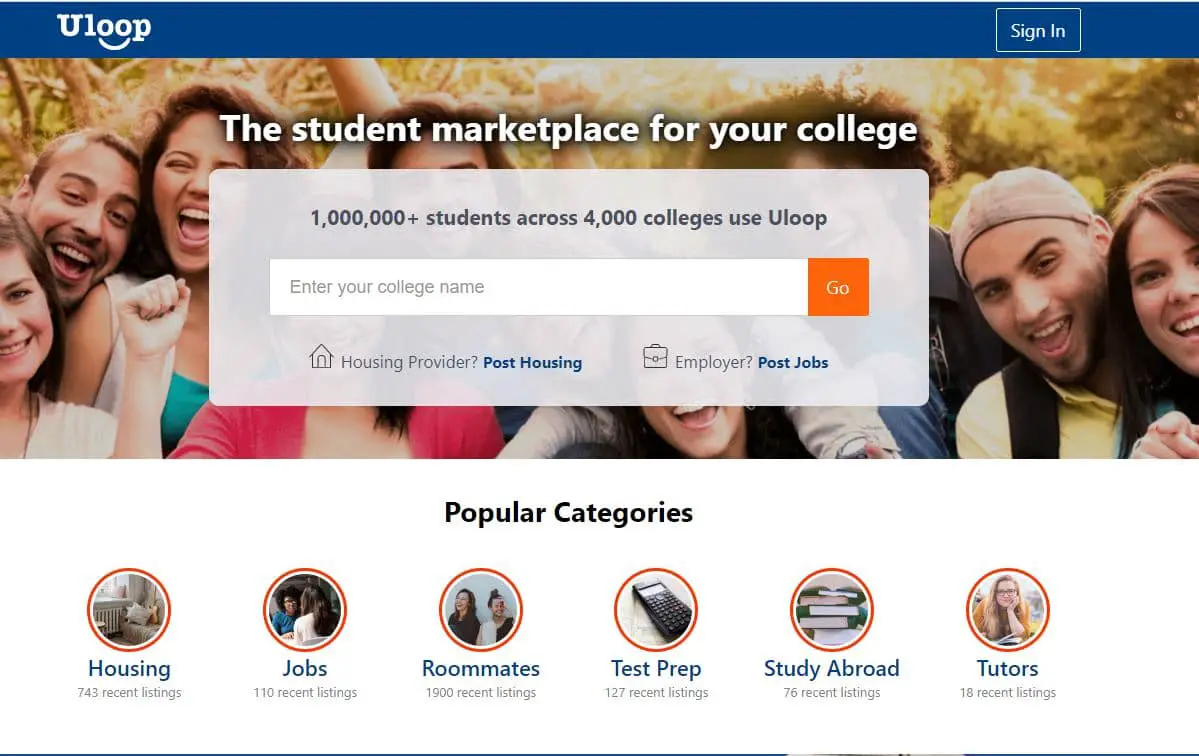
Also, students will help other students avoid getting stuck with a bad lecturer. This website is more helpful than just ratings of the professors.
Uloop is considered one of the best websites that students power. Students will know about the professors by checking how other students rated them. Uloop website provides different services to students. They are:
- Campus jobs
- Textbooks
- Student’s loans
- Course notes
- Tutors
- Help in finding roommates
- Professor ratings
Uloop offers teacher ratings and reviews. Former students of the lecturers write the reviews and give them valuable insight into their teaching style, behavior, and personality.
Professors are rated based on their clarity, easiness, and helpfulness to the students.
There might be some reviews that can help you gain a deeper understanding of that particular professor. Don’t you think knowing about a professor before joining the course is better?
6. Student Reviews
One of the best teacher rating websites is Student Reviews. It enables the students to rate their teachers, professors, and lecturers.
Also, Student Reviews offers pay rates, school ratings, researching careers, college finder, professor ratings, careers, school ranking, etc.
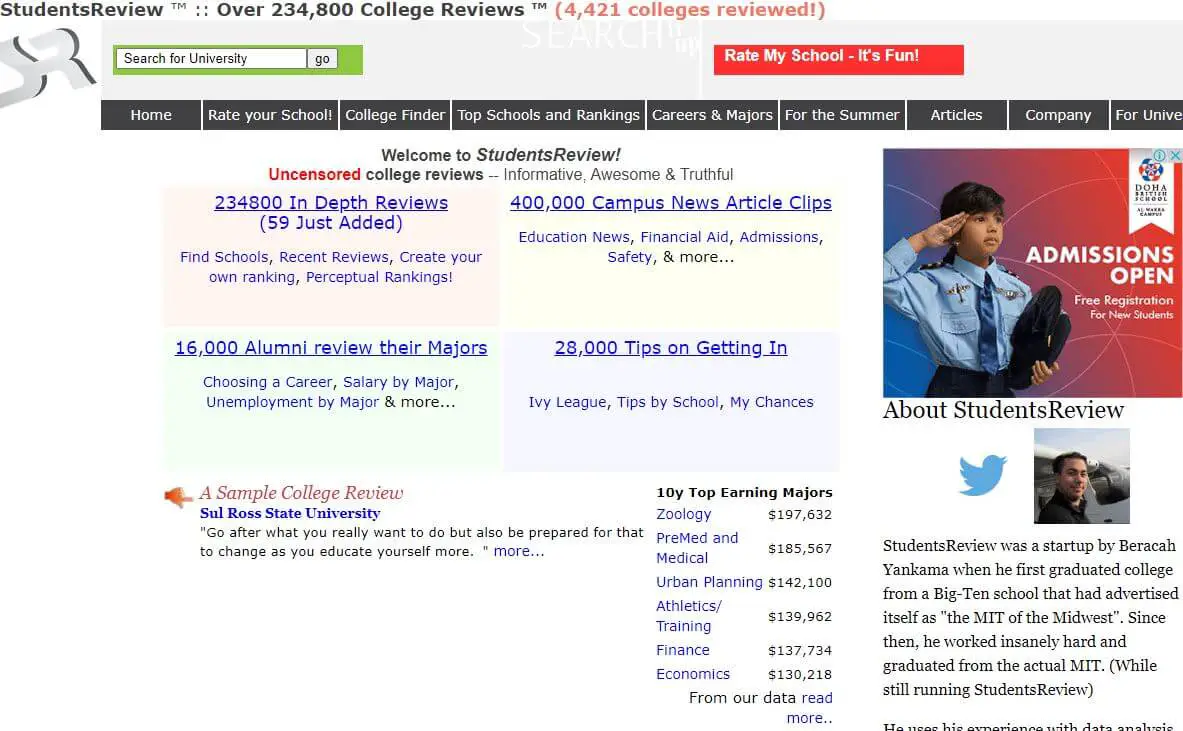
Student Reviews website helps students in choosing a career path. One of the best things about Student Reviews is that it offers students more information about the course.
The interface of the Student Reviews website doesn’t look organized. However, you will understand when you open it a few times. Because of the clutter, Student Reviews make the database rich in useful information.
It is disorganized well, as it is misleading. This website covers all the schools, universities, and colleges from all over the world. Also, the Student Reviews website comprises rankings for almost thousands of teachers.
On the Student Reviews website, students rate professors based on their characteristics.
Some of the characteristics include are:-
- Instructor effort
- Friendly
- Sociable
- Teacher enjoying teaching or not
- Respect for students
- Clarity in teaching
- Offering study material or not
The main drawback of the Student Reviews website is that it is a smaller database than other websites. However, there are still hundreds and thousands of professors who got rated.
7. Niche – teacher reviews high school
Niche is considered one of the best teacher rating websites. It is quite different from all the teacher rating websites. The Niche website lists the best schools, colleges, and universities in the USA.
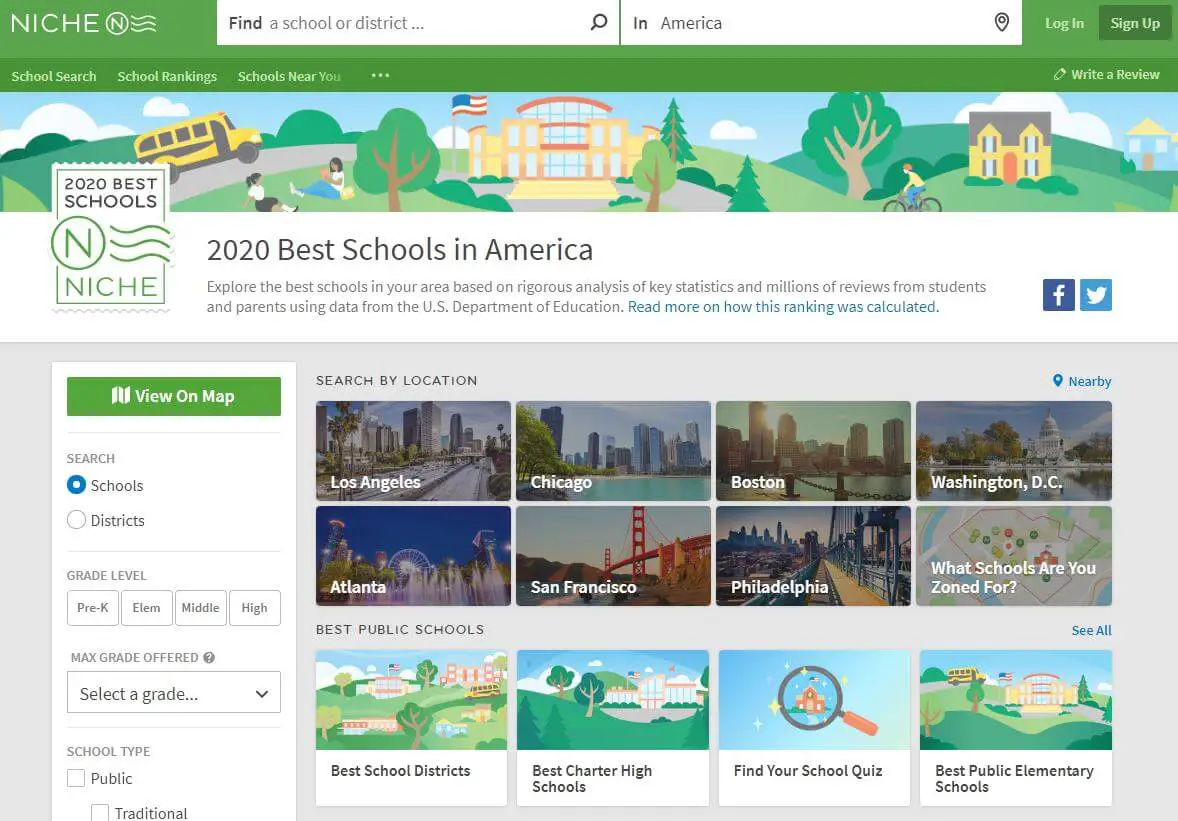
It also includes the list of the best teachers, lecturers, and professors from all the schools, colleges, and universities.
On this Niche website, you can see a collective ranking and rating of how a school fares in all the departments regarding the school faculty. It means you don’t see an individual teacher ranking and reviews.
The categories on which the school is rated include curriculum activities, student life, teachers, academics, and overall experience. The rating grades include poor, terrible, good, average, and excellent.
One of the best websites for teaching ratings and reviews is the Niche website. It has almost a hundred million survey responses, rankings, ratings, and reviews from students, residents, and parents.
Thus, it gives them valuable information about the school and the teacher. Also, the Niche website offers useful information to the students and their parents for a career. It helps the students in deciding what is best for them.
The Niche website is one of the best platforms to research USA colleges, especially in Ohio, Florida, Michigan, NYC, and other states., schools, and universities. Millions of students use this website as it is easy to access every month.
Also, parents even get full report cards, rankings, and reviews of their students’ professors. This website thoroughly analyzes large sets and combines everything with reviews and feedback.
8. Campushopper – teacher ratings elementary school
Campushopper is one of the favorite online platforms for students. Students believe this Campushopper is the best website to rate their teachers, professors, and lecturers.
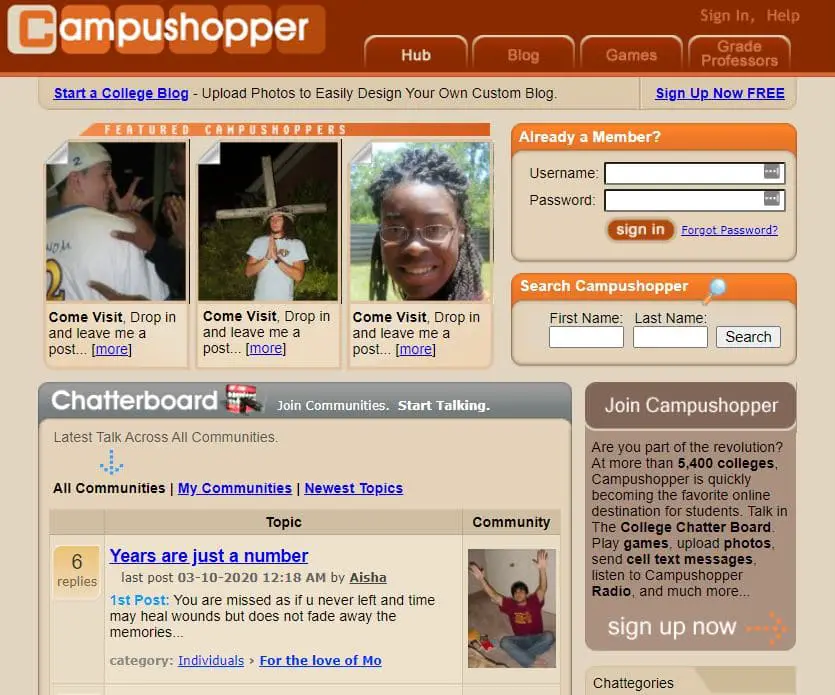
Also, students can network with other students by talking on the College Chatter Board. Students can upload photos and can listen to their Campushopper radio.
One of the best things about this Campushopper website is that students can play free online games.
Campushopper’s website covers almost six thousand colleges from all over the world. The students assign a grading system to that particular lecturer. Also, they can write reviews and feedback about the teacher’s teaching style, respect toward students, etc.
Students have the right to give feedback, either positive or negative. For instance, if you see a student’s best grades for a teacher, then the reviews will tell why that particular teacher is so good.
Similarly, if you see the poor grades for that particular teacher, you can also see why negative ratings will be mentioned.
To rate a teacher, students must select the name of the location and school from the menu list on this website.
One of the best features of this Campushopper website is that it offers neutral importance to all teachers and schools. Thus, this website has a great impression.
9. Rate Your Prof
Rate Your Prof is the best website for teacher grading websites. It has been on the run for more than two decades.
Rate Your Prof is a website that offers first-hand information to students about schools and teachers all over the USA.
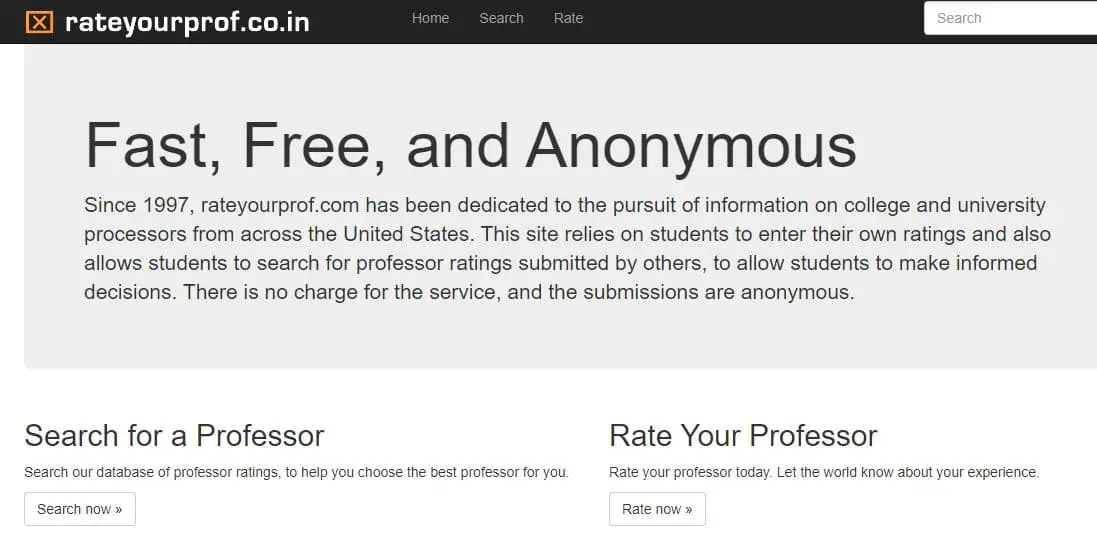
Students can start their search by typing the professor’s name, school, or location. You can also make ratings to the professors from one to five stars against the name of that particular professor. Also, students can check how other students have rated the professors.
The grades of each professor will be shown with the overall experience. It results in a combination of the characteristics of that particular professor.
Thus, you can understand the teacher’s quality when you click on the teacher’s name. Grades help students to make the right decision for their careers.
How To Choose A Good Teacher Or Professor
Do you wonder how you find a good professor or teacher? If you are wondering, you came to the right place.
Attending a class from a teacher, you know nothing can be worrying for anyone. This worry will increase if you search for a lecturer or professor.

Professor reviews and ratings play an essential role for students. Students don’t need inexperienced teachers for their courses.
Also, they shouldn’t be up to the mark to someone who impacts their overall grades. Thus, it is the student’s responsibility to research well and select the best teacher.
Teacher rating websites help students a lot. Also, those websites come to filter out the teachers. However, students need to consider the grades of their professors consistent grades on their websites. Students need to observe the reviews keenly. It is because some professor reviews can result from personal bias and revenge.
Nevertheless, no one should forget the reviews. If professor ratings are poor, you can ignore taking classes from them.
Similarly, if the teacher’s reviews and ratings are good, you can take classes from him/her. If you are already in school and looking for more opportunities to improve your grades, then you need to go through the following features:
- Homework checklist
- Printable homework planner
- Homework schedule
- Class planner and schedule
- Assignment schedule
- Multiple-task planner
- Student notebook
- Class Schedule
- Student planner
- Student calendar
- College Budget
It helps you to become a more efficient and successful student.
Criticisms and Challenges of Teacher Rating Sites
Teacher rating sites, despite their potential benefits, are not without criticisms and challenges.
While these platforms aim to enhance transparency and accountability in education, they face scrutiny from various stakeholders.
One of the key criticisms of teacher rating sites is the validity and reliability of the ratings provided.
Critics argue that these ratings can be subjective and prone to bias, as they rely heavily on individual opinions and experiences. Additionally, the limited sample size of reviewers may not accurately represent the overall teaching quality of an educator.
Another challenge is the potential for negative impact on teacher morale and job satisfaction. When ratings are publicly available, teachers may be subjected to unfair criticism and unwarranted attacks.
The complex nature of teaching, with its many variables and individual teaching styles, is often oversimplified in rating systems, leading to an incomplete assessment of a teacher’s effectiveness.
Ethical considerations also arise with teacher rating sites. Confidentiality and privacy concerns may arise when personal information is shared without consent.
Furthermore, there is a risk of ratings being used in a harmful or discriminatory manner, potentially stigmatizing teachers based on their ratings alone.
To mitigate these challenges, it is important to consider multiple sources of information when evaluating a teacher’s performance.
Employing a comprehensive evaluation approach that includes classroom observations, student feedback, and peer assessments can provide a more holistic view of a teacher’s capabilities.
Striking a balance between accountability and fair treatment of educators is crucial to ensure the responsible and ethical use of teacher rating sites.
In conclusion, while teacher rating sites can contribute to education, they face criticisms and challenges related to the validity of ratings, potential negative impact on teachers, and ethical considerations.
Employing a comprehensive and thoughtful approach to evaluation can help address these challenges and maximize the benefits of these platforms.
Strategies for Effective Teacher Ratings
Implementing effective teacher ratings requires thoughtful strategies to ensure fairness, reliability, and meaningful feedback.
By employing the following strategies, stakeholders can contribute to a comprehensive and valuable evaluation process.
1. Multiple data sources
Effective teacher ratings incorporate various quantitative and qualitative data from diverse sources. This includes student feedback, peer evaluations, and classroom observations.
A more comprehensive and balanced view of a teacher’s performance can be obtained by gathering information from various perspectives.
2. Clear evaluation criteria and standards
Establishing clear and specific criteria for evaluating teaching effectiveness is essential.
This involves defining the desired teaching competencies and outcomes and setting clear expectations for teachers and evaluators. A well-defined rubric or framework helps ensure consistency and fairness in the evaluation process.
3. Professional development and support
Teacher ratings should be seen as a tool for professional growth rather than mere judgment. Providing teachers with access to professional development resources and opportunities for growth is crucial.
Mentorship programs, coaching, and ongoing training can help teachers improve their instructional strategies and effectiveness.
4. Feedback and reflection
Effective teacher ratings encourage self-reflection and continuous improvement. Teachers should be allowed to reflect on their practice, identify areas for growth, and develop action plans to enhance their teaching skills.
Constructive feedback and coaching from peers and mentors play a vital role in this process.
5. Collaboration and sharing of best practices
Fostering a culture of collaboration and the exchange of best practices among educators contributes to improved teaching quality. Encouraging teachers to share their successful strategies, engage in peer observations, and participate in professional learning communities can enhance the overall effectiveness of teaching.
By adopting these strategies, education systems can establish a robust and meaningful approach to teacher ratings.
These strategies promote growth, collaboration, and teaching excellence, ultimately benefiting teachers and students alike.
📗FAQ’s
What happened to the Rate My Teacher site?
The Rate My Teacher site is no longer active. It was shut down in 2021 after operating for over 20 years. However, similar websites like Rate My Professors continue to exist.
What is rating scale by the teacher?
A rating scale by the teacher is a method of assessing a student’s performance or behavior. It typically involves assigning a numerical value or rating to a particular aspect of the student’s work, such as participation, homework completion, or test scores.
What is the website to see if professors are good?
One popular website to see if professors are good is Rate My Professors. This site allows students to rate and review their professors based on various criteria, such as their teaching ability, level of difficulty, and overall quality.
Here is a table summarizing some of the most popular websites:-
| Website | Description |
|---|---|
| Rate My Professors | It is a popular website where students can rate and review their professors on various factors such as clarity, helpfulness, and ease. |
| Faculty Focus | An online publication that offers resources and advice for college and university faculty members. It includes articles and videos on best teaching practices, student engagement strategies, and more. |
| A professional networking site that can be used to search for and connect with professors. It can also provide information about their work history, education, and other qualifications. | |
| Google Scholar | A search engine that can be used to find scholarly articles, books, and other publications by professors. It can provide insight into their research interests, publications, and contributions to their field. |
What is the best comment for the teacher?
The best comment for a teacher is one that is specific, sincere, and highlights the positive impact the teacher has had on the student’s learning and growth.
For example, “Thank you for always pushing me to do my best and believing in me even when I didn’t believe in myself. You have impacted my life, and I will always be grateful for your guidance.”
Is there another site like Teachers Pay Teachers?
Yes, several sites like Teachers Pay Teachers to offer educational resources, lesson plans, and activities for teachers. Some examples include TES, Teachers Notebook, and Educents.
Here’s a table comparing Teachers Pay Teachers to other similar sites:-
| Site Name | Description | Focus Area | Cost |
|---|---|---|---|
| Teachers Pay Teachers | A marketplace for teachers to buy and sell educational resources | All subjects and grade levels | Free to join, 40% commission on sales |
| Teachers Notebook | A platform for teachers to share and sell lesson plans, worksheets, and other resources | All subjects and grade levels | Free to join, 30% commission on sales |
| EduMarket | An online marketplace for educational resources created by teachers, for teachers | All subjects and grade levels | Free to join, 30% commission on sales |
| TES | A global online community of educators, offering resources, lesson plans, and teaching ideas | All subjects and grade levels | Free to join, some resources require a subscription |
| Share My Lesson | A platform for educators to share and download free lesson plans, teaching resources, and professional development materials | All subjects and grade levels | Free |
| TeacherVision | A platform that offers printable lesson plans, worksheets, and other resources for K-12 teachers | All subjects and grade levels | Free trial, then subscription-based |
| WeAreTeachers | An online community for educators that provides resources, inspiration, and professional development opportunities | All subjects and grade levels | Free |
What is the website where teachers are graded?
Rate My Professors is a popular website where college and university professors are graded by their students.
here’s a table of websites where teachers are graded:-
| Website Name | Description |
|---|---|
| RateMyTeachers | A website where students can rate and review their teachers anonymously. It allows students to rate their teachers based on various categories such as clarity, helpfulness, and overall quality. The website also provides a platform for teachers to respond to the reviews. |
| TeacherReview | A website that allows students and parents to rate and review their teachers. It also provides information on teacher performance, qualifications, and classroom policies. The website aims to help students and parents decide which teachers to choose. |
| GreatSchools | A website that offers information on schools, including teacher reviews and ratings. It allows parents to rate and review their child’s school and teachers. The website also provides information on school performance, test scores, and other data to help parents make informed decisions about their child’s education. |
| Niche | A website that provides reviews and ratings of schools, including teacher reviews. It allows students and parents to rate and review their teachers and schools based on various categories such as academics, diversity, and safety. The website also provides information on school rankings, test scores, and other data to help parents make informed decisions about their child’s education. |
| Yelp for Education | A new platform where students, parents and teachers can share their opinions on schools, universities and education companies. It allows users to search for education services and products and find reviews and ratings. The website aims to create a community of users who can share their experiences and help others make informed decisions. |
What are the 5 rating scale?
A 5 rating scale typically consists of five levels of performance or quality, ranging from poor to excellent. The exact criteria and descriptors for each level may vary depending on the specific context or application.
What is the 1 to 5 rating?
A 1 to 5 rating is a type of rating scale that consists of five levels of performance or quality, ranging from lowest to highest. It is often used to rate products, services, or experiences.
What is the 1 to 5 rating scale?
The 1 to 5 rating scale is commonly used to assess performance, quality, or satisfaction. It consists of five levels, with 1 typically representing the lowest or poorest performance and 5 representing the highest or best.
Is there an app to see professor ratings?
Several apps allow students to see professor ratings and reviews, including Rate My Professors, MyEdu, and Koofers.
here is a table of apps to see professor ratings:-
| App Name | Platforms | Features |
|---|---|---|
| Rate My Professors | iOS, Android, Web | Allows students to rate and review professors based on quality, helpfulness, clarity, easiness, and more. Also provides information on the level of difficulty of the course, textbook used, and the student’s grade. |
| Koofers | iOS, Android, Web | Provides professor ratings, past exams, flashcards, and study guides shared by other students. |
| MyEdu | Web | Offers professor ratings and reviews and the ability to build a personalized academic plan, view degree progress, and search for scholarships. |
| Grade My Professors | iOS, Android, Web | Allows students to rate and review professors based on quality, helpfulness, easiness, and overall rating. Also provides information on the course taken and the student’s grade. |
| Professors.com | Web | Offers professor ratings and reviews, as well as the ability to ask questions and share notes with other students. |
| CampusBooks | iOS, Android, Web | Provides professor ratings, along with textbook prices and availability at different online stores. |
How do professors detect cheating?
Professors may detect cheating by observing unusual behavior during exams, analyzing similarities in student work, using plagiarism detection software, or monitoring online activity during remote exams.
Are reviews on Rate My Professor anonymous?
Yes, reviews on Rate My Professor can be anonymous. Students can hide their names or identifying information when posting a review.
How do you comment on a teacher’s performance?
When commenting on a teacher’s performance, being specific, constructive, and respectful is important. Focus on specific behaviors or actions you observed and how they impacted your learning.
For example, “I appreciate how you take the time to explain complex concepts in a way I can understand. Your patience and dedication to teaching are inspiring.”
How do you compliment a principal?
To complement a principal, you can appreciate their leadership, communication, or support. For example, “I appreciate how approachable and supportive you are as a principal. Your leadership has helped create a positive and inclusive school environment for all students.”
What places pay teachers best?
The places that pay teachers the best vary depending on the location and type of school. Generally, private and affluent schools tend to offer higher salaries than public schools or those in lower-income areas.
Switzerland, Germany, and Luxembourg are the countries that pay the most for teachers. In the United States, states such as New York, California, and Massachusetts offer higher teacher salaries.
here’s a table showing some of the places where teachers are paid the highest salaries:-
| Rank | Place | Average Teacher Salary (USD) |
|---|---|---|
| 1 | Switzerland | $69,150 |
| 2 | Luxembourg | $60,220 |
| 3 | Germany | $58,950 |
| 4 | United States (New York) | $57,000 |
| 5 | Canada | $53,010 |
| 6 | United States (California) | $51,500 |
| 7 | Japan | $47,320 |
| 8 | South Korea | $44,480 |
| 9 | United Kingdom | $41,000 |
| 10 | United States (Massachusetts) | $40,850 |
Is Teacher Pay Teachers worth it?
Whether Teacher Pay Teachers is worth it depends on the individual teacher’s needs and preferences. The site offers various resources and materials to save teachers time and effort, but some may prefer to create their materials or use free resources.
Do teachers still use gradebooks?
Many teachers still use gradebooks to record and track student grades and progress. However, some schools and districts may use electronic grading systems or digital tools to manage student data.
What is Teacher Vision website?
Teacher Vision is a website that provides teachers with resources, lesson plans, and materials. It covers various subjects and grade levels, from preschool to high school.
How to do site grading?
Site grading prepares land for construction by shaping the terrain and creating a level surface. The specific steps involved in site grading may vary depending on the site and the intended use of the land but typically involve surveying the area, removing vegetation and debris, and grading the surface to the desired elevation.
Which rating scale is best?
The best rating scale depends on the specific context and application. For example, a 5-point scale may be appropriate for rating product satisfaction, while a 10-point scale may better assess service quality.
What is a 5-star rating system?
A 5-star rating system assesses performance or quality using a scale of 1 to 5 stars. It is commonly used to rate products, services, or experiences.
What is a 1 to 10 scale rating?
A 1 to 10 scale rating assesses performance or quality using a scale of 1 to 10. It is often used to rate products, services, or experiences.
Is a 4 out of 5 rating good?
A 4 out of 5 rating is generally considered good or above average. However, the interpretation may depend on the context and the rating scale used.
What are the types of rating scales?
The types of rating scales include binary scales (e.g. yes/no), ordinal scales (e.g. low/medium/high), interval scales (e.g. 1-10), and ratio scales (e.g. time, distance, weight).
Is a 5-star rating good?
A 5-star rating is generally considered good or excellent. However, the interpretation may depend on the context and the rating scale used.
What is a basic rating scale?
A basic rating scale is a simple method of assessing performance or quality using limited levels or descriptors. For example, a basic rating scale might use a 3-point poor/fair/good scale.
Why use a 5-point rating scale?
A 5-point rating scale is often used because it provides enough levels to capture meaningful variation in performance or quality, while still being easy to use and interpret.
How is a 5 rating calculated?
A 5 rating is typically determined by aggregating or averaging ratings from multiple sources or evaluators. The specific calculation method may depend on the context and the used rating system.
Do professors know who wrote Rate My Professor?
Professors do not know who specifically wrote a review on Rate My Professor, as the site allows students to post anonymous reviews. However, professors can see the overall rating and reviews for their profile on the site.
Can professors delete bad reviews on Rate My Professor?
No, professors cannot delete bad reviews on Rate My Professor. However, they can respond to the reviews or dispute them if they believe they are inaccurate or unfair.
Why do female professors get lower ratings?
Research has shown that female professors may receive lower ratings than their male counterparts due to biases and stereotypes around gender and leadership.
Female professors may be perceived as less competent or authoritative, affecting how students rate their teaching.
Can a teacher prove you cheated online?
A teacher may be able to prove that a student cheated online by analyzing patterns of behavior or activity during an exam, comparing student work to online resources, or using plagiarism detection software.
How do schools catch cheaters?
Schools may catch cheaters by monitoring online activity during exams, using plagiarism detection software, or comparing student work to online resources or other students’ work.
Should I tell my teacher I cheated on a test?
It is generally recommended that students take responsibility for their actions and confess to cheating if they are caught. However, whether or not to tell a teacher about cheating is a personal decision and depends on the situation.
Do professors actually read Rate My Professor?
Some professors may read their reviews on Rate My Professor, while others may not. However, the site is widely used by students and can affect a professor’s reputation and job prospects.
Do universities care about Rate My Professors?
Universities may consider a professor’s ratings and reviews on Rate My Professors when making hiring or promotion decisions. However, the site is just one factor among many that are considered.
Can professors get fired for bad reviews?
Generally, professors cannot be fired solely based on bad reviews. However, negative reviews may affect a professor’s reputation and job prospects, which could ultimately lead to termination in certain cases.
How do you show teachers they are valued?
Teachers can be shown they are valued by expressing appreciation, providing feedback, and offering support. Small gestures, such as thanking them after class or bringing in treats, can also go a long way.
How do you praise a teacher publicly?
To praise a teacher publicly, you can write a positive review on a teacher rating site or share a testimonial on social media. You can also nominate them for awards or recognition programs.
How do you thank your professor?
To thank a professor, you can write a personalized note or email expressing your gratitude, offer to assist with their research or projects, or nominate them for awards or recognition programs.
What is a good principal appreciation quote?
A good principal appreciation quote might be, “A good principal is a leader who inspires, guides, and supports their staff and students to reach their full potential. Thank you for being that kind of leader.”
How do you appreciate a teacher in words?
To appreciate a teacher in words, you can express gratitude for specific ways they have impacted your learning or growth.
For example, “Thank you for always pushing me to do my best and believing in me even when I didn’t believe in myself. Your dedication to teaching has made a lasting impact on my life.”
How do you appreciate a hardworking teacher?
To appreciate a hardworking teacher, you can express gratitude for their dedication and effort. You can also offer support or help lighten their workload by volunteering or assisting with classroom tasks.
What are the qualities of a good teacher?
Qualities of a good teacher include knowledge, passion, empathy, patience, adaptability, and strong communication and organizational skills.
What defines a great teacher?
A great teacher is defined by their ability to inspire and engage students, facilitate learning and growth, and create a positive and inclusive classroom environment. They possess subject matter expertise, teaching skills, and interpersonal skills.
Who is a good teacher in one sentence?
A good teacher inspires and empowers students to learn, grow, and achieve their full potential.
Is rate my professor a reliable source?
Students rely on Rate My Professor reviews while registering for classes, colleges, or universities. It helps students decide where to enroll themselves.
How do I find professors?
Some ways to discover how to find professors are by looking at ratemyprofessor.com. Check online video courses, professors’ websites or blogs, sit in their classrooms, take student recommendations, etc.
What changes would you like to bring to your school?
Some common things students would like to change about their schooling are options for advanced coursework, foreign languages, and encouraging all ( particularly girls ) in maths and science.
What happened to rate my teacher?
Previously, RMT or Rate My Teacher was governed by public volunteers. They could add, remove, or delete teacher listings. However, private moderators replaced the public community in 2017.
How do you judge a teacher?
Some way to judge a teacher is whether they instill confidence or not. A good teacher is capable of managing the classroom effectively. They are always prepared and also practice self-reflection.
Does anyone still use rate, my professor?
Rate My Professor is an anonymous platform for students to rate their teachers. It has been a norm for universities. Despite the popularity, anonymous users raise concerns over reliability.
Are there websites like Rate My Professor?
Schools View is another platform to check professor ratings. It is aimed at students in the UK, Canada, the U.S, and New Zealand. Users can evaluate their teachers, schools, etc.
Is Rate My Professor biased?
The lower end of the ratings was highly biased and negative. The higher-ending ratings in the same range did not correlate apart from being ‘high quality.’
Is Rate My Teacher legit?
Students can review and rate their teachers anonymously on the website Rate My Teacher. While there may be some valuable information on the website, it’s crucial to remember that the reviews and ratings may not be entirely true or dependable.
There is no way to confirm that the reports are posted by actual pupils who had the teacher in question because they are anonymous.
Furthermore, since the reviews are not regulated, it is impossible to guarantee that the material is suitable or that they are fair and unbiased.
It’s also important to remember that a teacher’s rating on Rate My Teacher could not correctly represent their overall effectiveness or the caliber of their lesson plans.
The subject matter, the student’s learning preferences, and the teacher’s teaching methodology are just a few of the numerous variables that might affect a teacher’s effectiveness.
In conclusion, while Rate My Teacher could be a helpful tool for students looking for information on a certain teacher, it’s vital to approach the site with caution and consider the reviews and ratings.
How do I review a teacher?
To review a teacher on Rate My Teacher, you will need to follow these steps:-
Step 1:- Go to the Rate My Teacher website and select your country, state/province, and school from the dropdown menus.
Step 2:- Type the name of the teacher you want to review in the search box and click the “Search” button.
Step 3:- If the teacher’s name appears in the search results, click on their name to go to their profile page.
Step 4:– Click the “Write a Review” button on the teacher’s profile page.
Step 5:- Fill out the review form, including your overall rating of the teacher, a title for your review, and your review itself.
Step 6:- Click the “Submit” button to post your review.
If the website has special standards for writing reviews, keep that in mind while posting your review, and make sure to read and abide by them.
Remember that the reviews are anonymous, so be respectful and omit any private or identifiable information from your review.
What is the teacher rating scale?
On Rate My Teacher, teachers are rated on a five-point system, with scores ranging from one to five.
The meaning of each rating on the scale is as follows:-
Poor:- The student did not enjoy their experience in the class, and this rating suggests that the teacher was ineffective.
Fair:– The teacher was adequate but not particularly great, according to this ranking.
Good:- According to this score, the student had a productive learning experience, and the teacher was competent.
Very Good:- This score demonstrates the teacher’s great effectiveness and the student’s outstanding learning environment.
Excellent:- This score demonstrates that the student had an amazing learning experience thanks to the teacher’s exceptional performance.
It’s crucial to remember that the ratings on Rate My Teacher are arbitrary and cannot accurately reflect a teacher’s general efficacy or the standard of their classroom education.
The subject matter, the student’s learning preferences, and the teacher’s teaching methodology are just a few of the numerous variables that might affect a teacher’s effectiveness.
What is a good teaching evaluation score?
A high rating on a teaching assessment should reflect the teacher’s success in the classroom and their capacity to foster a supportive learning environment for their pupils.
The subject matter, the student’s learning preferences, the teacher’s instructional approach, and the particular assessment method used are just a few examples of the many variables that might impact teaching evaluation scores, which can vary significantly.
Generally, a score in the high range (for example, 4 or 5 on a 5-point scale) is considered good, whereas a score in the low range (for example, 1 or 2) is considered poor.
The evaluation’s context and other information pertinent to the teacher’s performance should be considered, but they both must be considered.
It is also important to remember that a teacher’s performance in the classroom is a composite of many different factors and that evaluations of that performance should not be the only criteria used to assess a teacher’s effectiveness.
In assessing a teacher’s effectiveness, additional elements may be crucial, including student learning results, classroom observations, and colleagues’ feedback.
What are the best teaching grades?
There isn’t a single grade that is the “best” for teaching because a teacher may choose a grade level based on personal choice, their area of competence, and the demands of their school or district.
While some instructors could like working with younger students, others would favor older ones. Some teachers might want to teach those subjects because they have experience in those fields, like math or science.
In general, the optimal teaching grade enables the instructor to effectively use their knowledge and abilities to engage and instruct their pupils.
Teachers are more likely to succeed at any grade level if they are enthusiastic about their subject and can connect with their students.
Additionally, it’s critical to consider the unique requirements and traits of the children at the grade level being taught.
A teacher will likely have greater success in the classroom if they can modify their tactics and teaching style to suit the demands of their pupils.
What year of teaching is the hardest?
It is challenging to pinpoint the hardest year of teaching because the difficulties and demands of the job can vary widely based on the particular school, grade level, subject, and kids being taught. Additionally, teachers may view what is difficult or hard in their teaching responsibilities differently.
Nevertheless, teaching can be a rigorous and stressful profession, and all instructors will likely have difficulties and obstacles at some point in their lives.
Teachers who are new to the profession may find it particularly difficult because they may be learning how to balance the demands of a new job with managing their teaching position and obligations.
No matter what year or stage of their careers, teachers may benefit themselves and their students by staying current with educational best practices, looking for professional development opportunities, and developing a strong network of peers and mentors.
At what age is it too late to become a teacher?
There is no set age past which it is impossible to pursue a career as a teacher. If a person has the proper training and credentials, they can pursue a career in teaching regardless of age in many areas where there is no upper age limit for becoming a teacher.
To become a teacher, one must complete a teacher preparation program, get state certification or licensure, and obtain a bachelor’s degree in education or a closely related discipline.
Individuals of any age can often fulfill these requirements if they possess the required educational background and qualifications.
It is important to remember that becoming a teacher can be time-consuming and stressful, and it might be harder for older people to finish the required training and certification requirements while still managing other duties.
There may also be a set age limit for becoming a teacher in some school districts or states, though these are rather uncommon.
Suppose your age is a factor in your decision to become a teacher. In that case, it may be good to learn about the unique qualifications and application procedures in your state or nation and discuss your alternatives with advisers or professionals in the field of education.
Conclusion on teacher ratings websites
In this article, you can see the list of the best teacher ratings websites. It helps you to do some screening of their views and ranking. We know that the best courses are the most challenging decisions.
According to the stats, the websites mentioned above are the best teacher ratings websites. Also, you can understand the features of the teacher rating websites. Some websites will offer the best features, such as playing games, radio, study materials, and many more.
From this article, you can get a clear idea about the teaching faculty of a school. After that, you can make the right decisions in your life. Even parents can choose the right school for their children with the help of the websites mentioned above.
However, the abovementioned websites help parents understand school quality, discover inequities, and push for better schools. Also, students should consider the different perspectives of the professor or school. You may or may not agree with what everyone says.
Also, some websites allow students to rate their professors and teachers. In such a case, teachers will be quite familiar with their course and department.
If you want to tell others about your experience with that particular teacher, you must research before selecting it.