













With the help of a terminal emulator, users can connect one computer to another computer and have access to all its files, documents, and media.
It is software that helps your PC have all the functions and characteristics of a computer terminal and access other computers such as PC or minicomputers.
The software uses several protocols, but the main ones are Telnet and SSH. It is based on either a command-user interface or a graphic user interface.
Process Of Terminal Emulation:-
When the users want to connect their computer to the main computer, then for using the Terminal emulator, they need to install a program on their PC that will help them to establish a direct connection with the main computer. If it is impossible to connect with the main computer, then they can also set up a connection with their local server.
There are different programs for several terminal emulators; the programs are to be used according to the main computer’s data stream and communication stream.
After they install the program on their PC, the main computer will have access to its Windows and all types of files. Also, there are different types of terminal emulators for different types of PCs.
Best Linux Terminal Apps – Our Top Pick👌👌
There are various types of Terminal Apps; we here will know about various Terminal Apps for Linux.
1. Cool Retro Term
Cool Retro Term (Get Here) is one of the oldest cool terminal apps used by users. As the name suggests, this application’s styles and presentations are of vintage styles, making it preferable for people who love retro styles.
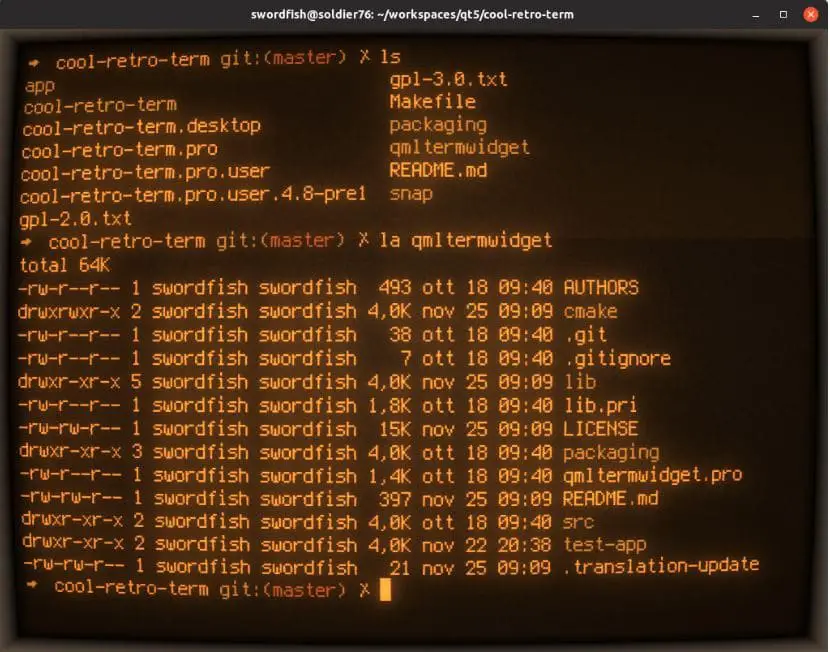
It provides the option of opening multiple tabs in a single window which helps the users to multitask without facing any problems or glitches.
Also, if your device is light-weighted, which means that it does not require much hardware, then this application is of much use to you as it works smoothly on devices with only a few hardware devices.
This application has various advanced features, such as changing the wallpaper and color combinations. Still, there have been cases where the application did not work smoothly because of these advanced features.
In such a case, the makers of this application have provided the option that the users can disable these advanced features and work with the application’s basic features so that their work does not get hampered.
The basic features include that whenever you give any command, and the computer executes it, a flashlight will blink, and mostly the characters in the basic settings are neon in color.

The application uses several libraries for its work, but mainly it works on KDE libraries. Because of its heavy dependency on KDE Libraries, the users need to download the whole bunch of KDE libraries on their devices to complete their tasks smoothly.
2. Tilda
Tilda (Get Here) application has very advanced features; the configuration of this application is also quite advanced.
The features of this application include that people can customize the application’s settings according to their choice, change the font style and type, change the color combinations, and take screenshots in the application.
They can work on multiple tabs simultaneously in a single window without facing any problems. The option of keybindings is also available for the convenience of the users. The search results provided by the application are also precise and accurate, providing a huge range of scrolling preferences to the users.
The background color is mostly transparent or translucent, but the users can change the background according to their requirements. The features of this application are quite similar to that of Konsole and xterm applications.
The application has several options of drop-down menus that the users can use by clicking the F1 key and they need to open the application window on the full screen.

3. Lily Term
The benefits of the Lily Term (Get Here) application are that the interface is user-friendly and has advanced features making the application work smoothly and quickly according to the users’ needs. The makers of the application focus on making updates that are in demand and useful for the users.
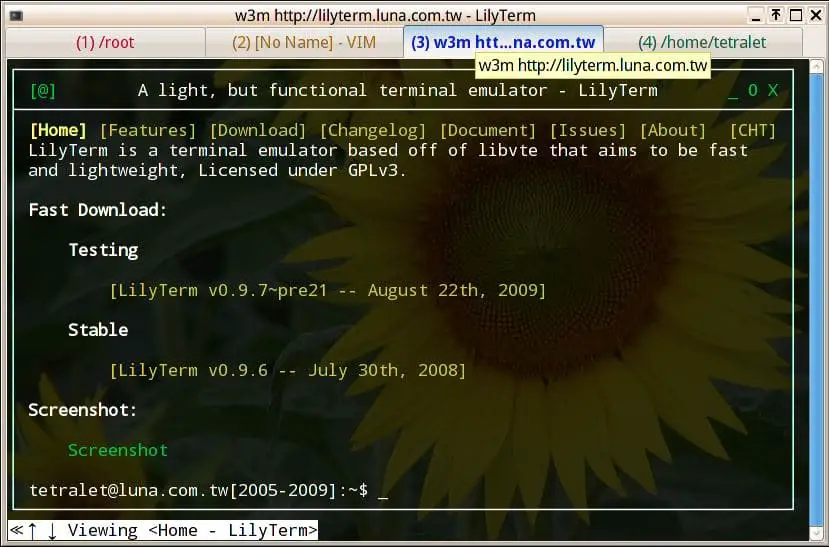
Several customization options are available according to the users’ convenience and choice.
Also, the background features of the application are quite transparent and simple so that the users do not face any difficulty while using the application. The application is based on libvte.
The application includes several features: users can open and use multiple tabs through key bindings and reorder the various tabs according to their needs.
Also, the buying procedure of this application is quite simple as the users just need to use their default package manager.
4. Guake
Guake (Get Here) application has several drop-down menu options displayed when the user presses the F12 button ad goes up again when the user clicks the same button. To make the screen full, the users just need to click on the F11 button.
These drop-down menus are quite useful for users who work on small screens as they do not need to open a new window for the application; they just need to scroll through the drop-down menus.
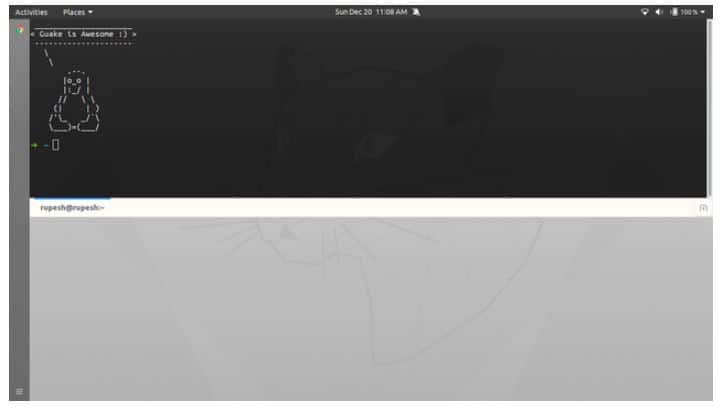
The integration of this application is quite similar to that of Gnome Terminal, and the application allows the users to open multiple tabs in a single window for multi-tasking their work.
The users can name these tabs for convenience and multiple opening tabs in a window.
The application is written in Python. As the name suggests, it is like Quake, a shooter video game. The application had advanced features such as changing the color combinations of the application; you can also take screenshots of the color combinations for future purposes.
Also, the search results displayed by the application are quick, accurate, and reliable. The appearance of the application is trendy yet simple so that the users do not find any difficulty using the application. Also, the users can do their work easily by remembering the shortcut keyboard keys.
5. ROXTerm
ROXTerm (Get Here) is considered one of the lightweight applications because of the powerful features that it provides to its users. This application provides several powerful features to the users, such as a graphic user interface that is fast and user-friendly; the application works quite smoothly and performs tasks quickly.
The application consists of several drop-down menus and simple and transparent background so that the users can use the application without any difficulty.
The features of this application are quite similar to the Gnome terminal; the only difference is that this application has more high-level features, and the integration of this application is simpler than Gnome Terminal.
People who want to use this application in their Linux can download it from their default package manager.
6. Sakura
Sakura (Get Here) is one of the best applications for terminal emulators. It is superior to other applications because it does not have too many prerequisites to be completed by the users to use this application.
The working of this application is smooth, and in most cases, users do not face any problems while using this application. The application is based on GTK and libvte.
Also, the users can have multiple tab options using this application, which works quite well with devices with minimum hardware. The application also supports multiple color options.
But the interface of this application is quite basic. It has simple features that are not of much use in advanced computers, so people who want a terminal emulator with the latest features should not go for this option.
7. Kitty
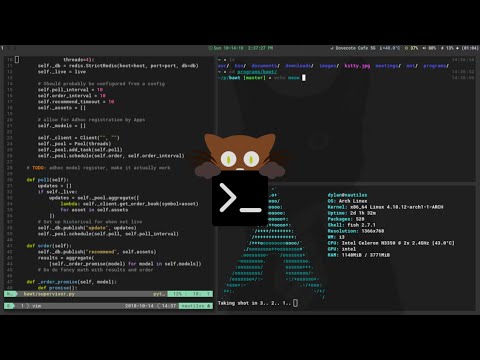
Kitty (Get Here) is one of the most advanced terminator applications and is also preferred by the users because the users need not pay any charges in downloading and installing the application.
To install this application in their Linux, the users just need to download it from the default package manager. Also, the application is based on C and Python languages. It has the features of changing the font type, size, color, and color combinations of the application, and the users can take screenshots.
Also, the application’s interface is quite advanced and user-friendly, so the users do not face many difficulties working on the application.
Using this application, the users can format their text and have the option of opening multiple tabs in a single window, making it useful for people who work on multiple tabs simultaneously.
8. Terminator
Terminator (Get Here) application has amazing features. Users can multi-task activities by opening several tabs in a single window, and the users can also have the option of full customization.
There are several drop-down menus available for the convenience of the users, and also, the users need not log in every time while using the application because the application provides the option of automatic log-in and saving credentials; the only problem sometimes users face is that the search option does not provide accurate and reliable results.
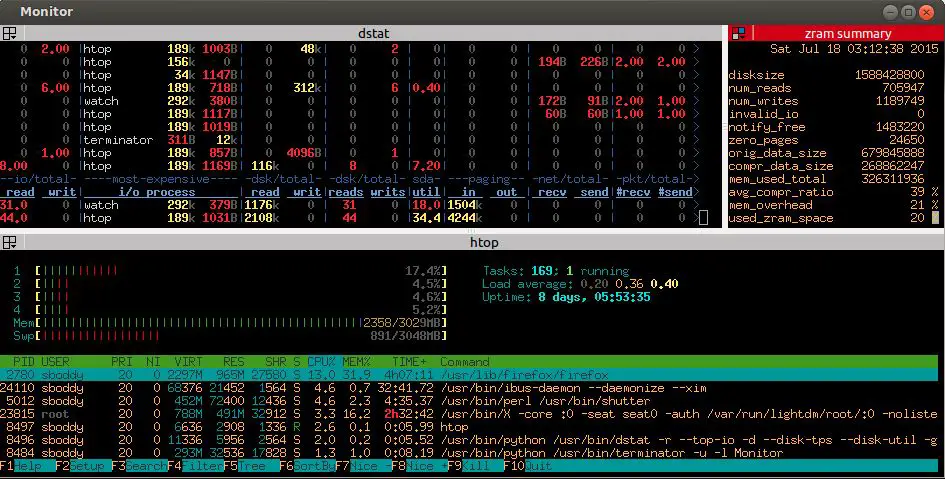
There are several other options also in the application that are quite useful and convenient for the users, it is based on Java, and the application is a type of cross-platform and open-source application.
Also, suppose you are an individual that prefers using devices that have minimal hardware. In that case, this application will not be useful for you as the application does not work smoothly with devices with minimal hardware.
This application works in coordination with the Gnome Terminator, and the application has regular updates that make the application advanced and useful for users who prefer the latest and advanced features.
9. Yakuake
The characteristics of this terminal apps are quite similar to Konsole. Yakuake (Get Here) stands for ‘Yet another Kuake,’ The application uses several libraries, but the main library it uses is KDE Libraries. Also, it is a well-known application that has amazing features.
The features it includes are it provides unlimited scrolling to the users. An enhanced emulator provides users screen split and full customization options.
The users can easily search for anything of their use as the search results provided by the emulator are quick. The problem that the users face while using this application after use for a specific time, the application does not work properly, and the tasks are not completed smoothly.
To use this terminal, all you need to do is click on the F12 button, and then a drop-down menu will appear, and then when you press the same button, it will again go back.

10. Terminology – Best terminal apps for ubuntu
Terminology (Get Here) is one of the rare applications with features of both traditional terminal emulators and modern terminal emulators.
The features and presentation of this application are quite similar, as well as some useful features for the users. One of them is that the application provides the option of previewing files for the users.
Also, the modern features of this application are the users can receive notifications of the activities that are taking place in their application, helping them to keep track of the activities done by them in the application; the application uses several kinds of libraries for its purpose. Still, it is mainly based on EFL libraries for use.
The users on the main computers cannot steal the content of your computer as the application detects the email address, documents, and media when posted on any other device without your knowledge.
As the application’s background can be transparent or translucent, the users can easily play videos, files, music, and other media backgrounds.

The application also provides a mini-view of the window on which the application is open so that the users need to open it every time, all they need to do is check the mini-view of the application on the screen.
Also, the unique feature of this application, along with selecting the color combinations of the application, the users can change the wallpapers of the application regularly. Therefore, these are a few exotic features of this application that make it superior to other applications.
11. Konsole
Konsole is one of the most powerful terminal apps users can use. The additional benefit is that the users need not pay any charges to download and install this application. The application is KDE-based.
The application is easily accessible to the users as it is easily available and free of charge. Also, it has a range of features that make it superior to other applications and one of the widely used terminal applications.
The application allows users to set the color combinations to change them according to their requirements. They can also change the background settings to transparent or translucent backgrounds.
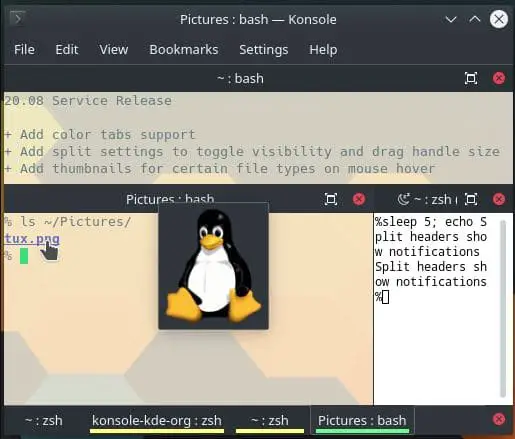
Like other applications, this application also provides the option of working on several tabs on a single window, providing convenience to multi-tasking users.
The search feature of this application is quite precise and useful and provides reliable and accurate results. Also, the application has the customizable key-bindings option found in a few terminal apps.
The feature that distinguishes this application from other applications is that the users get notifications of activities that they do in the application, so the users can easily take action if any activity happens without their consent; this feature also helps them be updated and keep track of the activities that they do.
Because of these amazing and out-of-the-box features, it is one of the widely used terminal apps.
12. Gnome-Terminal
The main feature of this application (Get Here) is that the users of the main computer cannot copy the content of the host computer intentionally because the application helps you detect mouse movement and copying of email addresses, documents, music, and other media. So it also provides the users’ data. Also, the features of this application are quite advanced.
It also has the option where the users, while using the application, can create different profiles for different purposes; each of their profiles can have different settings, such as different font types and styles, wallpaper, and background settings.
All these settings are customizable, meaning the users can edit them whenever they need or want.
The users can open multiple tabs in a single window and name each tab separately, so their work does not get messed up and they can perform their tasks without any glitches.
13. TermKit
Termkit (Get Here) application works with most web browsers, and the application’s interface is a graphic user interface.
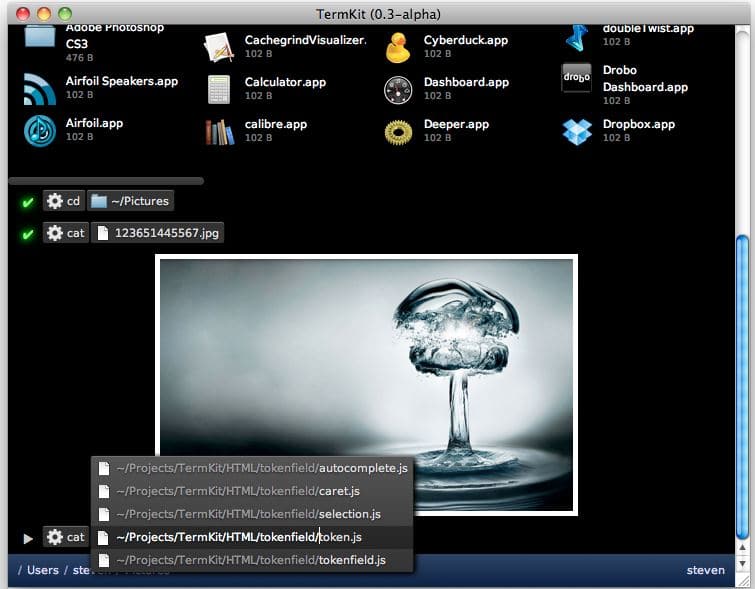
Along with working on Linux, the application also works on Mac and Windows-based devices. The application is a type of command line-based application.
14. Tilix
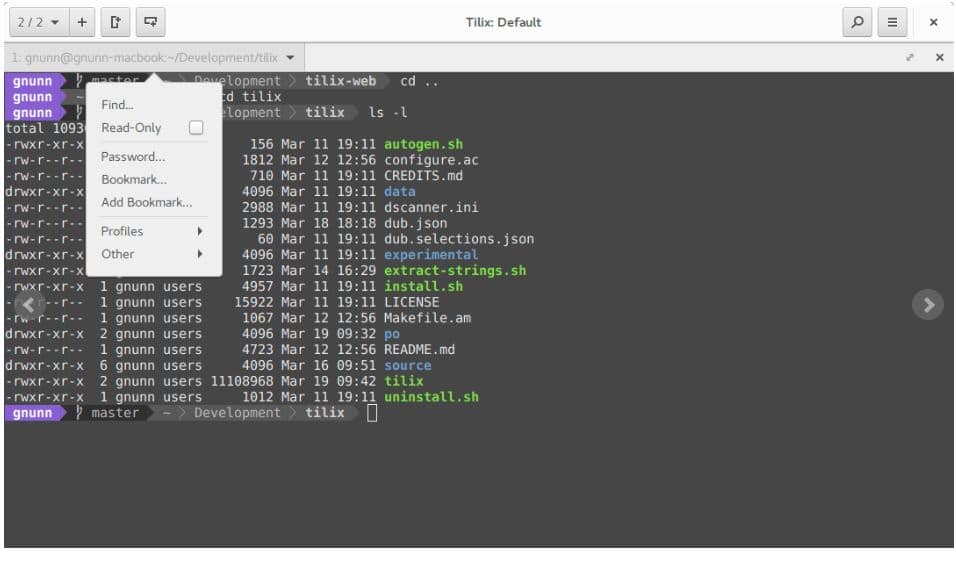
Tilix (Get Here) application has features quite similar to the tmux terminal. The application allows the users to open multiple tabs in a single window only, and the application has quite advanced and modern features and is a type of GTK3 terminal.
15. Rxvt-unicode
Rxvt (Get Here) stands for ‘Extended virtual terminal,’ and the application is also famous by the name of ‘urxvt’. It is a type of color terminal emulator. The application can work in various languages and supports pearl extensions, which provides comfort to the users while doing the tasks using this application.
It is one of those applications on which users can work effortlessly as the application does not have any glitches, and the graphics and features interface of the application is quite advanced and user-friendly.
This application is best for users who are veteran Linux users. It has many powerful features, and that is why it has been a replacement for many terminal apps.
The application and having different color combinations also allows for changing the font type, size, and color as it has a huge range of fonts according to the users’ preferences. The users who want to use this application in their veteran Linux can download and install it from their default package manager.
It also provides the option of changing the wallpaper of the application as well as amazing color combinations that the users can change according to their choice.
The application has several features using which the person on the main computer can run multiple files on multiple host computers without any chances of crashing or hampering the speed of their work.
Also, the application’s background is transparent or translucent, helping the users run videos, music, and audio in the background without risk.
The users can also customize the application according to their preferences. Still, for this purpose, they need to know the application’s integration settings so that its basic settings are not hampered while customizing the application.
16. LX Terminal
LX Terminal (Get Here) is an application that does not have any prerequisites for much hardware and can smoothly work on devices with minimum hardware.
Also, the application works smoothly on the desktop and is lightweight. The features of this application include that the users can change the colors in this application according to their choice.
Also, the users can open multiple tabs in a single window only, which will not hamper their work, and it also supports a huge range of commands so that the users can use the application conveniently. The users can download and install the application on their Linux from the default package manager.
📗FAQ
What are the best terminal applications?
The Terminal acts as the backbone of the Linux Operating system. Many users prefer using it over GUI for managing their systems. Some of the best terminal applications are Terminator, LADB, Termius, Qute, Xterm, Connectbot, Alacritty, Guake, etc.
What are the best terminal emulators for Android?
Android users usually prefer the app that keeps the authenticity intact, like the command line.
Some of the best Android emulators are CommandBot, JuiceSSH, Terminus, Terminal emulator for Android, Termux, and last but not least, LADB.
What are the best Terminal emulators for windows?
The terminal emulator simulates the features of conventional computer terminals. ConEmu console emulator, Mintty Console emulator for Cygwin, Cmder terminal emulator, Zoc terminal emulator, and MobaXterm emulator are the top terminal emulators for Windows.
Does windows 10 have a terminal program?
Microsoft created Windows Terminal, a multi-tabbed terminal emulator, to take the place of Windows Console in Windows 10.
It can run any command-line app in a separate tab. Command Prompt, PowerShell, WSL, SSH, and the Azure Cloud Shell Connector are all preconfigured to run on it.
Why do programmers use Terminal?
The Terminal allows the users to accomplish and automate tasks on computers without using Graphical User Interface and the Command Line interface. You can easily do it without clicking around if you want to create a new folder or upload a new file.
Can you code in Terminal?
The Terminal is the interface made to type and execute text-based commands. You can enter commands in front of the command prompts. One cannot access source code through the terminal as the terminal is designed in a way that it can only fulfill certain tasks.
Is PuTTY a terminal emulator?
PuTTY is an open-source Terminal Emulator that works on Windows and Mac operating systems.
It stands for Popular SSH and Telnet Client, free and used as a serial console and network file transfer application, making it easier for all users.
Conclusion
The users can use these several terminal apps for Linux to access other computers. These have several features; the users can install these applications on their PCs according to their needs and characteristics.