
























Imagine this – you’ve spent a fortune on your high-end gaming PC or workstation setup. It has the latest processor, an advanced graphics card, multiple SSDs, and many fans for optimum cooling.
Everything is perfect, except there’s one significant issue – frequent crashes, unexpected shutdowns, and sporadic system instability. All these problems might be stemming from one source – an underpowered or inefficient power supply unit (PSU). Your 1000-watt requirement isn’t just a number; it’s the lifeline that ensures your top-tier components run smoothly.
Such issues can not only be frustrating, causing interruptions in work or gaming sessions but can also reduce the lifespan of your costly components due to power fluctuations or overheating.
The worst-case scenario? A power surge or inadequate PSU can damage your hardware permanently, turning your considerable investment into a pile of electronic scrap.
Don’t worry; we’ve got your back. Understanding the importance of having the best 1000W power supply, we have sifted through the available options.
We’ve analyzed key factors such as efficiency, reliability, thermal performance, and noise levels to guide the best 1000W power supplies available comprehensively.
Whether you’re a gamer, a professional, or an enthusiast, our guide will help you decide to power your high-performance computing needs efficiently and reliably.
Let’s dive in and explore together.
Understanding the Role and Importance of Power Supply Units
In computer hardware, Power Supply Units (PSUs) stand as the unsung heroes, crucial to the smooth functioning of modern systems. A PSU serves as the lifeblood of a computer, channeling power to its various components, including the CPU, GPU, and other peripherals.
The importance of a robust PSU cannot be overstated, for it guarantees stable and reliable power delivery, safeguarding against potential damages that could arise due to fluctuations or surges.

Efficiency, a term often linked to PSUs, refers to the ratio of power drawn from the wall outlet to the power supplied to the components. A higher-efficiency PSU minimizes energy wastage and reduces operating costs, diminishing the environmental strain.
Modern computers demand wattage to meet their power needs adequately. Gaming rigs, content creation workstations, and high-performance systems necessitate PSUs with higher wattages to sustain their power-hungry components effectively.
Voltage regulation is another crucial aspect of PSUs, ensuring that the output voltages remain consistent even during varying loads. Stable voltage levels are essential in safeguarding sensitive hardware components from damage.
Modularity is desirable in PSUs, allowing users to connect only the required cables, resulting in a cleaner and more organized system with improved airflow.
In conclusion, comprehending the role and importance of Power Supply Units is vital for any computer enthusiast or professional builder. A well-chosen PSU ensures system longevity, performance, and energy efficiency, ultimately enhancing the overall computing experience.
Factors to Consider When Choosing a 1000W Power Supply
When building or upgrading a high-performance computer system, selecting the right 1000W power supply is critical to ensure optimal performance and stability. Several key factors should be carefully weighed before making a decision.
1. Efficiency and Certification: Look for a power supply with high-efficiency ratings and certifications, such as 80 PLUS Bronze, Silver, Gold, or Platinum. These certifications indicate the PSU’s ability to convert AC power from the outlet to DC power for your components with minimal energy loss, reducing electricity costs and environmental impact.
2. Power Requirements: Before settling on a 1000W PSU, assess your system’s power requirements. High-end gaming rigs or workstations with multiple graphics cards and powerful processors may necessitate a 1000W PSU. However, if your system does not demand such power, a lower-wattage PSU might suffice, potentially saving you money and improving efficiency.
3. Modular Design: Opt for a modular PSU with customizable cable connections. This design allows you to attach only the required cables, resulting in a neater interior and improved airflow within your PC case.
4. Voltage Regulation and Ripple: Check the PSU’s voltage regulation and ripple specifications. A good PSU will provide stable voltage levels, minimizing the risk of damage to your components due to power fluctuations.
5. Quality and Brand Reputation: Invest in a PSU from a reputable manufacturer known for producing high-quality power supplies. A reliable brand ensures better build quality, safety features, and customer support.
6. Cooling and Noise: Consider the PSU’s cooling system and noise levels. Look for models with efficient cooling mechanisms and quiet fans, ensuring smooth operation and minimal noise during intensive tasks.
By carefully considering these factors, you can confidently select a 1000W power supply that complements your system’s needs, providing ample power and reliability for your high-performance computing endeavors.
Top 1000W Power Supply Units – Reliable and Robust
1. Corsair RM1000x – Best Overall
Regarding 1000W power supplies, the Corsair RM1000x stands out as a top-tier option for discerning PC enthusiasts and professionals seeking uncompromising performance and reliability. Packed with cutting-edge features and advanced technologies, this PSU has earned its place as one of the best in the market.
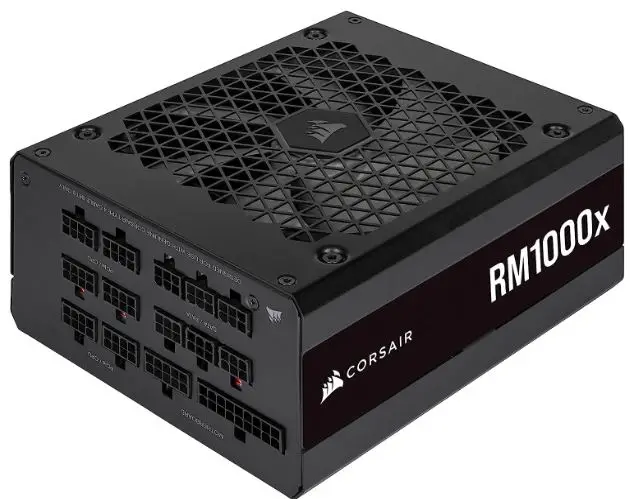
The 80 PLUS Gold certification speaks volumes about the RM1000x’s efficiency, ensuring minimal energy wastage and reduced operating costs. This power supply excels in converting AC power from the outlet into stable DC power for your components, making it an environmentally conscious choice.
The RM1000x’s fully modular design enables seamless cable management, allowing users to connect only the necessary cables and ensuring a clutter-free and organized build. Improved airflow and enhanced aesthetics are just some of the benefits of this feature, making it a favorite among PC enthusiasts.
Low-noise fan operation is another highlight of the RM1000x. The PSU operates silently during low to moderate loads with its quiet and intelligent cooling system. The Zero RPM fan mode also ensures complete silence when the system is idling, contributing to a peaceful computing experience.
Corsair’s commitment to reliability shines through with the RM1000x, as evidenced by the generous warranty provided for this power supply. The manufacturer’s dedication to quality and customer satisfaction is evident, giving users peace of mind and confidence in their investment.
In conclusion, the Corsair RM1000x exemplifies the best in 1000W power supplies, catering to the demands of high-performance gaming systems and resource-intensive workstations.
Its efficiency, modular design, low-noise operation, and warranty make it a top choice for those seeking a powerful and dependable PSU to fuel their computing endeavors.
Features:-
High Power Capacity: The Corsair RM1000x boasts a substantial 1000W power capacity, making it ideal for powering high-performance gaming PCs and professional workstations.
80 PLUS Gold Efficiency: With its 80 PLUS Gold certification, this power supply delivers impressive energy efficiency, minimizing power wastage and reducing electricity costs.
Fully Modular Design: The RM1000x is fully modular, allowing users to connect only the necessary cables for a clean, organized build with improved airflow and aesthetics.
Low-Noise Fan: Equipped with a low-noise fan, this power supply operates quietly even under moderate loads, ensuring a peaceful computing experience.
Zero RPM Fan Mode: The Zero RPM fan mode enables silent operation during system idling, enhancing overall noise reduction and providing a near-silent environment.
Japanese 105°C Capacitors: High-quality Japanese 105°C capacitors ensure enhanced reliability and longevity, contributing to the PSU’s overall durability.
Active Power Factor Correction (PFC): The active PFC feature optimizes power efficiency by reducing reactive power, resulting in improved energy efficiency.
Overcurrent, Overvoltage, and Short Circuit Protection: The RM1000x includes multiple protective features, such as overcurrent, overvoltage, and short circuit protection, safeguarding your components from potential damage.
Ten-Year Warranty: Corsair offers a generous ten-year warranty for the RM1000x, showcasing the manufacturer’s confidence in the product’s quality and reliability.
Compact Size: Despite its high power capacity, the RM1000x maintains a compact form factor, making it suitable for various PC cases and builds.
Multi-GPU Support: The power supply is optimized for multi-GPU configurations, catering to gaming enthusiasts and content creators seeking exceptional graphics performance.
Fully Sleeved Cables: The included fully sleeved cables add to the PSU’s aesthetic appeal and improve cable management and reduce clutter.
In summary, the Corsair RM1000x 1000W Power Supply encompasses an array of advanced features, making it a top choice for enthusiasts and professionals seeking a reliable, efficient, and silent power solution for their high-performance systems. Its impressive warranty period and top-notch components further solidify its position as a standout PSU in the market.
Pros:-
High Power Capacity: The RM1000x offers a robust 1000W power capacity, making it suitable for powering high-end gaming rigs and professional workstations.
80 PLUS Gold Efficiency: With its 80 PLUS Gold certification, this power supply delivers excellent energy efficiency, reducing power wastage and saving on electricity costs.
Fully Modular Design: The fully modular design allows for clean cable management, providing a neat, organized build with improved airflow and aesthetics.
Low-Noise Operation: The RM1000x has a low-noise fan and Zero RPM mode, ensuring silent operation during low to moderate loads and complete silence during system idling.
Japanese 105°C Capacitors: Using high-quality Japanese 105°C capacitors enhances the PSU’s reliability and lifespan, contributing to long-term durability.
10-Year Warranty: Corsair’s generous 10-year warranty gives users peace of mind and reflects the manufacturer’s confidence in the product’s quality and reliability.
Multi-GPU Support: The power supply is optimized for multi-GPU configurations, catering to gamers and content creators seeking exceptional graphics performance.
Compact Form Factor: Despite its high wattage, the RM1000x maintains a compact size, making it compatible with various PC cases and builds.
Cons:-
Higher Price: As a premium power supply with top-notch features, the RM1000x may have a higher price tag than lower wattage options.
Overkill for Some Builds: Not all systems require a 1000W PSU, and users with lower power requirements may find this power supply excessive.
Limited RGB or Aesthetics: Those seeking extensive RGB lighting or unique aesthetic features in their power supply might find the RM1000x design relatively simple.
Non-Fanless Design: While the fan operates quietly, the RM1000x is not completely fanless, which may be a consideration for users looking for absolute silence.
The Corsair RM1000x 1000W Power Supply offers numerous advantages, including high efficiency, modular design, low-noise operation, and excellent warranty coverage.
However, potential buyers should consider their specific power requirements and budget to ensure this power supply aligns with their needs and preferences.
Check Price on Amazon2. EVGA SuperNOVA 1000 G2
When it comes to powering high-performance systems, the EVGA SuperNOVA 1000 G2 stands tall as one of the finest 1000W power supplies available today. This fully modular PSU boasts various features, making it a top choice for enthusiasts, gamers, and professionals.
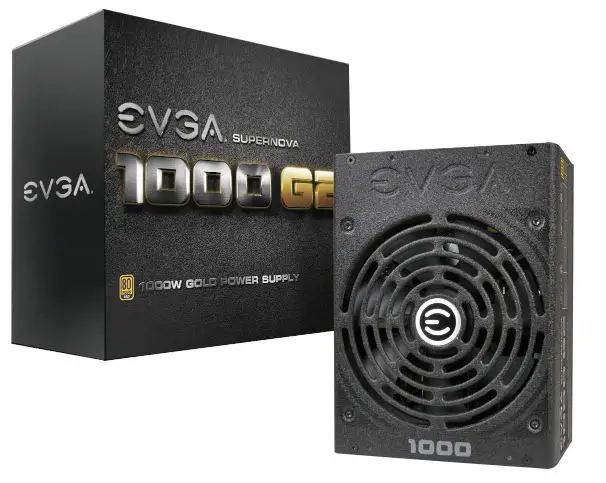
Efficiency is a hallmark of the SuperNOVA 1000 G2, with its 80+ GOLD certification. This means it operates with exceptional energy efficiency, converting power from the outlet to your components with minimal wastage, reducing electricity costs and environmental impact.
Built with gamers and power users in mind, this PSU is NVIDIA SLI and Crossfire Ready, allowing you to effortlessly harness the power of multiple graphics cards for jaw-dropping performance in the latest AAA titles or resource-intensive applications.
The SuperNOVA 1000 G2’s fully modular design lets you connect only the necessary cables, promoting a tidy and clutter-free build. This enhances your system’s aesthetics and improves airflow, resulting in cooler and quieter operation.
Furthermore, EVGA’s commitment to quality is evident in the PSU’s 10-year warranty, providing users with peace of mind and confidence in their investment. The extended warranty period highlights the manufacturer’s belief in the product’s reliability and durability.
With superior voltage regulation and low ripple, the SuperNOVA 1000 G2 ensures stable power delivery, safeguarding your valuable components from potential damage caused by power fluctuations.
In conclusion, the EVGA SuperNOVA 1000 G2 emerges as the best 1000W power supply, catering to the demands of high-end gaming rigs and professional workstations. Its efficiency, modularity, and NVIDIA SLI and Crossfire support make it a powerhouse PSU worthy of serious consideration for any performance-driven build.
Key Features:-
1000W Power Capacity: The EVGA SuperNOVA 1000 G2 boasts a robust 1000W power capacity, providing ample power for high-performance gaming rigs and professional workstations.
80+ GOLD Efficiency: With its 80+ GOLD certification, this power supply achieves high energy efficiency, minimizing power wastage and reducing electricity costs.
Fully Modular Design: The SuperNOVA 1000 G2 features a fully modular design, allowing users to connect only the necessary cables, resulting in a neat and clutter-free build with improved airflow.
NVIDIA SLI and Crossfire Ready: This power supply supports NVIDIA SLI and AMD Crossfire multi-GPU configurations, enabling users to harness the full potential of multiple graphics cards for exceptional gaming and rendering performance.
10-Year Warranty: EVGA provides a generous 10-year warranty for the SuperNOVA 1000 G2, ensuring long-term reliability and customer confidence in the product.
Stable Power Delivery: The PSU offers reliable voltage regulation and low ripple, delivering stable power to critical components and safeguarding them against power fluctuations.
Quiet and Efficient Cooling: Equipped with a quiet and efficient cooling system, the SuperNOVA 1000 G2 ensures optimal cooling performance while maintaining low noise levels during demanding tasks.
Overcurrent Protection (OCP): The power supply features Overcurrent Protection to prevent damage to the components in case of excessive current draw.
Overvoltage Protection (OVP): OVP safeguards the system by automatically shutting down the power supply if the output voltage exceeds safe levels.
Short Circuit Protection (SCP): The SCP feature helps protect the power supply and connected components from damage in case of a short circuit.
Over Power Protection (OPP): OPP prevents the power supply from delivering more power than its rated capacity, ensuring safe operation under heavy loads.
Active Power Factor Correction (PFC): The active PFC feature optimizes power efficiency by minimizing reactive power, improving overall energy efficiency.
In summary, the EVGA SuperNOVA 1000 G2 1000W Power Supply encompasses an array of features designed to deliver top-tier performance, efficiency, and reliability. Its fully modular design, multi-GPU support, and long warranty period make it an excellent choice for powering high-end systems and easily tackling resource-intensive tasks.
Pros:-
High Efficiency: The 80+ GOLD certification ensures excellent energy efficiency, reducing power wastage and lowering electricity costs.
Ample Power Output: With a 1000W capacity, this PSU can easily handle high-end gaming rigs and demanding professional workstations.
NVIDIA SLI and Crossfire Ready: The PSU supports multi-GPU setups, delivering impressive gaming and content creation graphics performance.
Fully Modular Design: The fully modular cables allow for a clean and organized build, improving airflow and aesthetics.
Stable Power Delivery: The SuperNOVA 1000 G2 offers reliable voltage regulation and low ripple, safeguarding delicate components from power fluctuations.
Quiet Operation: The PSU features a quiet and efficient cooling system, ensuring minimal noise even during intensive tasks.
10-Year Warranty: EVGA’s extended warranty period instills confidence in the product’s durability and reliability.
Cons:-
Higher Price: The premium features and quality of the SuperNOVA 1000 G2 may result in a higher price tag than lower wattage PSUs.
Overkill for Some Builds: Not all systems require a 1000W PSU, and some users may find the wattage excessive for their specific needs.
Size and Weight: Higher wattage PSUs often come in larger sizes and can be heavier, potentially posing challenges for smaller cases or portability.
Not Fully Fanless: While the PSU is designed for quiet operation, it is not completely fanless, which might be a consideration for those seeking absolute silence.
Limited RGB or Aesthetics: Some users who prioritize RGB lighting or unique aesthetics in their builds may find the SuperNOVA 1000 G2’s design relatively basic.
In conclusion, the EVGA SuperNOVA 1000 G2 excels in efficiency, power capacity, and modular design. It is well-suited for enthusiasts and professionals seeking a reliable and high-performance PSU, though its higher wattage may not be necessary for all users.
Despite minor drawbacks, its exceptional features and 10-year warranty make it a compelling choice for power-hungry systems.
Check Price on Amazon3. Pystar ES1000
The Pystar ES1000 is a force to be reckoned with in power supplies, delivering unparalleled performance and efficiency. Designed with cutting-edge technology and engineering, this 1000W full modular PSU sets the stage for top-tier computing experiences.
At the heart of the ES1000 lies its 80+ Gold certification, showcasing remarkable energy efficiency. This power supply converts AC power to DC power with minimal wastage, ensuring reduced electricity costs and a smaller environmental footprint.
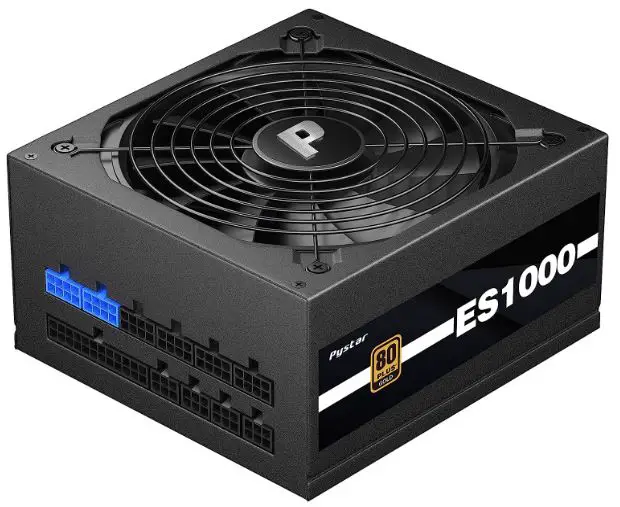
The full modular design of the ES1000 allows for optimal cable management, granting users the freedom to connect only the necessary cables. This feature promotes a clean and organized build and improves airflow and cooling, crucial for maintaining peak performance.
Equipped with advanced protective features like overcurrent protection (OCP), overvoltage protection (OVP), and short circuit protection (SCP), the ES1000 safeguards your valuable components from potential damage caused by unforeseen power fluctuations.
One of the standout features of the ES1000 is its silent operation, enabled by a low-noise fan. This fan ensures that your computing environment remains tranquil, even during resource-intensive tasks.
Additionally, the ES1000’s high-quality components and rigorous testing ensure reliability and long-term stability, giving users the confidence that their investment is built to withstand the test of time.
In conclusion, the Pystar ES1000 epitomizes power and efficiency in 1000W power supplies. Its 80+ Gold certification, fully modular design, advanced protective features, silent operation, and reliable performance make it a formidable choice for gamers, content creators, and professionals seeking a robust and dependable PSU to elevate their computing endeavors to new heights.
Features:-
1000W Power Capacity: The Pystar ES1000 boasts a powerful 1000W power capacity, providing sufficient power to handle high-performance gaming rigs and demanding professional workstations.
80+ Gold Efficiency: With its 80+ Gold certification, this power supply delivers exceptional energy efficiency, converting power from the outlet to your components with minimal wastage, reducing electricity costs.
Full Modular Design: The ES1000 features a full modular design, allowing users to connect only the required cables, promoting a clean and organized build with improved airflow and cable management.
Advanced Protective Features: Equipped with overcurrent protection (OCP), overvoltage protection (OVP), and short circuit protection (SCP), the ES1000 safeguards your components from potential damage due to power fluctuations or faults.
Silent Operation: The ES1000 incorporates a low-noise fan, ensuring silent operation during low to moderate loads and maintaining a peaceful computing environment.
High-Quality Components: This power supply is built with high-quality components, enhancing reliability and longevity and providing users with a stable and durable power solution.
Rigorous Testing: The ES1000 undergoes rigorous testing to meet industry standards, ensuring consistent and reliable performance under various conditions.
Enhanced Cooling: The efficient cooling system of the ES1000 ensures that your components remain at optimal temperatures, contributing to your system’s overall stability and performance.
ATX Form Factor: Designed with the standard ATX form factor, the ES1000 fits seamlessly into most modern PC cases, making it compatible with a wide range of builds.
Sleek Aesthetics: With its sleek and minimalist design, the ES1000 adds a touch of elegance to your PC build, complementing the overall aesthetics of your system.
In summary, the Pystar ES1000 1000W Power Supply boasts impressive features, including high efficiency, fully modular design, advanced protective features, silent operation, and rigorous testing.
This power supply is a reliable and powerful choice for enthusiasts and professionals seeking a robust and efficient PSU to meet their high-performance computing needs.
Pros:-
High Power Capacity: The ES1000 offers a robust 1000W power capacity, making it suitable for powering high-performance gaming rigs and resource-intensive workstations.
80+ Gold Efficiency: With its 80+ Gold certification, this power supply delivers exceptional energy efficiency, converting power from the outlet to your components with minimal wastage, reducing energy costs.
Full Modular Design: The ES1000 features a fully modular design, allowing for easy cable management and a clean build with improved airflow and aesthetics.
Advanced Protective Features: Equipped with overcurrent protection (OCP), overvoltage protection (OVP), and short circuit protection (SCP), the ES1000 safeguards your valuable components from potential damage due to power fluctuations or faults.
Quiet Operation: The ES1000 is designed with a low-noise fan, ensuring silent operation during low to moderate loads, providing a quieter and more comfortable computing experience.
High-Quality Components: This power supply is built with high-quality components, contributing to its reliability, stability, and long-term durability.
Rigorous Testing: The ES1000 undergoes rigorous testing to meet industry standards, ensuring consistent and reliable performance under various conditions.
ATX Form Factor: Designed with the standard ATX form factor, the ES1000 fits seamlessly into most modern PC cases, making it compatible with a wide range of builds.
Cons:-
Price: As a high-performance power supply with advanced features, the ES1000 may have a higher price than lower wattage alternatives.
Overkill for Some Builds: Not all systems require a 1000W PSU, and users with lower power requirements may find this power supply excessive.
Limited Availability: Depending on the market and region, availability may vary, and potential buyers may need to check for stock availability.
Aesthetics: While the ES1000 is designed for performance, it may not have the same aesthetic customization or RGB lighting options as other power supplies.
The Pystar ES1000 1000W Power Supply offers numerous advantages, including high efficiency, fully modular design, advanced protective features, and quiet operation. However, potential buyers should consider their specific power requirements and budget to ensure this power supply aligns with their needs and preferences.
Check Price on Amazon4. Seasonic SSR-1000TR
The Seasonic SSR-1000TR stands tall as the epitome of excellence in 1000W power supplies for gaming, redefining the gaming experience with its unparalleled performance and cutting-edge features. Crafted with precision and innovation, this power supply is a powerhouse that elevates gaming rigs to new heights.
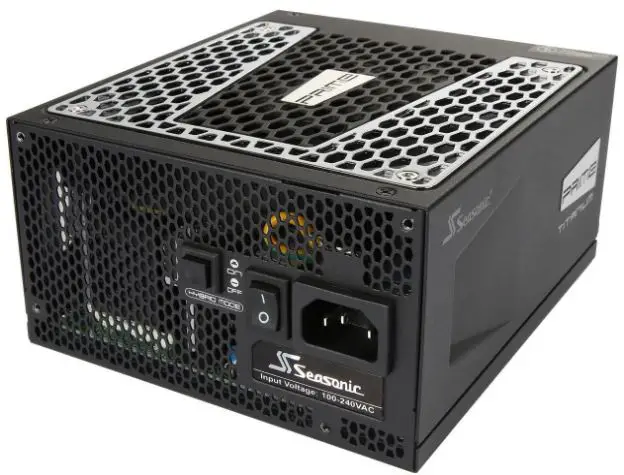
The 80+ Titanium efficiency sets the SSR-1000TR apart, ensuring top-notch power delivery with minimal wastage. This certification reflects its ability to efficiently convert AC power to DC power, reducing energy costs and eco-friendliness.
The full modular design is a gamer’s delight, allowing easy cable management to achieve a clean and organized build. This feature enhances airflow for optimal cooling and gives gamers the flexibility to customize their rigs easily.
The SSR-1000TR has a 135mm Fluid Dynamic Bearing (FDB) fan, delivering silent and efficient cooling during intense gaming sessions. The whisper-quiet fan operation ensures minimal distractions, allowing gamers to immerse themselves fully in the gaming world.
Adding to its appeal is the Power On Self Tester (POST) feature, which allows users to check the PSU’s functionality without connecting it to other components, saving time and providing reassurance before installation.
Seasonic’s commitment to reliability shines through with a remarkable 12-year warranty. This extended warranty period reflects the manufacturer’s confidence in the SSR-1000TR’s quality and longevity, providing gamers with peace of mind and confidence in their investment.
In conclusion, the Seasonic SSR-1000TR is the best 1000W power supply for gaming enthusiasts. With its 80+ Titanium efficiency, full modular design, silent cooling, and generous warranty, it is a force to be reckoned with in the gaming world.
Elevate your gaming experience to extraordinary levels with the SSR-1000TR, and witness the seamless blend of power and performance in action.
Features:-
1000W Power Capacity: The Seasonic SSR-1000TR offers a robust 1000W power capacity, providing abundant power for high-performance gaming rigs and demanding tasks.
80+ Titanium Efficiency: With its 80+ Titanium certification, this power supply achieves the highest level of energy efficiency, delivering optimal power conversion with minimal wastage, resulting in reduced electricity costs.
Full Modular Design: The SSR-1000TR features a full modular design, allowing users to connect only the necessary cables, leading to a clean and organized build with improved airflow and cable management.
135mm Fluid Dynamic Bearing (FDB) Fan: Equipped with a 135mm FDB fan, this power supply ensures efficient and quiet cooling during intensive gaming sessions, contributing to a serene computing environment.
Power On Self Tester (POST): The POST feature enables users to test the functionality of the power supply without connecting it to other components, providing reassurance before installation.
12-Year Warranty: Seasonic offers an exceptional 12-year warranty for the SSR-1000TR, showcasing the manufacturer’s confidence in the product’s quality and reliability, and providing users with long-term assurance.
ATX12V and EPS12V Compatibility: Designed to meet ATX12V and EPS12V standards, the SSR-1000TR is compatible with many modern PC components and motherboards.
Premium Components: Seasonic employs high-quality components in the SSR-1000TR, ensuring reliable and stable performance under various conditions, enhancing its durability.
Hybrid Silent Fan Control: The hybrid silent fan control feature optimizes the fan’s speed based on the system’s load, minimizing noise during low to moderate loads, enhancing user comfort.
Compact Size: Despite its high power capacity, the SSR-1000TR maintains a compact form factor, making it suitable for various PC cases and builds.
In summary, the Seasonic SSR-1000TR 1000W Power Supply encompasses an array of advanced features, making it an ideal choice for gaming enthusiasts and professionals seeking an efficient, quiet, and reliable PSU to power their high-performance systems. Its exceptional energy efficiency, modular design, extended warranty, and premium components make it a standout option in the market.
Pros:-
High Power Capacity: The SSR-1000TR offers a robust 1000W power capacity, providing ample power for high-performance gaming rigs and demanding components.
80+ Titanium Efficiency: With its 80+ Titanium efficiency rating, this power supply delivers top-tier energy efficiency, reducing power wastage and minimizing electricity costs for long gaming sessions.
Full Modular Design: The SSR-1000TR features a full modular design, allowing for easy cable management and customization, promoting better airflow and aesthetics for a clean and organized build.
Silent Operation: Equipped with a 135mm Fluid Dynamic Bearing (FDB) fan, the power supply operates silently, creating a peaceful gaming environment with minimal distractions.
Power On Self Tester (POST): The POST feature enables users to test the power supply’s functionality before installation, providing reassurance and saving time during the build process.
12-Year Warranty: Seasonic’s generous 12-year warranty showcases the manufacturer’s confidence in the SSR-1000TR’s quality and reliability, offering gamers long-term assurance.
ATX12V and EPS12V Compatibility: Designed to meet ATX12V and EPS12V standards, the SSR-1000TR is compatible with various gaming components and motherboards.
Premium Components: The SSR-1000TR utilizes high-quality components, ensuring stability and reliability for uninterrupted gaming performance.
Cons:-
Higher Price Point: As a premium power supply with top-notch features, the SSR-1000TR may have a higher price tag than lower-wattage alternatives.
Overkill for Some Builds: Not all gaming systems require a 1000W PSU, and users with lower power requirements may find this power supply excessive.
Large Form Factor: The SSR-1000TR’s 1000W capacity and larger form factor may not be suitable for compact PC cases with limited space.
Limited RGB or Aesthetics: For users seeking extensive RGB lighting or unique aesthetic features in their power supply, the SSR-1000TR’s design may appear relatively simple.
The Seasonic SSR-1000TR 1000W Power Supply boasts numerous advantages, including high efficiency, silent operation, modular design, and an extended warranty period.
However, potential buyers should consider their specific power requirements and budget to ensure that this power supply aligns with their gaming needs and preferences. Its exceptional features make it a compelling choice for gamers seeking a reliable and powerful PSU to fuel their gaming adventures.
Check Price on Amazon5. ASUS ROG-STRIX-1000G
The ASUS ROG-STRIX-1000G is a formidable powerhouse that epitomizes excellence in power supplies. With cutting-edge features and innovative technology, this 1000W PSU is designed to elevate your gaming and computing experience to unprecedented heights.
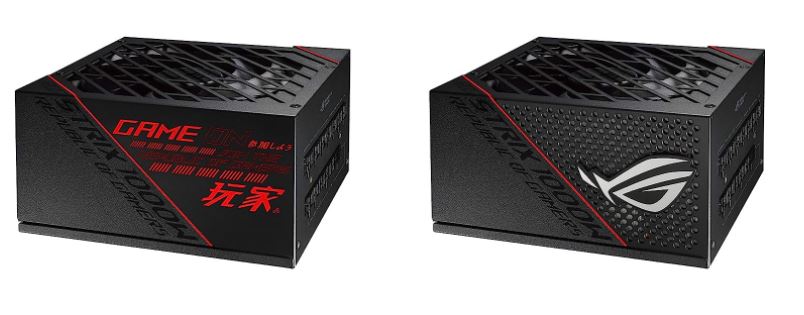
Engineered with precision, the ROG-STRIX-1000G boasts an 80 PLUS Gold certification, ensuring exceptional energy efficiency and optimal power delivery. This certification reflects its ability to convert AC power to DC power with minimal wastage, resulting in reduced electricity costs and a more sustainable gaming setup.
The standout feature of the ROG-STRIX-1000G lies in its advanced cooling technology. The Axial-tech fan design, equipped with dual ball fan bearings, ensures efficient and consistent cooling, even during intensive gaming sessions. With 0dB technology, the fan remains silent during low loads, providing a whisper-quiet gaming environment.
The fully modular cables offer the utmost flexibility and ease of cable management, allowing users to connect only the necessary cables for a clean and organized build. This not only enhances airflow but also provides seamless and clutter-free aesthetics.
ASUS’s commitment to quality and durability is reflected in the 10-year warranty provided with the ROG-STRIX-1000G. This extended coverage speaks volumes about the manufacturer’s confidence in the product’s performance and longevity, offering users peace of mind and reassurance in their investment.
In conclusion, the ASUS ROG-STRIX-1000G is a game-changer in the world of power supplies. Its 80 PLUS Gold efficiency, advanced cooling technology, fully modular design, and generous warranty make it ideal for gaming enthusiasts and professionals seeking uncompromising power and performance.
Embrace the unrivaled power of the ROG-STRIX-1000G and unleash the true potential of your gaming rig with confidence and precision.
Key Features:-
1000W Power Capacity: The ASUS ROG-STRIX-1000G offers a robust 1000W power capacity, providing ample power to fuel high-performance gaming rigs and demanding components.
80 PLUS Gold Certification: With its 80 PLUS Gold certification, this power supply achieves excellent energy efficiency, converting power with minimal wastage and reducing electricity costs.
Axial-tech Fan Design: The ROG-STRIX-1000G is equipped with an advanced Axial-tech fan design, delivering efficient and consistent cooling during intensive gaming sessions and ensuring optimal performance.
Dual Ball Fan Bearings: Including dual ball bearings enhances the fan’s durability and longevity, providing reliable cooling for extended periods.
0dB Technology: With 0dB technology, the fan remains completely silent during low to moderate loads, creating a quiet gaming environment without compromising cooling performance.
Fully Modular Cables: The fully modular design allows users to connect only the necessary cables, offering greater flexibility in cable management for a clean and organized build with improved airflow.
ROG Heatsinks: The ROG-STRIX-1000G features dedicated ROG heatsinks, enhancing heat dissipation and cooling efficiency, and maintaining optimal operating temperatures for stable performance.
Sleek Aesthetics: ASUS has crafted the ROG-STRIX-1000G with sleek aesthetics, ensuring that it performs at its best and adds an appealing touch to any gaming setup.
10-Year Warranty: ASUS provides a remarkable 10-year warranty for the ROG-STRIX-1000G, showcasing the manufacturer’s confidence in its quality and long-term reliability.
ASUS Aura Sync Support: The power supply supports ASUS Aura Sync, allowing users to synchronize lighting effects with other compatible components, creating a harmonious and visually captivating gaming ecosystem.
In summary, the ASUS ROG-STRIX-1000G Power Supply offers impressive features, making it an exceptional choice for gaming enthusiasts and professionals seeking top-tier performance, efficiency, and reliability.
Its advanced cooling technology, fully modular design, and extended warranty period add to the overall appeal, making it a standout option in the market. Embrace the power of the ROG-STRIX-1000G and take your gaming experience to the next level with precision and confidence.
Pros:-
High Power Capacity: With its 1000W power capacity, the ASUS ROG-STRIX-1000G can easily handle high-performance gaming rigs and demanding components.
80 PLUS Gold Certification: The power supply’s 80 PLUS Gold certification ensures excellent energy efficiency, reducing power wastage and lowering electricity costs.
Advanced Cooling Technology: The Axial-tech fan design with dual ball fan bearings provides efficient and consistent cooling during intensive gaming sessions, maintaining optimal performance.
0dB Technology: The 0dB technology ensures silent operation during low to moderate loads, creating a quiet gaming environment without compromising on cooling.
Fully Modular Cables: The fully modular design allows for easy cable management, enabling users to connect only the necessary cables for a tidy, organized build with improved airflow.
ROG Heatsinks: The dedicated ROG heatsinks enhance heat dissipation, contributing to stable and reliable performance.
Sleek Aesthetics: The ROG-STRIX-1000G features sleek aesthetics that add a visually appealing touch to any gaming setup.
10-Year Warranty: ASUS provides a generous 10-year warranty, offering users long-term assurance and peace of mind.
Cons:-
Higher Price Point: As a premium power supply with advanced features, the ROG-STRIX-1000G may have a higher price than lower wattage options.
Overkill for Some Builds: Not all gaming systems require a 1000W PSU, and users with lower power requirements may find this power supply excessive.
Large Form Factor: The 1000W capacity and larger form factor may not be suitable for compact PC cases with limited space.
Limited RGB or Aesthetics: For users seeking extensive RGB lighting or unique aesthetic features in their power supply, the ROG-STRIX-1000G’s design may appear relatively simple.
Check Price on Amazon6. Thermaltake Toughpower GF3 1000W
The Thermaltake Toughpower GF3 1000W power supply is a testament to reliability and top-notch performance. Engineered with precision and cutting-edge technology, this 1000W PSU is a powerhouse that caters to the demands of high-performance gaming rigs and intensive computing tasks.
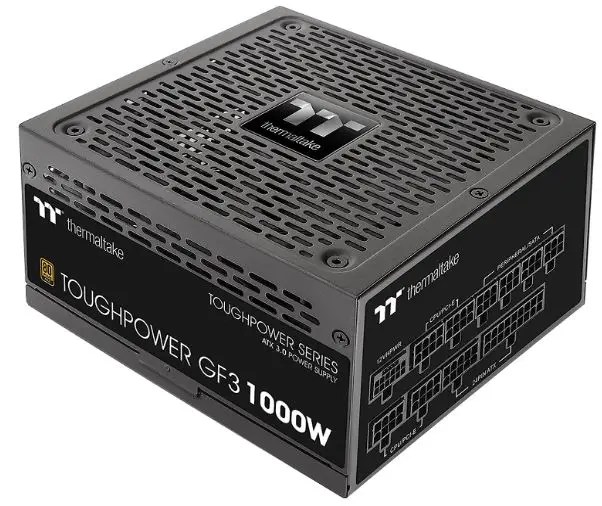
The GF3 1000W features a True 600W 12VHPWR connector on the PSU, providing a dedicated and stable power supply to high-end graphics cards, including the NVIDIA RTX 40 series. This ensures smooth and uninterrupted power delivery, even during the most demanding gaming and rendering tasks.
With support for ATX 3.0/PCI-E 5.0, the Toughpower GF3 1000W is ready for the latest advancements in computing technology, ensuring compatibility with future hardware upgrades and innovations.
Boasting an impressive 80+ Gold certification, the GF3 1000W achieves exceptional energy efficiency, reducing energy wastage and lowering electricity costs. It is an eco-friendly and cost-effective choice for gamers and professionals alike.
The power supply is SLI/Crossfire Ready, catering to users who wish to harness the immense power of multiple GPUs for unparalleled gaming performance and graphics rendering capabilities.
Thermaltake’s commitment to quality and reliability is evident through the inclusion of a 10-year warranty, providing users with peace of mind and long-term assurance in their investment.
In conclusion, the Thermaltake Toughpower GF3 1000W is a formidable choice for those seeking a reliable, high-performance power supply. Its True 600W 12VHPWR connector, 80+ Gold certification, and SLI/Crossfire readiness deliver the power and stability required for intensive gaming and professional computing tasks.
Embrace the unparalleled power and performance of the Toughpower GF3 1000W and elevate your computing experience to new heights with unwavering confidence.
Key Features:-
True 600W 12VHPWR Connector: The Toughpower GF3 1000W power supply features a dedicated 12VHPWR connector that delivers a stable and reliable power supply to high-end graphics cards, including the NVIDIA RTX 40 series, ensuring smooth and uninterrupted performance during demanding gaming and rendering tasks.
ATX 3.0/PCI-E 5.0 Ready: With support for the latest ATX 3.0 and PCI-E 5.0 standards, the GF3 1000W is prepared for future advancements in computing technology, ensuring compatibility with upcoming hardware upgrades and innovations.
80+ Gold Certification: The GF3 1000W power supply boasts an 80+ Gold certification, demonstrating exceptional energy efficiency and reduced power wastage, resulting in lower electricity costs and a more eco-friendly computing setup.
SLI/Crossfire Ready: Designed with SLI/Crossfire readiness, the Toughpower GF3 1000W caters to users seeking to harness the power of multiple GPUs for improved gaming performance and graphics rendering capabilities.
Robust Power Delivery: With its 1000W power capacity, the GF3 power supply delivers robust power output, making it suitable for high-performance gaming rigs, workstations, and content creation systems.
Reliable and Stable Performance: The Toughpower GF3 1000W ensures reliable and stable performance, providing consistent power delivery to keep your system running smoothly even under heavy loads.
Advanced Circuitry and Protections: Equipped with advanced circuitry and built-in protections such as OCP, OVP, SCP, UVP, and OPP, the GF3 1000W safeguards your components from potential electrical issues, ensuring long-term reliability.
Quiet Operation: The power supply is designed to operate quietly, reducing fan noise to provide a more peaceful computing environment during regular usage and gaming sessions.
10-Year Warranty: Thermaltake offers a generous 10-year warranty, reflecting the manufacturer’s confidence in the Toughpower GF3 1000W’s quality and longevity, providing users with peace of mind and long-term assurance.
Pros:-
High Power Capacity: With its 1000W power capacity, the Toughpower GF3 can handle power-hungry components, making it suitable for high-performance gaming rigs and intensive workstations.
True 600W 12VHPWR Connector: The dedicated 12VHPWR connector ensures a stable power supply to high-end graphics cards, including the NVIDIA RTX 40 series, guaranteeing smooth and uninterrupted performance during demanding tasks.
ATX 3.0/PCI-E 5.0 Ready: The GF3 1000W is designed to support the latest ATX 3.0 and PCI-E 5.0 standards, ensuring compatibility with future hardware upgrades and innovations.
80+ Gold Certification: The power supply’s 80+ Gold certification signifies excellent energy efficiency, reducing power wastage and lowering electricity costs.
SLI/Crossfire Ready: The GF3 1000W is optimized for multi-GPU setups, providing the necessary power for users seeking to maximize gaming performance with SLI or Crossfire configurations.
Reliable and Stable Performance: The Toughpower GF3 delivers reliable and stable performance, ensuring consistent power delivery to keep the system running smoothly even under heavy loads.
Quiet Operation: The power supply is designed to operate quietly, reducing fan noise for a more peaceful computing environment.
10-Year Warranty: Thermaltake provides an impressive 10-year warranty, reflecting the manufacturer’s confidence in the PSU’s quality and longevity, offering users peace of mind and long-term assurance.
Cons:-
Higher Price Point: As a premium power supply with advanced features and high power capacity, the Toughpower GF3 may have a higher price than lower wattage alternatives.
Large Form Factor: The 1000W capacity and larger form factor may not be suitable for compact PC cases with limited space.
Overkill for Some Builds: Not all gaming systems or workstations require a 1000W PSU, and users with lower power requirements may find this power supply excessive.
Limited RGB or Aesthetics: For users seeking extensive RGB lighting or unique aesthetic features in their power supply, the Toughpower GF3’s design may appear relatively simple.
The Thermaltake Toughpower GF3 1000W Power Supply offers various advanced features, making it a solid choice for high-performance gaming rigs and workstations. Its high power capacity, 12VHPWR connector, 80+ Gold efficiency, and SLI/Crossfire readiness make it ideal for enthusiasts seeking reliable and efficient power delivery.
However, potential buyers should consider their specific power requirements and budget to ensure that this power supply aligns with their needs and preferences. Its impressive performance and extended warranty make it a compelling option for users seeking a dependable and long-lasting power supply.
Check Price on Amazon7. be quiet! BN644
The be quiet! Straight Power 11 Platinum 1000W (BN644) stands as a pinnacle of excellence, embodying the perfect fusion of power, efficiency, and innovation. This fully modular power supply is designed for discerning enthusiasts and professionals and delivers unwavering performance and exceptional reliability.
At its core, the BN644 boasts an impressive 1000W power capacity, making it a powerhouse capable of easily fueling high-end gaming rigs and content-creation workstations. Whether you’re a hardcore gamer or a creative professional, this PSU has the muscle to handle even the most demanding components and tasks.
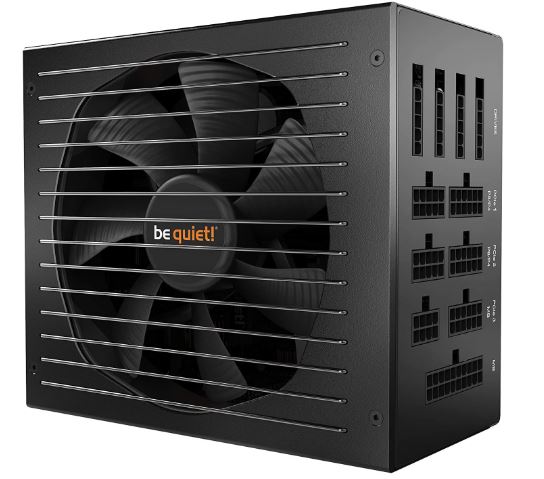
The power supply’s Platinum efficiency rating exemplifies its commitment to energy conservation and reduced power wastage. This translates to lower electricity bills and a greener computing setup, aligning perfectly with eco-conscious consumers.
Equipped with fully modular cables, the BN644 ensures a clutter-free and well-organized build, enhancing airflow and aesthetics within the PC chassis. This feature allows users to connect only the necessary cables, contributing to a cleaner and more efficient system overall.
As the name suggests, be quiet! prides itself on delivering silent operation, and the Straight Power 11 series is no exception. The BN644 incorporates be quiet!’s advanced Silent Wings 3 fan, which operates at extremely low noise levels, ensuring a whisper-quiet computing experience without compromising cooling performance.
Safety and stability are paramount, and the BN644 leaves no room for compromise. It has a full suite of protection features, including OCP, OVP, UVP, SCP, OTP, and OPP, safeguarding your precious components from electrical anomalies and ensuring long-term reliability.
In conclusion, the be quiet! Straight Power 11 Platinum 1000W (BN644) is a tour de force in power supplies. Its formidable power capacity, Platinum efficiency rating, silent operation, and robust safety features cater to enthusiasts and professionals seeking uncompromising performance and reliability.
Embrace the epitome of power and efficiency with the BN644 and elevate your computing experience to new heights.
Key Features:-
1000W Power Capacity: The BN644 offers a robust 1000W power capacity, providing ample power to handle high-performance gaming rigs and demanding workstations.
Platinum Efficiency Rating: With a Platinum efficiency rating, the BN644 exemplifies energy conservation and reduced power wastage, resulting in lower electricity costs and a more eco-friendly computing setup.
Fully Modular Design: The power supply is fully modular, allowing users to connect only the necessary cables. This results in a cleaner and more organized build, improving airflow and aesthetics within the PC chassis.
Silent Wings 3 Fan: The BN644 incorporates be quiet!’s advanced Silent Wings 3 fan, designed for ultra-quiet operation. It ensures a whisper-quiet computing experience without compromising on cooling performance.
Safety and Stability: Equipped with a comprehensive suite of protection features, including Over Current Protection (OCP), Over Voltage Protection (OVP), Under Voltage Protection (UVP), Short Circuit Protection (SCP), Over Temperature Protection (OTP), and Power Protection (OPP), the BN644 safeguards your components and ensures long-term reliability.
Premium Build Quality: The power supply is crafted with precision and high-quality components, ensuring durability and consistent performance.
Japanese Capacitors: Using high-quality Japanese capacitors enhances the PSU’s reliability and longevity.
Wire-Free Design: The BN644 features a wire-free design on the DC side, improving airflow and cooling efficiency within the power supply.
Multi-GPU Ready: The BN644 is optimized for multi-GPU configurations, making it an excellent choice for users seeking to maximize gaming performance with SLI or Crossfire setups.
ErP 2014 Ready: The power supply meets the requirements of the ErP 2014 standard, consuming less than 0.1W of power in standby mode, contributing to energy efficiency.
Pros:-
High Power Capacity: The 1000W power capacity makes the BN644 suitable for high-end gaming rigs and demanding workstations, providing ample power for graphics cards and other power-hungry components.
Platinum Efficiency Rating: With a Platinum efficiency rating, the BN644 ensures energy conservation and reduced power wastage, resulting in lower electricity costs and a more eco-friendly computing setup.
Silent Operation: The incorporation of be quiet!’s Silent Wings 3 fan ensures whisper-quiet operation even under heavy workloads, contributing to a peaceful computing experience.
Fully Modular Design: The fully modular design allows for easy cable management and customization, enabling users to connect only the necessary cables for a cleaner and more organized build.
Premium Build Quality: be quiet! is known for its high-quality components and craftsmanship, ensuring a reliable and durable power supply.
Comprehensive Protection Features: The BN644 comes equipped with multiple protection features, including OCP, OVP, UVP, SCP, OTP, and OPP, ensuring the safety and stability of your components.
Compatibility with High-Performance Hardware: The BN644 is optimized to support high-performance graphics cards and multi-GPU setups, catering to enthusiasts seeking top-tier gaming and rendering performance.
Cons:-
Higher Price Point: As a premium power supply with advanced features and high power capacity, the BN644 may have a higher price compared to lower wattage alternatives.
Large Form Factor: The 1000W capacity and larger form factor may not be suitable for compact PC cases with limited space.
Overkill for Some Builds: Not all gaming systems or workstations require a 1000W PSU, and users with lower power requirements may find this power supply excessive.
Limited RGB or Aesthetics: For users seeking extensive RGB lighting or unique aesthetic features in their power supply, the BN644’s design may appear relatively simple.
In summary, the be quiet! Straight Power 11 Platinum 1000W (BN644) power supply offers a range of advantages, including its high power capacity, Platinum efficiency rating, silent operation, and fully modular design.
However, potential buyers should consider their specific power requirements and budget to ensure that this power supply aligns with their needs and preferences.
Its exceptional performance, reliability, and premium build quality make it a compelling choice for users seeking a top-tier and dependable power supply for their high-performance systems.
Check Price on Amazon8. ARESGAME AGT Series 1000W
The ARESGAME AGT Series 1000W power supply stands as a remarkable testament to cutting-edge technology and performance, designed to cater to the needs of gaming enthusiasts and power-hungry systems.
With its impressive 1000W power capacity, the AGT Series ensures abundant power to easily drive high-end gaming rigs and resource-intensive tasks. Whether you’re a seasoned gamer seeking top-tier performance or a content creator handling demanding projects, this power supply has the muscle to handle it all.
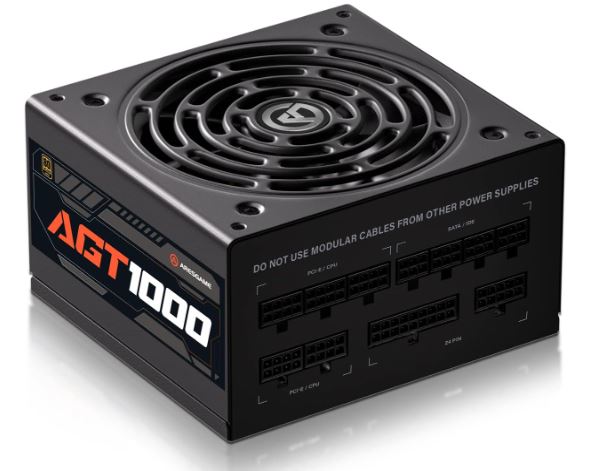
The AGT Series power supply is 80+ Gold certified, exemplifying remarkable energy efficiency and reduced power wastage. This translates to lower electricity costs and a more eco-conscious computing setup, making it an excellent choice for those who value sustainability.
Its fully modular design allows for seamless cable management and customization, enabling users to connect only the necessary cables for a clean and organized build. This feature not only improves airflow within the PC chassis but also enhances the overall aesthetics of the system.
Equipped with a Fluid Dynamic Bearing (FDB) fan, the AGT Series ensures silent and efficient cooling, contributing to a peaceful and undisturbed gaming experience.
Despite its impressive power capacity, the AGT Series power supply comes in a compact 140mm size, making it suitable for various PC cases, including those with limited space.
ARESGAME’s commitment to quality and durability is evident through the inclusion of a 10-year warranty, providing users with long-term assurance and peace of mind in their investment.
In conclusion, the ARESGAME AGT Series 1000W power supply delivers exceptional gaming power and performance. With its high power capacity, 80+ Gold certification, fully modular design, and FDB fan for quiet cooling, it is tailored for enthusiasts seeking a reliable and efficient power supply.
Embrace the AGT Series and elevate your gaming experience to new heights with unwavering power and performance.
Key Features:-
Impressive 1000W Power Capacity: The AGT Series power supply delivers a formidable 1000W power capacity, providing ample power to handle high-performance gaming rigs and resource-intensive workloads.
80+ Gold Certification: With its 80+ Gold certification, the AGT Series power supply ensures high energy efficiency, reducing power wastage and lowering electricity costs, making it an eco-conscious choice.
Fully Modular Design: The fully modular power supply allows for easy cable management and customization. Users can connect only the necessary cables, resulting in a cleaner and more organized build with improved airflow.
Fluid Dynamic Bearing (FDB) Fan: Equipped with a Fluid Dynamic Bearing fan, the AGT Series power supply delivers efficient cooling with reduced noise levels. The FDB fan ensures a peaceful computing experience even during intense gaming sessions.
Compact 140mm Size: Despite its impressive power capacity, the AGT Series power supply comes in a compact 140mm size, making it suitable for various PC cases, including those with limited space.
ATX Gaming Power Supply: Designed with gaming enthusiasts in mind, the AGT Series power supply caters to the power requirements of gaming rigs, offering reliable and stable performance during demanding gaming sessions.
10-Year Warranty: ARESGAME demonstrates confidence in the durability and reliability of the AGT Series power supply by providing a 10-year warranty, offering users long-term assurance and peace of mind.
High-Quality Components: The power supply is built with high-quality components to ensure durability and consistent performance, even under heavy loads.
Comprehensive Protection Features: The AGT Series power supply has various protection features, safeguarding the system and components from potential electrical anomalies, including over-current, over-voltage, and short-circuit protection.
Pros:-
High Power Capacity: The AGT Series 1000W power supply delivers a robust power capacity, providing ample power to handle high-performance gaming rigs and demanding workstations.
80+ Gold Certification: With its 80+ Gold certification, the power supply ensures high energy efficiency, lowering electricity costs and reducing environmental impact.
Fully Modular Design: The fully modular design allows easy cable management and customization, leading to a cleaner and more organized build with improved airflow.
Compact 140mm Size: Despite its high power capacity, the AGT Series power supply maintains a compact 140mm size, making it suitable for various PC cases, including those with limited space.
Fluid Dynamic Bearing (FDB) Fan: Equipped with a FDB fan, the power supply provides efficient cooling with reduced noise levels, ensuring a quieter computing experience.
10-Year Warranty: ARESGAME backs the AGT Series power supply with a 10-year warranty, offering users long-term peace of mind and confidence in their investment.
ATX Gaming Power Supply: Designed with gaming enthusiasts in mind, the AGT Series power supply caters to the power requirements of gaming setups, ensuring reliable and stable performance during intense gaming sessions.
Cons:-
Higher Price Point: As a power supply with advanced features and high power capacity, the AGT Series 1000W may have a higher price than lower wattage alternatives.
Overkill for Some Builds: Not all gaming systems or workstations require a 1000W PSU, and users with lower power requirements may find this power supply excessive.
Limited RGB or Aesthetics: For users seeking extensive RGB lighting or unique aesthetic features in their power supply, the AGT Series 1000W’s design may appear relatively simple.
Noisier under Heavy Loads: While the FDB fan provides efficient cooling, the power supply may generate more noise under heavy workloads compared to more premium and expensive alternatives.
In summary, the ARESGAME AGT Series 1000W power supply offers a range of advantages, including its high power capacity, 80+ Gold certification, fully modular design, and compact size.
However, potential buyers should consider their power requirements, budget, and noise sensitivity to ensure that this power supply aligns with their needs and preferences.
Its exceptional performance, reliability, and warranty make it a compelling choice for users seeking a dependable and efficient power supply for their gaming and computing setups.
Check Price on Amazon9. GAMEMAX RGB-1050
The GAMEMAX RGB-1050 power supply embodies cutting-edge technology and vibrant aesthetics, tailor-made to elevate gaming experiences to new heights.
The RGB-1050 boasts a formidable 1050W power capacity at its core, delivering abundant power to fuel high-performance gaming rigs and resource-intensive workloads. Whether you’re a hardcore gamer seeking unparalleled graphics performance or a creative professional working on demanding projects, this power supply has the muscle to handle it all with ease.
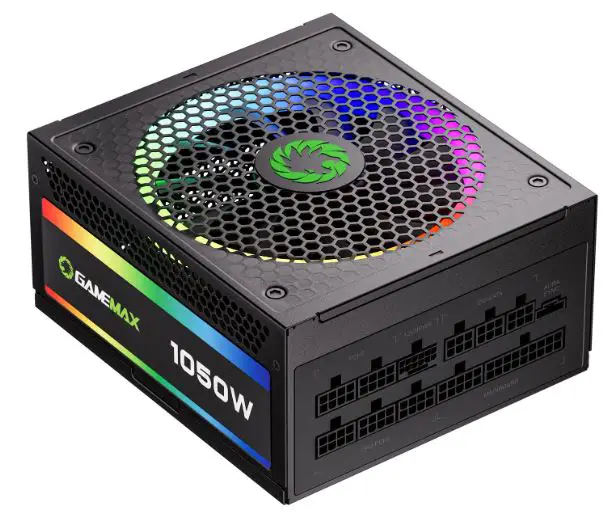
The 80+ Gold certification ensures exceptional energy efficiency, reducing power wastage and reducing electricity costs while contributing to a more environmentally conscious computing setup.
One of the standout features of the RGB-1050 is its Addressable RGB lighting, which can be synchronized with compatible 5V motherboards, creating mesmerizing lighting effects that dance harmoniously with your gaming setup. The customizable RGB lighting enhances the PC’s aesthetics and allows users to personalize their gaming environment.
The fully modular design of the RGB-1050 facilitates easy cable management and customization, resulting in a cleaner and more organized build. This improves airflow within the PC chassis and gives users the freedom to connect only the necessary cables, creating a sleek and clutter-free setup.
GAMEMAX’s commitment to quality and reliability is demonstrated by including a 10-year warranty, providing users with long-term assurance and peace of mind in their investment.
In conclusion, the GAMEMAX RGB-1050 power supply epitomizes excellence in both performance and aesthetics. Its high power capacity, energy-efficient 80+ Gold certification, addressable RGB lighting with motherboard sync, and fully modular design cater to discerning gamers seeking a reliable and visually stunning power supply.
Embrace the RGB-1050 and immerse yourself in a world of illuminated brilliance where gaming performance meets dazzling aesthetics.
Key Features:-
Impressive 1050W Power Capacity: The RGB-1050 power supply delivers a substantial 1050W power capacity, providing ample power for high-performance gaming rigs and resource-intensive tasks.
80+ Gold Certified Efficiency: With its 80+ Gold certification, the RGB-1050 ensures excellent energy efficiency, reducing power consumption and lowering electricity bills.
Addressable RGB Lighting with Motherboard Sync: The standout feature of the RGB-1050 is its addressable RGB lighting, which can be synchronized with compatible 5V motherboards. Users can customize the lighting effects to match their gaming setup and create stunning visuals.
Fully Modular Design: The RGB-1050 is fully modular, allowing for easy cable management and customization. Users can connect only the necessary cables, resulting in a cleaner and more organized build with improved airflow.
ATX 3.0 and PCIE 5.0 Ready: The power supply is designed to be compatible with the latest ATX 3.0 and PCIE 5.0 standards, ensuring it can meet the power demands of cutting-edge hardware.
High-Quality Components: GAMEMAX uses high-quality components to ensure the reliability and stability of the RGB-1050 power supply, even under heavy loads and demanding usage scenarios.
Quiet Cooling Performance: The RGB-1050 is designed to provide efficient and quiet cooling performance, contributing to a peaceful computing environment during intense gaming sessions.
10-Year Warranty: GAMEMAX backs the RGB-1050 power supply with a 10-year warranty, offering users long-term assurance and confidence in their investment.
ATX Gaming Power Supply: The RGB-1050 power supply is optimized for gaming setups, providing stable and reliable power delivery for demanding gaming and performance requirements.
Enhanced Aesthetics: The addressable RGB lighting and fully modular design of the RGB-1050 add a touch of visual flair to the gaming setup, allowing users to showcase their unique style.
Pros:-
High Power Capacity: The RGB-1050 boasts an impressive 1050W power capacity, providing ample power for high-performance gaming rigs and demanding computing tasks.
Energy-Efficient Performance: With its 80+ Gold certification, the power supply ensures excellent energy efficiency, reducing power wastage and lowering electricity costs.
Addressable RGB Lighting: The standout feature of the RGB-1050 is its captivating RGB lighting, which can be synchronized with compatible 5V motherboards, allowing for stunning lighting effects and customization.
Fully Modular Design: The fully modular design enables easy cable management and customization, resulting in a clean, organized build with improved airflow for optimal performance.
ATX 3.0 and PCIE 5.0 Ready: The power supply is designed to be compatible with the latest ATX 3.0 and PCIE 5.0 standards, ensuring it can handle the power demands of cutting-edge hardware.
10-Year Warranty: GAMEMAX stands behind the RGB-1050 with a 10-year warranty, providing users with long-term confidence and peace of mind in their investment.
Cons:-
Higher Price Point: As a power supply with advanced features and a high power capacity, the RGB-1050 may have a higher price than lower wattage alternatives.
Overkill for Some Builds: Not all gaming systems or workstations require a 1050W PSU, and users with lower power requirements may find this power supply excessive.
Limited Compatibility: The addressable RGB lighting with motherboard sync may only be fully utilized with compatible 5V motherboards, limiting the lighting options for users with other motherboard types.
Noise Levels: Some users may find that the power supply generates more noise under heavy loads compared to more premium and expensive alternatives.
In conclusion, the GAMEMAX RGB-1050 power supply offers a range of advantages, including its high power capacity, energy-efficient certification, addressable RGB lighting, and fully modular design.
However, potential buyers should consider their power requirements, budget, and lighting preferences to ensure this power supply aligns with their needs and gaming setup.
Its exceptional performance, RGB lighting, and extended warranty make it an appealing choice for users seeking a powerful and visually stunning power supply to complement their gaming and computing experiences.
Check Price on AmazonHow to Install a 1000W Power Supply
Installing a 1000W power supply is critical for any PC enthusiast or gamer seeking to build a high-performance rig capable of handling power-hungry components.
The process requires careful attention to detail and safety precautions to ensure a smooth and successful installation.

Let’s walk you through installing a 1000W power supply into your PC, from preparation to testing.
Before You Begin
Before diving into the installation process, there are several important preparatory steps to undertake:
Check Compatibility: Ensure the 1000W power supply is compatible with your PC’s components and motherboard. Verify the ATX standard and connector types required for your system.
Gather Tools: Prepare the necessary tools, including a screwdriver, cable ties, and thermal paste (if reseating the CPU cooler).
Safety First: Turn off your PC and unplug it from the wall outlet to avoid electrical accidents during installation.
Step 1: Removing the Old Power Supply
If you are upgrading from a lower-wattage power supply, you’ll need to remove the old unit before installing the new 1000W power supply:
- Power down your PC and unplug all cables from the power supply.
- Open the PC case and locate the power supply. It is usually located at the top or bottom of the case, secured with screws.
- Disconnect all cables attached to the power supply, including the 24-pin ATX connector, CPU power connector, PCIe power connectors, and any other peripherals.
- Unscrew the power supply from the case and carefully slide it out.
Step 2: Preparing the Case
Before installing the new 1000W power supply, take this opportunity to clean your PC case from dust and debris. A clean case promotes better airflow and cooling efficiency, ensuring optimal performance.
Step 3: Mounting the New Power Supply
- Check Mounting Holes: Ensure that the mounting holes on the new 1000W power supply align with the case’s mounting brackets. Different power supplies may have varying hole placements.
- Position the Power Supply: Carefully position the power supply into the case, making sure it aligns with the mounting holes.
- Secure the Power Supply: Use screws to secure the power supply to the case. Ensure it is firmly in place to prevent any movement.
Step 4: Connecting Cables
The fully modular design of most high-end power supplies, including the 1000W models, allows you to connect only the necessary cables. Follow these steps to connect the essential cables:
- ATX 24-pin Connector: Connect the 24-pin ATX connector to the motherboard. This provides power to the motherboard.
- CPU Power Connector: Connect the CPU power connector (usually 4+4 or 8-pin) to the corresponding socket on the motherboard.
- PCIe Power Connectors: For graphics cards and other PCIe devices, connect the appropriate PCIe power connectors from the power supply to the corresponding sockets on the GPU.
Step 5: Cable Management
Proper cable management is essential for a tidy and efficient build. Follow these cable management tips:
- Use Cable Ties: Secure cables using cable ties to keep them organized and prevent them from obstructing airflow.
- Routing Channels: Utilize routing channels in the case to guide cables along designated paths, keeping them away from fans and other components.
Step 6: Verifying Connections
Double-check all connections to ensure they are secure and correctly plugged in. Loose connections can cause power delivery issues and lead to system instability. Take the time to verify each cable’s connection to its respective socket.
Step 7: Testing the Power Supply
Before fully reassembling your PC, perform a quick test of the 1000W power supply outside the case. This will help ensure that the power supply is functioning correctly before installing it into the case:
- Paperclip Test: Connect the power supply to the motherboard and a CPU fan. Use a paperclip to bridge the green wire (PS_ON) and any black wire (COM) on the 24-pin ATX connector. This will simulate the power-on signal.
- Power On: Turn on the power supply by switching on the power supply unit or using the power switch on the back. The CPU fan should start spinning, indicating the power supply is operational.
Step 8: Reassemble and Power On
Once you’ve confirmed that the power supply is functioning correctly, reassemble your PC and ensure all components are securely in place. Plug in your PC and power it on. Access the BIOS to verify the power supply’s voltage readings are stable and accurate.
With the 1000W power supply installation successfully completed, your PC is now equipped to handle the power demands of high-performance components and intense gaming sessions.
By following this comprehensive guide and taking the necessary safety precautions, you’ve ensured a smooth and safe installation process. Enjoy your new power supply’s enhanced performance and stability in your gaming and computing experience.

📗FAQ’s
Is A 1000 Watt Power Supply Overkill?
A 1000W power supply for standard office PCs or low-power systems may be overkill. However, for gaming rigs, high-end workstations, or PCs with multiple GPUs, a 1000W PSU is often justified to handle the power demands of these power-hungry components.
Is A 1000 Watt Power Supply Good?
A 1000W power supply is excellent for enthusiasts and gamers who require robust power delivery. It ensures stability and efficiency, especially when running resource-intensive tasks or pushing the system to its limits.
How Many kWh Is a 1000W Power Supply?
The energy consumption of a 1000W power supply depends on usage. If the power supply runs continuously at its full capacity for an hour, it would consume 1 kWh (kilowatt-hour).
How Much Does a 1000W Power Supply Use?
The power usage of a 1000W PSU depends on the load it is under. At full load, it will consume close to 1000W. However, the power draw will be significantly lower during idle or low-demand tasks.
What Is the Highest Watt Power Supply?
Currently, the highest wattage power supplies available commercially are around 1600W to 2000W. These ultra-high-wattage PSUs target extreme gaming or professional workstations with multiple GPUs and CPUs.
Which Is Better: 1000W or 2000W?
Choosing between a 1000W and 2000W power supply depends on your system’s power requirements. For most high-end gaming and workstation builds, a 1000W PSU is more than sufficient. A 2000W PSU is only necessary for extreme configurations with multiple high-power components.
Is 1500 Watts Better Than 1000 Watts?
A 1500W power supply offers higher wattage capacity than a 1000W PSU. However, the better choice depends on your PC’s power demands. If your system requires a higher wattage due to multiple GPUs or CPUs, a 1500W PSU may be suitable.
Which 1000W Power Supply Is Best?
There are several excellent 1000W power supply options from reputable brands like Corsair, EVGA, Seasonic, and Thermaltake. The best one for you depends on efficiency, modularity, and budget. Research reviews and customer feedback to make an informed decision.
Is 1000W Equal to kW?
Yes, 1000W is equal to 1 kW (kilowatt). Power supply units often measure their output capacity in watts, and kilowatts are used for larger power measurements.
How Many Hours Is 1000W?
A 1000W power supply running at its full capacity for one hour will consume 1 kWh of electricity. It’s essential to consider power consumption and efficiency for energy-conscious users.
Is 1000W Too Much for a PC?
A 1000W power supply may be excessive for a standard desktop PC that doesn’t have power-hungry components. A power supply in the range of 500W to 750W is typically sufficient for regular usage.
Does Higher Wattage Mean More Power?
Yes, higher wattage indicates the power supply’s capacity to deliver electricity to the components in your PC. A higher wattage power supply can handle more demanding setups with multiple high-power components.
Is the Higher Watts the Better?
Not necessarily. A higher wattage power supply is better for systems that genuinely require the additional power. For regular gaming or office PCs, choosing a PSU with just enough wattage to handle your components efficiently is a more cost-effective option.
What Is a Good Power Source for a PC?
A good power supply for a PC meets the power demands of your components, has a high-efficiency rating (80 PLUS certification), is fully modular for easy cable management, and comes from a reputable brand known for reliability and performance.
Which Brand Power Supply Is Best?
Several brands offer excellent power supply units, and the “best” brand can vary depending on personal preferences and specific models. Some reputable brands known for quality power supplies include Corsair, EVGA, Seasonic, be quiet!, and Thermaltake. Researching individual models and reading reviews will help you make an informed choice.
Conclusion
After examining a host of options and assessing their performance on multiple critical parameters, it becomes clear that investing in the best 1000W power supply isn’t just about wattage – it’s about ensuring stable, efficient, and reliable power delivery to your high-end PC components. Your choice of PSU is instrumental in both the smooth day-to-day functioning of your system and its overall lifespan.
While all the 1000W power supplies reviewed in this guide have unique strengths and features, your ultimate choice should align with your system requirements, budget, and personal preferences.
Remember, whether you are into high-definition gaming, resource-intensive professional tasks, or high-performance computing, the right power supply is as vital as any other component in your setup.
Make sure you revisit our guide whenever you need to, and do not hesitate to delve further into each model to understand its suitability for your setup. With the right power supply, you are protecting your valuable hardware and ensuring that you get the most out of your machine for the years to come.
Take your time, make an informed decision, and witness your powerhouse PC deliver the performance you desire, all while being powered by the best 1000W power supply of your choice.