
























Have you ever struggled to keep track of time and performance while rowing?
It can be frustrating to lose track of time during a rowing session, especially when trying to improve your speed and endurance. And if you’re using a regular watch or a smartphone app, you may not get accurate data or risk damaging your device in the water.
That’s where a high-quality watch designed for rowing can make a real difference. With the right watch, you can track your stroke rate, distance, speed, heart rate, and more while enjoying a durable and waterproof device that can withstand the rigors of rowing.
In this article, we’ll present you with some of the best watches for rowing based on our research and testing. Whether you’re a beginner or a seasoned rower, you’ll find a watch that fits your needs and budget and helps you achieve your goals.
Let’s dive in!
Importance of a Reliable Watch in Rowing
A reliable watch is vital for rowers, serving as an indispensable tool for enhancing performance and achieving precision in their training and competitions.
Rowing is an intricate sport that demands meticulous timing, coordination, and synchronization. A well-designed watch specifically tailored to the needs of rowers becomes an invaluable companion, providing crucial data and empowering athletes to optimize their performance.

One of the key advantages of a reliable watch in rowing is its ability to measure and display split times accurately. Rowers depend on split times to gauge their speed and progress throughout a race or training session.
The watch acts as a precise chronometer, enabling rowers to assess their stroke rate, distance covered, and pace, enabling them to make real-time adjustments to improve efficiency.
Furthermore, a water-resistant watch is a must-have for rowers constantly exposed to the elements, including water splashes and sweat. A watch that can withstand the rigors of rowing ensures durability and longevity, minimizing the risk of damage or malfunction due to moisture.
A reliable watch also provides advanced features like GPS tracking and heart rate monitoring. These features enable athletes to track their training progress, analyze their performance, and identify areas for improvement. The watch becomes a comprehensive training tool, empowering rowers to optimize their workouts and achieve their goals more effectively.
In conclusion, a reliable watch is an indispensable asset for rowers, offering precise split timing, durability in water-intensive environments, and advanced features for performance analysis. Investing in a high-quality watch enhances rowers’ training and contributes to their overall success and development in this demanding and competitive sport.
Factors To Consider When Choosing a Watch for Rowing
When selecting a watch for rowing, it is crucial to consider several essential factors to ensure you make the right choice. These considerations will help you find a watch that meets the specific requirements of rowing, allowing you to make the most of your training and competitions.

Water resistance is paramount in a watch for rowing. Given the sport’s exposure to water splashes and intense physical exertion, a watch with a high level of water resistance, ideally rated for diving depths, will provide the necessary protection against moisture and ensure long-term reliability.
Display readability is another critical aspect to consider. A watch with a clear and easily readable display featuring large numbers or a digital format will enable rowers to glance at their stats and split times effortlessly, even in fast-paced and dynamic rowing environments.
Having a stopwatch and split timing features is a must. These functions allow rowers to accurately measure their performance, track intervals, and analyze their technique. Look for watches with precise timing capabilities, including recording and reviewing split times.
Comfort and fit are vital for a watch worn during rigorous rowing sessions. The watch should have an ergonomic design with a comfortable strap, ensuring a secure and adjustable fit on the wrist. This will prevent distractions and discomfort, allowing you to focus solely on your rowing technique.
Lastly, consider additional features such as GPS and tracking capabilities. These functionalities provide valuable data on distance, speed, and route mapping, giving rowers an in-depth analysis of their training sessions and allowing for improved performance.
By considering these key factors, you can confidently choose a watch that aligns with the specific demands of rowing, enhancing your training experience and empowering you to achieve your full potential on the water.
Here, we have prepared a list of some of the best ones for you –
Best Watches For Rowing To Stay Ahead of the Clock
1. Garmin Enduro 2
In rowing, precision and performance go hand in hand, and the Garmin Enduro 2 stands tall as the epitome of excellence, redefining what it means to be among the best watches for rowing.
With its exceptional blend of cutting-edge technology and unparalleled features, this ultra-performance watch emerges as the unrivaled choice for passionate rowers seeking to elevate their experience to unparalleled heights.
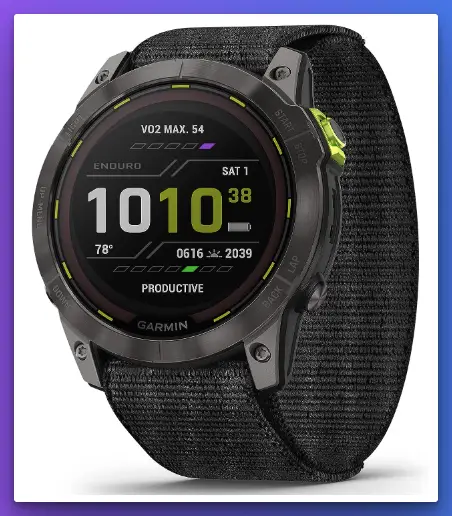
At the core of its brilliance lies the hallmark feature of the Garmin Enduro 2 – the long-lasting GPS battery life, empowering rowers to embark on extended excursions without fretting about battery depletion.
Every stroke counts, and with this watch adorning their wrist, athletes can focus solely on honing their technique, assured that their timepiece will keep pace with their unwavering dedication.
A true ode to sustainability, the watch boasts solar charging, harnessing the sun’s energy to power its functions during outdoor rowing sessions. Nature and technology converge seamlessly, providing rowers an eco-conscious solution to stay connected and powered throughout their adventures.
Navigating the vast waterways confidently is made possible by the preloaded maps feature. Armed with critical mapping data, rowers can chart new routes and conquer uncharted waters effortlessly, enhancing their exploration and training endeavors.
Performance metrics become the rower’s trainer, meticulously analyzing every movement, heart rate, and stroke efficiency. A treasure trove of data awaits, empowering athletes to fine-tune their training regimen and optimize their rowing prowess.
In conclusion, the Garmin Enduro 2 emerges as the undisputed champion among the best watches for rowing. Its enduring battery life, solar charging, preloaded maps, and comprehensive performance tracking redefine the rowing experience.
As rowers adorn their wrists with this masterpiece, they unlock the gateway to unparalleled performance, carving a path toward rowing greatness with each rhythmic stroke.
Pros:-
Long-lasting GPS Battery Life: The Garmin Enduro 2 boasts an exceptional GPS battery life, allowing rowers to track their activities for extended periods without worrying about running out of power.
Solar Charging: With its solar charging capability, the watch harnesses the power of the sun to keep itself charged, ensuring that rowers can stay connected and powered during outdoor sessions without the need for frequent charging.
Preloaded Maps: The watch comes with preloaded maps, empowering rowers to explore new waterways confidently and discover the best routes for their training or recreational rowing endeavors.
Performance Metrics: With comprehensive performance tracking, including heart rate monitoring and advanced metrics, rowers can gain valuable insights into their training progress, stroke efficiency, and overall fitness, helping them optimize their rowing technique.
Durable Design: The Garmin Enduro 2 is designed to withstand the rigors of rowing, with a rugged and durable build that can endure tough conditions and remain functional even in water-based activities.
Waterproof Rating: The watch has a high waterproof rating, making it suitable for use in wet environments and providing rowers with the confidence to wear it during rain or water-based sports.
User-friendly Interface: The watch features an intuitive and user-friendly interface, making it easy for rowers to access the information they need and customize settings according to their preferences.
Cons:-
Price: As a high-end watch with advanced features, the Garmin Enduro 2 may have a higher price tag than other basic fitness watches or entry-level sports watches.
Complex Features: Some rowers, especially those new to smartwatches or fitness tracking devices, may find the abundance of features on the Garmin Enduro 2 overwhelming or difficult to navigate initially.
GPS Reliance: While the GPS feature is beneficial for accurate tracking, it relies on satellite signals, which may be affected in areas with poor reception, obstructed signals, or tall buildings.
Limited Rowing-specific Features: Although the Garmin Enduro 2 offers excellent fitness tracking capabilities, it may lack some specialized rowing-specific features that dedicated rowing watches or apps might provide.
In conclusion, the Garmin Enduro 2 shines as one of the best watches for rowing, offering long-lasting GPS battery life, solar charging, preloaded maps, and comprehensive performance tracking. However, before deciding, potential buyers should consider factors like the price, complexity of features, GPS reliance, and specific rowing requirements.
2. Garmin Forerunner 935
In rowing, where precision and performance converge in graceful synchrony, the Garmin Forerunner 935 emerges as the ultimate companion, redefining what it means to be the best smartwatch for rowing.
With its exceptional blend of cutting-edge technology and unparalleled features, this running GPS unit transcends its primary function to become an indispensable tool for rowers seeking to elevate their performance on the water.
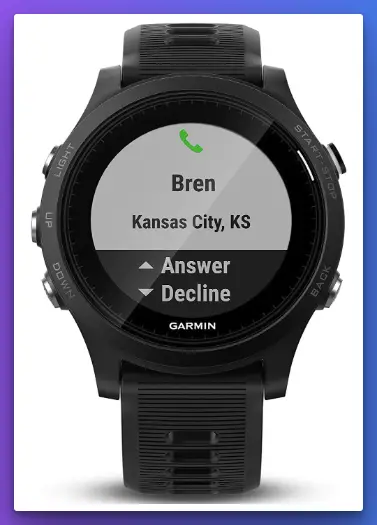
The Garmin Forerunner 935 is a symphony of innovation, offering various features that complement the rowing experience. Its built-in GPS precisely tracks distance and pace, empowering rowers to navigate waterways confidently while capturing essential real-time performance metrics.
One of the watch’s highlights is its advanced heart rate monitoring beyond basic measurements. The Forerunner 935 employs the Elevate™ wrist heart rate technology, enabling rowers to assess their cardiovascular fitness and training intensity with accuracy and insight.
When it comes to endurance, the Forerunner 935 is a stalwart companion. Its battery life is unparalleled, boasting up to 2 weeks in watch mode and an astonishing 24 hours in GPS mode. Rowers can now embark on long rowing expeditions, confident their watch will endure the journey.
Beyond the water, this smartwatch seamlessly integrates with the Connect IQ™ store, offering a treasure trove of apps, widgets, and watch faces. Personalization becomes an art, and rowers can tailor their Forerunner 935 to suit their unique style and preferences.
In conclusion, the Garmin Forerunner 935 is the epitome of excellence in rowing smartwatches. Its precise GPS tracking, advanced heart rate monitoring, and exceptional battery life make it the ideal companion for rowers seeking to optimize their performance on the water.
With the Forerunner 935 gracing their wrists, rowers embark on a journey of unparalleled insight and achievement, unlocking their true potential one stroke at a time.
Pros:-
Accurate GPS Tracking: The Garmin Forerunner 935’s built-in GPS tracks distance and pace, ensuring rowers can navigate waterways confidently and accurately monitor their performance.
Advanced Heart Rate Monitoring: With Elevate™ wrist heart rate technology, rowers can assess their cardiovascular fitness and training intensity with greater accuracy, helping them optimize their workouts and performance.
Long Battery Life: The Forerunner 935 boasts an impressive battery life, lasting up to 2 weeks in watch mode and 24 hours in GPS mode, ensuring it can endure long rowing expeditions without frequent charging.
Connect IQ™ Compatibility: The smartwatch seamlessly integrates with the Connect IQ™ store, offering a wide range of apps, widgets, and watch faces, allowing rowers to personalize their Forerunner 935 according to their style and preferences.
Multi-Sport Functionality: Beyond rowing, the Forerunner 935 supports various sports profiles, making it versatile for athletes engaged in cross-training or multi-sport activities.
Waterproof Design: The watch has a waterproof rating, making it suitable for water-based sports, ensuring it remains functional and reliable even in wet environments.
Cons:-
Price: As a high-end smartwatch with advanced features, the Garmin Forerunner 935 may have a higher price point than basic fitness trackers or entry-level smartwatches.
Learning Curve: Some users, especially those new to smartwatches or fitness-tracking devices, may find the range of features and settings on the Forerunner 935 initially overwhelming or challenging to navigate.
Lack of Rowing-Specific Features: While the Forerunner 935 offers excellent multi-sport functionality, it may not have the specialized rowing-specific features that some dedicated rowing watches or apps provide.
Small Screen Size: The watch’s compact design may result in a relatively small screen size, which could be less ideal for users who prefer larger displays for better visibility during workouts.
In conclusion, the Garmin Forerunner 935 shines as the best smartwatch for rowing, offering accurate GPS tracking, advanced heart rate monitoring, long battery life, and customization options.
While potential buyers should consider factors like price, learning curve, and specific rowing requirements, the Forerunner 935 undeniably elevates the rowing experience, empowering athletes to optimize their performance and achieve new heights in their waterborne endeavors.
3. Amazfit T-Rex 2
In rowing, where precision and endurance are paramount, the Amazfit T-Rex 2 stands tall as the ultimate companion, redefining what it means to be the best watch for rowers. Combining cutting-edge technology with rugged durability, this smartwatch for men is a force to be reckoned with, empowering rowers to conquer new horizons on the water.
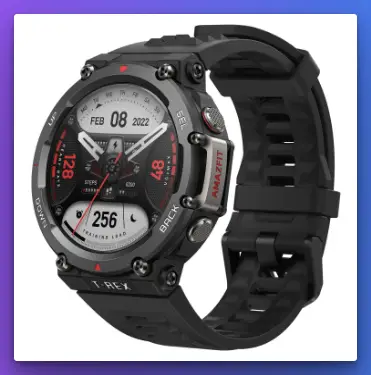
The Amazfit T-Rex 2 is a true adventurer’s dream, designed to withstand the toughest outdoor conditions. Its ultra-low temperature operation ensures that rowers can brave the harshest environments, keeping their performance on track even in frigid waters.
Equipped with dual-band and 6 satellite positioning, this military-grade smartwatch offers unparalleled accuracy in real-time navigation. Rowers can now confidently chart their course, explore uncharted waterways, and always find their way back home.
The most remarkable aspect of the Amazfit T-Rex 2 is its incredible 24-day battery life. Gone are the days of fretting about charging mid-rowing sessions. With this watch on their wrist, athletes can focus solely on perfecting their strokes without any battery anxiety.
Beyond its robust features, the Amazfit T-Rex 2 is a masterpiece of style and comfort. Its sleek design complements any rower’s attire, while the comfortable strap ensures it stays securely in place during even the most vigorous rowing sessions.
In conclusion, the Amazfit T-Rex 2 epitomizes excellence in rowing watches. Its ultra-low temperature operation, dual-band & 6 satellite positioning, and exceptional battery life make it the ideal companion for rowers seeking to elevate their performance on the water.
With the T-Rex 2 adorning their wrists, rowers embark on unparalleled adventure, conquering new waters and achieving rowing greatness one stroke at a time.
Pros:-
Rugged and Durable: The Amazfit T-Rex 2 is designed to withstand tough outdoor conditions, making it ideal for rowers who frequently engage in water-based activities and adventurous expeditions.
Ultra-Low Temperature Operation: With its capability to operate in extremely low temperatures, rowers can trust the watch to function reliably even in frigid waters, ensuring uninterrupted performance tracking.
Dual-Band & 6 Satellite Positioning: The watch’s dual-band and 6 satellite positioning technology offer exceptional accuracy in real-time navigation, allowing rowers to explore new waterways confidently.
Long Battery Life: The Amazfit T-Rex 2 boasts an impressive 24-day battery life, providing rowers with extended usage without worrying about frequent charging during their training or rowing excursions.
Rugged Outdoor GPS Military Smartwatch: As a military-grade smartwatch, the T-Rex 2 has robust features, including water resistance and durable construction, making it a reliable companion for adventurous rowers.
Comfortable Design: Despite its rugged build, the T-Rex 2 offers a comfortable and secure fit, ensuring it remains in place during rigorous rowing sessions.
Cons:-
Limited Rowing-Specific Features: While the T-Rex 2 is an excellent outdoor GPS smartwatch, it may lack the specialized rowing-specific features that dedicated rowing watches offer.
Learning Curve: Some users, especially those new to smartwatches, may find the T-Rex 2’s features and settings overwhelming and require time to become fully accustomed to its functionality.
Bulkier Design: The watch’s rugged and military-style design may be bulkier compared to more streamlined fitness watches, which could be a matter of personal preference for some rowers.
Limited Color Options: The T-Rex 2 may have limited color options compared to other smartwatches, which might be a consideration for users seeking a broader range of style choices.
In conclusion, the Amazfit T-Rex 2 is the best watch for rowers, offering rugged durability, ultra-low temperature operation, exceptional battery life, and precise navigation features.
While potential buyers should consider factors like rowing-specific features and design preferences, the T-Rex 2 undoubtedly elevates the rowing experience, providing adventurers on the water with a reliable and robust companion for their daring pursuits.
4. Amazfit T-Rex Pro
In the dynamic world of rowing, where precision and endurance converge, the Amazfit T-Rex Pro stands out as the ultimate companion, redefining what it means to be the best fitness watch for rowing.
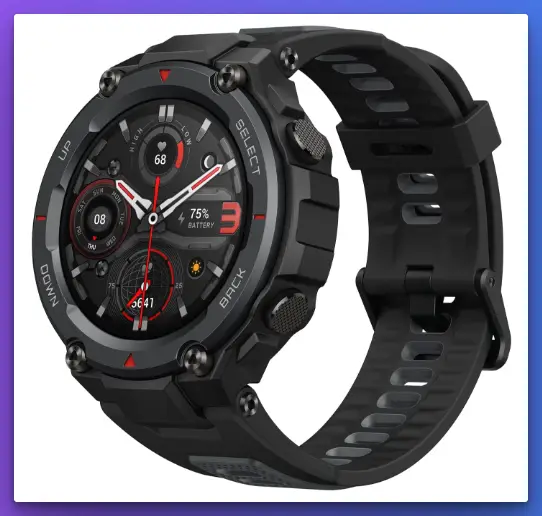
With its rugged outdoor GPS capabilities and advanced features, this smartwatch for men is a force to be reckoned with, empowering rowers to conquer new horizons on the water.
Engineered to endure the most challenging environments, the Amazfit T-Rex Pro boasts 15 Military Standard Certifications, ensuring it can easily withstand extreme conditions. Water-resistant up to 10 ATM, rowers can rely on this robust watch during aquatic pursuits without compromising its functionality.
Beyond its rugged exterior lies a treasure trove of sports modes. With 100+ sports modes, including specialized rowing tracking, the T-Rex Pro caters specifically to rowers, offering detailed insights into their performance, stroke efficiency, and heart rate during every rowing session.
The watch’s GPS fitness tracking feature ensures rowers can precisely navigate waterways, accurately measuring distance and pace. At the same time, the blood oxygen monitor empowers athletes to monitor their oxygen saturation levels, providing critical data for training optimization.
With an impressive 18-day battery life, the Amazfit T-Rex Pro keeps up with the demands of rowing training and expeditions, providing uninterrupted support and motivation during extended adventures.
In conclusion, the Amazfit T-Rex Pro epitomizes excellence in rowing fitness watches. Its ruggedness, extensive sports modes, GPS fitness tracking, blood oxygen monitoring, and long battery life make it the perfect companion for rowers seeking to elevate their performance on the water.
With the T-Rex Pro gracing their wrists, rowers embark on a journey of unparalleled insights and achievements, unlocking their true potential one stroke at a time.
Pros:-
Rugged and Durable: The Amazfit T-Rex Pro’s 15 Military Standard Certifications and rugged design ensure it can withstand extreme conditions, making it perfect for rowers engaged in outdoor water-based activities.
Specialized Rowing Tracking: With over 100 sports modes, including specialized rowing tracking, the watch provides detailed insights into rowers’ performance, stroke efficiency, and heart rate during every rowing session.
GPS Fitness Tracking: The GPS feature enables precise navigation and accurate measurement of distance and pace during rowing sessions, helping rowers analyze their routes and performance.
Blood Oxygen Monitor: The blood oxygen monitoring function empowers rowers to monitor their oxygen saturation levels, offering crucial data for optimizing training and overall fitness.
Long Battery Life: The impressive 18-day battery life ensures rowers have extended support and motivation during their training and rowing expeditions without frequent charging.
Water-Resistant: With a water resistance rating of 10 ATM, the watch remains functional even during aquatic pursuits, providing reliable tracking and performance data during water-based activities.
Cons:-
Bulkier Design: The rugged design of the T-Rex Pro may result in a bulkier watch compared to more streamlined fitness watches, which could be a matter of personal preference for some rowers.
Learning Curve: Some users, especially those new to smartwatches or fitness trackers, may find the extensive features and settings overwhelming and require time to become fully accustomed to using the watch.
Limited Color Options: The T-Rex Pro may have limited color options compared to other smartwatches, which might be a consideration for users seeking a broader range of style choices.
App Ecosystem: While the watch offers a range of sports modes, the availability of specific rowing-related apps or specialized features might be more limited compared to dedicated rowing watches.
In conclusion, the Amazfit T-Rex Pro is the best fitness watch for rowing, offering a rugged and durable design, specialized rowing tracking, GPS fitness tracking, blood oxygen monitoring, and long battery life.
While potential buyers should consider factors like the watch’s design, learning curve, and specific rowing requirements, the T-Rex Pro undoubtedly elevates the rowing experience, providing rowers with a reliable and robust companion for their training and aquatic adventures.
5. SAMSUNG Galaxy Watch 5 Pro
In rowing machine workouts, precision and performance are paramount, and the SAMSUNG Galaxy Watch 5 Pro emerges as the ultimate companion, redefining what it means to be the best smartwatch for rowing machine enthusiasts.
With its advanced features and cutting-edge technology, this Bluetooth smartwatch becomes an indispensable tool for rowers seeking to optimize their indoor rowing experience.
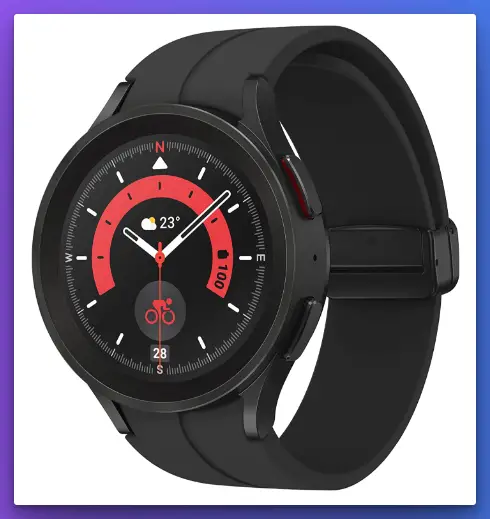
Equipped with an array of health, fitness, and sleep trackers, the SAMSUNG Galaxy Watch 5 Pro becomes the rower’s assistant, offering detailed insights into body metrics, heart rate, and sleep patterns. Rowers can now meticulously monitor their progress and recovery, ensuring they stay on track for peak performance.
The watch’s improved battery ensures prolonged usage, allowing rowers to focus entirely on their workouts without interruption. With this reliable power source, athletes can engage in long indoor rowing sessions, tracking every stroke and push without worrying about the battery running low.
One of the watch’s standout features is its GPS route tracking, which extends its usefulness beyond indoor workouts. When rowers venture outdoors for on-water training, they can confidently rely on the Galaxy Watch 5 Pro to accurately track their routes and performance metrics.
With a titanium frame and sapphire crystal glass, this smartwatch exudes elegance and durability, making it suitable for intense indoor rowing sessions and casual everyday wear.
In conclusion, the SAMSUNG Galaxy Watch 5 Pro is the epitome of excellence for rowing machine workouts. Its comprehensive health and fitness tracking capabilities, improved battery life, GPS route tracking, and premium build quality make it the ideal companion for rowers seeking to elevate their indoor and outdoor rowing experiences.
With the Galaxy Watch 5 Pro adorning their wrists, rowers embark on a journey of unparalleled insights and achievements, pushing their limits on the rowing machine to reach new heights of fitness and performance.
Pros:-
Comprehensive Health and Fitness Tracking: The Galaxy Watch 5 Pro offers a wide range of health and fitness tracking features, including heart rate monitoring, body metrics, and sleep tracking, providing rowers with valuable insights into their overall well-being.
Improved Battery Life: With an improved battery, rowers can enjoy extended usage during indoor rowing sessions without worrying about frequent charging.
GPS Route Tracking: The watch’s GPS route tracking feature becomes valuable when rowers venture outdoors, allowing them to track their routes and performance metrics during on-water training accurately.
Durable Build: The titanium frame and sapphire crystal glass give the Galaxy Watch 5 Pro a premium and durable build, ensuring it can withstand the rigors of indoor rowing workouts and everyday wear.
Bluetooth Connectivity: Bluetooth connectivity allows seamless integration with smartphones and other devices, enabling rowers to stay connected and receive notifications during workouts.
Cons:-
Price: As a high-end smartwatch with advanced features, the Galaxy Watch 5 Pro may have a higher price tag than basic fitness trackers or entry-level smartwatches.
Learning Curve: Some users, especially those new to smartwatches or fitness trackers, may find the extensive features and settings overwhelming and require time to become fully accustomed to using the watch.
Limited Third-Party Apps: While the watch provides comprehensive health and fitness tracking, the availability of specific rowing-related apps or specialized features might be more limited compared to dedicated rowing watches.
Indoor Rowing Calibration: While the Galaxy Watch 5 Pro offers various indoor workout modes, rowers may need to calibrate the watch for optimal tracking accuracy during indoor rowing machine workouts.
In conclusion, the SAMSUNG Galaxy Watch 5 Pro is the best smartwatch for rowing machine enthusiasts, offering comprehensive health and fitness tracking, improved battery life, GPS route tracking, and a durable build.
While potential buyers should consider factors like price, learning curve, and specific indoor rowing requirements, the Galaxy Watch 5 Pro enhances the rowing experience, providing rowers with a reliable and feature-rich companion for indoor and outdoor training.
6. Apple Watch SE (2nd Gen)
In rowing, where precision and performance intertwine, the Apple Watch SE (2nd Gen) emerges as the ultimate companion, redefining what it means to be the best Apple Watch for rowing.
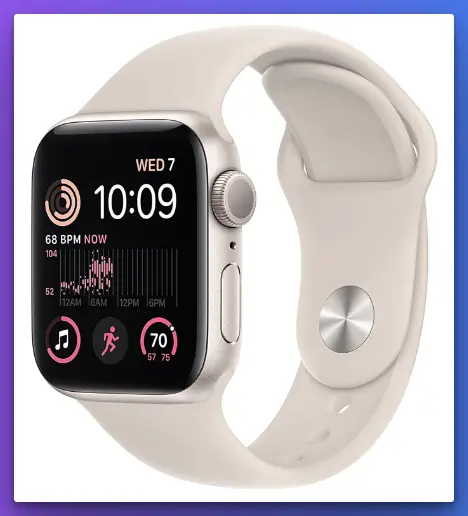
With its advanced features and sleek design, this smartwatch becomes an indispensable tool for rowers seeking to elevate their rowing experience to unparalleled heights.
Equipped with a comprehensive fitness and sleep tracker, the Apple Watch SE (2nd Gen) becomes the rower’s coach, providing valuable insights into their training progress and sleep patterns. Rowers can now optimize their workouts and recovery, ensuring they stay on track for peak performance.
The watch’s heart rate monitor offers real-time tracking during rowing sessions, allowing athletes to gauge their effort and maintain their target heart rate for optimal training results.
One of the standout features is crash detection, providing an added layer of safety for rowers venturing into water activities. In an accident, the watch can detect a hard fall and automatically call for help, providing peace of mind during solo rowing sessions.
With its water-resistant design, the Apple Watch SE (2nd Gen) remains functional even in wet conditions, making it ideal for rowers who love to row outdoors or in challenging weather.
The Retina display enhances visibility, allowing rowers to check their metrics and notifications during intense rowing workouts easily.
In conclusion, the Apple Watch SE (2nd Gen) epitomizes excellence among Apple Watches for rowing. Its fitness and sleep tracking capabilities, heart rate monitor, crash detection, water resistance, and Retina display make it the perfect companion for rowers seeking to optimize their performance and safety on the water.
With the Apple Watch SE (2nd Gen) adorning their wrists, rowers embark on unparalleled insights and achievements, pushing their limits one stroke at a time.
Pros:-
Comprehensive Fitness and Sleep Tracking: The Apple Watch SE (2nd Gen) offers a comprehensive fitness and sleep tracking system, providing rowers with valuable insights into their training progress and sleep patterns.
Heart Rate Monitor: The built-in heart rate monitor allows rowers to track their heart rate in real-time during rowing sessions, helping them gauge their effort and optimize their workouts.
Crash Detection: The watch’s crash detection feature adds an extra layer of safety for rowers during water activities. It can automatically call for help in case of a hard fall, providing peace of mind during solo rowing sessions.
Water-Resistant Design: With its water-resistant capabilities, the Apple Watch SE (2nd Gen) remains functional even in wet conditions. It is ideal for rowers who enjoy rowing outdoors or in challenging weather.
Retina Display: The Retina display enhances visibility, allowing rowers to check their metrics and notifications during intense rowing workouts easily.
Sleek Design: The Apple Watch SE (2nd Gen) boasts a sleek and stylish design, making it a fashionable accessory during rowing sessions and everyday wear.
Cons:-
Price: As a mid-range smartwatch, the Apple Watch SE (2nd Gen) may have a higher price tag than basic fitness trackers or entry-level smartwatches.
Limited Battery Life: The watch’s battery life may be limited compared to some dedicated fitness trackers, requiring more frequent charging, especially during prolonged rowing sessions.
Rowing-Specific Features: While the Apple Watch SE (2nd Gen) offers various fitness tracking capabilities, it may not have the specialized rowing-specific features that some dedicated rowing watches or apps provide.
Compatibility with Other Devices: The watch’s full functionality may be optimized when paired with an Apple iPhone, which could be a limitation for users with non-Apple smartphones.
In conclusion, the Apple Watch SE (2nd Gen) shines as the best Apple Watch for rowing, offering comprehensive fitness tracking, crash detection, water resistance, and a stylish design.
While potential buyers should consider factors like price, battery life, rowing-specific features, and device compatibility, the Apple Watch SE (2nd Gen) undoubtedly enhances the rowing experience, providing rowers with a reliable and feature-rich companion for their training and aquatic adventures.
7. Garmin Vivoactive 4
In rowing, where precision and performance intertwine, the Garmin Vivoactive 4 stands tall as the ultimate companion, redefining what it means to be the best watch for rowing.
With its cutting-edge features and advanced technology, this GPS smartwatch becomes an indispensable tool for rowers seeking to optimize their on-water performance and training endeavors.
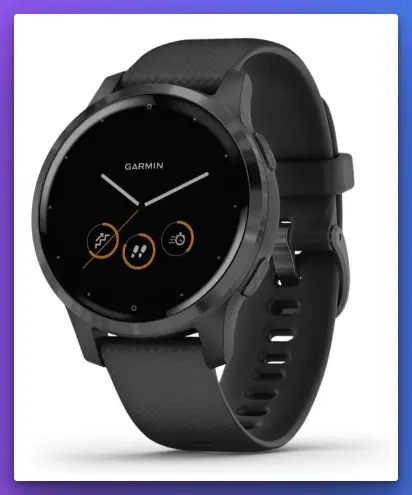
Equipped with body energy monitoring, the Garmin Vivoactive 4 becomes the rower’s virtual coach, offering insights into their energy levels and helping them balance training intensity for peak performance. With this data, athletes can fine-tune their rowing sessions to maximize efficiency and reduce fatigue risk.
The watch’s pulse ox sensors provide valuable data on blood oxygen saturation levels, giving rowers a better understanding of their body’s response to training and ensuring they stay within safe and optimal zones during their workouts.
One of the standout features is the animated workouts, which guide rowers through preloaded exercise routines on their wrists. These dynamic animations help rowers master their strokes and maintain proper form, improving technique and performance on the water.
With the option to store and play music directly from the watch, rowers can stay motivated and entertained during long rows, enhancing the overall rowing experience.
The Garmin Vivoactive 4’s water-resistant design ensures it remains functional even during water-based activities, making it ideal for rowers who embrace various water sports.
In conclusion, the Garmin Vivoactive 4 shines as the epitome of excellence among smartwatches for rowing. Its body energy monitoring, pulse ox sensors, animated workouts, music capabilities, and water resistance make it the perfect companion for rowers seeking to elevate their performance on the water.
With the Vivoactive 4 adorning their wrists, rowers embark on a journey of unparalleled insights and achievements, pushing their limits and reaching new heights in their waterborne pursuits.
Pros:-
Body Energy Monitoring: The Garmin Vivoactive 4 offers body energy monitoring, providing valuable insights into rowers’ energy levels and helping them optimize training intensity for peak performance.
Pulse Ox Sensors: With pulse ox sensors, rowers can monitor their blood oxygen saturation levels, better understanding their body’s response to training and ensuring safe and efficient workouts.
Animated Workouts: The watch’s animated workouts guide rowers through preloaded exercise routines, improving technique and form for more effective rowing sessions.
Music Capabilities: With the option to store and play music, rowers can stay motivated and entertained during their rowing sessions, enhancing the overall rowing experience.
Water Resistance: The Garmin Vivoactive 4’s water-resistant design ensures it remains functional even during water-based activities, making it suitable for rowers who engage in water sports.
GPS and Smartwatch Features: The watch’s built-in GPS accurately tracks rowing routes and performance metrics, while smartwatch features keep rowers connected and informed during workouts.
Cons:-
Limited Rowing-Specific Features: While the Garmin Vivoactive 4 offers various fitness tracking capabilities, it may not have the specialized features that some dedicated rowing watches or apps provide.
Battery Life: Depending on usage and settings, the watch’s battery life may vary, and rowers in long rowing sessions may need to consider charging between workouts.
Screen Size: Some users may find the watch’s screen size relatively smaller, impacting visibility and ease of use, especially during intense rowing sessions.
Price: As a feature-rich GPS smartwatch, the Garmin Vivoactive 4 may have a higher price than basic fitness trackers or entry-level smartwatches.
In conclusion, the Garmin Vivoactive 4 shines as the best watch for rowing, offering body energy monitoring, pulse ox sensors, animated workouts, music capabilities, water resistance, GPS tracking, and smartwatch features.
While potential buyers should consider factors like rowing-specific features, battery life, screen size, and price, the Vivoactive 4 undoubtedly enhances the rowing experience, providing rowers with a reliable and feature-packed companion for their training and waterborne adventures.
8. Garmin Fenix 7X Sapphire
In the rowing world, where precision and endurance converge, the Garmin Fenix 7X Sapphire stands tall as the ultimate companion, redefining what it means to be one of the best watches for rowing.
With its unrivaled capabilities and cutting-edge technology, this larger-sized adventure smartwatch becomes an indispensable tool for rowers seeking to conquer new horizons on the water.
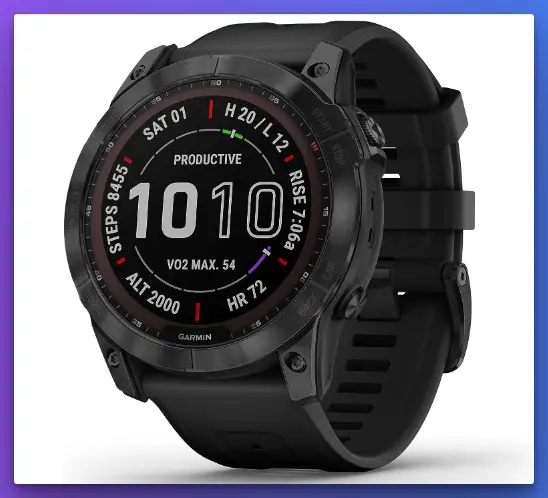
Crafted with a black DLC titanium casing and sapphire crystal, the Garmin Fenix 7X Sapphire exudes rugged durability and sophistication. Its larger size ensures readability during intense rowing sessions, and the black band complements any rower’s attire.
The watch’s solar charging capabilities offer an extraordinary advantage, harnessing the power of the sun to extend battery life. Rowers can now venture on longer waterborne expeditions without worrying about running out of power.
Equipped with advanced GPS and navigation features, the Fenix 7X Sapphire enables rowers to chart their course with precision, measure distance, pace, and elevation, and explore new waterways confidently.
The touchscreen interface offers intuitive and seamless interaction, allowing rowers to access crucial data and features effortlessly. A user-friendly design lets athletes focus on their rowing performance without distractions.
Beyond its outdoor prowess, the Fenix 7X Sapphire boasts a range of wellness features, including heart rate monitoring, stress tracking, and sleep analysis. Rowers can optimize their training and recovery, ensuring they are in peak condition for each rowing session.
In conclusion, the Garmin Fenix 7X Sapphire shines as the epitome of excellence among the best watches for rowing. Its black DLC titanium construction, solar charging capabilities, advanced GPS and navigation features, intuitive touchscreen, and wellness tracking make it the perfect companion for rowers seeking to elevate their performance on the water.
With the Fenix 7X Sapphire adorning their wrists, rowers embark on a journey of unparalleled insights and achievements, conquering waterways and reaching new heights in their rowing endeavors.
Pros:-
Rugged and Durable: The Garmin Fenix 7X Sapphire features a black DLC titanium casing and sapphire crystal, providing exceptional durability and protection during rugged rowing activities.
Solar Charging: With solar charging capabilities, rowers can enjoy extended battery life, ensuring the watch remains powered during long waterborne expeditions.
Advanced GPS and Navigation: The watch’s GPS and navigation features enable precise course tracking, distance measurement, and elevation data, allowing rowers to explore new waterways confidently.
Intuitive Touchscreen Interface: The touchscreen interface offers a user-friendly experience, enabling rowers to access crucial data and features seamlessly during intense rowing sessions.
Wellness Tracking: With heart rate monitoring, stress tracking, and sleep analysis, the Fenix 7X Sapphire helps rowers optimize their training and recovery, enhancing their overall fitness and performance.
Water-Resistant: The watch’s water-resistant design ensures it remains functional even during water-based activities, making it suitable for rowers engaging in various water sports.
Cons:-
Higher Price Point: As a premium adventure smartwatch, the Garmin Fenix 7X Sapphire may have a higher price tag than basic fitness trackers or entry-level smartwatches.
Larger Size: Some users may find the larger watch size less comfortable, especially for those with smaller wrists or those who prefer more compact designs.
Advanced Features Learning Curve: While the watch offers many features, some users may require time to familiarize themselves with all the functionalities and settings.
Limited Color Options: The Garmin Fenix 7X Sapphire may have limited color options compared to other smartwatches, which could be a consideration for users seeking a broader range of style choices.
In conclusion, the Garmin Fenix 7X Sapphire shines as one of the best watches for rowing, offering rugged durability, solar charging, advanced GPS and navigation features, an intuitive touchscreen interface, and comprehensive wellness tracking.
While potential buyers should consider factors like price, size, learning curve, and color options, the Fenix 7X Sapphire undoubtedly elevates the rowing experience, providing rowers with a reliable and feature-packed companion for their training and aquatic adventures.
9. Polar Vantage M2
Regarding rowing, precision and performance are paramount, and the Polar Vantage M2 stands out as one of the best watches for rowing. This advanced multisport smartwatch integrates cutting-edge technology to provide rowers with the tools to optimize their on-water performance and track their fitness journey.
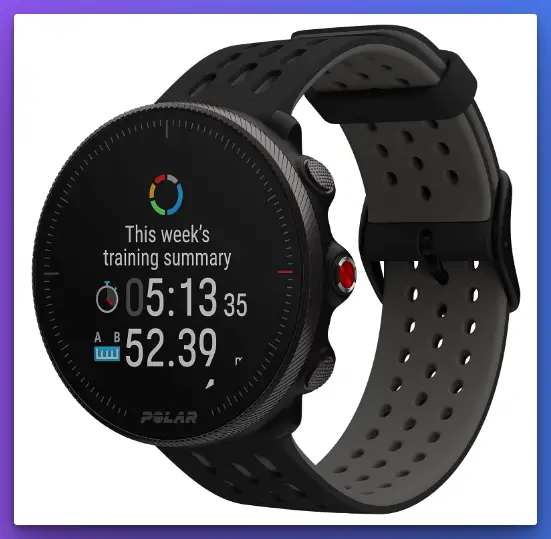
With an integrated GPS, the Polar Vantage M2 ensures accurate route tracking during rowing sessions, enabling rowers to analyze their routes and precisely monitor their pace and distance. Whether rowing on calm lakes or challenging rivers, this smartwatch guides athletes on waterborne expeditions.
The wrist-based heart monitor allows rowers to track their heart rate throughout every stroke, providing real-time insights into their effort and performance. By monitoring heart rate zones, rowers can optimize their training intensity for maximum results.
Beyond rowing-specific features, the Polar Vantage M2 offers a comprehensive array of daily workout, sleep, and recovery tracking capabilities. This invaluable data helps rowers understand their fitness level, optimize rest and recovery, and fine-tune their training routines.
With music controls, weather updates, and phone notifications at their fingertips, rowers can stay connected and motivated during their workouts. The watch’s sleek design and user-friendly interface make it a stylish and intuitive companion for both on-water rowing sessions and everyday wear.
In conclusion, the Polar Vantage M2 shines as the epitome of excellence among smartwatches for rowing. Its integrated GPS, wrist-based heart monitor, daily workout tracking, and versatile features make it the perfect companion for rowers seeking to elevate their performance on the water and beyond.
With the Polar Vantage M2 adorning their wrists, rowers embark on a journey of unparalleled insights and achievements, conquering waterways and reaching new heights in their rowing endeavors.
Pros:-
Integrated GPS: The Polar Vantage M2 features an integrated GPS, providing accurate route tracking during rowing sessions and helping rowers analyze their performance metrics.
Wrist-Based Heart Monitor: With a wrist-based heart monitor, rowers can track their heart rate in real time, enabling them to optimize their training intensity and monitor their effort during rowing workouts.
Comprehensive Fitness Tracking: The watch offers daily workout, sleep, and recovery tracking, allowing rowers to gain valuable insights into their overall fitness level and make informed training decisions.
Music Controls and Phone Notifications: With music controls and phone notifications, rowers can stay connected and motivated during their workouts, making the rowing experience more enjoyable and engaging.
Sleek Design: The Polar Vantage M2 boasts a sleek and stylish design, making it a fashionable accessory during rowing sessions and everyday wear.
User-Friendly Interface: The watch’s user-friendly interface ensures easy navigation and quick access to important features, allowing rowers to focus on their training without distractions.
Cons:-
Limited Color Options: The Polar Vantage M2 may have limited color options compared to some other smartwatches, which could be a consideration for users seeking a broader range of style choices.
Battery Life: Depending on usage and settings, the watch’s battery life may vary, and rowers in long rowing sessions may need to consider charging between workouts.
Rowing-Specific Features: While the Polar Vantage M2 offers various fitness tracking capabilities, it may not have the specialized rowing-specific features that some dedicated rowing watches or apps provide.
Price: As a feature-rich multisport smartwatch, the Polar Vantage M2 may have a higher price point than basic fitness trackers or entry-level smartwatches.
In conclusion, the Polar Vantage M2 shines as one of the best watches for rowing, offering integrated GPS, wrist-based heart monitoring, comprehensive fitness tracking, music controls, phone notifications, a sleek design, and a user-friendly interface.
While potential buyers should consider factors like color options, battery life, rowing-specific features, and price, the Polar Vantage M2 undoubtedly enhances the rowing experience, providing rowers with a reliable and feature-packed companion for their training and waterborne adventures.
Accessories and Additional Tools For Rowing
Rowing, a compelling sport and popular fitness regimen demands physical stamina and technical proficiency. To elevate the experience and efficiency of rowing, a broad spectrum of Accessories and Additional Tools For Rowing is available for enthusiasts and professionals alike.

Let’s highlight these accessories, underlining their significance in augmenting rowing performance.
Ergonomic Seat Pads and Cushions:- Comfort is paramount in rowing, where repetitive motion can strain the body. Ergonomic seat pads and cushions act as vital accessories to alleviate discomfort. They are meticulously crafted to conform to the rower’s body, providing support and minimizing fatigue. Integrating such accessories into the rowing apparatus ensures an enhanced and extended performance.
High-Tech Rowing Monitors:- In the digital age, data-driven decision-making has transcended various domains, including sports. High-tech rowing monitors stand out among the Accessories and Additional Tools For Rowing by offering real-time feedback on key metrics like stroke rate, distance covered, and calories burned. These monitors act as a virtual coach, guiding the rower in fine-tuning techniques and tracking progress.
Advanced Footwear and Footplates:- Footwear and footplates are additional accessories contributing to a rower’s stability and power output. Modern footplates are adjustable and designed with an intricate understanding of biomechanics. Such considerations ensure proper foot placement and alignment, facilitating optimal energy transfer from the rower to the oars.
Rowing Gloves and Grips:- A firm grip is indispensable in rowing, where control and precision are at a premium. Rowing gloves and grips are crucial accessories that protect the hands from blisters and provide additional tactile control. Whether for competitive racing or casual rowing, these accessories offer an ergonomic advantage and augment the physical connection between the rower and the oar.
Adaptive Equipment:- Inclusion has found its resonance in rowing, with adaptive equipment tailored for rowers with disabilities. These Accessories and Additional Tools For Rowing are custom-made to fit individual needs, promoting accessibility and expanding the sport’s horizons. This not only fosters inclusivity but also underscores the potential of design thinking in shaping the future of rowing.
Maintenance Tools:- Regular maintenance is the lifeblood of any mechanical system, including rowing machines. Maintenance tools, such as specialized wrenches, lubricants, and cleaning solutions, are essential to upkeep rowing equipment. These tools ensure the smooth functioning of components, prevent wear and tear, and extend the equipment’s lifespan.
Portable Racks and Carriers:- For those rowers who frequently travel to different locations or partake in various competitions, portable racks and carriers facilitate the transportation of rowing shells. Designed to focus on durability and convenience, these accessories have become vital in the contemporary rowing scenario.
The myriad of Accessories and Additional Tools For Rowing transcends the boundaries of mere supplementary equipment. They act as an extension of the rower’s body and mind, providing a synergetic fusion that elevates the rowing experience to new heights.
From ergonomic design to high-tech integration, from inclusion to meticulous maintenance, these accessories are instrumental in shaping the ever-evolving landscape of rowing. By understanding and utilizing these tools, rowers can push the envelope of achievable goals, defining new performance, comfort, and inclusivity paradigms.
✅FAQ’s
Do Garmin watches track rowing?
Yes, Garmin watches are equipped with specialized activity-tracking features that include rowing. They can accurately monitor your rowing sessions, providing essential data such as stroke rate, distance covered, and calories burned.
Does Galaxy Watch track rowing?
The device confidently and accurately identifies physical activities, including walking, running, swimming, elliptical training, rowing machine, and dynamic workouts without requiring manual input.
Does Apple Watch track rowing?
Yes, Apple Watch has a dedicated rowing workout mode that accurately tracks your rowing performance, making it an excellent option for rowing enthusiasts.
Does Garmin Fenix track rowing?
Absolutely, Garmin Fenix series watches excel in tracking various activities, including rowing. They provide detailed metrics and performance insights during rowing workouts.
How can I track my rowing progress?
You can track your rowing progress using compatible fitness watches like Garmin, Galaxy, or Apple Watch, which offer specific rowing modes. Additionally, various rowing apps allow you to analyze and monitor your progress.
Can Garmin Forerunner 245 be used for rowing?
Yes, the Garmin Forerunner 245 supports rowing tracking, enabling you to optimize your rowing sessions and monitor your fitness advancements.
Does Garmin Instinct track rowing?
Yes, Garmin Instinct includes a rowing mode, catering to those engaging in rowing activities and offering insightful data during workouts.
Is 20 minutes of rowing enough?
A 20-minute rowing session can be beneficial, promoting cardiovascular health and engaging various muscle groups. However, the ideal duration varies depending on your fitness goals and intensity.
Can you lose belly fat on a rowing machine?
Rowing is a full-body workout that can aid in burning calories and reducing overall body fat, including belly fat, when combined with a balanced diet and consistent exercise routine.
Is it OK to row every day?
Rowing daily can be acceptable but ensure you alternate between high-intensity and moderate workouts to avoid overtraining and give your muscles ample time to recover.
Does the Forerunner 55 track rowing?
The Garmin Forerunner 55 includes rowing tracking functionality, providing essential metrics for rowing enthusiasts.
Can you add rowing to Garmin Forerunner 45?
While the Forerunner 45 may not have a pre-installed rowing mode, some third-party apps may enable rowing tracking on this Garmin watch.
Will Strava track rowing?
Yes, Strava can track rowing workouts when you log them using compatible devices such as Garmin watches or smartphones with GPS capabilities.
What is a good distance for 20 minutes on a rowing machine?
Aim to cover at least 3,500 to 4,000 meters in 20 minutes on a rowing machine for a challenging and effective workout.
What rowing app works with Apple Watch?
Apple Watch users can use rowing apps such as “CrewNerd” or “Rowing Coach” to enhance their rowing experience and track performance.
What pace do Olympic rowers row at?
During their races, olympic rowers typically maintain an impressive pace, averaging around 36 to 44 strokes per minute.
Is Coros better than Garmin?
Coros and Garmin offer exceptional fitness watches, each with unique strengths. The better choice depends on individual preferences and specific needs.
How do I add indoor rowing to my Garmin Forerunner 45?
While the Forerunner 45 might not have a dedicated indoor rowing mode, you can use the “Indoor Cardio” or “Other” activity option to log your rowing workouts.
Why is the rowing machine not popular?
The rowing machine may be perceived as less popular due to misconceptions about its complexity and other well-advertised fitness equipment availability.
Why does nobody use the rowing machine?
The rowing machine might be underutilized because some people are unfamiliar with its benefits or are unaware of how to use it properly.
Why is the rower so hard?
Rowing can be physically demanding due to the involvement of various muscle groups, requiring proper technique and endurance to achieve optimal performance.
Does rowing count as cardio?
Yes, rowing is an excellent cardiovascular exercise that increases your heart rate and improves overall cardiovascular health.
What exercise is equivalent to the rowing machine?
Rowing provides a unique full-body workout, making finding a single exercise equivalent challenging. However, a combination of cardio and strength training can offer similar benefits.
Is rowing a mental sport?
Indeed, rowing requires mental focus, discipline, and determination, making it a sport that demands physical and mental prowess.
What is the Garmin rowing function?
Garmin’s rowing function allows users to track rowing workouts with specific metrics such as stroke rate, distance, and pace for performance evaluation.
Is 500m in 2 minutes good rowing?
Yes, covering 500 meters in 2 minutes is an impressive feat for rowers, indicating a high level of fitness and strength.
Can rowing get you ripped?
Rowing is an effective full-body workout that can contribute to muscle toning and definition when combined with a proper diet and consistent training.
Do rowers have good bodies?
Rowers often have well-toned and muscular bodies due to the rigorous demands of the sport on various muscle groups.
Will rowing tone my arms?
Yes, rowing engages the arms and shoulders, improving muscle tone and strength.
Does rowing change your body shape?
Rowing can contribute to changes in body shape by targeting multiple muscle groups and promoting fat loss, leading to a more toned physique.
Will rowing tone my stomach?
Rowing engages the core muscles, helping to tone and strengthen the abdominal region.
Is it better to row or run?
Both rowing and running offer unique benefits. Rowing is low-impact and works the upper body, while running is excellent for cardiovascular health.
What time of day is best to row?
The best time to row is when you feel energized and can commit to a consistent workout routine. Find a time that suits your schedule and preferences.
How long does it take to see results from rowing?
Results from rowing can vary based on individual fitness levels and training consistency. However, noticeable improvements may appear within a few weeks to a few months.
Is the Garmin 55 worth it?
The Garmin Forerunner 55 is a valuable option for fitness enthusiasts, offering a range of features and tracking capabilities at a reasonable price.
Can Garmin Forerunner track rowing?
Yes, depending on the model, Garmin Forerunner watches can track rowing workouts efficiently.
How do I track rowing on my Garmin watch?
To track rowing on your Garmin watch, select the rowing mode or use a related activity option like “Paddling” or “Rowing Machine” during indoor sessions.
Are there apps for rowing workouts?
Several rowing apps are available for smartphones and compatible fitness watches, enhancing your rowing experience and tracking your performance.
How do I connect my Garmin to ERG?
To connect your Garmin watch to ERG (a rowing machine), you can use Bluetooth or ANT+ connectivity, depending on your watch model and the ERG equipment.
Does Garmin track in Strava?
Yes, Garmin allows you to sync your activity data with Strava, enabling you to analyze and share your rowing workouts on the platform.
Conclusion on best watches for rowing
In conclusion, finding the perfect watch for rowing can greatly enhance your training and performance on the water.
By considering key features such as water resistance, durability, and GPS tracking, you can ensure that your watch can withstand the sport’s demands and provide accurate data to improve your training.
From the Garmin Forerunner to the Suunto Ambit3, plenty of options on the market cater to rowers of all levels.
So whether you’re a seasoned pro or just starting, investing in a quality watch can help take your rowing to the next level.
Don’t settle for anything less than the best watches for rowing, and start reaping the benefits today.