


















Do you ever feel like you’re walking through life unsure of your true self? Are you stuck in a career or relationship that doesn’t suit your unique personality? You are not alone.
Millions worldwide struggle with understanding themselves, their strengths, weaknesses, and how they can truly thrive. This lack of self-awareness can hinder personal growth, relationship building, and career progress.
Imagine going on for years, unknowingly making choices that don’t align with your core personality traits. This could lead to dissatisfaction, missed opportunities, and unnecessary stress. Even worse, not understanding ourselves can result in low self-esteem and a lack of confidence. All these factors contribute to a life that feels out of sync and unfulfilled.
Enter the solution – Personality Test Apps. With advanced algorithms and user-friendly interfaces, these apps can help reveal your true personality traits, values, and preferences.
These insights help you understand yourself better and guide you to make choices that align with your personality type. The result? More fulfillment, less friction, and a life lived in sync with who you are.
Stay tuned as we explore the best Personality Test Apps that can start you on this journey of self-discovery.
Understanding Personality Tests
Personality tests have gained popularity in various fields, from recruitment to personal development endeavors. These assessments endeavor to uncover the depths of one’s psyche and provide valuable insights into the intricacies of human behavior. Understanding the fundamentals of personality tests is essential to grasp their implications accurately.
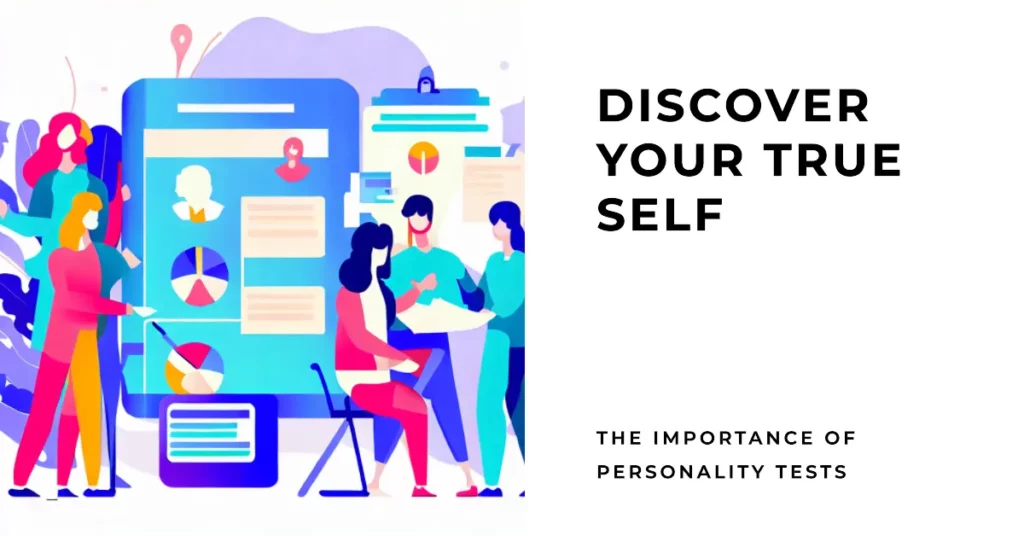
Personality, a multifaceted and intangible construct, refers to the unique pattern of thoughts, emotions, and behaviors that characterizes an individual. It’s an amalgamation of traits, cognitive processes, and motivational drivers that govern our responses to the world around us.
Personality tests, often based on diverse psychological theories, adopt diverse formats and structures to delve into the subtleties of one’s character. From the Myers-Briggs Type Indicator (MBTI) to the Big Five Personality Model, these assessments encompass an array of methodologies, each aiming to discern distinct facets of an individual’s personality.
It’s crucial to fathom the distinction between self-report and projective measures to unravel the complexities underlying these tests. Self-report instruments entail direct responses from the individual being assessed, relying on their self-awareness to reveal personality traits. Conversely, projective measures explore the subconscious mind, prompting individuals to respond to ambiguous stimuli, allowing their unconscious thoughts to surface.
Moreover, applying personality tests extends beyond individual purposes, finding utility in team dynamics and organizational settings. Companies employ these assessments during recruitment to ascertain job fit, ensuring candidates align with the company’s culture and requirements.
However, it’s imperative to interpret the results cautiously, recognizing that personality tests have inherent limitations. The complexity of human behavior transcends the boundaries of standardized assessments, making it challenging to encapsulate the entirety of one’s personality through a single evaluation.
In conclusion, understanding personality tests necessitates grasping the nuances of human character they aim to unravel. These instruments, though insightful, only offer a partial glimpse into the intricate tapestry of human nature. Embracing each individual’s diversity and idiosyncrasies remains integral to fully comprehending the human experience.
Importance of Validated and Reliable Personality Tests
The importance of validated and reliable personality tests cannot be overstated in psychological assessments. These instruments play a pivotal role in understanding the intricate nuances of human behavior and are utilized across various domains, including recruitment, counseling, and personal development.
When appropriately designed and rigorously validated, personality tests offer valuable insights into an individual’s character, motivations, and cognitive processes. They enable professionals to make informed decisions and provide personalized guidance, enhancing outcomes for individuals and organizations.
Validation is critical to ensuring a personality test’s accuracy and credibility. A validated test has undergone meticulous scientific scrutiny and empirical research to establish its efficacy in measuring the intended constructs. Through validation studies, researchers assess the test’s consistency, stability, and convergent validity to ensure it aligns with established theories and measures what it intends to measure.
Reliability, conversely, pertains to the consistency and stability of the test results over time and across diverse situations. A reliable personality test will yield consistent outcomes when administered to the same individual on multiple occasions, providing a reliable foundation for concluding their personality traits.
One of the primary benefits of utilizing validated and reliable personality tests is their ability to enhance self-awareness. By gaining a deeper understanding of their personality traits, individuals can leverage this knowledge to make more informed life choices, set realistic goals, and develop strategies to overcome challenges.
Moreover, these tests facilitate effective employee selection and team composition in organizational settings. When used in the hiring process, validated personality tests can predict job performance and job fit more accurately, ensuring that candidates align with the company culture and values.
Furthermore, reliable personality assessments can assist in conflict resolution and team dynamics by highlighting the strengths and weaknesses of team members. Understanding each team member’s personality traits fosters better communication, cooperation, and synergy among team members, ultimately leading to improved productivity and performance.
In conclusion, the importance of validated and reliable personality tests lies in their ability to provide deep insights into human behavior, and support informed decision-making in various realms. From individual self-discovery to optimizing organizational performance, these assessments are invaluable personal and professional growth tools.
Top Personality Test Apps To Unveil Your Inner Traits
1. Dimensional
In the ever-expanding realm of mobile applications, Dimensional shines as a true gem, offering a transformative and enriching experience for iPhone users seeking to delve into the depths of their psyche. As one of the best personality test apps for iPhone, Dimensional stands out for its unique approach, comprehensive insights, and user-friendly interface.
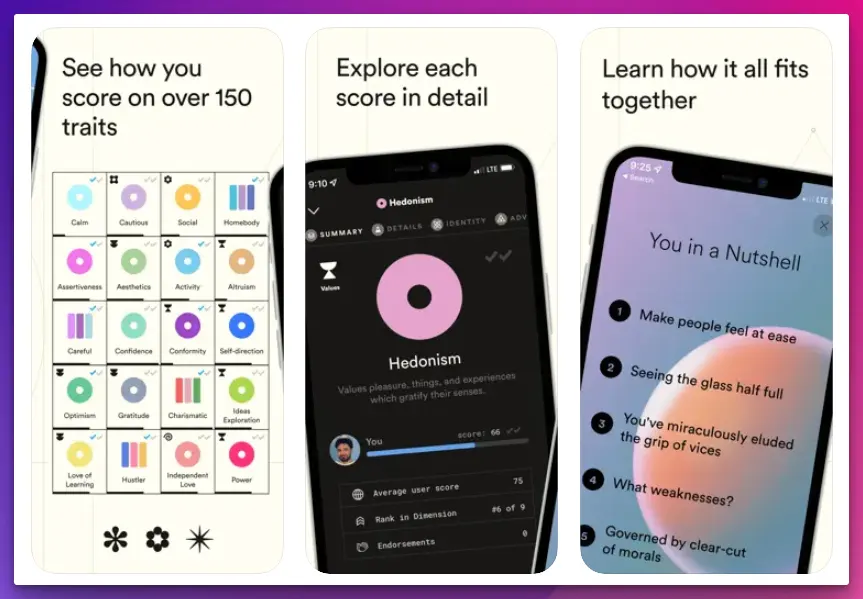
At the core of Dimensional lies a sophisticated psychometric assessment meticulously crafted by psychology and behavioral science experts. Unlike conventional personality tests, Dimensional transcends the confines of binary categorizations, embracing the multidimensionality of human character.
By employing an array of diverse traits and factors, the app provides users with a nuanced understanding of their personality, reflecting the intricacies of the human psyche.
The app’s user experience is seamless and intuitive, catering to individuals of all ages and backgrounds. Upon installation, users are guided through a thoughtfully designed questionnaire that probes various aspects of their behavior, cognition, and emotional responses. Each response contributes to a comprehensive personality profile, carefully crafted to uncover the layers of one’s character.
What truly sets Dimensional apart from other personality test apps is its emphasis on validity and reliability. Rigorous testing and validation ensure the results accurately represent an individual’s unique traits and tendencies. This enhances the user’s self-awareness and enables them to leverage this knowledge for personal growth and development.
Beyond individual introspection, Dimensional extends its utility to interpersonal dynamics. The app fosters healthier relationships and effective communication by providing detailed insights into compatibility with others.
In conclusion, Dimensional is an unparalleled choice among personality test apps for iPhone users, offering a comprehensive, scientifically validated, and user-friendly platform for self-discovery and personal growth. Whether you seek to explore the depths of your personality or enhance your interactions with others, Dimensional is an invaluable companion on your journey of self-awareness and transformation.
Pros:-
Comprehensive Insights: Dimensional offers a multidimensional approach to personality assessment, providing users with a detailed and in-depth understanding of their character traits, behavior, and emotional responses.
Scientific Validity: The app utilizes a psychometric assessment that is rigorously tested and validated, ensuring the accuracy and reliability of the results. Users can trust that the information provided is based on sound scientific principles.
User-Friendly Interface: Dimensional boasts an intuitive and user-friendly interface, making it accessible to individuals of all ages and backgrounds. The questionnaire is easy to navigate, enhancing the overall user experience.
Personal Growth: By gaining insights into their personality, users can embark on self-discovery and personal growth. The app empowers individuals to identify their strengths and weaknesses, facilitating targeted self-improvement efforts.
Interpersonal Relationships: Dimensional goes beyond individual introspection and offers valuable insights into compatibility with others. This feature can foster healthier relationships and more effective communication with friends, family, and colleagues.
Privacy and Security: The app values user privacy and ensures the confidentiality of personal data. With data protection measures in place, users can rest assured that their information is safe.
Cons:-
Limited Scope: While Dimensional provides a comprehensive assessment, it may not cover every aspect of an individual’s personality. Some users may desire a broader analysis encompassing additional traits and dimensions.
Subjective Responses: The results’ accuracy relies on users’ honesty and self-awareness when responding to the questionnaire. Biases or inaccurate self-perceptions may influence the outcomes.
Cultural Bias: Like many personality assessments, Dimensional may have a cultural bias, potentially impacting the accuracy of the results for individuals from diverse cultural backgrounds.
Solely Self-Report: The app relies on self-reporting, which may be influenced by mood fluctuations or situational factors. This limitation could affect the stability of the results over time.
Limited Professional Interpretation: While the app offers valuable insights, it may lack the depth of interpretation that a trained psychologist or counselor could provide. Users may benefit from seeking professional guidance for a more in-depth analysis.
In conclusion, Dimensional offers a range of advantages, from comprehensive insights and scientific validity to user-friendly navigation and personal growth opportunities.
However, it’s essential to consider potential limitations, such as subjective responses and the scope of the assessment, when utilizing the app for self-exploration and development. Overall, Dimensional remains a valuable tool for individuals seeking to understand themselves better and improve their interpersonal dynamics.
Download The App From Apple App Store
2. 16 Types Personality Test
The 16 Types Personality Test is a fascinating and insightful exploration into the intricacies of human behavior, cognition, and character. As one of the most popular personality tests available, it offers a unique perspective on personality typology. It sheds light on how individuals perceive and interact with the world around them.
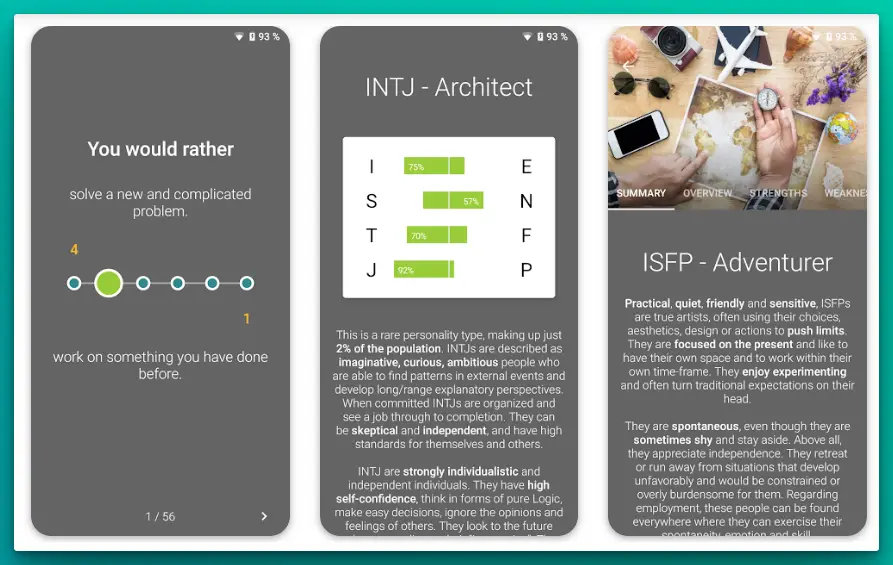
At the core of the 16 Types Personality Test lies the concept of personality typology, which categorizes individuals into distinct personality types based on their preferences and tendencies. Developed by Isabel Briggs Myers and Katharine Cook Briggs, this test is inspired by the pioneering work of psychologist Carl Jung, whose theories on personality laid the foundation for the Myers-Briggs Type Indicator (MBTI).
The test assesses four key dimensions, resulting in 16 possible personality types. Each type is represented by a unique combination of traits, such as Extraversion (E) versus Introversion (I), Sensing (S) versus Intuition (N), Thinking (T) versus Feeling (F), and Judging (J) versus Perceiving (P). This intricate amalgamation of traits generates a rich and diverse tapestry of human personality.
Users of the 16 Types Personality Test embark on a thought-provoking journey of self-discovery as the test illuminates their inherent preferences and inclinations. By understanding their personality type, individuals gain valuable insights into their strengths, potential areas of growth, and preferred ways of interacting with others.
While the test offers valuable perspectives, it is crucial to approach it with an open mind, recognizing that individuals are multidimensional and may exhibit characteristics from various personality types. As with any personality assessment, self-awareness and honest reflection are paramount to obtaining accurate and meaningful results.
In conclusion, the 16 Types Personality Test provides a captivating and informative lens through which to explore the intricacies of human nature.
As individuals gain a deeper understanding of their unique personality type, they can embrace their diversity and leverage this knowledge to foster personal growth, enhance interpersonal relationships, and navigate life’s complexities with greater insight and self-awareness.
Pros:-
Insightful Self-Discovery: The test offers users valuable insights into their personality type, helping them understand their inherent preferences, strengths, and potential areas for personal growth.
Enhanced Interpersonal Relationships: By understanding their own personality type and those of others, individuals can improve their communication and interactions with different personality types, fostering healthier and more harmonious relationships.
Applicability in Various Areas: The 16 Types Personality Test finds utility in diverse fields, such as career counseling, team building, and personal development, making it a versatile tool for individuals and professionals alike.
Framework for Personal Development: The test serves as a framework for personal growth, guiding individuals to harness their strengths and address potential challenges based on their personality type.
Positive and Empowering: Rather than focusing on weaknesses, the test highlights an individual’s strengths and contributions, promoting a positive and empowering approach to self-awareness.
Cons:-
Simplistic Categorization: The test categorizes individuals into fixed personality types, potentially oversimplifying the complexities of human behavior and character.
Limited Scientific Support: While based on psychological theories, some critics argue that the test lacks robust scientific evidence to fully support its validity and reliability.
Binary Dichotomies: The test relies on binary dichotomies (e.g., Extraversion vs. Introversion), which may not fully capture the spectrum of human personality traits.
Inflexibility of Personality Types: Personality is fluid and can change over time due to life experiences and personal growth. The test’s fixed personality types may not account for this dynamic nature.
Potential Stereotyping: The test may lead to stereotyping or bias when interpreting the results, as individuals may associate certain traits with specific personality types.
Limited Individuality: The test places individuals into predefined categories, potentially overlooking their unique qualities and idiosyncrasies.
In conclusion, the 16 Types Personality Test offers valuable insights and can be a helpful tool for personal development and understanding interpersonal dynamics. However, it’s essential to approach the test with a critical mindset, recognizing its limitations and appreciating the diverse and multifaceted nature of human personality.
Using the test as a stepping stone to greater self-awareness and growth can lead to more meaningful and fulfilling personal and professional lives.
Download The App From Google Play Store
3. Praditus Personality Test
When it comes to delving into the depths of your character and uncovering the nuances of your personality, look no further than the Praditus Personality Test. This remarkable app stands out as one of the best personality test apps for Android and iPhone, offering a transformative experience for individuals seeking self-awareness and personal growth.
At the heart of the Praditus Personality Test lies a sophisticated and scientifically validated psychometric assessment. This comprehensive evaluation encompasses various personality dimensions, providing users with a holistic understanding of their traits, behaviors, and motivations.
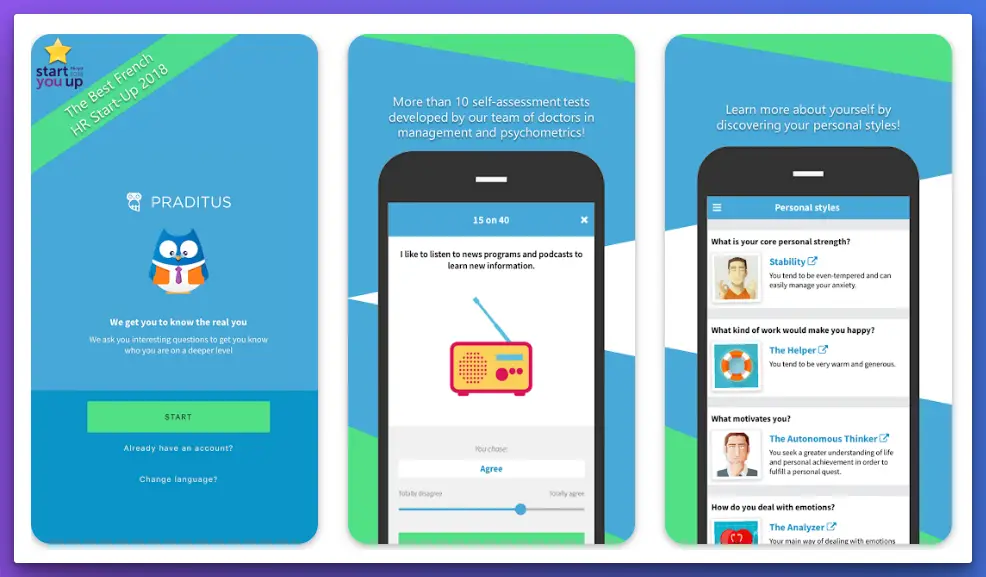
One of the app’s standout features is its adaptability to both Android and iPhone platforms. Whether you own an Android device or an iPhone, the Praditus app seamlessly caters to your preferences, ensuring accessibility to a broad audience.
Users are greeted with an intuitive, user-friendly interface, guiding them through a thoughtfully designed questionnaire. The responses provided contribute to creating a detailed personality profile, shedding light on various aspects of an individual’s character.
Praditus empowers individuals with self-discovery and extends its utility to professional settings. Companies and organizations can benefit from the app’s team-building capabilities, as it provides valuable insights into team dynamics and compatibility.
Moreover, Praditus employs cutting-edge data security measures, ensuring the confidentiality and privacy of user information. This commitment to safeguarding user data further enhances the app’s credibility and reliability.
In conclusion, the Praditus Personality Test emerges as a stellar choice among personality test apps for both Android and iPhone users. With its scientifically validated assessment, user-friendly interface, and applicability to various contexts, the app offers a transformative journey of self-awareness and personal growth.
Embrace the opportunity to unravel the complexities of your personality with Praditus and embark on a path of self-discovery like never before.
Pros:-
Scientific Validity: The app employs a scientifically validated psychometric assessment, ensuring the accuracy and reliability of the personality results.
Comprehensive Insights: Praditus offers a holistic understanding of an individual’s personality, encompassing various dimensions and traits.
User-Friendly Interface: The app’s intuitive and user-friendly interface makes it accessible and easy for Android and iPhone users to navigate.
Personal Growth: Users gain valuable insights into their strengths, weaknesses, and areas for improvement, facilitating personal development and self-awareness.
Professional Applicability: Praditus extends its utility beyond individual self-discovery, providing valuable insights for team building and professional settings.
Data Security: The app prioritizes data security, ensuring the confidentiality and privacy of user information.
Cons:-
Language Limitations: The app’s availability in specific languages may limit accessibility for users who prefer other languages.
Cultural Bias: As with any personality assessment, cultural bias may influence the results for individuals from diverse cultural backgrounds.
Fixed Personality Types: The test may categorize individuals into fixed personality types, potentially oversimplifying the complexities of human behavior.
Subjective Responses: The results’ accuracy relies on users’ honesty and self-awareness when responding to the questionnaire.
Limited Professional Interpretation: While the app offers valuable insights, it may lack the depth of interpretation that a trained psychologist or counselor could provide.
In conclusion, the Praditus Personality Test offers many benefits, from its scientific validity and comprehensive insights to its user-friendly interface and professional applicability.
However, it’s essential to approach any personality test with an open mind, recognizing potential limitations and embracing the unique complexities of human nature. Praditus remains a valuable tool for personal growth and self-awareness, supporting individuals to understand and embrace their personalities.
Download The App From Google Play Store
Download The App From Apple App Store
4. EnneaApp
EnneaApp stands as a powerful and transformative tool in the realm of self-discovery and personal growth. Available on Android and iOS platforms, this remarkable app offers a comprehensive exploration of the Enneagram system, making it a must-have for individuals seeking to understand the complexities of their personalities.
At its core, EnneaApp revolves around the Enneagram, a profound and ancient system that delves into the intricacies of human behavior and motivation.
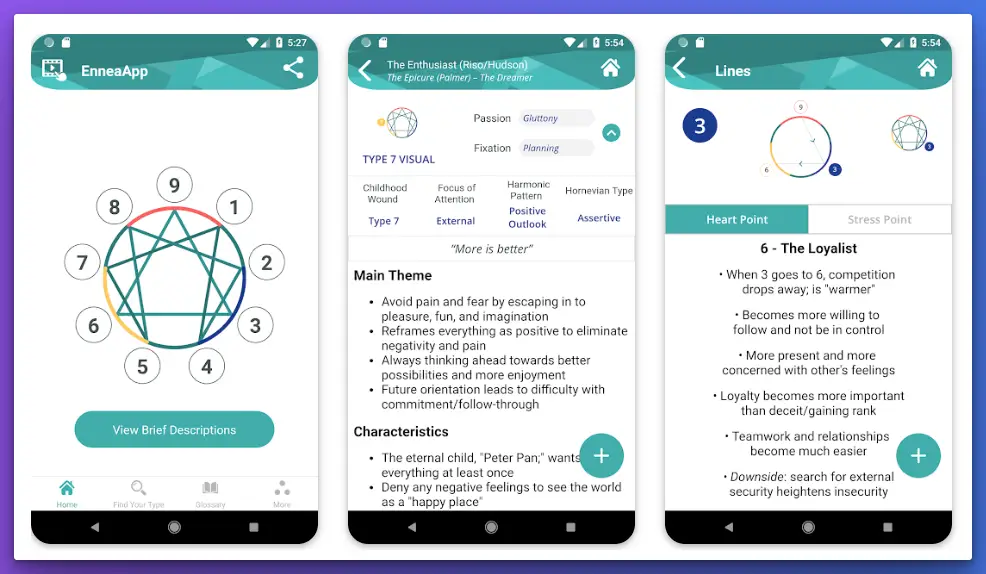
The Enneagram categorizes individuals into nine distinct personality types, each representing unique thinking patterns, feelings, and behavior patterns. By thoroughly analyzing their Enneagram type, the app offers a deep understanding of their core fears, desires, and defense mechanisms.
The app’s user-friendly interface guides users through a well-crafted questionnaire, skillfully assessing various aspects of their personality to determine their Enneagram type accurately. The results go beyond superficial labels, offering a profound and multi-dimensional portrait of each individual’s inner landscape.
One of the standout features of EnneaApp is its personalized approach to personal growth. The app illuminates an individual’s strengths and potential pitfalls and offers tailored insights and strategies for self-improvement based on their Enneagram type.
Moreover, the app provides valuable resources, including articles and podcasts, allowing users to deepen their understanding of the Enneagram system and its applications in daily life.
EnneaApp’s presence on multiple platforms, including iPad, further expands its accessibility and user reach, ensuring that individuals from various devices can benefit from its transformative potential.
In conclusion, EnneaApp is a powerful and insightful companion for self-discovery and personal growth. Through its exploration of the Enneagram system, the app provides individuals with profound insights into their personality, offering a roadmap for understanding their core motivations and fostering personal development.
Embrace the wisdom of the Enneagram with EnneaApp and unlock the transformative power of self-awareness and inner growth.
Pros:-
Comprehensive Enneagram Analysis: EnneaApp offers a thorough and accurate assessment of an individual’s Enneagram type, providing deep insights into their core motivations and personality traits.
Personalized Approach: The app goes beyond generic personality profiles, offering personalized insights and strategies for personal growth based on the user’s Enneagram type.
User-Friendly Interface: EnneaApp features a user-friendly interface that makes navigating and completing the Enneagram questionnaire easy.
Multi-Platform Availability: The app is available on Android and iOS platforms, including iPad, ensuring accessibility to a wide range of users.
Additional Resources: EnneaApp provides valuable resources, such as articles and podcasts, to further enhance users’ understanding of the Enneagram system and its practical applications.
Insightful Self-Discovery: Users gain a deeper understanding of their core fears, desires, and defense mechanisms, fostering self-awareness and personal development.
Cons:-
Subjective Responses: The accuracy of the Enneagram analysis relies on users’ self-awareness and honest responses to the questionnaire, which biases or mood fluctuations may influence.
Complexity of Enneagram: The Enneagram system can be intricate and may take time for users to grasp and integrate into their lives.
Lack of Professional Guidance: While EnneaApp offers valuable insights, it may not substitute for in-depth, personalized guidance from a trained Enneagram practitioner or therapist.
Limited to Enneagram System: The app focuses solely on the Enneagram system, which may not provide a complete picture of an individual’s personality from other perspectives.
Fixed Personality Types: As with any personality typing system, the Enneagram’s fixed personality types may not fully capture the complexity and fluidity of human behavior.
In conclusion, EnneaApp’s strengths lie in its comprehensive Enneagram analysis, personalized approach, and user-friendly interface, making it a valuable tool for self-discovery and personal growth.
However, users should be aware of potential limitations, such as subjective responses and the complexity of the Enneagram system, while utilizing the app as a guide on their journey of self-awareness and inner transformation.
Download The App From Google Play Store
Download The App From Apple App Store
5. Personality Trait Test – Redis
Personality Trait Test – Redis stands as a captivating and insightful app, offering a profound exploration into the intricacies of human behavior and character.
As a cutting-edge tool for self-discovery, this app enables individuals to gain valuable insights into their personality traits and understand the complexities that shape their unique identity.
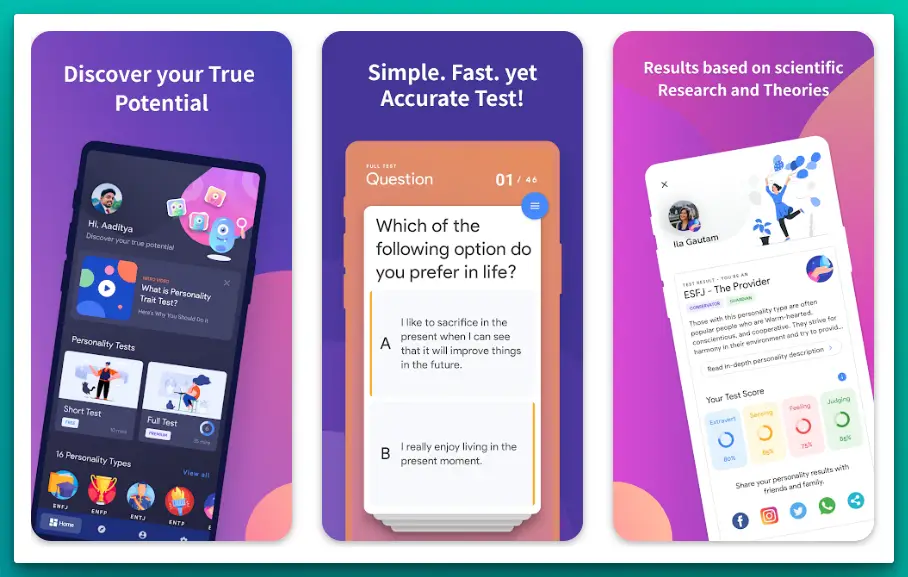
At the core of the Personality Trait Test – Redis lies a well-designed and scientifically validated assessment meticulously crafted to evaluate various dimensions of an individual’s personality.
By delving into different traits and behaviors, the test paints a multi-dimensional portrait of each user’s character, providing a holistic understanding of their strengths, weaknesses, and potential areas for growth.
The app’s user-friendly interface ensures a seamless experience for users of all backgrounds. Guided through a series of thought-provoking questions, individuals respond to prompts that skillfully analyze their preferences, cognitive patterns, and emotional responses. The results provide valuable insights into their personality, illuminating aspects that may have remained dormant or unnoticed.
One of the standout features of Personality Trait Test – Redis is its ability to foster self-awareness and personal development. Armed with a deeper understanding of their personality traits, users can embark on a transformative journey of growth and enhancement, aligning their actions with their authentic selves.
Furthermore, the app allows users to gain a deeper insight into their interpersonal dynamics. By understanding how their personality traits interact with those of others, individuals can nurture more meaningful and harmonious relationships.
In conclusion, Personality Trait Test – Redis is an invaluable companion on the path to self-discovery and personal growth. Through its scientifically validated assessment and user-friendly interface, the app empowers individuals to unravel the complexities of their character and embrace their unique identity.
Embrace the journey of self-awareness and understanding with the Personality Trait Test – Redis, and unlock the transformative potential of discovering the depths of your personality.
Pros:-
Comprehensive Personality Assessment: The app provides a thorough and multi-dimensional analysis of an individual’s personality traits, offering valuable insights into various aspects of their character.
Scientifically Validated: Personality Trait Test – Redis is based on scientific principles and has undergone validation to ensure the accuracy and reliability of the assessment.
User-Friendly Interface: The app’s intuitive and user-friendly interface makes it accessible and easy to navigate, catering to users of all backgrounds.
Enhanced Self-Awareness: By gaining a deeper understanding of their personality traits, users can foster self-awareness, leading to personal growth and self-improvement.
Insights into Interpersonal Dynamics: The app also provides valuable insights into how individuals’ personality traits interact with others, improving their interpersonal relationships.
Flexible Application: The assessment can be utilized in various contexts, from individual self-discovery to team-building exercises and personal development programs.
Cons:-
Subjective Responses: The accuracy of the results relies on users’ honest and self-aware responses to the questionnaire, which biases or mood fluctuations may influence.
Fixed Trait Analysis: The app may categorize individuals into fixed personality traits, potentially overlooking the fluidity and complexity of human behavior.
Limited Interpretation: While the app provides insights, it may not substitute for personalized guidance from a trained psychologist or counselor to interpret the results in a more profound context.
Inability to Capture All Aspects: No personality test can fully capture the entirety of an individual’s personality, and the app may not account for certain nuances or aspects of an individual’s character.
Cultural Bias: Like any personality assessment, the app may have some cultural bias, which could affect the accuracy of the results for individuals from diverse cultural backgrounds.
In conclusion, the Personality Trait Test – Redis offers a comprehensive and scientifically validated analysis of an individual’s personality traits, fostering self-awareness and personal growth. While it has its limitations, the app serves as a valuable tool for individuals seeking to explore and understand the depths of their character and improve their interpersonal interactions.
Users should approach the results with an open mind, recognizing the fluidity of human behavior and embracing the insights offered by the app as a stepping stone on their journey of self-discovery.
Download The App From Google Play Store
6. Psychotests
Psychotests stands as a captivating and enlightening app, offering a diverse array of psychological assessments that delve into the intricate workings of the human mind.
As a comprehensive platform for self-exploration and introspection, this app provides users a unique opportunity to gain valuable insights into various aspects of their cognition, personality, and emotional well-being.
At the core of Psychotests lies a rich collection of psychological assessments, each meticulously designed to evaluate specific dimensions of an individual’s psyche.
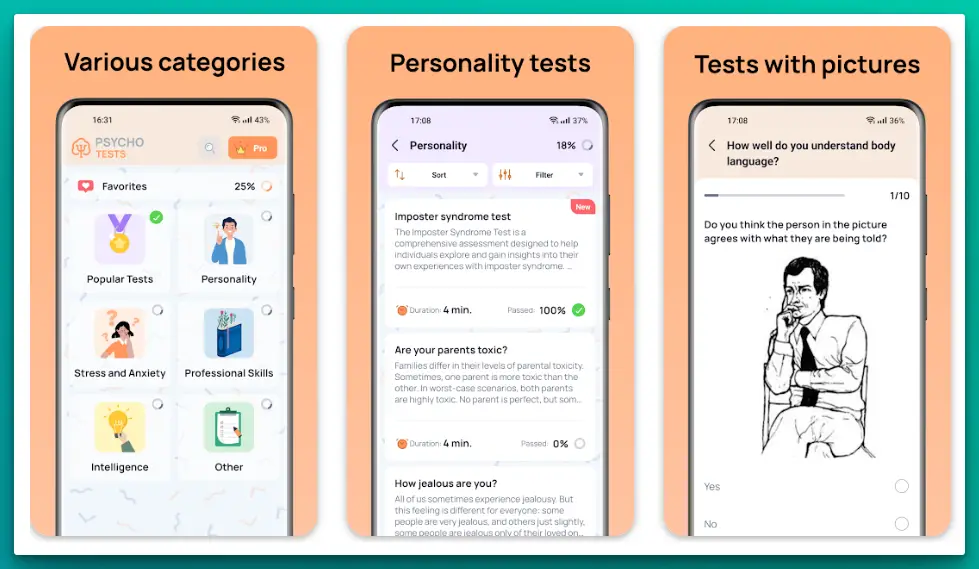
From personality tests that unveil the intricacies of character traits to cognitive assessments that explore intelligence and aptitude, the app offers a holistic and multi-faceted approach to understanding the complexities of the human mind.
The app’s user-friendly interface guides individuals through a thought-provoking journey of self-discovery. Engaging questionnaires and interactive exercises prompt users to reflect on their thoughts, feelings, and behaviors, culminating in comprehensive insights into their unique psychological makeup.
One of the standout features of Psychotests is its emphasis on personalized feedback and self-awareness. The app provides users with their test scores and offers detailed interpretations and actionable recommendations for personal growth and development.
Furthermore, the diversity of tests available on Psychotests caters to various needs and interests. Whether users seek to understand their cognitive strengths, explore their personality, or assess their emotional well-being, the app provides a wealth of psychological assessments to suit their preferences.
In conclusion, Psychotests emerges as a captivating and transformative platform for self-exploration and introspection. Through its comprehensive psychological assessments and user-friendly interface, the app empowers individuals to unravel the depths of their minds and gain valuable insights into their cognition, personality, and emotions.
Embrace the journey of self-awareness and personal growth with Psychotests, and unlock the transformative potential of understanding the intricacies of your psyche.
Pros:-
Comprehensive Psychological Assessments: The app offers a diverse collection of psychological tests, covering various dimensions of an individual’s cognition, personality, and emotional well-being.
User-Friendly Interface: The app’s intuitive and user-friendly interface makes it accessible and easy to navigate for users of all backgrounds.
Personalized Feedback: Psychotests provides users with detailed interpretations and actionable recommendations based on their test results, fostering self-awareness and personal growth.
Versatility: The app caters to various needs and interests, offering tests to suit different preferences and goals.
Insightful Self-Exploration: Through engaging questionnaires and exercises, individuals gain valuable insights into their thoughts, feelings, and behaviors, fostering a deeper understanding of their psychological makeup.
Cons:-
Limited Professional Interpretation: While the app provides valuable insights, it may not substitute for personalized guidance from a trained psychologist or counselor to interpret the results in a more profound context.
Subjective Responses: The accuracy of the results relies on users’ honest and self-aware responses to the questionnaires, which biases or mood fluctuations may influence.
In-App Purchases: Some advanced tests or features may require in-app purchases, limiting access to certain content for users who prefer free options.
Cultural Bias: As with any psychological assessment, the app may have some cultural bias, which could affect the accuracy of the results for individuals from diverse cultural backgrounds.
Test Accuracy: The app’s assessments may not be as scientifically rigorous as tests administered by licensed professionals, potentially impacting the precision of the results.
In conclusion, Psychotests offers a comprehensive platform for self-exploration and introspection, providing valuable insights into an individual’s cognition, personality, and emotional well-being.
While it has its limitations, the app serves as a valuable tool for individuals seeking to gain a deeper understanding of their psychological makeup and embark on a journey of self-awareness and personal growth.
Users should approach the results with an open mind, recognizing the app’s potential and considering the benefits of seeking professional guidance for a more profound and personalized psychological assessment.
Download The App From Google Play Store
7. Know Yourself Personality Test
Embark on a profound journey of self-discovery with the Know Yourself Personality Test app. This captivating and introspective tool offers a transformative experience for individuals seeking a deeper understanding of their personality, emotions, and behavior.
At the heart of the Know Yourself Personality Test lies a comprehensive and scientifically validated assessment thoughtfully designed to explore various facets of an individual’s psyche. The app delves into the complexities of cognition, emotions, and interpersonal dynamics through engaging questionnaires and interactive exercises.
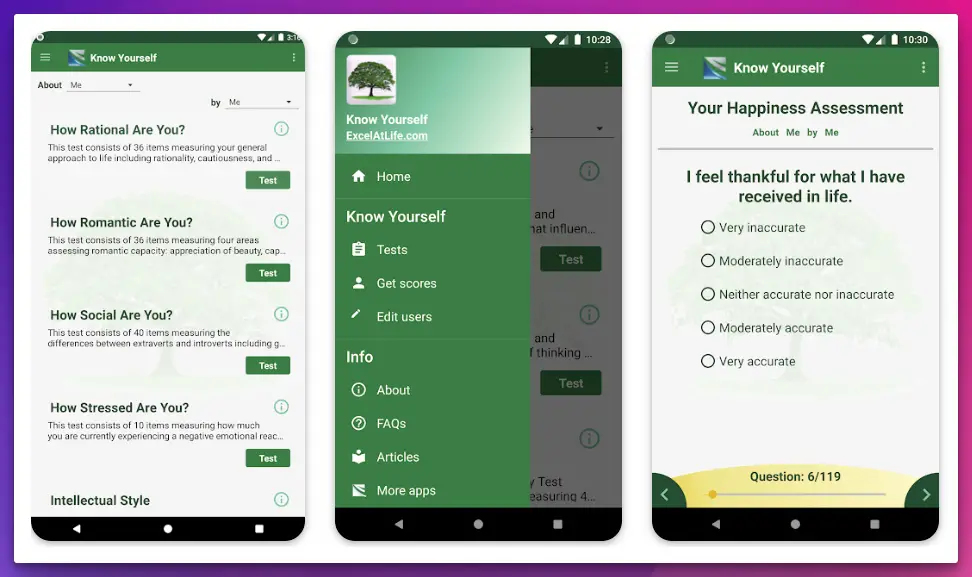
Unravel the intricacies of your personality as the app provides valuable insights into your traits, preferences, and tendencies. Discover hidden strengths, uncover potential growth areas, and deeply understand your unique identity.
One of the standout features of the Know Yourself Personality Test is its adaptability to individual needs. Whether seeking to improve your emotional intelligence, understand your behavioral patterns, or explore your communication style, the app offers various tests to suit your preferences.
The app’s user-friendly interface ensures a seamless and enriching experience for users of all backgrounds. As you progress through the assessments, the app generates detailed and personalized reports, providing an in-depth analysis of your personality.
Furthermore, the Know Yourself Personality Test transcends traditional personality assessments by delving into emotional regulation, stress management, and personal growth. It empowers individuals to make positive life changes based on newfound self-awareness.
In conclusion, the Know Yourself Personality Test is a compelling and transformative platform for self-discovery and introspection. The app’s comprehensive assessments and user-friendly interface enable individuals to gain profound insights into their personality, emotions, and behavior.
Embrace the opportunity to know yourself like never before and unlock the transformative power of self-awareness with the Know Yourself Personality Test.
Pros:-
Comprehensive Self-Discovery: The app offers a comprehensive exploration of an individual’s personality, emotions, and behavior, providing valuable insights into various aspects of self-discovery.
Scientifically Validated: Know Yourself Personality Test is based on scientific principles and validated assessments, ensuring the accuracy and reliability of the results.
User-Friendly Interface: The app’s user-friendly interface makes it accessible and easy to navigate for users of all backgrounds, enhancing the overall user experience.
Personalized Reports: The app generates detailed and personalized reports, offering in-depth analyses tailored to each individual’s unique personality.
Emphasis on Personal Growth: Know Yourself Personality Test goes beyond traditional personality assessments, focusing on emotional regulation, stress management, and personal development.
Adaptability to Individual Needs: The app offers a diverse range of tests to suit individual preferences and goals, catering to various aspects of self-exploration.
Cons:-
Subjective Responses: The accuracy of the results relies on users’ honest and self-aware responses to the questionnaires, which biases or mood fluctuations may influence.
Limited to Self-Reporting: The app solely relies on self-reporting, which may not accurately capture certain aspects of an individual’s personality.
Inability to Replace Professional Guidance: While the app provides valuable insights, it may not substitute for personalized guidance from a trained psychologist or counselor for a more profound understanding.
Potential Cultural Bias: Like any personality assessment, the app may have some cultural bias, affecting the accuracy of the results for individuals from diverse cultural backgrounds.
Complexity of Human Behavior: No personality test can fully capture the entirety of an individual’s personality, and the app may not account for certain nuances or complexities in behavior.
In conclusion, the Know Yourself Personality Test offers a compelling and insightful platform for self-discovery and introspection. While it has its limitations, the app serves as a valuable tool for individuals seeking to gain a deeper understanding of their personality, emotions, and behavior.
Users should approach the results with an open mind, recognizing the app’s potential and appreciating the benefits of seeking professional guidance for a more profound and personalized self-exploration journey.
Download The App From Google Play Store
8. IQ, EQ Tests – Psychometrica
IQ, EQ Tests – Psychometrica is a powerful and all-encompassing app, offers a profound exploration into cognitive and emotional intelligence.
As a comprehensive platform for self-assessment, this app provides individuals with a unique opportunity to measure and understand their intellectual capabilities and emotional aptitude.
At the core of IQ, EQ Tests – Psychometrica lies a diverse collection of scientifically validated tests designed to evaluate an individual’s cognitive intelligence (IQ) and emotional intelligence (EQ).
Through engaging and thought-provoking assessments, the app delves into various facets of intelligence, providing a holistic understanding of an individual’s strengths and areas for development.
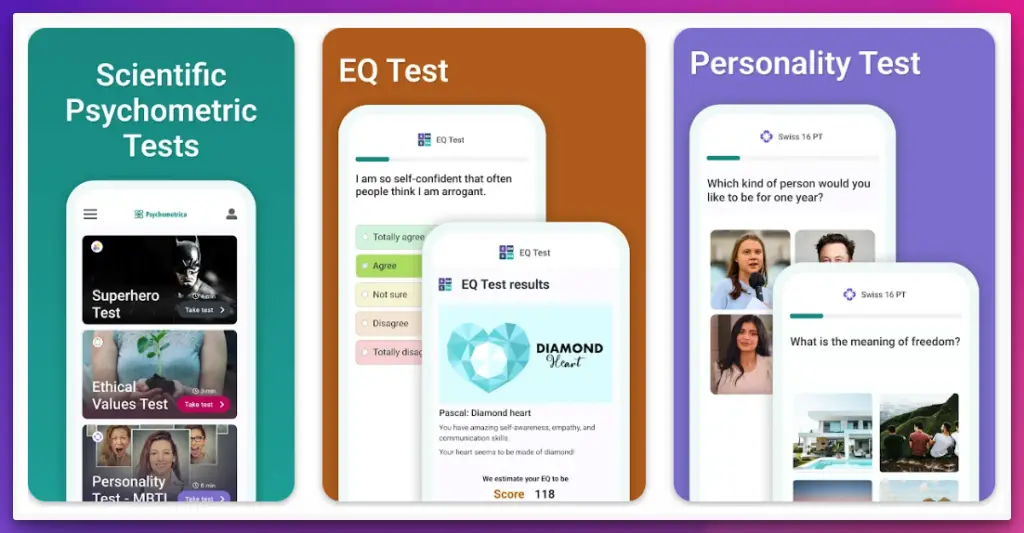
Unravel the intricacies of your cognitive prowess as the app presents you with challenging questions and puzzles. The IQ tests assess problem-solving skills, logical reasoning, and abstract thinking, offering a quantitative measure of cognitive aptitude.
Furthermore, EQ Tests – Psychometrica delves into emotional intelligence, which encompasses self-awareness, empathy, and interpersonal skills. The emotional intelligence assessments explore an individual’s ability to understand and manage their emotions, as well as their capacity for building meaningful relationships with others.
The app’s user-friendly interface ensures a seamless and enriching experience for users of all backgrounds. As individuals complete the assessments, IQ, EQ Tests – Psychometrica generates detailed reports, providing an in-depth analysis of their cognitive and emotional intelligence.
One of the standout features of IQ, EQ Tests – Psychometrica is its emphasis on personalized feedback and growth. Based on the test results, the app offers tailored insights and recommendations, guiding users on their self-improvement and personal development journey.
In conclusion, IQ, EQ Tests – Psychometrica is a comprehensive and transformative platform for measuring and understanding cognitive and emotional intelligence. The app empowers individuals to gain profound insights into their intellectual capabilities and emotional aptitude through its scientifically validated assessments and user-friendly interface.
Embrace the opportunity to explore and enhance your cognitive and emotional intelligence with IQ, EQ Tests – Psychometrica and unlock the transformative power of self-awareness and personal growth.
Pros:-
Comprehensive Assessment: The app offers a diverse range of scientifically validated tests to evaluate cognitive intelligence (IQ) and emotional intelligence (EQ), providing a comprehensive measure of an individual’s abilities.
Personalized Feedback: IQ, EQ Tests – Psychometrica provides detailed reports with personalized insights and recommendations, guiding users on their self-improvement and personal development journey.
User-Friendly Interface: The app’s user-friendly interface makes it accessible and easy to navigate for users of all backgrounds, enhancing the overall user experience.
Quantitative and Qualitative Measures: The app provides quantitative scores for IQ tests and qualitative insights for EQ assessments, offering a well-rounded understanding of intelligence.
Scientific Validity: The tests are based on scientific principles and have undergone validation, ensuring the accuracy and reliability of the results.
Versatility: The app caters to individuals seeking to measure and enhance both their cognitive and emotional intelligence, making it a versatile tool for personal growth.
Cons:-
Subjective Responses: The accuracy of the results relies on users’ honest and self-aware responses to the assessments, which biases or mood fluctuations may influence.
Limited to Self-Reporting: The app solely relies on self-reporting, which may not accurately capture certain aspects of an individual’s intelligence.
Inability to Replace Professional Evaluation: While the app provides valuable insights, it may not substitute for a comprehensive evaluation by a trained psychologist or counselor.
Emotional Intelligence Complexity: Assessing emotional intelligence can be intricate, and the app’s evaluations may not fully capture the nuances and complexities of EQ.
Cultural Bias: As with any intelligence assessment, the app may have some cultural bias, affecting the accuracy of the results for individuals from diverse cultural backgrounds.
In conclusion, IQ, EQ Tests – Psychometrica offers a comprehensive and insightful platform for measuring cognitive and emotional intelligence. While it has its limitations, the app serves as a valuable tool for individuals seeking to gain a deeper understanding of their intellectual capabilities and emotional aptitude.
Users should approach the results with an open mind, recognizing the app’s potential and considering the benefits of seeking professional evaluation for a more comprehensive understanding of their intelligence.
Download The App From Google Play Store
9. Charma
Charma emerges as a captivating and transformative personality test app, catering to Android and iPhone users. With its innovative approach and comprehensive assessments, this app is one of the best personality test apps available for individuals seeking profound insights into their unique character.
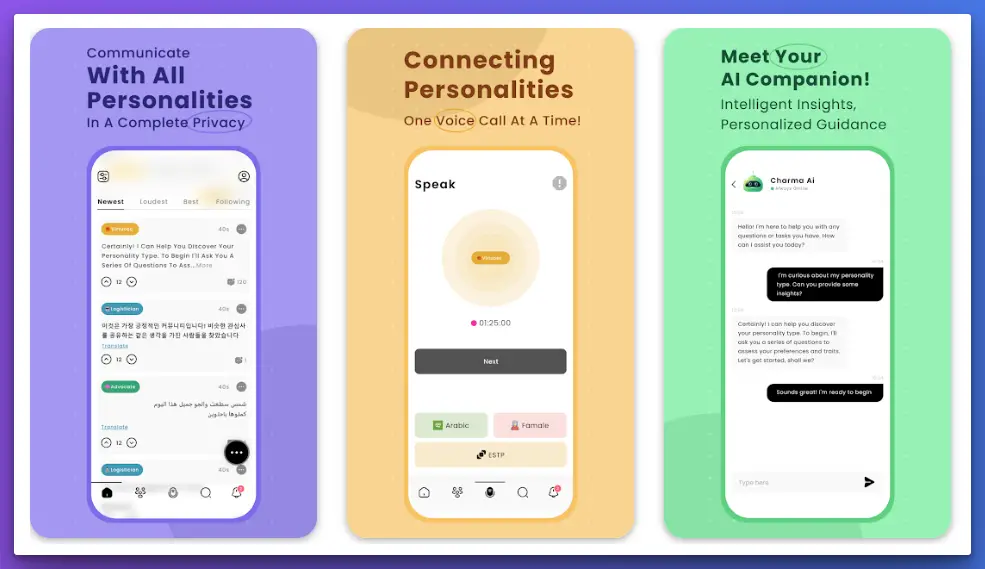
At the heart of Charma lies a sophisticated and well-crafted assessment designed to explore various facets of an individual’s personality. Through engaging and thought-provoking questions, the app delves into an individual’s traits, preferences, and behaviors, offering a holistic understanding of their strengths and areas for growth.
The user-friendly interface ensures a seamless experience, guiding users through the assessment process easily and clearly. Upon completion, the app generates detailed reports, giving users in-depth analyses of their personalities and offering valuable insights.
One of the standout features of Charma is its emphasis on personal growth and development. Beyond merely categorizing individuals into fixed personality types, the app offers tailored recommendations for self-improvement, empowering users to make positive changes based on newfound self-awareness.
Moreover, Charma fosters a deeper appreciation of interpersonal dynamics by exploring how different personality types interact. This aspect enhances the app’s utility for individual self-discovery and improving relationships and team dynamics.
In conclusion, Charma is a powerful and transformative tool for self-exploration and introspection, available on Android and iPhone platforms. Through its comprehensive assessments, user-friendly interface, and focus on personal growth, the app empowers individuals to embrace their unique personality traits and embark on a journey of self-awareness and personal development.
Embrace the wisdom of Charma and unlock the transformative power of understanding your personality’s depths on Android and iPhone devices.
Pros:-
Comprehensive Personality Assessment: Charma offers a sophisticated and well-crafted assessment that explores various facets of an individual’s personality, providing a holistic understanding of their traits and behaviors.
User-Friendly Interface: The app’s intuitive and user-friendly interface makes it accessible and easy to navigate for users of all backgrounds, enhancing the overall user experience.
Tailored Recommendations: Charma goes beyond generic personality types and offers personalized recommendations for self-improvement, empowering users to make positive changes based on newfound self-awareness.
Interpersonal Dynamics: The app explores how different personality types interact with one another, enhancing its utility in improving relationships and team dynamics.
Availability on Multiple Platforms: Charma is available on Android and iPhone devices, catering to many users.
Insightful Reports: Upon completing the assessment, the app generates detailed reports, giving users in-depth analyses of their personalities and offering valuable insights.
Cons:-
Subjective Responses: The accuracy of the results relies on users’ honest and self-aware responses to the questions, which biases or mood fluctuations may influence.
Limited to Self-Reporting: The app solely relies on self-reporting, which may not accurately capture certain aspects of an individual’s personality.
Fixed Personality Typing: Charma’s categorization into fixed personality types may not fully capture the complexity and fluidity of human behavior.
Inability to Replace Professional Evaluation: While the app provides valuable insights, it may not substitute for a comprehensive evaluation by a trained psychologist or counselor.
Cultural Bias: Like any personality assessment, the app may have some cultural bias, affecting the accuracy of the results for individuals from diverse cultural backgrounds.
In conclusion, Charma – Best Personality Test App offers a comprehensive and insightful platform for self-exploration and introspection. While it has its limitations, the app serves as a valuable tool for individuals seeking to gain a deeper understanding of their personality traits and behaviors.
Users should approach the results with an open mind, recognizing the app’s potential and considering the benefits of seeking professional evaluation for a more profound understanding of their personality.
Download The App From Google Play Store
Download The App From Apple App Store
10. The Personality Types
The Personality Types app offers a captivating and transformative experience, delving into the depths of self-discovery and unveiling the intricacies of human behavior. With its availability on iPhone and iPad platforms, this app is a valuable tool for individuals seeking profound insights into their unique personalities.
At the heart of The Personality Types lies a comprehensive and scientifically validated assessment designed to explore various facets of an individual’s psyche. Through a series of thought-provoking questions and interactive exercises, the app delves into an individual’s traits, preferences, and behaviors, offering a holistic understanding of their strengths and areas for growth.
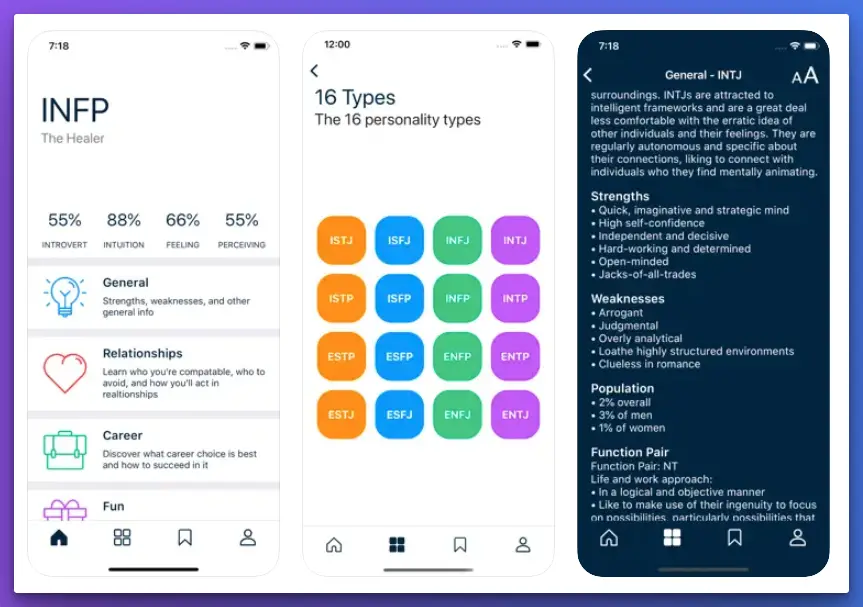
The app’s user-friendly interface ensures a seamless and enriching user experience, guiding them through the assessment process easily and clearly. Upon completion, the app generates detailed reports, giving users in-depth analyses of their personalities and offering valuable insights.
One of the standout features of The Personality Types is its emphasis on personal growth and development. Beyond merely categorizing individuals into fixed personality archetypes, the app offers tailored recommendations for self-improvement, empowering users to make positive changes based on newfound self-awareness.
Moreover, The Personality Types foster a deeper appreciation of interpersonal dynamics by exploring how different personality types interact. This aspect enhances the app’s utility for individual self-discovery and improving relationships and team dynamics.
In conclusion, The Personality Types is a captivating and transformative platform for self-exploration and introspection, available on iPhone and iPad devices.
Through its comprehensive assessments, user-friendly interface, and focus on personal growth, the app empowers individuals to embrace their unique personality traits and embark on a journey of self-awareness and personal development.
Embrace the wisdom of The Personality Types and unlock the transformative power of understanding the depths of your personality.
Pros:-
Comprehensive Personality Assessment: The app offers a comprehensive and scientifically validated assessment, providing a holistic understanding of an individual’s personality traits, preferences, and behaviors.
User-Friendly Interface: The app’s intuitive and user-friendly interface makes it accessible and easy to navigate for users on both iPhone and iPad devices, enhancing the overall user experience.
Personalized Recommendations: The Personality Types app goes beyond generic categorizations and offers tailored recommendations for self-improvement, empowering users to make positive changes based on newfound self-awareness.
Insightful Reports: Upon completing the assessment, the app generates detailed reports, giving users in-depth analyses of their personalities and offering valuable insights.
Interpersonal Dynamics: The app explores how different personality types interact, making it useful for improving relationships and team dynamics.
Availability on Multiple Platforms: The Personality Types app is available on iPhone and iPad, catering to many users.
Cons:-
Subjective Responses: The accuracy of the results relies on users’ honest and self-aware responses to the assessment questions, which biases or mood fluctuations may influence.
Fixed Personality Typing: The app may categorize individuals into fixed personality archetypes, which may not fully capture the complexity and fluidity of human behavior.
Inability to Replace Professional Evaluation: While the app provides valuable insights, it may not substitute for a comprehensive evaluation by a trained psychologist or counselor.
Cultural Bias: Like any personality assessment, the app may have some cultural bias, affecting the accuracy of the results for individuals from diverse cultural backgrounds.
Limited Contextual Analysis: The app’s assessments may not consider individual circumstances and life experiences, potentially impacting the interpretation of results.
In conclusion, The Personality Types app offers a comprehensive and insightful platform for self-exploration and introspection. While it has its limitations, the app serves as a valuable tool for individuals seeking to gain a deeper understanding of their personality traits and behaviors.
Users should approach the results with an open mind, recognizing the app’s potential and considering the benefits of seeking professional evaluation for a more profound understanding of their personality.
Download The App From Apple App Store
11. Psychological tests By nixGames
Psychological Tests By nixGames stands as a captivating and enlightening app, offering a diverse array of psychological assessments that delve into the intricate workings of the human mind.
As a comprehensive platform for self-exploration and introspection, this app provides users a unique opportunity to gain valuable insights into various aspects of their cognition, personality, and emotional well-being.
At the core of Psychological Tests By nixGames lies a rich collection of psychological assessments, each meticulously designed to evaluate specific dimensions of an individual’s psyche.
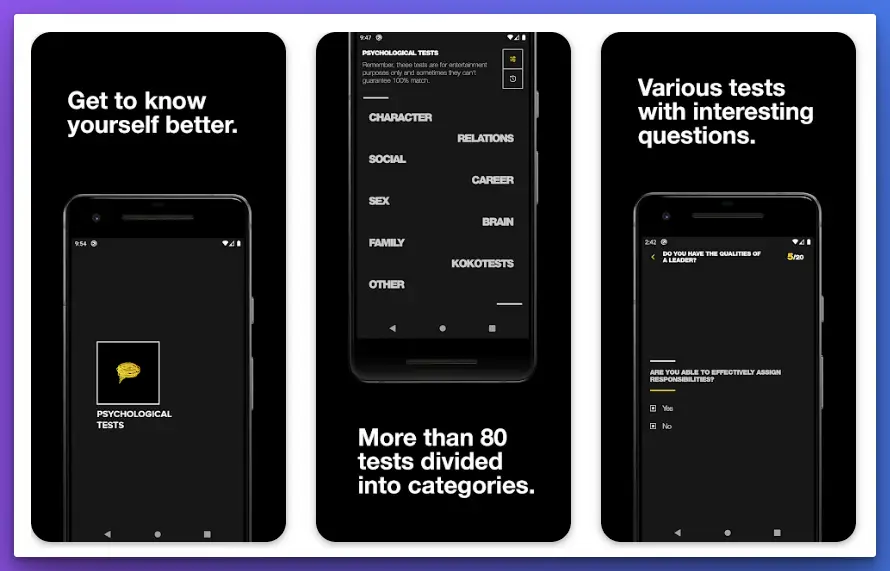
From personality tests that unveil the intricacies of character traits to cognitive assessments that explore intelligence and aptitude, the app offers a holistic and multi-faceted approach to understanding the complexities of the human mind.
The app’s user-friendly interface guides individuals through a thought-provoking journey of self-discovery. Engaging questionnaires and interactive exercises prompt users to reflect on their thoughts, feelings, and behaviors, culminating in comprehensive insights into their unique psychological makeup.
One of the standout features of Psychological Tests By nixGames is its emphasis on personalized feedback and self-awareness. The app provides users with their test scores and offers detailed interpretations and actionable recommendations for personal growth and development.
Furthermore, the diversity of tests available on Psychological Tests By nixGames caters to various needs and interests. Whether users seek to understand their cognitive strengths, explore their personality, or assess their emotional well-being, the app provides a wealth of psychological assessments to suit their preferences.
In conclusion, Psychological Tests By nixGames emerges as a captivating and transformative platform for self-exploration and introspection. Through its comprehensive psychological assessments and user-friendly interface, the app empowers individuals to unravel the depths of their mind and gain valuable insights into their cognition, personality, and emotions.
Embrace the journey of self-awareness and personal growth with Psychological Tests By nixGames, and unlock the transformative potential of understanding the intricacies of your psyche.
Pros:-
Diverse Psychological Assessments: The app offers a wide range of psychological tests, catering to various aspects of an individual’s cognition, personality, and emotional well-being.
User-Friendly Interface: The app’s user-friendly interface makes it accessible and easy to navigate, providing a seamless experience for users.
Personalized Feedback: Psychological Tests By nixGames provides users with detailed interpretations and actionable recommendations, fostering self-awareness and personal growth.
Comprehensive Insights: The app offers comprehensive insights into an individual’s unique psychological makeup through engaging questionnaires and interactive exercises.
Multi-Faceted Approach: The app takes a holistic approach to understanding the complexities of the human mind, encompassing personality, cognition, and emotional aspects.
Versatility: Whether users are interested in understanding their cognitive strengths or exploring their personality, the app offers a wealth of assessments to suit different preferences.
Cons:-
Limited to Self-Reporting: The accuracy of the results relies on users’ honest and self-aware responses to the assessments, which biases or mood fluctuations may influence.
In-App Purchases: Some advanced tests or features may require in-app purchases, limiting access to certain content for users who prefer free options.
Professional Guidance: While the app provides valuable insights, it may not substitute for personalized guidance from a trained psychologist or counselor for a more profound interpretation.
Cultural Bias: Like any psychological assessment, the app may have some cultural bias, which could affect the accuracy of the results for individuals from diverse cultural backgrounds.
The complexity of Human Mind: No psychological test can fully capture the entirety of an individual’s mind, and the app’s assessments may not account for certain nuances or complexities in behavior.
In conclusion, Psychological Tests By nixGames offers a diverse and insightful platform for self-exploration and introspection. While it has its limitations, the app serves as a valuable tool for individuals seeking to gain a deeper understanding of their cognition, personality, and emotional well-being.
Users should approach the results with an open mind, recognizing the app’s potential and considering the benefits of seeking professional guidance for a more profound and personalized psychological assessment.
Download The App From Google Play Store
How to Use the Results from Personality Test Apps
Personality test apps have gained popularity as intriguing tools for self-discovery and introspection. These apps utilize a variety of assessments to uncover aspects of an individual’s personality, behavior, and cognitive traits.
Yet, obtaining the results from these tests is merely the first step. The true value lies in effectively using these insights to enhance self-awareness, personal growth, and interpersonal dynamics. Here are some practical ways to make the most of the results from personality test apps.
1. Embrace Self-Awareness: The results of a personality test can shed light on strengths and areas for development. Embrace this newfound self-awareness by acknowledging your positive traits and recognizing potential areas where personal growth is possible. This awareness forms the foundation for improvement.
2. Set Realistic Goals: Use the insights from the personality test to set realistic and achievable personal goals. Whether enhancing emotional intelligence, improving communication skills, or managing stress better, having clear objectives based on the test results can drive meaningful self-improvement.
3. Tailor Personal Development: Personality test apps often provide personalized feedback and recommendations for growth. Utilize these insights to tailor your personal development journey. Invest time in activities and practices that align with your personality traits and goals.
4. Enhance Interpersonal Relationships: Understanding your personality can also improve your interactions with others. Recognize the diverse personality types around you and adapt your communication and behavior accordingly to foster better relationships.
5. Seek Professional Guidance: While personality test apps provide valuable insights, they may not replace the expertise of a trained psychologist or counselor. Consider seeking professional guidance to understand better the results and how they impact your life.
6. Reflect on Career Choices: Personality test results can offer valuable guidance in career decisions. Reflect on the traits and skills that align with your personality and explore career paths that capitalize on these attributes.
7. Cultivate Emotional Intelligence: Pay attention to the emotional intelligence aspects highlighted in the test results. Improve your emotional awareness, empathy, and communication skills to build healthier relationships.
8. Be Open to Change: Personality is not fixed and can evolve. Embrace change and growth, knowing your personality can adapt and develop through life experiences and self-awareness.
9. Avoid Stereotyping: Personality test results should not be used to stereotype or label yourself or others. Remember that these tests are tools for self-understanding, not definitive character judgments.
10. Regularly Revisit Results: As time passes, reassess the results from the personality test. Review your progress, reassess your goals, and reflect on any personality or behavior changes.
In conclusion, personality test apps can be powerful tools for self-exploration and personal growth. Utilizing the results effectively involves embracing self-awareness, setting goals, and tailoring personal development.
Individuals can make the most of the insights gained from these apps by reflecting on career choices, cultivating emotional intelligence, and seeking professional guidance. Remember that personality is dynamic, and as you evolve, your self-awareness will deepen, and your path to personal growth will continue to flourish.
📗FAQ’s
Is there an app that describes your personality?
Several apps are available that aim to delve into the depths of your personality and provide insightful descriptions. These apps utilize various assessment techniques, including quizzes and self-evaluation tools, to analyze behavioral patterns, traits, and preferences.
What is the most accurate online personality test?
The concept of “accuracy” in personality tests can vary, but the Big Five Personality Test is widely regarded as one of the most scientifically validated and reliable assessments. It examines five core dimensions of personality: openness, conscientiousness, extraversion, agreeableness, and emotional stability.
Is there a free personality test?
Indeed, there are numerous free personality tests accessible online. These tests can provide valuable insights into your personality, allowing you to gain self-awareness and personal growth without financial burden.
What is the most trusted personality test?
The Myers-Briggs Type Indicator (MBTI) is often considered one of the most trusted and well-known personality tests. It categorizes individuals into 16 different personality types based on preferences related to perception and decision-making.
Is there a test to see what personality type you are?
Absolutely! Personality tests, including the MBTI above and the Big Five Personality Test, can help identify your unique personality type and shed light on your behavioral tendencies.
Is there an app that identifies what you are looking at?
Indeed, several image recognition apps can identify objects, plants, animals, and even landmarks from pictures you take or upload. These apps use advanced algorithms and AI to provide accurate identifications.
What’s the rarest personality type?
In the MBTI system, the INFJ personality type is considered one of the rarest, representing introverted, intuitive, feeling, and judging individuals.
What is better than Myers-Briggs?
The Big Five Personality Test is often regarded as a more comprehensive and scientifically validated alternative to the Myers-Briggs Type Indicator due to its broader focus on personality traits.
What is the most widely used personality test?
The Myers-Briggs Type Indicator (MBTI) remains one of the most widely used personality tests globally, employed in various settings, including workplaces and educational institutions.
Can you take the Myers-Briggs personality test online for free?
Some websites and platforms offer free versions of the MBTI test, allowing you to explore your personality type at no cost.
What is the Big Five personality test?
The Big Five Personality Test assesses five fundamental dimensions of personality: openness, conscientiousness, extraversion, agreeableness, and emotional stability. It is a widely recognized and extensively researched model in personality psychology.
Is The Myers-Briggs Personality Test worth it?
The value of the Myers-Briggs test depends on individual preferences. While some find it enlightening and insightful, others criticize its lack of scientific rigor and potential for oversimplification.
What is the best personality test to understand yourself?
The best personality test for understanding oneself can vary from person to person. The Big Five Personality Test and the Enneagram are popular for their depth and accuracy.
What is the most common personality type?
In the MBTI system, the ISFJ personality type is considered one of the most common, representing introverted individuals, sensing, feeling, and judging.
How reliable is the 16 personalities test?
The 16 Personalities test, based on the MBTI model, has gained popularity but remains a subject of debate among psychologists. While it provides insights, its scientific validity is a matter of scrutiny.
Is Truity accurate?
Truity is one of the platforms that offer the 16 Personalities test. Its accuracy can vary depending on how honestly the test-taker responds to the questions.
What are the 7 different personality types?
The concept of “7 different personality types” is commonly associated with the Enneagram model, which categorizes individuals into nine distinct types, each representing specific motivations and behaviors.
Can I take a picture and have Google identify it?
Yes, Google Lens is an example of a powerful image recognition tool that allows you to take a picture and receive information about the identified object.
Can you take a picture of something and search it?
Absolutely! Many search engines and apps employ image recognition technology, enabling you to search for information about objects from pictures you capture.
Is there an app to search by picture?
Yes, apps like Google Lens, TinEye, and CamFind allow you to search for information using images.
What personality type is hard to read?
Individuals with the INTP personality type, characterized by introversion, intuition, thinking, and perceiving, can sometimes be challenging to read due to their reserved and analytical nature.
What is the most mysterious personality type?
The INFJ personality type is often described as mysterious due to their complex and private inner world and their empathetic and intuitive nature.
What is the second rarest personality?
Within the MBTI framework, the INTJ personality type is considered the second rarest, representing introverted, intuitive, thinking, and judging individuals.
What is Barack Obama Myers Briggs type?
Barack Obama’s reported MBTI type is ENFJ, denoting an extroverted, intuitive, feeling, and judging individual.
What is Elon Musk’s Myers Briggs type?
Elon Musk’s reported MBTI type is INTJ, indicating an introverted, intuitive, thinking, and judging individual.
What is the unhappiest Myers Briggs type?
While happiness is subjective and can vary for each individual, some suggest that the INFP personality type may struggle with emotional challenges more than others due to their sensitive and idealistic nature.
What personality test do most employers use?
Many employers use the MBTI and the Big Five Personality Test as part of their hiring and team-building processes to understand candidates’ personalities and potential compatibility.
Is Myers-Briggs scientifically valid?
The scientific validity of the Myers-Briggs Type Indicator has been a topic of debate within the psychological community, with critics pointing to its lack of empirical evidence and inconsistent results.
Why do people love MBTI?
People are drawn to the MBTI for various reasons, including its potential for providing insights into their behaviors, preferences, and communication styles, fostering self-awareness and personal growth.
Why is the Myers Briggs test not valid?
Critics argue that the Myers-Briggs test lacks scientific rigor, with concerns surrounding its reliability, validity, and the risk of pigeonholing individuals into overly simplistic categories.
Is the 16 personalities test the same as Myers-Briggs?
The 16 Personalities test is based on the same principles as the Myers-Briggs Type Indicator, categorizing individuals into 16 personality types derived from four dichotomies. Still, it is not identical in every aspect.
Do I have a neurotic personality?
Neuroticism is one of the traits assessed in the Big Five Personality Test. It reflects a tendency towards negative emotions, anxiety, and emotional instability.
What are the four types of personality traits?
Personality traits are often categorized into four core dimensions: openness, conscientiousness, extraversion, and agreeableness, which are assessed in the Big Five Personality Test.
What is a Machiavellian character?
A Machiavellian character is someone exhibiting traits associated with manipulation, deceit, and a strategic approach to achieving personal goals, named after the political philosopher Niccolò Machiavelli.
At what age is Myers-Briggs accurate?
The accuracy of the Myers-Briggs Type Indicator is believed to improve with age, as individuals develop a more stable and defined personality over time.
What is the disadvantage of Myers-Briggs?
One of the disadvantages of the Myers-Briggs test is its potential for oversimplification, as individuals may not fit neatly into predefined personality categories.
What are the cons of the Myers-Briggs test?
Critics highlight several cons of the Myers-Briggs test, including its lack of scientific basis, poor predictive validity, and susceptibility to biases.
How can I identify my personality?
You can identify your personality through various methods, such as taking personality tests, self-reflection, seeking feedback from others, and analyzing your behavioral patterns.
Can you practice for a personality test?
Personality tests are designed to reflect your inherent traits and tendencies, making them difficult to “practice” for in the traditional sense. However, being mindful and honest during the assessment can yield more accurate results.
How to get the most accurate results in a personality test?
To obtain the most accurate results in a personality test, answer each question honestly and trust your initial instincts rather than overthinking your responses.
What is the rarest personality type for a woman?
Among women, the INTJ personality type is often considered one of the rarest, representing introverted, intuitive, thinking, and judging individuals.
What is the top 3 rarest personality?
Within the MBTI framework, the top three rarest personality types are INFJ, INTJ, and ENTJ.
What is the rarest type in the 16 personalities test?
In the 16 Personalities test, the INFJ personality type is often considered the rarest.
What is the most reliable and accurate personality test?
The most reliable and accurate personality tests are backed by extensive research and scientific validation, such as the Big Five Personality Test.
Can my personality test be wrong?
While valuable tools for self-awareness, personality tests are not infallible and can provide varying results depending on factors such as mood, circumstances, and how honestly you respond to the questions.
Conclusion
In this era of technological advancements, tools like Personality Test Apps have made self-exploration more accessible than ever. They offer an in-depth understanding of our core traits, values, and preferences, providing a foundation for making more informed and congruent life choices.
The apps we’ve explored in this article – from 16Personalities to Good&Co, from Crystal Knows to Truity and Personality and IQ Test – offer a diverse range of scientifically-backed tests. Each offers unique insights that can lead to greater self-awareness, more fulfilling relationships, and a more harmonious career path.
However, while these apps provide valuable insights, remember that they are tools for exploration, not definitive answers. Your personality is complex and evolving, and no single test can fully capture who you are. These apps should guide your journey of self-discovery rather than final destinations.
We hope you find the right app that resonates and helps you unlock your potential. Embrace this journey of self-discovery because understanding yourself is the first step to living a life that truly reflects who you are. Happy exploring!