
























Are you tired of fumbling with your phone or an old-fashioned compass while hunting?💁
Have you ever wished for a more convenient way to keep track of time, navigate, and stay informed about weather conditions during your hunting trips? You’re not alone.
Many hunters face the same challenges, and it’s clear that the traditional gear just doesn’t cut it anymore. Imagine being deep in the woods, with your game in sight, and suddenly you lose track of time or direction. The frustration of missing a perfect shot or getting lost can be overwhelming.
Moreover, unexpected weather changes can catch you off guard, turning an exciting hunting trip into a struggle for safety. These issues can be a real hindrance to the hunting experience you crave.
Enter Hunting Watches – the ultimate game-changer for modern hunters. These rugged, high-tech timepieces are specifically designed to enhance your hunting experience. With features like GPS navigation, weather forecasting, and long-lasting battery life, hunting watches are the perfect companion for any hunting expedition.
This guide will explore the best hunting watches and help you choose the one that fits your needs and style. Say goodbye to the frustrations and embrace the future of hunting with the right watch on your wrist.
Stay tuned as we delve into the world of hunting watches, and discover how they can revolutionize your hunting adventures.
What Makes a Watch Suitable For Hunting
When it comes to hunting, a timepiece becomes more than a mere accessory; it transforms into a critical tool that can enhance the overall hunting experience. To ensure you make the most of your hunting escapades, it is essential to choose a watch that possesses certain key qualities.
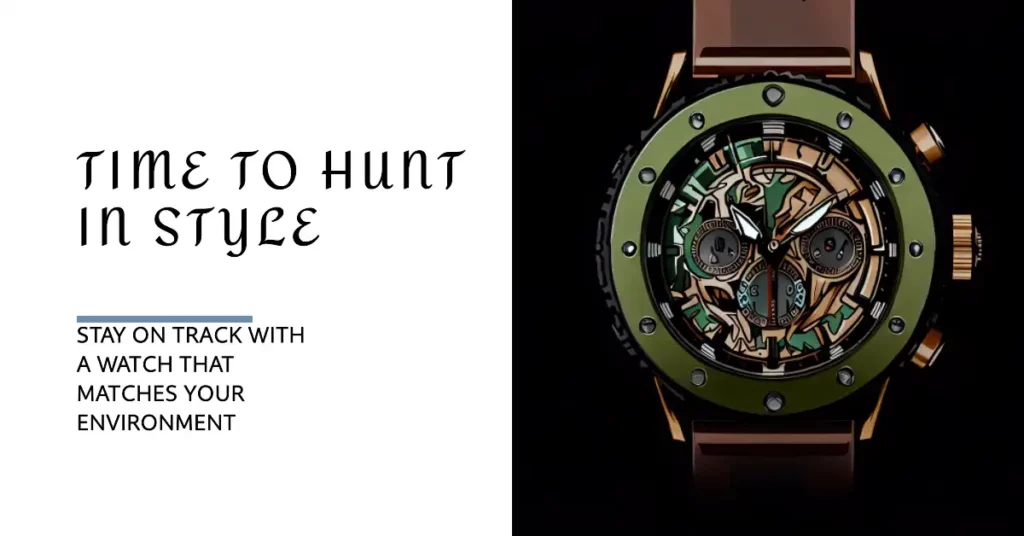
Durability is paramount in a hunting watch, as it must withstand the rigors of the wilderness. Harsh weather conditions, rugged terrains, and potential impacts necessitate a timepiece crafted from robust materials such as stainless steel or titanium.
Additionally, water resistance is vital to protect the watch from rain, splashes, or even accidental submersion. Accuracy is another crucial factor. A hunting watch must boast a reliable movement that ensures precise timekeeping, allowing you to synchronize your actions with the environment.
A timepiece equipped with chronograph functionality provides added utility by enabling you to measure elapsed time for tasks such as tracking games or timing shots.
Furthermore, a luminous dial or illuminated hands are invaluable features, allowing optimal visibility in low-light conditions. This is particularly useful during dawn or dusk hunts when visibility can be challenging.
Another consideration is camouflage. A watch that incorporates earthy or woodland tones, or even a camo-patterned strap, can help it blend seamlessly with your hunting gear, minimizing the risk of startling the game.
In conclusion, a watch suitable for hunting must be durable, accurate, and possess features like water resistance, chronograph functionality, and excellent visibility. By selecting a timepiece that aligns with these criteria, you can elevate your hunting experience and ensure that time remains on your side during your outdoor pursuits.
Best Hunting Watches To Unleash Your Hunting Potential
1. Garmin Instinct 2 Solar
When it comes to the pursuit of hunting, having a reliable and feature-packed GPS watch can significantly enhance your outdoor adventures. One standout option in the market is the Garmin Instinct 2 Solar. This cutting-edge timepiece boasts impressive functionalities, making it the best GPS watch for hunting.
The Garmin Instinct 2 Solar excels in its GPS capabilities. With its advanced navigation system and preloaded topographic maps, this watch ensures you never lose your way in the wilderness.
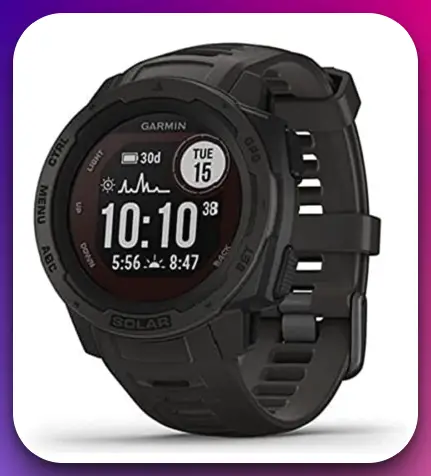
Whether you’re tracking game, scouting new hunting spots, or simply exploring unfamiliar terrains, the watch provides accurate and real-time positioning information to keep you on the right track.
But its innovative solar charging feature truly sets Instinct 2 Solar apart. Equipped with solar panels on the display, this watch harnesses the power of the sun to extend its battery life. This means you can rely on its longevity during long hunting trips without worrying about running out of power. It’s a game-changer for outdoor enthusiasts.
Another standout feature is the watch’s robust construction. Designed to meet military-grade durability standards, the Instinct 2 Solar can withstand extreme conditions. It is shock-resistant, water-resistant, and built to resist thermal fluctuations, ensuring it can handle the toughest hunting environments.
Furthermore, the watch offers a plethora of hunting-specific features. It includes a hunting and fishing calendar, moon phase data, and sunrise/sunset times, which are invaluable for planning your hunting excursions. The watch also integrates a compass, an altimeter, and a barometer, providing essential environmental information to aid your hunting strategies.
In conclusion, the Garmin Instinct 2 Solar is the ultimate GPS watch for hunting. Its exceptional GPS capabilities, solar charging feature, rugged construction, and hunting-specific functionalities make it a reliable companion for every hunter. Embrace this timepiece, and elevate your hunting experiences to new heights of precision and adventure.
Pros:-
Advanced GPS capabilities: The Garmin Instinct 2 Solar offers highly accurate and reliable GPS tracking, ensuring you can navigate the wilderness with ease and confidence.
Solar charging: The watch’s solar panels enable it to harness the sun’s power, extending its battery life and reducing the need for frequent recharging, which is especially beneficial during long hunting trips.
Durable construction: Built to military-grade standards, the Instinct 2 Solar is shock-resistant and water-resistant, capable of withstanding the harshest hunting environments and ensuring long-lasting durability.
Hunting-specific features: The watch includes various features tailored specifically for hunting, such as a hunting and fishing calendar, moon phase data, and sunrise/sunset times, providing valuable information to optimize your hunting strategies.
Environmental sensors: With an integrated compass, altimeter, and barometer, the watch provides essential environmental data, allowing you to make informed decisions based on changes in weather conditions and elevation.
Cons:-
Price: The Garmin Instinct 2 Solar is positioned as a premium product, which may make it less accessible to budget-conscious hunters.
Complexity: The watch offers a wide range of features and functionalities, which can overwhelm users who prefer simpler devices or are not tech-savvy.
Limited touchscreen functionality: Unlike other smartwatches, the Instinct 2 Solar relies heavily on physical buttons for navigation, which may be less intuitive for users accustomed to touchscreens.
Reliance on GPS signal: In areas with poor GPS coverage or heavy tree cover, the watch’s GPS performance may be compromised, affecting its accuracy and reliability.
Size and weight: The Instinct 2 Solar is a robust and rugged watch, which may be bulkier and heavier than more lightweight options, potentially impacting comfort, especially during extended wear.
2. Garmin Instinct Tactical
In hunting, having a reliable timepiece that can withstand the rugged outdoor conditions and provide essential features is paramount. The Garmin Instinct Tactical stands out as one of the best watches for hunting.
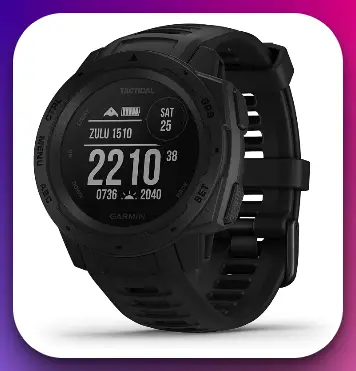
Crafted with precision and durability in mind, the Instinct Tactical is constructed to meet the demanding U.S. Military Standard 810G. This means it can endure extreme thermal changes, shocks, and water resistance, making it a rugged companion for any hunting expedition. One of the standout features of the Instinct Tactical is its tactical-specific functionality.
It includes a stealth mode that disables wireless connectivity and eliminates the chances of your watch emitting signals that could alert the game. This feature enhances your stealth and allows you to remain undetected during your hunting missions.
The watch has a reliable GPS, providing accurate tracking and navigation capabilities. You can mark locations, create waypoints, and track your routes effortlessly, ensuring you never lose your way in the vast wilderness.
The black color of the Instinct Tactical adds a touch of elegance and versatility to its design. It complements hunting attire perfectly and minimizes the chances of standing out in the natural environment.
Furthermore, the Instinct Tactical offers additional features such as a compass, barometric altimeter, multiple global navigation satellite systems (GPS, GLONASS, and Galileo), and compatibility with the Garmin Explore app.
These features provide crucial environmental data, precise elevation information, and expanded connectivity options for a seamless hunting experience.
In conclusion, the Garmin Instinct Tactical is the ultimate companion for hunting enthusiasts. With its robust construction, tactical-specific features, reliable GPS, and essential functionalities, this watch is designed to enhance your hunting endeavors. Embrace the Instinct Tactical, and elevate your hunting game to new heights of precision and success.
Pros:-
Rugged and durable: The Garmin Instinct Tactical is constructed to meet the U.S. Military Standard 810G, ensuring it can withstand thermal changes, shocks, and water resistance. It is built to withstand the demands of outdoor hunting adventures.
Tactical-specific features: The watch includes a stealth mode that disables wireless connectivity, allowing hunters to remain undetected by the game. This feature enhances stealth and increases the chances of a successful hunt.
Accurate GPS system: With its reliable GPS capabilities, the Instinct Tactical provides accurate tracking and navigation, allowing hunters to mark locations, create waypoints, and track routes effortlessly. It ensures you can navigate through unfamiliar terrains with confidence.
Sleek black design: The black color of the Instinct Tactical adds a touch of elegance and versatility to its appearance. It blends well with hunting attire and minimizes the chances of standing out in the natural environment.
Additional features: The watch offers a compass, barometric altimeter, multiple global navigation satellite systems (GPS, GLONASS, and Galileo), and compatibility with the Garmin Explore app.
These features provide essential environmental data, precise elevation information, and expanded connectivity options for a comprehensive hunting experience.
Cons:-
Limited touchscreen functionality: The Instinct Tactical relies on physical buttons for navigation, which may be less intuitive for users accustomed to touchscreens.
Price: As a feature-packed and rugged watch, the Instinct Tactical may have a higher price point than more basic hunting watches.
Steep learning curve: The watch offers a wide range of features and functionalities that may take some time to understand and utilize fully.
Size and weight: The Instinct Tactical is designed to be durable and rugged, which may result in a bulkier and heavier watch compared to more lightweight options. This may impact comfort, especially during extended wear.
Limited color options: While the black design is versatile, some hunters may prefer more color options to match their style or camouflage preferences.
3. Garmin Instinct
For hunting enthusiasts seeking a reliable timepiece that doesn’t break the bank, the Garmin Instinct emerges as the best budget watch for hunting. Despite its affordable price point, this rugged outdoor watch offers impressive features that enhance your hunting experience.
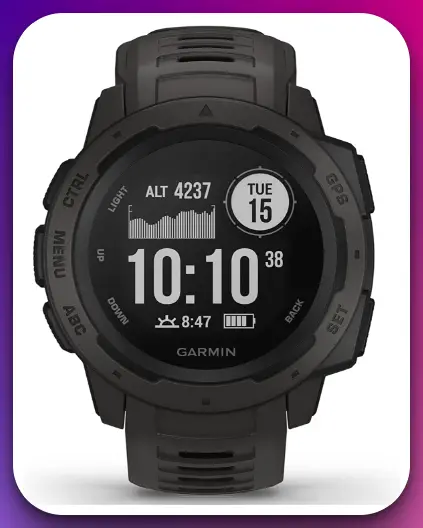
Equipped with GPS functionality, the Garmin Instinct provides reliable tracking and navigation capabilities. Whether exploring new hunting grounds or tracking games, this watch ensures you never lose your way in the wilderness. With support from Glonass and Galileo satellite systems, it offers enhanced accuracy and coverage, even in challenging terrains.
Another noteworthy feature of the Instinct is its heart rate monitoring. By monitoring your heart rate during hunts, this watch helps you gauge your exertion levels and optimize your performance. This feature allows you to maintain an optimal pace and conserve energy for those crucial moments.
Including a 3-axis compass is invaluable for hunters, providing reliable directional guidance even in remote areas without GPS coverage. This ensures you can navigate with confidence, no matter the circumstances.
Despite its budget-friendly nature, the Garmin Instinct doesn’t compromise on durability. Its rugged construction can withstand the rigors of the outdoors, making it shock-resistant and water-resistant. This means it can withstand accidental impacts and exposure to water, ensuring its longevity in harsh hunting conditions.
The Graphite color of the Instinct adds a sleek and understated aesthetic, blending well with hunting attire and minimizing the risk of drawing attention. It also features a scratch-resistant display, maintaining visibility and ensuring the watch can withstand wear and tear.
In conclusion, the Garmin Instinct is the best budget watch for hunting, offering an impressive range of features, including GPS, heart rate monitoring, a 3-axis compass, and a durable build. With this watch on your wrist, you can embark on hunting adventures with confidence and precision and without breaking the bank.
Pros:-
Affordable price: The Garmin Instinct is a budget-friendly watch, making it accessible to hunters conscious of their budget.
GPS functionality: With reliable GPS capabilities, the Instinct allows for accurate tracking and navigation during hunting expeditions. It ensures you can confidently explore new areas and track games with ease.
Heart rate monitoring: The watch’s feature enables hunters to monitor their exertion levels, helping them optimize their performance and conserve energy during hunts.
3-axis compass: Including a 3-axis compass provides reliable directional guidance, even in remote areas without GPS coverage. It enhances navigation abilities, ensuring hunters can find their way in any situation.
Rugged construction: The Garmin Instinct is built to be durable and withstand the rigors of outdoor activities. It is shock-resistant and water-resistant, making it suitable for harsh hunting environments.
Cons:-
Limited advanced features: Compared to more expensive models, the Instinct may lack certain advanced features that some hunters may desire, such as advanced fitness tracking or smartphone connectivity.
Simplistic design: The watch’s design is straightforward and functional, which may not appeal to hunters seeking a more stylish or high-end look.
Smaller display: The Instinct features a smaller display size than other watches, which may impact visibility, especially for hunters who prefer larger screens.
Limited color options: While the Graphite color option is versatile, some hunters may prefer a wider range of color choices to suit their preferences or camouflage needs.
Less robust battery life: Compared to more expensive models, the battery life of the Instinct may be relatively shorter, requiring more frequent charging during extended hunting trips.
4. Suunto Traverse
The Suunto Traverse stands out as one of the best options when finding the perfect GPS watch for hunting. This versatile timepiece combines advanced GPS technology with various features designed for hunting enthusiasts.
The Suunto Traverse boasts top-notch GPS capabilities that ensure accurate tracking and navigation during your hunting expeditions. You can easily explore unfamiliar terrains and track games with its precise positioning and route planning features.
The watch supports multiple satellite systems, including GPS, GLONASS, and GALILEO, providing enhanced coverage and reliability.
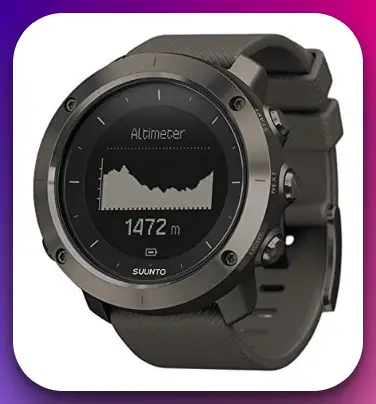
One of the standout features of the Suunto Traverse is its robust battery life. It offers up to 100 hours of continuous GPS tracking, making it ideal for extended hunting trips without frequent recharging. This long-lasting power ensures you can rely on your watch throughout outdoor adventures.
Equipped with an intuitive interface and easy-to-read display, the Suunto Traverse allows for seamless navigation and quick access to essential information. Its built-in compass provides accurate directional guidance, while the altimeter offers precise elevation data, enabling you to make informed decisions based on the terrain.
The Suunto Traverse is also rugged and durable, designed to withstand the demands of the outdoors. Its water-resistant construction ensures it can handle unexpected weather conditions and accidental splashes without compromising functionality.
Moreover, this watch offers additional features such as activity tracking, allowing you to monitor your fitness levels and stay in optimal shape during hunting seasons. It also provides smartphone connectivity for syncing data and receiving notifications on the go, keeping you connected while focusing on your hunting pursuits.
In conclusion, the Suunto Traverse is the best GPS watch for hunting due to its exceptional GPS capabilities, long battery life, intuitive interface, and durability. With this reliable timepiece on your wrist, you can confidently navigate the wilderness, track the game effectively, and elevate your hunting experience to heights of precision and success.
Pros:-
Advanced GPS capabilities: The Suunto Traverse offers precise GPS tracking and navigation, supporting multiple satellite systems (GPS, GLONASS, and GALILEO) for enhanced coverage and reliability during hunting expeditions.
Long battery life: With up to 100 hours of continuous GPS tracking, the watch provides long-lasting power, allowing hunters to rely on it during extended trips without requiring frequent recharging.
Intuitive interface: The Suunto Traverse features an easy-to-use interface and a clear display, ensuring quick access to essential information and seamless navigation in the field.
Built-in compass and altimeter: The watch’s built-in compass provides accurate directional guidance, while the altimeter offers precise elevation data, assisting hunters in making informed decisions based on the terrain.
Rugged and durable: Designed to withstand the demands of the outdoors, the Suunto Traverse is water-resistant and built to endure tough conditions, ensuring its reliability in various hunting environments.
Cons:-
Limited advanced features: Compared to more advanced models, the Suunto Traverse may lack certain high-end features, such as advanced fitness tracking or smartphone notifications.
Simplistic design: The watch’s design is functional and straightforward, which may not appeal to hunters seeking a more stylish or customizable appearance.
Smaller display: The display on the Suunto Traverse may be smaller than other watches, which could impact visibility, especially for hunters who prefer larger screens.
Limited color options: The watch is available in a limited range of colors, which may not offer as much variety for hunters looking for specific color preferences or camouflage needs.
Lack of touchscreen functionality: The Suunto Traverse does not feature touchscreen capabilities, which may be less intuitive for users accustomed to touch-based navigation.
5. SUUNTO Core
When finding the ideal watch for hunting, the SUUNTO Core stands out as one of the best options. This outdoor sports watch combines essential features with rugged durability to enhance your hunting experience.
The SUUNTO Core excels in its reliable and accurate timekeeping. With precise quartz movement, this watch ensures that you can trust its timekeeping capabilities during your hunting adventures. It is designed to provide accurate data and assist you in synchronizing your actions with the environment.
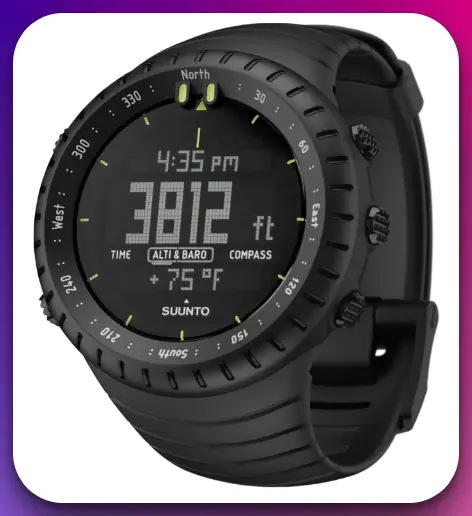
One of the standout features of the SUUNTO Core is its altimeter. This built-in tool allows you to track elevation changes, providing valuable information for navigation and understanding the terrain. It enables you to assess your position about hunting grounds, ensuring you can plan your approach effectively.
The watch also includes a barometer, which measures atmospheric pressure and allows you to predict weather changes. This feature is especially useful during hunting trips, as it helps you stay ahead of weather patterns, adapting your strategy accordingly.
Equipped with a digital compass, the SUUNTO Core ensures you have reliable directional guidance. It assists in navigation, allowing you to move through the wilderness with confidence and precision. The compass helps you orient yourself in unfamiliar areas, ensuring you stay on track.
Durability is crucial for hunting watches, and the SUUNTO Core doesn’t disappoint. With its robust construction and water resistance, it is built to withstand the demands of outdoor activities. Whether you encounter rain, bumps, or splashes, this watch can handle it all.
In conclusion, the SUUNTO Core is the best hunting watch, offering reliable timekeeping, essential features like the altimeter, barometer, digital compass, and a durable design. With the SUUNTO Core on your wrist, you can navigate the wilderness, track weather changes, and optimize your hunting strategies confidently and easily.
Pros:-
Reliable timekeeping: The SUUNTO Core ensures accurate timekeeping with its precise quartz movement, allowing hunters to synchronize their actions precisely.
Altimeter: The built-in altimeter provides valuable elevation data, helping hunters navigate varying terrains and plan their approach effectively.
Barometer: The barometer measures atmospheric pressure, allowing hunters to predict weather changes and make informed decisions based on evolving weather conditions.
Digital compass: The digital compass provides reliable directional guidance, assisting hunters in confidently and precisely navigating unfamiliar areas.
Durability: The SUUNTO Core is designed to withstand the rigors of outdoor activities, featuring a robust construction and water resistance that can endure various environmental challenges.
Cons:-
Limited advanced features: Compared to more advanced models, the SUUNTO Core may lack high-end features such as GPS tracking or heart rate monitoring.
Simplistic design: The watch is functional and straightforward, which may not appeal to hunters seeking a more stylish or customizable appearance.
Smaller display: The display on the SUUNTO Core may be smaller than other watches, which could impact visibility, especially for hunters who prefer larger screens.
Limited connectivity: The watch does not offer smartphone or advanced syncing options, limiting its integration with other devices or apps.
Lack of specialized hunting features: The SUUNTO Core lacks specific features tailored exclusively for hunting, such as hunting calendars or moon phase data.
6. Amazfit T-Rex Pro
The Amazfit T-Rex Pro is one of the best choices when finding the ultimate GPS watch for hunting. Designed with rugged outdoor enthusiasts in mind, this smartwatch offers an impressive array of features that elevate the hunting experience.
The Amazfit T-Rex Pro excels in its GPS capabilities. Equipped with a highly accurate GPS, this watch ensures precise tracking and navigation during hunting expeditions.
Whether exploring new hunting grounds or monitoring game patterns, the T-Rex Pro provides reliable positioning information to keep you on the right path.
With its 15 Military Standard certifications, the Amazfit T-Rex Pro is built to withstand extreme conditions. It is shock-resistant and can endure harsh impacts, making it a durable companion for rugged hunting environments.
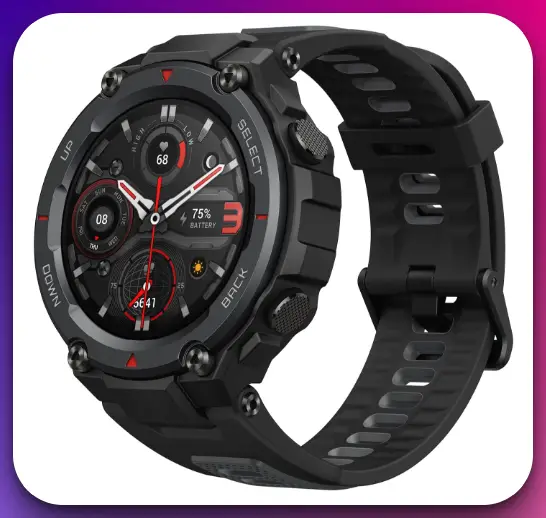
Its 10 ATM water resistance also ensures it can withstand water immersion up to 100 meters, protecting it from rain, splashes, or accidental submersion. This watch offers over 100 sports modes, including specific hunting-related activities, allowing you to track and analyze your performance during hunts.
With its comprehensive set of sensors, the T-Rex Pro records essential data like distance covered, speed, and heart rate, giving you insights to improve your hunting strategies.
The impressive 18-day battery life of the Amazfit T-Rex Pro ensures that it won’t leave you stranded during extended hunting trips. You can rely on its long-lasting power to stay connected and informed throughout your outdoor adventures.
Furthermore, the watch features a built-in blood oxygen monitor that tracks oxygen saturation levels, providing insights into your overall health and fitness. This information can be valuable for assessing your physical condition during intense hunting activities.
In conclusion, the Amazfit T-Rex Pro is the best GPS watch for hunting. With its reliable GPS capabilities, rugged construction, extensive sports modes, long battery life, and health monitoring features, this smartwatch is an indispensable companion for hunters. Embrace the T-Rex Pro, and elevate your hunting game to new levels of precision and performance.
Pros:-
Advanced GPS capabilities: The Amazfit T-Rex Pro offers highly accurate GPS tracking and navigation, ensuring precise positioning information for hunting activities.
Rugged and durable: With its 15 Military Standard certifications, the watch is built to withstand extreme conditions and is shock-resistant, making it suitable for rugged hunting environments.
Water-resistant: The T-Rex Pro has a 10 ATM water resistance rating, allowing it to withstand water immersion up to 100 meters. It can handle rain, splashes, and accidental submersion without compromising functionality.
Extensive sports modes: The watch provides over 100 sports modes, including specific hunting-related activities, allowing you to track and analyze your performance during hunts.
Long battery life: The impressive 18-day battery life ensures the watch won’t run out of power during extended hunting trips, keeping you connected and informed.
Cons:-
Limited compatibility: The Amazfit T-Rex Pro may have limited compatibility with certain smartphones or operating systems, affecting its functionality and connectivity options.
Design and aesthetics: Some users may find the design of the T-Rex Pro to be bulkier or less stylish than other smartwatches on the market.
Less advanced smart features: Compared to high-end smartwatches, the T-Rex Pro may lack certain advanced features, such as a touchscreen display or extensive app integrations.
User interface: The watch’s user interface may have a learning curve, requiring some time to navigate and utilize all the available features effectively.
Limited third-party app support: The watch may have limited support for third-party apps, which could restrict its versatility and customization options compared to more app-focused smartwatches.
7. Garmin fēnix 5
When it comes to hunting, having a smartwatch that can keep up with your outdoor pursuits is essential. The Garmin fēnix 5 stands out as the best hunting smartwatch available. Its premium features and rugged design make it a reliable companion for hunters.
The Garmin fēnix 5 combines multisport functionality with advanced GPS capabilities to enhance your hunting experience. Its accurate GPS tracking allows you to navigate through dense forests, mark important locations, and confidently track games.
The watch supports multiple satellite systems, including GPS, GLONASS, and Galileo, ensuring optimal coverage and precise positioning data.
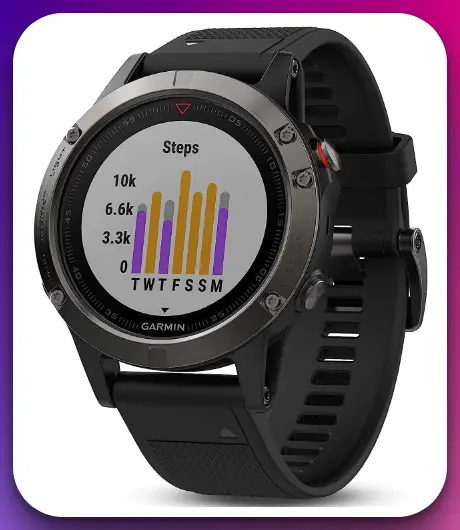
Durability is a key factor for any hunting watch, and the fēnix 5 delivers. Its rugged construction and 47mm size can withstand the toughest conditions. The watch is water-resistant and built to endure bumps, shocks, and extreme temperatures, ensuring its reliability during hunting expeditions.
The fēnix 5 is a GPS watch and a comprehensive fitness tracker. It monitors and records various metrics, including distance traveled, steps taken, burned calories, and heart rate. These features are valuable for hunters who want to track their physical activity levels and optimize their performance in the field.
Additionally, the fēnix 5 offers a range of hunting-specific features. It includes a shot detection feature that records and measures the power of your shots, allowing you to analyze your shooting performance.
The watch also provides hunt/fish calendar information, moon phase data, and sunrise/sunset times, enabling you to plan your hunting activities more effectively.
With its long battery life and compatibility with various smartphone notifications, the fēnix 5 keeps you connected even in the field. You can receive important alerts, messages, and calls without contacting your phone.
In conclusion, the Garmin fēnix 5 is the best hunting smartwatch due to its multisport functionality, advanced GPS capabilities, rugged construction, comprehensive fitness tracking features, and hunting-specific functionalities. With the fēnix 5 on your wrist, you can elevate your hunting experience and maximize your outdoor pursuits.
Pros:-
Multisport functionality: The Garmin fēnix 5 offers many features, making it suitable for various outdoor activities, including hunting.
Advanced GPS capabilities: The watch provides accurate GPS tracking and navigation, supporting multiple satellite systems (GPS, GLONASS, and Galileo) for optimal coverage and precise positioning data.
Rugged and durable: Designed with rugged construction, the fēnix 5 is built to withstand tough conditions, including bumps, shocks, and extreme temperatures. It is also water-resistant, ensuring reliability in outdoor environments.
Comprehensive fitness tracking: The watch is a comprehensive fitness tracker, recording metrics such as distance, steps, calories burned, and heart rate. This feature is valuable for hunters who want to monitor and optimize their physical activity levels.
Hunting-specific features: The fēnix 5 includes hunting-specific functionalities such as shot detection, hunt/fish calendar information, moon phase data, and sunrise/sunset times, aiding hunters in planning and analyzing their hunting activities.
Cons:-
Size and weight: The 47mm size of the fēnix 5 may be relatively larger and heavier than other smartwatches, affecting comfort, especially for users with smaller wrists.
Price: The fēnix 5 is positioned as a premium smartwatch, which may make it less accessible for budget-conscious hunters.
Complexity: The watch offers a wide range of features and functionalities, which may require some time for users to understand and utilize it effectively and fully.
Limited touchscreen functionality: The fēnix 5 relies heavily on physical buttons for navigation, which may be less intuitive for users accustomed to touchscreens.
Battery life with GPS usage: While the fēnix 5 has a decent battery life, continuous GPS usage can drain the battery faster, requiring more frequent recharging during extended hunting trips.
How To Choose the Right Hunting Watch for You
When hunting, having the right gear can make all the difference. A hunting watch is essential to provide crucial information and enhance your overall hunting experience. With a wide range of options available, it’s important to know how to choose the right hunting watch for you.
Here are some key factors to consider:-
1. Purpose and Features:- Consider the specific features you need in a hunting watch. Look for GPS capabilities to help you navigate unfamiliar terrains and track your movements. A built-in compass is also valuable for direction finding.
Additionally, consider features like an altimeter for tracking elevation, a barometer for monitoring atmospheric pressure and weather changes, and a moon phase indicator for optimal hunting times.
2. Durability:- Hunting can be demanding, so durability is crucial. Look for a watch that is shock-resistant and water-resistant to withstand the rigors of the outdoors. It should be able to handle accidental impacts, vibrations, and exposure to water, ensuring it remains reliable even in challenging conditions.
3. Battery Life:- Consider the watch’s battery life, particularly if you plan long hunting trips. Look for a watch with a long-lasting battery to ensure it will last throughout your expeditions. Some watches offer extended battery life with features like solar charging or low-power modes.
4. Comfort and Fit:- A hunting watch should be comfortable for extended periods. Look for watches with adjustable straps to ensure a proper fit. Consider the weight and size of the watch, as well as the materials used, to ensure it won’t hinder your movements or become a distraction during your hunts.
5. Display and Visibility: Opt for a clear and easily readable watch, even in varying lighting conditions. Look for features like backlighting or high-contrast displays to ensure visibility in low-light situations. Additionally, some watches offer customizable display options, allowing you to prioritize the most relevant information.
6. Budget:- Set a budget range for your hunting watch. Prices can vary widely depending on the brand and features offered. While it’s important to invest in a quality watch, it’s also essential to find one that fits within your budget. Consider your priorities and determine which features are essential for your hunting needs.
7. Brand and Reputation:- Research reputable brands are known for their quality and reliability in producing hunting watches. Look for brands with a track record of durability and customer satisfaction. Reading reviews and seeking recommendations from experienced hunters can provide valuable insights into the performance and reliability of different watch models.
8. Additional Features:- Consider additional features that may enhance your hunting experience. Some watches offer activity tracking, heart rate monitoring, or compatibility with smartphone apps. Assess whether these features align with your needs and preferences.
Considering these factors, you can make an informed decision when choosing the right hunting watch. Remember, a hunting watch is not just a timepiece; it’s a valuable tool that can provide essential information and enhance your overall hunting performance.
Find a watch that combines the features, durability, and comfort that suit your hunting style, and embark on your hunting adventures confidently and precisely.
Tips For Maintaining Your Hunting Watch
Your hunting watch is a timepiece and a valuable tool that assists you in the field. To ensure its longevity and optimal performance, it’s important to follow these tips for maintaining your hunting watch:
1. Regular Cleaning: Clean your hunting watch regularly to remove dirt, sweat, and debris that may accumulate during your hunting adventures. Use a soft cloth or brush to gently clean the exterior, paying attention to the crevices and the strap. Avoid using harsh chemicals or abrasive materials that could damage the watch.
2. Water Resistance Check: If your hunting watch is water-resistant, periodically check its water resistance rating to ensure it remains intact.
Refer to the manufacturer’s instructions on performing a water resistance check or consult a professional watch technician. This step is crucial to prevent water damage during rainy hunts or accidental submersion.
3. Strap Maintenance: The strap of your hunting watch can accumulate dirt and odor over time. Clean the strap regularly using mild soap and water, or follow the manufacturer’s recommendations. If your strap is removable, consider rotating it with a spare one to prolong its lifespan.
4. Battery Replacement: Keep track of your hunting watch’s battery life and replace it as needed. Regularly monitor the battery level indicator or consider replacing the battery at recommended intervals to prevent unexpected power failures during crucial hunting moments. Consult the watch manual or seek professional assistance for battery replacement.
5. Avoid Extreme Temperatures: Extreme temperatures can affect the performance of your hunting watch. Avoid exposing it to extreme heat or cold, as it may cause damage to the internal components or affect the accuracy of timekeeping. Store your watch in a suitable temperature-controlled environment when not in use.
6. Avoid Impact and Shock: Hunting involves various activities that may subject your watch to impacts and shocks.
While many hunting watches are designed to withstand rugged conditions, it’s still important to avoid unnecessary impacts that can compromise durability. Be mindful of your watch during outdoor activities to minimize the risk of damage.
7. Professional Servicing: Consider periodic professional servicing for your hunting watch. Professional watch technicians can inspect, clean, and lubricate the internal components, ensuring optimal performance.
Regular servicing can also identify and address potential issues before they become more significant problems.
By following these tips, you can maintain the longevity and performance of your hunting watch. Proper care and maintenance will ensure that your watch remains reliable in the field, providing accurate timekeeping and essential data and enhancing your overall hunting experience.
The Future of Hunting Watches
As technology advances rapidly, hunting watches are poised to evolve and adapt to meet the changing needs of hunters. The future of hunting watches holds exciting possibilities and innovative features that will enhance the hunting experience.
Here are some key trends and advancements we can expect:
1. Integration of Artificial Intelligence (AI): Hunting watches of the future will likely incorporate AI capabilities, enabling them to provide real-time analysis and insights. AI algorithms could analyze data from various sensors, including GPS, heart rate monitors, and environmental sensors, to offer personalized recommendations and optimize hunting strategies.
2. Enhanced Connectivity: Hunting watches will feature improved connectivity options, allowing seamless integration with other devices such as smartphones, tablets, and hunting accessories. Hunters can receive notifications, share data, and access hunting apps directly from their watches, enhancing convenience and efficiency in the field.
3. Advanced Environmental Sensors: Future hunting watches will incorporate more advanced environmental sensors, enabling hunters to monitor and analyze various factors, including temperature, humidity, wind speed, and atmospheric pressure. This data will provide valuable insights for assessing game patterns and making informed decisions.
4. Augmented Reality (AR) Integration: AR technology will likely be integrated into hunting watches, providing hunters with virtual overlays of maps, navigation aids, and real-time data on their watch screens. This will enhance situational awareness, allowing hunters to easily identify landmarks, track game, and navigate challenging terrains.
5. Biometric Tracking: Hunting watches of the future will incorporate advanced biometric sensors to track and monitor hunters’ physical well-being.
These sensors will provide real-time data on heart rate, oxygen levels, and stress levels, allowing hunters to better understand their physical condition during hunts and make informed decisions based on their health and performance.
6. Advanced Mapping and Navigation: Hunting watches will feature more advanced mapping and navigation capabilities, with detailed topographic maps, satellite imagery, and trail data. These maps will be constantly updated and provide real-time tracking, ensuring hunters can navigate accurately and efficiently in any hunting environment.
7. Solar Charging and Extended Battery Life: To address the battery life issue, future hunting watches may incorporate solar charging technology, allowing them to harness the power of sunlight to extend battery life.
This feature will ensure hunters can rely on their watches for extended periods without frequent recharging.
The future of hunting watches is exciting, with technological advancements and features that will revolutionize how hunters navigate, track games, and optimize their hunting strategies.
As these innovations unfold, hunters can look forward to more intelligent, connected, and versatile watches to enhance their hunting experiences.
The Difference Between GPS and ABC Technology in Hunting Watches
Regarding hunting watches, two key technologies are crucial in enhancing the hunting experience: GPS and ABC (Altimeter, Barometer, Compass) features. Understanding the difference between GPS and ABC technology is essential for choosing the right hunting watch for your needs.
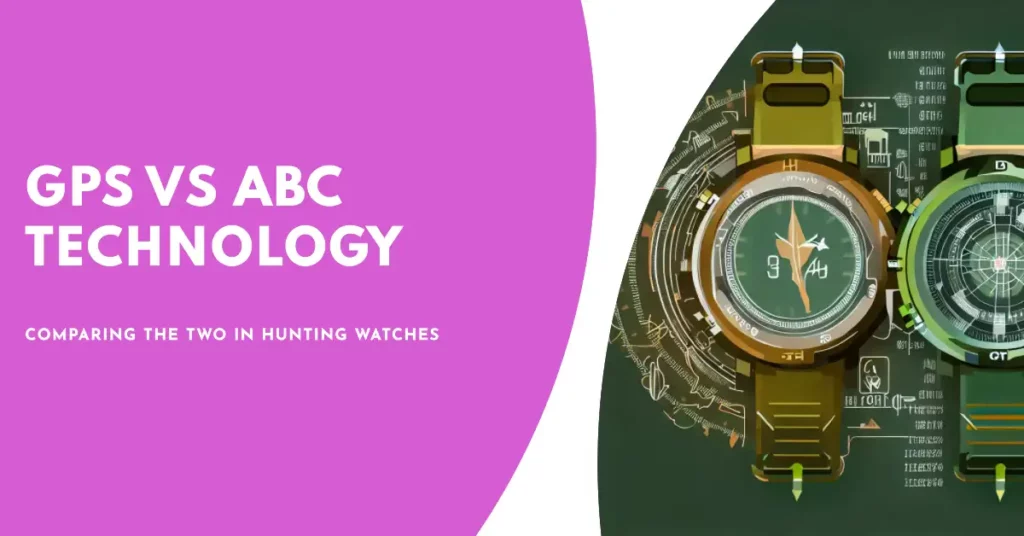
GPS (Global Positioning System) technology is designed to provide precise location tracking and navigation. A GPS hunting watch lets you determine your exact coordinates, plot waypoints, and follow pre-defined routes.
This feature is particularly valuable for navigating unfamiliar terrains, marking hunting spots, and tracking game trails. With GPS, you can easily locate yourself on a map and find your way back to basecamp or other points of interest.
On the other hand, ABC technology refers to the combination of altimeter, barometer, and compass functionalities. An altimeter measures altitude, allowing you to track changes in elevation during your hunting expedition.
This information can be useful for identifying vantage points, understanding animal behavior about elevation, and predicting weather patterns.
The barometer measures atmospheric pressure, which helps in monitoring weather changes. A sudden drop in atmospheric pressure often indicates an approaching storm, while a rise may suggest fair weather. This data can assist in planning hunting activities and staying prepared for changing weather conditions.
Lastly, the compass provides accurate direction finding, ensuring you maintain a sense of direction even in unfamiliar or featureless landscapes. It helps you navigate toward your target destination, follow game trails, and avoid getting disoriented in dense forests or challenging terrains.
While GPS technology primarily focuses on navigation, ABC technology enhances situational awareness and helps you make informed decisions based on altitude, weather, and direction. Some hunting watches offer GPS and ABC features, providing comprehensive functionality for outdoor pursuits.
Ultimately, the choice between GPS and ABC technology depends on your hunting needs and preferences. If precise navigation is your priority, a hunting watch with advanced GPS capabilities may be ideal.
However, a watch equipped with ABC technology will benefit more if you value a deeper understanding of your surroundings, including altitude, weather changes, and direction.
By considering the difference between GPS and ABC technology in hunting watches, you can select the one that aligns with your hunting style and enhances your overall experience in the field.
📗FAQ’s
What is the best G shock watch for hunting?
The best G-Shock watch for hunting is the G-Shock Rangeman. It is highly regarded for its ruggedness, shock resistance, and outdoor features such as a compass, altimeter, and barometer.
Coros Pace vs Garmin Instinct Solar: Which is the Best Hunting Watch?
When choosing the best hunting watch, two notable contenders in the market are the Coros Pace and the Garmin Instinct Solar.
Both watches offer a range of features and functionalities tailored to outdoor enthusiasts, but which is truly the best hunting companion?
The Coros Pace boasts impressive GPS capabilities, allowing for accurate location tracking and navigation during your hunting expeditions.
Its long battery life ensures you won’t be stranded in the wilderness without essential tracking features. Additionally, the Pace offers advanced training metrics and performance monitoring, allowing you to analyze your hunting activities in detail.
On the other hand, the Garmin Instinct Solar sets itself apart with its rugged design and solar charging capability. The solar feature ensures extended battery life, making it a reliable choice for long hunting trips.
With its ABC sensors, including an altimeter, barometer, and compass, the Instinct Solar provides valuable environmental data to aid in strategic decision-making during your hunts.
In terms of durability, both watches are constructed to withstand the demands of outdoor activities. They are water-resistant, shock-resistant, and built to endure rugged environments. However, the Garmin Instinct Solar is constructed to meet U.S. military standards (MIL-STD-810), making it even more resilient in challenging conditions.
Choosing the Coros Pace and Garmin Instinct Solar as the best hunting watch depends on your specific needs and preferences.
If accurate GPS tracking and comprehensive training metrics are your priority, the Coros Pace may be the ideal choice. However, if you value extended battery life, ruggedness, and military-grade durability, the Garmin Instinct Solar is likely the better option.
Consider your hunting style, desired features, and overall requirements to determine which watch best fits your needs.
The Coros Pace and Garmin Instinct Solar offer reliable performance and advanced features, ensuring you have a dependable companion for your hunting adventures.
What is the best Garmin watch for backpacking and hunting?
The best Garmin watch for backpacking and hunting is the Garmin fēnix 6 Pro. It offers comprehensive outdoor features, including GPS navigation, ABC sensors, and long battery life.
Is Garmin Instinct good for hunting?
Yes, the Garmin Instinct is a popular choice for hunting. It features durable construction, GPS functionality, hunting-specific features, and compatibility with hunting apps.
What watches were used in the deer hunter?
Various watches were used in the movie “The Deer Hunter,” including the Rolex GMT-Master, Seiko 5, and Hamilton Khaki Field.
What watch did Hunter S. Thompson wear?
Hunter S. Thompson often wore a TAG Heuer Monaco. This watch became closely associated with his unique style.
G-Shock watches are popular among Navy SEALs and other military personnel due to their durability, reliability, and shock resistance.
Why is G-Shock so popular?
G-Shock watches are popular due to their ruggedness, innovative technology, and ability to withstand harsh conditions. They have become a trusted choice for outdoor enthusiasts and professionals.
What watches are in Predators?
In the movie “Predators,” the characters wore various watches, including the Seiko H558, Casio G-Shock DW-6600, and Luminox 3051.
Who competes with Garmin outdoor?
Some outdoor GPS watch market competitors include Suunto, Polar, and Casio, with their Pro Trek series.
What is the best Garmin watch for routes?
The best Garmin watch for routes is the Garmin Forerunner 945. It offers advanced mapping and routing capabilities, ideal for route planning and navigation.
Is Garmin Fenix better than Instinct?
The Garmin fēnix series is considered more advanced than the Garmin Instinct, offering additional features. However, the choice depends on individual needs and preferences.
How do I use Garmin Instinct for hunting?
To use Garmin Instinct for hunting, familiarize yourself with its hunting-specific features, such as the hunting calendar, moon phase information, and shot detection. Customize your watch settings and utilize its GPS capabilities for navigation.
Is Garmin Instinct military grade?
While the Garmin Instinct is built to meet military standards for ruggedness, it does not hold an official military-grade certification.
What watch did James Hunt wear?
The Formula 1 racing driver James Hunt often wore a Rolex Daytona, a classic and iconic timepiece.
What is a hunter’s watch?
A hunter’s watch is a timepiece specifically designed with features relevant to hunting, such as GPS capabilities, compass, moon phase data, and hunting-specific functionalities.
Why Polar is better than Garmin?
Polar and Garmin are both reputable brands offering GPS watches. Polar is often considered better regarding heart rate monitoring accuracy and features, while Garmin excels in GPS functionality and outdoor navigation.
Why is Garmin so expensive?
Garmin watches are often priced higher due to their advanced technology, durable construction, extensive features, and reputation for reliability in outdoor environments.
Which watch has the most accurate GPS?
Various brands, including Garmin, Suunto, and Polar, offer watches known for their accurate GPS functionality. Garmin is often praised for its highly accurate GPS performance.
What are Garmin’s weaknesses?
Some users may find Garmin’s user interface complex, and certain models may have limited battery life during heavy GPS usage. Additionally, the cost of Garmin watches can be a potential drawback for budget-conscious buyers.
Where is the best place to put a Garmin watch?
The best place to wear a Garmin watch is on your wrist, ensuring it remains secure and easily accessible for data monitoring and navigation during outdoor activities.
Which Garmin GPS has the best accuracy?
Garmin’s high-end models like the fēnix and Forerunner series are known for their excellent GPS accuracy and performance.
What is the difference between Fenix 7 and Instinct?
The Garmin fēnix 7 is a more advanced and feature-rich watch than the Garmin Instinct. It offers additional features, higher durability, and greater customization options.
What Garmin has the most accurate GPS?
Garmin watches equipped with the latest GPS technologies, such as the GPSMAP 66i and fēnix 6 Pro, are known for their highly accurate GPS performance.
Can you use a Garmin watch for hunting?
Yes, Garmin watches like the Garmin Instinct and fēnix series are popular choices for hunting as they offer hunting-specific features, GPS functionality, and durability.
Does Garmin Instinct show maps?
The Garmin Instinct provides basic navigational capabilities but does not display detailed maps. For comprehensive mapping, higher-end Garmin models like the fēnix series are recommended.
Can you text on Garmin Instinct?
The Garmin Instinct does not support texting capabilities. It primarily provides essential outdoor features like GPS navigation, activity tracking, and durability.
Conclusion
We’ve journeyed through the world of hunting watches, exploring their incredible features and highlighting the best models available. From GPS navigation to weather forecasting, it’s evident that these rugged timepieces are indispensable for modern hunters.
Think back to your frustrations and limitations with traditional gear. Now, imagine the possibilities with a hunting watch strapped to your wrist. Not only do you gain a reliable tool for timekeeping, but you also equip yourself with many features designed to enhance your hunting experience.
Investing in a quality hunting watch is not just a purchase; it’s an investment in your passion. The convenience, reliability, and wealth of information it provides can be the difference between a frustrating outing and a triumphant adventure.
Remember to consider your specific needs, budget, and preferences as you choose. Don’t forget to pay attention to customer reviews and brand reputation. And once you have your ideal hunting watch, take good care of it to ensure it serves you for many hunting seasons.
We’d love to hear about your experiences with hunting watches. Have you found the perfect one? Do you have any tips or insights to share? Please leave your comments below and join the conversation.
Thank you for joining us on this exploration of hunting watches. With time on your side, may your next hunting expedition be the best one yet.
Happy hunting!