























You’ve got your golf simulator ready, your virtual fairways are waiting, and you’re excited to swing your club in the comfort of your home. There’s just one problem — your current projector doesn’t do justice to your simulator software’s stunning graphics and real-world imagery.
The golf courses seem lackluster, the detailing is lost, and the overall experience feels far from real. This can be frustrating, especially when you’ve invested a significant amount in creating your personal indoor golf space.
Imagine not being able to see the ball clearly against the virtual sky or struggling to make out the minute details that can impact your shot, like the layout of the green or the distance markers.
With a subpar projector, that’s precisely the problem you’ll encounter. It can throw off your game, affect your ability to practice effectively and diminish the joy of playing.
But it doesn’t have to be this way. With the right projector, your indoor golf experience can be transformed. You can enjoy crisp, vibrant graphics, experience smooth real-time play, and feel like you’re walking the course rather than looking at a screen.
That’s why we’ve put together this definitive guide on the best projectors for golf simulators. We’ll walk you through key features to look for, review top models, and help you make an informed decision so you can truly get the most out of your golf simulator setup.
Let’s tee off to a whole new level of indoor golfing!
Understanding Golf Simulators
Golf simulators have revolutionized how golf enthusiasts practice and enjoy their favorite sport. These cutting-edge devices offer a realistic and immersive experience, allowing players to simulate golf rounds in the comfort of their own homes or indoor facilities.
Understanding golf simulators involves grasping the intricate technology behind them and the benefits they bring to golfers.

A golf simulator comprises hardware and software components that work harmoniously to replicate the golfing experience. The simulator captures and analyzes various data points such as club speed, ball speed, launch angle, and spin rate, providing players with valuable feedback on their swing mechanics and shot performance.
This data-driven approach enables golfers to refine their technique and make informed adjustments to enhance their game.
The simulator’s software uses advanced algorithms to recreate real golf courses digitally. These simulations are designed meticulously, incorporating accurate topography, hazards, and green undulations. Players can choose from various courses worldwide, from famous championship venues to picturesque coastal links.
Using a golf simulator offers numerous advantages. It eliminates weather restrictions, enabling golfers to play and practice year-round. Furthermore, it saves time and money by eliminating the need for frequent trips to the golf course.
Golf simulators also provide an opportunity for multiplayer gaming, allowing friends or family members to compete against each other in virtual tournaments.
In conclusion, golf simulators have transformed the way golfers approach the game. By providing a realistic and immersive experience and valuable data insights, these devices offer a convenient and effective means of practicing and enjoying golf regardless of external factors.
Important Projector Features for Golf Simulators
Choosing the right projector is crucial to ensure a captivating and immersive experience when setting up a golf simulator. The projector is the visual centerpiece, projecting the virtual golf course onto a screen or hitting the mat.
Understanding the important projector features for golf simulators will help you make an informed decision.
First and foremost, brightness is a key consideration. Golf simulators often require higher brightness levels than traditional home theater setups. Look for projectors with a high ANSI lumens rating, as this ensures clear and vibrant visuals even in well-lit environments.
Another critical feature is resolution. Opt for a projector with a minimum Full HD (1920×1080) resolution to ensure sharp and detailed graphics. Higher resolution projectors, such as 4K, offer even greater clarity, making you feel like you’re standing on the golf course.
The throw ratio is an essential factor when it comes to projector placement. Golf simulators typically require a short-throw or ultra-short-throw projector. These projectors can be positioned closer to the screen, allowing larger image sizes in smaller spaces.
Consider the refresh rate of the projector as well. A higher refresh rate ensures smoother motion and reduces motion blur, enhancing the realism of your golfing experience. Look for projectors with a refresh rate of 120Hz or higher for optimal performance.
Last, input lag is crucial, particularly for interactive golf simulator software. Lower input lag ensures minimal delay between your swing and the projection, resulting in a more responsive and immersive experience.
By paying attention to these important projector features for golf simulators, you can create a visually stunning and engaging environment that will elevate your golfing practice and enjoyment to new heights.
Best Projectors For Golf Simulators To Get the Perfect Swing
1. OptiShot 2 Golf Simulator for Home
If you’re looking to create an immersive and realistic golfing experience in the comfort of your own home, the OptiShot 2 golf simulator is a fantastic choice. And when it comes to finding the best projector for golf simulators, the OptiShot 2 doesn’t disappoint.
One of the standout features of the OptiShot 2 is its compatibility with a wide range of projectors. This flexibility lets you choose a projector that suits your needs and budget.
Whether you opt for a short-throw, ultra-short-throw, or standard projector, the OptiShot 2 seamlessly integrates with your setup, ensuring a seamless and captivating visual experience.
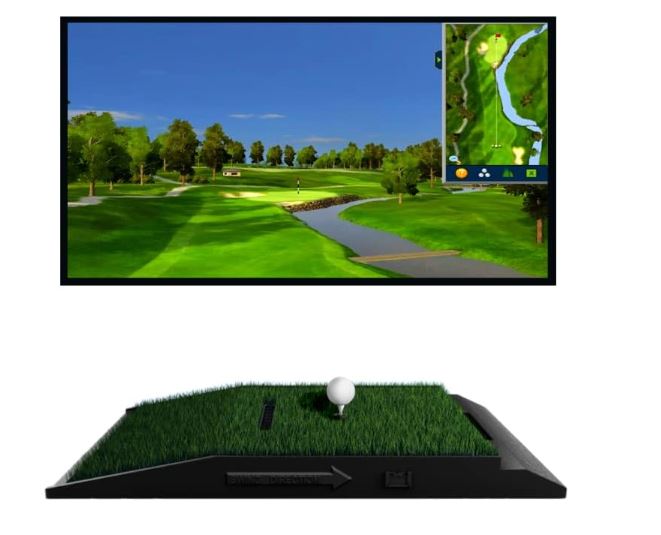
When it comes to image quality, the OptiShot 2 performs exceptionally well. With its high-definition graphics and vibrant color reproduction, every virtual golf course comes to life. You’ll feel as if you’re standing on the fairways and greens of prestigious golf courses around the world, thanks to the OptiShot 2’s immersive projection capabilities.
The OptiShot 2 is renowned for its accuracy in capturing and analyzing golf swing data. When paired with a compatible projector, the system provides real-time feedback on your swing mechanics, club speed, ball speed, and other essential metrics. This valuable information helps you refine your technique and improve your game.
In addition to its impressive performance, the OptiShot 2 is also highly user-friendly. The setup process is straightforward, and the projector integration is seamless. Whether you’re a seasoned golfer or a beginner, you’ll appreciate the user-friendly interface and intuitive controls that the OptiShot 2 offers.
The OptiShot 2 is a top choice when considering the best projector for golf simulators. Its compatibility, image quality, accuracy, and user-friendly design make it an ideal companion for creating a captivating and realistic golfing experience at home.
Elevate your game and enjoy hours of golfing excitement with the OptiShot 2 as your trusty projector companion.
Pros:-
Compatibility: The OptiShot 2 golf simulator is compatible with a wide range of projectors, allowing users to choose a projector that fits their needs and budget.
Immersive Visual Experience: With high-definition graphics and vibrant color reproduction, the OptiShot 2 delivers a visually immersive experience, making you feel like you’re playing on real golf courses.
Accurate Swing Analysis: The OptiShot 2 accurately captures and analyzes swing data, providing real-time feedback on club speed, ball speed, and other important metrics. This helps players refine their technique and improve their overall game.
User-Friendly: The OptiShot 2 is designed with user-friendliness in mind. The setup process is straightforward, and the interface is intuitive, making it accessible for both seasoned golfers and beginners.
Versatility: The OptiShot 2 can be used in various settings, whether you have a dedicated indoor golf space or a small setup at home. Its flexibility allows users to enjoy golf simulation regardless of their available space.
Cons:-
Limited Compatibility: While the OptiShot 2 offers compatibility with a range of projectors, there may still be some projector models that are not supported. It is important to check compatibility before making a purchase.
Projection Quality: While the OptiShot 2 provides a solid visual experience, the projection quality may not match that of high-end, dedicated home theater projectors. Users seeking the highest level of image quality may need to invest in a more premium projector.
Limited Simulated Courses: The OptiShot 2 has a selection of preloaded courses, but the variety may be limited compared to other golf simulator options. However, additional courses can be purchased separately.
Additional Equipment Required: While the OptiShot 2 itself is a comprehensive golf simulator, additional equipment, such as a hitting net or mat, as well as golf clubs, may be necessary for a complete setup. These additional costs should be taken into consideration.
Overall, the OptiShot 2 is a versatile and user-friendly golf simulator that offers a compelling visual experience and accurate swing analysis. While it may have some limitations regarding projector compatibility and projection quality, its strengths make it a top choice for many golf enthusiasts looking to enjoy the game indoors.
Check Price on Amazon2. BenQ TK700 – 4k projector for golf simulator
When creating a truly immersive golfing experience at home, the BenQ TK700 4K HDR Gaming Projector stands out as one of the best 4K projectors for golf simulators.
Packed with advanced features and cutting-edge technology, this projector delivers stunning visuals and exceptional performance for golf enthusiasts.
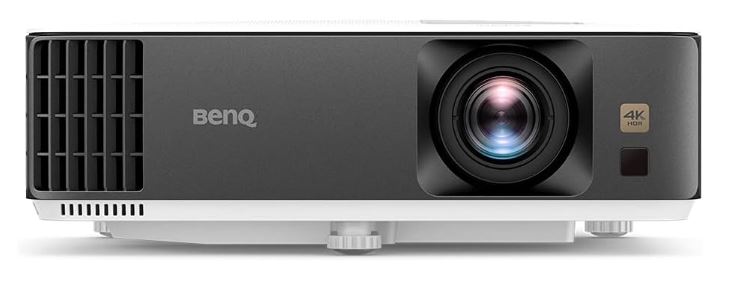
One of the standout features of the BenQ TK700 is its 4K resolution. With four times the resolution of Full HD, this projector produces incredibly detailed and crisp images, allowing you to see every blade of grass and every subtle contour of the virtual golf course.
The vibrant colors and enhanced dark visual details further enhance the realism, making you feel as if you’re playing on a real golf course.
With its impressive 3200 lumens brightness, the BenQ TK700 ensures bright and vivid images, even in well-lit environments. This makes it perfect for golf simulators, as you can enjoy virtual rounds without compromising image quality. The projector’s high brightness capability makes every course detail visible, providing a truly immersive experience.
Another notable feature of the BenQ TK700 is its 16ms response time at 4K resolution. This rapid response ensures minimal input lag, allowing for a smooth and responsive gaming experience. Golfers can swing their virtual clubs precisely, knowing their actions are accurately reflected on the screen in real time.
The projector’s Game Modes are specifically designed to optimize gaming performance. With dedicated modes for different gaming genres, including golf simulators, the BenQ TK700 delivers enhanced visuals and smooth motion, creating an engaging and lifelike gameplay experience.
Additionally, the built-in 5W chamber speaker provides a decent audio output, adding another layer of immersion to your golf simulator setup. However, for a more immersive audio experience, connecting external speakers or a sound system is recommended.
In conclusion, the BenQ TK700 4K HDR Gaming Projector is a top choice for golf simulators, offering stunning 4K visuals, high brightness, low input lag, and dedicated gaming modes.
With its exceptional performance and advanced features, the BenQ TK700 enhances the realism and enjoyment of your virtual golfing experience, making it an excellent investment for avid golfers and enthusiasts alike.
Pros:-
4K Resolution: The BenQ TK700 offers a stunning 4K resolution, providing incredibly detailed and crisp images for a lifelike golfing experience. Every blade of grass and contour of the virtual course is beautifully displayed.
High Brightness: With its impressive 3200 lumens brightness, the TK700 ensures bright and vivid visuals, even in well-lit environments. This allows for optimal visibility and immersion during your golf simulator sessions.
Low Input Lag: The 16ms response time at 4K resolution ensures minimal input lag, resulting in a smooth and responsive gaming experience. Golfers can swing their clubs precisely, knowing their actions are accurately reflected on the screen in real-time.
Game Modes: The projector’s dedicated Game Modes optimize visuals and motion for gaming, including golf simulators. These modes enhance the overall gameplay experience, delivering immersive and lifelike graphics.
Enhanced Dark Visual Details: The TK700’s enhanced dark visual details enhance the contrast and depth of the image, providing rich and realistic visuals. This feature adds to the overall immersive experience during virtual golf sessions.
Cons:-
Built-in Speaker Limitations: While the projector features a built-in 5W chamber speaker, the audio quality may not be as robust as a dedicated external audio setup. For a truly immersive audio experience, connecting external speakers or a sound system is recommended.
Limited Keystone Correction: The TK700 offers a 2D keystone correction feature, which allows for some adjustment to correct the image distortion caused by the projector’s angle. However, it has its limits and may not fully compensate for extreme angles or irregular projection surfaces.
Limited Connectivity Options: The TK700 includes two HDMI 2.0 ports, which may be sufficient for most users. However, if you require additional connectivity options or specific interfaces, such as DisplayPort or USB-C, you may need to consider external adapters or alternative projector models.
Despite these minor drawbacks, the BenQ TK700 4K HDR Gaming Projector is a highly capable and feature-rich projector for golf simulators. Its stunning 4K resolution, high brightness, low input lag, game modes, and enhanced dark visual details contribute to an immersive and realistic virtual golfing experience.
Check Price on Amazon3. Optoma UHD38x
For golf enthusiasts seeking the ultimate immersive experience in their home golf simulators, the Optoma UHD38x Bright stands out as the best projector for golf simulators.
Packed with advanced features and cutting-edge technology, this projector delivers exceptional performance and stunning visuals that elevate your virtual golfing experience.
One of the standout features of the Optoma UHD38x Bright is its impressive brightness of 4000 lumens. This high brightness ensures vibrant and vivid images, even in well-lit environments. You can enjoy your virtual golf rounds with optimal visibility and clarity, as every detail of the virtual golf course is beautifully displayed.
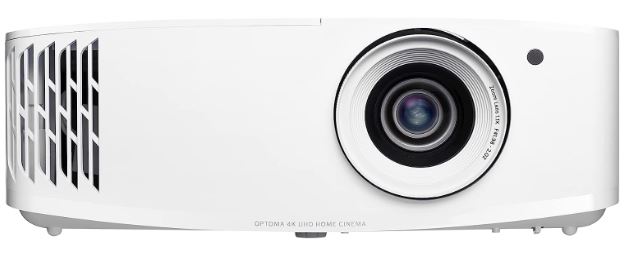
The Optoma UHD38x Bright boasts a true 4K UHD resolution, delivering incredibly detailed and sharp visuals. With four times the resolution of Full HD, this projector brings out every nuance of the virtual golf course, making you feel like you’re playing on a real fairway.
Another remarkable feature is the projector’s exceptional response time of 4.2ms at 1080p resolution and enhanced gaming mode. This ensures minimal input lag, allowing for precise and responsive gameplay. Swing your virtual club confidently, knowing your actions are accurately reflected on the screen in real-time.
The Optoma UHD38x Bright also features a 240Hz refresh rate, providing ultra-smooth motion during your virtual golf sessions. This high refresh rate minimizes motion blur, creating a fluid and realistic gameplay experience.
With support for HDR10 and HLG (Hybrid Log-Gamma), the Optoma UHD38x Bright offers stunning color reproduction and contrast, enhancing your virtual golf courses’ visual depth and realism. The vibrant colors and accurate color representation make the virtual environment come alive.
In conclusion, the Optoma UHD38x Bright is the best projector for golf simulators, delivering exceptional brightness, true 4K resolution, low input lag, and a high refresh rate. With its advanced features and immersive visuals, this projector takes your virtual golfing experience to new heights.
Enjoy lifelike golf courses and accurate gameplay as you perfect your swing in the comfort of your own home.
Pros:-
Impressive Brightness: The Optoma UHD38x Bright offers a high brightness of 4000 lumens, ensuring vibrant and vivid images even in well-lit environments. This allows for optimal visibility and clarity during your virtual golf sessions.
True 4K UHD Resolution: With a true 4K UHD resolution, the UHD38x Bright delivers incredibly detailed and sharp visuals. Every blade of grass and contour of the virtual golf course is beautifully displayed, enhancing the realism of your golfing experience.
Low Input Lag: The projector’s 4.2ms response time at 1080p resolution, combined with the enhanced gaming mode, ensures minimal input lag. This provides precise and responsive gameplay, allowing you to swing your virtual club confidently.
High Refresh Rate: The UHD38x Bright features a 240Hz refresh rate, resulting in ultra-smooth motion during your virtual golf sessions. This minimizes motion blur and creates a fluid and realistic gameplay experience.
HDR10 and HLG Support: With support for HDR10 and HLG, this projector delivers stunning color reproduction and contrast. The vibrant colors and accurate color representation enhance your virtual golf courses’ visual depth and realism.
Cons:-
Limited Keystone Correction: The UHD38x Bright offers limited keystone correction options, which may be a disadvantage if you require significant adjustments to correct the image distortion caused by projector placement.
Fan Noise: Some users have reported that the projector’s fan noise can be noticeable during operation. While this may not be a significant issue for everyone, it is worth considering if you are sensitive to noise.
Limited Lens Shift: The UHD38x Bright has limited lens shift capabilities, which may require more precise projector positioning for optimal image alignment.
Higher Price Point: As a feature-packed projector, the UHD38x Bright comes at a higher price point compared to entry-level options. However, the advanced features and exceptional performance justify the investment for serious golf simulator enthusiasts.
Despite these minor drawbacks, the Optoma UHD38x Bright is a top choice for golf simulators, offering impressive brightness, true 4K resolution, low input lag, high refresh rate, and support for HDR10 and HLG.
Its exceptional performance and immersive visuals make it an ideal projector for creating a realistic and enjoyable virtual golfing experience at home.
Check Price on Amazon5. Optoma ZH406STx
For golf enthusiasts seeking the ultimate projection experience for their home golf simulators, the Optoma ZH406STx Short Throw Full HD Professional Laser Projector is undoubtedly the best projector for golf simulators.
Boasting advanced features and cutting-edge technology, this projector delivers exceptional performance and stunning visuals that elevate your virtual golfing experience.
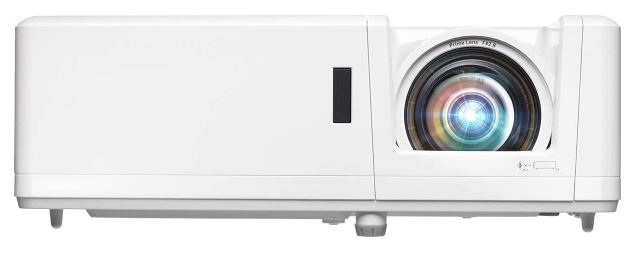
One of the standout features of the Optoma ZH406STx is its short throw capability. This short-throw projector allows you to enjoy a large-sized projection even in small spaces. The projector can be placed close to the screen, reducing shadows and minimizing the risk of obstructing the projected image while you swing your golf clubs.
The ZH406STx utilizes DuraCore Laser Technology, ensuring long-lasting performance and maintenance-free operation. With a high brightness of 4,200 lumens, this projector produces vibrant and vivid images, even in well-lit environments.
You’ll experience exceptional image quality with stunning color reproduction and clarity, bringing your virtual golf courses to life.
Equipped with 4K HDR input, the Optoma ZH406STx is compatible with high-definition content, delivering sharp and detailed visuals. This ensures that you don’t miss out on any of the intricate details of the virtual golf course, enhancing the realism of your golfing experience.
The projector’s Four Corner Image Adjustment feature allows precise image alignment, ensuring a perfect fit on your projection surface. This flexibility eliminates distortion and ensures a seamless and immersive experience while playing golf on the virtual course.
The Optoma ZH406STx is also network-compatible, allowing easy integration into your home network setup. This enables convenient control and management of the projector, making it effortless to operate and customize according to your preferences.
In conclusion, the Optoma ZH406STx Short Throw Full HD Professional Laser Projector is the best projector for golf simulators. With its short throw capability, DuraCore Laser Technology, high brightness, 4K HDR input, Four Corner Image Adjustment, and network compatibility, this projector offers exceptional performance and stunning visuals.
Elevate your virtual golfing experience with the Optoma ZH406STx and enjoy immersive gameplay in the comfort of your home.
Pros:-
Short Throw Capability: The Optoma ZH406STx’s short throw capability allows for a large projection size even in small spaces, making it suitable for home golf simulator setups with limited room.
DuraCore Laser Technology: The projector’s DuraCore Laser Technology ensures long-lasting performance and maintenance-free operation, providing a reliable and hassle-free experience over time.
High Brightness: With a brightness of 4,200 lumens, the ZH406STx produces vibrant and vivid images, even in well-lit environments. This ensures optimal visibility and image clarity during your virtual golf sessions.
4K HDR Input: The projector’s compatibility with 4K HDR input delivers sharp and detailed visuals, allowing you to appreciate the intricacies of the virtual golf course and enhancing the realism of your golfing experience.
Four-Corner Image Adjustment: The Four Corner Image Adjustment feature enables precise image alignment, ensuring a perfect fit on your projection surface. This eliminates distortion and ensures a seamless and immersive gameplay experience.
Network Compatibility: The ZH406STx’s network compatibility allows for easy integration into your home network setup. This enables convenient control and management of the projector, offering flexibility and ease of use.
Cons:-
Limited Resolution: The ZH406STx has a Full HD resolution, which may not provide the same level of detail as higher-resolution projectors. While the image quality is still excellent, those seeking the highest visual clarity might consider a projector with 4K resolution.
Price: As a professional-grade projector, the ZH406STx comes at a higher price point compared to entry-level options. However, the advanced features and superior performance make it a worthwhile investment for avid golfers and enthusiasts.
Audio Quality: The ZH406STx offers built-in audio capabilities, but the 10-watt speaker may not provide the same audio quality as dedicated external speakers or a sound system. For an immersive audio experience, connecting external speakers is recommended.
Despite these minor drawbacks, the Optoma ZH406STx Short Throw Full HD Professional Laser Projector excels in terms of short throw capability, DuraCore Laser Technology, high brightness, 4K HDR input, Four Corner Image Adjustment, and network compatibility.
With its outstanding performance and immersive visuals, this projector is ideal for creating a realistic and enjoyable virtual golfing experience at home.
Check Price on Amazon6. BenQ MW632ST
When creating an immersive golf simulator experience, the BenQ MW632ST WXGA Short Throw Projector is undoubtedly the best projector for golf simulators.
With its advanced features and impressive performance, this projector enhances your virtual golfing sessions and brings the game to life.
The BenQ MW632ST offers a short throw capability, allowing you to project large images even in limited spaces. This feature eliminates the need for extensive room setup, making it ideal for home golf simulators where space is at a premium.
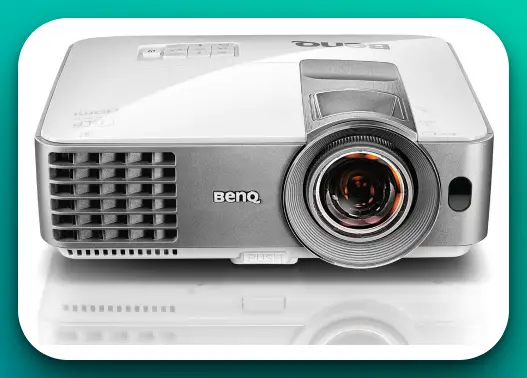
With its 3200 lumens of brightness, the MW632ST delivers clear and vibrant visuals, ensuring optimal visibility during your virtual golf rounds. This high brightness level allows you to enjoy a crisp and vivid image, even in well-lit environments.
Equipped with 3D capability, the MW632ST adds an extra dimension to your golf simulation experience. With compatible 3D content, you can immerse yourself in a lifelike golf course environment, enhancing the realism of your virtual golfing sessions.
The projector’s 10W speaker provides a decent audio output, allowing you to enjoy the accompanying sounds of the game. While connecting external speakers or a sound system may offer a more immersive audio experience, the built-in speaker of the MW632ST still offers satisfactory sound quality.
The MW632ST features keystone correction and a 1.2X zoom, providing flexibility in adjusting and aligning the projected image to your projection surface. This ensures a properly proportioned, distortion-free display, enhancing the visual experience.
Furthermore, the MW632ST is specifically optimized for golf simulation. Its short throw capability, high brightness, and versatile features make it an excellent choice for recreating the golfing experience in your own home. With the MW632ST, you can improve your swing and enjoy virtual rounds with accuracy and realism.
In conclusion, the BenQ MW632ST WXGA Short Throw Projector is the best projector for golf simulators. Its short throw capability, high brightness, 3D capability, 10W speaker, keystone correction, and zoom functionality make it an ideal companion for immersive golf simulation experiences.
Take your golf game to the next level with the MW632ST and enjoy realistic virtual golfing in the comfort of your own home.
Pros:-
Short Throw Capability: The BenQ MW632ST offers a short throw capability, allowing for large image projection even in limited spaces. This is ideal for home golf simulators where space is a constraint.
High Brightness: With its 3200 lumens of brightness, the MW632ST delivers clear and vibrant visuals, ensuring optimal visibility during your virtual golf sessions, even in well-lit environments.
3D Capability: The projector’s 3D capability adds an extra dimension to your golf simulator experience, immersing you in a lifelike environment and enhancing the realism of your virtual rounds.
10W Speaker: The MW632ST comes with a built-in 10W speaker, providing satisfactory audio output for the accompanying sounds of the game. While external speakers may offer a more immersive audio experience, the built-in speaker is a convenient and decent option.
Keystone Correction and Zoom Functionality: The projector’s keystone correction and 1.2X zoom allow for easy adjustment and alignment of the projected image to ensure a properly proportioned and distortion-free display.
Cons:-
WXGA Resolution: The MW632ST has a WXGA resolution, which may not offer the same level of detail and sharpness as higher-resolution projectors. While still providing a satisfactory visual experience, those seeking the highest level of image quality might prefer a projector with a higher resolution.
Limited Resolution for 3D: When using the 3D capability of the MW632ST, the resolution is reduced to half. This reduction in resolution may affect the overall image quality in 3D mode.
Limited Connectivity Options: The MW632ST offers standard connectivity options but may lack certain advanced input ports such as DisplayPort or USB-C. Users with specific connectivity requirements may need additional adapters or alternative projector models.
Despite these minor drawbacks, the BenQ MW632ST WXGA Short Throw Projector excels in short throw capability, high brightness, 3D capability, built-in speaker, keystone correction, and zoom functionality.
Its optimized features make it an excellent choice for golf simulators, allowing you to enjoy immersive and realistic virtual golfing experiences in the comfort of your home.
Check Price on Amazon7. YABER Y31 9800L – Best Budget Option
When creating an immersive and lifelike golfing experience at home, the YABER Y31 9800L projector is an exceptional choice for avid golf enthusiasts.
Combining impressive specifications with affordability, this projector offers a perfect solution for setting up a golf simulator without breaking the bank.
At the heart of the YABER Y31 9800L lies its remarkable native 1920x1080P resolution, which ensures crystal-clear image quality with rich detail and vibrant colors.
This Full HD projection capability provides golfers an unparalleled visual experience, as every aspect of the golf course comes to life in their living room.
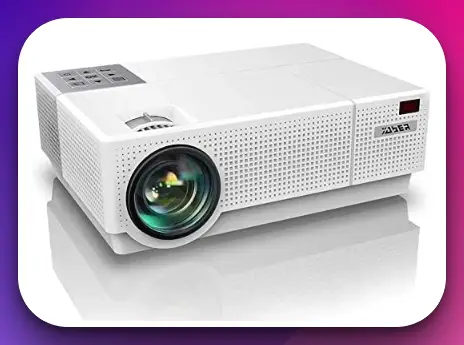
Whether examining the undulating greens or appreciating the intricate design of the fairways, this projector delivers stunning imagery that enhances the overall realism of the virtual golfing environment.
One standout feature of the YABER Y31 9800L is its impressive brightness of 9800L lumens, which ensures clear visibility even in well-lit rooms. This high-brightness capability allows golfers to enjoy virtual rounds without worrying about interference from ambient light.
Whether day or night, the YABER Y31 9800L delivers consistent image quality, allowing golfers to practice and improve their swing at their convenience.
Another noteworthy aspect of this projector is its remarkable 4D Keystone Correction feature, which provides flexibility in projector placement. With a ±50° keystone correction range, users can easily adjust the distortion caused by angled or uneven projection surfaces, ensuring a perfectly rectangular image.
This feature enhances the visual aesthetics and contributes to an immersive golfing experience, where golfers feel completely engrossed in their virtual surroundings.
The YABER Y31 9800L projector also supports 4K content, enabling golfers to enjoy ultra-high-definition golf simulations. This compatibility ensures future-proofing, allowing users to experience the advancements in virtual golf technology without needing an immediate upgrade.
In conclusion, the YABER Y31 9800L projector offers exceptional affordability, impressive specifications, and advanced features. It is the best budget projector for golf simulators, allowing golf enthusiasts to transform their living space into a virtual golf course.
With its native 1920x1080P resolution, high brightness, 4D Keystone Correction, and support for 4K content, the YABER Y31 9800L ensures an immersive and realistic golfing experience that will elevate any golfer’s practice sessions.
Pros:-
Affordable Price: The YABER Y31 9800L offers exceptional value for its price, making it an ideal choice for those on a budget.
High Native Resolution: With its native 1920x1080P resolution, this projector delivers sharp and detailed images, enhancing the realism of your golf simulation experience.
Impressive Brightness: The YABER Y31 9800L boasts a brightness of 9800 lumens, ensuring clear visibility even in well-lit rooms, allowing you to enjoy your virtual golf rounds without any distractions.
4D Keystone Correction: The projector’s ±50° 4D Keystone Correction feature allows for easy image distortion adjustment, ensuring a perfectly rectangular image on any projection surface.
Support for 4K Content: The YABER Y31 9800L is compatible with 4K content, providing a future-proof option that allows you to enjoy the advancements in virtual golf technology without upgrading your projector.
Cons:-
Limited Connectivity Options: While the YABER Y31 9800L supports various devices such as smartphones, PCs, TV sticks, and gaming consoles, it may not have as extensive connectivity options as some high-end projectors.
Built-in Speaker Quality: The projector has a built-in speaker, but the sound quality may not be as robust or immersive as a dedicated external speaker system. Consider connecting external speakers for a more immersive audio experience.
Size and Portability: The YABER Y31 9800L is not the most compact or lightweight projector, so if you require frequent portability or have limited space, you may need to consider alternative options.
Fan Noise: Like many projectors, the YABER Y31 9800L may produce some fan noise during operation. While it is generally not disruptive, it is worth considering if you prefer a quieter environment during your golf simulation sessions.
Lamp Life: The projector’s lamp has a finite lifespan; eventual replacement may be required after extended usage. However, with proper care and maintenance, the lamp should last considerably.
Considering its overall features, affordability, and performance, the YABER Y31 9800L remains an excellent choice for golf enthusiasts looking to create an immersive golf simulator experience at home.
8. BenQ TH690ST
When transforming your living space into an immersive golf simulator, the BenQ TH690ST projector is the ultimate choice for discerning golf enthusiasts.
With its impressive features and cutting-edge technology, this projector offers a seamless and lifelike golfing experience right in the comfort of your home.
The BenQ TH690ST is renowned for its 1080p HDR resolution, ensuring stunning visuals with exceptional clarity and vibrant colors. Every blade of grass, every contour of the golf course, and every swing of the club are presented with remarkable detail and realism.
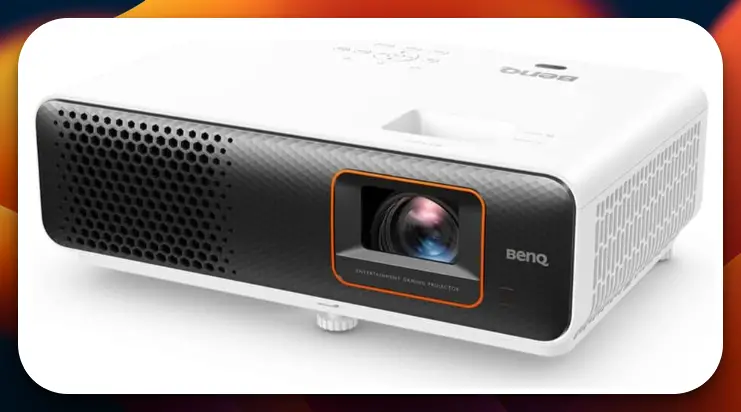
This high-definition projection capability elevates your golf simulation experience, immersing you in a virtual world that replicates the nuances of a real golf course.
One standout feature of the BenQ TH690ST is its remarkable short-throw capability, allowing you to project a large image even in confined spaces. With a short throw ratio, you can position the projector close to the screen or wall, minimizing shadows and maximizing the projected image size.
This feature is particularly beneficial for golf simulators where space is limited, ensuring an optimal projection setup without compromising image quality.
Golfers will appreciate the projector’s low input lag and dedicated Game Mode. With an ultra-fast response time of 8.3ms@120Hz, the BenQ TH690ST delivers smooth and responsive gameplay, allowing you to perfect your swing without any noticeable delay.
The Game Mode further enhances the gaming experience by optimizing the projector’s settings for optimal performance and image quality.
The BenQ TH690ST also offers versatile connectivity options, including dual HDMI ports, S/PDIF, and built-in 5W*2 speakers. This lets you connect your gaming consoles, such as the PS5 and Xbox Series X & S, directly to the projector for a hassle-free setup.
The built-in speakers provide decent audio output, although connecting external speakers is recommended for a truly immersive experience.
In addition, the projector supports 2D Keystone correction, ensuring a distortion-free image even when the projector is placed at an angle. This feature helps to maintain accurate proportions and geometry, contributing to a more realistic golfing environment.
With support for 3D content, the BenQ TH690ST offers an additional dimension to your golf simulation experience. Immerse yourself in three-dimensional fairways and greens, bringing the game to life like never before.
In conclusion, the BenQ TH690ST is undoubtedly the best projector for golf simulators. With its high-definition resolution, short throw capability, low input lag, versatile connectivity options, and 3D support, this projector delivers a truly immersive and lifelike golfing experience. Step into virtual golf with the BenQ TH690ST and elevate your game.
Pros:-
1080p HDR Resolution: The BenQ TH690ST offers stunning high-definition visuals with exceptional clarity and vibrant colors, enhancing the realism of your golf simulation experience.
Short Throw Capability: The projector’s short throw ratio allows you to project a large image even in confined spaces, making it ideal for setting up a golf simulator in smaller rooms.
Low Input Lag and Game Mode: With an ultra-fast response time of 8.3ms@120Hz and a dedicated Game Mode, the BenQ TH690ST delivers smooth and responsive gameplay, ensuring accurate swing tracking and an immersive gaming experience.
Versatile Connectivity Options: The projector provides dual HDMI ports, S/PDIF, and built-in 5W*2 speakers, allowing for easy connectivity with gaming consoles like the PS5 and Xbox Series X & S. The built-in speakers provide decent audio output, eliminating the need for external speakers in some cases.
2D Keystone Correction: The 2D Keystone correction feature ensures a distortion-free image, even if the projector is placed at an angle, maintaining accurate proportions and geometry on the projection surface.
Cons:-
Limited Brightness: The projector has a brightness level of 2300 lumens, which may not be sufficient for well-lit rooms. The projector in a dimly lit or controlled lighting environment is recommended to achieve the best image quality.
Sound Quality: While the built-in 5W*2 speakers provide decent audio output, they may not deliver the same level of immersion as dedicated external speakers. Connecting external speakers is advisable for a more immersive audio experience.
3D Glasses Not Included: While the BenQ TH690ST supports 3D content, the 3D glasses required for viewing are not included with the projector. They need to be purchased separately for a complete 3D experience.
Limited Keystone Correction: The projector offers 2D Keystone correction, which may not be as versatile as 4D Keystone correction found in some higher-end models. This limitation may require additional effort in adjusting the image to achieve the desired projection alignment.
Overall, the BenQ TH690ST projector offers a range of impressive features for golf simulators, including high-resolution visuals, short throw capability, low input lag, and versatile connectivity options.
While it may have some limitations in brightness, sound quality, and Keystone correction, its strengths make it an excellent choice for creating an immersive and enjoyable golf simulation setup at home.
9. AWOL VISION LTV-2500
When creating an unparalleled golf simulator experience, the AWOL VISION LTV-2500 projector epitomizes cutting-edge technology and innovation. With its remarkable features and exceptional performance, this projector takes golf simulation to new heights, making it the best choice for avid golfers.
The AWOL VISION LTV-2500 has an impressive 4K UHD resolution, delivering stunningly crisp visuals that bring the golf course to life in vivid detail.
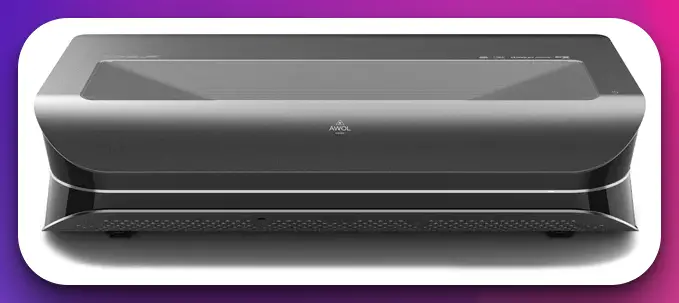
Every blade of grass, every ripple on the water hazards, and every contour of the bunkers are showcased with unparalleled clarity, immersing you in a lifelike golfing environment that enhances your overall simulation experience.
One standout feature of the AWOL VISION LTV-2500 is its Ultra Short Throw capability. With this technology, the projector can be positioned close to the screen or wall, minimizing shadows and maximizing the image size.
This means you can have a large projected image even in smaller spaces, creating an immersive and realistic golf simulation setup without needing a large dedicated room.
Featuring a powerful Triple Laser system, this projector delivers exceptional brightness, with a peak luminosity of 2600 lumens. This ensures that every detail of the virtual golf course is vividly illuminated, even in well-lit environments.
No matter the time of day or lighting conditions, the AWOL VISION LTV-2500 guarantees an optimal viewing experience, allowing you to focus on your game without distractions.
With support for 3D content, this projector takes your golf simulation to the next level of realism. Experience the undulating fairways and rolling greens in stunning 3D, adding depth and immersion to your virtual golfing sessions.
The AWOL VISION LTV-2500 is not just about visuals; it also delivers an exceptional audio experience. Featuring Dolby Atmos technology, the projector creates a three-dimensional soundscape that envelops you in immersive audio.
Hear the rustle of leaves, the chirping of birds, and the distant applause of a virtual gallery, adding another layer of realism to your golfing experience.
Included with the projector is the Fire TV Stick 4K Max, providing seamless access to a wide range of golf simulation software and entertainment options. The AWOL VISION LTV-2500 and the Fire TV Stick 4K Max combination ensures a hassle-free setup and an immersive golf simulator experience.
In conclusion, the AWOL VISION LTV-2500 redefines the possibilities of golf simulator projection. With its 4K UHD resolution, Ultra Short Throw capability, Triple Laser system, support for 3D content, Dolby Atmos audio, and Fire TV Stick 4K Max, it is the ultimate choice for golf enthusiasts seeking the best projection solution.
Elevate your golf simulation experience to new heights with the AWOL VISION LTV-2500 and enjoy the immersive world of virtual golf like never before.
Pros:-
4K UHD Resolution: The AWOL VISION LTV-2500 offers stunningly crisp visuals with its 4K UHD resolution, ensuring a lifelike and immersive golf simulation experience.
Ultra Short Throw Capability: The projector’s Ultra Short Throw technology allows for easy setup in smaller spaces, minimizing shadows and maximizing the projected image size for a more immersive golfing environment.
Triple Laser System: The powerful Triple Laser system delivers exceptional brightness, ensuring vibrant and well-illuminated visuals even in well-lit environments, allowing you to appreciate the details of the virtual golf course fully.
Support for 3D Content: The AWOL VISION LTV-2500 supports 3D content, adding depth and realism to your golf simulation and enhancing the overall experience.
Dolby Atmos Audio: With Dolby Atmos technology, the projector provides a three-dimensional audio experience, immersing you in realistic and immersive sound and enhancing the overall immersion of your virtual golfing sessions.
Fire TV Stick 4K Max Included: The inclusion of the Fire TV Stick 4K Max provides easy access to a wide range of golf simulation software and entertainment options, simplifying the setup process and expanding the possibilities for your golf simulator.
Cons:-
Price: The AWOL VISION LTV-2500 is likely to be a high-end and premium projector, which may come with a higher price tag than other options on the market.
Installation: While the Ultra Short Throw capability is convenient, the installation process may require careful positioning and adjustment to ensure optimal projection and image quality.
Limited Connectivity Options: The projector’s connectivity options may be limited compared to other models, potentially requiring additional adapters or devices for certain connectivity needs.
Portability: The AWOL VISION LTV-2500 may not be as portable as smaller, more compact projectors, which could limit its flexibility if you plan to move or transport your golf simulator setup frequently.
Despite these considerations, the AWOL VISION LTV-2500 offers exceptional features and performance, making it the best projector for golf simulators.
Its 4K UHD resolution, Ultra Short Throw capability, Triple Laser system, support for 3D content, Dolby Atmos audio, and Fire TV Stick 4K Max create an immersive and realistic golfing experience that will elevate your practice sessions and entertainment to new levels.
Top Projector Brands For Golf Simulators
Having the right projector is crucial when creating an immersive golf simulator experience. A high-quality projector can bring the virtual fairways and greens to life, allowing golf enthusiasts to practice their swings and improve their game in the comfort of their homes.
To help you make an informed decision, we’ve compiled a list of the top projector brands for golf simulators known for their exceptional performance and cutting-edge technology.
1. Epson
Renowned for its innovative projectors, Epson offers a range of models specifically designed for golf simulators. With their advanced 3LCD technology and high brightness levels, Epson projectors deliver vibrant and accurate colors, ensuring that every detail on the virtual course is crystal clear. Their projectors also feature low input lag, minimizing delays between your swing and the on-screen action.
2. Optoma
Optoma is another top contender in golf simulator projectors. Their models boast high contrast ratios, providing deep blacks and bright whites for a more realistic visual experience. Optoma projectors also come with a wide color gamut, ensuring accurate color reproduction and enhancing the overall realism of the virtual golf course.
3. Sony
Known for their expertise in visual technology, Sony projectors are highly regarded in the golf simulator community. Equipped with advanced image processing technologies, Sony projectors deliver exceptional image quality with sharp details and excellent clarity. Their projectors also feature high refresh rates, reducing motion blur and maintaining smooth gameplay.
4. BenQ
BenQ projectors are renowned for their low input lag and high native resolution, making them an excellent choice for golf simulators. These projectors offer various connectivity options, allowing seamless integration with golf simulator software and other devices.
BenQ’s models also have flexible installation features, ensuring optimal positioning and alignment for a captivating golfing experience.
5. ViewSonic
ViewSonic projectors combine affordability and performance, making them popular among golf simulator enthusiasts. These projectors offer high brightness levels, enabling clear visibility even in well-lit environments. ViewSonic’s models also have user-friendly interfaces and intuitive controls, making them easy to set up and operate.
In conclusion, the top projector brands for golf simulators provide exceptional image quality, low input lag, and advanced features that enhance the virtual golfing experience.
Whether you choose Epson, Optoma, Sony, BenQ, or ViewSonic, you can be confident in investing in a projector to bring the golf course to your doorstep. Selecting the right projector will elevate your golf simulator setup and help you improve your skills on the virtual links.
Factors To Consider When Buying a Projector for a Golf Simulator
Selecting the right projector is essential when creating a realistic and immersive golf simulator experience. The Factors to Consider When Buying a Projector for a Golf Simulator extend beyond the basic specifications and require careful evaluation to ensure optimal performance.
Here are some key considerations to keep in mind before making your purchase.
1. Resolution: The projector’s resolution is crucial for a detailed, lifelike image. Look for projectors with a minimum resolution of Full HD (1080p) or higher to ensure clear visuals and sharp details. Higher resolutions, such as 4K, can provide even greater clarity, enhancing the simulation experience.
2. Brightness: Golf simulators often require a well-lit environment to replicate outdoor conditions accurately. Opt for projectors with high brightness ratings, typically measured in lumens. A higher lumen count ensures the image remains vibrant and visible, even in well-lit spaces.
3. Contrast Ratio: The contrast ratio determines the difference between the darkest and brightest areas of the image. A higher contrast ratio ensures better differentiation between shadows and highlights, providing a more immersive visual experience. Look for projectors with a high contrast ratio to enhance the realism of the virtual golf course.
4. Throw Distance: The throw distance refers to the distance between the projector and the screen. Ensure that the projector’s throw distance matches the available space in your golf simulator setup. Some projectors offer a short-throw feature, allowing you to position the projector closer to the screen without sacrificing image quality.
5. Input Lag: Input lag is the delay between an action, such as swinging a club, and the corresponding response on the screen. Choose a projector with low input lag for a seamless, responsive gameplay experience. This ensures your swing is accurately represented in real-time, providing a natural and immersive golfing experience.
6. Connectivity Options: Consider the connectivity options available on the projector. Look for projectors with multiple input ports, such as HDMI and VGA, to connect with various devices like gaming consoles and computers. This flexibility allows easy integration with golf simulator software and other setup components.
7. Image Adjustments: The ability to fine-tune the image settings can greatly enhance your golf simulator experience. Look for projectors with image adjustment features, including keystone correction, zoom, and focus controls. These adjustments ensure the image fits correctly on the screen, minimizing distortion and maximizing visual quality.
8. Durability and Reliability: Invest in a projector from a reputable brand that produces durable and reliable products. Review reviews and consider the manufacturer’s warranty to gauge the projector’s longevity and after-sales support.
9. Price and Budget: Set a realistic budget for your golf simulator projector. Determine the features that are most important to you and find a projector that offers a balance between performance and affordability. Compare prices and specifications to make an informed decision.
In conclusion, selecting the right projector for your golf simulator involves considering various factors, including resolution, brightness, contrast ratio, throw distance, input lag, connectivity options, image adjustments, durability, reliability, and budget.
By evaluating these factors, you can find a projector that meets your requirements and elevates your golfing experience to new heights.
Installation Tips For Projectors in Golf Simulators
Setting up a projector in your golf simulator requires careful consideration to ensure optimal performance and a seamless experience.
The Installation Tips for Projectors in Golf Simulators outlined below will guide you through the process, helping you achieve excellent image quality and an immersive virtual golfing environment.
1. Determine the Ideal Positioning: Before installing your projector, identify the optimal positioning within your golf simulator setup. Consider the projector’s throw distance, which is the distance between the projector and the screen. Ensure the projector is placed at the appropriate distance to achieve the desired image size and clarity.
2. Mounting Options: Explore different mounting options for your projector. Ceiling mounts are popular as they allow for a clean, unobstructed projection path. Ensure the mount provides flexibility regarding tilt, swivel, and height adjustment to achieve the perfect projection angle.
3. Screen Selection: The right projection screen is crucial for an immersive experience. Consider factors such as screen size, aspect ratio, and material. Opt for screens specifically designed for golf simulators, as they are often made to enhance image quality, reduce glare, and provide a realistic representation of a golf course.
4. Ambient Lighting Control: Control the ambient lighting in your golf simulator room to minimize interference with the projected image.
Install blackout curtains or blinds to block external light sources and ensure a darkened environment for optimal image visibility. Additionally, consider installing ambient lighting around the screen to enhance the atmosphere.
5. Calibration and Alignment: After mounting the projector and setting up the screen, it’s crucial to calibrate and align the projector to ensure accurate image reproduction.
Adjust the projector’s settings, including keystone correction, focus, and zoom, to eliminate distortion or blurriness. Use calibration tools or software to fine-tune the color accuracy and image quality.
6. Cable Management: Proper cable management is essential to maintain a neat and organized setup. Conceal cables using cable channels or wall mounts to prevent tripping hazards and maintain a clutter-free environment. Additionally, use high-quality cables to ensure reliable connections and minimize signal loss.
7. Ventilation and Heat Dissipation: Projectors generate heat during operation, so proper ventilation is crucial to prevent overheating. Ensure that the projector has sufficient space around it to allow for proper airflow. Avoid placing the projector in enclosed spaces or near heat sources that can affect its performance and lifespan.
8. Remote Control Accessibility: Consider the remote control accessibility when positioning your projector. Ensure the projector’s infrared (IR) receiver is visible and not obstructed by other objects or the screen. This allows for convenient control of the projector’s settings and functions from a comfortable location.
9. Regular Maintenance: Schedule regular maintenance for your projector to ensure consistent performance. Clean the projector’s air filters and lens periodically to prevent dust accumulation, which can affect image quality. Refer to the manufacturer’s guidelines for specific maintenance instructions and recommended intervals.
Following these Installation Tips for Projectors in Golf Simulators can create an immersive and realistic golfing experience in your home’s comfort.
Attention to detail during installation and setup will ensure optimal image quality, accurate alignment, and a seamless gameplay experience. Take the time to plan and execute the installation properly to enjoy countless hours of virtual golfing entertainment.
📗FAQ’s
Which projector is best for a golf simulator?
The best projector for a golf simulator depends on several factors, such as resolution, brightness, and throw distance. Ideally, you want a projector with high resolution to ensure clear and detailed visuals. A 4K projector offers exceptional image quality, but a Full HD (1080p) projector can also provide satisfactory results.
Do I need a 4K projector for a golf simulator?
While a 4K projector can enhance the visual experience of a golf simulator with its higher pixel density, it is unnecessary. A Full HD (1080p) projector can still deliver impressive image quality, especially when combined with other factors such as brightness and contrast.
How many lumens do you need for a golf projector?
The required number of lumens for a golf projector depends on the lighting conditions in your simulator room. For a well-lit environment, higher lumens are recommended, typically ranging from 2000 to 4000 lumens. A projector with lower lumens in darker settings can still provide satisfactory results.
Can you use an ultra-short throw projector for a golf simulator?
Yes, an ultra-short throw projector can be used for a golf simulator. Ultra short throw projectors have a shorter throw distance, allowing them to be placed close to the screen or hitting mat. This setup can provide a more compact and immersive golfing experience, especially in limited spaces.
What simulator does the PGA store use?
The PGA store uses the renowned TrackMan simulator for its golfing experiences. TrackMan is widely recognized in golf for its accurate ball-tracking technology and realistic gameplay simulations.
Can I use a regular projector for a golf simulator?
Yes, a regular projector can be used for a golf simulator if it meets the requirements, such as resolution, brightness, and input lag. Consider the specific needs of your setup and choose a projector that aligns with those requirements.
Should the golf simulator projector be on the floor or ceiling?
The placement of the golf simulator projector depends on the available space and the desired projection setup. While ceiling mounting is a common choice as it keeps the projector out of the way, placing it on a floor mount or a dedicated shelf can also work well. Consider throw distance and the projector’s projection angle to achieve optimal results.
Is a short-throw projector better?
A short-throw projector can offer certain advantages in a golf simulator setup. A shorter throw distance allows for a larger image size in limited spaces. Additionally, it reduces the chances of shadows being cast by the golfer.
However, whether a short throw projector is better depends on your specific requirements and the layout of your simulator.
What size projector is ideal for a golf simulator?
The ideal projector size for a golf simulator depends on the screen or hitting mat dimensions and the desired image size. Choosing a projector that can comfortably produce the desired image size while maintaining image clarity and sharpness is recommended.
Is 7000 lumens good for a projector?
Yes, a projector with 7000 lumens is considered high brightness and can perform well in various environments, including golf simulators. This level of brightness ensures clear and vibrant visuals even in well-lit rooms.
Is 9500 lumens good for a projector?
A projector with 9500 lumens is considered extremely bright and is suitable for large venues or spaces with high ambient lighting. While it can be used for a golf simulator, it may not be necessary unless you have specific requirements or a large dedicated space.
Which is better, an ultra short throw projector or a regular projector?
Choosing between an ultra-short throw projector and a regular projector depends on your needs and space limitations. An ultra-short throw projector is ideal for smaller spaces or for the projector to be closer to the screen. A regular projector offers more flexibility regarding placement options and may be suitable for larger simulator setups.
Are Panasonic projectors good for a golf simulator?
Panasonic projectors are known for their reliability and image quality, making them a viable option for a golf simulator. Consider Panasonic models that meet your specific setup’s necessary resolution, brightness, and specifications.
What is the best aspect ratio for a golf simulator?
The best aspect ratio for a golf simulator is 16:9, the standard widescreen format commonly used in TVs and projectors. This aspect ratio provides a wider viewing area and better accommodates the virtual golf course’s visuals.
What simulator does Tiger Woods use?
Tiger Woods uses a high-end golf simulator known as the Full Swing Simulator. Full Swing Simulators are renowned for their advanced technology, accuracy, and realistic gameplay experiences.
What kind of simulator does Tiger Woods use?
Tiger Woods uses a state-of-the-art Full Swing Simulator for his golf training and practice needs. Full Swing Simulators utilize advanced ball tracking and simulation technology to provide a lifelike golf experience.
What simulator does Rory McIlroy use?
Rory McIlroy, a professional golfer, utilizes a TrackMan Simulator for his golf training and practice sessions. TrackMan Simulators are widely recognized for their precision and accurate ball-tracking capabilities.
What is the throw ratio for a projector in a golf simulator?
The throw ratio for a projector in a golf simulator refers to the distance between the projector and the screen divided by the screen’s width. The required throw ratio depends on the desired image size and the projector’s throw distance capabilities.
Can you use a laser projector for a golf simulator?
Yes, a laser projector can be used for a golf simulator. Laser projectors offer several benefits, such as longer lifespan, consistent brightness over time, and improved color accuracy. However, ensure that your chosen laser projector meets your simulator’s necessary resolution and specifications.
Is a golf simulator screen 16:9 or 4:3?
Golf simulator screens typically have a 16:9 aspect ratio, the standard widescreen format used in most modern displays and projectors. This aspect ratio provides a wider viewing area and is well-suited for simulating the golfing experience.
Is looking at a projector better than a screen for a golf simulator?
The choice between looking at a projector or a screen for a golf simulator depends on personal preference and the specific setup. While a projector offers a larger and more immersive visual experience, a dedicated projection screen can provide enhanced image quality and better surface characteristics for ball tracking.
Does a projector look better on a wall than a screen for a golf simulator?
The visual quality of a projector can be affected by the surface it’s projected onto. While projecting onto a dedicated projection screen designed for optimal image quality is generally preferred, projecting onto a high-quality, flat, and smooth wall can still provide satisfactory results in some cases.
Where should you position a projector in a golf simulator?
The projector’s positioning in a golf simulator depends on the available space and desired image size. Mounting the projector on the ceiling or placing it on a shelf behind the golfer are common options. The projector should be positioned to allow for proper throw distance and optimal image alignment.
Can people tell the difference between 2K and 4K resolution in a golf simulator?
In a golf simulator, the difference between 2K (Full HD) and 4K resolution may not be easily discernible to the naked eye, especially considering factors like viewing distance and image size. While 4K can offer more detail, 2K resolution can still provide satisfactory image quality for most golf simulator setups.
Can the human eye distinguish between 2K and 4K resolution?
Under normal viewing conditions, the human eye may not perceive a significant difference between 2K (Full HD) and 4K resolution, particularly at typical viewing distances for a golf simulator. However, individual visual acuity and other factors can influence personal perception.
Is 2K resolution better than 1080p?
Regarding resolution, 2K is equivalent to 1080p (Full HD). Both offer the same level of detail and clarity. Therefore, there is no difference in resolution between the two; they are essentially the same.
What is the downside of a short-throw projector?
While short throw projectors offer benefits like reduced shadows and the ability to be placed closer to the screen, they may have a limited throw distance. This means they may be unsuitable for larger spaces requiring a longer throw distance to achieve the desired image size.
Is it better to have a projector closer or further away in a golf simulator?
The positioning of the projector in a golf simulator depends on various factors. The projector closer to the screen can benefit smaller spaces, especially when using a short-throw projector. A further throw distance may be necessary for larger spaces to achieve the desired image size and clarity.
What’s better, a DLP or LCD projector for a golf simulator?
Depending on personal preferences and requirements, DLP (Digital Light Processing) and LCD (Liquid Crystal Display) projectors can be suitable for a golf simulator.
DLP projectors often offer better motion handling and higher contrast, while LCD projectors may provide better color accuracy and a wider color gamut. Consider the specific characteristics of each technology when making your decision.
What is the best size for a golf simulator screen?
The best screen size for a golf simulator depends on the available space and personal preference. A common recommendation is a screen size between 100 and 120 inches diagonally. However, the size can vary depending on the dimensions and layout of your simulator room.
What projector does Full Swing use for golf simulators?
Full Swing Golf, a renowned golf simulator company, utilizes a variety of projectors in their golf simulators. The projector model may vary depending on the simulator configuration and customer requirements.
Is 8000 lumens too bright for a projector?
An 8000-lumen projector is considered very bright and may suit large venues or areas with high ambient lighting. However, a golf simulator setup in a typical home environment could be too bright and require light control measures to optimize the viewing experience.
Can a projector be too bright for a golf simulator?
Yes, a projector can be too bright for a golf simulator, especially in a dimly lit or darkened room. Excessive brightness can lead to eye discomfort or visual fatigue. Balancing brightness and ambient lighting conditions is essential to achieve optimal image quality and viewing comfort.
Is 8000 lumens good for a projector?
An 8000-lumen projector is considered excellent in brightness and is suitable for large venues, outdoor events, or spaces with high ambient lighting. However, a lower lumen count can still provide satisfactory results for smaller-scale applications like a golf simulator in a home or indoor setting.
How many lumens should a 4K projector have for a golf simulator?
The number of lumens required for a 4K projector for a golf simulator depends on factors such as ambient lighting and screen size. A 4K projector with 3000 to 4000 lumens should be sufficient in a well-lit room. However, darker environments may allow for lower lumen counts while maintaining good image quality.
How many lumens do you need to project in daylight for a golf simulator?
A higher number of lumens is generally required to project in daylight for a golf simulator due to the competing ambient light. Depending on the daylight entering the room, a projector with 5000 lumens or more may be necessary to ensure a bright and visible image on the screen.
How do I choose a good projector for a golf simulator?
To choose a good projector for a golf simulator, consider factors such as resolution, brightness, throw distance, input lag, and connectivity options. Look for projectors that meet your requirements and offer features suitable for an immersive and realistic golfing experience.
How many lumens do I need for an outdoor projector for a golf simulator?
The number of lumens required for an outdoor golf simulator depends on the ambient lighting conditions during outdoor usage. To combat the sun’s brightness, a projector with 5000 lumens or more is typically recommended to ensure a visible and vibrant image on the screen.
What is the maximum throw distance for a projector in a golf simulator?
The maximum throw distance for a projector in a golf simulator depends on the specific projector model and its lens capabilities. Consult the projector’s specifications or manufacturer’s guidelines to determine its maximum throw distance.
Do you need an impact screen for a golf simulator?
While an impact screen is unnecessary for a golf simulator, it is highly recommended. Impact screens are specially designed to withstand the impact of golf balls, ensuring durability and longevity. Using a high-quality impact screen enhances safety, minimizes damage to the screen, and provides a better overall experience.
What projector does OptiShot use for golf simulators?
OptiShot, a popular golf simulator brand, offers various models compatible with various projectors. The specific projector used with OptiShot systems may vary depending on the customer’s preferences and requirements.
What do I need for an indoor golf simulator?
You will typically need a few key components for an indoor golf simulator setup. These include golf simulator software, a projector, a projection screen or hitting mat, a launch monitor or sensor system, and adequate space to swing the golf club comfortably.
Consider lighting, sound, and impact screen protection for an optimal indoor golfing experience.
Conclusion
Choosing the best projector for your golf simulator can be a game-changer. With the right device, your virtual golfing experience will be visually rich and immersive, and your practice sessions can also become more productive.
The difference a top-quality projector makes can be staggering – from the crispness of the images to the seamless synchronization of movements.
Remember, the key factors to consider while choosing a projector include brightness, resolution, contrast ratio, throw distance, refresh rate, and compatibility with your simulator.
Don’t let a substandard projector mar your indoor golfing experience, especially when numerous excellent options cater to various budgets and requirements.
We hope this guide helps you navigate your way to the ideal projector for your golf simulator setup. May every swing you make in your enhanced simulator bring you closer to perfecting your game on the course. Here’s to achieving your best golf, one virtual round at a time!
References
Social Presence in Virtual Golf Simulators
Fact: The success of virtual golf simulators may be more related to an enhanced sense of socialization with other players, rather than the virtual reality technology itself.
Source: “Presence in virtual golf simulators: The effects of presence on perceived enjoyment, perceived value, and behavioral intention” published in September 2013. Link to the paper.
Customer Productivity in Virtual Golf Simulators
Fact: Technological innovation in virtual golf simulators allows customers to perform certain tasks normally undertaken by employees, which is an important means to improving productivity.
Source: “Customer productivity in technology-based self-service of virtual golf simulators.” published in October 2014. Link to the paper.
Golf Simulators and Self-Efficacy
Fact: Golf simulators can influence the self-efficacy and motivation of beginning golfers.
Source: “Examining the Efficacy of Virtual Golf Simulators on Improving Self-Efficacy and Motivation” published in 2017. Link to the paper.
Indoor Golf Simulator with Data Synchronization
Fact: An indoor golf simulator has been developed that allows a player to pause a game at any time and resume it at any place by applying data synchronization techniques in ubiquitous environments.
Source: “An Indoor Golf Simulator for Continuous Golf Games” published in 2013. Link to the paper.
Smartphone-based Golf Simulation for Arthritis Patients
Fact: A smartphone-based golf game that uses GPS and accelerometer sensors for collecting monitoring data can motivate arthritis patients to get active.
Source: “A smartphone-based golf simulation exercise game for supporting arthritis patients” published in November 2013. Link to the paper.
Pseudo Golf Club for Virtual Golf Simulation
Fact: A pseudo golf club can sense a user’s swing motion and is used in a virtual golf simulation system that calculates and displays the trajectory of a golf ball, helping users to learn golf easily.
Source: “Implementation of Pseudo Golf Club and Virtual Golf Simulation System” published in 2018. Link to the paper.