
























Do you have the curiosity to know about the Best Night Vision Helmets to buy in 2022? You can easily Find out now in this definitive list with our detailed review.
Without any further delay let’s find out. 👓👓
Night vision helmets are well-known tools used at night by night lovers. And in most cases, the helmet usually comes with a goggle that enables you to see properly at night.
So whether it is your job that takes you out at night, or it’s just your hobby to go out at night and explore, you will need a helmet that will sit comfortably on your head for as long as you are out at night.
In the past, binoculars and monocular were most common as that is what people use in exploring the night, but those tools were not convenient enough because it restricted movements and occupied your hands. But with the helmet, your hands will be free and you can explore and have fun all through the night.
before starting talking about Best Night Vision Helmets, let’s Know How Does Night Vision Works? 🤔 with the below-mentioned video.

The night helmets are usually advertised as goggles because you can’t use a helmet without a goggle that would enable you to see clearly.
Most times the night vision glasses are included in your helmet package but they only see from a static point, but the helmet and goggle package is most preferable because the goggles allow you to see very far.
But while getting your helmet, you need to consider the fact that you might be wearing it all through the night, so, it should be lightweight which means it shouldn’t be more than two pounds and you also need to consider the battery life because you need a helmet with a strong battery life that will last you for as long as you are outside.
However, since there are lots of night vision helmets out there, choosing the best one for you can be quite challenging and confusing, hence, this article will guide you on how to get the best helmet.
In this article, we will list out a few night vision helmet that is perfect for you.
Best Night Vision Helmets: Our Top Picks 👌
1. Pulsar Gs Super 1 + Night Vision Helmet
The Pulsar Gs night vision helmet is one that comes with a goggle to enable you to see clearly at night. It also comes with headgear that allows you to carry out any kind of project that you wish to do at night.
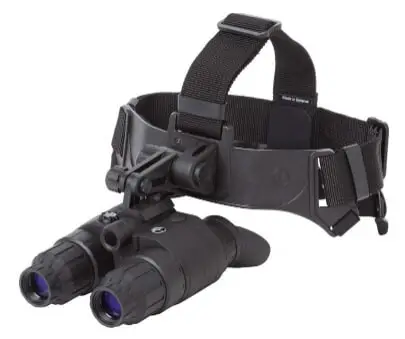
This equipment has been used by many who have rated it online and that is why it is rating top on Amazon.
This night vision helmet also comes with a goggle and its battery life can stay for about 15 hours without running out. If the battery is fully charged, you can go days without charging your helmet even while using it.
This night vision helmet will be great if you are going camping or on a trip, especially to a place where you will not get access to a charging port. You will be glad that you went with the pulsar helmet because there won’t be a need to charge always.
Below are some of the features of the Pulsar Gs Super 1 + Night Vision Helmet that earned it a spot in our list of Best Night Vision Helmets to get in 2022.
Features:-
- The pulsar night vision helmet weighs 0.99 pounds which makes it lightweight and makes it comfortable enough for you to wear the helmet for long hours.
- It provides you with a clear image even in complete darkness.
- It also comes with adjustable brightness settings that allow you to adjust the brightness.
- It is a gen 1 device that focuses more on clarity.
The pulsar night vision helmet might not have lots of features like gen 2, 3, and 4 but it still offers you a clear image and it is budget-friendly.
which means you can afford it even on a low budget. You need not worry if it will be effective or not, because the company is well known for producing good night vision products.
Check Price on Amazon
2. Night Optics D – 2 MV Gen 1 + Night Vision Helmet
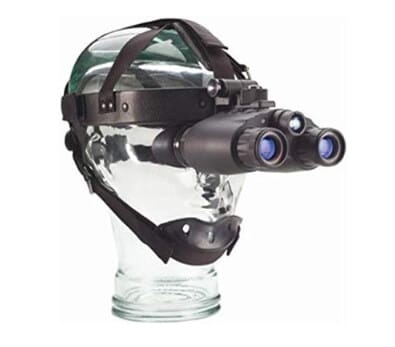
The Night Optic is a popular company that is known for producing night vision equipment and their night vision is no exception to their excellent work. They use cutting-edge technology for their products and a strict test carried out to make sure their equipment is highly efficient for use by their users.
Features:-
- The helmet was specially designed to be comfortable and versatile.
- It comes with an ergonomic design that gives you great comfort while wearing it.
- It is capable of withstanding any weather conditions.
- It comes with a night goggle that lets you see clearly at night.
The night optic D-2 is a great and affordable helmet for people who wants to own a helmet but can’t due to financial constrain.
The helmet is a gen 1 helmet but still works perfectly well for you. it’s lightweight also enables you to carry it all through the night without having neck cramps.
Check Price on Amazon3. Wanney Tracker Night Vision Google with Head Gear
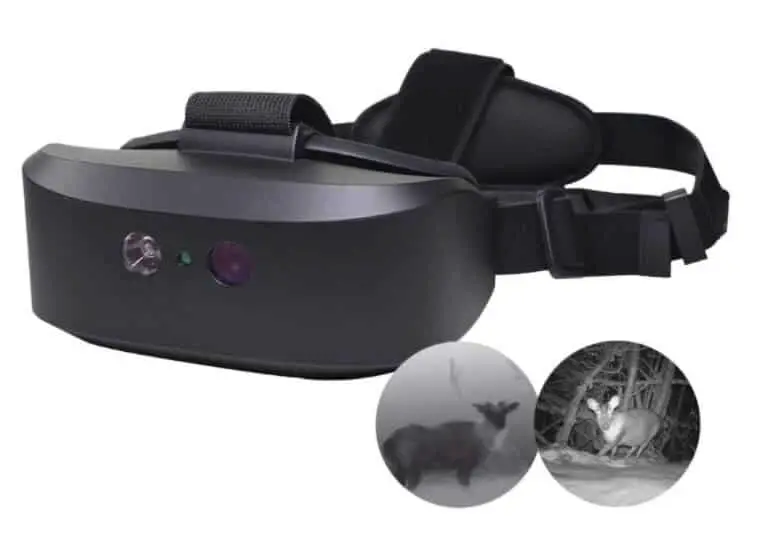
Another excellent futuristic night vision kit from Ocean City, this combo is excellent for surveillance, hunting, and just viewing your environment at night.
At first glance, this goggle looks confusing but they are actually very easy to use and the design material allows for kids to get a hang night vision especially in pitch darkness.
Specification:-
- Weighs in at 2 pounds
- An integrated LCD screen and infrared LED illuminator allow for visual clarity up to 90 meters in total blackout
- 300-meter view range in lighted areas
- Rechargeable battery with up to 6 hours of charge and 1.5 hours of continuous usage
Below are some of the features of the Wanney Tracker Night Vision Google with Head Gear that earned it a spot in our list of Best Night Vision Helmets to get in 2022.
Features:-
1. A multi-coated glass objective allows for maximum optimization of light to create sharp images with brilliant contrast and definition. This singular feature also enables images to attain superior clarity. This unit can also accommodate an IR flashlight to give you an immerse image are a distance of up to 300 meters
2. One negative in the WANNEY tracker night vision goggle is the short battery lifespan of just 90 minutes. If you are playing paintball with your friends, then 90 minutes is enough time to get exhausted otherwise you will a 6 hours charge to come back to the game
3. The straps on the headgear are light, skin-friendly, and easy to do and undo to create a secure and evenly distributed weight across your head circumference.
Below is the summary of the main Pros and Cons of The Wanney Tracker Night Vision Google with Head Gear.
Pros:-
- A durable and sturdy device
- Lightweight
Cons:-
- Needs constant charging
Overall, the WANNEY tracker Night Vision Kit is the best for people just starting to understand how night vision works. The fact that you need your charger every 2 hours is surely not fun, but the device is a fun one to work with.
4. Sightmark SM15070 Ghost Hunter
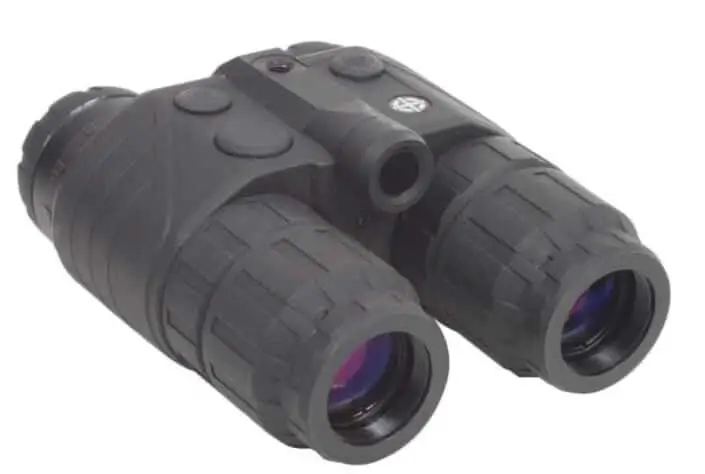
The Sightmark night vision goggle with a helmet is another contender on the market and one approved by the North American Hunting Club.
This Generation 1 binocular night vision goggle comes with some pretty attractive technology and operation options that allow you total control of your environment regardless of the brightness of the environment.
Specifications:-
- Magnification 1 by 24
- Lens diameter of 24mm
- Field view of 54 meter
- Battery life up to 20 hours with the IR switched on
Below are some of the features of the Sightmark SM15070 Ghost Hunter that earned it a spot in our list of Best Night Vision Helmets to get in 2022.
Features:-
1. Ultra-lightweight dual-lens goggles with headgear both of which will sit lightly over your head with any discomfort or any part rubbing on your skin.
2. Excellent resolution and image quality enable viewers to take note of their surroundings in high infrared illumination. The 15070 great illuminators and magnification power easily mark this night vision goggle the best for low and total darkness.
Furthermore, to avoid an impromptu intense light from shooting into your eye socket, the device automatically shuts off which also saves your battery too.
3. A great focus and object identification with a powerful inbuilt illuminator and magnification making it absolutely bang on the bucks for hunting especially in low lighting with a clear and detailed image.
Below is the summary of the main Pros and Cons of The Sightmark SM15070 Ghost Hunter.
Pros:-
- Quick charge and long battery life
- Ability to control the image resolution on each lens of the binocular
- ¼ inch socket for tripod goggle that enables you to affix your night vision goggle on the helmet securely.
- Get quick deployment and mount for hands-free operation
- A compact, durable and sturdy device
Cons:-
- Need constant adjusting as the focus distance moves farther apart
Overall, this night vision kit by Sightmark is exceptional and for the price, features, and design, this is definitely one for beginners and professionals looking for a device that is easy to use without all the fuss.
5. X-Vision Pro Night Vision Goggle with Helmet
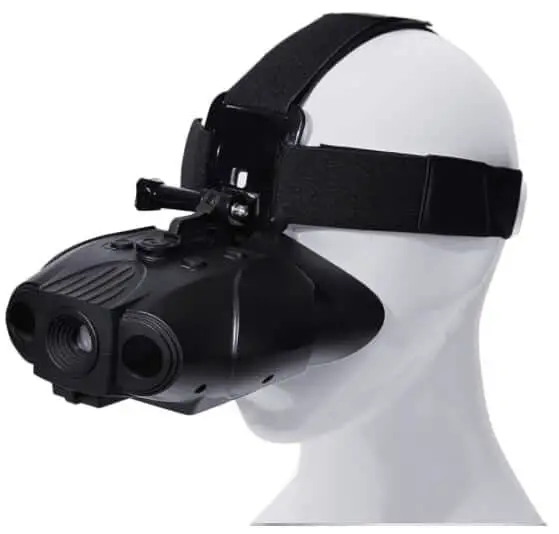
If you are on the lookout for a good night vision helmet with a night goggle that is packed with more than enough technology for use in several scenarios like hunting, camping, paintball shoot out with your friend, or trying to look for something in the dark without switching on the lights.
The X-vision pro night vision device is a hands-free product, friendly on your wallet, and super lightweight enabling you to wear it all day with little or no friction or irritation on your skin. X-vision pro is a day and night mountable night vision device that allows you to see indoor and outdoor.
Below are some of the features of the X-Vision Pro Night Vision Goggle with Helmet that earned it a spot in our list of Best Night Vision Helmets to get in 2022.
Features:-
1. The best thing about this technology is the ability to not only see any time of the day, but this innovative digital technology allows you to record, zoom onto an object, take pictures and well, see at night.
2. A lens resolution of 320 by 240 pixels gives you an even clearer image and distinct identification in the dark making it especially used for in surveillance and camping.
For daytime use, the night goggle comes with a lens blocker that controls the amount of IR illumination that enters the device shadowing your vision.
3. While some other night vision goggles have a range of 50 to 100 meters, the X-vision pro has a 300 yards detection range with VGA thermal image sensor allowing for clearer vision either in the original size or zoomed to twice its size.
4. For the recording, the X-vision Pro charges using a regular USB cable and have an SD card slot right on the lot part of the goggle
Below is the summary of the main Pros and Cons of The X-Vision Pro Night Vision Goggle with Helmet.
Pros:-
- 3 times magnification rate and a 2X zoom mode
- Comes with an over the head strap or neck strap for two wearing options
- A perfect device for low light and dark environment
- Lightweight, durable, comfortable, and won’t cause any distraction or image distortion during use
- Excellent device for all outdoor activities or as the security camera for your home
- A rechargeable battery system eliminates the use of double AA batteries and a longer battery lifetime with 4 hours of charging time from 0 – 100 percent.
Overall, it is a very powerful device, light, and comfortable with the entire button at close range allowing you to reach them easily. Furthermore, it is a super affordable and durable device for long use.
6. Zerone tactical Helmet Military Style Black Night Vision
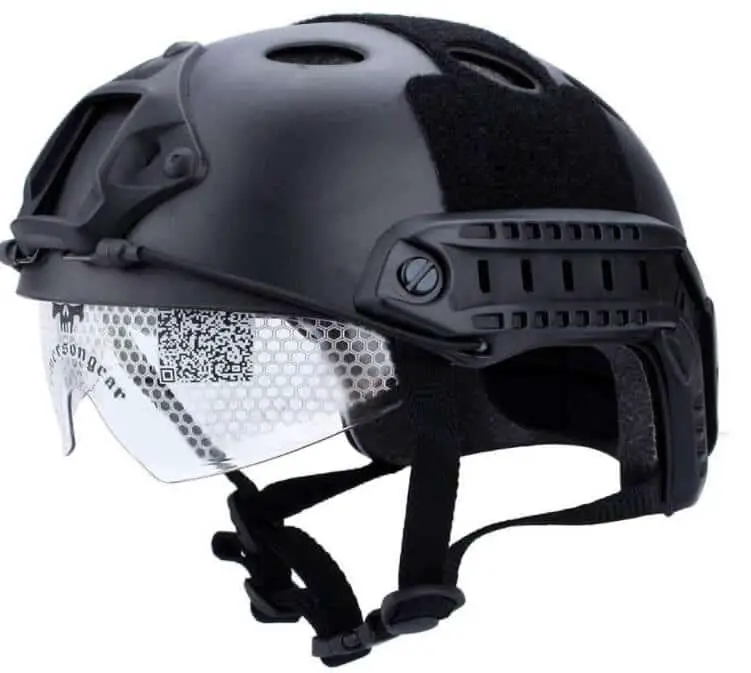
Well, if you are going to be shoot paintball with your friends but want to remain safe and secure especially from paint or injuries to your face, this Zerone tactical helmet is one that you should have.
This helmet also comes with built-in goggles and a mesh beneath especially for people who wear glasses. This helmet won’t clog up easily due to the built-in visor that prevents clogging during use.
Features:-
- The helmet is made with super-strong but light plastic with full padding around the eyes, ears, and head for full protection.
- The straps are double locked to ensure that your helmet stays on during play as you move around without becoming an obstruction while you play.
- Inner soft and moisture-absorbent lining pads provide comfort and prevent clogging regardless of the temperature or the altitude. The helmet is also well-ventilated, so you will always get a fresh bout of oxygen to keep you going.
- The night vision mount is directly seated in the front side of the helmet enabling you to lock your night vision goggle in place without stress.
Pros:-
- Suitable for games, paintball, rescue operation, or paramilitary activities
- Light durable design that will protect the head and face from injuries
- Adjust straps for secure wearing
- Ability to add a mouth and nose guard to completely protect your face
- Will fit a head circumference of 560 to 600mm
- The helmet will also accommodate cameras for sports and outdoor activities
Overall, it is a very interesting toy with all the amenities to help you secure your helmet on your head. Furthermore, it is light, easy to use, has extra Velcro in and around the helmet that enables it to sit lightly on your head.
7. Firefield Spartan 1 by 24 Night Vision Goggle
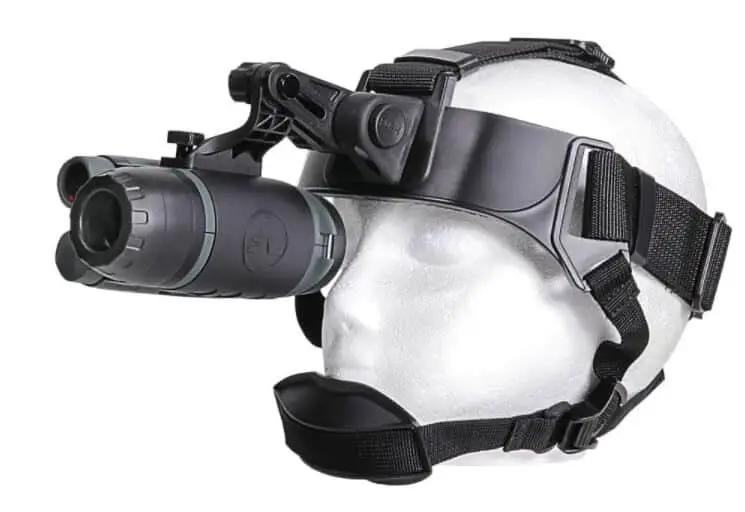
This is another excellent night vision kit that will enable you to see in the dark without giving your position away with a flashlight or walking blindly in the dark.
Although not the Generation 3 and generation 4 night goggles, this Generation one kit will enable you to see what is ahead of you and be cautious especially if it is been used as a surveillance device.
Specifications:-
- 1 X magnification
- 24mm lens diameter
- 36 LP mm resolutions
- 30-degree field of view angle
- Up to 40 hours of battery life
Below are some of the features of the Firefield Spartan 1 by 24 Night Vision Goggle that earned it a spot in our list of Best Night Vision Helmets to get in 2022.
Features:-
1. While night vision lovers will disqualify this unit because of the distance, you will be surprised at the impeccable clarity that this device affords you in pitch darkness.
2. Speaking of distance, the Spartan night vision camera has a clear focus on images 5 yards and the monocular feature makes this device have excellent magnification with the ability to clearly identify objects in the dark.
3. Overall, the Spartan Firefield has excellent built, is soft to touch, ergonomically beautiful, and very light. With that, even when combined with a helmet, it is still light enough to have around your head throughout the day.
Below is the summary of the main Pros and Cons of The Firefield Spartan 1 by 24 Night Vision Goggle.
Pros:-
- Comes with a tripod mount for animal viewing and hunting
- Fully waterproof, versatile night vision goggle
- Capable of full functionality in any weather condition
- The light rubberized body makes it light on the head and the straps are skin-friendly causing no irritation
Cons:-
- Red IR light will give your position away to others looking in the dark
Overall, the Firefield Spartan night vision is a great one for a beginner or if you don’t have the funding for a Gen 2 or 3.
8. Yukon – NV 1×24 Night Vision Goggles
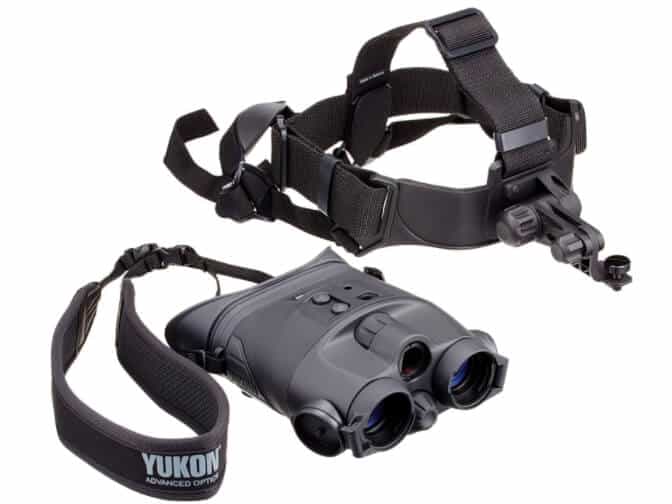
Transform your night into day with these night vision goggles with headgear for the ultimate hands-free operation. These lightweight night vision goggles have an ergonomic design that enables you to make headway even in pitch darkness with the IR illuminator to create clear images of your surroundings.
So whether you are out hunting, nature watching or playing paintball with your friends, now you can see like the sun is up 24 hours every day.
The Yukon night vision is a Generation one goggle with all the features to make you night as bright as day.
Specifications:-
- Generation-1 binoculars
- 1 X magnification
- 24mm lens diameter
- A 540-meter field of view with a 30-degree angle
- The image resolution of 36mm
Below are some of the features of the Yukon – NV 1×24 Night Vision Goggles that earned it a spot in our list of Best Night Vision Helmets to get in 2022.
Features:-
- This Gen 1 night vision kit comes complete with a comfortable head mount that sits securely around your head for all-day wearing
- The built-in IR illuminator with a range of 150 meters with clear visual images in the compact small body allowing you to enjoy a complete hand-free operation in the dark
- An eclipse lens cap system that eliminates the constant need of having to remove your lens protector from excess light streaming into the device causing undue irritation
- Water-resistant and great for use in any conditions
Pros:-
- Provides clear images with minimal distortion
- Sleek and modern design that is durable and sturdy
- Headgear is soft to the skin and the straps are very easy to do and undo
- Comes with 40 hours of battery life
Overall, this night vision camera is great for night use with incredible detailing of the object found in the dark. Its versatility allows for use in all areas whether professional or amateur.
This is our list for the best night vision helmet that you should buy into 2022 and enjoy nighttime a little bit different than most people do.
9. Steel bird R2k Night Vision Helmet Matt
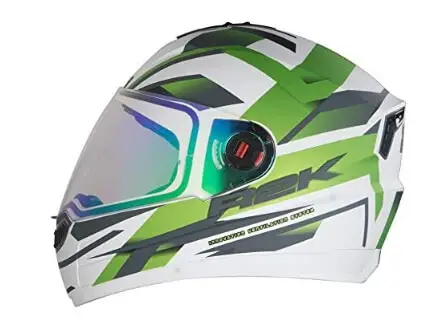
The steel bird helmets have been in existence for years and they are known for their helmet products that have been saving lives since their inception.
If you are a biker that loves the night ride or one who loves to go skiing or have fun at night, then the steel bird night helmet is best for you. Not only will it protect your head at night, but it also gives you a clear vision both during the day and at night.
Below are some of the features of the Steel bird R2k Night Vision Helmet Matt that earned it a spot in our list of Best Night Vision Helmets to get in 2022.
Features:-
- The steel bird night vision helmet comes with an air booster system that allows airflow into the helmet. One shouldn’t suffocate while wearing a helmet, that is why the air booster is of utmost importance.
- It is a full-face helmet that protects your face against any danger at night.
- The helmet is well-certified by ISI.
The steel bird products have never disappointed anyone and it is very comfortable. You can wear it for as long as you want and you won’t feel the weight because it is lightweight. The material used in building the helmet is of high quality. And it fits perfectly well on your head.
Check Price on Amazon10. Steel bird Air SBA -2 Night Vision Helmet
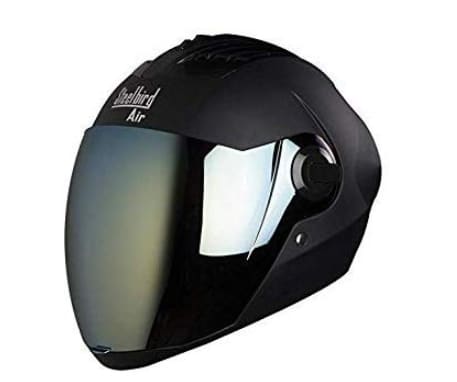
This is another one of steel bird’s product, a night vision helmet that is mostly used by bikers. Riding a bike at night means you need a product that will offer you clarity and allow you to see images from afar, to prevent you from getting into an accident.
The steel bird air SBA night vision helmet is made to protect you and make you feel comfortable all through your ride.
Below are some of the features of the Steel bird Air SBA -2 Night Vision Helmet that earned it a spot in our list of Best Night Vision Helmets to get in 2022.
Features:-
- It comes with a night vision visor that works both day and night. And it is stress-free because even at night, you don’t need to switch
- It is made from high impact materials
- It comes with a multi-layer EPS, high and low density, and also air channels for your safety and comfort.
- The helmet uses the air booster system to allow for ventilation.
- It also comes with a neck protector for some extra comfort.
If you are looking for that one helmet that will take you through the night comfortably, then the steel bird Air night vision helmet is best for you.
The helmet has lovely features that you comfortable and makes you enjoy your night trip. It comes with a brightness that allows you to see clearly at night, the brightness is adjustable and you get well-protected while using it.
Check Price on Amazon Check Price on Amazon .IN11. Steel bird SBA 2 strength stylish night vision helmet
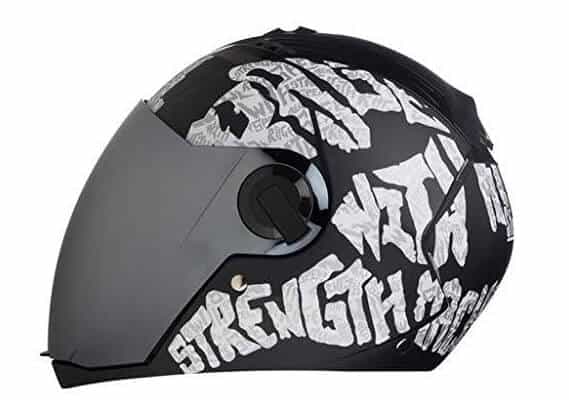
Here is another one of the steel bird’s night vision helmet that works well at night and it is suitable for everyone’s use. It is a full-faced helmet that not only lets you see properly at night but also protects your head and face at night. it also comes with a night visor that lets you see clearly at night.
Below are some of the features of the Steel bird SBA 2 strength stylish night vision helmet that earned it a spot in our list of Best Night Vision Helmets to get in 2022.
Features:-
- The material shell is made of high impact.
- Its interior is highly hygienic with interior multiple pores.
- Its buckle is micrometric and also a European standard.
- The helmet’s upper part uses an air booster for proper ventilation.
- It comes with a breathable padding neck protector for total comfort.
The steel bird stylish strength helmet was made with the user’s comfort in mind. Its visor mechanism enhances your vision at night.
And even if your face is fully covered, you still get the chance to see images clearly from afar off. And for your complete safety, it comes with a multilayer EPS high and low density with Air channels.
Check Price on Amazon. IN12. Steel bird Air SBA 2 Strength Night Vision Helmet
The steelbird company is one that produces lots of helmets, and they have various models of night vision helmet with its different prices and functions. The full face graphics helmet is yet another one of their night vision helmet with great looks and features.
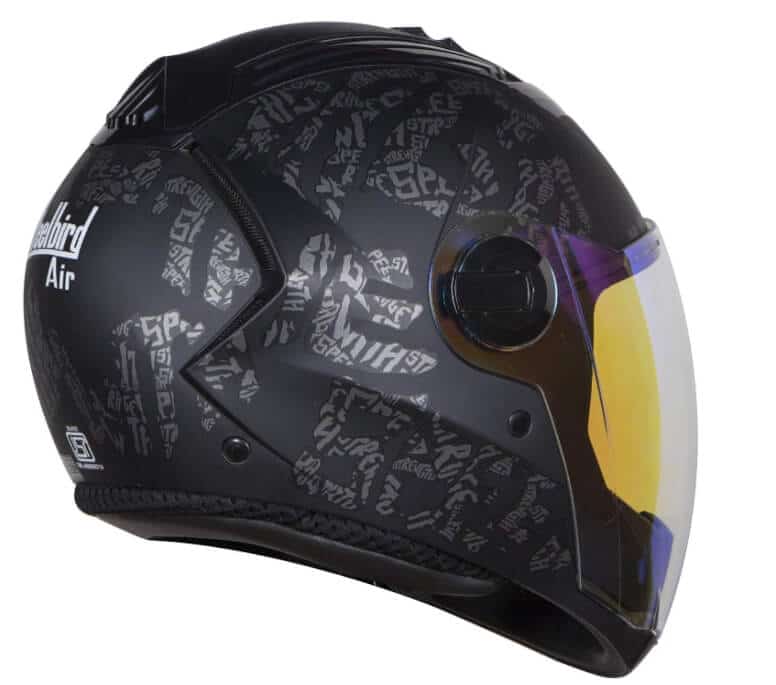
The helmet is known for its single night vision dual-action visor that is used for both day and night. And that is what makes their helmet outstanding, the fact that it can be used during the day and at night.
Below are some of the features of the Steel bird Air SBA 2 Strength Night Vision Helmet that earned it a spot in our list of Best Night Vision Helmets to get in 2022.
Features:-
- The helmet is well vented to allow for the free flow of air.
- It comes with a wide opening that could fit your night goggles for a clearer image at night.
- It also comes with a padded liner that can be removed and washed so as to keep your helmet fresh and clean.
- The materials used in making the helmet are of high quality, so you can be assured that it will last long.
- Most importantly, it is lightweight and you can wear it all through the night.
If you love the night ride so much, then this is your pick to have a smooth sail. The helmet’s pad is one that can be removed and washed, so you need not worry about how sweaty you will get while using it.
It comes with air boosters that you great ventilation so you also need not fear you might get suffocated while wearing the helmet. It is made to withstand every weather condition, be it harsh or mild.
It also has two air extractors that recycle the air inside the helmet, and it comes with a strap around your chin that makes the helmet sit comfortably on you without shaking. It also has a neck protector odorless mouth guard and it comes in different colors.
13. Moon Ski Helmet with Goggles
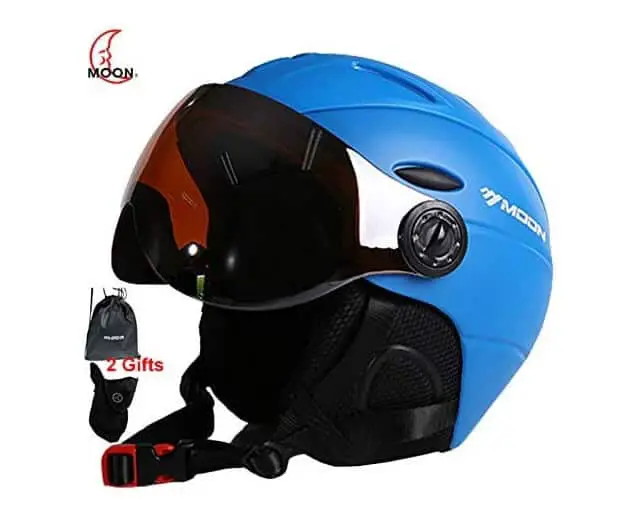
Skiing at night can be so much fun and here is another ski helmet that you can use in having fun at night with your friends and family. The moon ski helmet comes with goggles that provide you with a bright light to see clearly. It comes with full coverage that protects you fully and it is very safe.
Below are some of the features of the Moon Ski Helmet with Goggles that earned it a spot in our list of Best Night Vision Helmets to get in 2022.
Features:-
- It is made of EPS and PC material to keep you warm and it is also windproof.
- It comes with an adjustable chin pad and magic tape which offers you the opportunity to adjust the helmet to your size.
- It comes with a good ventilation system that effectively helps you to dissipate heat and provides you with much-needed ventilation.
- It is a one-piece design that comes with a unique hole that makes it convenient for you to wear.
The goggle belt attached to the moon ski helmet protects the goggle from falling off while skiing. Its adjustable device helps in adjusting the helmet to fit your head circumference and it fits the size of your head.
It also comes with extra isolation to protect your ear from any cold injury and keeping it warm. The goggle attached to the moon helmet not only provides you with extra light to see clearly at night, but it also protects your eyes from hurting from any harsh weather.
So be sure that while having fun, you are also protecting yourself from any further danger.
14. Vermar Eclipse Night Vision Helmet
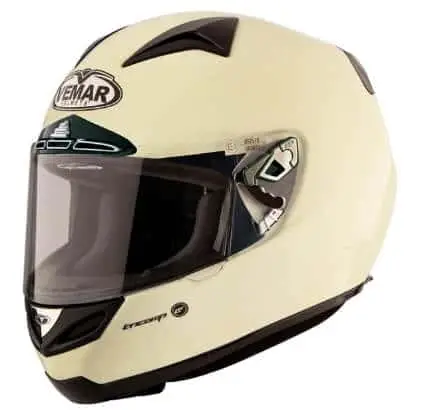
The Vermar eclipse night vision helmet comes with an improved visor gasket and advanced ventilation. The Vermar eclipse helmet gets activated when it absorbs the UV radiation from sunlight. Once you are able to make sure the helmet gets enough sunlight, for a longer period of time, it will emit a wonderful afterglow.
Below are some of the features of the Vermar Eclipse Night Vision Helmet that earned it a spot in our list of Best Night Vision Helmets to get in 2022.
Features:-
- The helmet is an oval-shaped, high-impact shell.
- It has a padded chin strap that has a double D ring closure system.
- Its cheek pads are removable and also washable.
- It comes with a full ventilation system that is adjustable.
The Vermar eclipse night helmet also comes with a night vision that allows you to see clearly at night. The sunlight that it takes in during the day, makes it glow very bright at night and allows you to see images clearly.
It also comes with a user guide that directs you on how to use the helmet and you are sure of a five years warranty. It comes also in different sizes, so you are sure to get your size of a helmet in the market.
Check Price on AmazonBest Night Vision Helmets: What To Consider
The Distance
The magnification will determine how much you can see in the dark. The distance also dictates how far you can see which is great. The higher the magnification the long you can see and the more distinct images are in the dark.
The Image Quality
The quality of the images seen through night-vision goggles should be good enough and look as if you are seeing with your naked eyes but also enable you to distinguish the image that is been seen. Most night vision goggles are used by hunters and other lovers of night goggles.
The Mount Section
Since your night vision goggle will be mounted on your headgear or helmet, it should stay securely on your head and not bounce around when you are running or obstructing your view when it is in use. Furthermore, the straps must be gentle of your skin
The Padding
The inner layer of the helmet should consist of various padding that will act as shock-resistant if an object hits your head or you bump your head while using the device. It should also be comfortable and easy to mount.
Conclusion
Riding at night might be quite enjoyable and fun at the same time, but one needs to be careful when out at night. You should check to be sure you are safe while having fun so you don’t get into an accident.
Night vision helmets are made for your safety, so it is a necessity for you to have. It protects you all through the night and allows you to see clearly at night. Most of the helmets come with a goggle that lets you see from afar and enjoy your night adventure.
Even if you were going hunting or fishing, you still need a helmet that comes with a goggle so as go see clearly and get a free hand to do anything you want to.
So if you were confused about which helmet is best for you, the list above will let you choose the best and most suitable helmet for you.
Some of the helmets are budget-friendly, so you will get to see one that you can afford. Get a helmet today and have fun without worry at night.